

Using Picture Clues Worksheet
This Using Picture Clues Worksheet gives first graders four illustrated sentences and asks them to figure out what each bold word means. An answer key is included, so it is ready for quick, no-prep reading practice.
$6.97
Or free with a membership — members pay $3.33/mo for all 10,000+ resources. See plans
Want this one free?
Tell us where to send it and it’s yours — no card, no catch.
One free resource per teacher. We’ll also send free teaching ideas each week — unsubscribe anytime.
Teaching is easier with a membership
Unlimited printables, games & videos for PreK–6th — for your classroom or homeschool. Cancel anytime.
Start your 3-day free trial$0 today · cancel anytime · Instant access to 10,000+ resources
About this resource
Description
Picture clues are one of the very first strategies a young reader learns to lean on. When a child meets a word they cannot decode yet, the illustration beside the sentence quietly supplies the meaning — a spotted baby deer standing beside its mother tells them what a fawn is long before they could sound the word out. This Using Picture Clues Worksheet gives first graders four short sentences and four matching pictures, then asks them to use what they see to work out what one bold word means. It is the same habit that grows, a few years later, into using sentence context and text evidence.
Each item on this first grade context clues worksheet pairs one picture with one short sentence. The child reads the sentence, studies the picture beside it, and then circles the choice that tells what the bold word means. Because every sentence is only five or six words long, the reading load stays light and the thinking stays on the strategy itself. Read the directions aloud once, model the first item together, and then let students finish the page on their own or with a partner.
What’s Included
- 1 print-ready PDF worksheet
- Answer key
- 4 illustrated picture-clue sentences with three answer choices each
There are three reasons this Using Picture Clues Worksheet builds real reading skill. First, it makes the strategy visible: a child has to find something in the picture before choosing, which turns a vague habit into a step they can name and repeat. Second, the three answer choices are close enough to be worth thinking about — a fawn is not a baby bird, and a bouquet is not a glass of milk — so guessing rarely pays off. Third, the words are ones first graders meet in storybooks all year long, so the practice carries straight over into independent reading.
To keep the skill going after the page is finished, cover the words in a favorite picture book and ask your child to tell the story from the pictures alone, then uncover the text and compare. Play a quick guessing game where you describe what is happening in an illustration and your child names the word. During read-alouds, pause on an unfamiliar word and ask what in the picture could help before you supply the meaning. Older siblings can draw their own picture clue for a new word and quiz the family at dinner.
Related Resources
What teachers say
Reviews
You must be logged in to post a review.
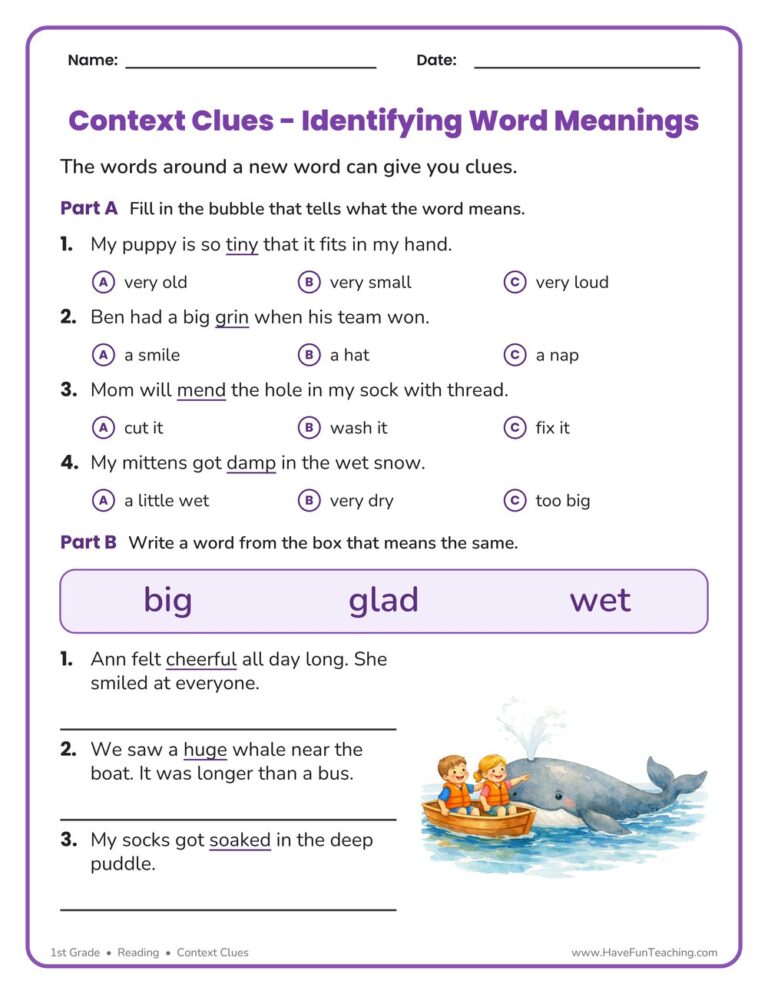
This context clues identifying word meaning worksheet has 1st Grade readers use the words around an underlined word to choose or write its meaning. An answer key is included, so checking work takes seconds.
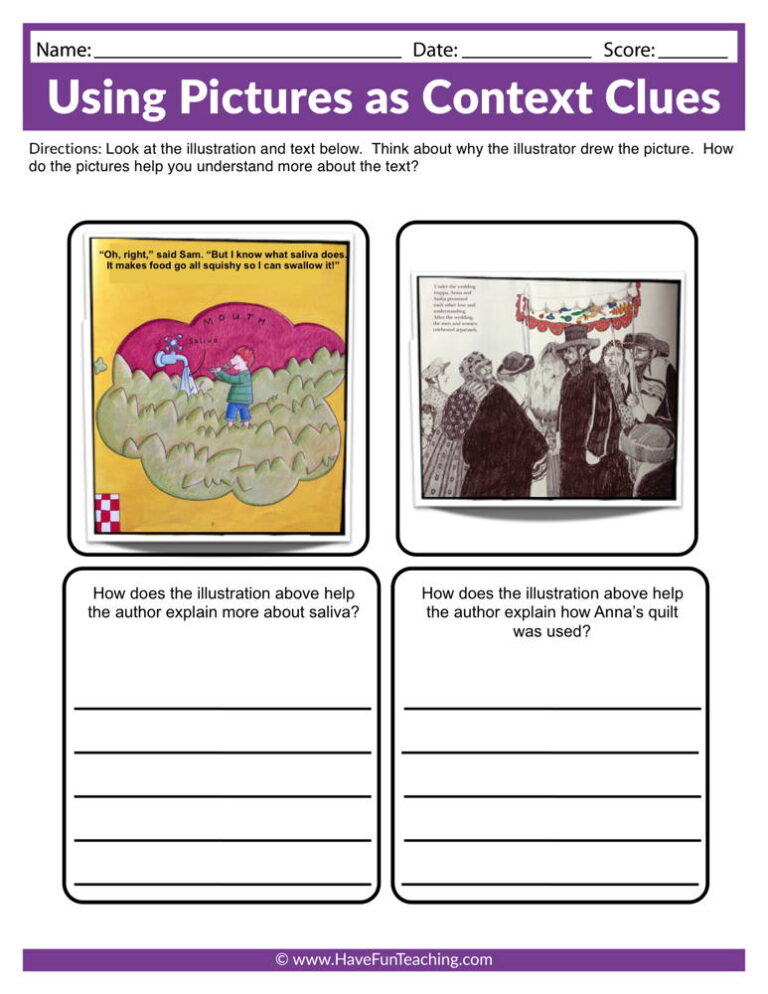
This Using Pictures as Context Clues Worksheet helps 1st Grade readers use an illustration and the words around a new word to find its meaning, with five questions and an answer key included.

Find Meaning Worksheet gives 1st Grade readers six sentences with a tricky underlined word, then asks them to use the sentence clues to choose or write a word that means the same. Answer key included for quick, confident practice.

The Understanding Meaning The Venus Fly Trap Worksheet gives 1st graders a short non-fiction passage and five context clue questions. An answer key is included, so students can check their thinking and point to the sentence that proves it.
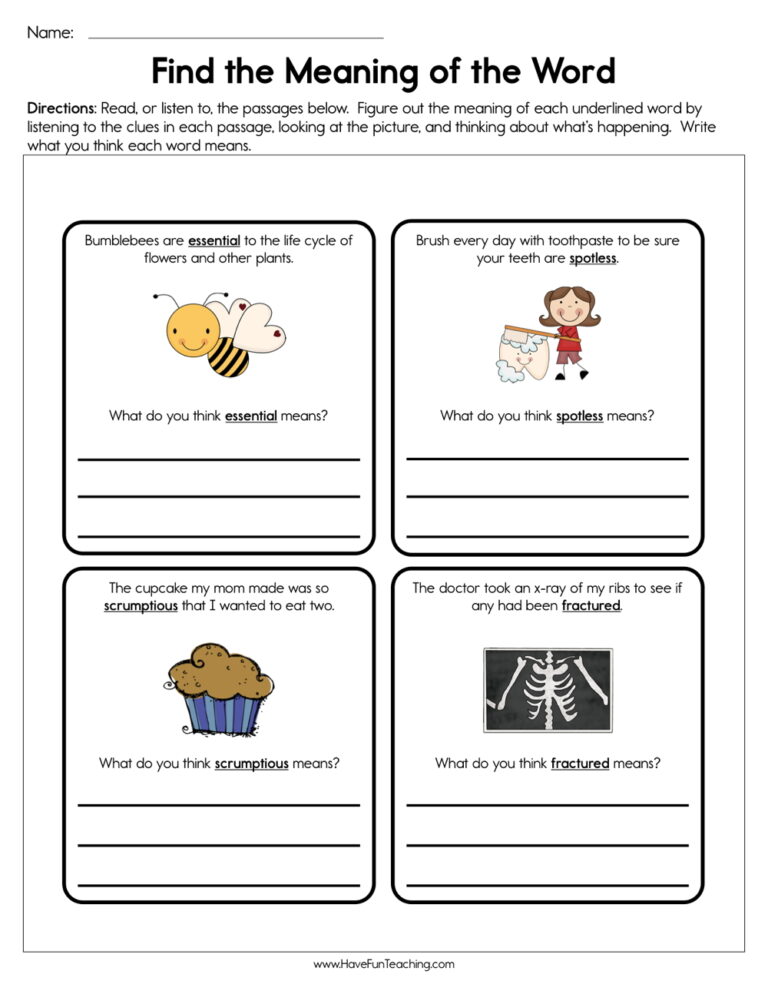
The Find the Meaning of the Word Worksheet gives 1st graders a short non-fiction passage and five context clue questions. An answer key is included, so children can check their thinking and point to the sentence that proves it.
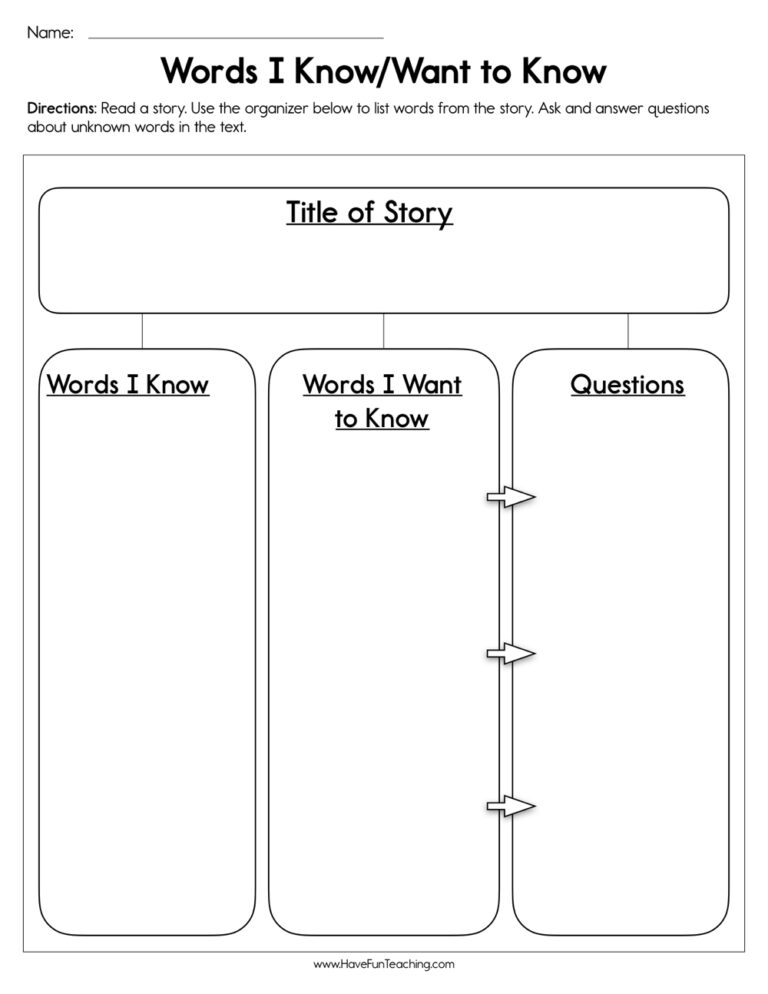
This Words I Know Want to Know Worksheet gives 1st grade readers a short sunflower passage and five questions on what each new word means. An answer key is included, so children can check their own thinking.
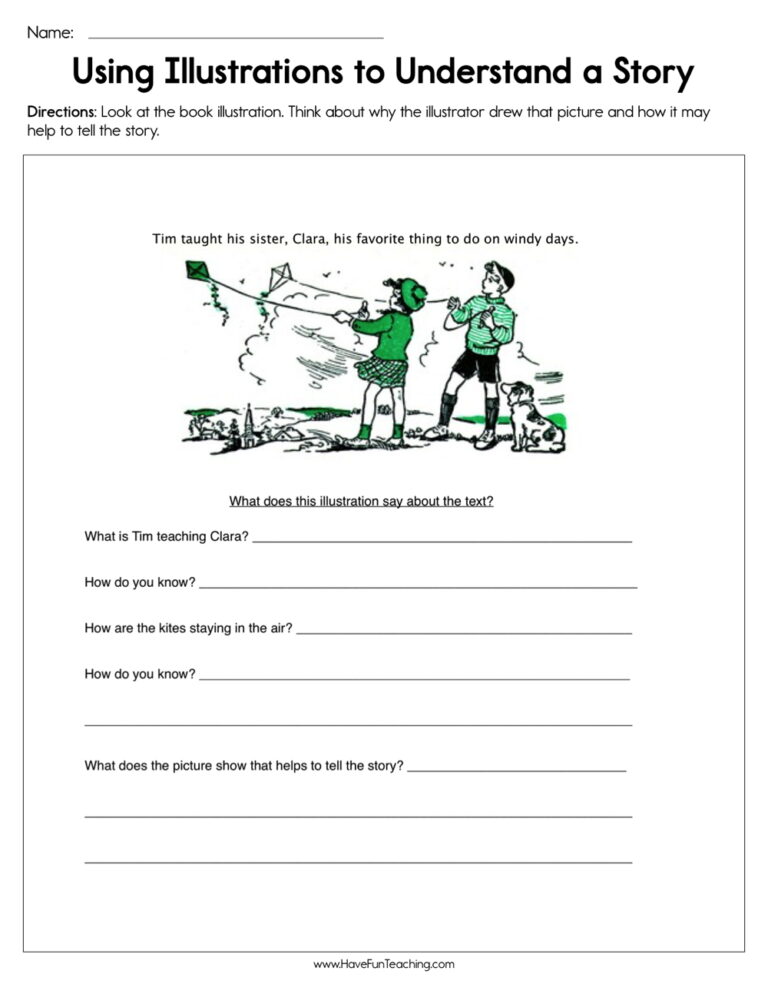
The Using Illustrations to Understand a Story Worksheet gives 1st graders a short story and a picture that fills in what the words leave out. Five questions and an answer key are included.
Using The Magic School Bus Lost in the Solar System Worksheet, students read The Magic School Bus Lost in the Solar System to determine the meanings of these words and phrases.

Using Rocking Word Meanings Worksheet, students read Let's Go Rock Collecting by Roma Gans to determine the meanings of these words and phrases.

Using What Does This Word Mean Activity, students read independently or with a partner to collect unknown words and phrases to build their vocabulary and reading comprehension.

Using Unknown Words and Phrases Activity, students read independently or with a partner to collect unknown words and phrases to build their vocabulary and reading comprehension.
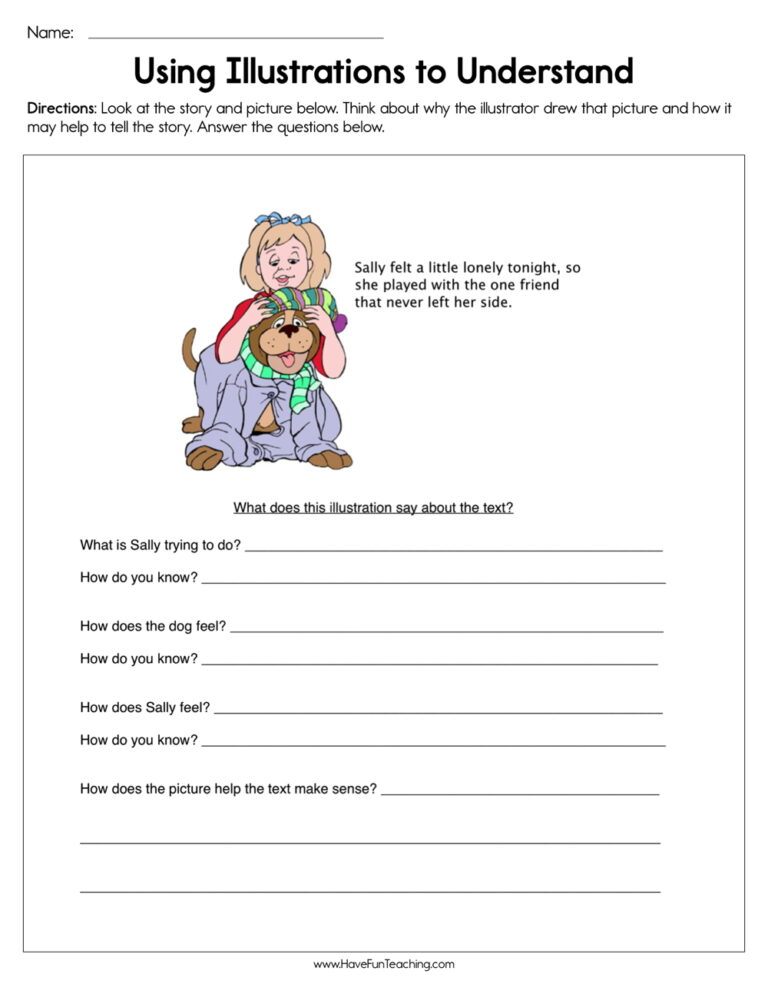
A Using Illustrations to Understand Worksheet that has 1st graders pull clues about weather, feelings, and events from a picture the words never mention. Answer key included for fast, no-prep reading practice.




Reviews
There are no reviews yet