

Verbs or Adjectives Worksheet
This Verbs or Adjectives Worksheet asks 2nd graders to put closely related words in order from least to most and circle the word that means the most. Answer key included for fast, no-prep vocabulary practice.
$6.97
Or free with a membership — members pay $3.33/mo for all 10,000+ resources. See plans
Want this one free?
Tell us where to send it and it’s yours — no card, no catch.
One free resource per teacher. We’ll also send free teaching ideas each week — unsubscribe anytime.
Teaching is easier with a membership
Unlimited printables, games & videos for PreK–6th — for your classroom or homeschool. Cancel anytime.
Start your 3-day free trial$0 today · cancel anytime · Instant access to 10,000+ resources
About this resource
Description
Verbs and adjectives are not all the same strength, and learning to hear the difference is a big step toward a rich vocabulary. This Verbs or Adjectives Worksheet helps second graders notice the small distances between closely related words such as whisper, talk, shout, and scream. When students can rank words by how much or how strongly they mean something, their own writing gets clearer and their reading comprehension grows right along with it.
This shades of meaning worksheet gives students two kinds of practice on a single page. In Part A they read four sets of closely related words and rewrite each set on the lines in order, beginning with the least and finishing with the most. In Part B they circle the word in each row that means the most. Print one copy per student and use it for morning work, a literacy center, homework, or a quick check after a vocabulary lesson.
What’s Included
- 1 print-ready PDF worksheet
- Answer key
- 4 word-ordering sets and 3 circle-the-strongest-word rows
This Verbs or Adjectives Worksheet helps children in three ways. First, putting words in order by intensity makes students think about meaning instead of matching a single definition, which deepens real word knowledge. Second, every set uses everyday verbs and adjectives second graders already say out loud, so the challenge stays on meaning rather than decoding. Third, the two-part format moves from a longer written response to a fast circling task, so every learner has a way to show what they understand.
Keep the learning going away from the page. Ask children to act out a word ladder — whisper, talk, shout — and talk about when each one is the right choice. Write related words on index cards and have students slide them into order on the floor. During read-alouds, pause on a strong word and ask what a weaker word would have sounded like. You can also challenge writers to trade one plain word in their own story for a word that means more.
Related Resources
What teachers say
Reviews
You must be logged in to post a review.
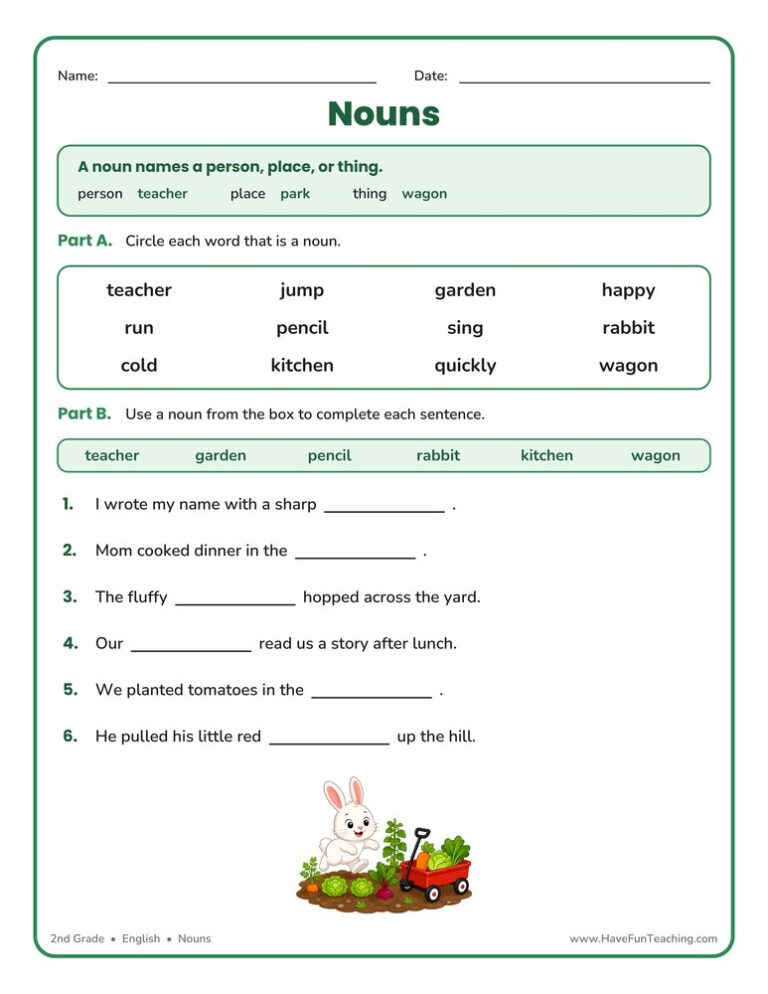
This Noun Fill in the Blanks Worksheet helps 2nd grade students identify nouns in a word box and complete sentences with the correct noun. Includes a complete answer key for quick, no-prep grammar practice at home or in the classroom.
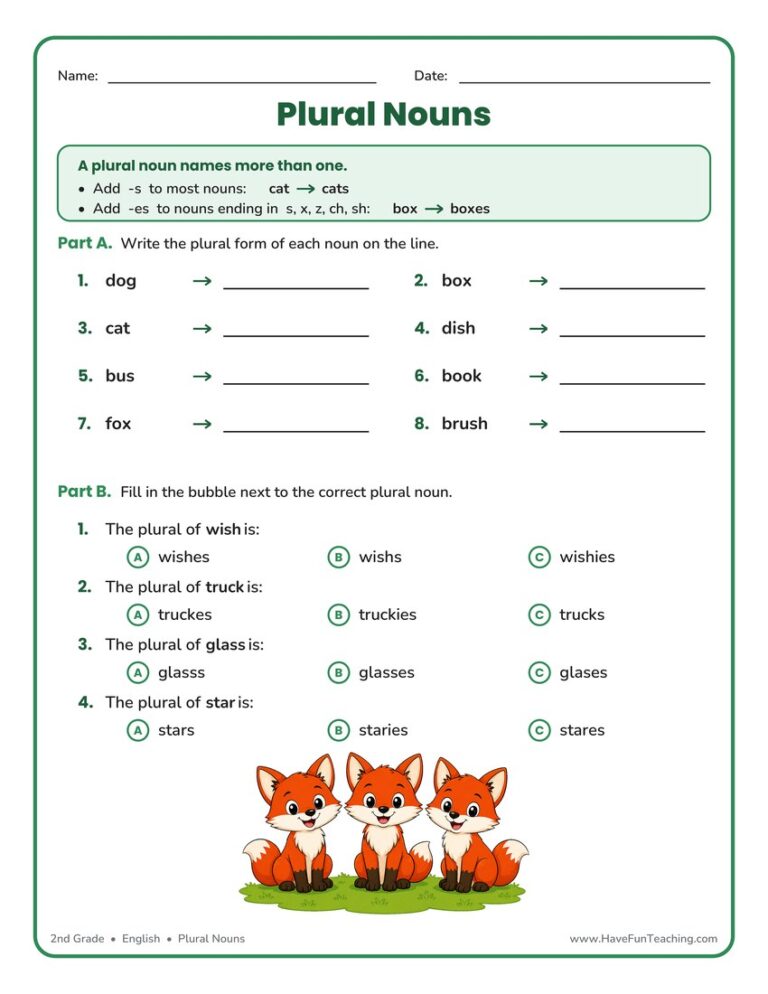
The Creating Plural Nouns Worksheet gives 2nd graders two-part practice turning singular nouns into plurals with the -s and -es rules. Includes a complete answer key for quick, no-prep grammar practice at home or school.

A free second grade using irregular nouns worksheet where students circle the correct irregular plural in eight sentences. Includes a complete answer key for quick, no-prep grammar practice.

This 2nd grade Choosing Pronouns Worksheet gives students fun fill-in-the-blank practice picking the right subject and object pronouns, with an answer key included for fast grading and confident grammar skills.
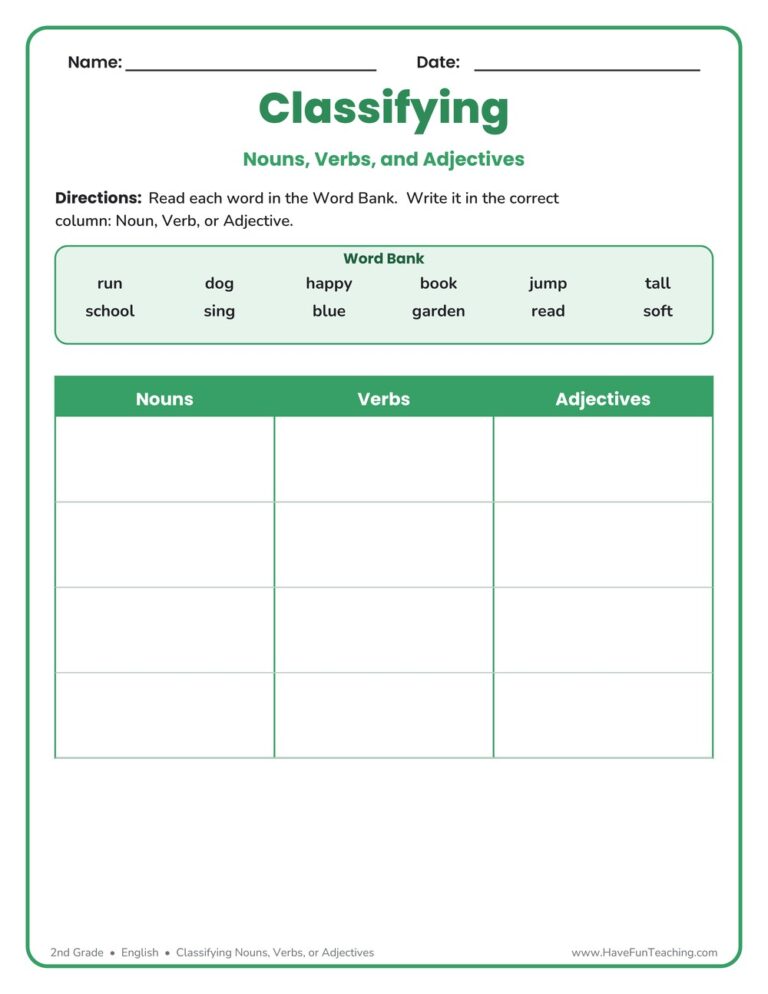
Sort twelve everyday words into nouns, verbs, and adjectives with this Classifying Nouns, Verbs, or Adjectives Worksheet for 2nd grade. Includes a complete answer key for quick, no-prep grammar practice.
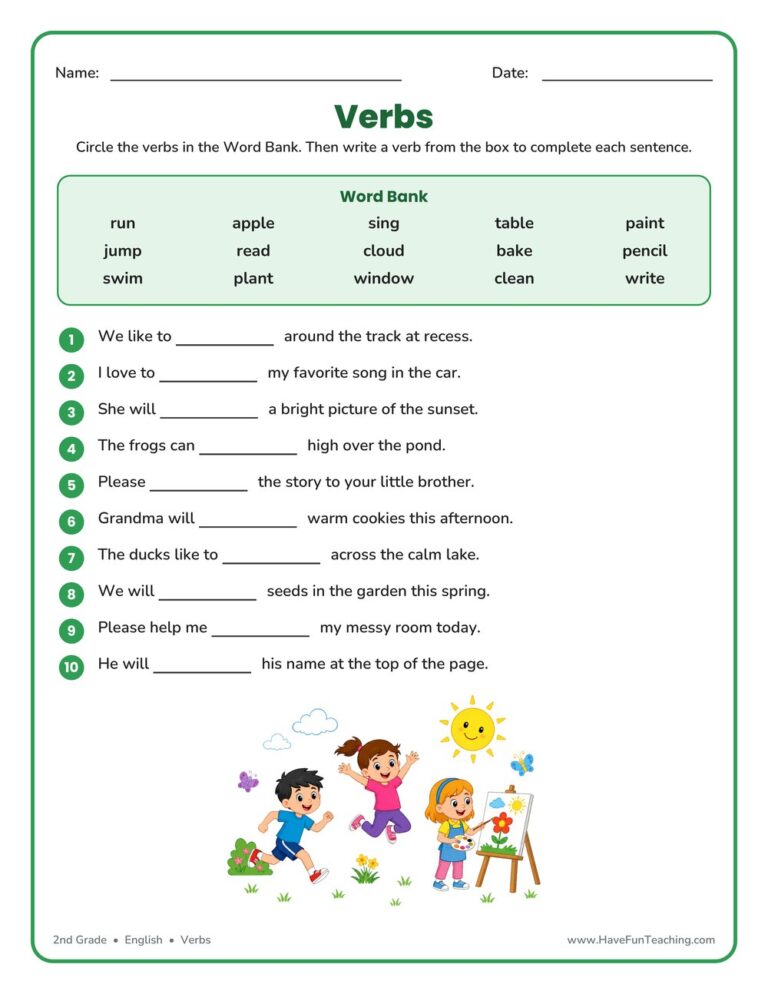
A 2nd grade fill in the blanks verb worksheet where students circle the verbs in a word bank and use them to complete ten sentences. Includes a complete answer key for quick, no-prep grammar practice.
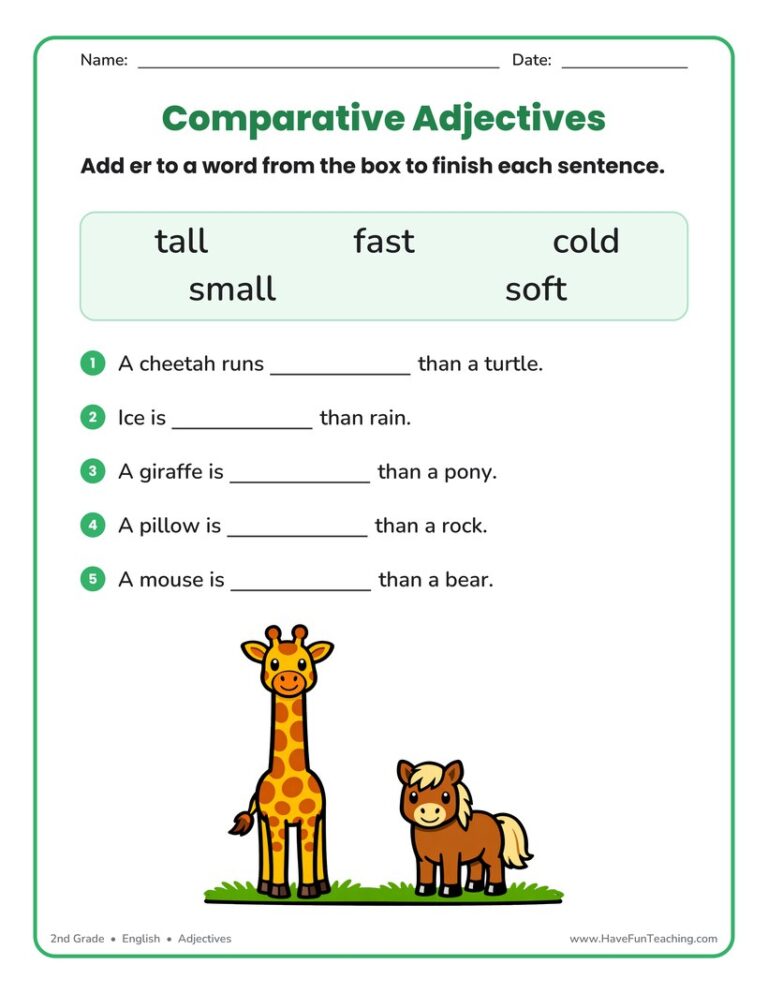
This Comparing Adjectives Fill in Blank Worksheet asks 2nd Grade students to add er to a word from the box and finish five comparing sentences. Answer key included for quick checking.

This Writing Personal Pronouns Worksheet has second graders swap an underlined noun for the pronoun that fits, using each word once. Answer key included, so practice checks itself.
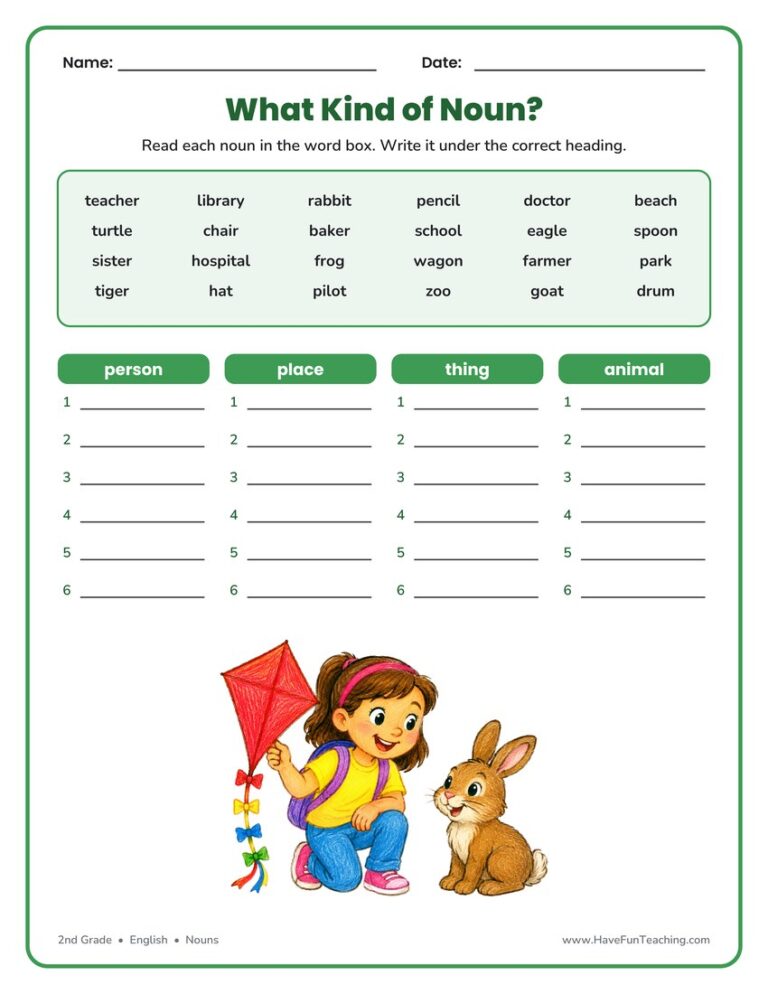
Students sort twenty-four nouns into person, place, thing, and animal categories on this 2nd grade sorting nouns worksheet. Includes a complete answer key for fast, no-prep grammar practice.

The Combining and Expanding Sentences Worksheet helps second graders use conjunctions to join sentences and add describing words. Grade 2, answer key included — a simple way to build stronger sentence writing.

This Noun Adjective and Verb Worksheet gives 2nd graders clear practice labeling words and finding the part of speech in a sentence. Includes an answer key — a simple, no-prep way to build grammar confidence.
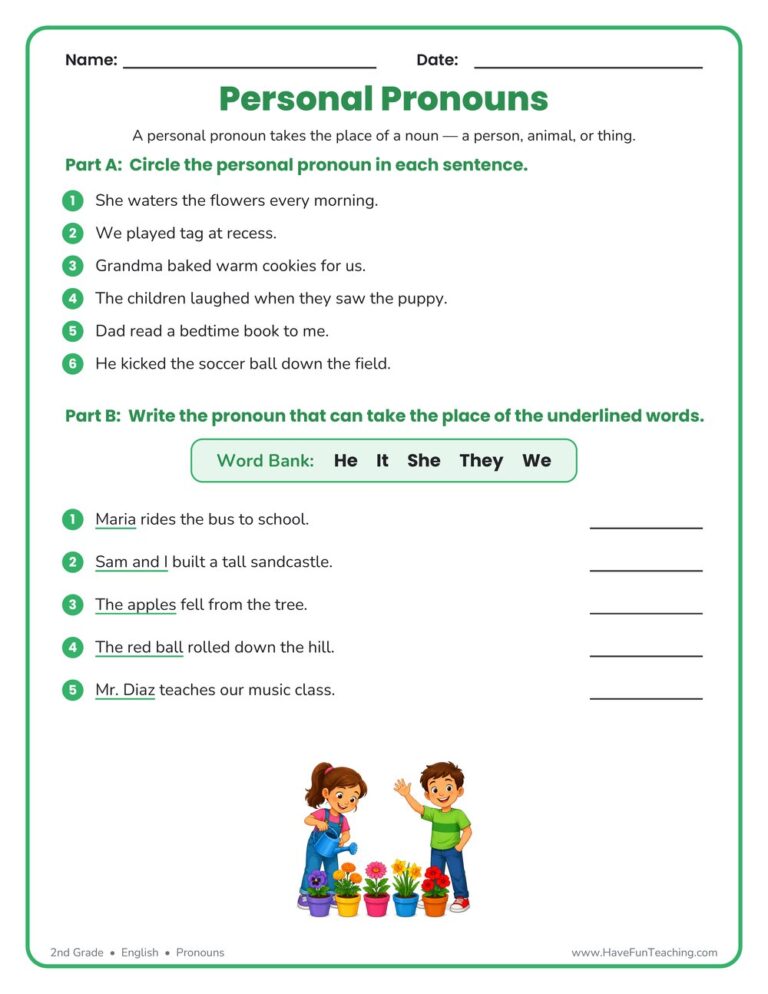
This personal pronouns worksheet gives 2nd graders practice circling pronouns and swapping nouns for the right pronoun using a word bank. An answer key is included to make grammar review simple.
Reviews
There are no reviews yet