
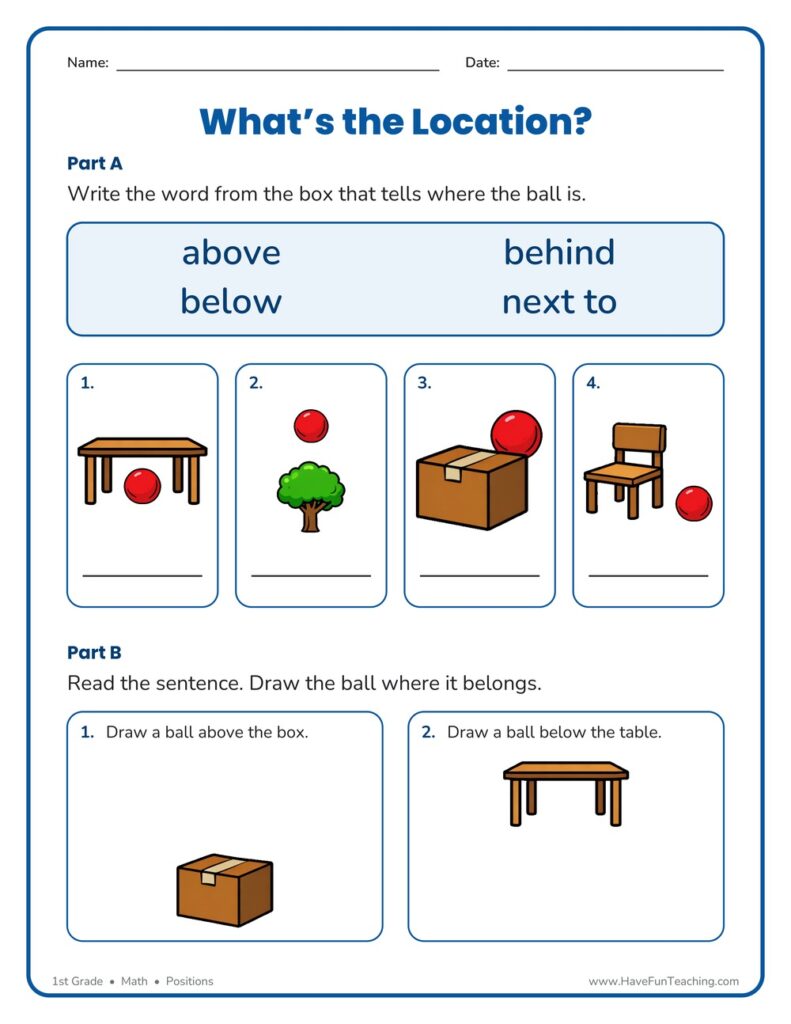
What’s the Location Worksheet
This What’s the Location Worksheet has 1st Grade students write the position word that tells where the ball is, then draw a ball above and below an object. Answer key included for quick, no-prep practice.
$6.97
Or free with a membership — members pay $3.33/mo for all 10,000+ resources. See plans
Want this one free?
Tell us where to send it and it’s yours — no card, no catch.
One free resource per teacher. We’ll also send free teaching ideas each week — unsubscribe anytime.
Teaching is easier with a membership
Unlimited printables, games & videos for PreK–6th — for your classroom or homeschool. Cancel anytime.
Start your 3-day free trial$0 today · cancel anytime · Instant access to 10,000+ resources
About this resource
Description
Position words are how a child says exactly where something is, and this What’s the Location Worksheet gives first graders a clear, picture-first way to practice them. Words like above, below, behind, and next to sound simple, but they carry a lot of weight: they are the words a child needs to follow a direction, describe a picture, retell where something happened in a story, and later to talk about shapes and space in math. Because the same words live in both language arts and math, position practice pays off twice.
This kindergarten positions worksheet and 1st grade favorite keeps the thinking visual. In Part A, four picture cards each show a red ball placed somewhere around an everyday object — a table, a tree, a box, and a chair — and the student writes the word from the box that tells where the ball is. The four words are used once each and the answers are deliberately out of order, so nobody can solve the page by matching top to top. Part B flips the skill around: the student reads a sentence and draws the ball in the right spot, which proves they understand the word rather than just recognizing it. Use it as morning work, a center, a partner activity, or a quick check before a shapes unit.
What’s Included
- 1 print-ready PDF worksheet
- Answer key
- 4 write-the-position-word picture cards and 2 draw-the-ball activities
Three things make this What’s the Location Worksheet work well for young learners. First, every item is a picture, so a child who is still building reading stamina can succeed on the thinking without getting stuck on the text. Second, the word box holds only four clearly different words — no near-synonyms — so each card has exactly one right answer and the child gets clean feedback. Third, the drawing task at the end moves from recognizing a word to using it, which is the step that makes position vocabulary stick and gives a teacher a fast, honest read on who has it.
Teachers and parents can keep the practice going all day. Play “Simon Says” with position words — put your hand above your head, put your book below your chair. Hide a small toy and give position clues until a partner finds it. Ask children to describe where their backpack is using two position words. Build a tower and have a partner place a block behind, next to, or above it. On a walk, take turns naming where things are: the bird is above the roof, the dog is next to the gate.
Related Resources
What teachers say
Reviews
You must be logged in to post a review.
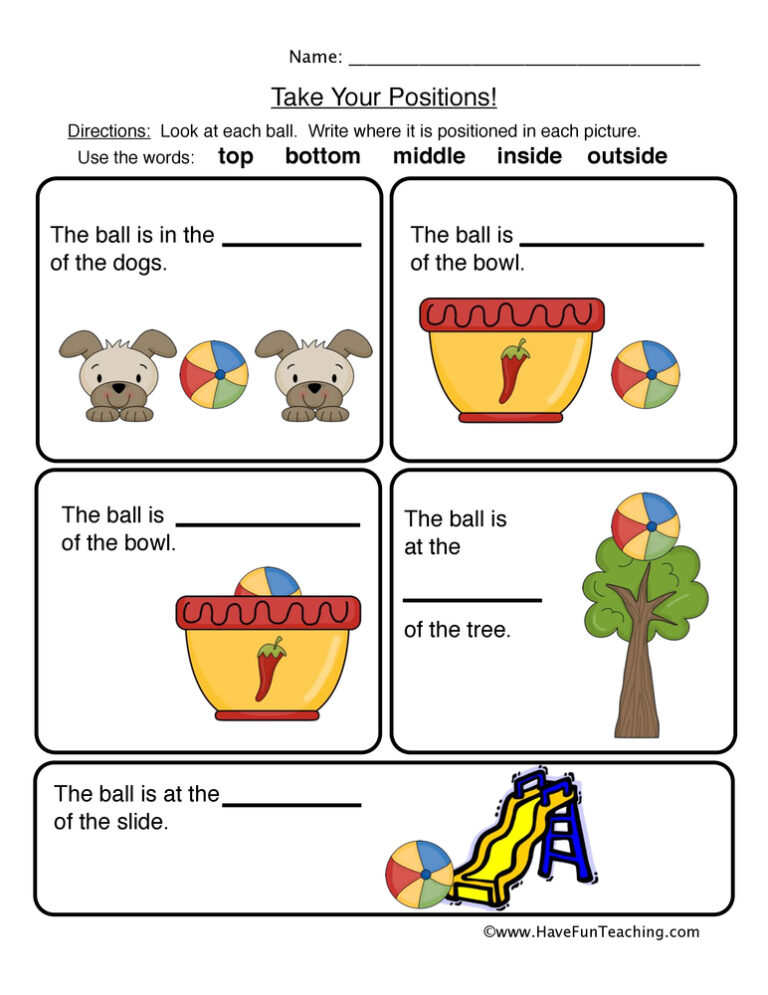
This prepositions positions worksheet asks 1st Grade students to look at five pictures and write on, in, under, beside, or between on the line. An answer key is included, so position words click fast.
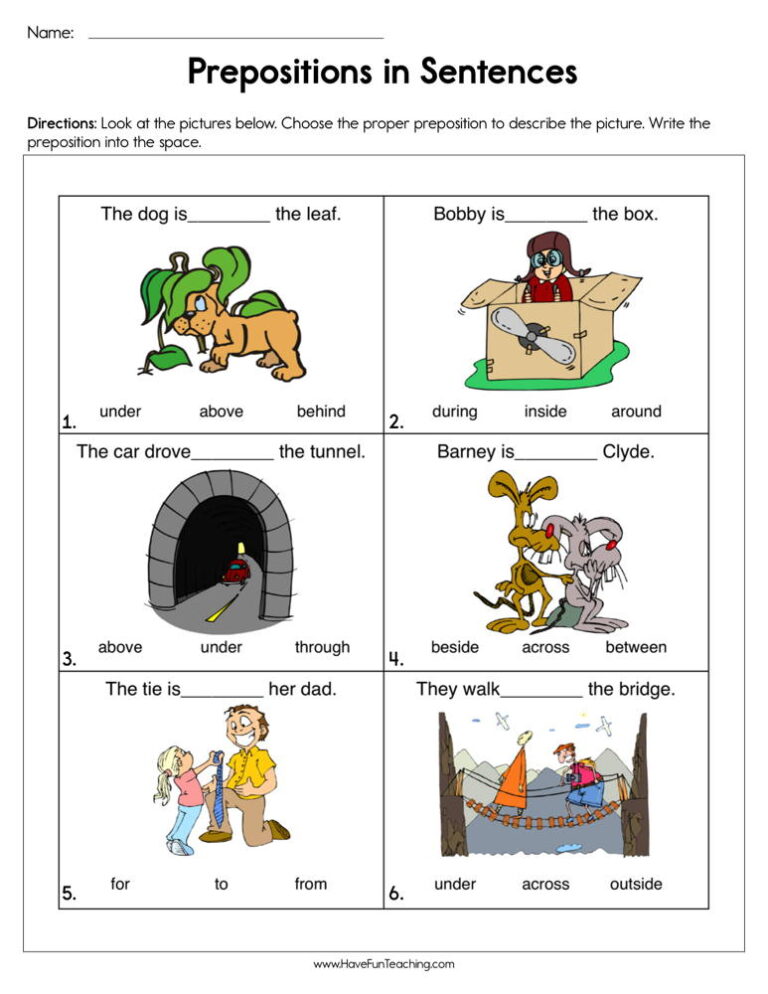
A picture-based prepositions in sentences worksheet that helps 1st graders choose and write position words like under, between, and above. Answer key included for fast, no-prep grammar practice.

This Draw the Positions Worksheet asks 1st Grade students to read four sentences and draw a shape above, under, next to and between the objects shown. An answer key is included.

Using Position Words Butterfly Activity, students choose a word from the box to describe where the butterfly is located in relation to the object to build their positional word vocabulary.
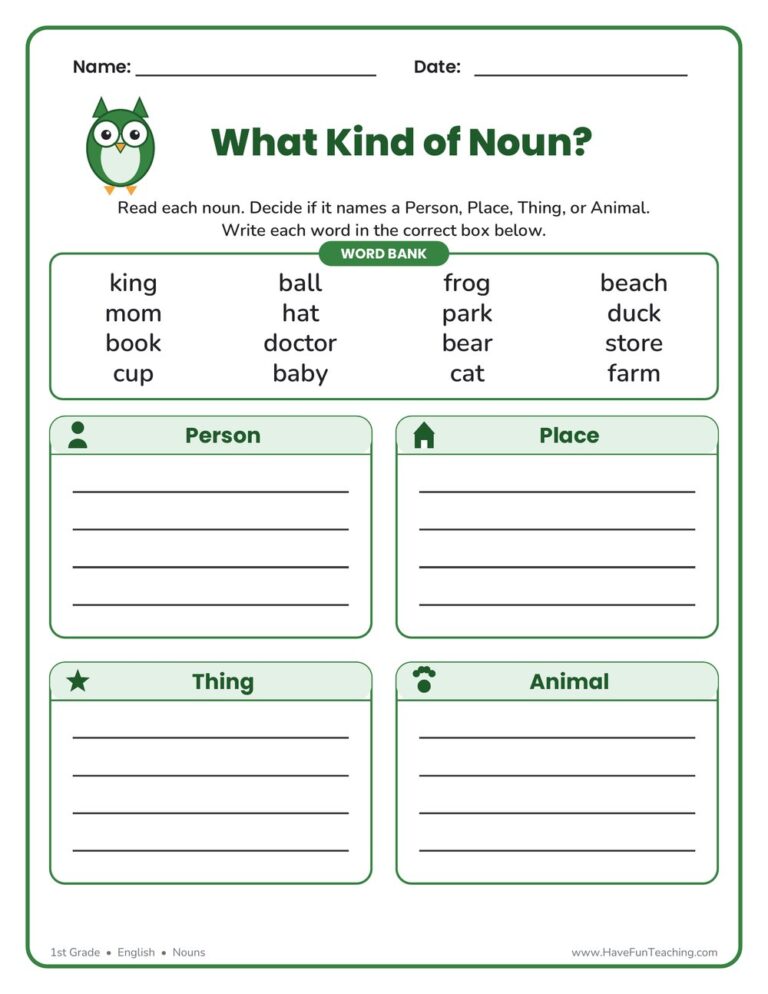
A noun sorting worksheet that helps 1st graders read everyday words and sort them into person, place, thing, and animal. Includes a complete answer key — perfect for quick, no-prep grammar practice at home or school.
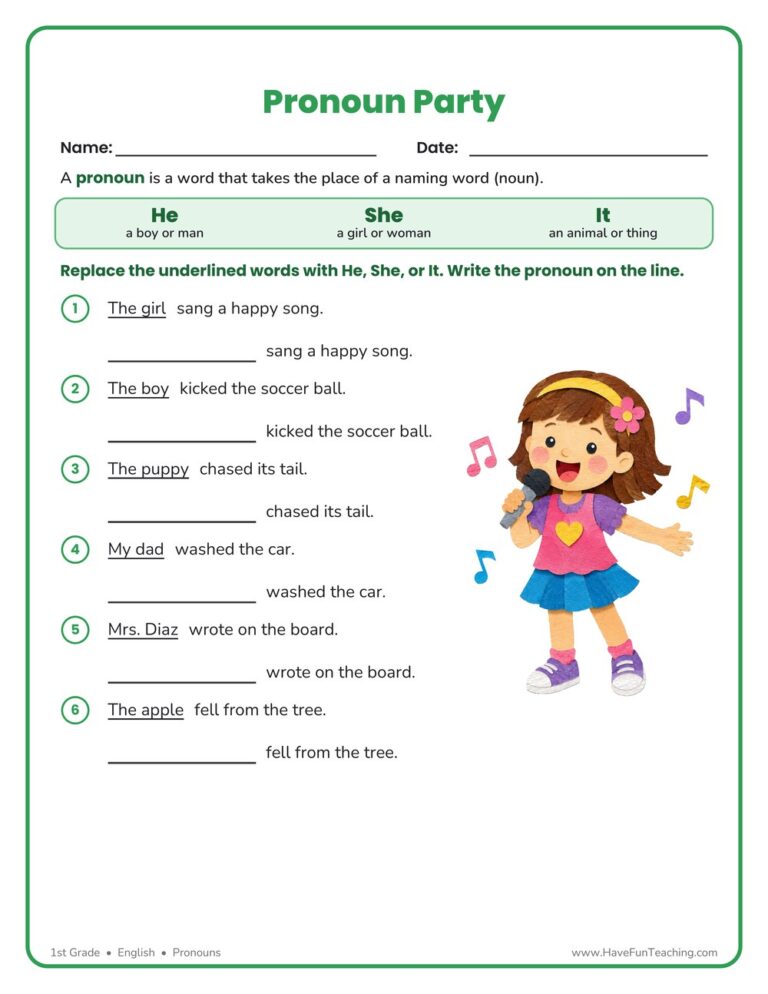
This first grade Pronoun Worksheet has students replace underlined naming words with the pronouns He, She, and It across six sentences. An answer key is included—perfect for quick, no-prep grammar practice at home or school.

This Adjectives Color Size Shape Worksheet gives 1st graders picture prompts and an adjective sorting activity to practice describing words. Answer key included for easy, no-prep grammar practice.

This identifying verbs worksheet gives 1st graders practice circling the action word in a sentence and matching verbs to pictures. Answer key included for fast, no-prep grammar review.

This Categorizing Objects Worksheet helps 1st graders read nine words and sort them into groups like animals, food, and colors. Includes a complete answer key for quick, no-prep classification practice.
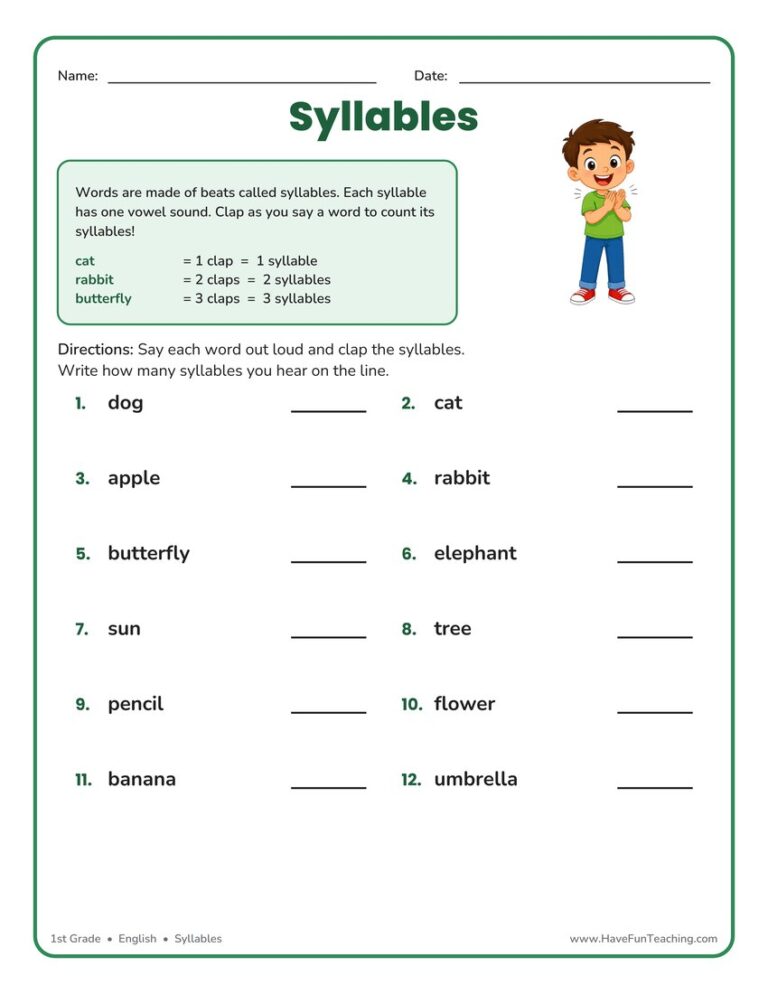
A clap-and-count syllables worksheet that helps first graders hear and count the beats in everyday words. Includes a complete answer key — perfect for quick, no-prep phonological awareness practice.
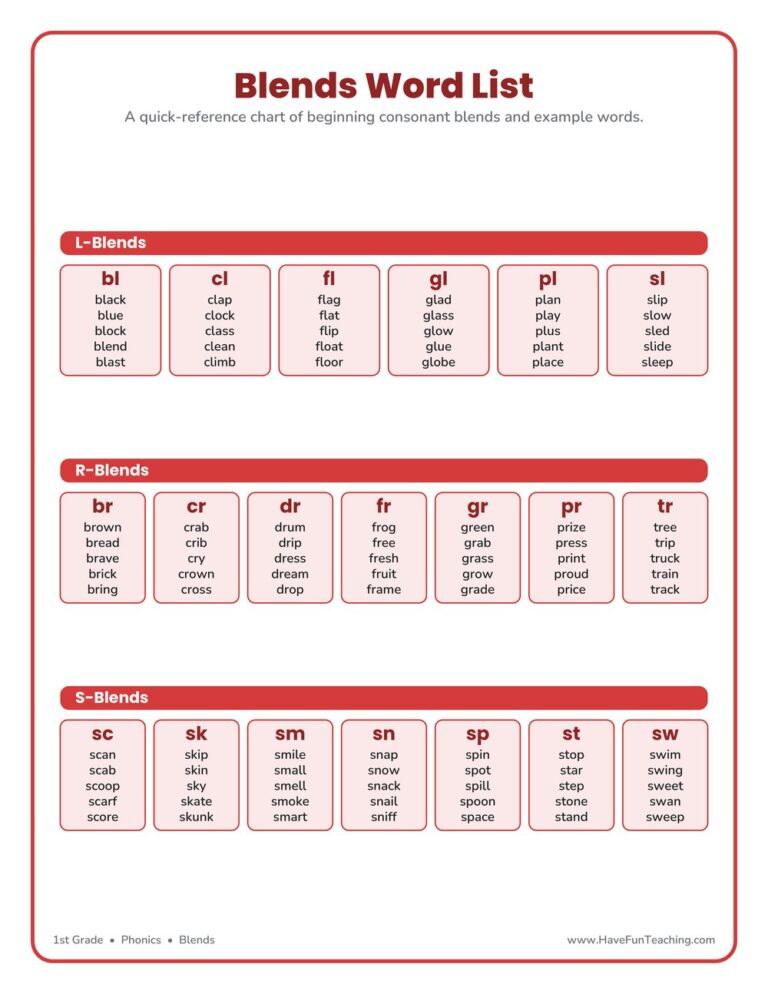
This Blends Word List is a single-page phonics reference chart grouping L-blends, R-blends, and S-blends with example words for each. A clean, no-prep tool that helps 1st graders read and build blend words with confidence.
Reviews
There are no reviews yet