
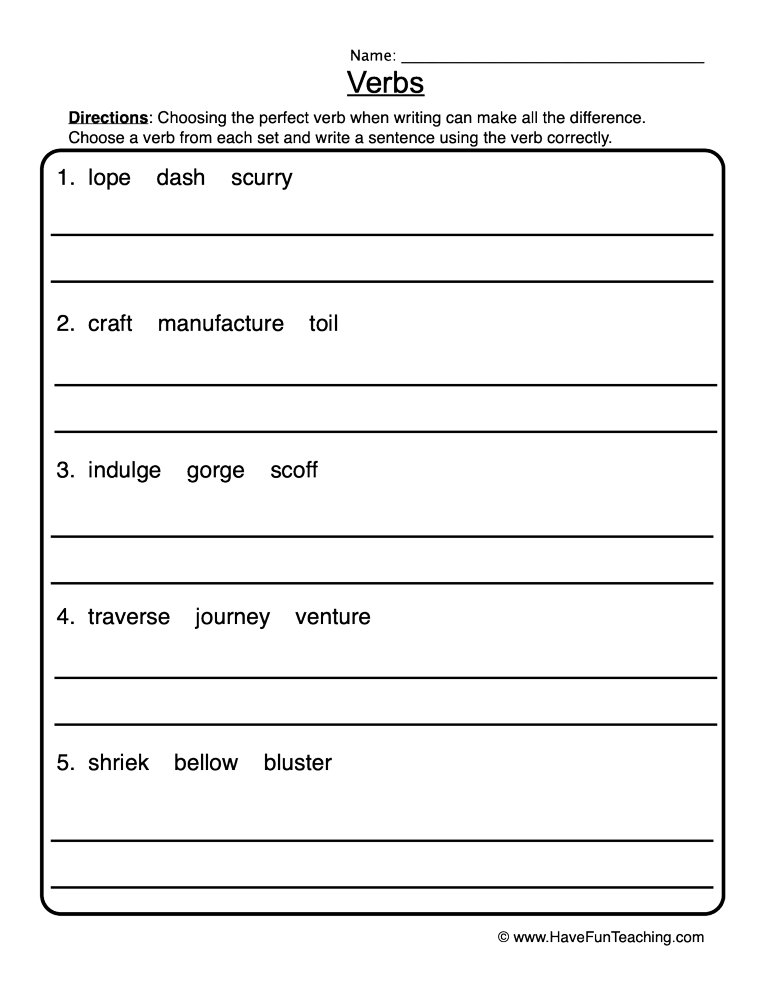
Writing with Verbs Worksheet
This writing with verbs worksheet asks 3rd Grade students to choose the verb that finishes each sentence and trade four tired verbs for stronger ones, with an answer key that makes checking quick.
$6.97
Or free with a membership — members pay $3.33/mo for all 10,000+ resources. See plans
Want this one free?
Tell us where to send it and it’s yours — no card, no catch.
One free resource per teacher. We’ll also send free teaching ideas each week — unsubscribe anytime.
Teaching is easier with a membership
Unlimited printables, games & videos for PreK–6th — for your classroom or homeschool. Cancel anytime.
Start your 3-day free trial$0 today · cancel anytime · Instant access to 10,000+ resources
About this resource
Description
Verbs carry the action of a sentence, and the verb a writer picks decides how much a reader actually sees. Walked and stomped describe the same trip down the hall, but only one of them shows the mood. This writing with verbs worksheet gives third graders eight chances to make that choice on purpose. In the first half, three close verbs sit above each sentence and students write the one the sentence really needs — the clue is always in the words around the blank, so strolled, raced and limped cannot all be right for a child who is late for the bus.
The second half turns the same skill around. Four short sentences are printed with a tired, ordinary verb underlined, and a word box holds four stronger verbs. Students read the sentence, decide what is really happening in it, and write the better verb on the line below. Because the box on this writing with verbs worksheet holds exactly four words for four sentences, every choice has to be earned by the sentence rather than guessed, and the box words never sit in the same order as the answers.
What’s Included
- 1 print-ready PDF worksheet
- Answer key
- 4 choose-the-best-verb sentences and 4 replace-the-tired-verb sentences with a word box
Three things make this 3rd grade parts of speech worksheet worth the fifteen minutes it takes. First, students write the verb instead of circling it, so the word goes through their hand and not just their eye. Second, every blank on the page is the same length, so nothing in the layout hints at which answer is long or short. Third, the two halves ask for opposite moves — choose the exact verb, then upgrade a dull one — which is the same pair of decisions a writing rubric asks a student to make in their own paragraphs.
Ways to Use It
- Read each set of three verbs aloud and ask what each one makes you picture.
- Have students explain why the two verbs they did not choose do not fit.
- Use the word box half as an exit ticket after a lesson on strong writing.
- Ask students to rewrite one sentence from their own journal with a stronger verb.
Related Resources
What teachers say
Reviews
You must be logged in to post a review.
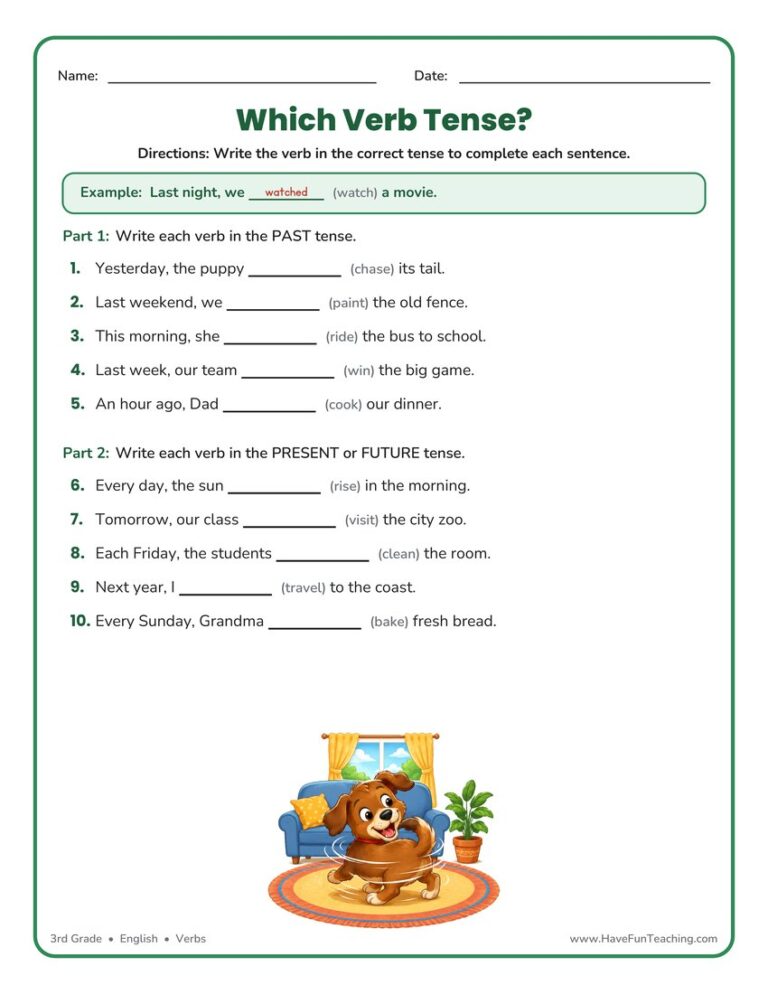
This Verb Tenses Fill in the Blank Worksheet helps 3rd graders choose the correct past, present, or future verb form using clear time clues. Answer key included—a quick, no-prep grammar practice for home or class.
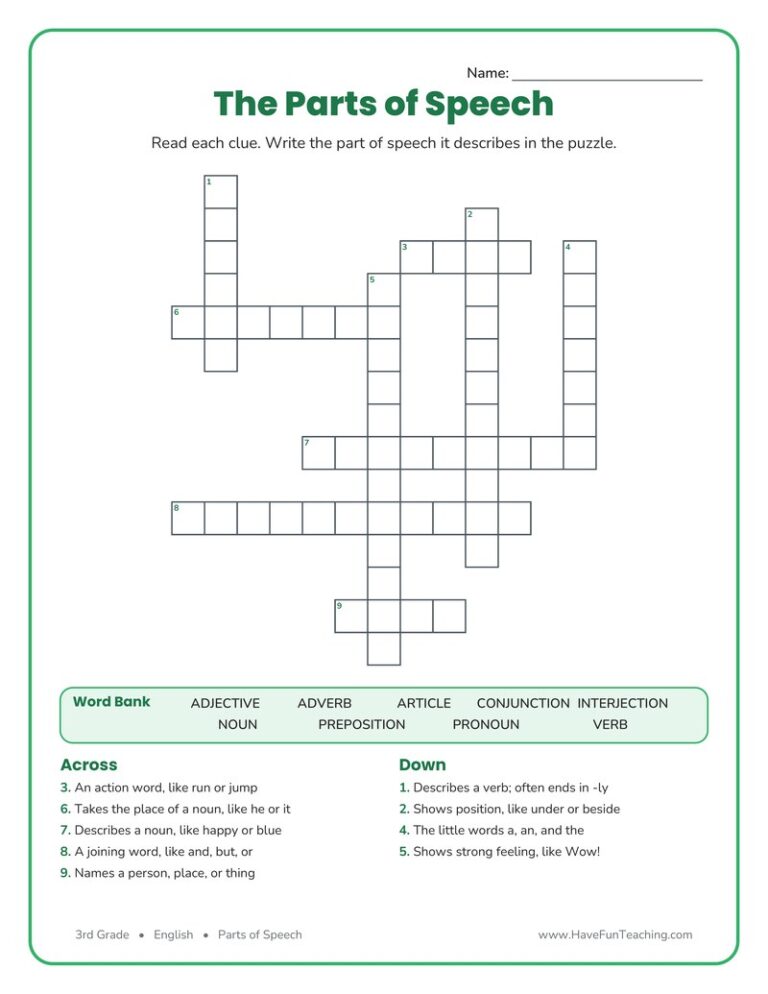
This Parts of Speech Crossword Puzzle has 3rd grade students match grammar clues to nouns, verbs, adjectives, and more, then fill in the grid. Includes an answer key and a helpful word bank for no-prep practice.
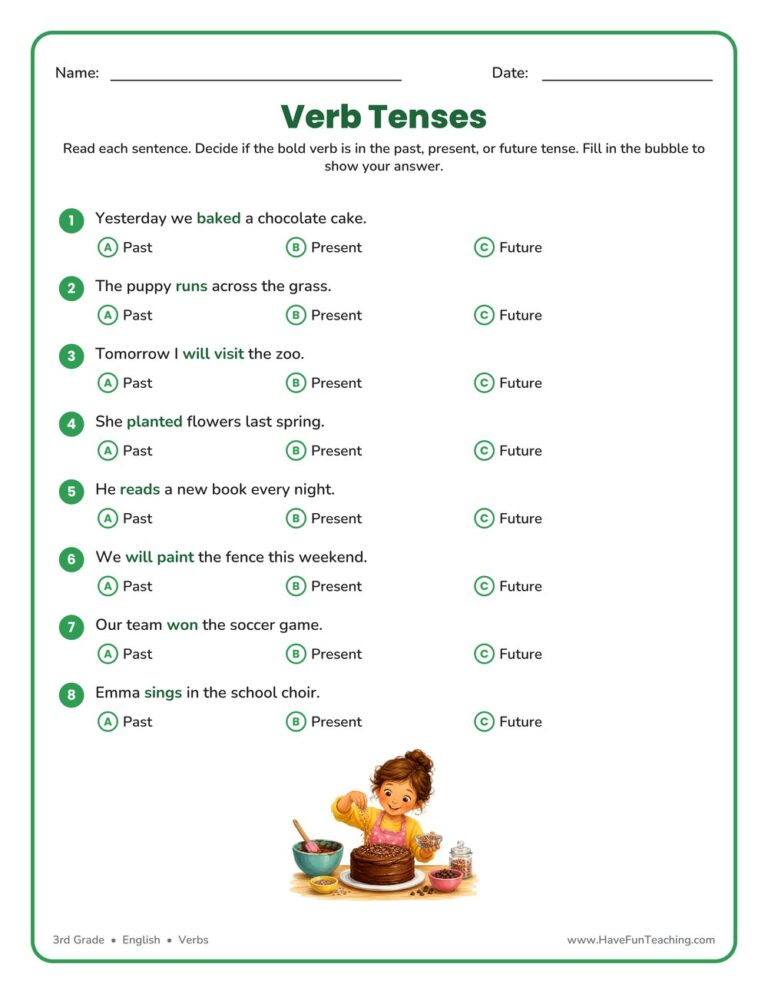
This Identifying Verb Tenses Worksheet gives 3rd graders eight bold-verb sentences to sort into past, present, or future tense. Includes a complete answer key—perfect for quick, no-prep grammar practice at home or in class.

This prepositions worksheet gives 3rd graders a word bank and eight sentences to complete with the correct preposition. Includes an answer key — perfect for no-prep grammar practice at school or home.

A subordinating conjunctions worksheet for 3rd Grade: students complete sentences from a word box, combine sentence pairs, and write one of their own. Answer key included, so complex-sentence practice takes no prep.

This Vivid Verbs Worksheet gives 3rd grade writers three ways to trade plain action words for precise ones, from a word box to rewriting their own sentences. Answer key included, so word choice practice takes no prep.

This Conjugating Verbs Worksheet gives 3rd graders present-simple practice with verb conjugation charts and fill-in sentences. A complete answer key is included for fast, no-prep grammar review at home or in class.
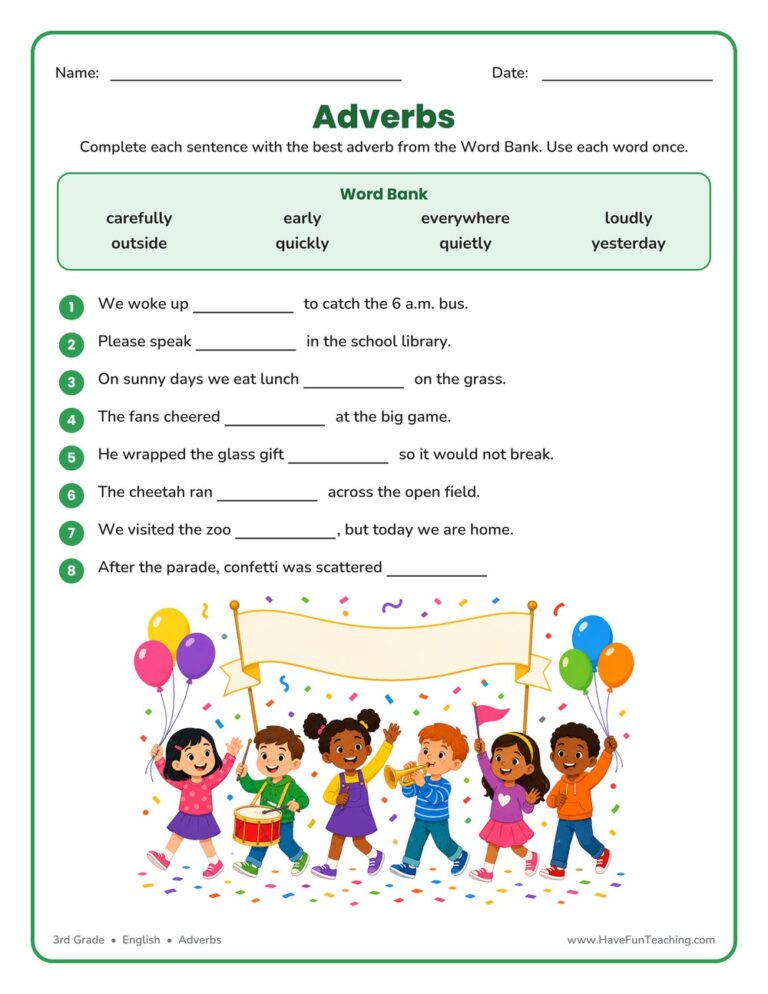
This Adverb Fill in the Blanks Worksheet gives 3rd graders a word bank and eight sentences to complete with the best adverb. Answer key included, perfect for no-prep grammar practice at home or school.

Practice with this comparative and superlative adjectives worksheet: 3rd graders complete a chart, choose the right form in five sentences, and write two of their own. Answer key included for fast, no-prep grammar review.
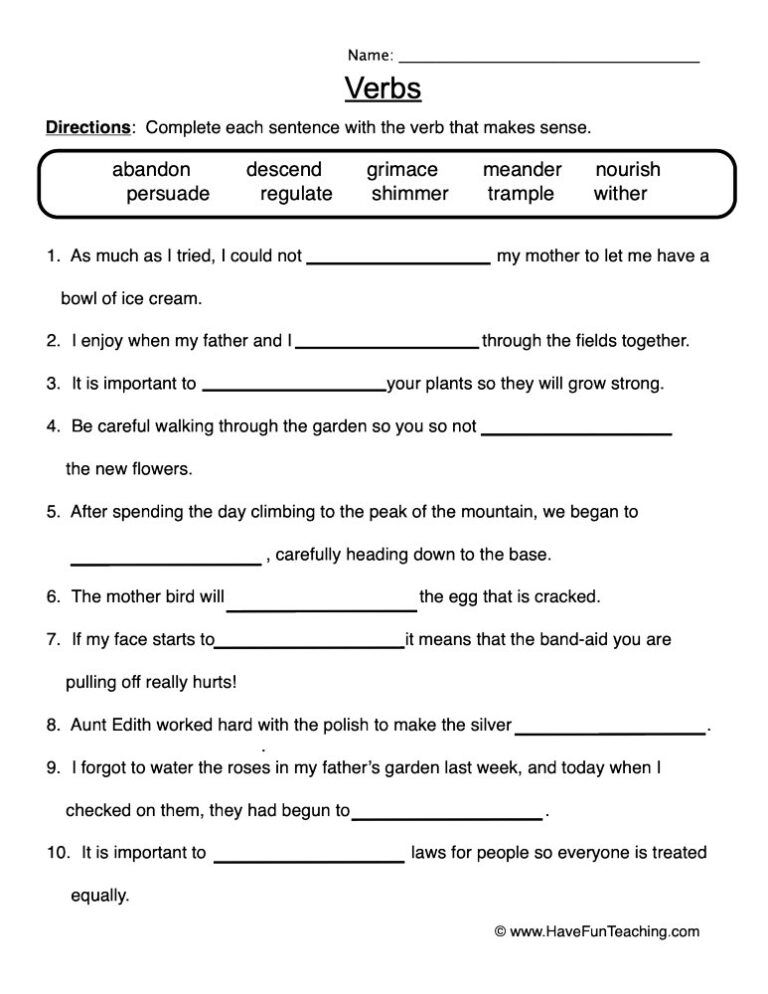
A verbs fill in the blanks worksheet for 3rd grade, with a five-verb word bank, past tense practice, and a write-your-own-sentence task. Answer key included, so grammar practice takes no prep at all.
Using the Noun Song (Lyric Music Video), students will be able to define, give examples and use adjectives in their own writing using the catchy and memorable lyrics.
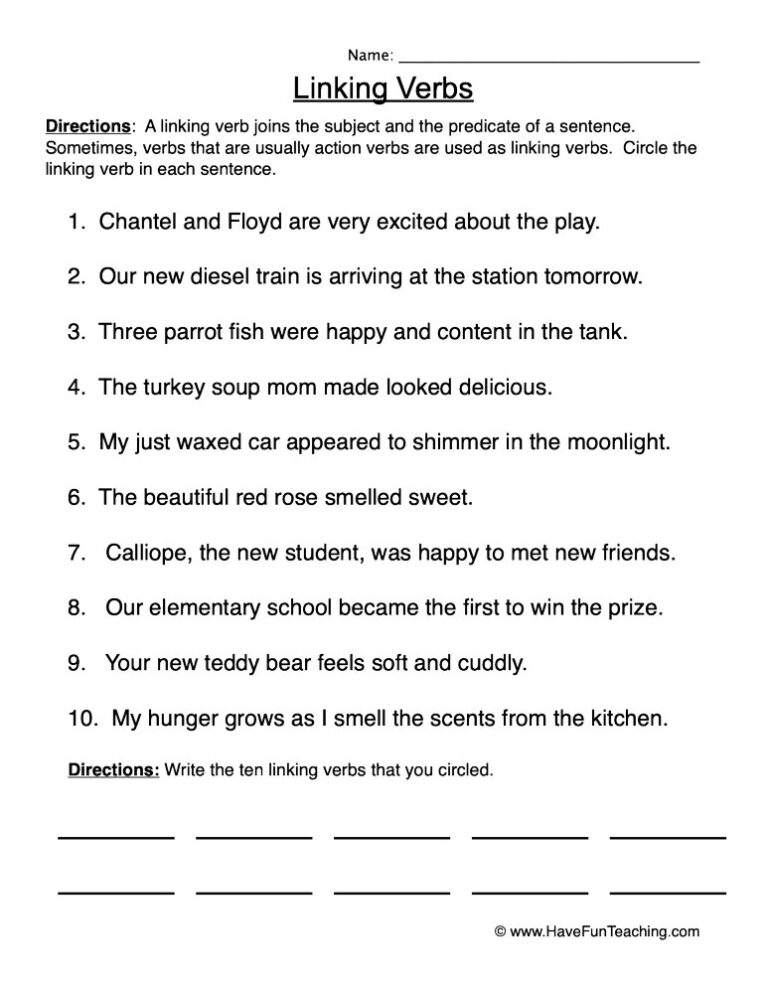
This Locating Linking Verbs Worksheet gives 3rd graders eleven sentences to sort out plus a write-and-explain task. A full answer key is included, so grammar practice stays quick to assign and easy to check.

Reviews
There are no reviews yet