Skip to content
Start My 3 Free Days $0 today · cancel anytime

4th Grade Sequencing Resources (Reading)

6 4th grade sequencing resources: 3 activities, 2 worksheets, 1 song and more. How teachers use these

4th Grade Sequencing Resources (Reading)

6 4th grade sequencing resources: 3 activities, 2 worksheets, 1 song and more. How teachers use these

Activity
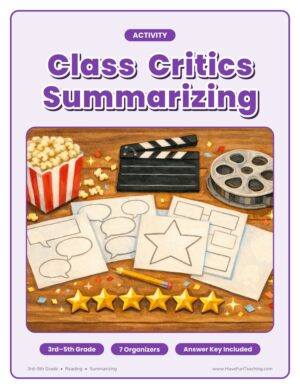
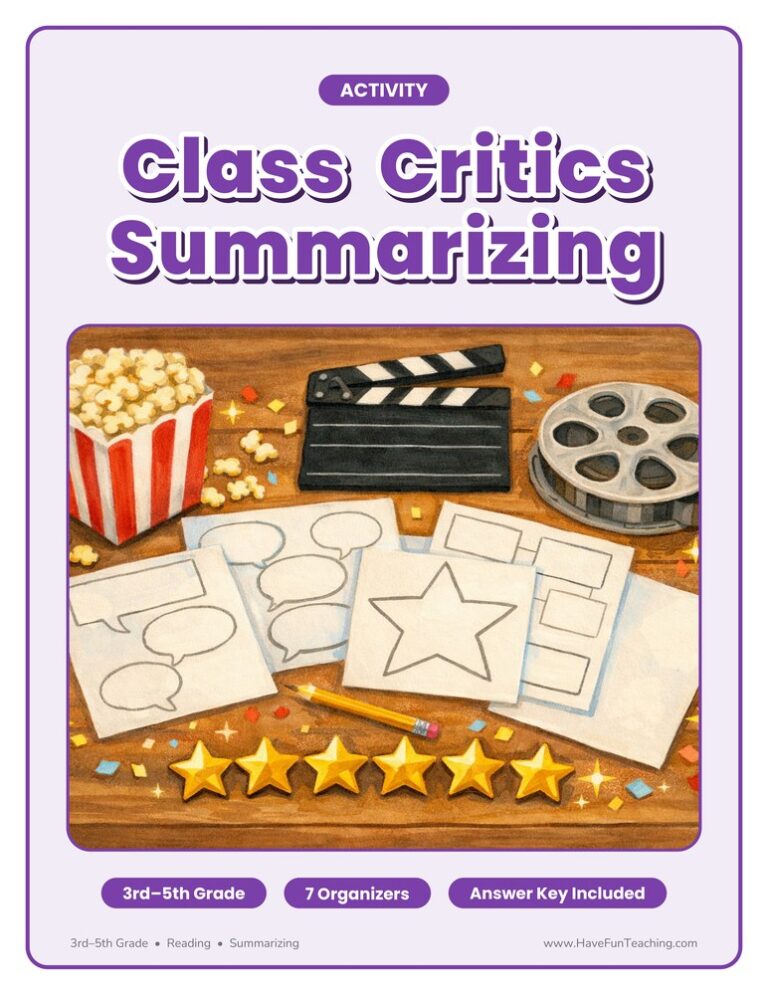
Activity4th GradeClass Critics Summarizing Activity

This class critics summarizing activity gives 3rd to 5th grade students seven organizers to summarize books, videos, and articles. Answer key included for the model and practice.

Worksheet
Worksheet4th GradeFirst Next Last Graphic Organizer Worksheet

This First Next Last Graphic Organizer Worksheet gives 4th Grade readers one page to map the order of events in any book, from the opening through four middle events to the ending.

Worksheet
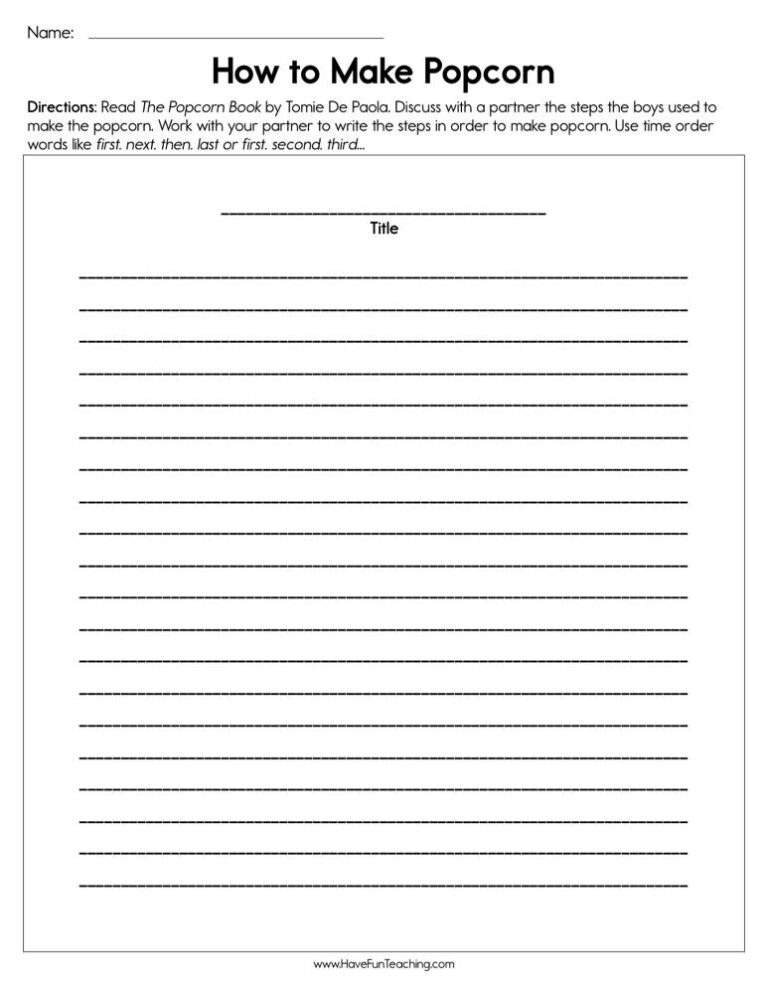
Worksheet4th GradeHow to Make Popcorn Worksheet

Using How to Make Popcorn Worksheet, studentsreadThe Popcorn Book by Tomie De Paola and write the steps to make popcorn.

Activity
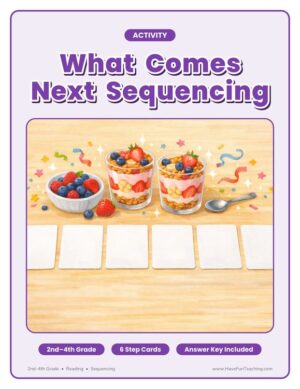
Activity4th GradeWhat Comes Next Sequencing Activity

This what comes next sequencing activity has 2nd to 4th grade students read a how-to recipe, put six step cards in order and retell each step. Answer key included.

Activity
Activity4th GradeDigging for Information Text Structure Activity

Using Digging for Information Text Structure Activity, students describe the relationship between events, scientific concepts, or procedures in a text.

From our teachers' playbook

First, next, then… what happened?

What do 4th graders learn about sequencing?

Fourth graders learn to put the events of a story or the steps of a process in the right order and explain how they connect. They use signal words like first, next, then, after that, finally and notice when an author uses a flashback or jumps ahead. In nonfiction, they spot chronological and step-by-step text structures, like a recipe or a history timeline. Sequencing also powers summarizing, because a good summary retells the key events in order. The click comes when kids see that changing the order of events can change the whole meaning of a story.

Our favorite ways to teach sequencing

Sequencing is about seeing the shape of a text. These moves help fourth graders track order and explain why it matters.

Map it first, next, last

While reading, kids jot key events into a first, next, last organizer. Then they cover the organizer and retell the story from memory. If the retell gets jumbled, the organizer shows exactly where.

Why it works: kids understand an idea best when they touch it, then draw it, then write it, the order the U.S. Department of Education recommends for elementary math.

First Next Last Graphic Organizer WorksheetTry it withFirst Next Last Graphic Organizer WorksheetWorksheetsOpen it →

Follow the recipe

Read a how-to text out loud and model how the signal words guide you. Then ask, "What happens if we skip step two?" Procedures make order feel important because getting it wrong has a funny result.

Why it works: showing first, practicing together, then letting kids try alone is the "gradual release" model teachers have relied on for decades (Pearson and Gallagher, 1983).

How to Make Popcorn WorksheetTry it withHow to Make Popcorn WorksheetWorksheetsOpen it →

What comes next?

Hand out event cards from a story in a mixed-up pile. Groups put them in order, then predict what comes next. Arguing over the order sends kids back into the text for proof.

Why it works: in a well-known study, a few short sessions of a simple number board game measurably boosted young children's number skills (Ramani and Siegler, 2008).

What Comes Next Sequencing ActivityTry it withWhat Comes Next Sequencing ActivityActivitiesOpen it →

Questions parents and teachers ask

What is sequencing in 4th grade reading?

Sequencing is putting events or steps in the order they happen. Fourth graders use it to understand stories, follow instructions and write summaries.

What are sequencing signal words?

Common signal words are first, next, then, after that, before, during and finally. They tell readers when something happened compared to other events.

How is sequencing different from summarizing?

Sequencing lists events in order. Summarizing picks only the most important events and retells them briefly, which means a good summary depends on knowing the sequence first.

How can I practice sequencing at home?

Ask your child to tell you how they made a sandwich or what happened at recess, using first, next and finally. After a show or book, ask for the three biggest events in order.