Skip to content
Start My 3 Free Days $0 today · cancel anytime

4th Grade Human Body Worksheets

10 4th grade human body worksheets. Teacher favorites: Label Skeletal System Worksheet and Muscular System Research Worksheet. How teachers use these

Find the perfect resource in seconds

4th Grade Human Body Worksheets

10 4th grade human body worksheets. Teacher favorites: Label Skeletal System Worksheet and Muscular System Research Worksheet. How teachers use these

Worksheet
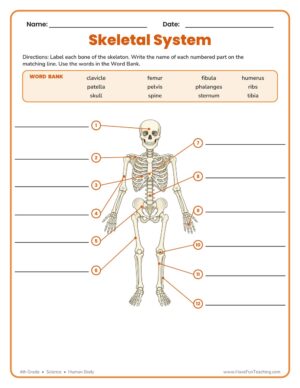
Worksheet4th GradeLabel Skeletal System Worksheet

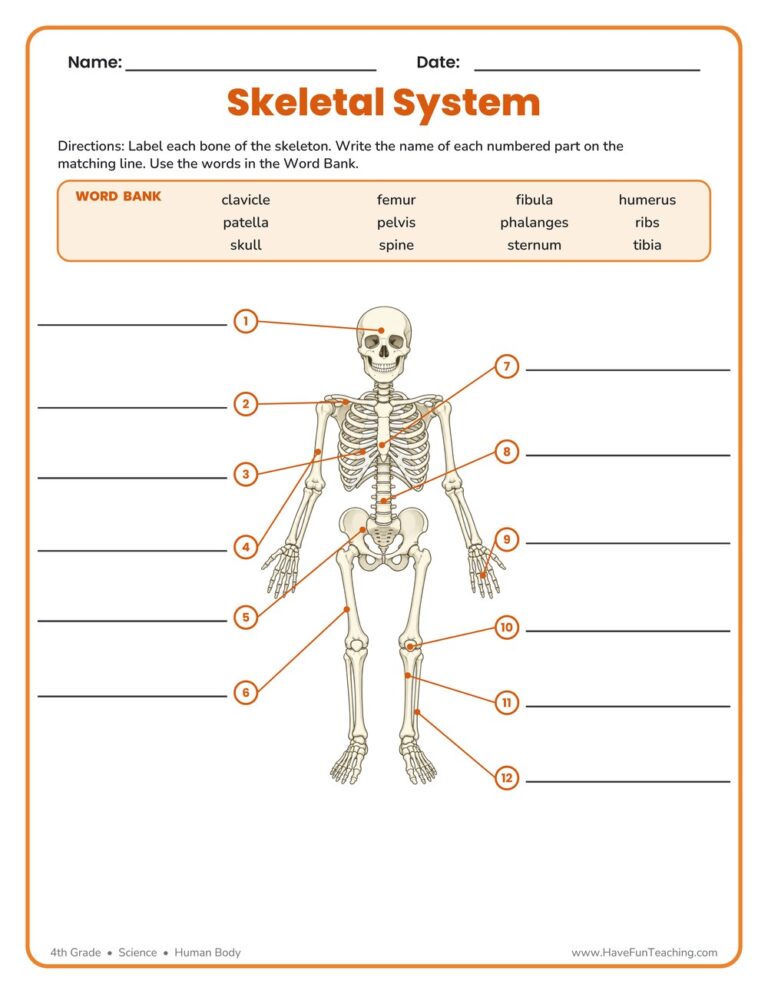
This Label Skeletal System Worksheet lets 4th grade students identify and name twelve major bones on a clear skeleton diagram using a word bank. An answer key is included for quick, no-prep human body practice.

Worksheet
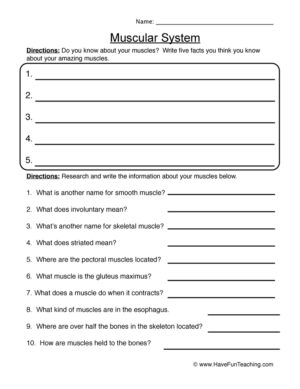
Worksheet4th GradeMuscular System Research Worksheet

This Muscular System Research Worksheet has 4th graders name the three muscle types, sort voluntary and involuntary actions, and explain their thinking. Answer key included, so checking work takes seconds.

Worksheet
Worksheet4th GradeSkeletal System Research Worksheet

This skeletal system research worksheet asks 4th grade students to pair six bones with what each one does, then answer three research questions about the human skeleton. An answer key is included.

Worksheet
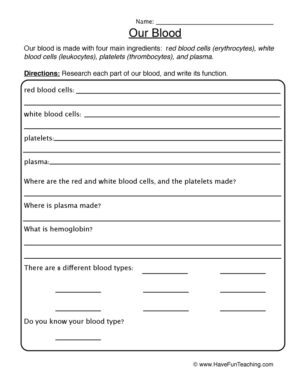
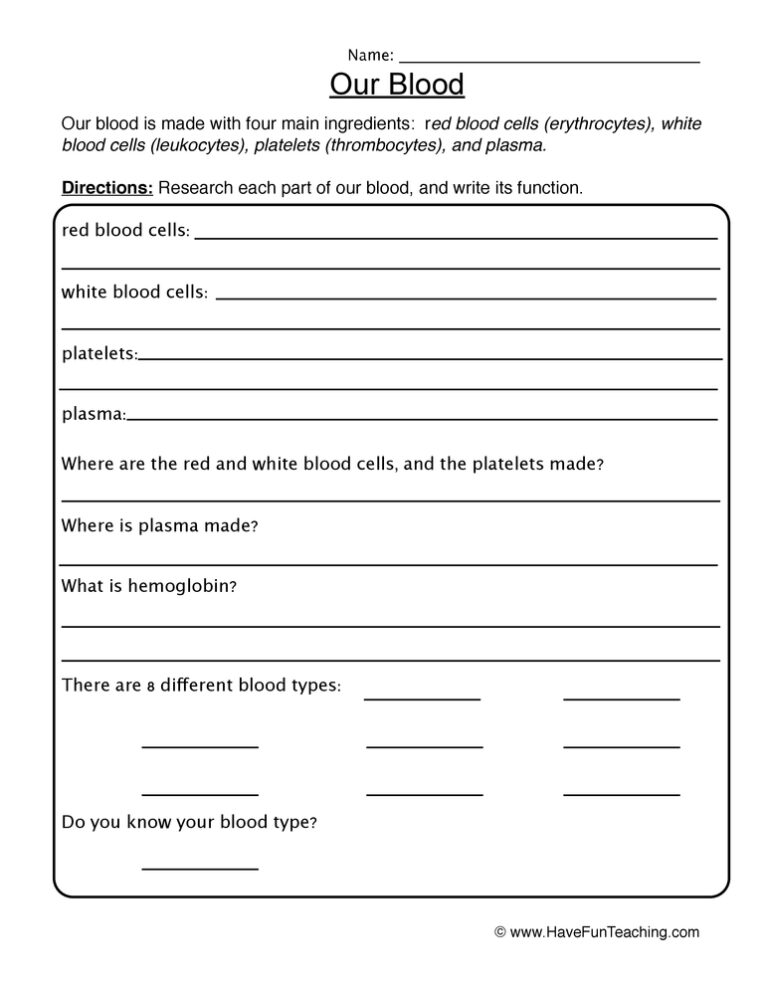
Worksheet4th GradeBlood Worksheet

A Blood Worksheet that walks 4th graders through red blood cells, white blood cells, platelets, and plasma with matching, bubble questions, and a written response. Answer key included for fast, no-prep science practice.

Worksheet
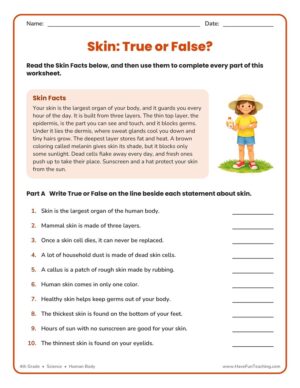
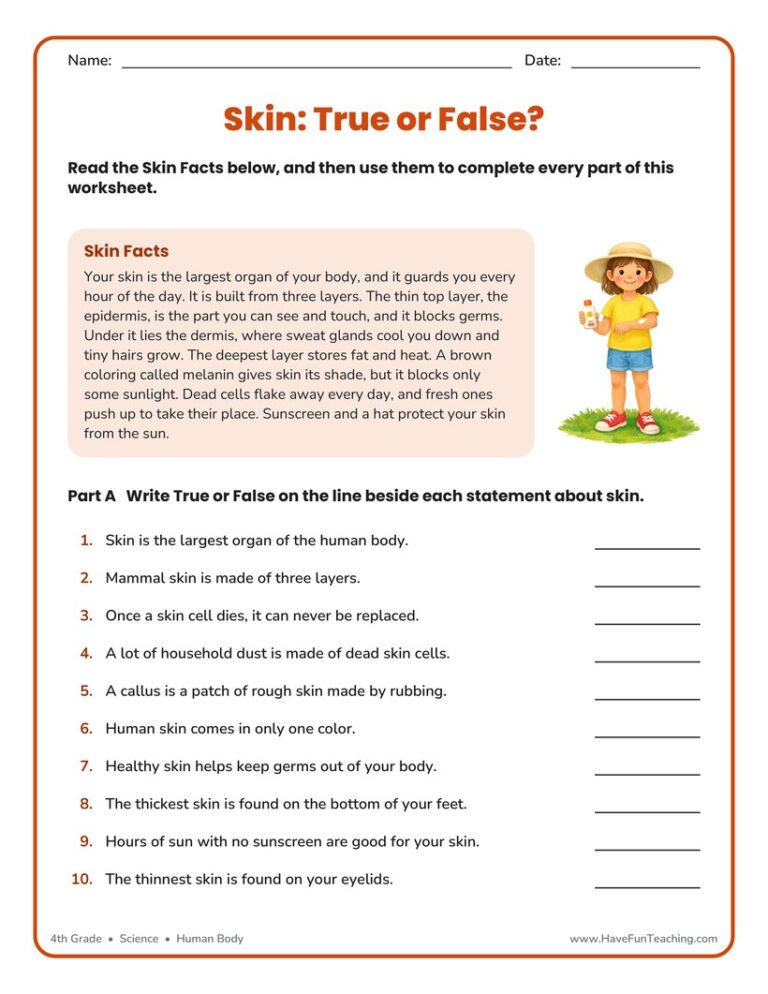
Worksheet4th GradeSkin True or False Worksheet

This Skin True or False Worksheet asks 4th grade students to judge ten skin facts, name the layers of the skin, and explain their thinking in writing. Answer key included, so science review takes minutes.

Worksheet
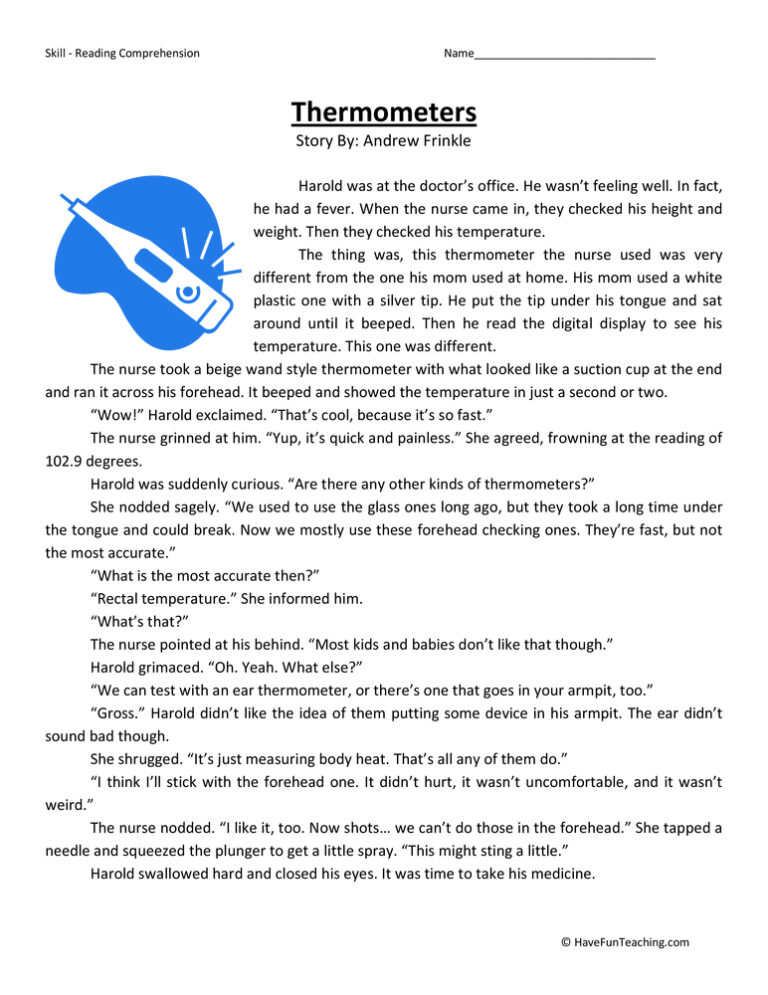
Worksheet4th GradeThermometers Reading Comprehension Worksheet

Thermometers Reading Comprehension Worksheet gives 4th grade students a two page non-fiction passage about how thermometers measure heat, four multiple choice questions and a written response. An answer key is included.

Worksheet
Worksheet4th GradePopcorn Five Senses Worksheet

This Popcorn Five Senses Worksheet asks 4th graders to chart each sense organ and the information it detects, then name the sense behind three popcorn-day clues. Answer key included for fast, no-prep science practice.

Worksheet
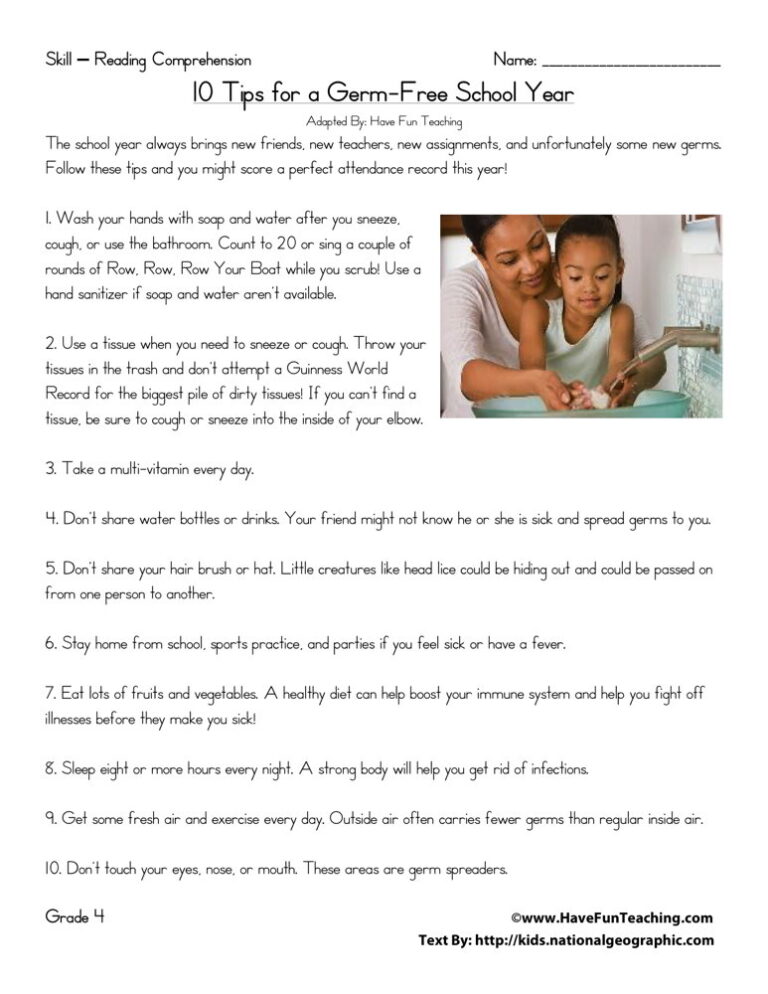
Worksheet4th Grade10 Tips for a Germ Free School Year Reading Comprehension Worksheet

This 10 Tips for a Germ Free School Year Reading Comprehension Worksheet gives 4th graders a two-page non-fiction passage on healthy habits, four multiple-choice questions, and a written response. Answer key included.

Worksheet
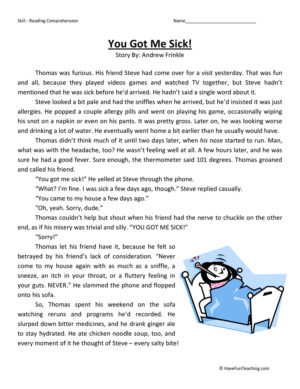
Worksheet4th GradeYou Got Me Sick Reading Comprehension Worksheet

The You Got Me Sick Reading Comprehension Worksheet gives 4th grade students a two page non-fiction passage on how a cold travels, four multiple choice questions and a written response. An answer key is included.

Worksheet
Worksheet4th GradeMuscular System Writing Worksheet

Using this Muscular System Writing Worksheet, students read and then write about each part of the muscular system and explain its function in our body.

From our teachers' playbook

Bones, muscles and the systems inside you

What do 4th graders learn about the human body?

Fourth graders learn that the body is made of systems that work together. They study the skeletal system (bones that support and protect), the muscular system (muscles that pull bones to move), plus skin, blood and the senses. They learn how structure fits function: the skull protects the brain and joints let us bend. They also connect the body to health, like how germs spread and how to stay well. The click moment is when kids feel their own muscles tighten and realize muscles can only pull, never push.

Our favorite ways to teach the human body

Kids are fascinated by what's inside them. These moves turn that curiosity into real science.

Label it, then find it on you

After labeling a skeleton diagram, kids find each bone on their own body: tap your skull, your ribs, your femur. Connecting the picture to themselves turns a vocabulary list into something they'll remember.

Why it works: children learn more from words and pictures together than from words alone (Mayer, 2009).
Label Skeletal System WorksheetTry it withLabel Skeletal System WorksheetWorksheetsOpen it →
Research one system

Give partners a body system to research and report: what it does, two important parts and one cool fact. Kids teach each other in a quick gallery walk. Explaining it to classmates builds deeper understanding than reading alone.

Why it works: kids understand an idea best when they touch it, then draw it, then write it, the order the U.S. Department of Education recommends for elementary math.

Muscular System Research WorksheetTry it withMuscular System Research WorksheetWorksheetsOpen it →

True or false warm-ups

Open class with five true-or-false statements, like "Skin is an organ." Kids vote, then defend their answer. Quick quizzes surface misconceptions early and kids love debating the tricky ones.

Why it works: pulling an answer out of memory makes it stick far better than rereading it, one of the strongest findings in learning research (Dunlosky and colleagues, 2013).

Skin True or False WorksheetTry it withSkin True or False WorksheetWorksheetsOpen it →

Human body questions parents and teachers ask

What body systems do 4th graders learn?

Many fourth grade classes study the skeletal and muscular systems in depth, along with skin, blood and the senses. Some also introduce the nervous, digestive and circulatory systems.

How do muscles and bones work together?

Muscles are attached to bones by tendons. When a muscle contracts, it pulls on the bone and moves it at a joint. Muscles work in pairs because they can only pull, never push.

How many bones are in the human body?

An adult has 206 bones. Babies are born with more, around 270, but many fuse together as they grow.

How can I teach the human body at home?

Use your own bodies! Feel your pulse, find bones you can feel, and watch your arm muscle change as you lift something. Short videos and a labeled skeleton poster help too.