
Skip to content
Start My 3 Free Days $0 today · cancel anytime

4th Grade Scientific Method Resources

6 4th grade scientific method resources: 3 worksheets, 2 songs, 2 videos and more. How teachers use these

4th Grade Scientific Method Resources

6 4th grade scientific method resources: 3 worksheets, 2 songs, 2 videos and more. How teachers use these

Worksheet
Worksheet4th GradeScientific Method Worksheet

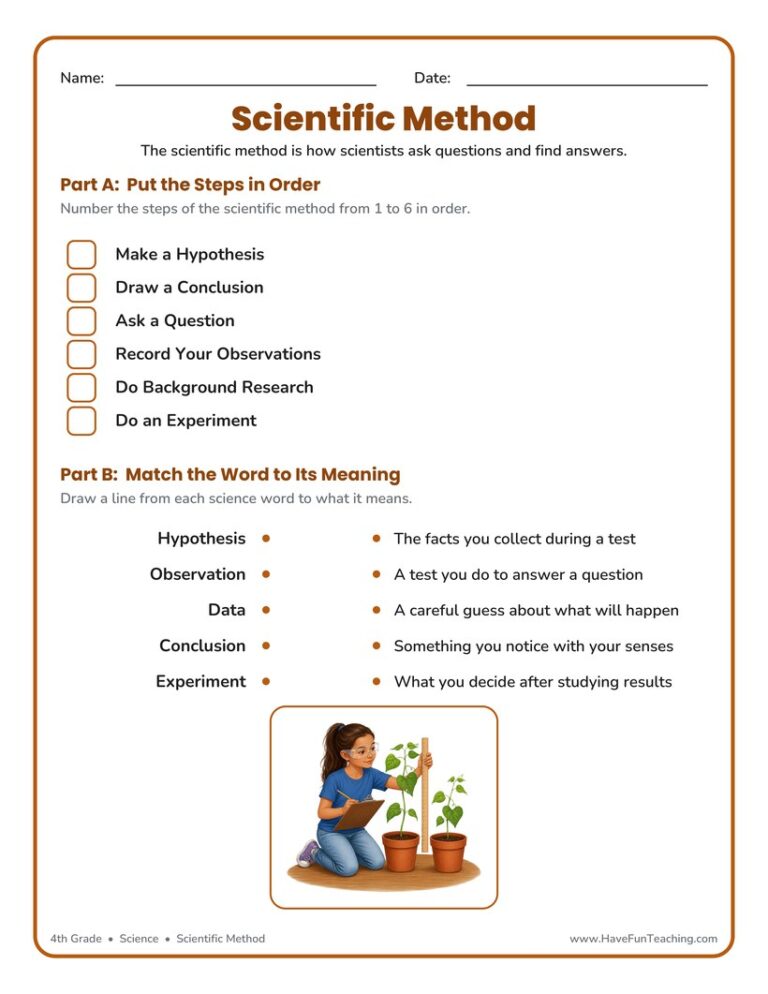
This Scientific Method Worksheet helps 4th graders order the six steps of an investigation, match key science words, and analyze a real bean-plant experiment. Answer key included — a no-prep way to build real science-thinking skills.

Video
Video4th GradeScientific Method Song (Animated Music Video)

While listening the Scientific Method Song (Animated Music Video), students learn about seven steps of the scientific method while listening to a catchy song.

Worksheet
Worksheet4th GradeScientific Observation Worksheet

This scientific observation worksheet gives 4th graders practice sorting observations from inferences, recording what they notice, and judging a science note. Answer key included for quick, no-prep science practice.

Worksheet
Worksheet4th GradeScientist Matching Worksheet

This scientist matching worksheet has 4th grade students pair six famous scientists with the work they are known for, then explain one discovery. Answer key included.

Video
Video4th GradeScientific Method Song (MP3)

While listening the Scientific Method Song (MP3), students learn about seven steps of the scientific method while listening to a catchy song.

Activity
Activity4th GradeHow Much Will It Absorb Diaper STEAM Activity

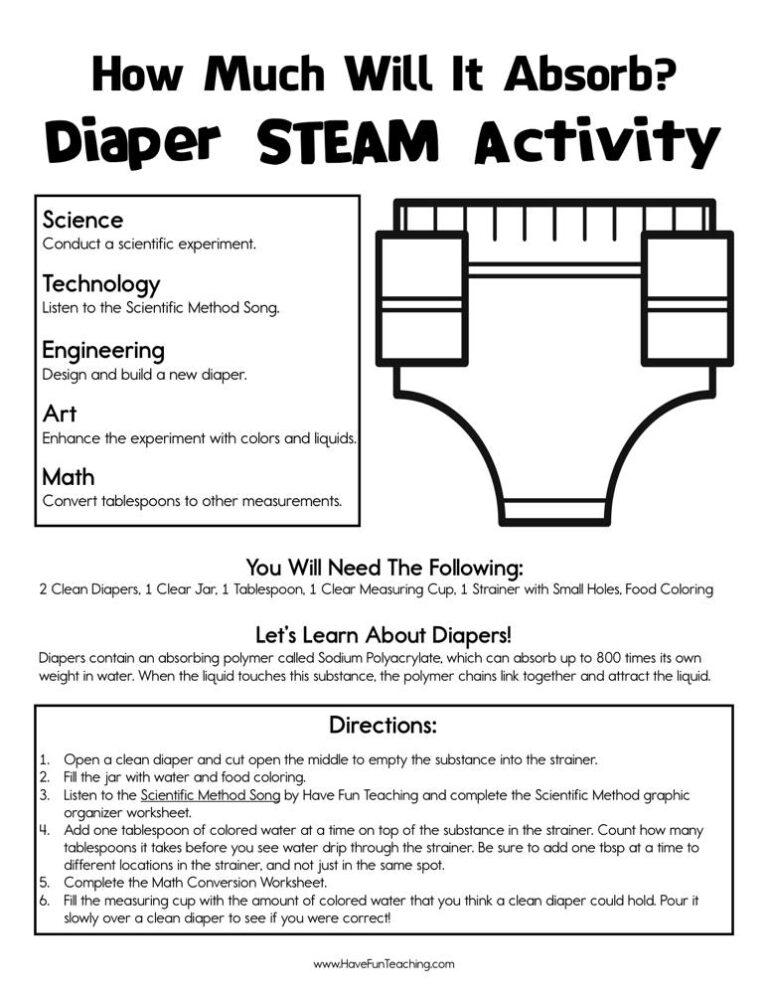
Run the How Much Will It Absorb Diaper STEAM Activity as a real lab for 4th to 6th grade: test diaper gel, convert capacity units, and design a diaper, with an answer key included.

From our teachers' playbook

Ask it, test it, prove it!

What do 4th graders learn about the scientific method?

Fourth graders move from "doing a fun experiment" to running a real investigation. They learn the steps: ask a question, make a hypothesis, test it, record data and draw a conclusion. The big new idea is a fair test: change only one thing and keep everything else the same. If you want to know which paper towel soaks up the most water, every towel gets the same amount of water and the same amount of time. The click comes when a student's hypothesis turns out wrong and they realize that is not failing, that is learning something real.

How we teach the scientific method

Kids learn science by doing science. These three moves take students from memorizing steps to actually using them.

Run a real fair test

Give small groups a simple question, like "Which material absorbs the most water?" and have them plan the test before they touch anything. Make them name the one thing they will change and list everything they will keep the same. The planning conversation is where the learning happens.

Why it works: going from real objects to pictures to symbols is a core recommendation of the U.S. Department of Education's elementary math guide.

How Much Will It Absorb Diaper STEAM ActivityTry it withHow Much Will It Absorb Diaper STEAM ActivityActivitiesOpen it →

Sing the steps

The order of the steps is easy to mix up, so we put it to music. Play the song at the start of every lab for a week. Before long, kids are humming "question, hypothesis" while they fill in their lab sheets.

Why it works: words set to a repeating melody are easier to recall than the same words spoken (Wallace, 1994).

Scientific Method Song (Animated Music Video)Try it withScientific Method Song (Animated Music Video)SongsOpen it →

Think aloud first

Walk through one complete investigation on the board while you talk through your thinking. "My hypothesis is... I think this because..." Then students fill in the same steps on their own sheet with a new question. Seeing an expert reason first makes the steps feel doable.

Why it works: handing over the work step by step, from teacher to student, is one of the most widely used teaching frameworks (Pearson and Gallagher, 1983).

Scientific Method WorksheetTry it withScientific Method WorksheetWorksheetsOpen it →

Questions parents and teachers ask

What are the steps of the scientific method for 4th grade?

Ask a question, do some research, form a hypothesis, test it with an experiment, record and analyze the data, and draw a conclusion. Many classrooms add a final step: share your results.

What is a hypothesis in kid terms?

A hypothesis is a smart guess about what will happen, plus the reason why. A good one can be tested, like "I think the plant in the sun will grow taller because plants need light."

What is a fair test?

It is an experiment where you change only one thing, called the variable, and keep everything else the same. That way you know the change you made caused the result.

What are easy scientific method experiments at home?

Try which paper towel absorbs the most water, which ball bounces highest, or whether ice melts faster in salt water or fresh water. Have your child write a hypothesis before every test.

What if the experiment proves the hypothesis wrong?

That is a great result! Scientists learn just as much from a wrong hypothesis as a right one. Encourage kids to explain what surprised them and what they would test next.