3 days free
Ready for the whole library?
You’ve had your freebie — but members download 10,000+ resources for every grade, all year long. Try it free — $0 today, cancel anytime.
Free for teachers
Pick your grade. We’ll send 10 free resources.
Worksheets, activities and a video — picked for your classroom, ready to print tonight.
One free bundle per teacher. We’ll also send free teaching ideas each week — unsubscribe anytime.



This Grouping into Categories Worksheet asks kindergarten students to sort eight pictures into fruit, animals, plants, and shapes by writing each one's category number. Includes an answer key for fast, no-prep classification practice.

This Sorting Objects Worksheet has kindergarten students sort twelve pictures into animals, plants, vehicles, and people, then count each group. Includes an answer key — a no-prep way to build classification and early counting skills.
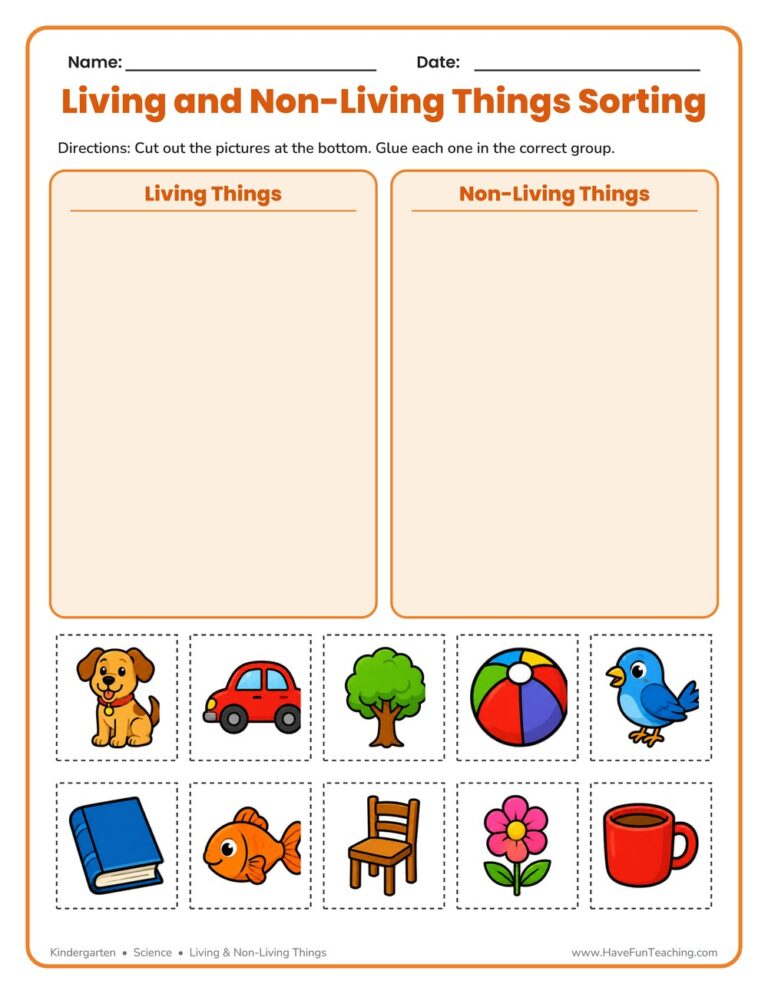
This Living Things and Non Living Things Sorting Worksheet has kindergarten students cut out ten pictures and sort them into living and non-living groups. Answer key included for quick, hands-on science practice.

This matching words that go together worksheet gives Kindergarten students five picture-and-word pairs to connect, building early classification and vocabulary skills. An answer key is included, so checking takes seconds.

This Classify Count and Sort By Color Worksheet asks Kindergarten students to sort six colorful pictures into green, red, and yellow boxes, then count each group. An answer key is included, so checking work takes seconds.
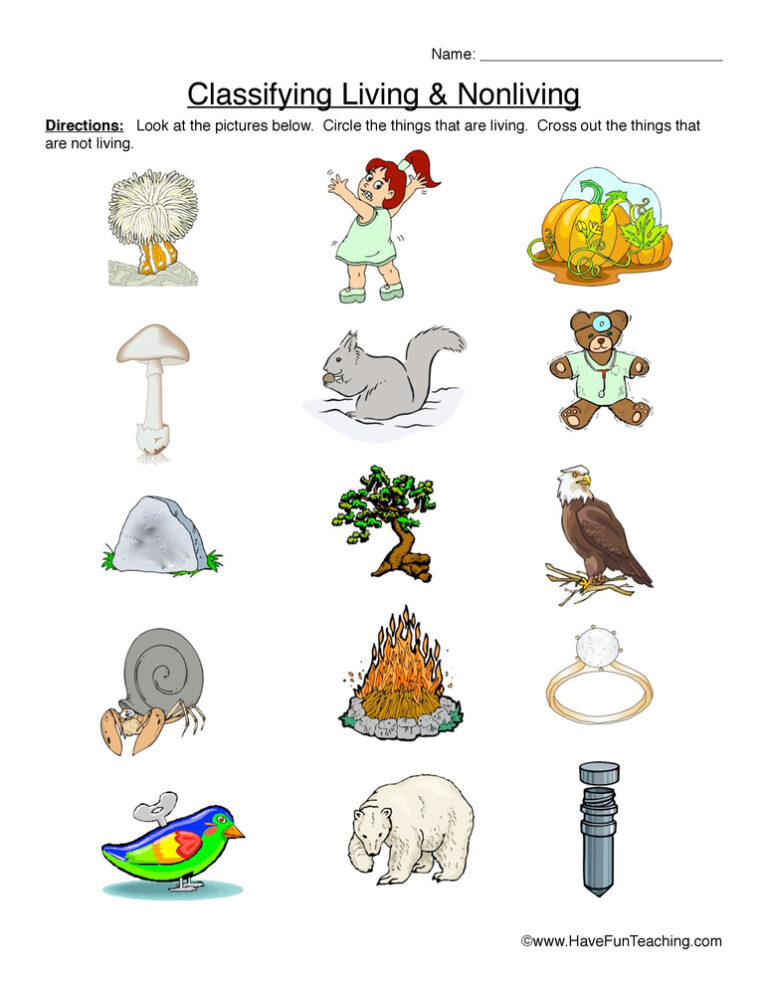
The Classifying Living and Nonliving Things Primary Version Worksheet asks Kindergarten students to sort six familiar pictures into living and nonliving groups. An answer key is included, so this hands-on science practice takes no prep at all.

This Sort Classify and Count Worksheet asks kindergartners to sort twelve mixed shapes, count each kind, and answer three questions about which has the most and fewest. Answer key included.
Using this Kitchen, Bedroom, or Garage Classifying Worksheet, students sort objects into three categories basedon where it is found in a house.