Skip to content
Start My 3 Free Days $0 today · cancel anytime

Letter Recognition Assessments

48 letter recognition assessments. Teacher favorites: Alphabet Letter Recognition Assessment and Alphabet Reading Comprehension Workbook. How teachers use these

Find the perfect resource in seconds

Letter Recognition Assessments

48 letter recognition assessments. Teacher favorites: Alphabet Letter Recognition Assessment and Alphabet Reading Comprehension Workbook. How teachers use these

Assessment
AssessmentKindergartenAlphabet Letter Recognition Assessment

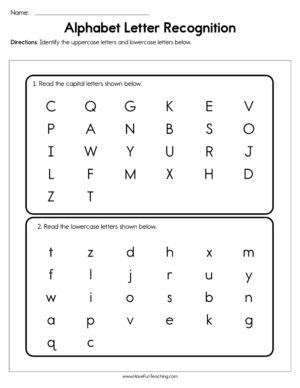
This alphabet letter recognition assessment helps kindergarten teachers quickly check which uppercase and lowercase letters a child can name. Includes a complete A-to-Z answer key for fast, low-prep progress checks.

Assessment
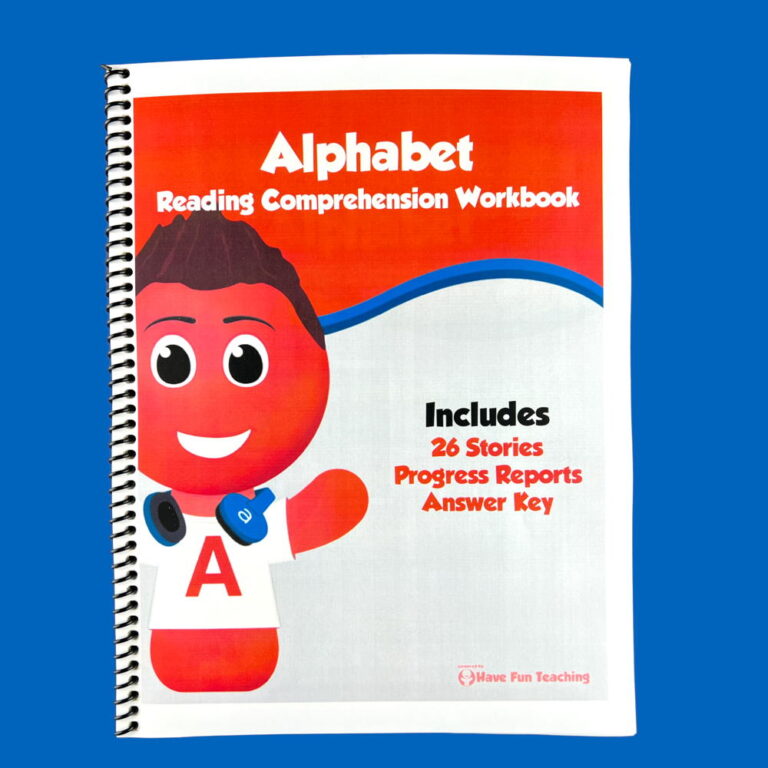
AssessmentPreschoolAlphabet Reading Comprehension Workbook

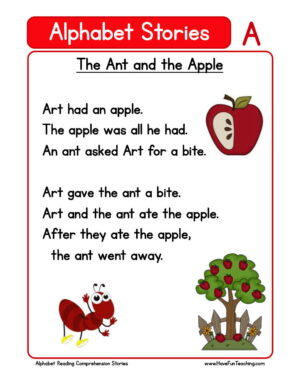
Use Alphabet Reading Comprehension Workbook to build student reading comprehension skills using the Alphabet Stories.

Assessment
Assessment1st GradeDavey and the Cheese Phonics Reading Comprehension Story Worksheet - Long Vowel E Sound

The Davey and the Cheese Phonics Reading Comprehension Story Worksheet - Long Vowel E Sound gives 1st graders a silly long E story and comprehension questions. An answer key is included for quick, no-prep phonics practice.

Assessment
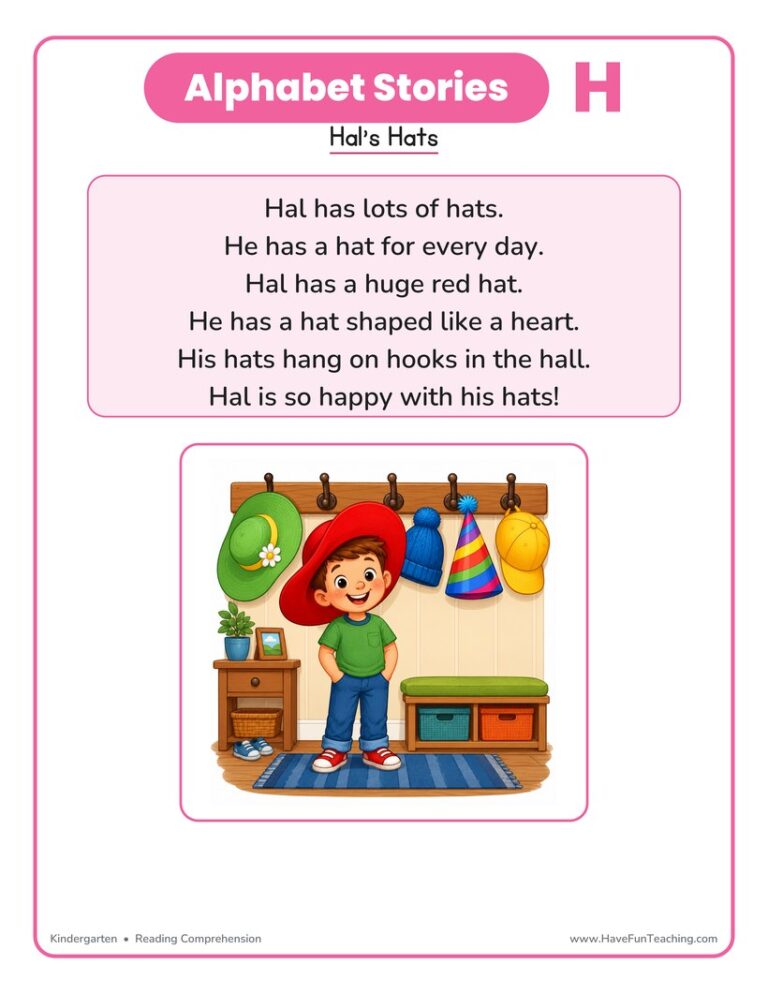
AssessmentKindergartenAlphabet Stories Letter H Reading Comprehension Worksheet

The Alphabet Stories Letter H Reading Comprehension Worksheet gives Kindergarten readers a playful “Hal’s Hats” story full of letter-H words plus five comprehension questions. Answer key included — a fun, no-prep way to build early reading and phonics skills.

Assessment
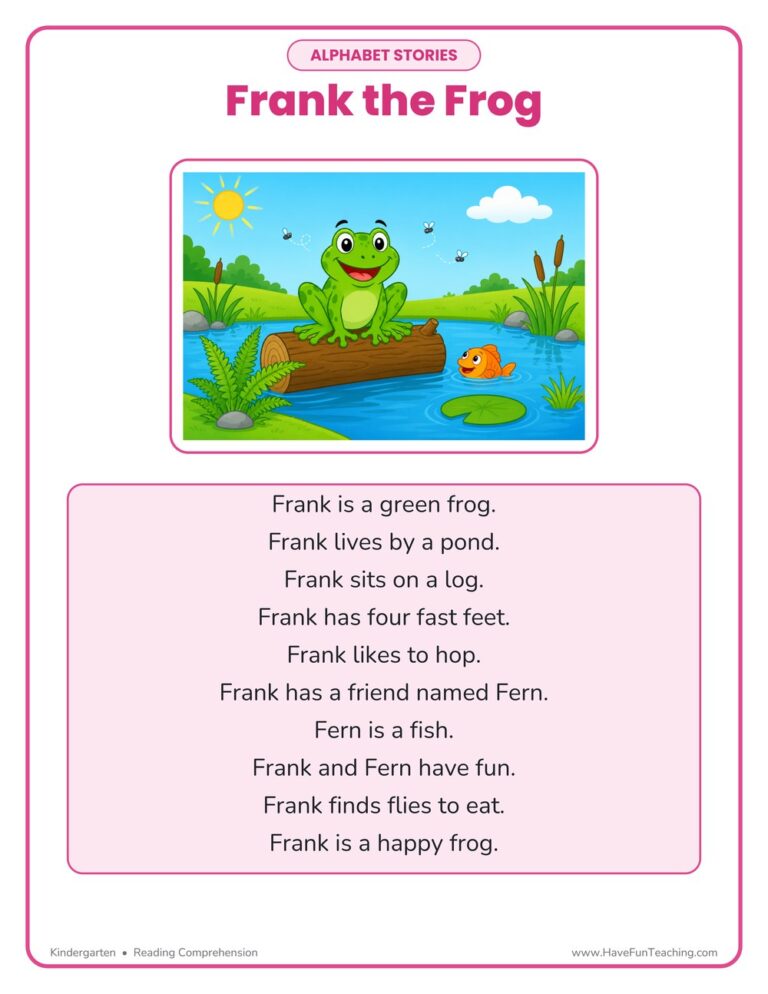
AssessmentKindergartenAlphabet Stories Letter F Reading Comprehension Worksheet

This Alphabet Stories Letter F Reading Comprehension Worksheet gives kindergarten readers a short Frank the Frog story and five picture-supported questions, with an answer key included, so they build letter F skills and reading confidence together.

Assessment
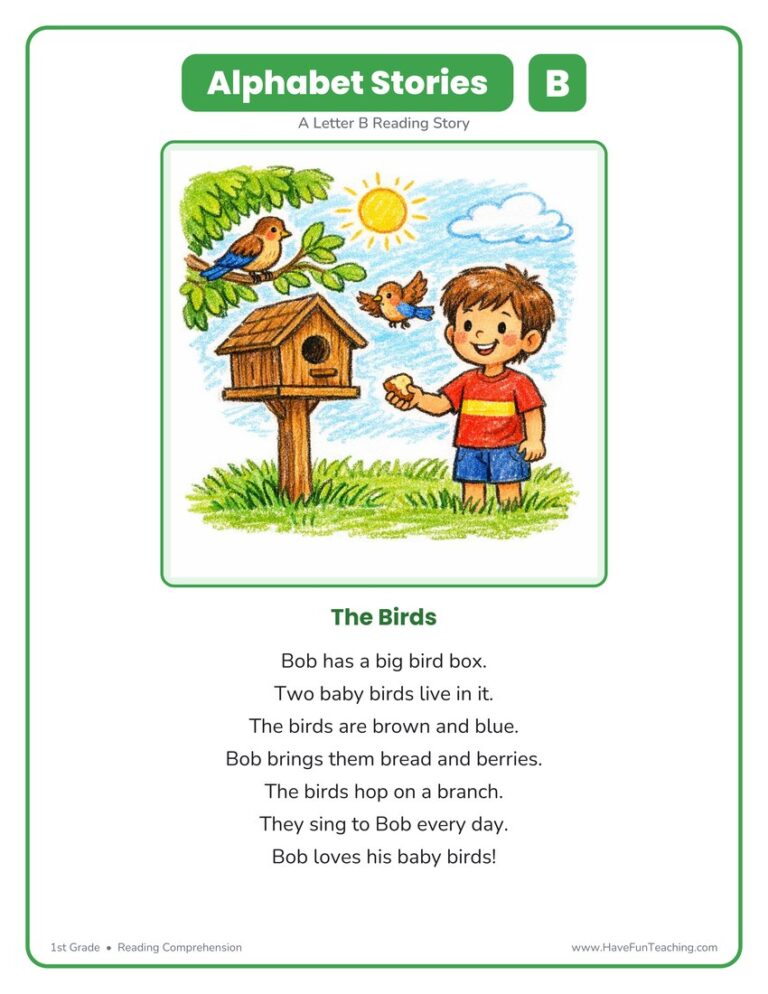
Assessment1st GradeAlphabet Stories Letter B Reading Comprehension Worksheet

A first grade Alphabet Stories Letter B Reading Comprehension Worksheet built around a short story about Bob and his birds. Includes an answer key — perfect for no-prep letter B reading practice at home or school.

Assessment
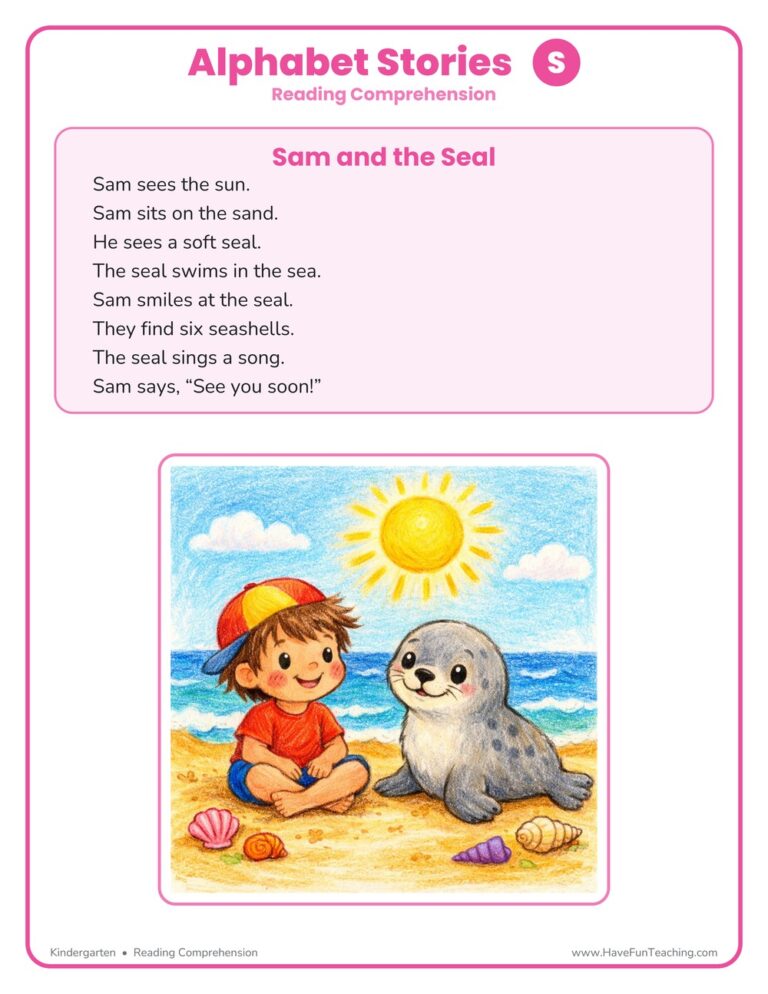
AssessmentKindergartenAlphabet Stories Letter S Reading Comprehension Worksheet

The Alphabet Stories Letter S Reading Comprehension Worksheet gives Kindergarten readers a fun beach story full of the /s/ sound plus five comprehension questions. Answer key included for quick, no-prep Letter S practice.

Assessment
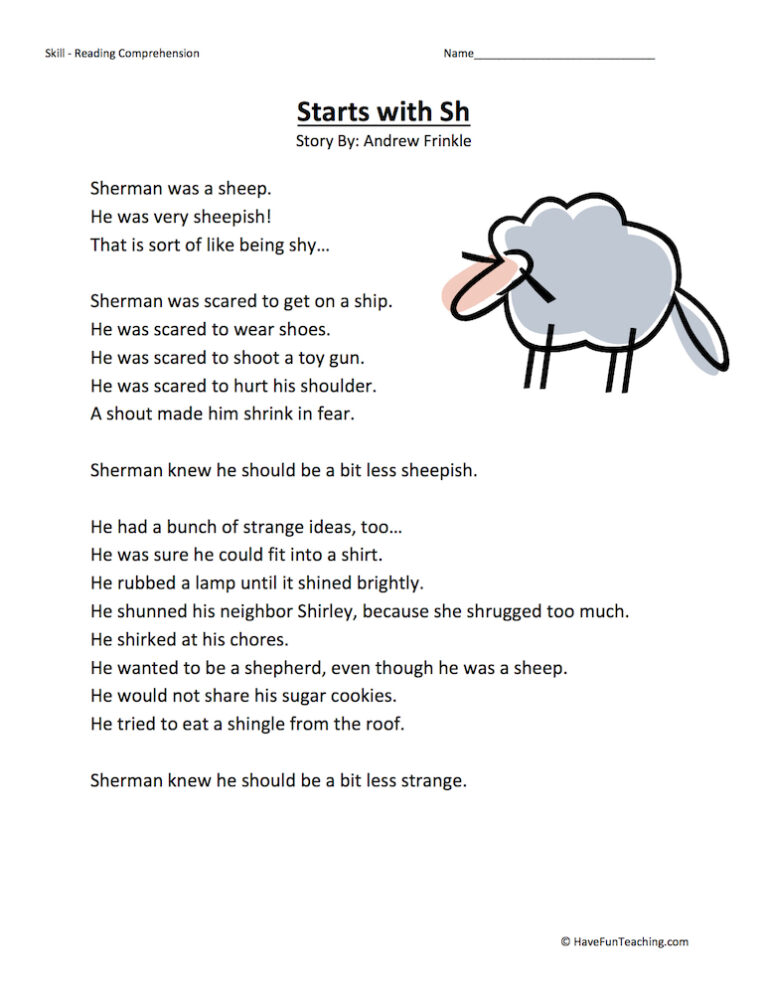
Assessment1st GradeStarts With SH Reading Comprehension Worksheet

This Starts With SH Reading Comprehension Worksheet gives 1st graders a short beach story full of sh words plus five bubble-in questions. An answer key is included, so phonics practice and reading comprehension happen in one no-prep activity.

Assessment
AssessmentKindergartenAlphabet Stories Letter D Reading Comprehension Worksheet

The Alphabet Stories Letter D Reading Comprehension Worksheet gives kindergarten readers a short Letter D story with five questions and an answer key, building early reading confidence one letter sound at a time.

Assessment
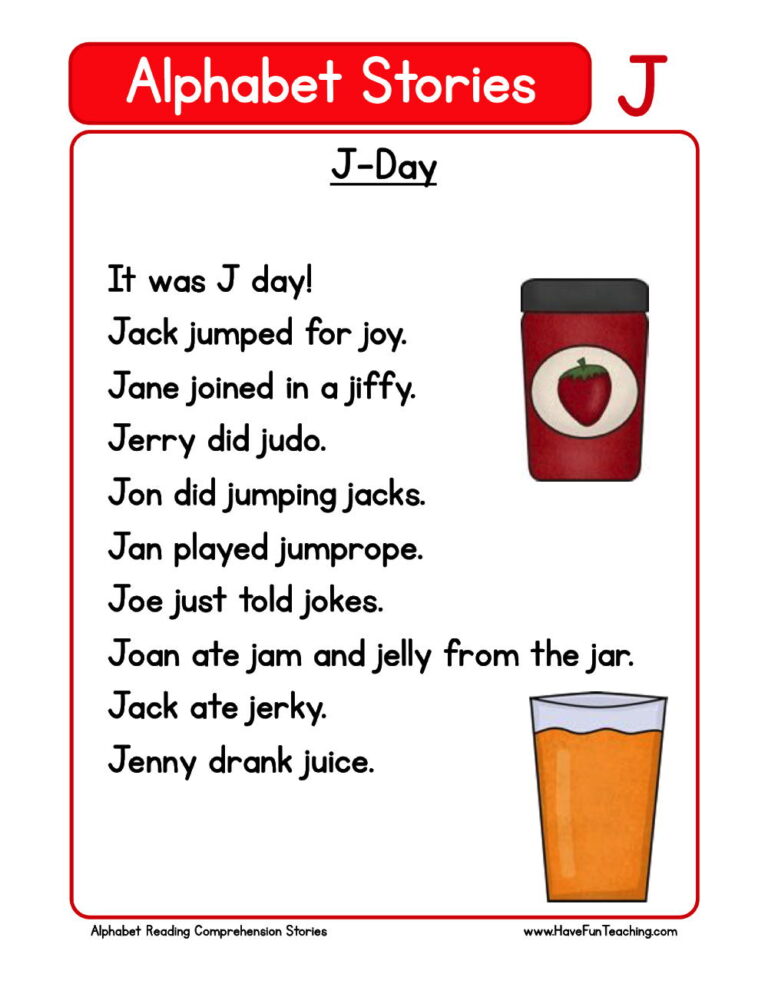
AssessmentKindergartenAlphabet Stories Letter J Reading Comprehension Worksheet

Build early reading comprehension with the Alphabet Stories Letter J Reading Comprehension Worksheet. Kindergarten readers enjoy a short letter J story, then answer five fill-in-the-bubble questions. An answer key is included, so checking work takes seconds.

Assessment
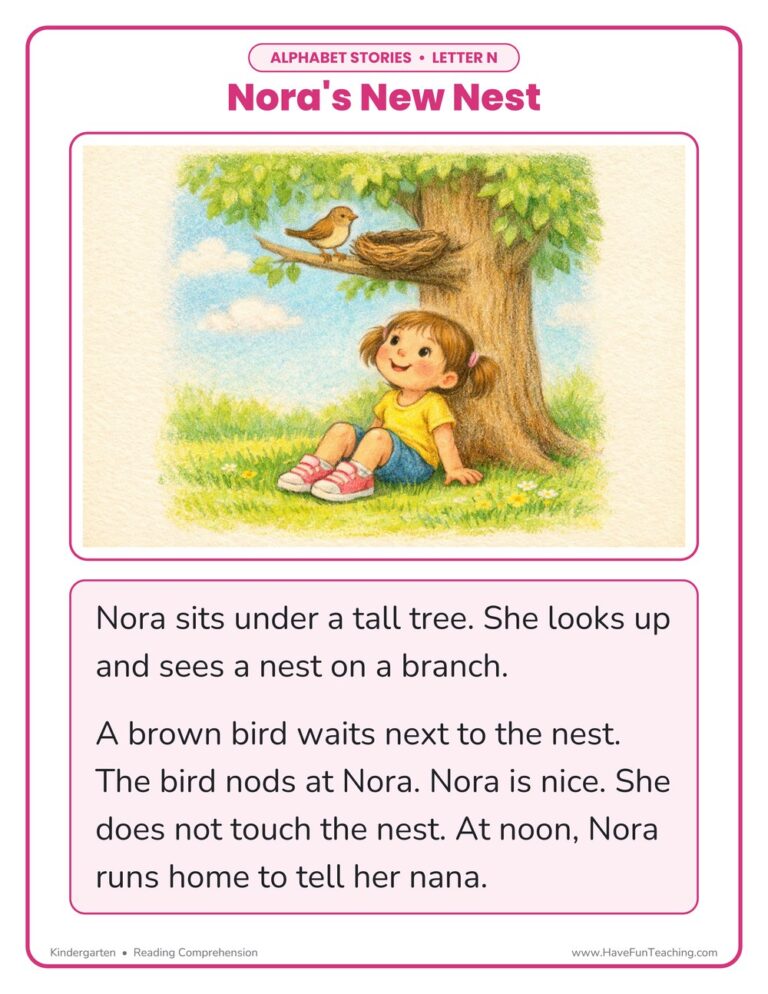
AssessmentKindergartenAlphabet Stories Letter N Reading Comprehension Worksheet

This Alphabet Stories Letter N Reading Comprehension Worksheet gives kindergarten readers a short N-sound story plus five bubble-answer questions, answer key included, so phonics and comprehension grow together.

Assessment
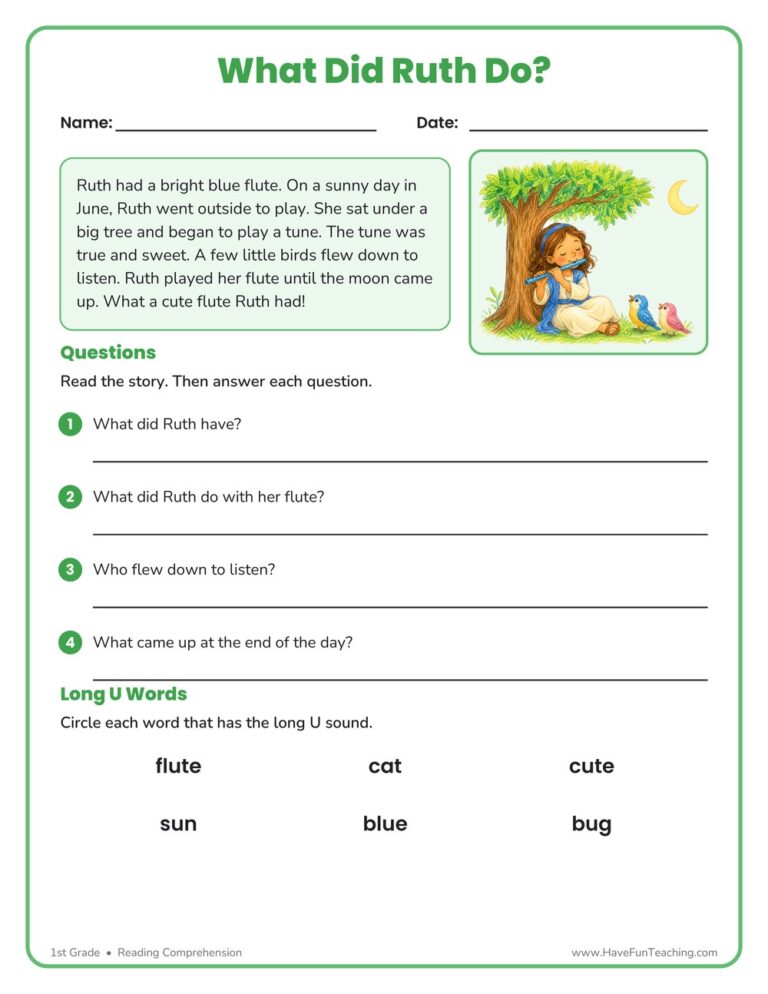
Assessment1st GradeWhat Did Ruth Do? Phonics Reading Comprehension Story Worksheet - Long Vowel U Sound

The What Did Ruth Do? phonics reading comprehension story worksheet helps 1st graders practice the long vowel U sound by reading a short decodable story and answering questions. Includes an answer key for easy, no-prep practice.

Assessment
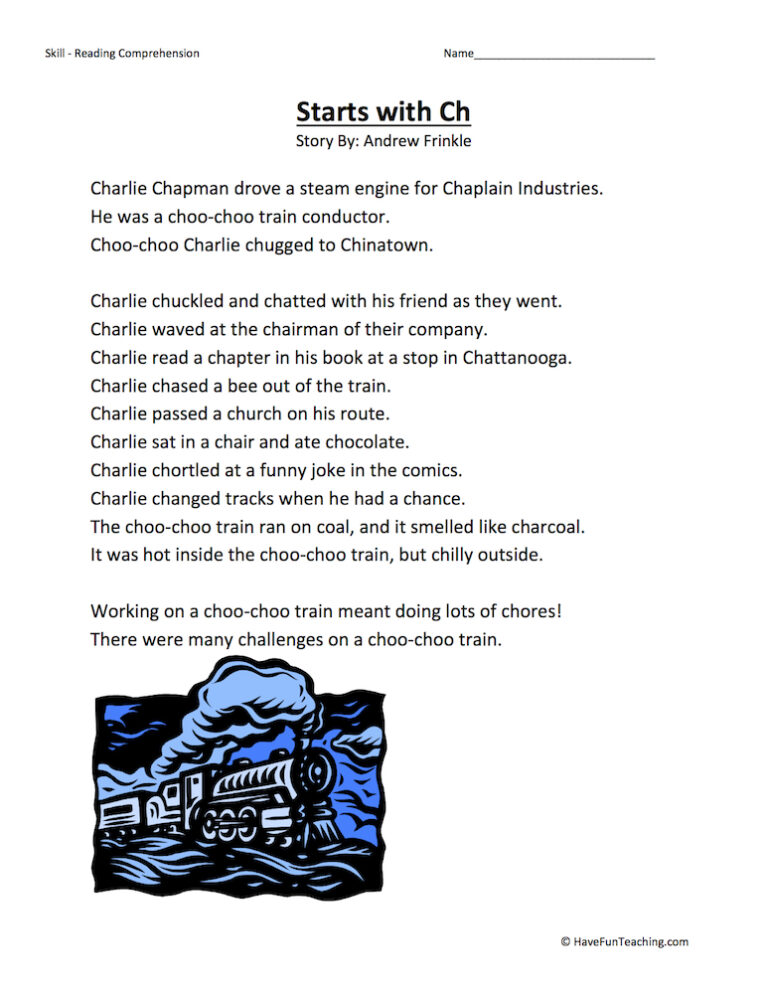
Assessment2nd GradeStarts With CH Reading Comprehension Worksheet

This Starts With CH Reading Comprehension Worksheet gives 2nd graders a short orchard story packed with ch words, four questions and a written response. An answer key is included, so digraph practice and comprehension happen in one sitting.

Assessment
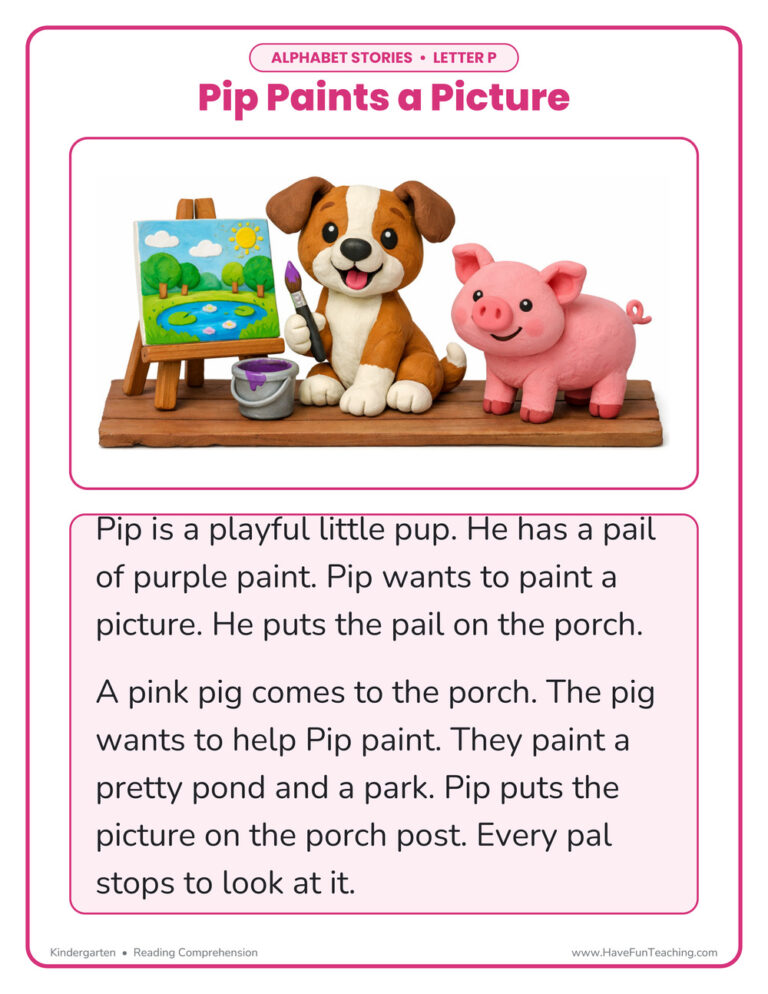
AssessmentKindergartenAlphabet Stories Letter P Reading Comprehension Worksheet

This Alphabet Stories Letter P Reading Comprehension Worksheet gives kindergarten readers a short story about Pip the pup plus five bubble-in questions. An answer key is included, so comprehension practice needs no prep.

Assessment
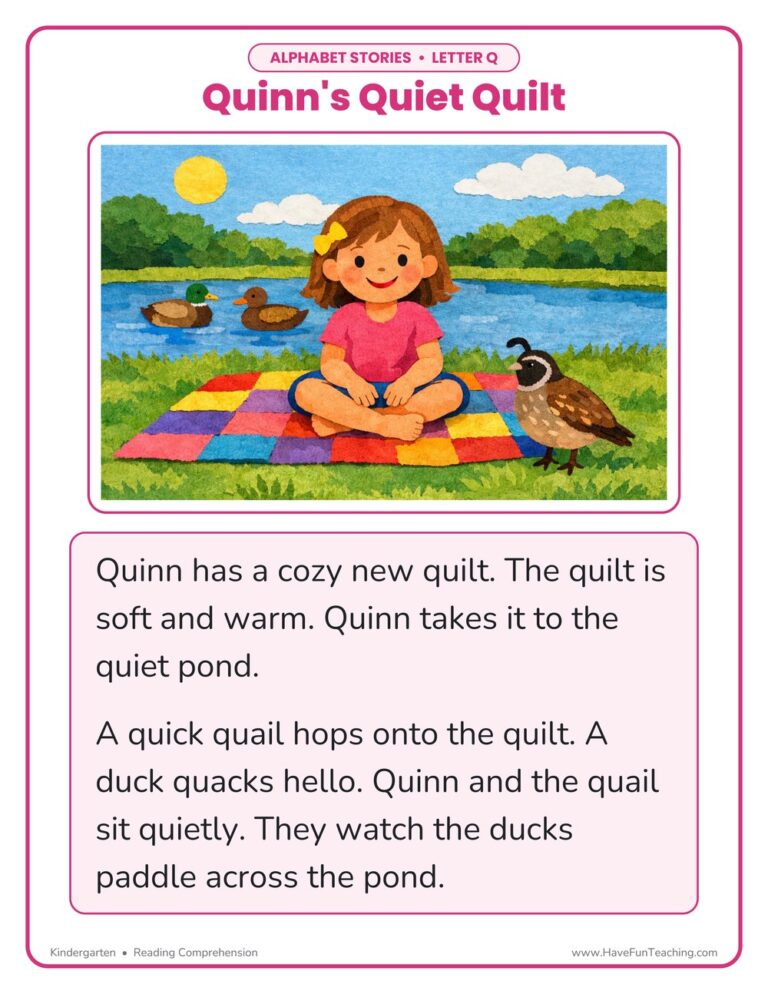
AssessmentKindergartenAlphabet Stories Letter Q Reading Comprehension Worksheet

Read a playful letter Q story and answer five picture-supported questions with this Alphabet Stories Letter Q Reading Comprehension Worksheet. Built for Kindergarten, answer key included, and perfect for building early reading confidence.

Assessment
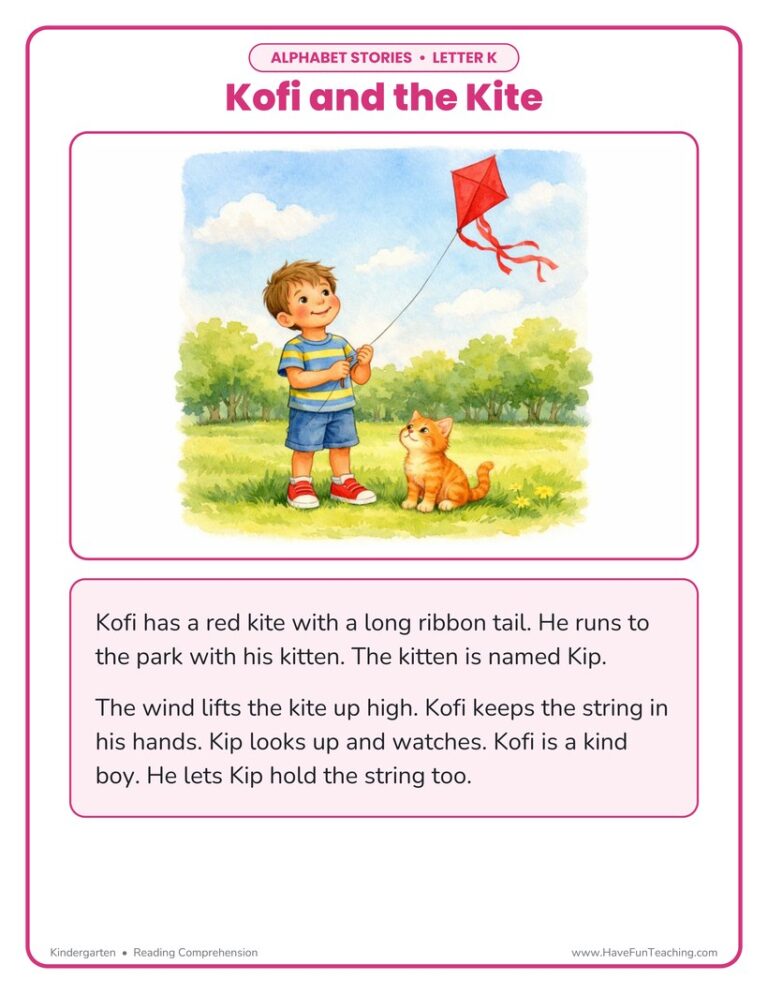
AssessmentKindergartenAlphabet Stories Letter K Reading Comprehension Worksheet

This Alphabet Stories Letter K Reading Comprehension Worksheet gives Kindergarten readers a short K story and five bubble questions. An answer key is included, so early readers get instant feedback.

Assessment
AssessmentKindergartenAlphabet Stories Letter I Reading Comprehension Worksheet

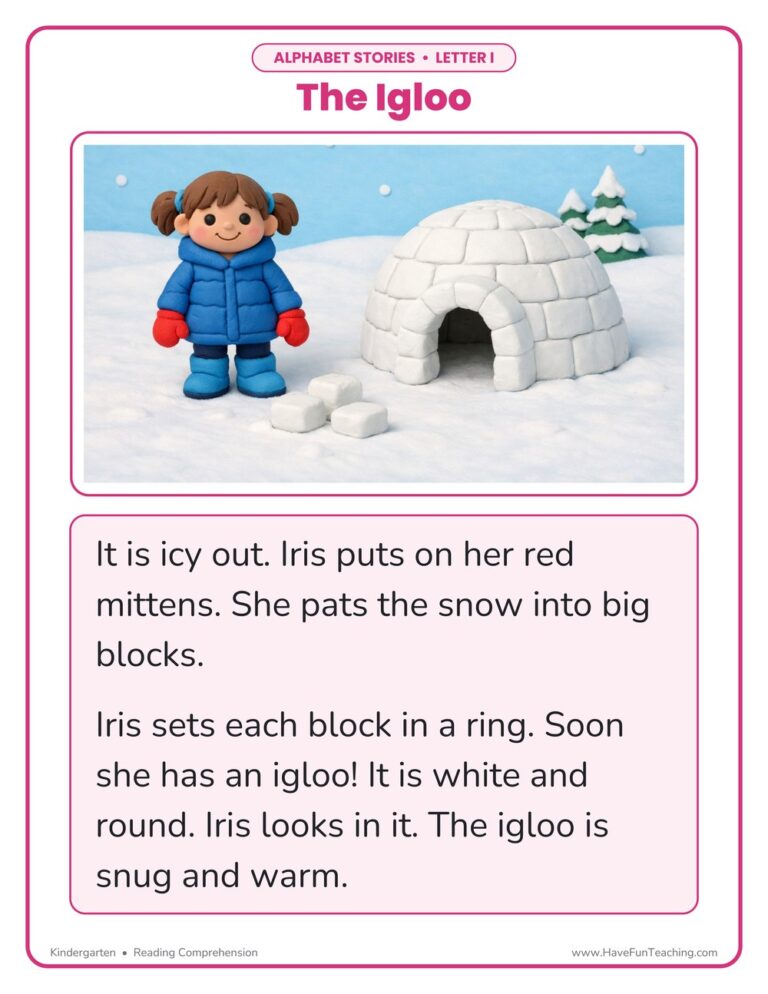
This Alphabet Stories Letter I Reading Comprehension Worksheet gives Kindergarten readers a short illustrated story and five bubble-in questions, with an answer key included, so letter I practice and early comprehension grow together.

Assessment
AssessmentKindergartenAlphabet Stories Letter U Reading Comprehension Worksheet

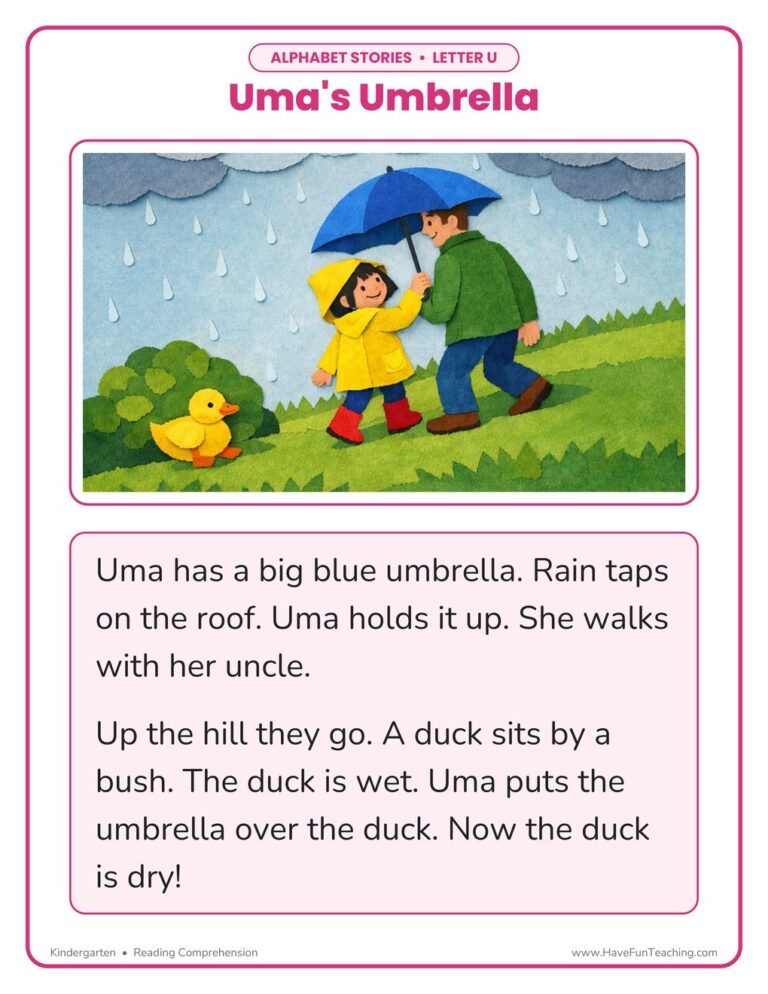
This alphabet stories letter u reading comprehension worksheet gives Kindergarten readers a short illustrated story and five comprehension questions, with an answer key included, so letter U practice turns into real reading.

Assessment
Assessment1st GradeChase Loves to Play Phonics Reading Comprehension Story Worksheet - Long Vowel A Sound

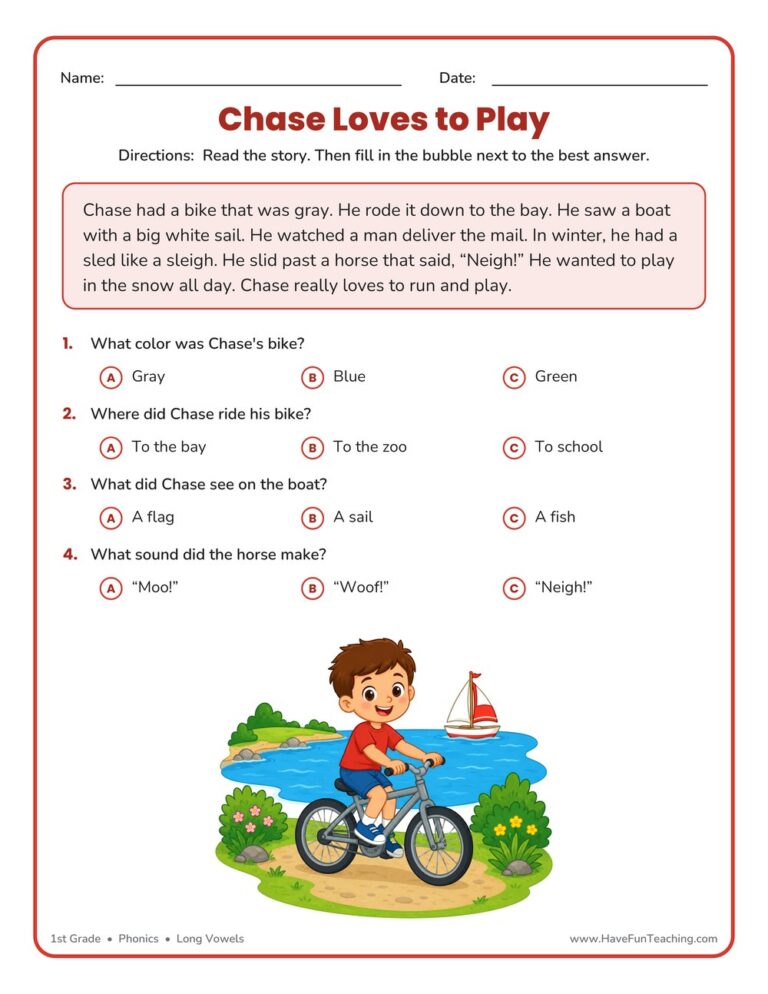
The Chase Loves to Play Phonics Reading Comprehension Story Worksheet - Long Vowel A Sound gives 1st graders a rhyming long A story with comprehension questions. Answer key included for quick, no-prep phonics practice.

Assessment
AssessmentPreschoolVowel Sounds Reading Comprehension Workbook

Using this Vowel Sounds Reading Comprehension Workbook, you can have all of the passages about different vowel sounds all in one place.

From our teachers' playbook

A, B, C and all their friends

What do kids learn about letter recognition?

Letter recognition means seeing a letter and knowing its name right away, whether it's capital or lowercase. Kids learn the 26 capital letters first, then the trickier lowercase ones like b, d, p and q that look like mirror images. Once they can name letters fast, they match each one to its sound. Most kids learn letters in preschool and kindergarten, and a quick, automatic name is a big step toward reading. The click moment is when a child spots the first letter of their own name on a sign.

How we teach letter recognition

Letters stick with a mix of seeing, hearing and playing. These are the moves we use every day.

Check, then target

Do a quick letter check at the start of the year to see which letters each child knows. Then focus practice only on the ones they're missing. Kids feel proud of what they know and you don't waste time on the rest.

Why it works: researchers who compared ten study methods found practice testing is one of the two that work best (Dunlosky and colleagues, 2013).
Alphabet Letter Recognition AssessmentTry it withAlphabet Letter Recognition AssessmentAssessmentsOpen it →

Sing the whole alphabet

Sing the alphabet song while pointing to each letter on a chart. Then slow it down so "L-M-N-O-P" doesn't blur into one sound. Kids start to see that each letter is separate.

Why it works: words set to a repeating melody are easier to recall than the same words spoken (Wallace, 1994).

Alphabet Song (Original Music Video)Try it withAlphabet Song (Original Music Video)VideosOpen it →

Color-coded letters

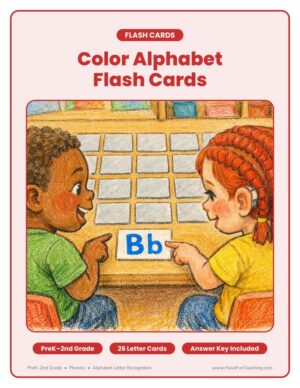
Use colorful alphabet flash cards and flip them in a different order every day. Kids call out the name and the sound. A few minutes a day builds the fast, automatic recognition they need for reading.

Why it works: teaching letter sounds directly and in order is one of the best-supported findings in reading research (National Reading Panel, 2000).

Color Alphabet Flash CardsTry it withColor Alphabet Flash CardsFlash CardsOpen it →

Letter recognition questions from teachers and parents

What age should a child recognize letters?

Many children know some letters by age 3 or 4, and most know all 26 by the end of kindergarten. Every child learns at their own pace.

Should I teach capital or lowercase letters first?

Most teachers start with capitals because they're easier to tell apart. Lowercase letters come soon after, since they show up most in books.

How do I help my child with b and d?

Teach a trick: make a "bed" with your hands, with the b on the left and d on the right. Practice them on different days so they don't get mixed up.

How many letters should a child learn per week?

Many classrooms teach one or two letters a week, but quick daily review of all letters works well too. Focus on letters the child hasn't learned yet.