
Skip to content
Start My 3 Free Days $0 today · cancel anytime

Preschool Story Elements Resources

5 preschool story elements resources: 3 worksheets, 2 assessments and 2 activities. How teachers use these

Preschool Story Elements Resources

5 preschool story elements resources: 3 worksheets, 2 assessments and 2 activities. How teachers use these

Worksheet
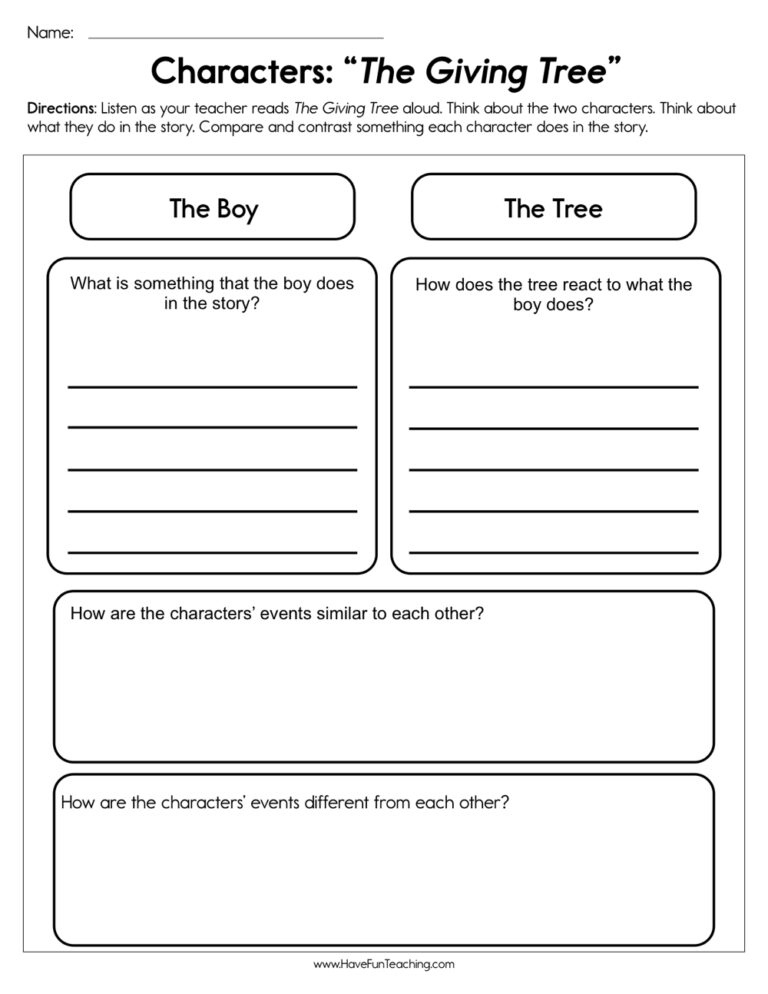
WorksheetPreschoolCharacters The Giving Tree Worksheet

Using Characters, Settings, and Big Events Worksheet, students draw pictures and write a sentence for each to tell about the story elements in a book.

Assessment
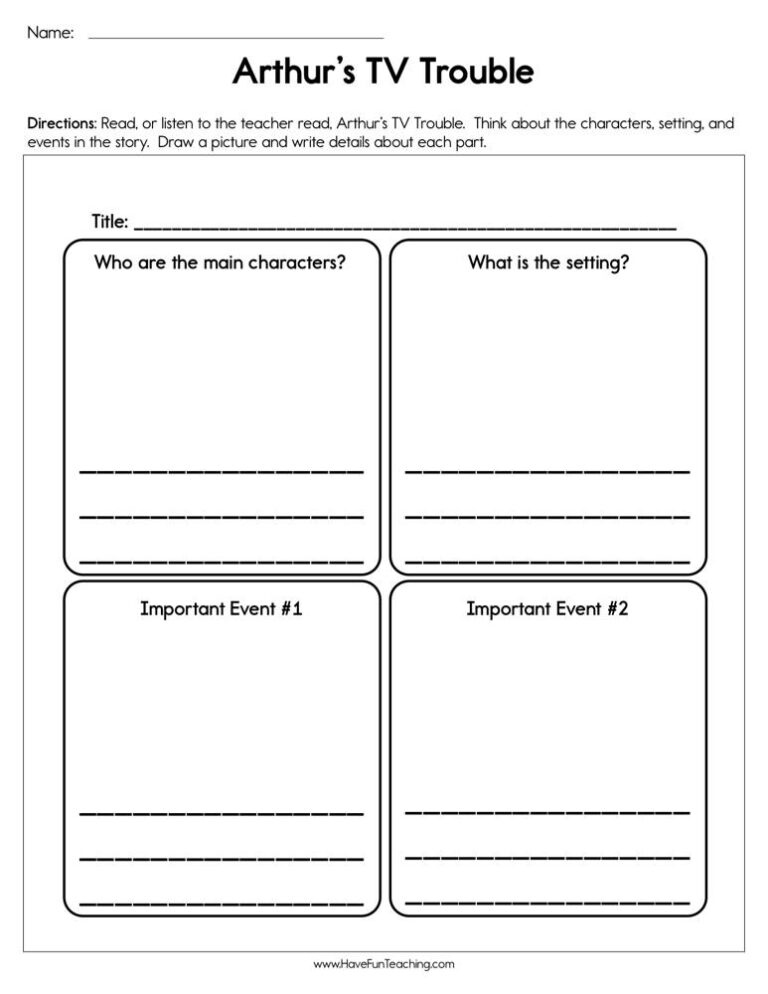
AssessmentPreschoolArthur's TV Trouble Worksheet

Using Arthur's TV Trouble Worksheet,students retell the story by describing the story elements of any given story to build their reading comprehension.

Activity
ActivityPreschoolSpin and Answer Story Elements Activity

This spin and answer story elements activity helps Preschool to 1st grade children find characters, setting, problem and solution with a spinner and picture cards. Answer key included.

Activity
ActivityPreschoolQuestion Cards for Reading Books Activity

Using this Question Cards for Reading Books Activity, students answer questions aboutkey details in a text.

From our teachers' playbook

Who? Where? What happened?

What do preschoolers learn about story elements?

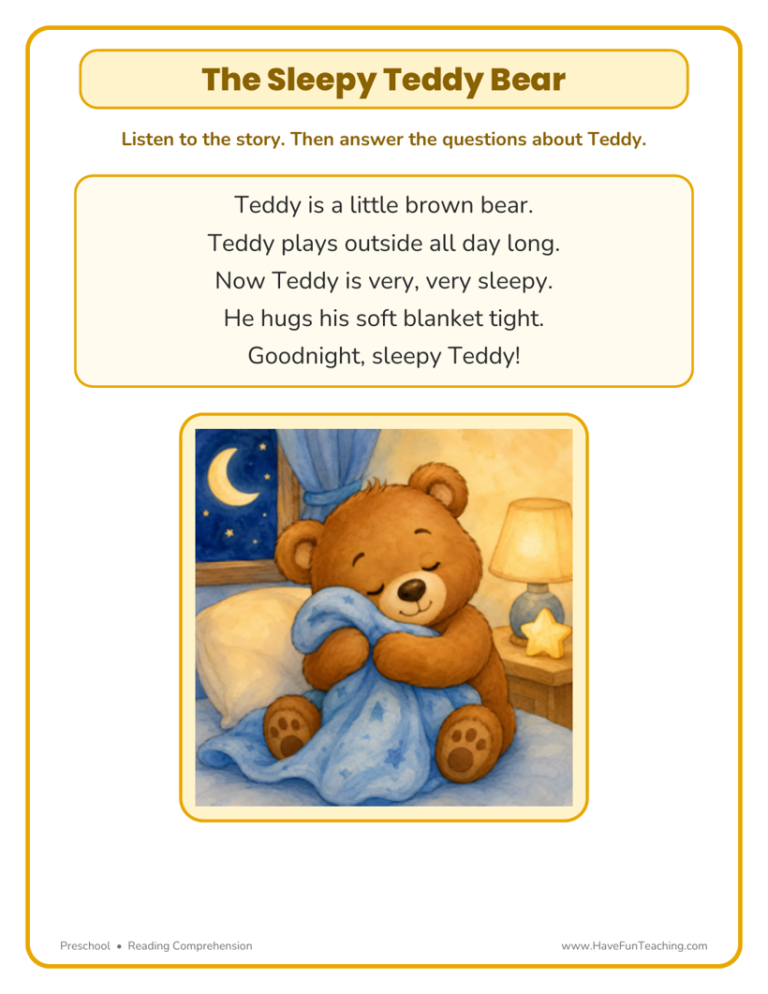
Preschoolers learn that every story has a few big pieces. There are characters (who is in the story), a setting (where it happens), and events (what happens first, next and last). After a read-aloud, a four-year-old can tell you "The bear was in the forest and he was sleepy!" That's characters, setting and an event all in one breath. The click moment is when kids start answering "who" and "where" before you even ask.

Our favorite ways to teach story elements

Big words, tiny learners. Keep the questions simple and the books well loved.

Ask the same three questions

After every read-aloud, ask "Who was in the story? Where were they? What happened?" Use the question cards so the routine looks the same each day. Repetition is the secret: within weeks, kids ask each other.

Why it works: showing first, practicing together, then letting kids try alone is the "gradual release" model teachers have relied on for decades (Pearson and Gallagher, 1983).

Question Cards for Reading Books ActivityTry it withQuestion Cards for Reading Books ActivityActivitiesOpen it →
Draw the who and the where

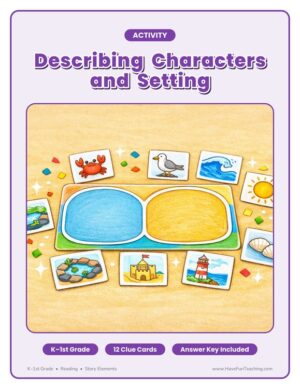
Fold a paper in half. On one side kids draw a character, on the other the setting. Then they tell you one thing about each and you write their words. Drawing gives little ones a way to show what they understood.

Why it works: kids understand an idea best when they touch it, then draw it, then write it, the order the U.S. Department of Education recommends for elementary math.

Describe Characters and Setting ActivityTry it withDescribe Characters and Setting ActivityActivitiesOpen it →

Spin a question

Kids take turns spinning to land on character, setting or event, then answer about today's book. The spinner adds suspense, and everyone wants a turn. Keep groups to four so nobody waits too long.

Why it works: in a well-known study, a few short sessions of a simple number board game measurably boosted young children's number skills (Ramani and Siegler, 2008).

Spin and Answer Story Elements ActivityTry it withSpin and Answer Story Elements ActivityActivitiesOpen it →

Questions parents and teachers ask

What are story elements for preschoolers?

The simple pieces of a story: characters (who), setting (where) and events (what happened). Older kids add problem and solution, but preschoolers start with who, where and what.

How do I teach characters and setting to a 4-year-old?

Pause during a read-aloud and ask "Who is this?" and "Where are they?" Point to the pictures for clues. Short, playful questions after every story build the habit.

When do kids learn beginning, middle and end?

Many preschoolers can retell what happened first and last with picture support. Full beginning, middle and end retelling usually firms up in kindergarten.

How can I practice story elements at home?

At bedtime, ask your child to tell you the story back. Let them use puppets or stuffed animals as characters. It's retelling practice that feels like pretend play.



