Skip to content
Start My 3 Free Days $0 today · cancel anytime

Story Elements Resources

118 story elements resources: 57 worksheets, 31 activities, 17 graphic organizers and more. How teachers use these

Story Elements Resources

118 story elements resources: 57 worksheets, 31 activities, 17 graphic organizers and more. How teachers use these

Worksheet
WorksheetKindergartenCharacters, Settings, and Events Worksheet

A kindergarten characters, settings, and events worksheet that helps young readers identify story elements—who is in a story, where it happens, and what happens—using a simple three-column graphic organizer for retelling any story.

Worksheet
Worksheet1st GradeCharacters, Settings, and Big Events Worksheet

A characters, settings, and big events worksheet for 1st Grade: students read a short story, then draw and write the characters, setting, and big event in a simple organizer. Answer key included for quick, no-prep story elements practice.

Worksheet
Worksheet3rd GradeWho What When Where Why Graphic Organizer Worksheet

This who what when where why graphic organizer worksheet helps 3rd graders record the five key details — who, what, when, where, and why — from any story or article. A clear, reusable note-taking template.

Worksheet
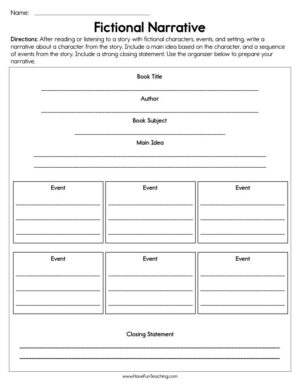
Worksheet3rd GradeFictional Narrative Worksheet

This Fictional Narrative Worksheet gives 3rd Grade students one page to plan a story from a book they love, with lines for the main idea, four events and a closing statement, so drafting starts easy.

Worksheet
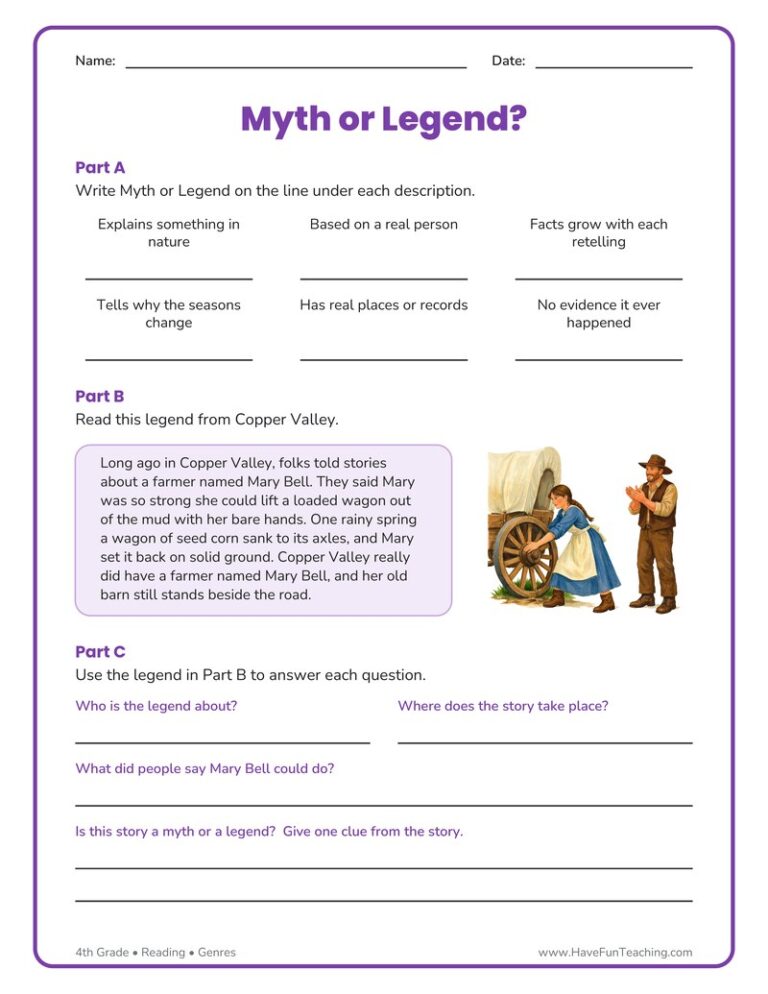
Worksheet4th GradeMyths Legends Worksheet

This Myths Legends Worksheet helps 4th graders tell the two genres apart, then apply what they learn to an original legend passage. Answer key included — a no-prep way to build genre knowledge and text evidence skills.

Worksheet
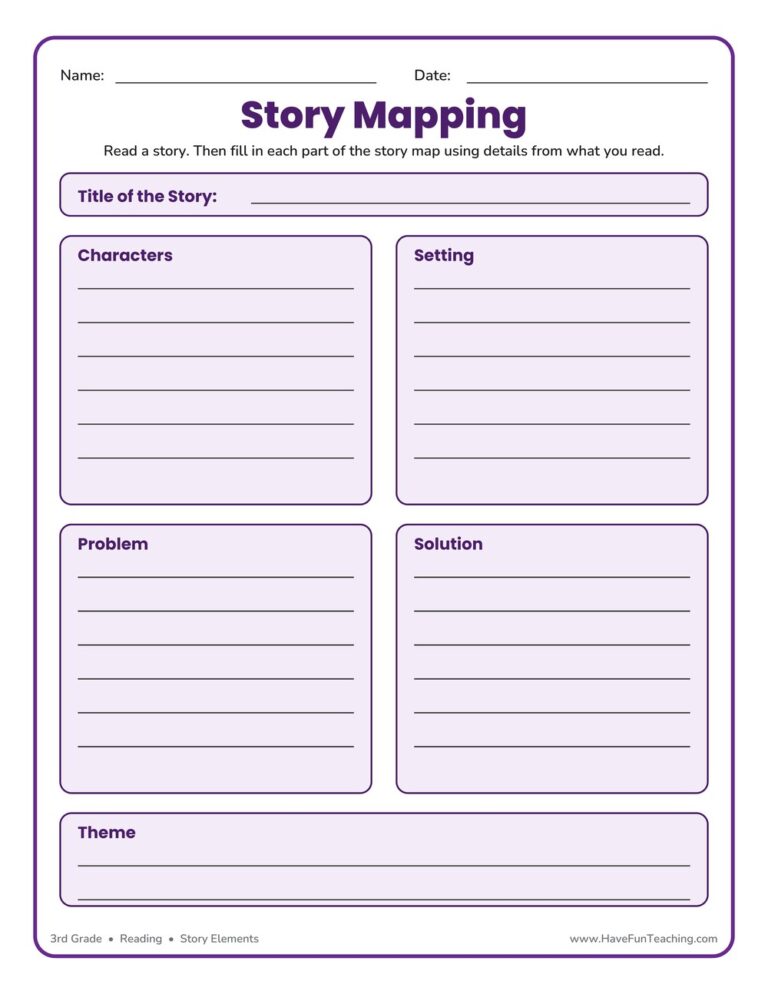
Worksheet3rd GradeStory Map Graphic Organizer

This 3rd grade Story Map Graphic Organizer Worksheet has students record a story's characters, setting, problem, solution, and theme in one clear, reusable page that strengthens reading comprehension.

Worksheet
Worksheet3rd GradeWho What When Where Why Summary Graphic Organizer Worksheet

A Who What When Where Why Summary Graphic Organizer Worksheet that walks 3rd graders from a short story to the five W answers and on to a written summary. Answer key included, so students get quick feedback and real confidence.

Activity
Activity3rd GradeIdentifying Theme Activity

This identifying theme activity helps 3rd to 5th grade students match short stories to their themes and back them up with text details. Answer key included.

Worksheet
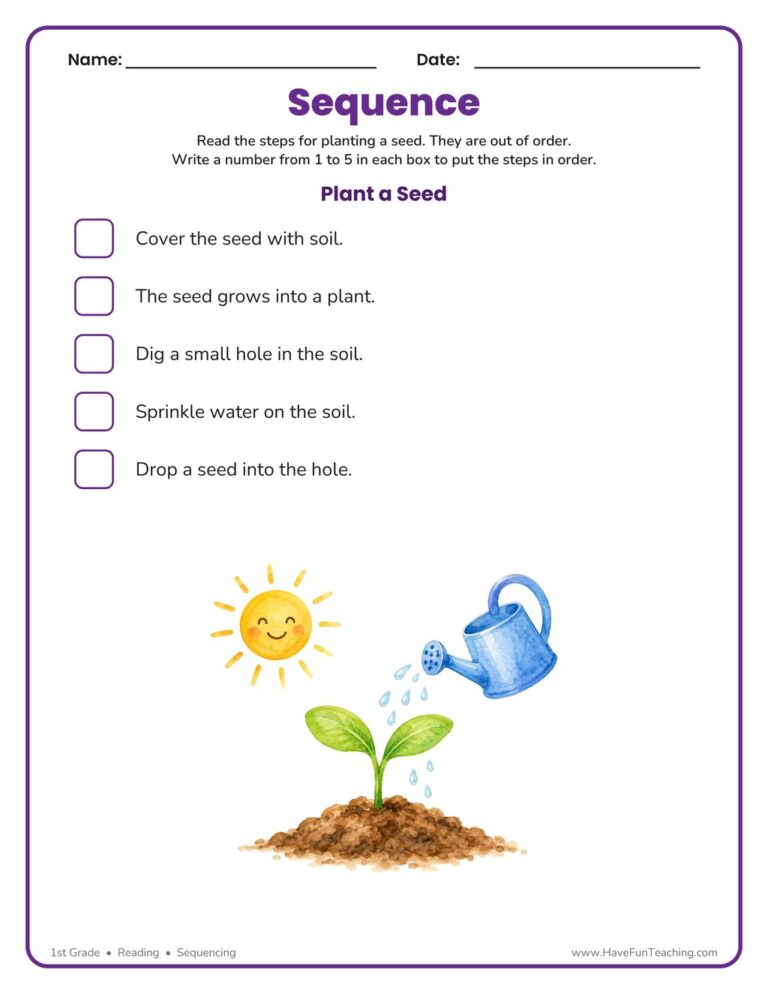
Worksheet1st GradePlant a Seed Sequence Worksheet

The Plant a Seed Sequence Worksheet helps 1st graders put five planting steps in order from first to last. Includes a complete answer key—perfect for quick, no-prep sequencing practice at home or school.

Worksheet
Worksheet1st GradeAsking Questions About Pictures Worksheet

This Asking Questions About Pictures Worksheet gives 1st Grade students an illustrated scene, four fill-in-the-bubble questions, and room to write a question of their own. Answer key included, so checking takes seconds.

Worksheet
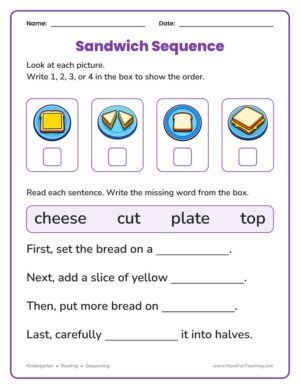
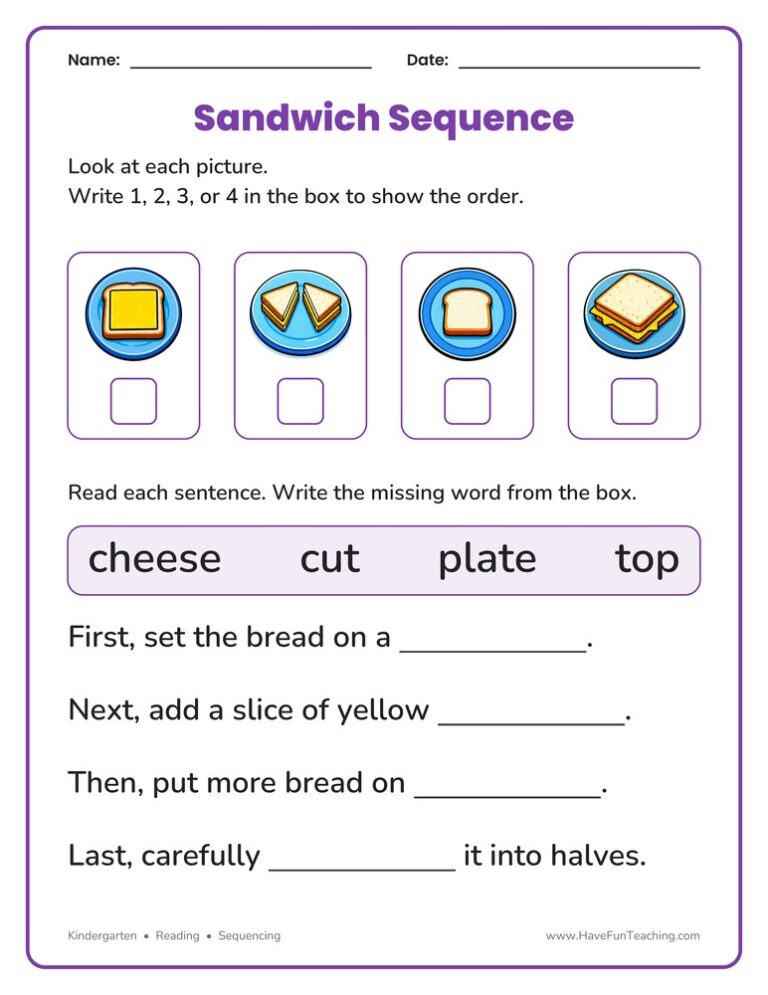
WorksheetKindergartenSequencing Pictures Worksheet

This sequencing pictures worksheet has kindergarten students number four sandwich-making pictures in order and finish four First, Next, Then, Last sentences. An answer key is included to make checking quick.

Worksheet
Worksheet2nd GradeSequence Writing Worksheet

This sequence writing worksheet has 2nd graders number four mixed-up pancake story events, then write the story with order words and an ending. An answer key is included for easy checking.

Worksheet
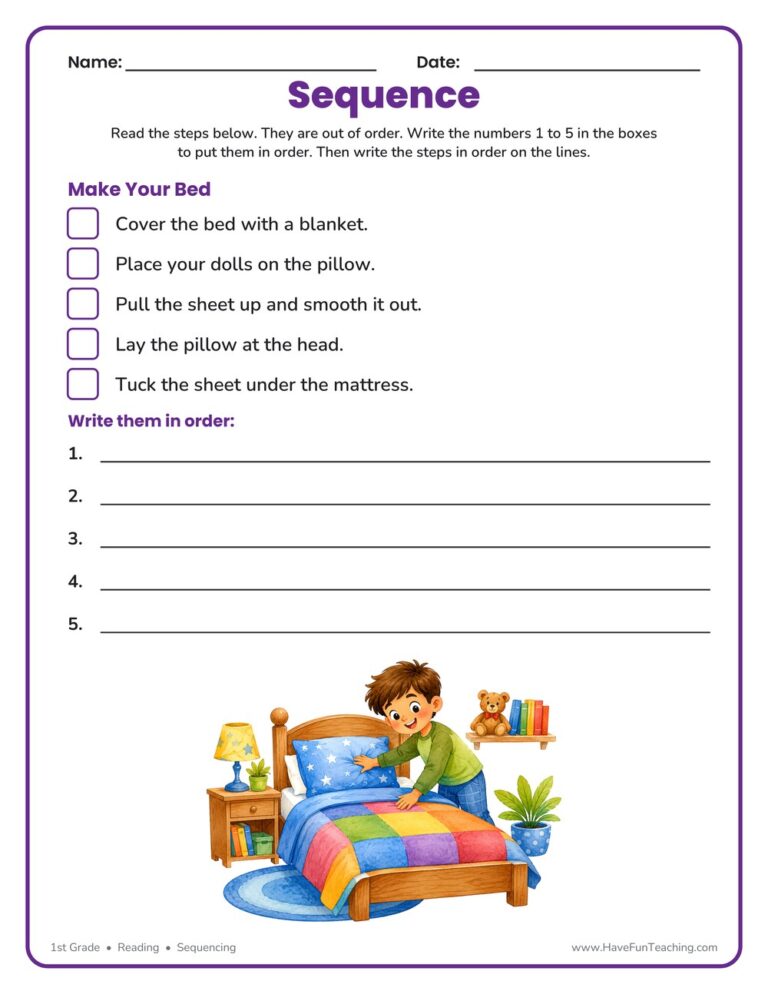
Worksheet1st GradeMaking a Bed Sequence Worksheet

This Making a Bed Sequence Worksheet has 1st graders order five steps, number the boxes 1 to 5, and rewrite them in sequence. Answer key included — a fun, no-prep way to practice sequencing.

Workbook
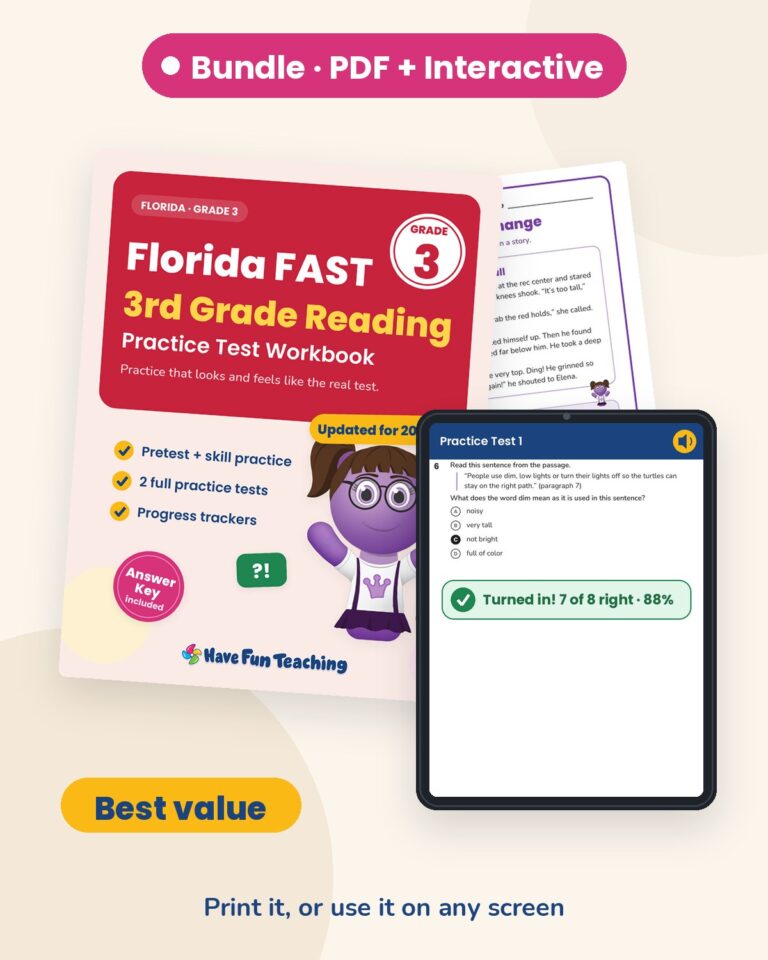
Workbook3rd GradeFlorida FAST 3rd Grade Reading Practice Test Workbook

A Florida FAST 3rd grade reading practice test workbook for teachers, with a pretest, skill practice for all 13 benchmarks, mixed review and 2 full-length practice tests. Answer key included, so test prep is ready to go.

Activity
Activity3rd GradeDetermining Theme Activity

Students read 12 short fable cards in this determining theme activity for 3rd to 5th Grade, match each to a theme, and cite a detail. Answer key included.

Worksheet
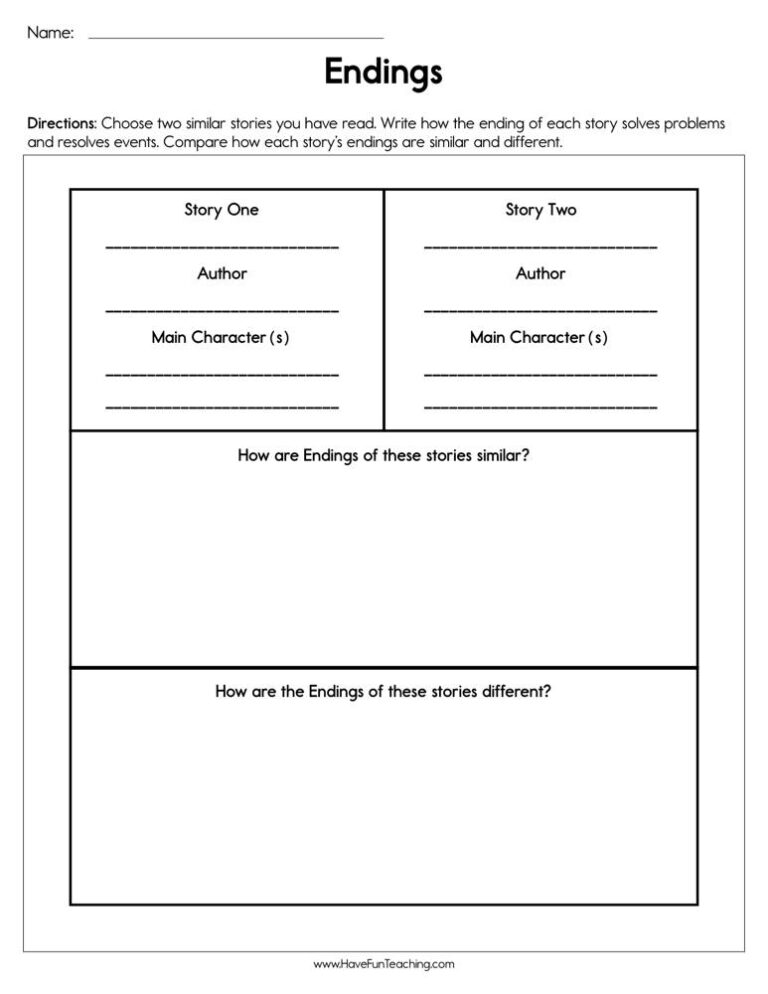
Worksheet3rd GradeEndings Worksheet

This endings worksheet helps 3rd grade students compare how two stories they have read end, explaining each ending and how the two are alike and different to build strong reading skills.

Worksheet
Worksheet2nd GradeCharacters and Story Plots Worksheet

This characters and story plots worksheet gives 2nd Grade readers a short story, then asks them to name the characters and tell the beginning, problem and ending. An answer key is included, so retelling a book gets easier.

Worksheet
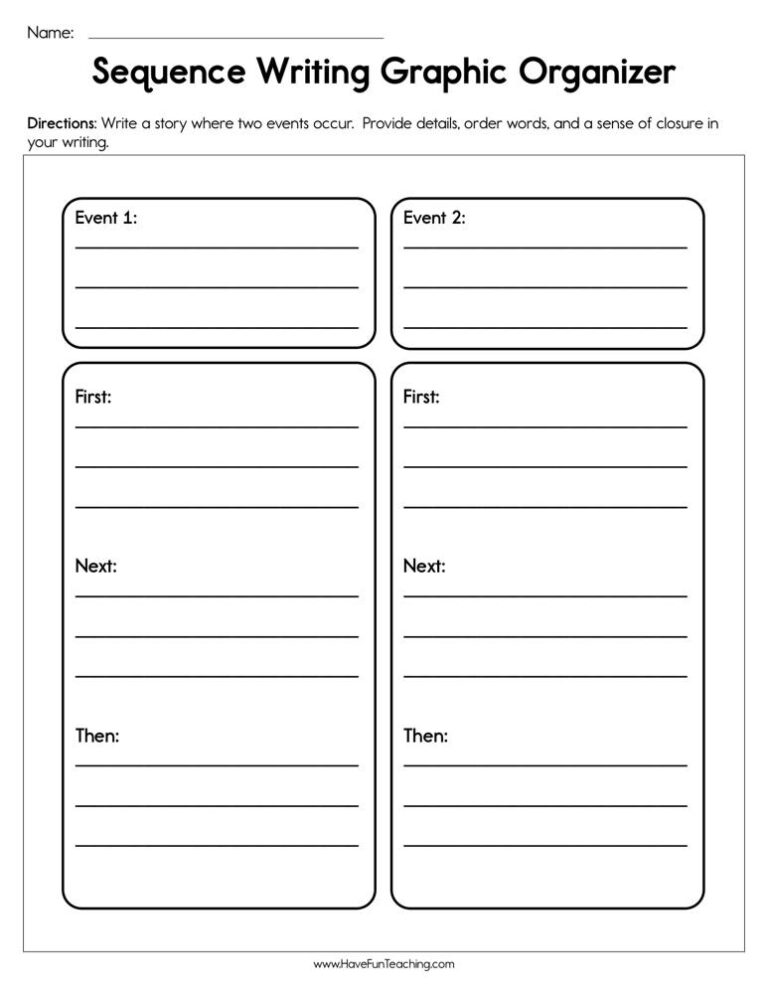
Worksheet1st GradeSequence Writing Graphic Organizer Worksheet

Plan a story from start to finish with this Sequence Writing Graphic Organizer Worksheet. First Grade writers name their story idea, then write what happens First, Next, Then, and Last on wide primary lines.

Workbook
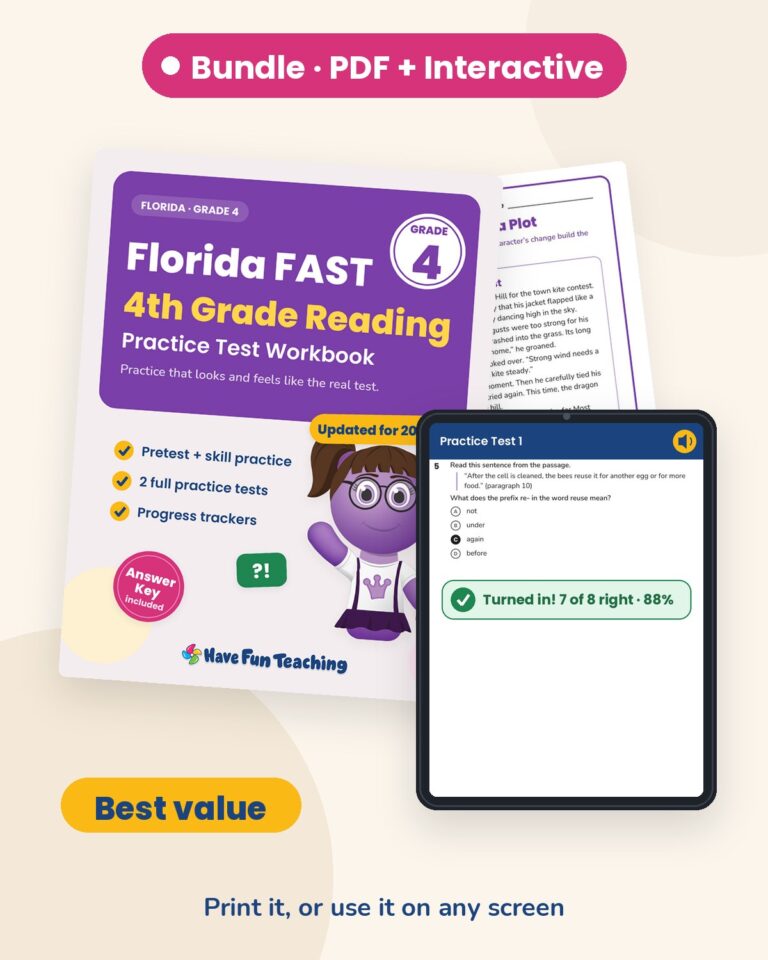
Workbook4th GradeFlorida FAST 4th Grade Reading Practice Test Workbook

A Florida FAST 4th grade reading practice test workbook for teachers, with a pretest, skill practice for all 13 benchmarks, mixed review and 2 full-length practice tests. Answer key included, so test prep is ready to go.

Worksheet
Worksheet3rd GradeStory Map Worksheet

This story map worksheet lets 3rd grade students record the characters, setting, problem, main events, and solution of any story they read, building stronger comprehension and retelling skills.

From our teachers' playbook

Who, where, what happened, and why

What do kids learn about story elements?

Every story has the same building blocks: characters (who it's about), setting (where and when it happens), plot (the events, from beginning to middle to end), a problem and a solution. Young kids name the characters and setting and retell what happened in order. By 2nd and 3rd grade they describe how characters respond to big events and identify the problem and solution. Older kids look at point of view, how characters change, and the theme, the lesson a story teaches. The click is when a child finishes a book and says, "The problem was... and she solved it by..." without any prompting.

Our favorite ways to teach story elements

Kids already love stories. These moves help them see how stories are built.

Map the story

After a read-aloud, fill in a story map together: characters, setting, problem, events and solution. Then hand kids a blank map for the next book. A graphic organizer makes the invisible structure of a story easy to see.

Why it works: pairing a picture with each word gives kids two ways to remember it, a well-tested principle of how people learn (Mayer, 2009).
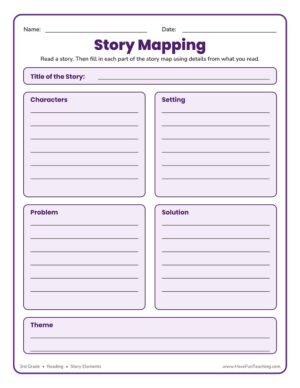
Story Map Graphic OrganizerTry it withStory Map Graphic OrganizerGraphic OrganizersOpen it →

Five W's think-aloud

Stop mid-story and think aloud: "Who is this about? Where are we? What just went wrong?" Then ask the same questions after the next chapter and let kids answer. Soon they're asking themselves while they read.

Why it works: showing first, practicing together, then letting kids try alone is the "gradual release" model teachers have relied on for decades (Pearson and Gallagher, 1983).

Who What When Where Why Graphic Organizer WorksheetTry it withWho What When Where Why Graphic Organizer WorksheetWorksheetsOpen it →

Story building blocks

Put character, setting and problem cards into three bags. Kids pull one from each and write or tell a story that uses all three. Building a story from the parts shows kids exactly what each element does.

Why it works: the U.S. Department of Education's guide for teaching elementary math recommends moving from hands-on objects to drawings to numbers.

Fictional Narrative WorksheetTry it withFictional Narrative WorksheetWorksheetsOpen it →

Story elements: your questions

What are the 5 story elements?

The five main story elements are characters, setting, plot, conflict (the problem) and resolution (the solution). Many teachers add theme as a sixth.

What's the difference between plot and theme?

Plot is what happens in the story. Theme is the lesson or message the story teaches, like kindness matters or never give up.

What grade learns story elements?

Kindergarten and 1st grade students identify characters, setting and major events. Second and 3rd graders add problem and solution, and 4th and 5th graders study theme, point of view and how characters change.

How can I practice story elements at home?

After reading or watching a movie together, ask: Who was in it? Where did it happen? What was the problem? How was it solved? Those four questions cover the basics.

Keep exploring