Skip to content
Start My 3 Free Days $0 today · cancel anytime

Rebus Resources

5 rebus resources: 4 worksheets and 1 activity. How teachers use these

Rebus Resources

5 rebus resources: 4 worksheets and 1 activity. How teachers use these

Worksheet
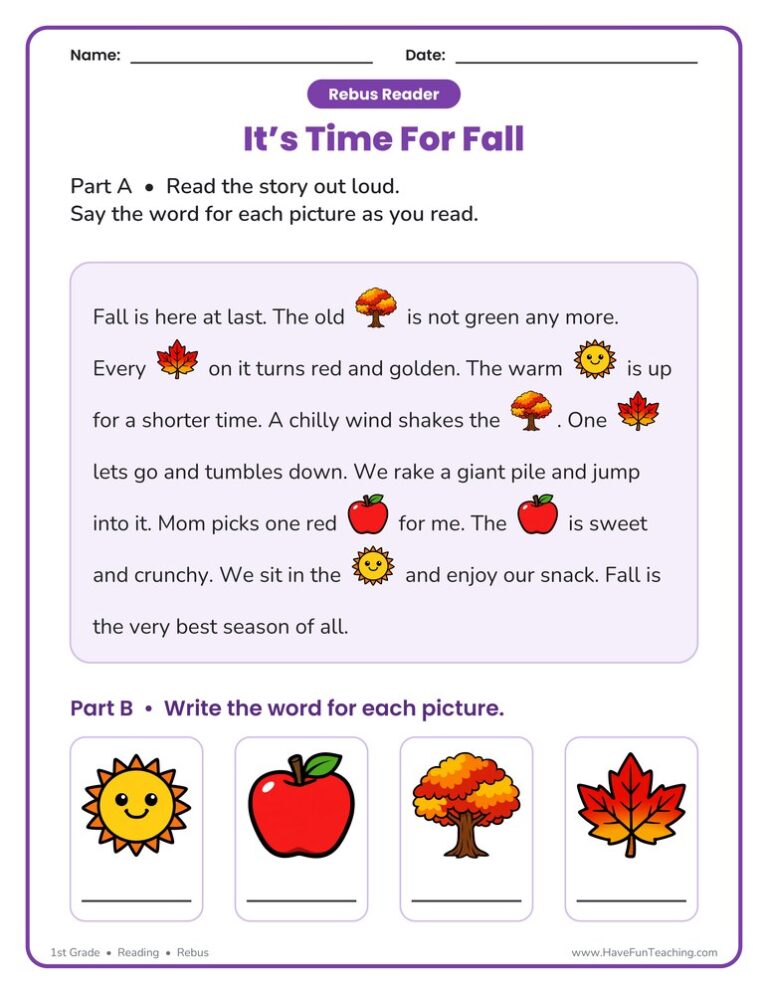
Worksheet1st GradeTime for Fall Rebus Worksheet

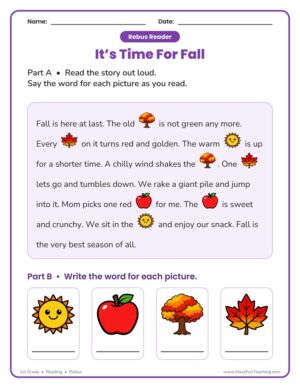
This Time for Fall Rebus Worksheet gives 1st graders an autumn story to read aloud, with pictures standing in for tree, leaf, sun, and apple. An answer key is included for quick fluency practice.

Worksheet
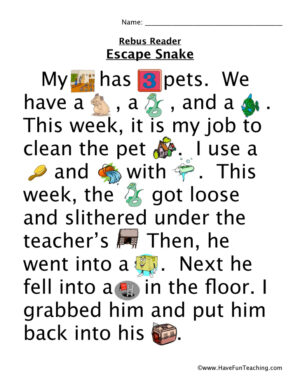
Worksheet1st GradeSnake Rebus Worksheet

This Snake Rebus Worksheet gives 1st graders a picture-supported story to read aloud, then four pictures to label with the matching word. Answer key included, so fluency practice takes almost no prep.

Worksheet
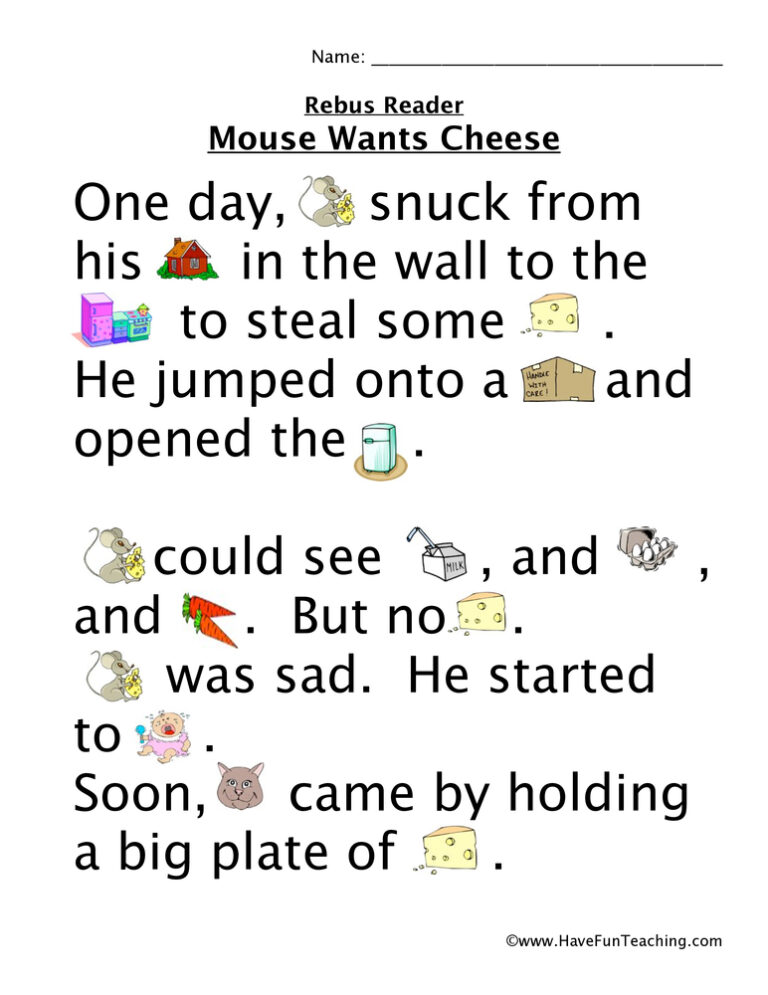
Worksheet1st GradeMouse Wants Cheese Rebus Worksheet

This Mouse Wants Cheese Rebus Worksheet lets 1st graders read a short story with pictures standing in for three words, then write each word on its own card. Answer key included for quick, no-prep fluency practice.

Worksheet
WorksheetPreschoolPicnic Day Rebus Worksheet

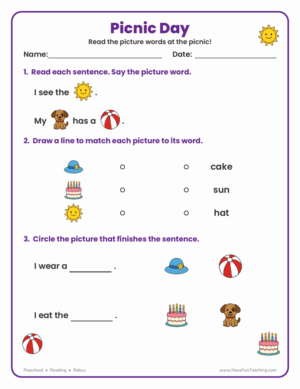
A sunny Picnic Day rebus worksheet that helps preschoolers read picture sentences, match pictures to words, and build early reading confidence. Answer key included.

Activity
ActivityPreschoolLeft and Right Simon Says Opposites Activity

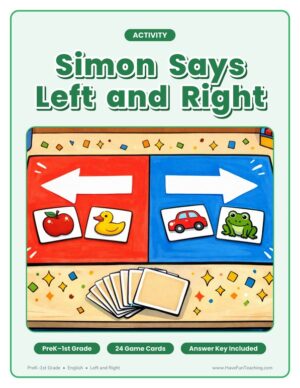
Play the Left and Right Simon Says Opposites Activity with preschool to 1st grade: move picture cards to the correct side of the mat. Practice page and answer key included.

From our teachers' playbook

Read the words, read the pictures!

What do kids learn from a rebus?

A rebus is a story or sentence where some words are swapped for little pictures. Kids read the words, then "read" each picture as a word: a drawing of a cat in a sentence is read as "cat." Rebus stories are a favorite with early readers because pictures carry the hard words, so kids can read a whole story with confidence. They build left-to-right tracking, sight word practice and comprehension at the same time. The click comes when a beginning reader finishes a rebus page and realizes, "I just read a whole story by myself!"

Our favorite ways to teach with a rebus

Rebus reading is a confidence booster for new readers. These moves help kids get the most out of every picture-packed page.

Read it together first

Read the rebus aloud while you sweep your finger under each word and tap each picture. Kids join in on the pictures the first time, then read more and more on their own. Tracking with a finger keeps eyes moving left to right.

Why it works: handing over the work step by step, from teacher to student, is one of the most widely used teaching frameworks (Pearson and Gallagher, 1983).
Snake Rebus WorksheetTry it withSnake Rebus WorksheetWorksheetsOpen it →

Name the picture, read the word

Before reading, go through every picture and agree on its word: is it "mouse" or "rat"? Then kids read the story. Settling the picture words first means they can focus on the printed words.

Why it works: children learn more from words and pictures together than from words alone (Mayer, 2009).

Mouse Wants Cheese Rebus WorksheetTry it withMouse Wants Cheese Rebus WorksheetWorksheetsOpen it →
A story a week

Add a new seasonal rebus each week and let kids reread the old ones in a book bin. Rereading favorite stories builds fluency, and the pictures keep it easy enough to be fun.

Why it works: short practice spread over several days beats one long session, according to a large review of learning research (Dunlosky and colleagues, 2013).

Time for Fall Rebus WorksheetTry it withTime for Fall Rebus WorksheetWorksheetsOpen it →
Questions parents and teachers ask

What is a rebus story?

A rebus story uses small pictures in place of some words. Kids read the printed words and say the picture names as words, so they can read a full story even before they know every word.

What age are rebus stories for?

Rebus stories are great for preschool, kindergarten and first grade. They help early readers track print and practice sight words while pictures carry the harder words.

How do rebus stories help kids learn to read?

They build confidence, left-to-right tracking and sight word practice. Because the story makes sense, kids also practice comprehension while they read.

How can I use rebus stories at home?

Read one together and let your child read the pictures, then more of the words. Try writing a family rebus note on the fridge, like "I love you" with a heart for love.

Keep exploring