29 animals activities. Teacher favorites: Fish Parts Activity and Animal Habitats Activity - Freshwater, Grasslands, Forest, Ocean. How teachers use these ↓
Popular
Most Recent
Alphabetical
Animals Activities
29 animals activities. Teacher favorites: Fish Parts Activity and Animal Habitats Activity - Freshwater, Grasslands, Forest, Ocean. How teachers use these ↓
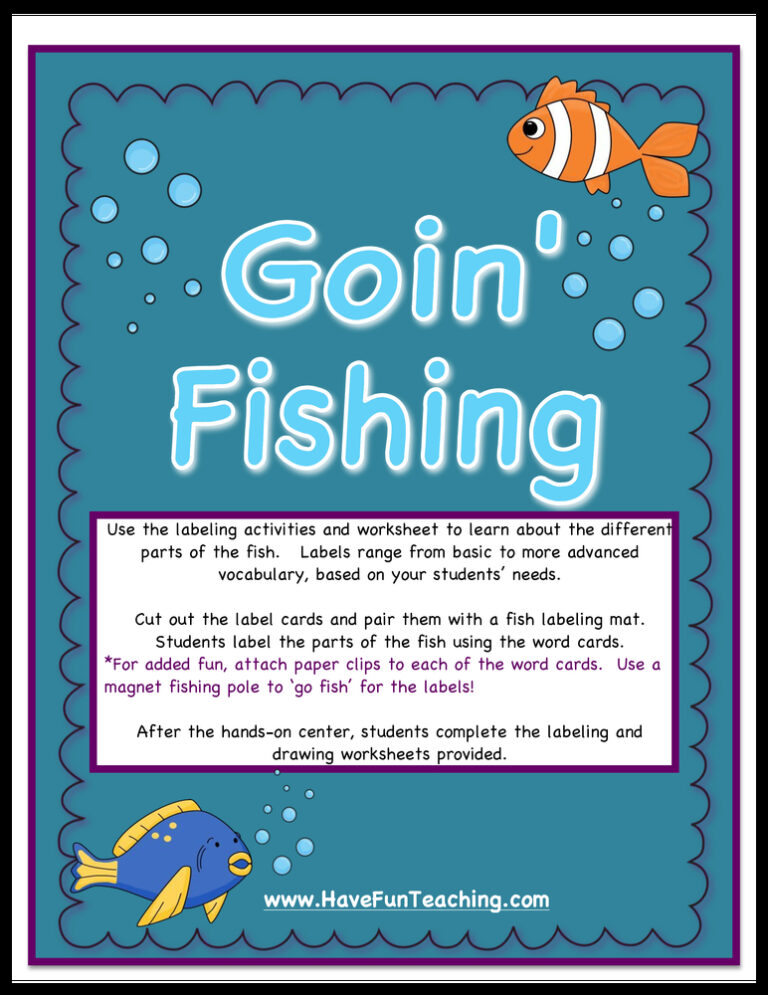
This fish parts activity has kindergarten and 1st grade children catch picture cards and label the eye, mouth, gills, fin, scales and tail, with an answer key included for quick checking.
This animal habitats activity has kindergarten to 2nd grade students sort 16 animal cards onto freshwater, grassland, forest and ocean mats. A practice page and an answer key are included.
This frog facts activity has children sort 12 fact cards onto TRUE and FALSE lily pads. Made for Kindergarten to 3rd Grade, with a practice page and answer key included.
This boy and his dog puzzle lets Preschool to 1st grade children cut out and rebuild a 15-piece picture of a boy and his puppy, building problem solving and scissor skills.
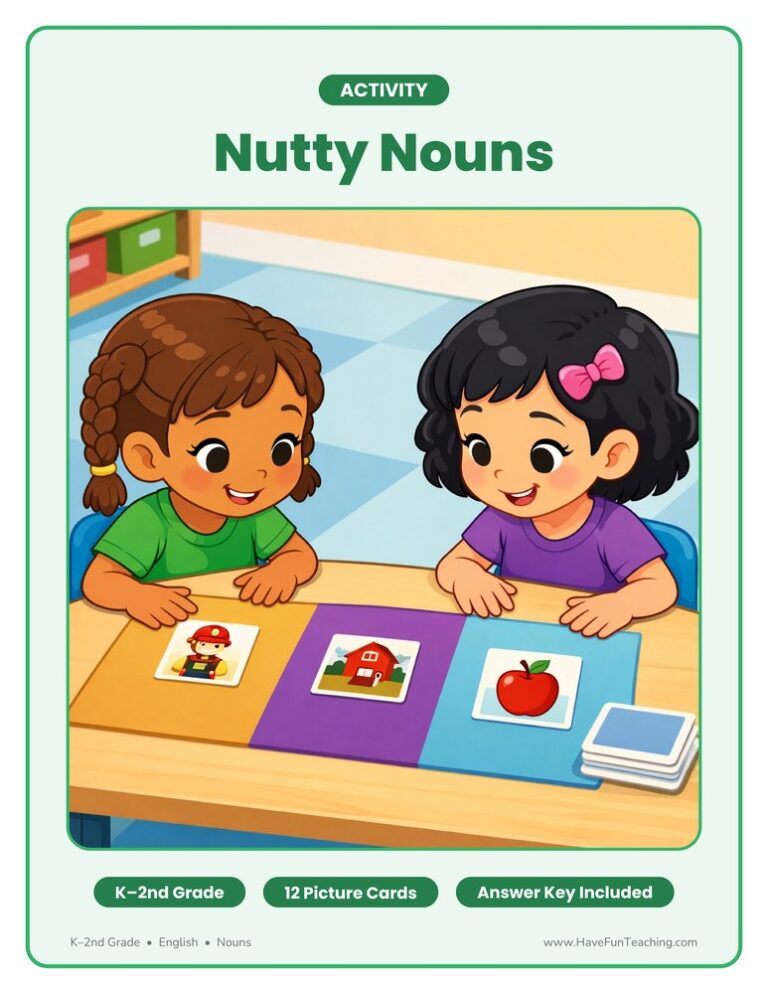
This nutty nouns activity lets Kindergarten to 2nd grade students sort picture cards into person, place and thing, then practice with a word-box sort. Answer key included.
This animal riddles activity has students read clues and match each riddle to the right animal card. Made for 1st-2nd grade with self-check cards, a practice page and an answer key included.
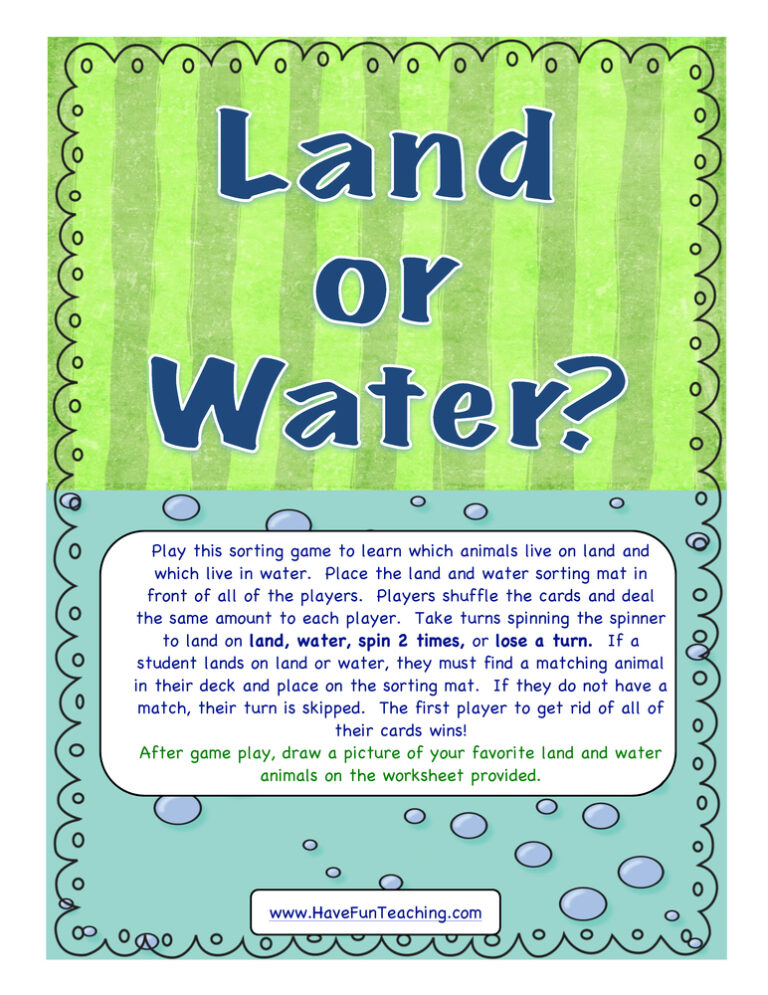
This land or water activity is a K-2nd grade animal sorting card game with a spinner and sorting mat. Children classify animals by where they live, and an answer key is included.
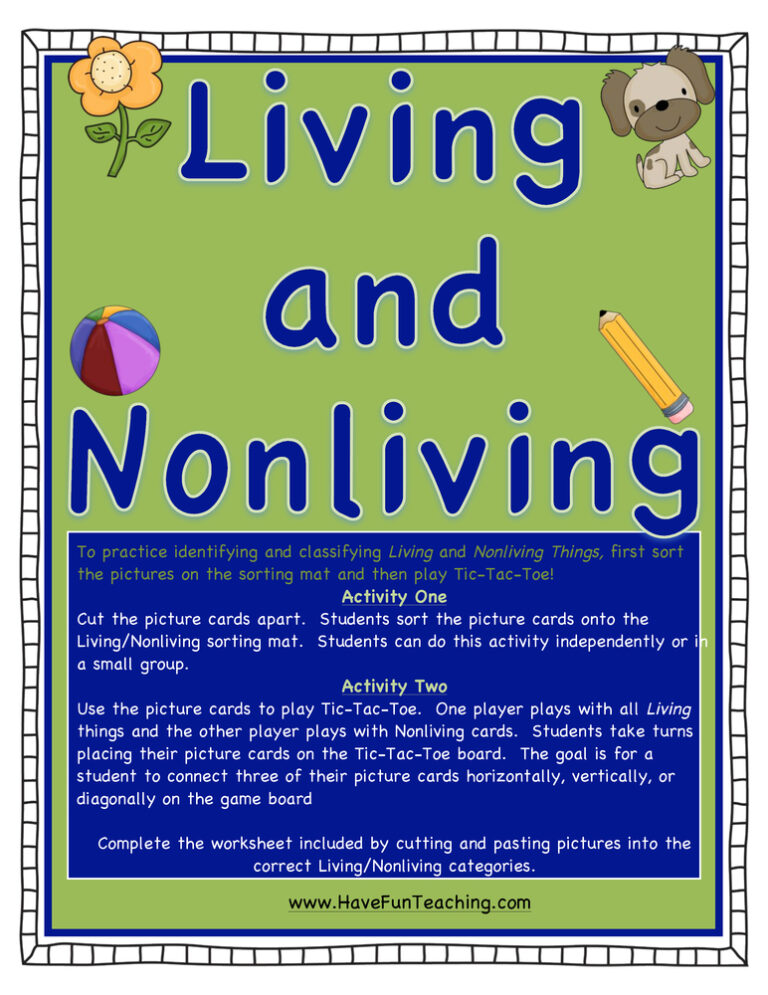
This living and nonliving activity gives kindergarten to 2nd grade students 12 picture cards and a sorting mat to classify things that are alive. A practice page and answer key are included.
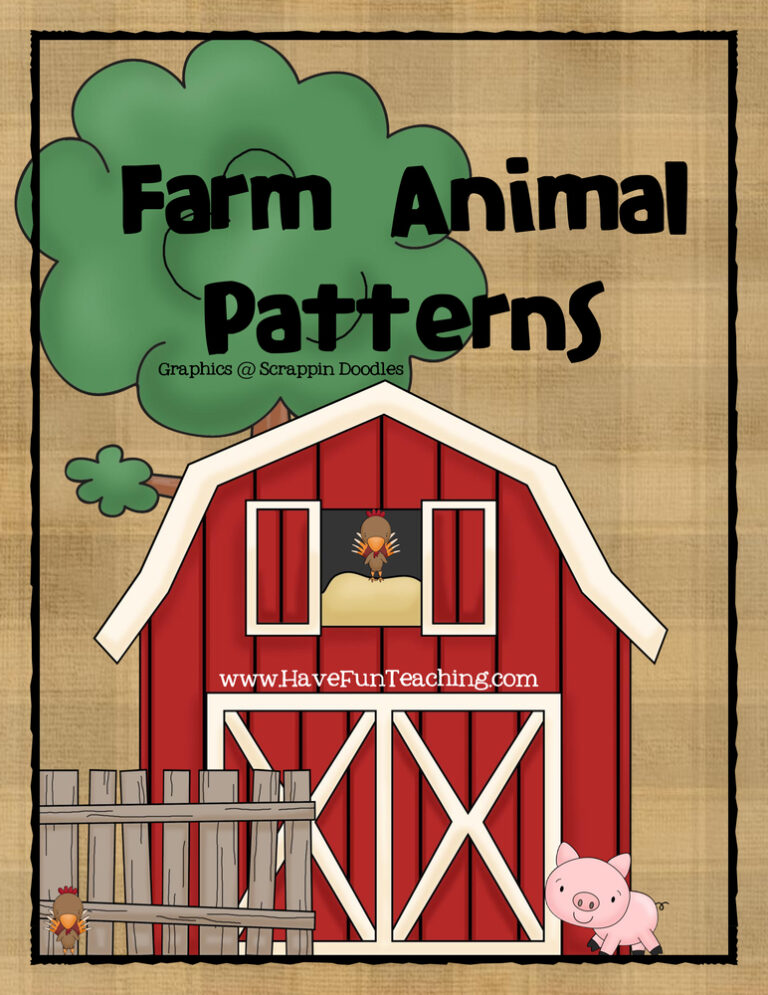
Kids finish farm animal patterns with picture cards in this farm sequencing activity for Preschool through 1st Grade, then practice on a worksheet. Answer key included.
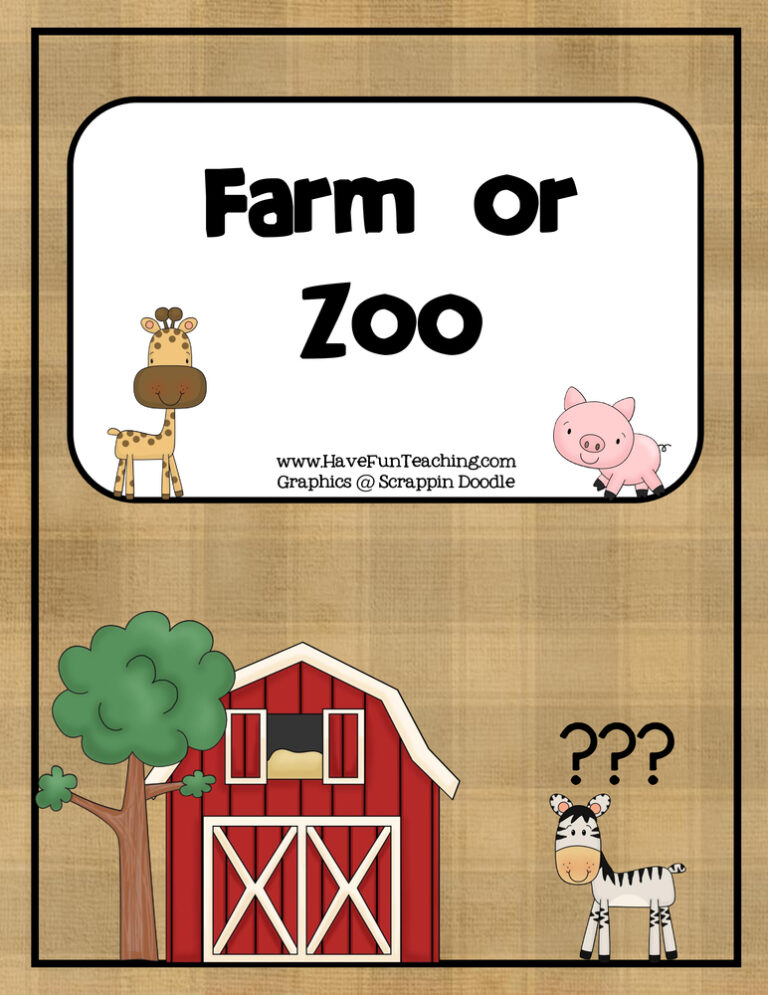
This farm or zoo matching activity has PreK-1st Grade children sort 12 animal picture cards onto a farm and zoo mat, with a practice worksheet and answer key included for easy checking.
This farm puzzle activity lets Preschool to 1st grade children cut out and rebuild a 15-piece farm picture, building problem solving, scissor skills and farm animal words.
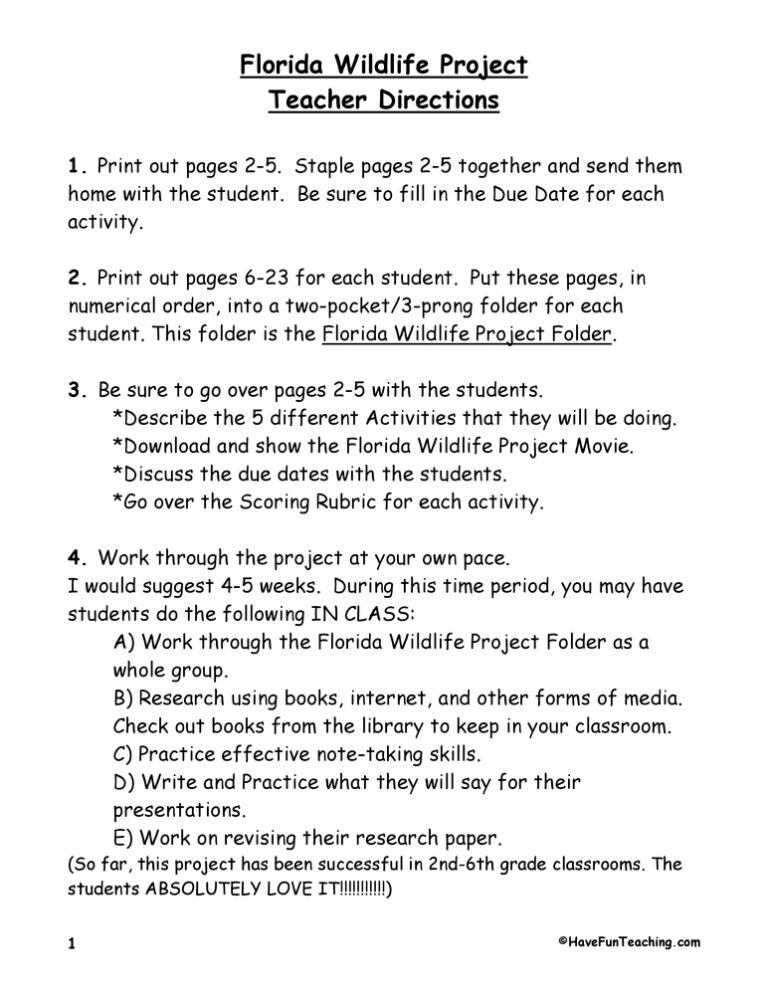
Using this Florida Wildlife Animal Project, students research, design a poster, create a model and give a presentation to learn about the animals that live in Florida.
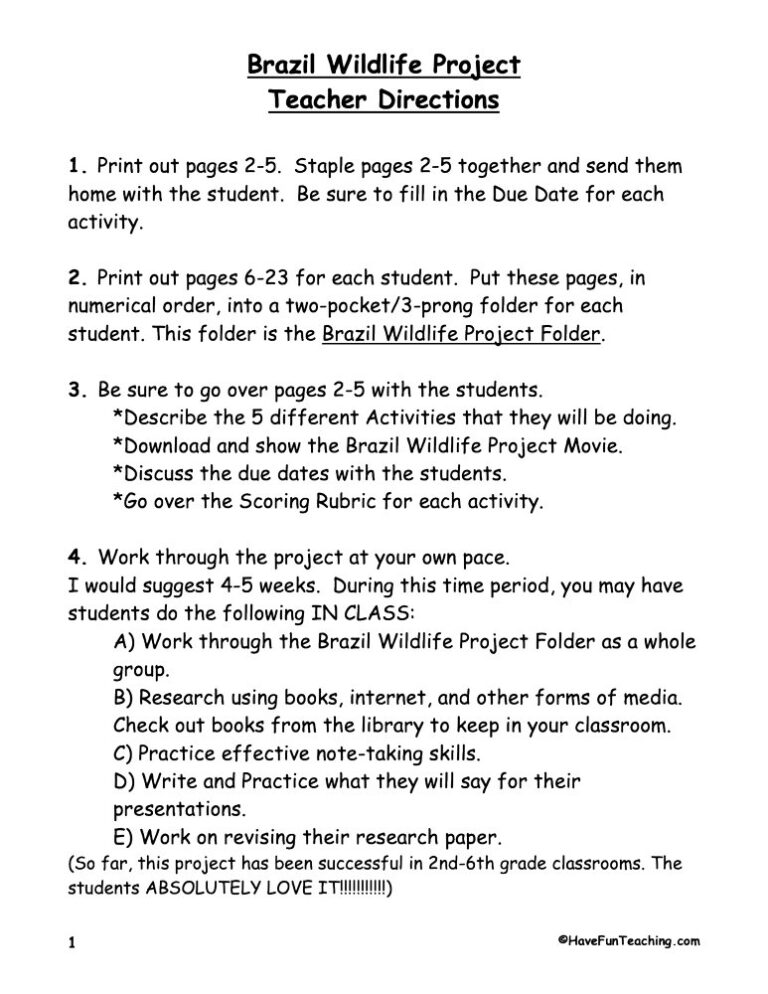
This Brazil wildlife animal project activity has students sort ten rainforest animals by layer, then research one animal and share it. Made for 3rd to 5th grade, answer key included.
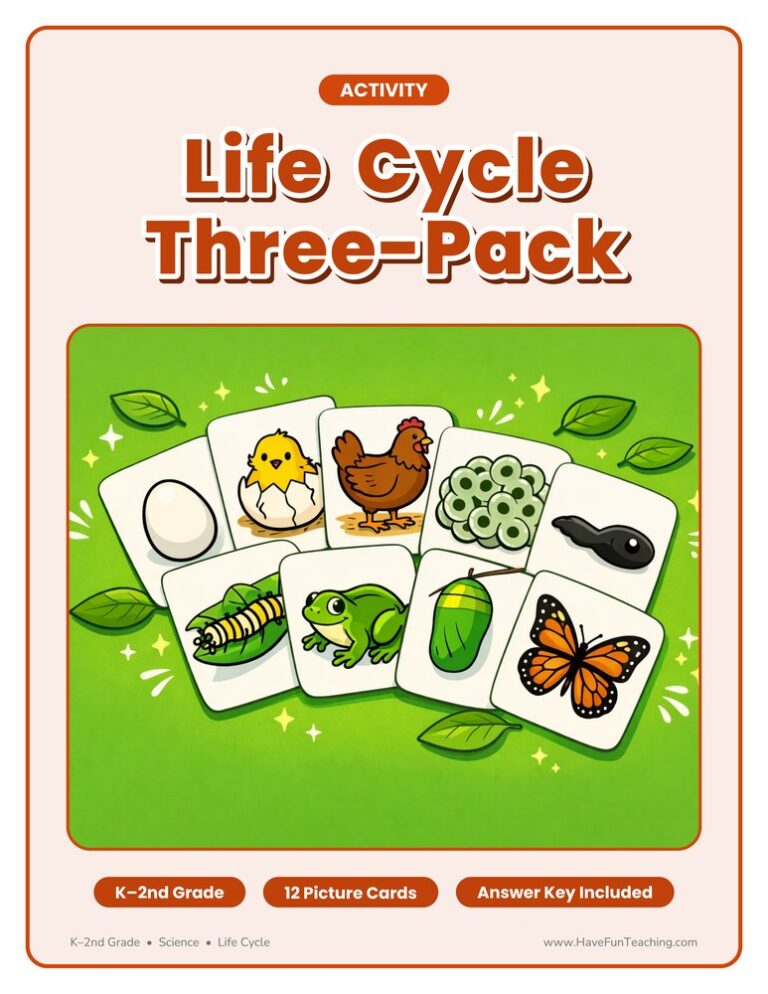
Try this life cycle three pack science life cycles activity with kindergarten to 2nd grade students. Kids sequence chicken, frog and butterfly picture cards; an answer key is included.
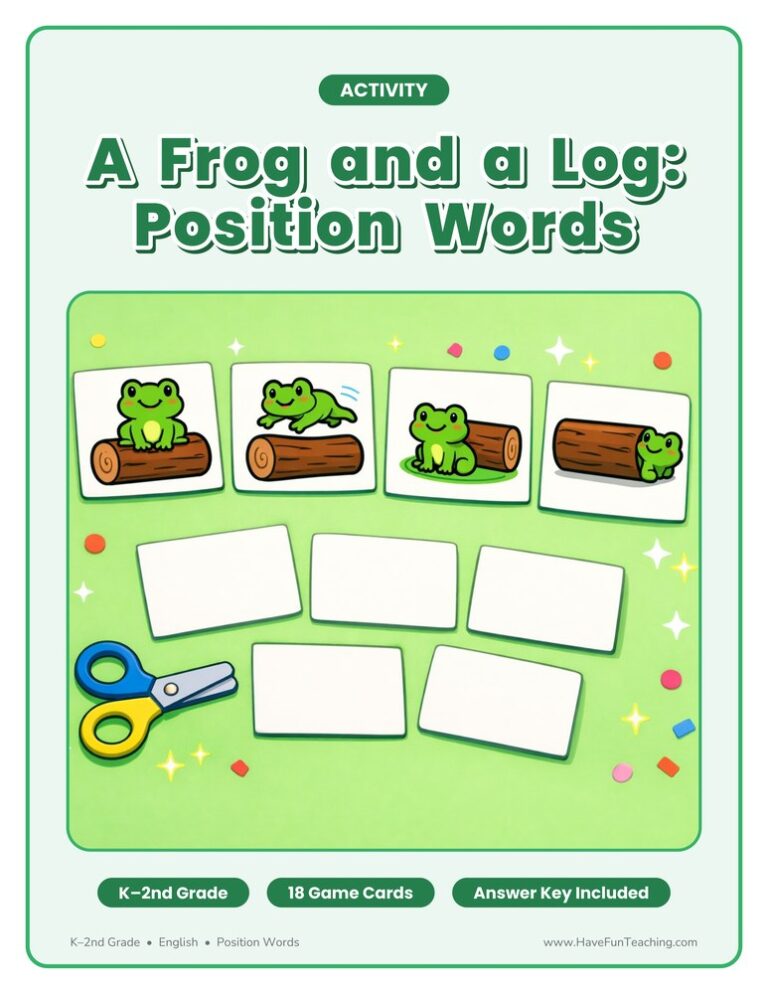
This frog and a log position words activity helps K-2nd Grade children match picture cards to on, under, above, next to, in front of and behind, with practice and an answer key included.
This farm numbers activity has kindergarten and 1st grade children put 50 barn number cards in order from 1 to 50, with a practice page and answer key included.
Kids are natural animal experts, and science gives that curiosity a structure. Young learners sort animals by what they look like and where they live. Then they learn the big groups: mammals, birds, fish, reptiles, amphibians and insects, each with clues like fur, feathers or scales. Older students dig into life cycles, food chains and adaptations, like why a polar bear's thick fur helps it survive. The click moment is when a child sees a whale and says "That's a mammal, not a fish, because it breathes air!"
How we make animal science stick
Animal units can easily turn into fun facts that fade by Friday. These three moves help kids remember the big ideas.
Sort, then explain
Give each group a stack of animal picture cards and let them sort however they like. Then share the rules they used. Most groups land close to the real classes, and you introduce mammals, birds and reptiles as the scientist's version of their sort.
Why it works: going from real objects to pictures to symbols is a core recommendation of the U.S. Department of Education's elementary math guide.
A catchy song gives kids a hook for the classification clues. We play it during transitions for a week, then pause it and let kids fill in the next animal group. It's amazing how many hands go up.
Why it works: words set to a repeating melody are easier to recall than the same words spoken (Wallace, 1994).
A short reading and quiz on mammals tells you who really understands the traits. Go over the answers right away and let kids fix their own mistakes. The quick feedback is what makes it stick.
Why it works: researchers who compared ten study methods found practice testing is one of the two that work best (Dunlosky and colleagues, 2013).
Animal science questions from teachers and parents
What are the main animal groups kids learn?
Most elementary science covers mammals, birds, fish, reptiles, amphibians and insects. Kids learn one or two clues for each, like mammals have hair and feed their babies milk.
How do you teach animal classification to kids?
Let them sort animal pictures first, then compare their groups to the scientific ones. Tricky animals like whales, bats and penguins make great discussion starters.
What is an animal adaptation?
An adaptation is a body part or behavior that helps an animal survive where it lives. A camel's hump stores fat, and a duck's webbed feet help it swim.
What age do kids learn about animal habitats?
Kindergarten and 1st grade students match animals to homes like oceans, forests and deserts. By 3rd to 5th grade they connect habitats to food chains and adaptations.
Are these animal worksheets printable?
Yes. Every worksheet on this page is a printable PDF you can use in class or at home, and members get the whole library.
Written by the Have Fun Teaching team of elementary teachers and homeschoolers. Research: U.S. Department of Education, What Works Clearinghouse (2021). Assisting Students Struggling with Mathematics: Intervention in the Elementary Grades. Wallace, W. T. (1994). Memory for music: Effect of melody on recall of text. Journal of Experimental Psychology: Learning, Memory, and Cognition, 20(6). Dunlosky, J., Rawson, K. A., Marsh, E. J., Nathan, M. J., & Willingham, D. T. (2013). Improving Students' Learning With Effective Learning Techniques. Psychological Science in the Public Interest, 14(1).
3 days free
2:39Ready to print!
Printables · Songs · Games
Loved by 2 million teachers & families
Where learning feels like play.
Printables, songs and games for every subject, Preschool through 6th. Ready to teach today, and kids beg for more.
$0due today
then $39.97$35.97for your first year, and $39.97 a year after that.






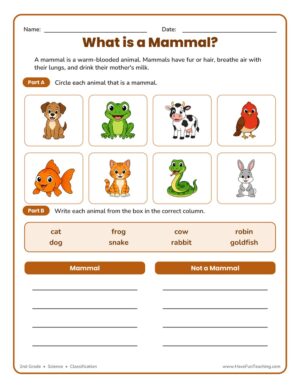 Try it withMammal Classification WorksheetWorksheetsOpen it →





