Skip to content
Start My 3 Free Days $0 today · cancel anytime

2nd Grade Rhyming Resources

4 2nd grade rhyming resources: 2 worksheets, 1 Common Core Lesson and 1 activity. How teachers use these

2nd Grade Rhyming Resources

4 2nd grade rhyming resources: 2 worksheets, 1 Common Core Lesson and 1 activity. How teachers use these

Worksheet
Worksheet2nd GradePoetry Rhyme and Rhythm Worksheet

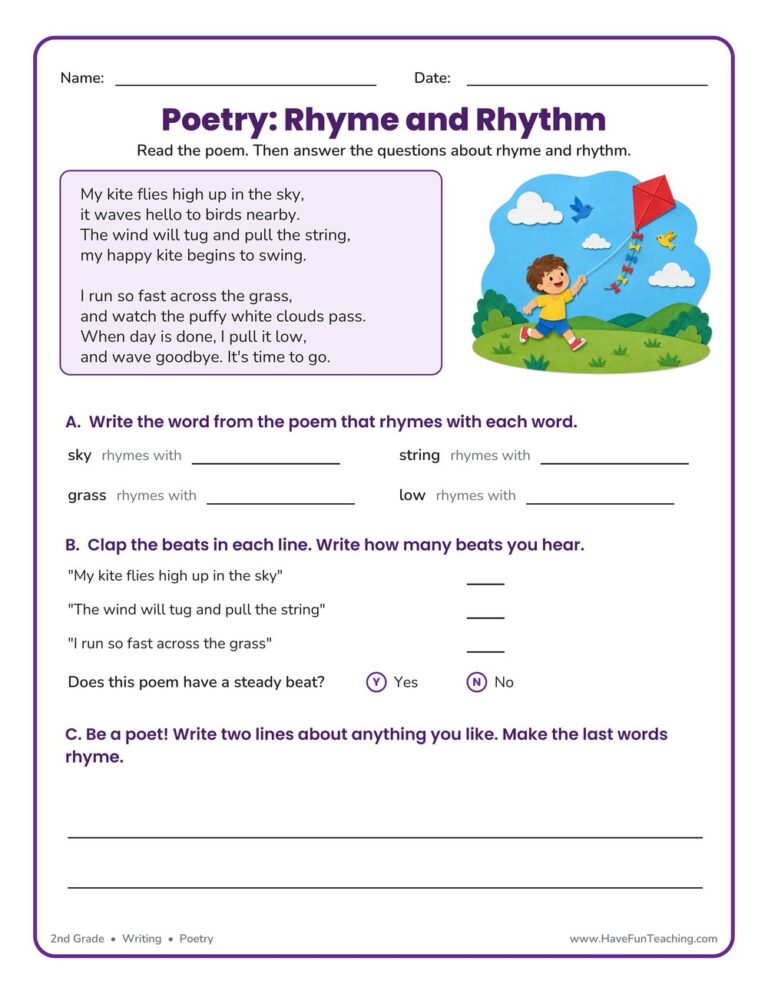
A kite-themed Poetry Rhyme and Rhythm Worksheet where 2nd graders read a poem, find rhyming words, clap out the beat, and write their own rhyming lines. Includes an answer key for quick, no-prep poetry practice.

Worksheet
Worksheet2nd GradeFinding Rhyming Words Worksheet

The Finding Rhyming Words Worksheet has 1st grade students match five long vowel words to their rhyme families, then write each word in a sentence. An answer key is included.

Common Core Lesson
Common Core Lesson2nd GradeRL.2.4 Second Grade Common Core Lesson

Using RL.2.4 Second Grade Common Core Lesson, studentsdescribe how words & phrases supply rhythm and meaning in a story, poem, or song.

Activity
Activity2nd GradeRhyming Words Bingo Activity

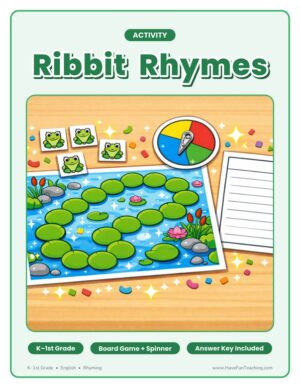
Using Rhyming Words Bingo Activity, students Play BINGO to practice identifying and listening for rhyming word pairs.

From our teachers' playbook

Sounds that match make words that stick

What do 2nd graders learn about rhyming?

By 2nd grade, kids move past hearing rhymes to using them. They find rhyming words in poems and songs, notice how rhyme and rhythm make a poem fun to read aloud, and spot words that rhyme but are spelled differently: blue / shoe / few. They use rhyming word families to read and spell new words. The click moment is when a student explains that a poet chose a word because it rhymes, not just because it fits.

Our favorite ways to teach rhyming

Rhyme is music for the ears. These moves keep kids listening and creating.

Rhyme and rhythm in poems

Read a short poem aloud and clap the beat, then have kids highlight the rhyming pairs on the rhyme and rhythm worksheet. Ask, "Why do you think the poet picked that word?" It turns rhyme into an author's choice.

Why it works: handing over the work step by step, from teacher to student, is one of the most widely used teaching frameworks (Pearson and Gallagher, 1983).

Poetry Rhyme and Rhythm WorksheetTry it withPoetry Rhyme and Rhythm WorksheetWorksheetsOpen it →

Word family work

Build a word family on the board, like -ight: light, night, fight. Then use the word work activity to stretch it further. Rhyming families help kids spell lots of words from one pattern.

Why it works: the National Reading Panel found that systematic, explicit phonics teaching clearly improves how children learn to read.

Word Work ActivityTry it withWord Work ActivityActivitiesOpen it →

Find the rhyme

Give kids a short passage and a timer and let them circle every rhyming pair they can find on the finding rhymes worksheet. Then compare with a partner. Quick searches build sharp ears.

Why it works: pulling an answer out of memory makes it stick far better than rereading it, one of the strongest findings in learning research (Dunlosky and colleagues, 2013).

Finding Rhyming Words WorksheetTry it withFinding Rhyming Words WorksheetWorksheetsOpen it →

Questions teachers and parents ask about rhyming

What do 2nd graders learn about rhyming?

They find rhyming words in poems and songs, use word families to read and spell, and learn how rhyme and rhythm add meaning and fun to poetry.

Why is rhyming important for reading?

Rhyming helps kids hear the sound parts of words. That makes it easier to decode and spell words that share a pattern, like cake, make and lake.

Can words rhyme if they are spelled differently?

Yes! Rhyme is about sound, not spelling. Blue, shoe and few all rhyme even though their endings look different.

How can I practice rhyming at home?

Play "rhyme time" in the car: say a word and take turns naming words that rhyme. Silly made-up words count too, as long as they rhyme.