
Skip to content
Start My 3 Free Days $0 today · cancel anytime

2nd Grade Subject and Predicate Resources

11 2nd grade subject and predicate resources: 8 worksheets, 2 videos, 1 activity and more. How teachers use these

2nd Grade Subject and Predicate Resources

11 2nd grade subject and predicate resources: 8 worksheets, 2 videos, 1 activity and more. How teachers use these

Worksheet
Worksheet2nd GradeWriting Complete Sentences about an Image Worksheet

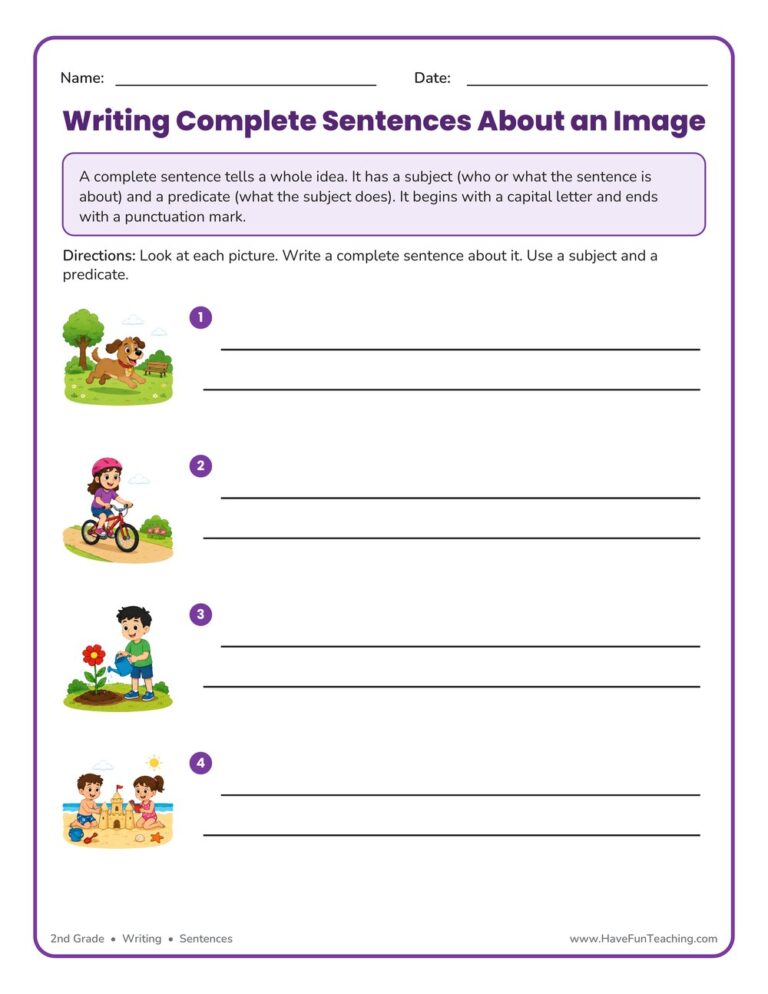
This Writing Complete Sentences About an Image Worksheet gives 2nd graders four picture prompts to practice building sentences with a subject and predicate. Includes sample answers — great for no-prep grammar and writing practice.

Worksheet
Worksheet2nd GradeIdentify Subject Worksheet

This identify subject worksheet has 2nd Grade students write the complete subject of four sentences, then label four more as WHO or WHAT, with an answer key for fast checking.

Video
Video2nd GradeSubject and Predicate Song (Original Music Video)

Using the Subject and Predicate Song (Original Music Video), students will be able to define, give examples and use subjects and predicates in their own writing using the catchy and memorable lyrics.

Worksheet
Worksheet2nd GradeSpeaking in Complete Sentences Worksheet

A Speaking in Complete Sentences Worksheet that helps 2nd graders tell a whole sentence from a fragment, find the naming part, and say and write one about a picture. Answer key included for confident sentence practice.

Worksheet
Worksheet2nd GradeUsing Complete Sentences Worksheet

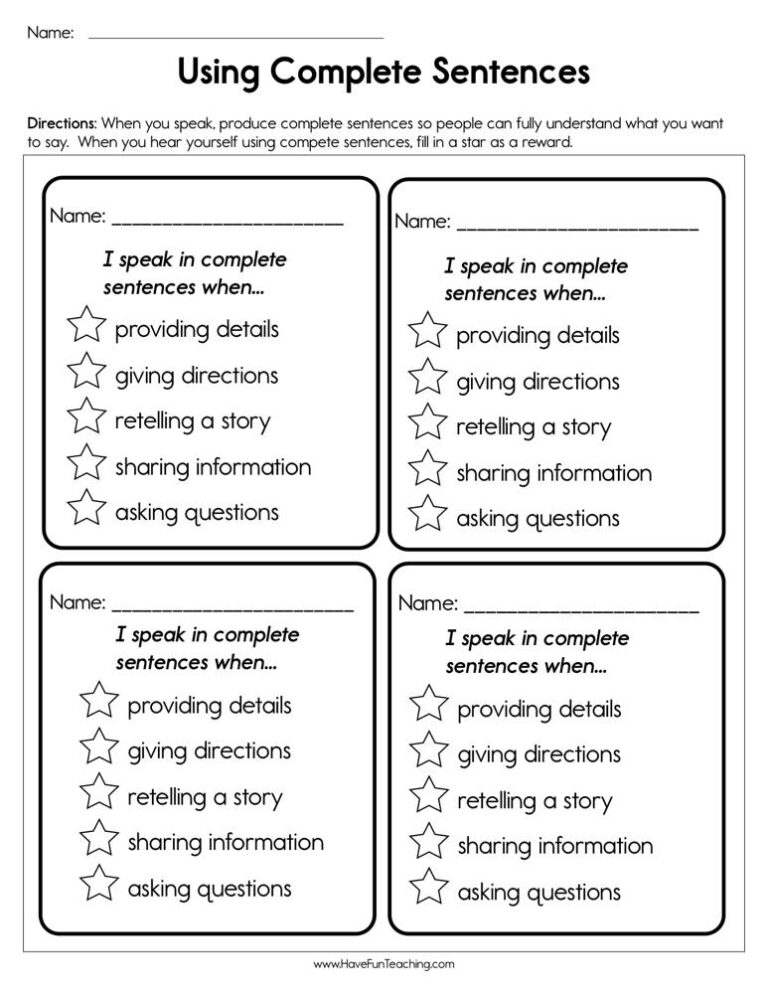
This Using Complete Sentences Worksheet helps 2nd graders find the subject and the predicate, match the two halves, and write a complete sentence of their own. Answer key included for fast, no-prep grammar practice.

Worksheet
Worksheet2nd GradeSubject Verb Agreement Worksheet

A 2nd grade subject verb agreement worksheet where students fill in the bubble to choose the verb that matches each subject. Includes a complete answer key—perfect for quick, no-prep grammar practice at home or school.

Activity
Activity2nd GradeComplete Sentences with Subject and Predicate Activity

This complete sentences with subject and predicate activity has 1st to 3rd grade students match picture subject cards to predicate cards, then practice on a worksheet. Answer key included.

Worksheet
Worksheet2nd GradeWriting Predicates Worksheet

This writing predicates worksheet helps 2nd graders finish five sentences with their own predicate and tell subjects from predicates. An answer key with sample answers is included.

Worksheet
Worksheet2nd GradeIdentifying Predicates Worksheet

This identifying predicates worksheet helps 2nd graders find the complete predicate in each sentence and tell if a detail shows where or when. An answer key is included for fast checking.

Worksheet
Worksheet2nd GradeWrite the Subject Worksheet

This write the subject worksheet has 2nd graders finish sentences by adding their own subjects and tell whether subjects name a person or a thing. An answer key is included for quick checking.

Video
Video2nd GradeSubject and Predicate Song (MP3)

Using the Subject and Predicate Song (MP3), students will be able to define, give examples and use subjects and predicates in their own writing using the catchy and memorable lyrics.

From our teachers' playbook

Who did it? What happened?

What do 2nd graders learn about subject and predicate?

Second graders learn that every complete sentence has two parts. The subject tells who or what the sentence is about, and the predicate tells what the subject does or is. In The silly dog | chased its tail., the subject is "The silly dog" and the predicate is "chased its tail." Kids practice finding each part, fixing sentences that are missing one, and writing their own complete sentences. The click comes when they can spot a fragment like "Ran to the park" and ask, "Wait, who ran?"

Our favorite ways to teach subject and predicate

Two simple questions do most of the work here: "Who or what?" and "What did they do?" These moves get kids asking them without thinking.

Sing the two parts

Play the song at the start of the lesson and again at the end of the day. A catchy chorus gives kids words to explain the rule. You will hear them humming it while they edit their writing.

Why it works: a catchy, repeating tune gives the brain a hook to hang words on, so sung text is remembered better (Wallace, 1994).
Subject and Predicate Song (Original Music Video)Try it withSubject and Predicate Song (Original Music Video)VideosOpen it →

Snap sentences together

Write subjects on blue strips and predicates on green strips. Kids snap one of each together and read the result out loud. "My teacher ate a cloud" earns big laughs and proves they know both parts are needed.

Why it works: kids understand an idea best when they touch it, then draw it, then write it, the order the U.S. Department of Education recommends for elementary math.

Complete Sentences with Subject and Predicate ActivityTry it withComplete Sentences with Subject and Predicate ActivityActivitiesOpen it →

Think aloud, then hand it over

Read a sentence and model your thinking: "Who is this about? The baby. What did the baby do? Giggled." Underline the subject once and the predicate twice. Do two together, then let kids try one on their own.

Why it works: handing over the work step by step, from teacher to student, is one of the most widely used teaching frameworks (Pearson and Gallagher, 1983).

Identify Subject WorksheetTry it withIdentify Subject WorksheetWorksheetsOpen it →

Questions parents and teachers ask

What is a subject and predicate in 2nd grade?

The subject is who or what a sentence is about. The predicate tells what the subject does or is. In "Maya kicked the ball," Maya is the subject and "kicked the ball" is the predicate.

How do I explain subject and predicate to a child?

Use two questions. Ask "Who or what is this about?" to find the subject, then "What did they do?" to find the predicate. Kids can circle the first part and underline the second.

What is a sentence fragment?

A fragment is missing the subject or the predicate. "Jumped over the log" has no subject, and "The big frog" has no predicate. Second graders fix fragments by adding the missing part.

How can I practice subject and predicate at home?

Make silly sentences at dinner. One person says a subject, the next adds a predicate, and everyone reads it out loud. Funny combinations help kids remember that a sentence needs both parts.



