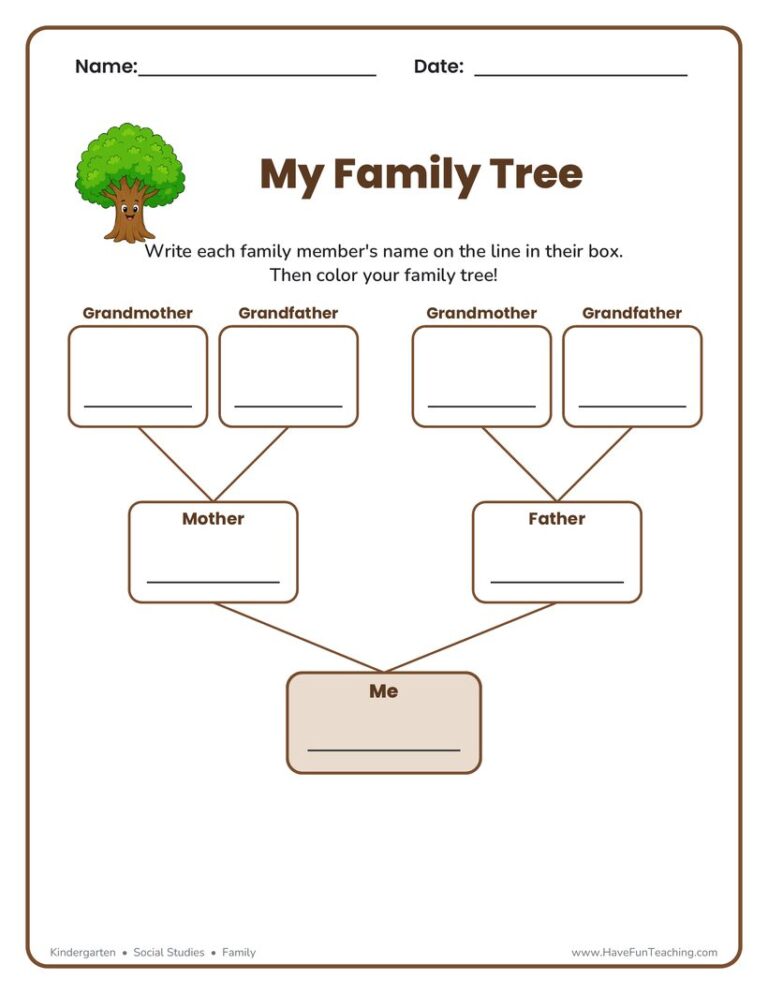
A 1 Child Family Tree Worksheet where kindergarteners write the names of their grandparents, parents, and themselves on a friendly tree they can color. A no-prep, all-about-me activity perfect for the start of a family unit.
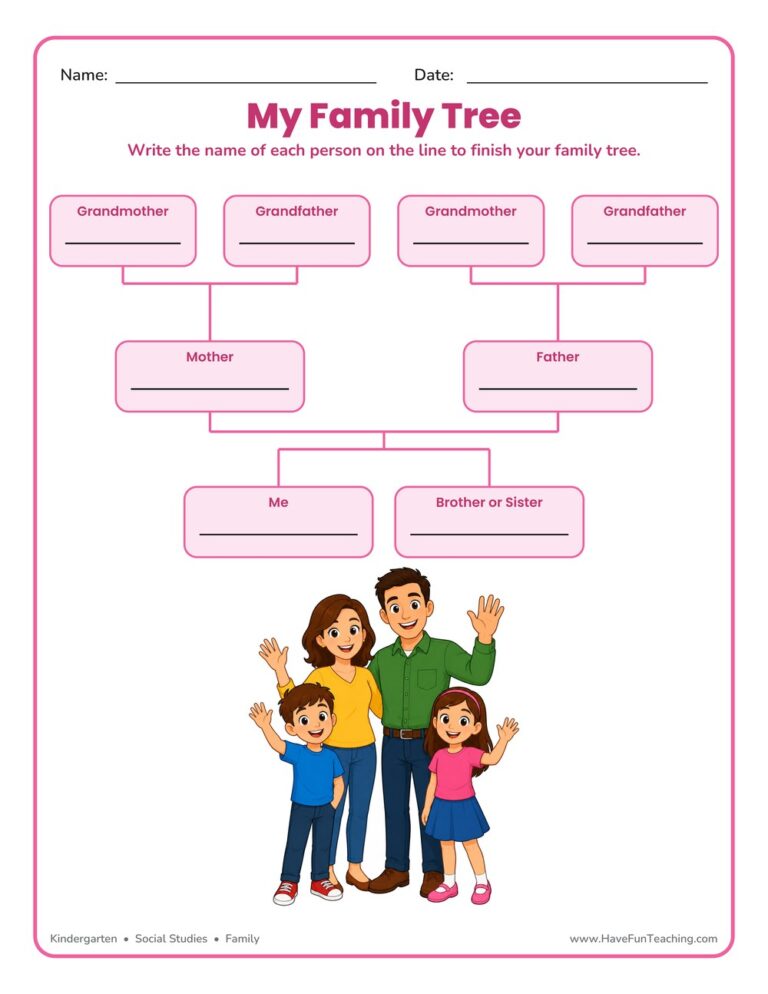
The 2 Children Family Tree Worksheet lets kindergarteners fill in the names of their grandparents, parents, and two children to build a simple family tree. A fun, hands-on way to explore family and social studies.
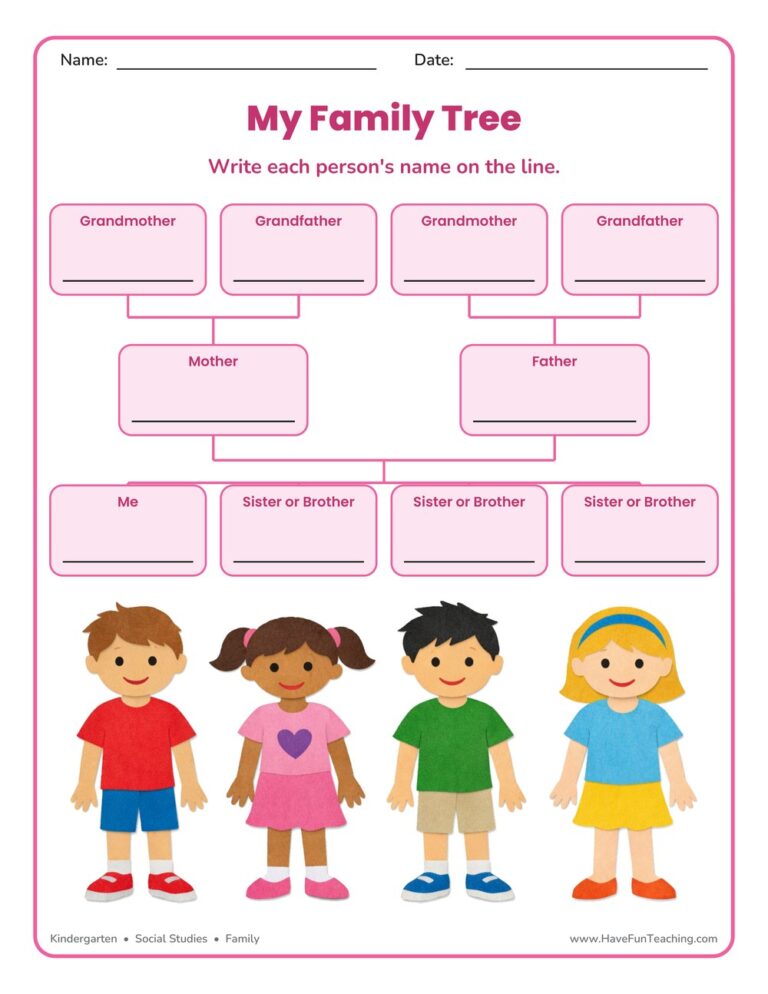
This 4 children family tree worksheet gives Kindergarten students a clear, printable place to name four grandparents, two parents, and four children. A personal graphic organizer that makes family vocabulary stick.
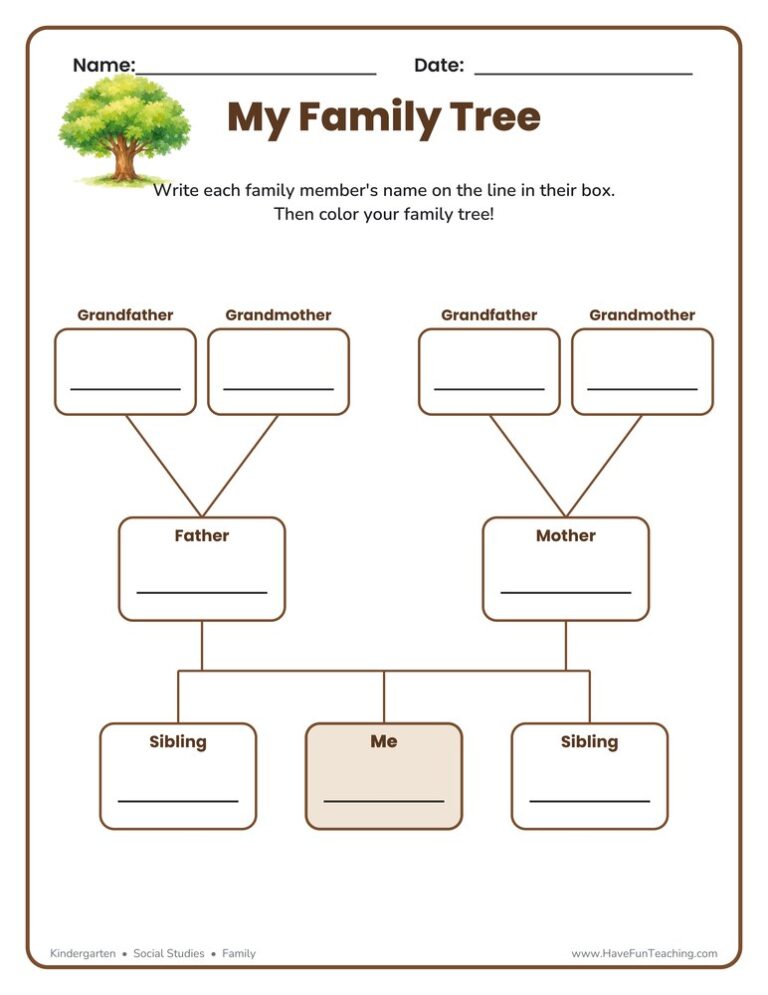
The 3 Children Family Tree Worksheet gives kindergarten learners a friendly diagram to fill in four grandparents, two parents, and three children. A no-prep way to explore family relationships and build early social studies vocabulary.
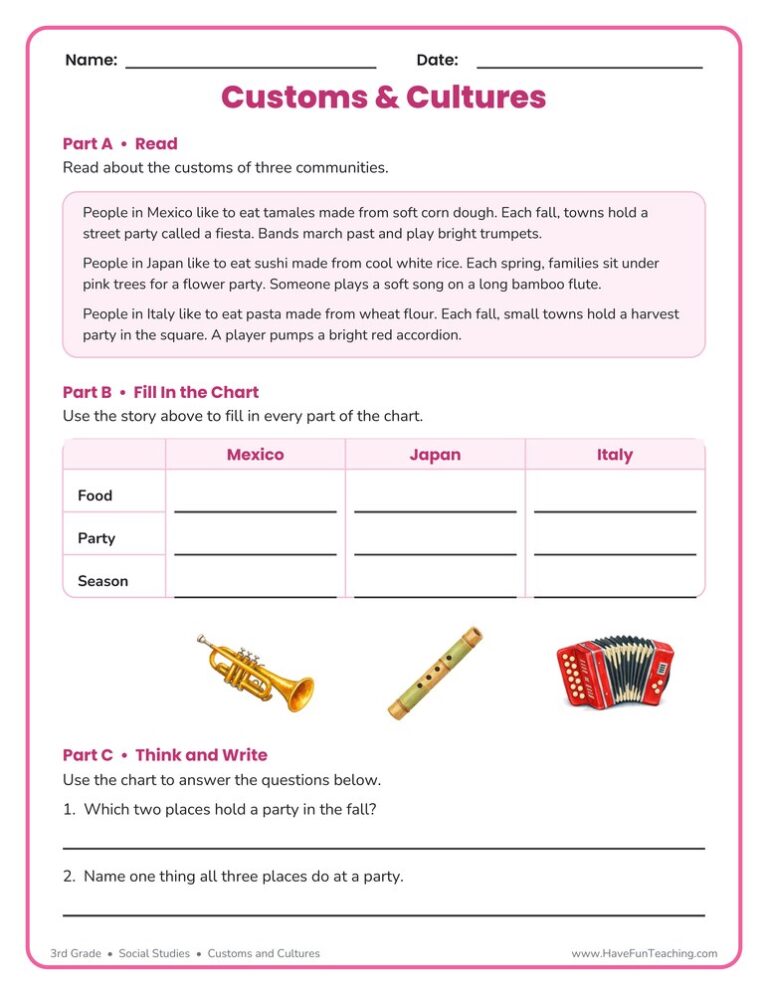
This Customs and Cultures Comparison Worksheet has 3rd graders read about three communities, then chart the food, party, and season for each one. Answer key included — an easy, no-prep way to practice comparing traditions.

This Grandparents Day Reading Comprehension Worksheet gives 2nd grade readers an original story, four multiple-choice questions, and one written response about a boy and his grandma. An answer key is included.
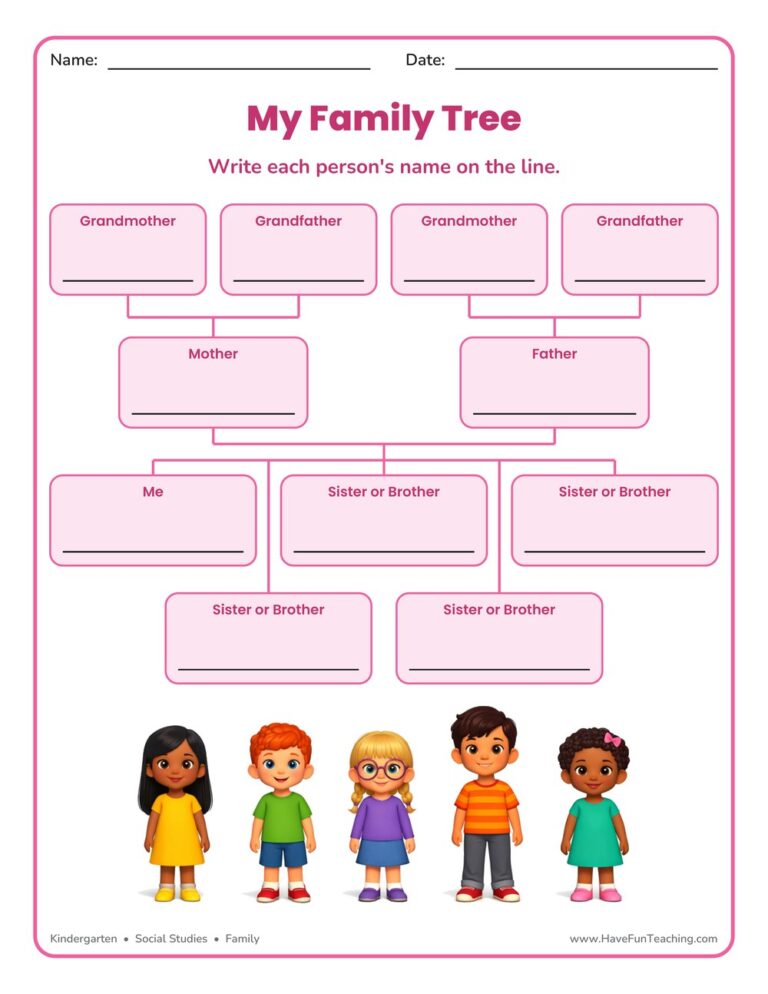
The 5 children family tree worksheet gives Kindergarten students eleven labeled boxes for four grandparents, two parents, and five children. A friendly first graphic organizer that builds family vocabulary and handwriting on one printable page.

The What a Great Fall Reading Comprehension Worksheet gives 2nd graders a short story about a boy learning to ride a bike, four bubble questions and a written response. Answer key included for quick no-prep practice.
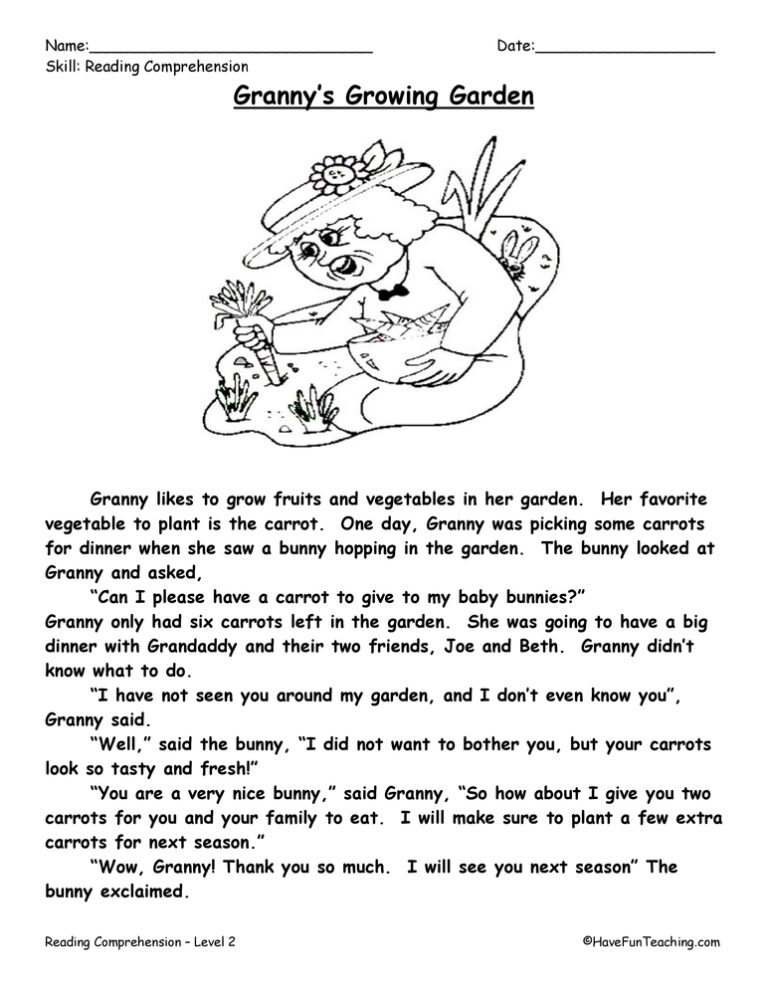
This Granny's Growing Garden reading comprehension worksheet gives 2nd graders a family garden story, four multiple-choice questions and a short response, with an answer key, so kids practice finding story details.
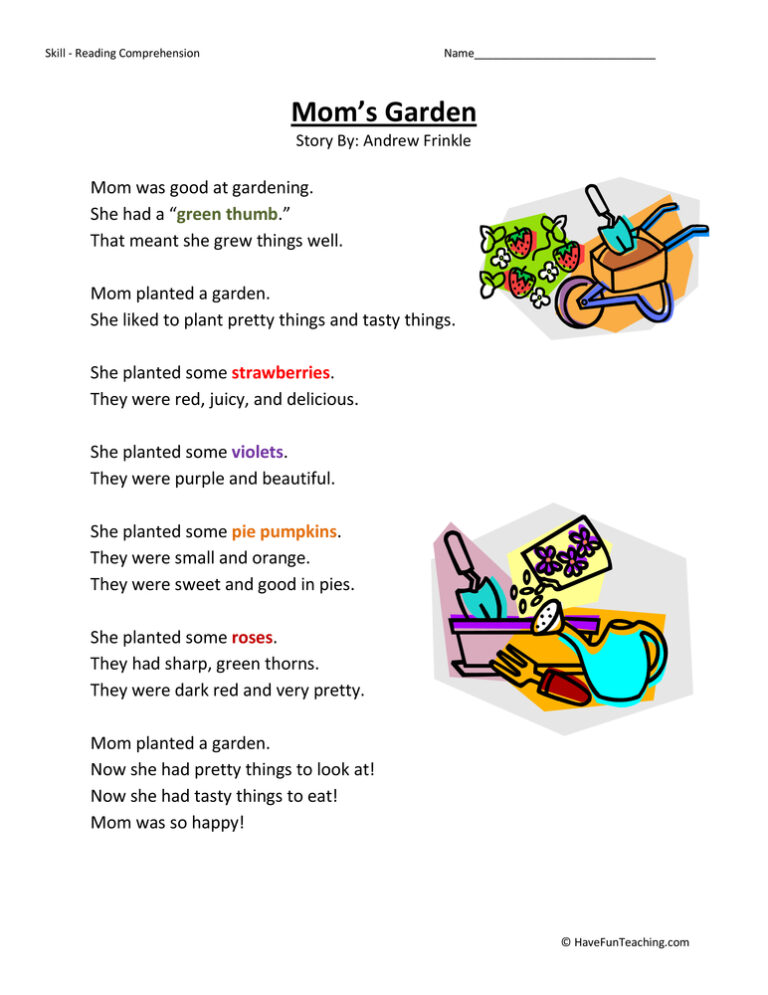
Mom's Garden Reading Comprehension Worksheet pairs an original 2nd Grade passage with four bubble questions and one written response, plus an answer key, so students practise proving answers from the text.
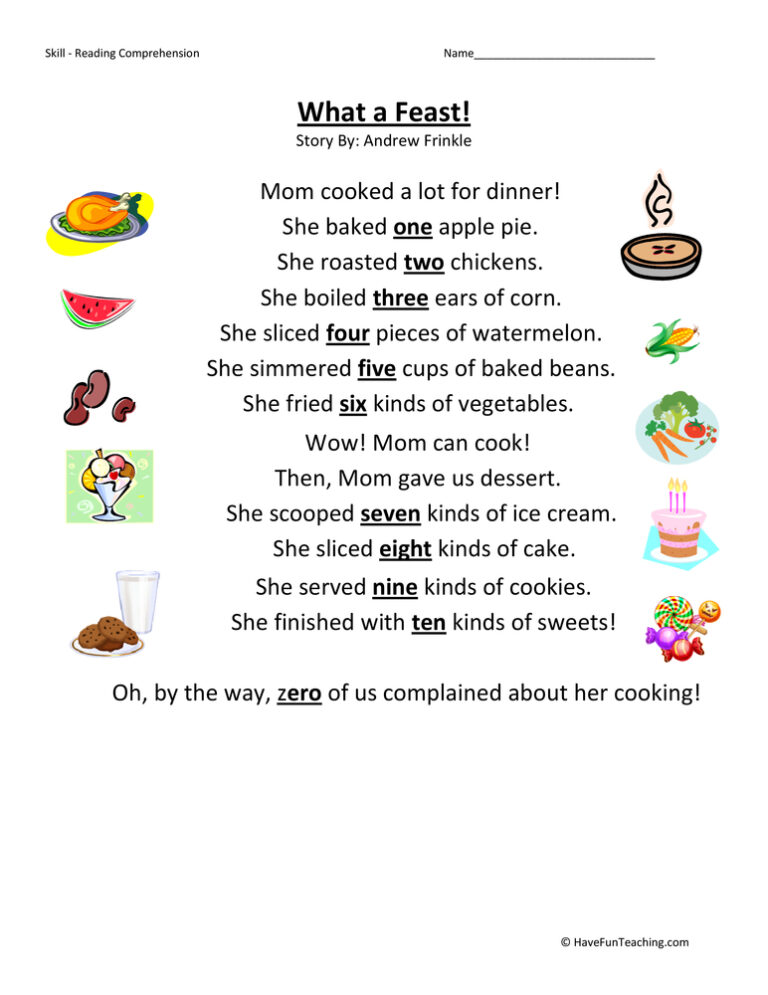
The What a Feast Reading Comprehension Worksheet pairs a short 1st grade story about a family dinner with five fill-in-the-bubble questions and an answer key, so new readers practice finding proof in the text.
This Mommy Is Always Exercising reading comprehension worksheet gives 1st grade readers a warm family story about a mommy who loves to exercise, five bubble questions and an answer key for easy reading practice.
This birdhouses reading comprehension worksheet has 5th graders read a two-page story about building with Grandpa, answer questions with text evidence, and check their work with the answer key.
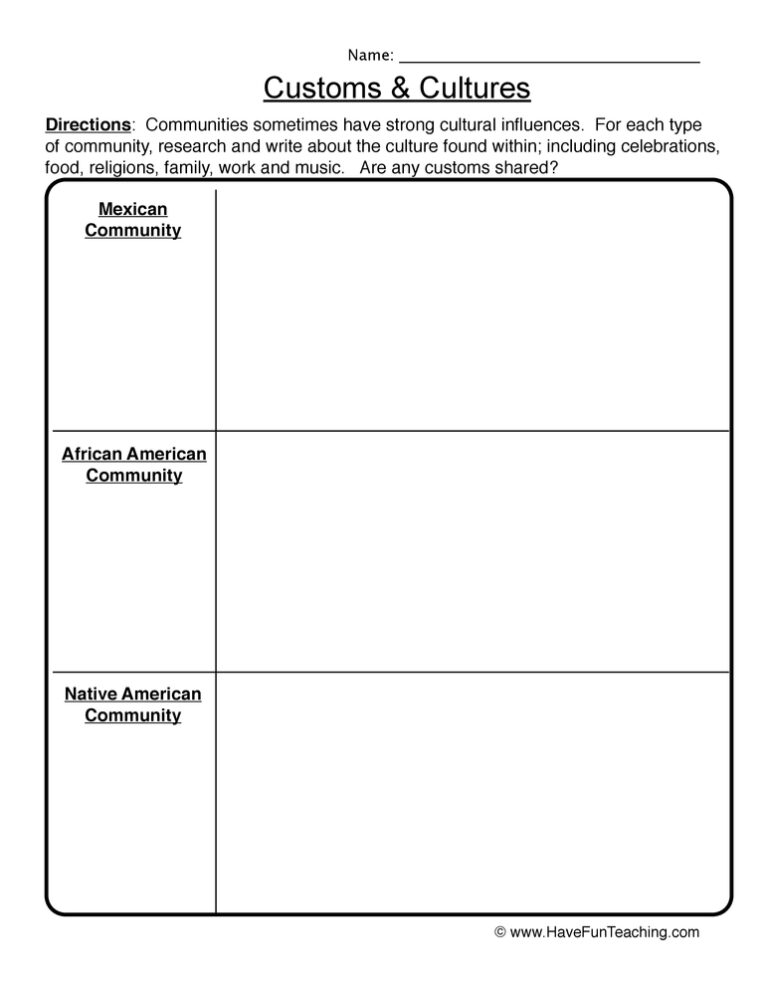
In this customs and cultures worksheet, 4th graders research a celebration, food, song or family custom from three American communities, cite their source, and find a custom two of them share.
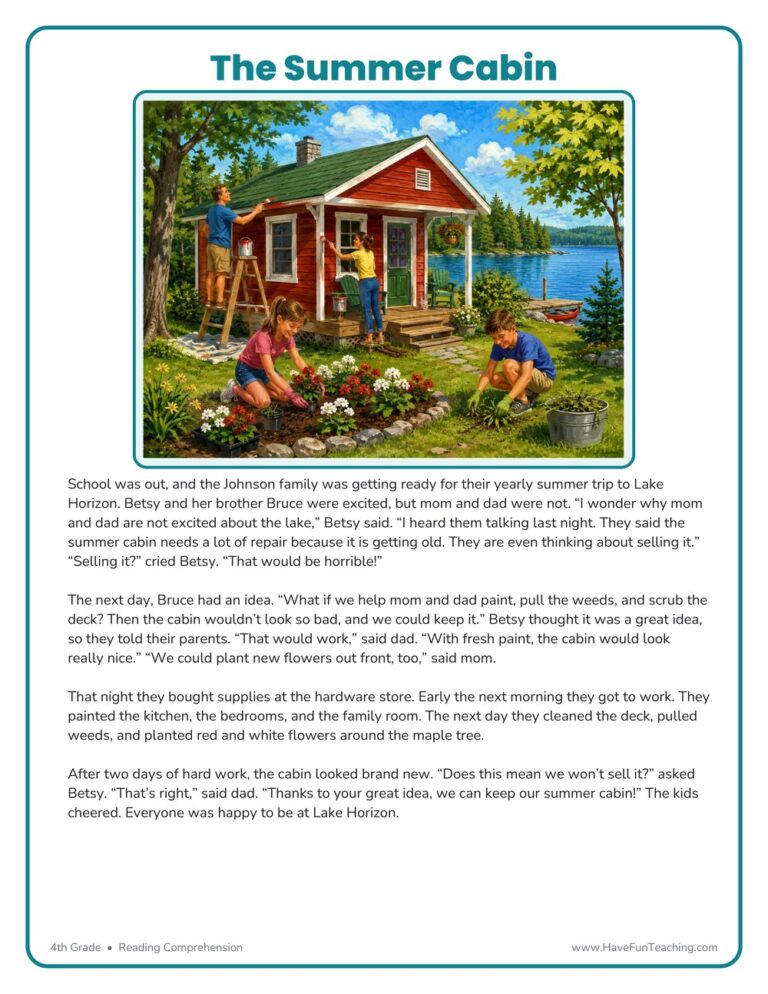
The Summer Cabin Reading Comprehension Worksheet gives 4th graders a family story with a color illustration and five questions. Answer key included — a no-prep way to practice reading comprehension.

This Mommy's Necklace reading comprehension worksheet gives 4th graders a nonfiction passage on family heirlooms, with questions and an answer key that build vocabulary and main-idea skills.
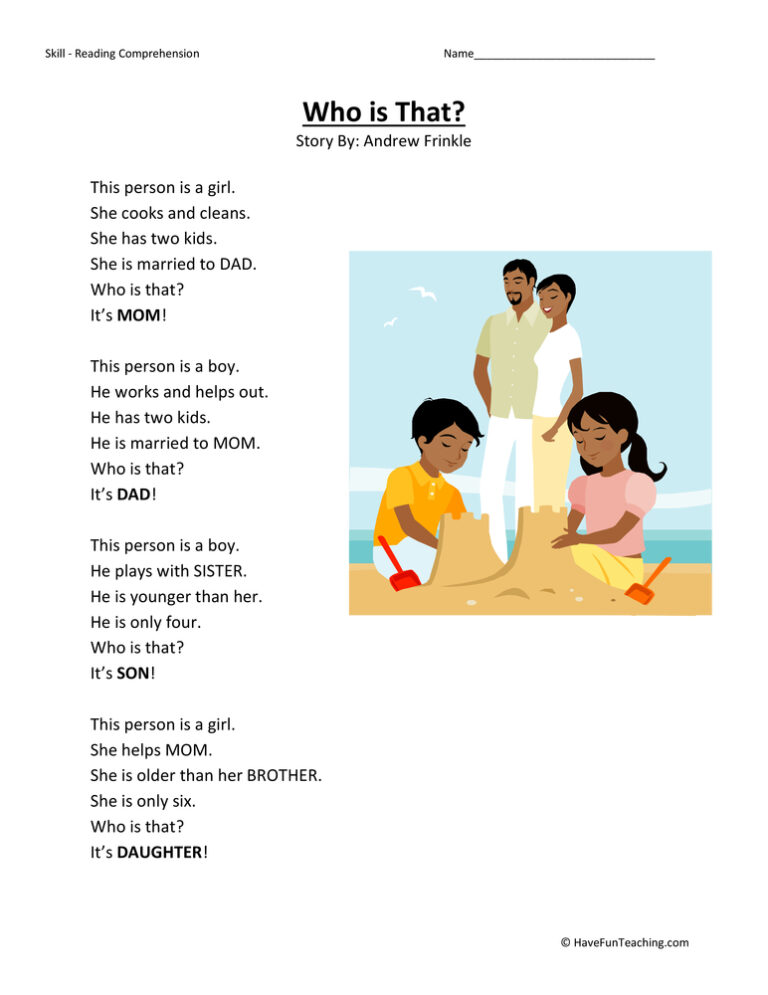
This who is that reading comprehension worksheet gives kindergarten readers three family riddles and five bubble-in questions. An answer key is included, so every answer is easy to check against the clues.

This So Tired Reading Comprehension Worksheet gives 3rd Grade students an original story about a tired girl and her dad, plus six questions and an answer key, so comprehension practice takes one page.

This Grandpa's Books - Reading Comprehension Worksheet gives 5th graders a two-page story about a family book room, plus questions that ask for text evidence. Answer key included for fast, no-prep practice.
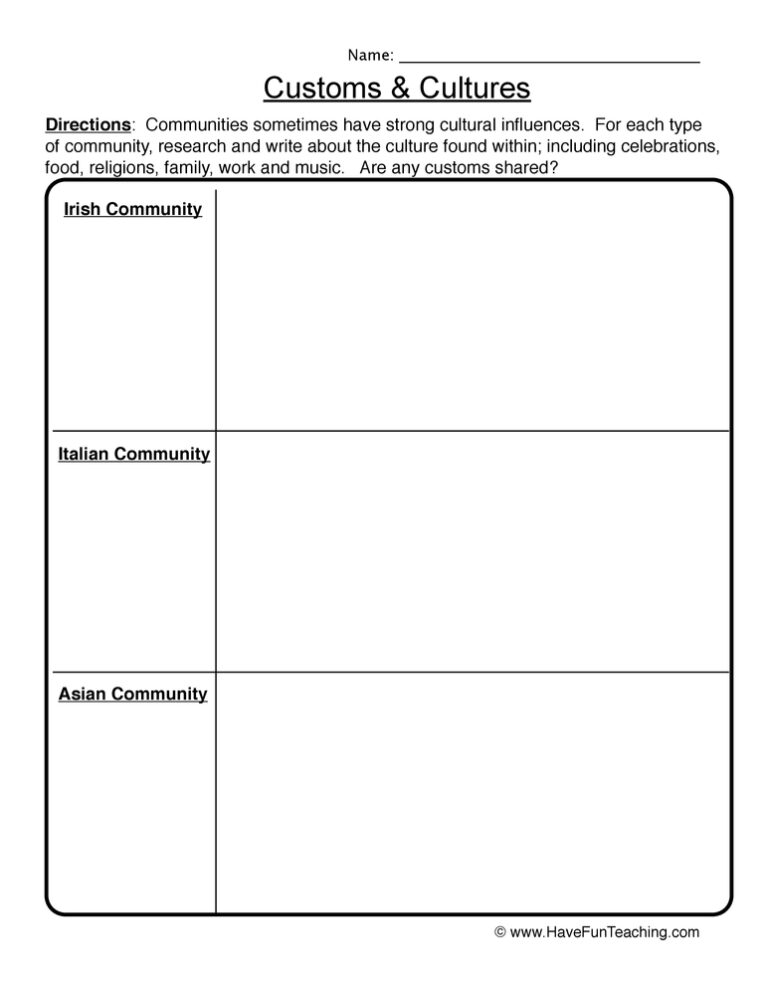
With this customs and cultures worksheet, 4th graders look up a celebration, food, song or family custom from Irish, Italian and Asian American communities, note their source, and compare what they find.