
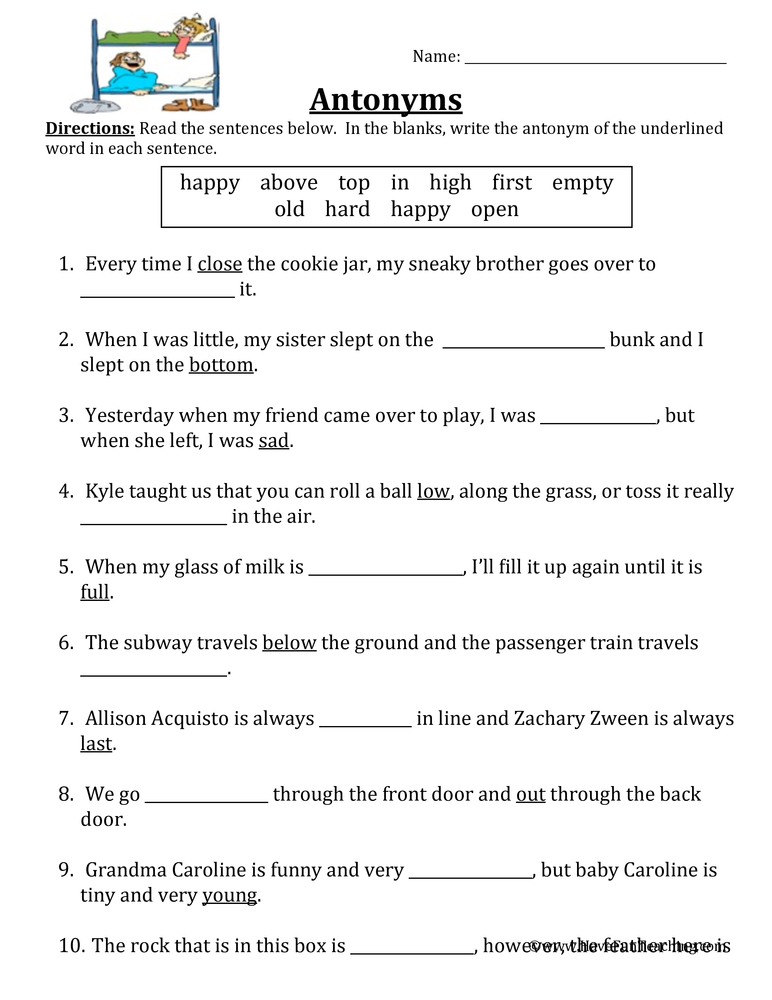
Antonym Fill in the Blank Worksheet
Students use each underlined word to figure out its opposite and write it in the blank. This 2nd Grade antonym fill in the blank worksheet includes a word bank and an answer key, so vocabulary practice checks itself.
$6.97
Or free with a membership — members pay $3.33/mo for all 10,000+ resources. See plans
Want this one free?
Tell us where to send it and it’s yours — no card, no catch.
One free resource per teacher. We’ll also send free teaching ideas each week — unsubscribe anytime.
Teaching is easier with a membership
Unlimited printables, games & videos for PreK–6th — for your classroom or homeschool. Cancel anytime.
Start your 3-day free trial$0 today · cancel anytime · Instant access to 10,000+ resources
About this resource
Description
Antonyms are words that mean the opposite of each other, like full and empty or slow and fast. Learning antonyms helps second graders grow their vocabulary, notice how one word choice changes the meaning of a whole sentence, and read with sharper comprehension. This Antonym Fill in the Blank Worksheet gives students focused practice pairing a word with its opposite inside a real sentence, so the skill is learned in context instead of memorized from an isolated list.
This 2nd grade antonyms worksheet asks students to read six short sentences, look closely at the underlined word in each one, and write its antonym in the blank. A word bank at the top of the page holds all six answers, so students can read every choice before they decide. Print the page and use it for independent practice, a literacy center, morning work, homework, or a quick review before a vocabulary assessment. The answer key makes checking the work fast.
What’s Included
- 1 print-ready PDF worksheet
- 1 answer key
- 6 fill-in-the-blank antonym sentences
- A six-word word bank of opposites
- Original Have Fun Teaching artwork
This Antonym Fill in the Blank Worksheet helps kids learn opposites in three ways. First, every antonym sits inside a complete sentence, so students lean on context clues rather than guessing. Second, the word bank keeps the task achievable while still requiring real reading, because the answers are scrambled and never follow the order of the box. Third, the sentences use familiar second-grade vocabulary, which frees students to think about the antonym relationship instead of struggling to decode the words around it.
Teachers and parents can stretch this skill well beyond the page. Play a quick opposites call-and-response game, where one person says a word and the other answers with its antonym as fast as they can. Keep an antonym chart on the wall and add one new pair each day from a read-aloud. Ask students to write their own sentence for each word bank word, then trade papers with a partner and fill in the opposite. Sorting picture cards into opposite pairs is another hands-on way to practice.
Related Resources
What teachers say
Reviews
You must be logged in to post a review.
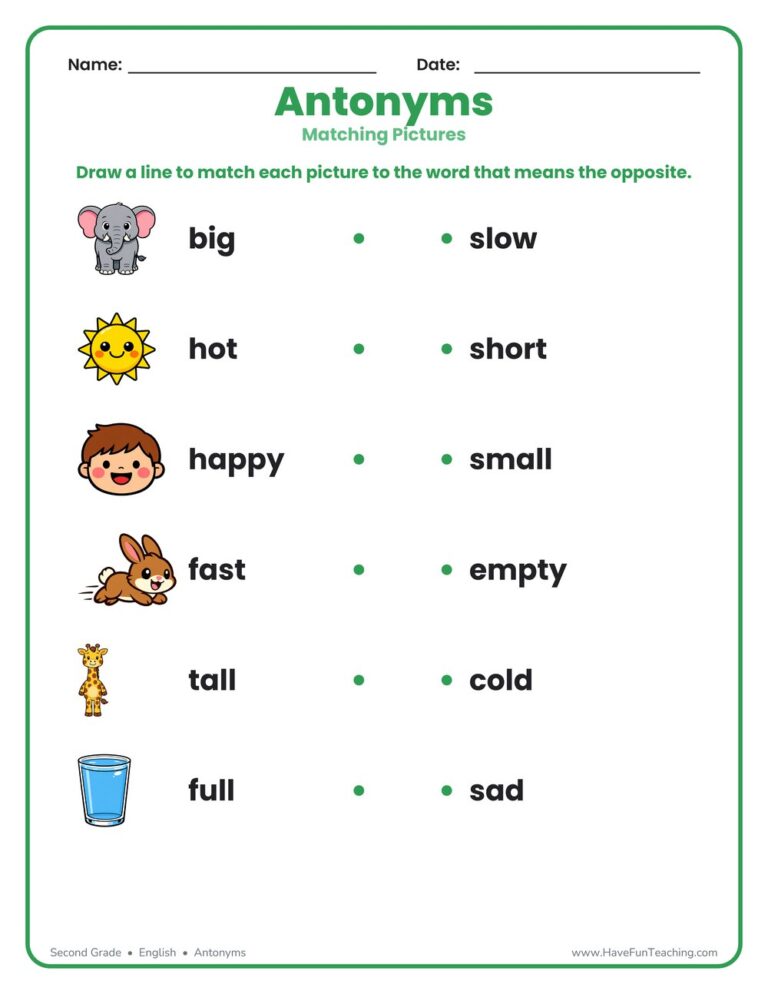
The Antonyms Matching Pictures Worksheet gives second grade students six picture clues to match with their opposite words, plus an answer key, to build vocabulary and word skills.
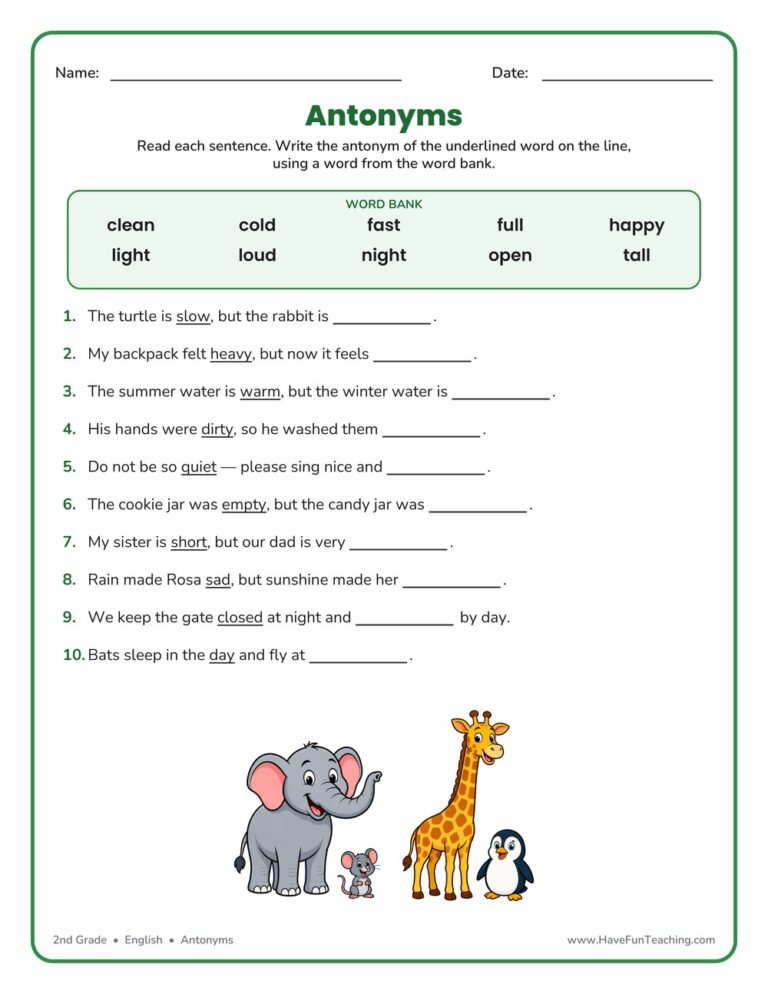
This Antonym Worksheet has 2nd graders write the opposite of each underlined word using a word bank of ten common antonyms. Answer key included — a no-prep way to build vocabulary and reading skills.

This antonyms crossword puzzle worksheet gives 2nd graders eight everyday opposite pairs to solve, with a word bank to guide them. An answer key is included, so checking work takes only seconds.
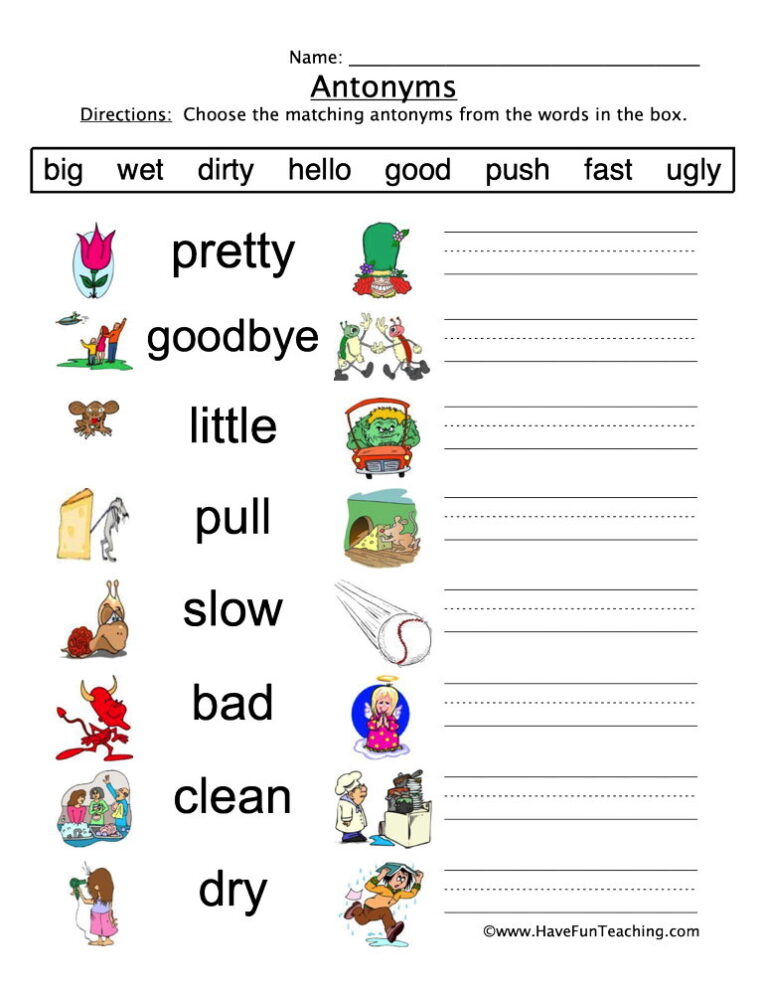
This Antonyms Word Bank Worksheet gives 2nd graders six word-box blanks and five matching pairs of opposites. An answer key is included, so students get fast, confident vocabulary practice with almost no prep.
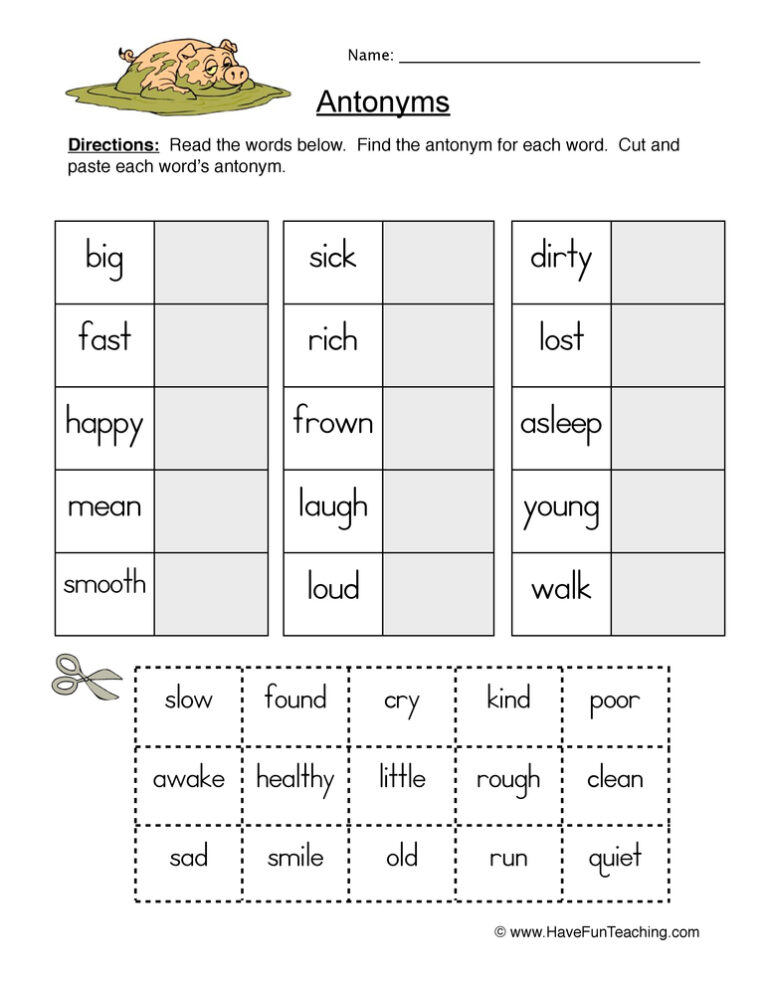
Students cut out six word cards and glue each one beside its opposite in this Antonyms Cutting Worksheet for 2nd grade. An answer key is included, so vocabulary practice checks itself in seconds.

This Antonyms Drawing Pictures Worksheet has 2nd graders write the opposite of six familiar words and draw a picture of each new word. An answer key is included for quick checking.
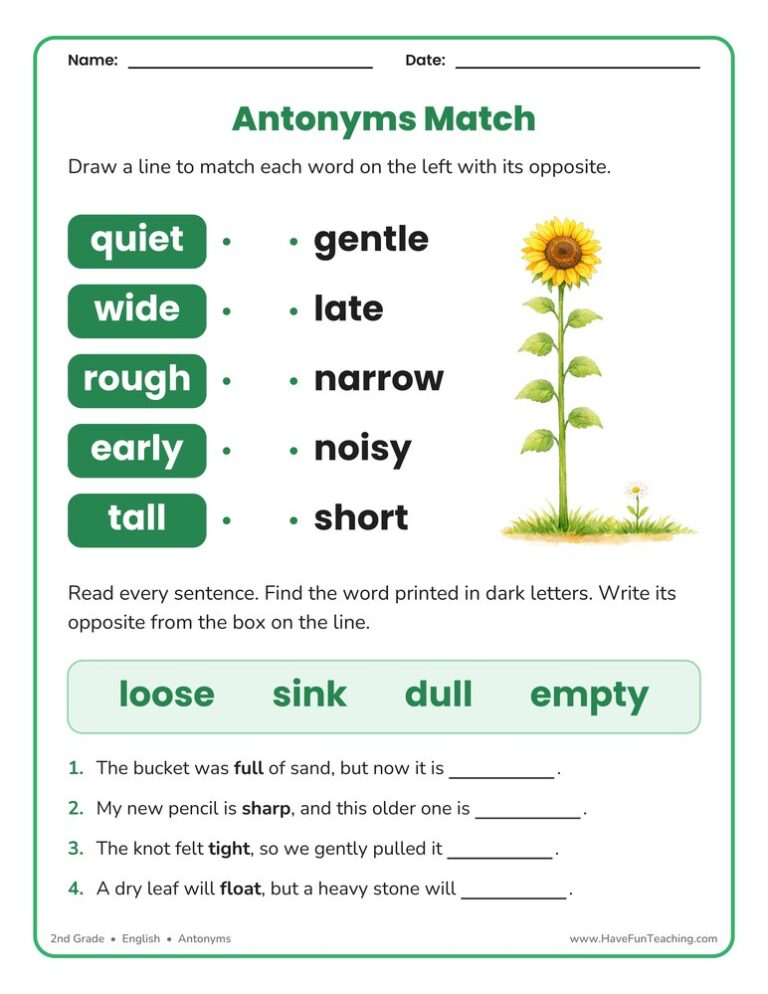
This antonyms game worksheet has 2nd Grade students match five opposite pairs, then fill four sentences from a word box. Answer key included, so checking the page takes seconds.

Using this Antonyms List Worksheet, students create lists of antonyms using the provided words to build their vocabulary.
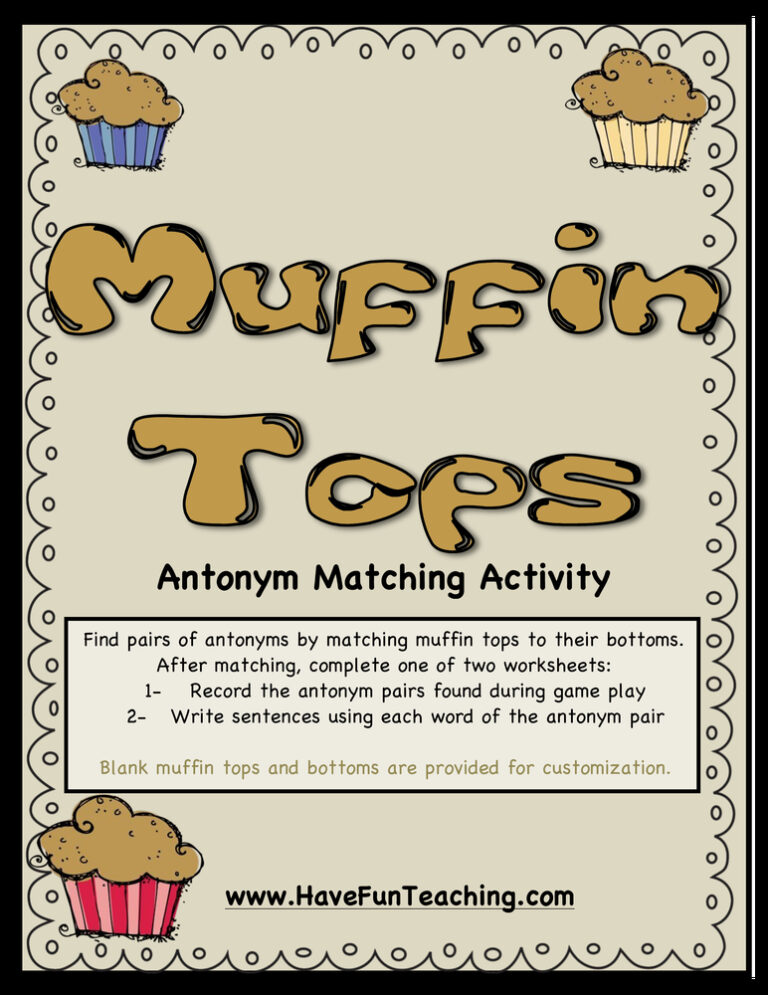
Using this Muffin Tops Antonyms Activity, students match the cards to make antonym pairs of opposite meanings.
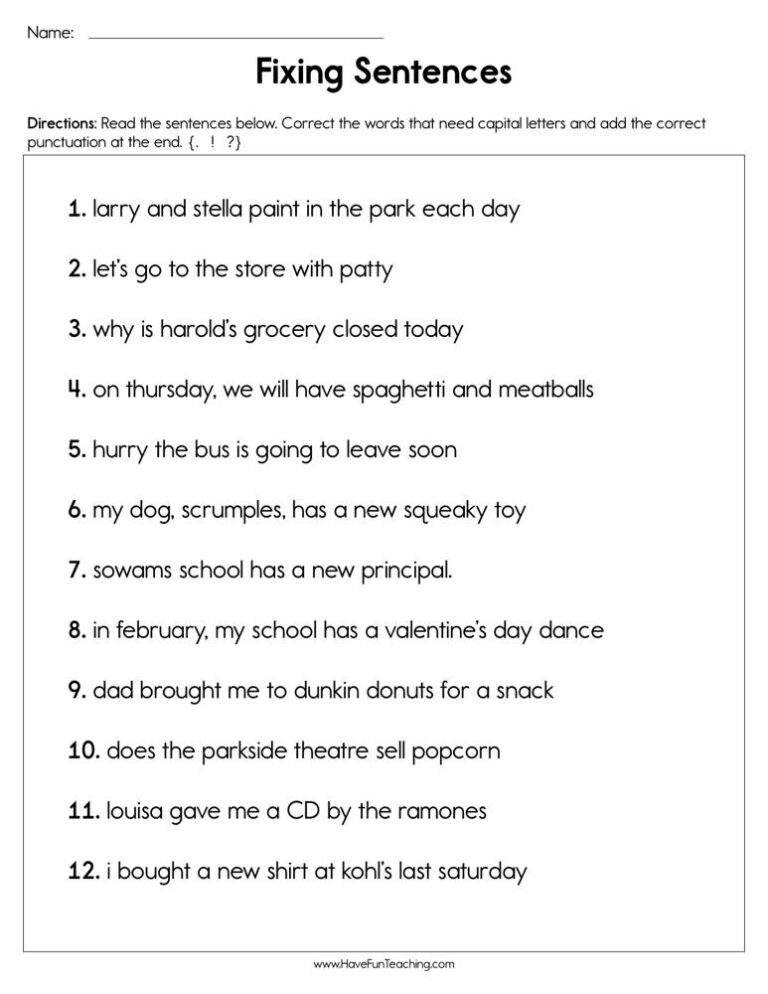
This editing sentences worksheet gives 2nd graders eight sentences to rewrite with the correct capital letters and end marks. Includes a complete answer key—perfect for quick, no-prep proofreading practice at home or school.
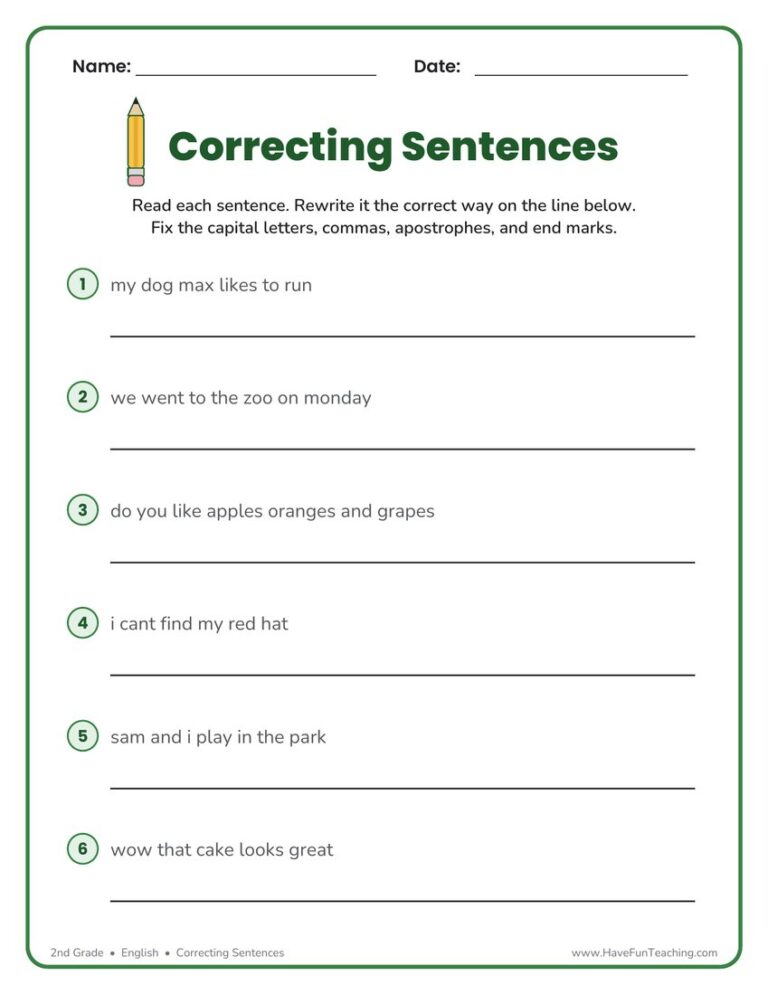
A 2nd grade correcting sentences worksheet where students rewrite six sentences to fix capital letters, commas, apostrophes, and end marks. Includes an answer key for quick, no-prep proofreading practice.
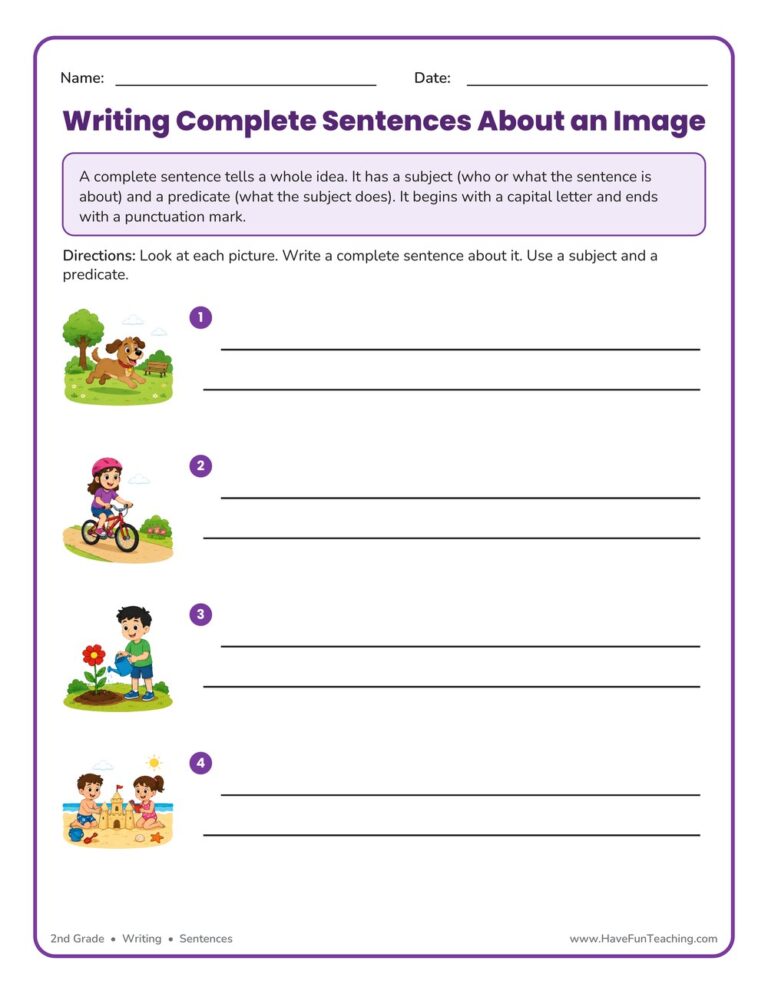
This Writing Complete Sentences About an Image Worksheet gives 2nd graders four picture prompts to practice building sentences with a subject and predicate. Includes sample answers — great for no-prep grammar and writing practice.




Reviews
There are no reviews yet