
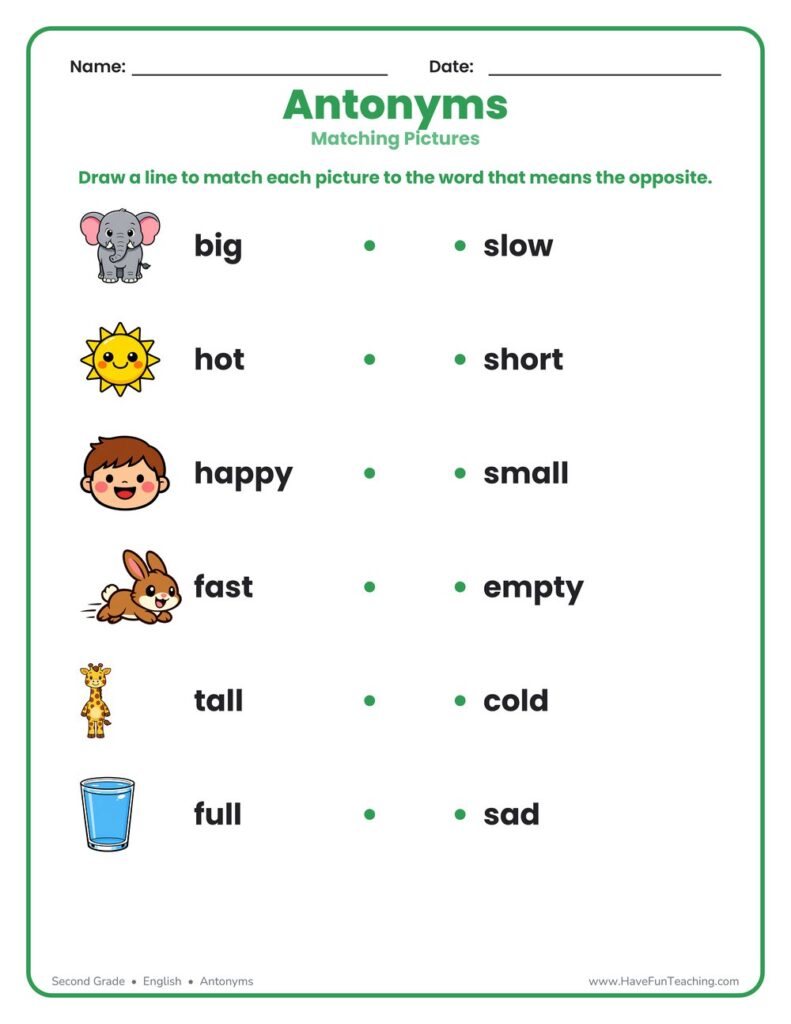
Antonyms Matching Pictures Worksheet
The Antonyms Matching Pictures Worksheet gives second grade students six picture clues to match with their opposite words, plus an answer key, to build vocabulary and word skills.
$6.97
Want this one free?
Tell us where to send it and it’s yours — no card, no catch.
One free resource per teacher. We’ll also send free teaching ideas each week — unsubscribe anytime.
Free teacher account · no credit card
Membership
Get every game, song, & printable
- Every game, on any device
- 10,000+ printables
- Assign online with HFT Classroom
Then $39.97/year · cancel anytime · See plans
- Instant digital download
- Printable PDF + answer key
- Made by real teachers
Teacher / Family membership
Teaching is easier with every resource
One membership for your whole year: 10,000+ worksheets, games, songs and videos for Preschool–6th, for your classroom or homeschool.
- Unlimited printables & downloads
- Every game, on any device
- Assign online with HFT Classroom
- Cancel anytime
Teacher / Family membership · 3 days free
Yearly
Monthly would be $119.64 a year
$3.33/month
Billed $39.97 once a year
You save $79.67 every year
Start My 3 Free Days$0 today · cancel anytime
Monthly
$9.97/month
Flexible, month to month
Yearly is just $3.33/mo. Switch and save $79.67
Start My 3 Free Days$0 today · cancel anytime
About this resource
Description
The Antonyms Matching Pictures Worksheet helps second grade students build vocabulary by matching pictures to words that mean the opposite. Learning antonyms strengthens word knowledge, reading comprehension, and writing, and this picture-based worksheet makes the skill hands-on and fun for young learners.
With this Antonyms Matching Pictures Worksheet, students look at six friendly pictures — a big elephant, a hot sun, a happy face, a fast rabbit, a tall giraffe, and a full glass — and draw a line from each picture to the word that means the opposite. To use it, read the word beside each picture together, then have students connect it to its antonym in the right-hand column. A complete answer key is included so checking work is quick and simple.
What’s Included
- A one-page antonyms matching activity with six picture clues
- Six common antonym pairs (big/small, hot/cold, happy/sad, fast/slow, tall/short, full/empty)
- Clear, colorful clip-art pictures for every word
- A complete answer key
This second grade antonyms worksheet helps students in three important ways. First, it grows vocabulary by introducing high-frequency opposite words that students use in everyday reading and writing. Second, it supports visual learners by pairing each word with a picture, making abstract word meanings concrete. Third, it builds confidence with a clear, low-stress matching format that students can complete independently.
Teachers and parents can use this worksheet during reading centers, as morning work, for early finishers, or as a quick vocabulary check. Pair it with a class game of calling out a word and having students shout the opposite, or use it inside a larger unit on antonyms and synonyms. It also works well for small-group instruction, homework, and independent practice at home.
Related Resources
What teachers say
Reviews
Write a review, earn store credit
Get 25¢ in credit for every approved review of a resource you’ve downloaded, played or purchased — up to 15 a month. Credit applies automatically to your membership payments, so your reviews can help pay for your membership.
Honest reviews only — any star rating earns the same. Program rules
Log in to write a review and earn store credit.
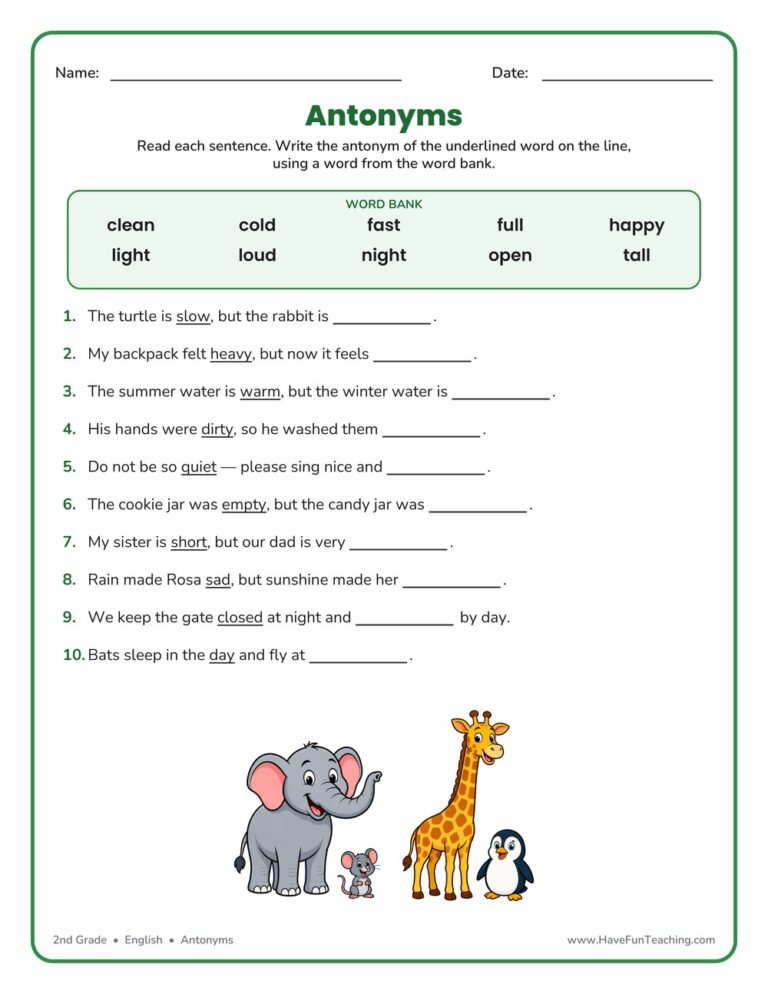
This Antonym Worksheet has 2nd graders write the opposite of each underlined word using a word bank of ten common antonyms. Answer key included — a no-prep way to build vocabulary and reading skills.
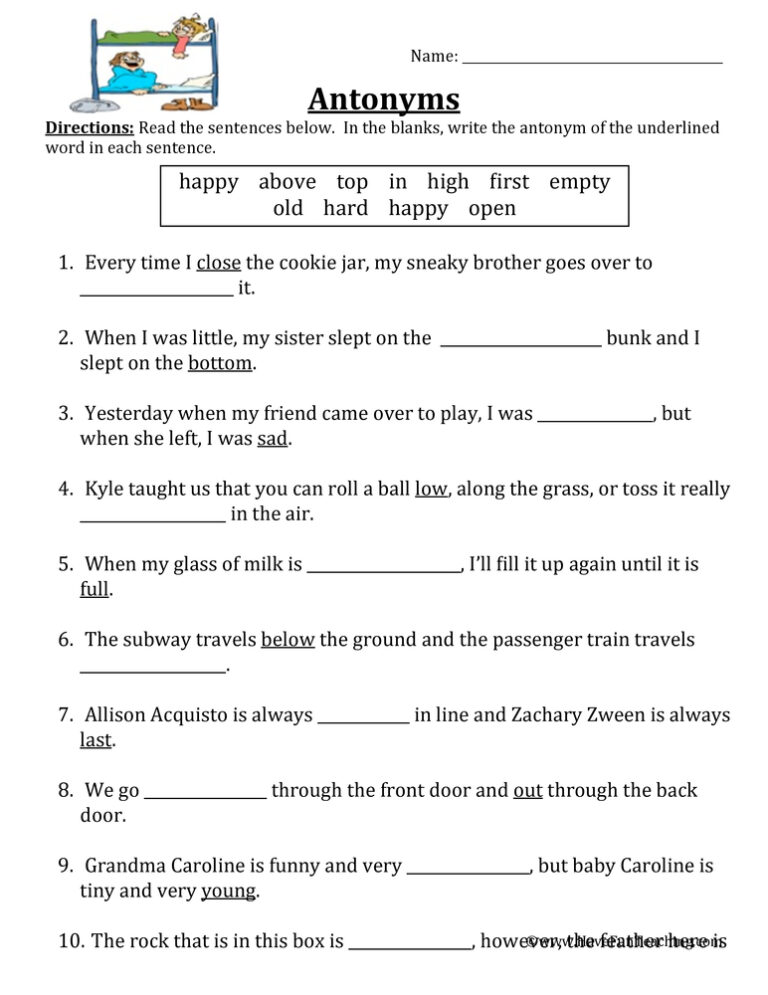
Students use each underlined word to figure out its opposite and write it in the blank. This 2nd Grade antonym fill in the blank worksheet includes a word bank and an answer key, so vocabulary practice checks itself.

This antonyms crossword puzzle worksheet gives 2nd graders eight everyday opposite pairs to solve, with a word bank to guide them. An answer key is included, so checking work takes only seconds.
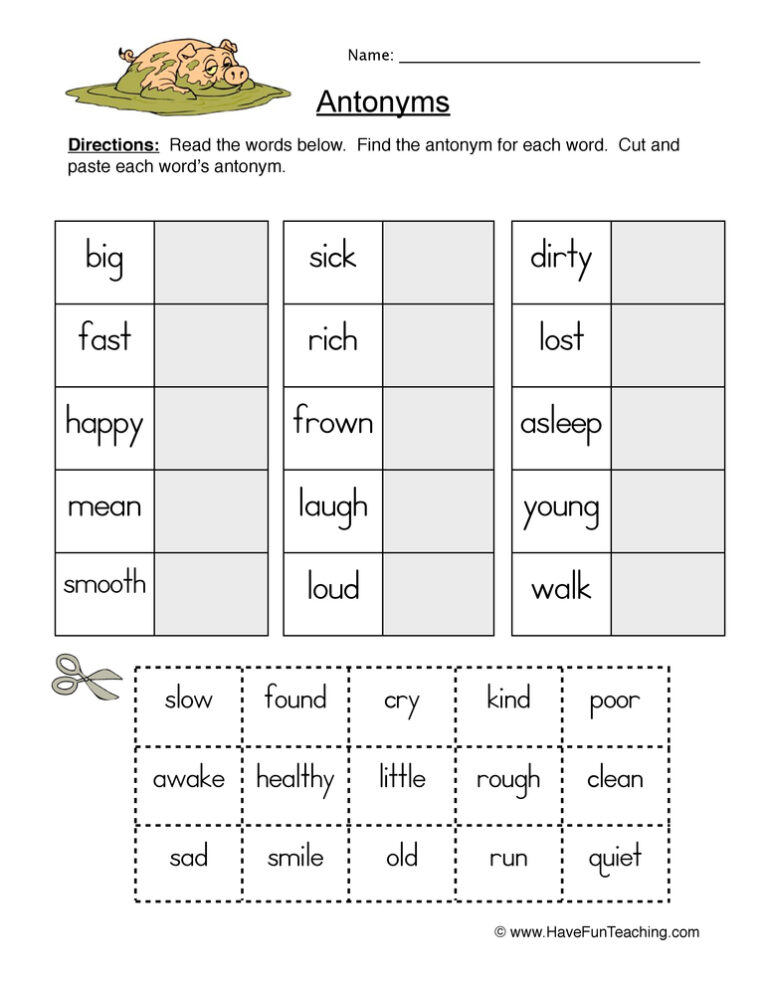
Students cut out six word cards and glue each one beside its opposite in this Antonyms Cutting Worksheet for 2nd grade. An answer key is included, so vocabulary practice checks itself in seconds.

This Antonyms Drawing Pictures Worksheet has 2nd graders write the opposite of six familiar words and draw a picture of each new word. An answer key is included for quick checking.
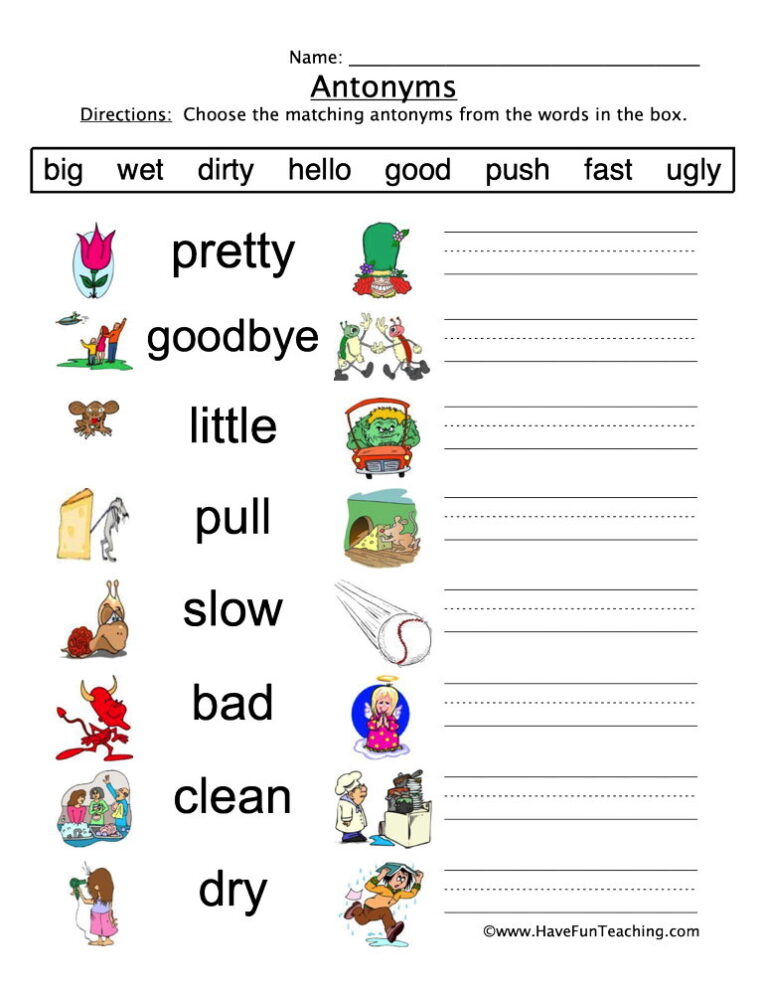
This Antonyms Word Bank Worksheet gives 2nd graders six word-box blanks and five matching pairs of opposites. An answer key is included, so students get fast, confident vocabulary practice with almost no prep.
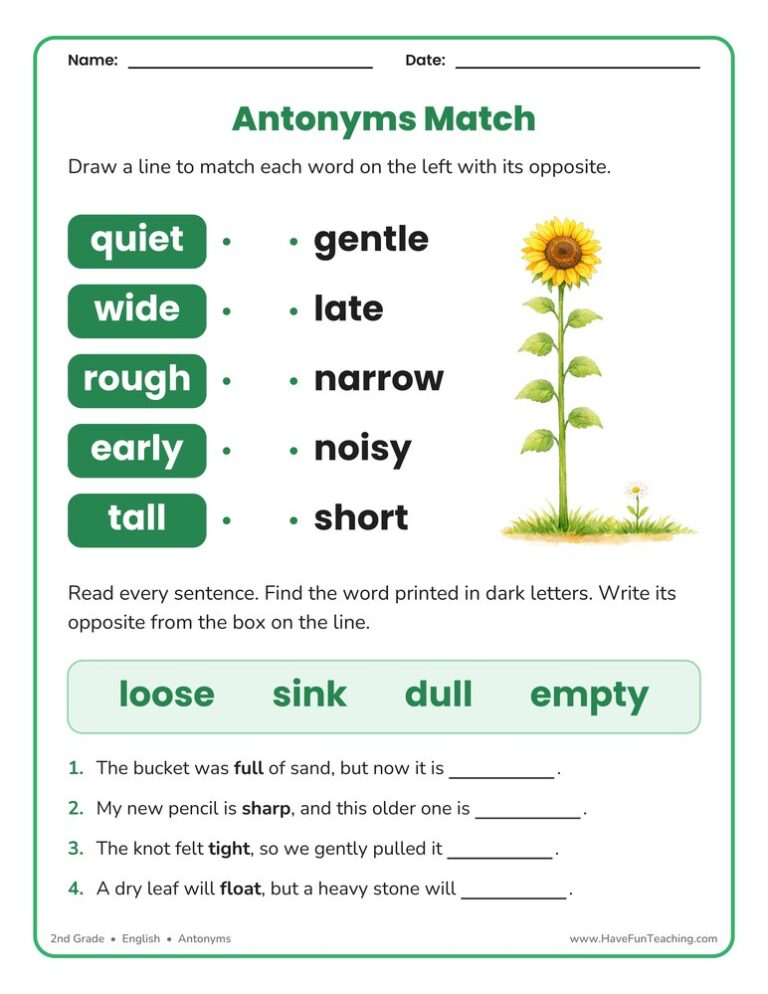
This antonyms game worksheet has 2nd Grade students match five opposite pairs, then fill four sentences from a word box. Answer key included, so checking the page takes seconds.
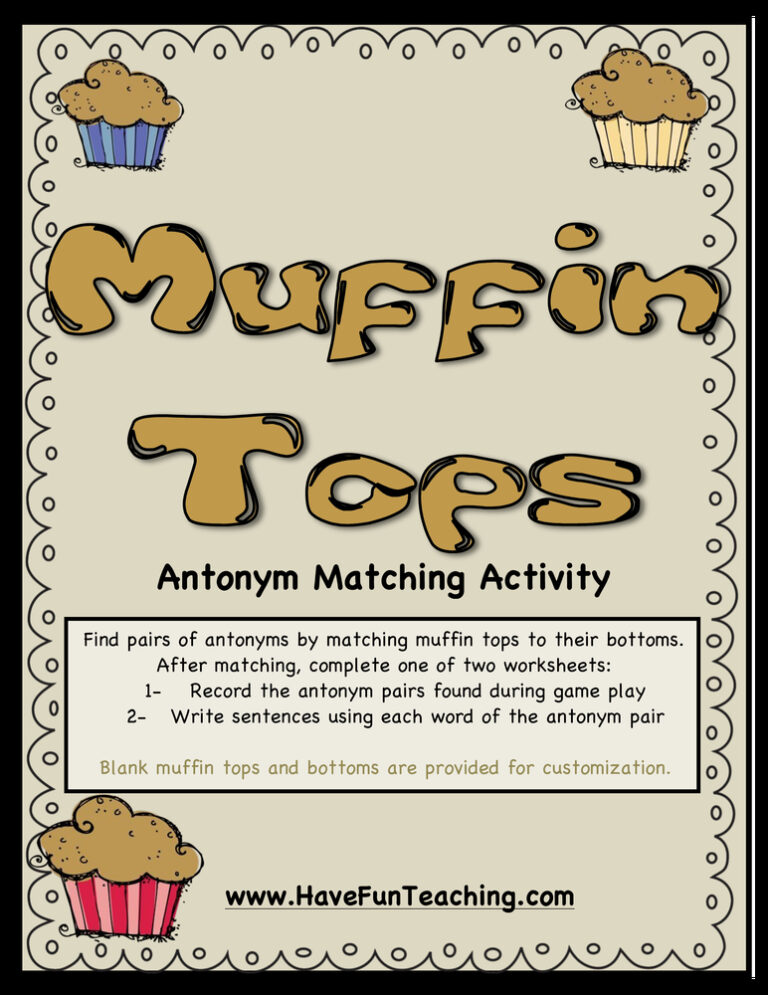
Using this Muffin Tops Antonyms Activity, students match the cards to make antonym pairs of opposite meanings.
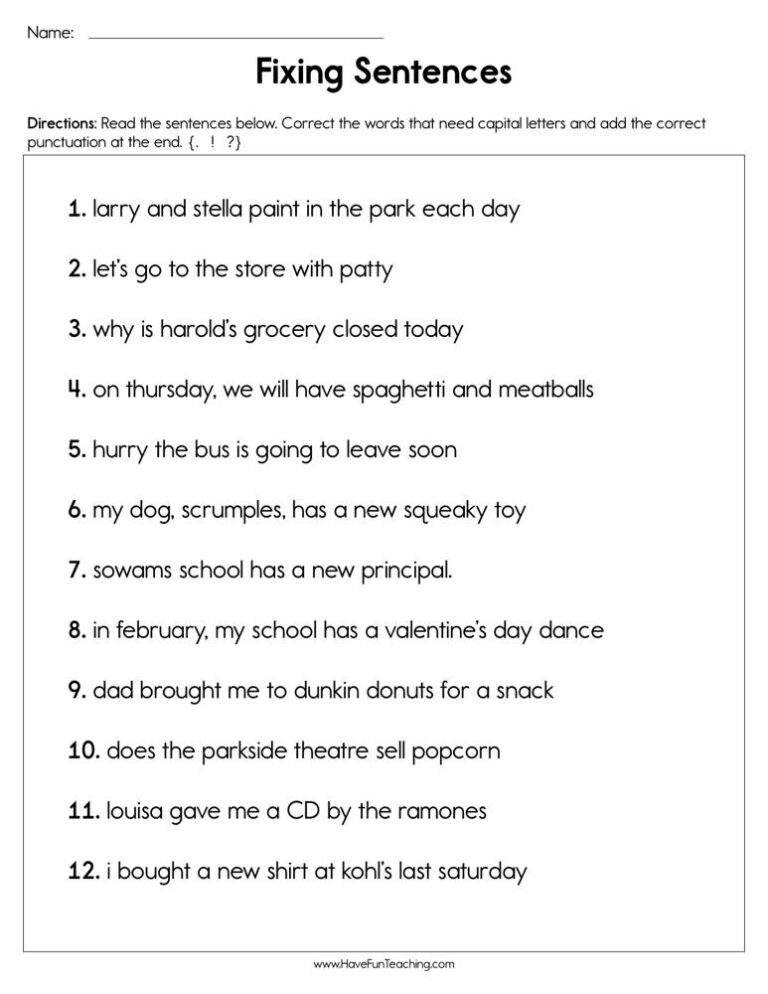
This editing sentences worksheet gives 2nd graders eight sentences to rewrite with the correct capital letters and end marks. Includes a complete answer key—perfect for quick, no-prep proofreading practice at home or school.
A soccer vowel teams game where second grade kids kick the ball at words with ai, ay, ee, ea, oa, ow, ie and igh, like rain, bee, boat and pie. Play online on any phone, tablet, Chromebook or computer.
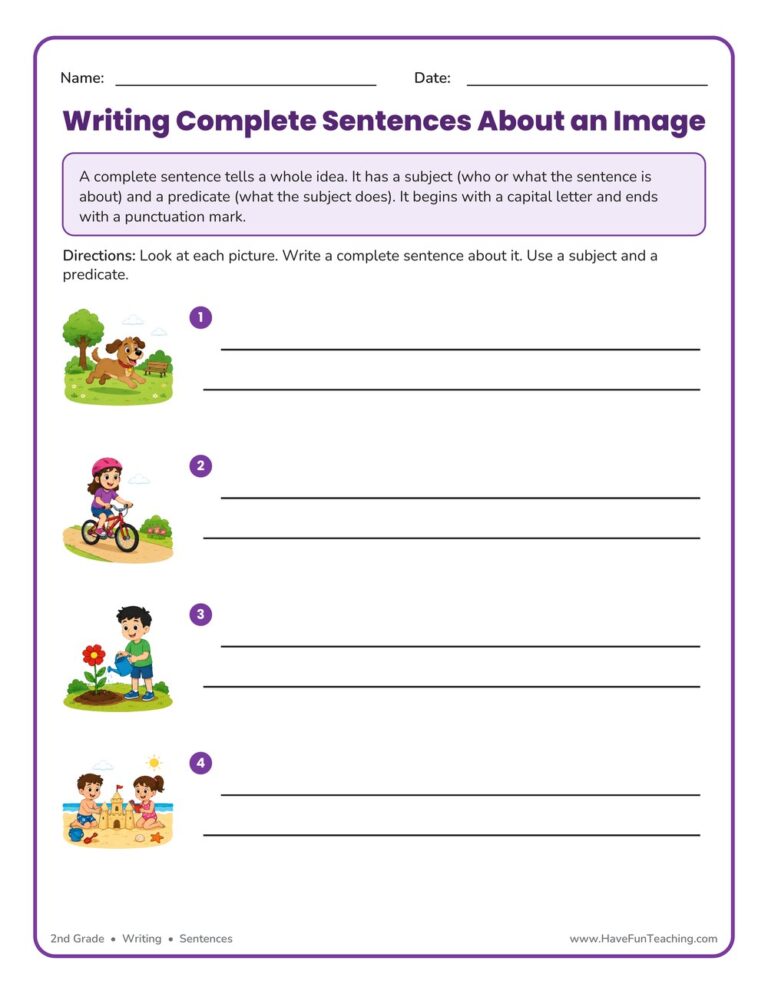
This Writing Complete Sentences About an Image Worksheet gives 2nd graders four picture prompts to practice building sentences with a subject and predicate. Includes sample answers — great for no-prep grammar and writing practice.
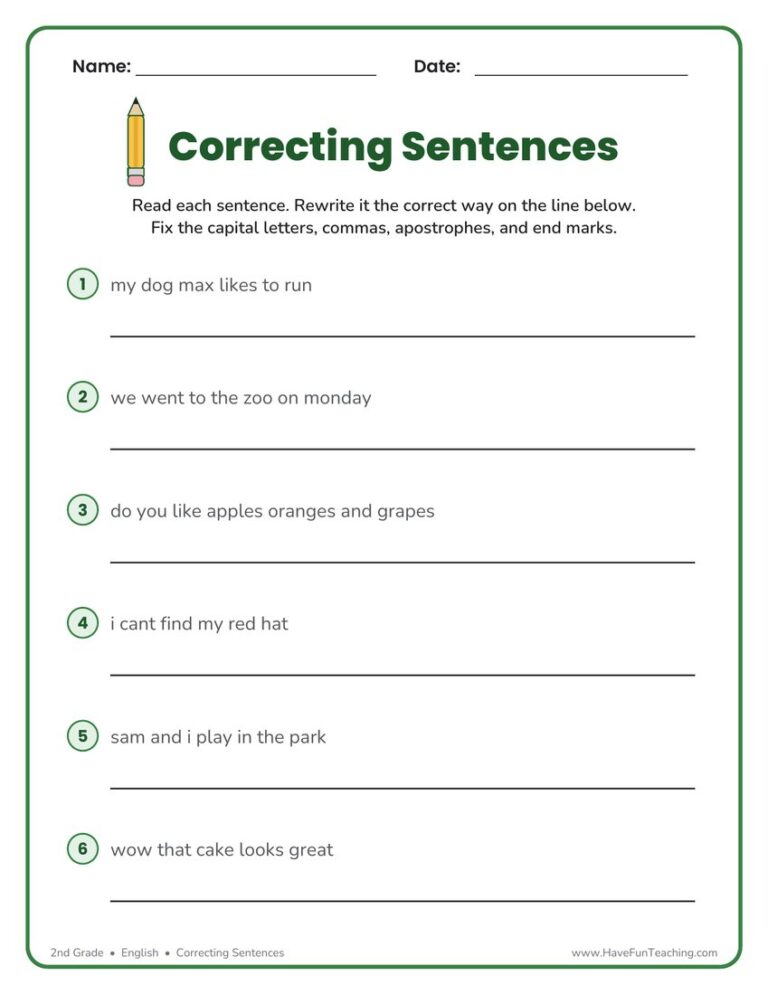
A 2nd grade correcting sentences worksheet where students rewrite six sentences to fix capital letters, commas, apostrophes, and end marks. Includes an answer key for quick, no-prep proofreading practice.
Reviews
There are no reviews yet