
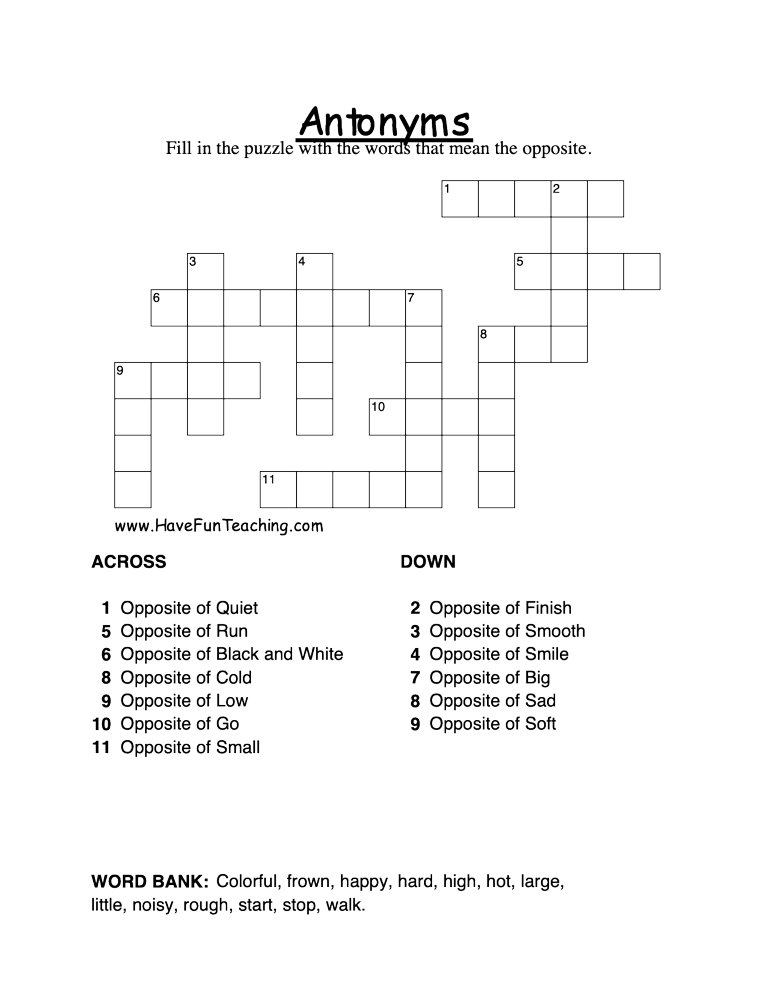
Antonyms Crossword Puzzle
This antonyms crossword puzzle worksheet gives 2nd graders eight everyday opposite pairs to solve, with a word bank to guide them. An answer key is included, so checking work takes only seconds.
$6.97
Or free with a membership — members pay $3.33/mo for all 10,000+ resources. See plans
Want this one free?
Tell us where to send it and it’s yours — no card, no catch.
One free resource per teacher. We’ll also send free teaching ideas each week — unsubscribe anytime.
Teaching is easier with a membership
Unlimited printables, games & videos for PreK–6th — for your classroom or homeschool. Cancel anytime.
Start your 3-day free trial$0 today · cancel anytime · Instant access to 10,000+ resources
About this resource
Description
Antonyms are words that mean the opposite of each other, like big and little or day and night. Learning antonyms helps young readers build a stronger vocabulary and describe the world with more precision, and this antonyms crossword puzzle worksheet turns that practice into a game. Second graders already know most of these everyday word pairs by ear; what they need is a reason to slow down, think about meaning, and then spell the matching word correctly. A crossword does both at once, because every answer has to fit its clue and the letters that cross it.
This 2nd grade antonyms worksheet gives students a word bank of eight opposites and a numbered crossword grid to fill in. Students read each clue, decide which bank word means the opposite of the clue word, and print one letter in each box. The crossing letters give instant feedback, so a child who spells a word incorrectly finds out right away and self-corrects. Use it as morning work, a literacy center, early-finisher work, or homework.
What’s Included
- 1 print-ready PDF worksheet
- Answer key
- 8 antonym crossword clues with a supporting word bank
This antonyms crossword puzzle worksheet helps kids in three ways. First, it builds vocabulary depth, because matching a word to its opposite makes students think about meaning instead of simply recognizing a word on sight. Second, it reinforces spelling and letter-by-letter accuracy, since one wrong letter blocks the answer that crosses it. Third, the puzzle format keeps motivation high, so students treat the page as a game rather than a drill and stay with the task long enough to practice every pair.
Teachers and parents can extend the lesson in simple ways. Play an opposites call-and-response: say a word and have students answer with its antonym as fast as they can. Hunt for antonym pairs during a read-aloud and list them on chart paper. Ask students to write a silly sentence that uses both halves of a pair, such as “The big dog barked and the little dog slept.” You can also copy the word bank onto index cards and let partners race to match the opposites.
Related Resources
What teachers say
Reviews
You must be logged in to post a review.
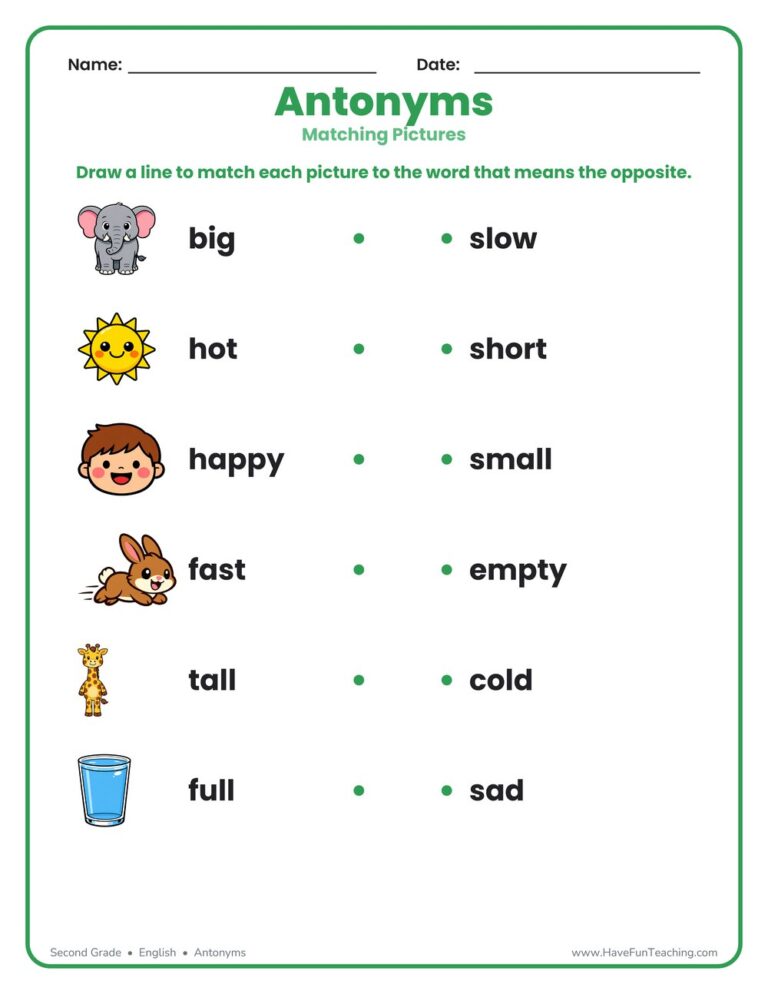
The Antonyms Matching Pictures Worksheet gives second grade students six picture clues to match with their opposite words, plus an answer key, to build vocabulary and word skills.
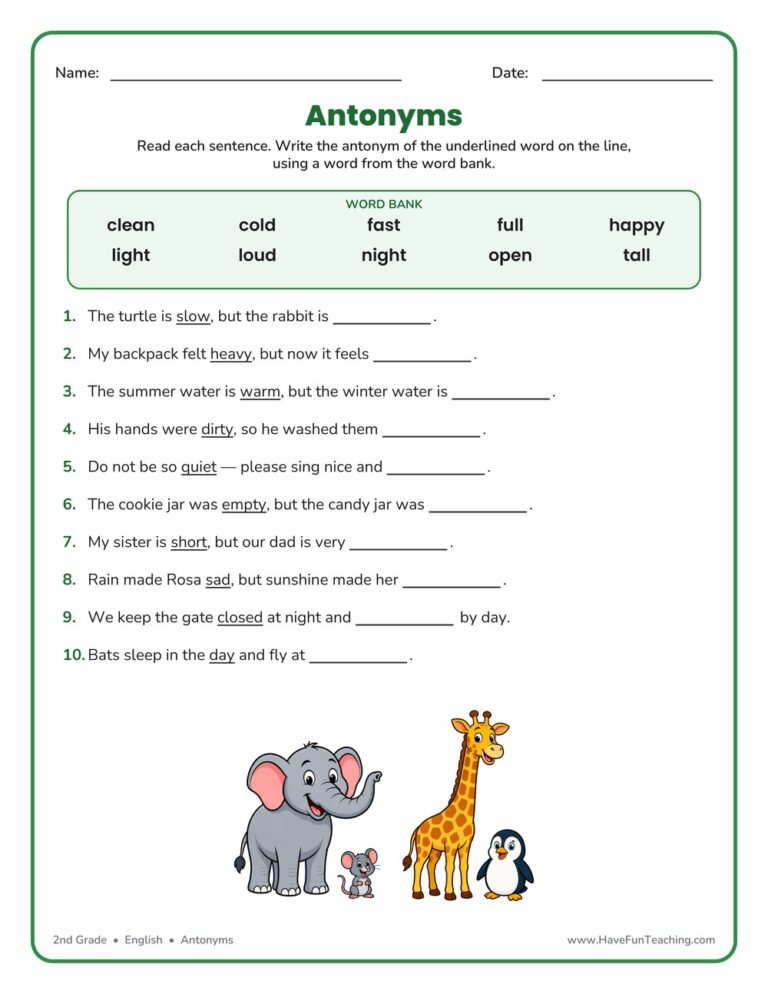
This Antonym Worksheet has 2nd graders write the opposite of each underlined word using a word bank of ten common antonyms. Answer key included — a no-prep way to build vocabulary and reading skills.
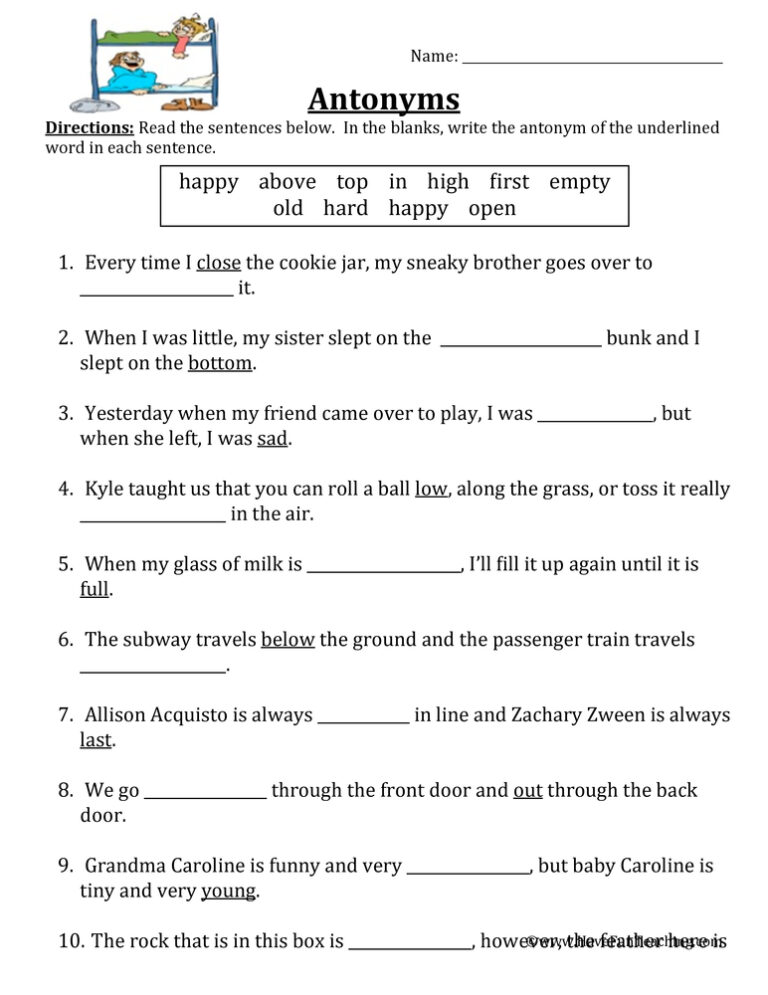
Students use each underlined word to figure out its opposite and write it in the blank. This 2nd Grade antonym fill in the blank worksheet includes a word bank and an answer key, so vocabulary practice checks itself.
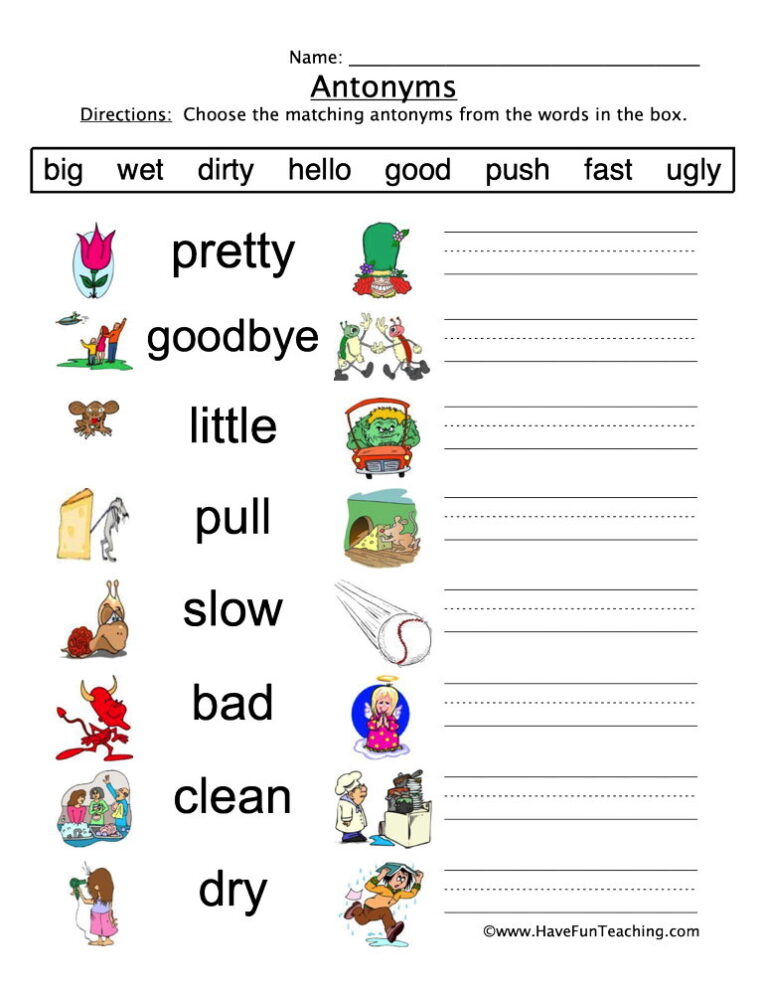
This Antonyms Word Bank Worksheet gives 2nd graders six word-box blanks and five matching pairs of opposites. An answer key is included, so students get fast, confident vocabulary practice with almost no prep.
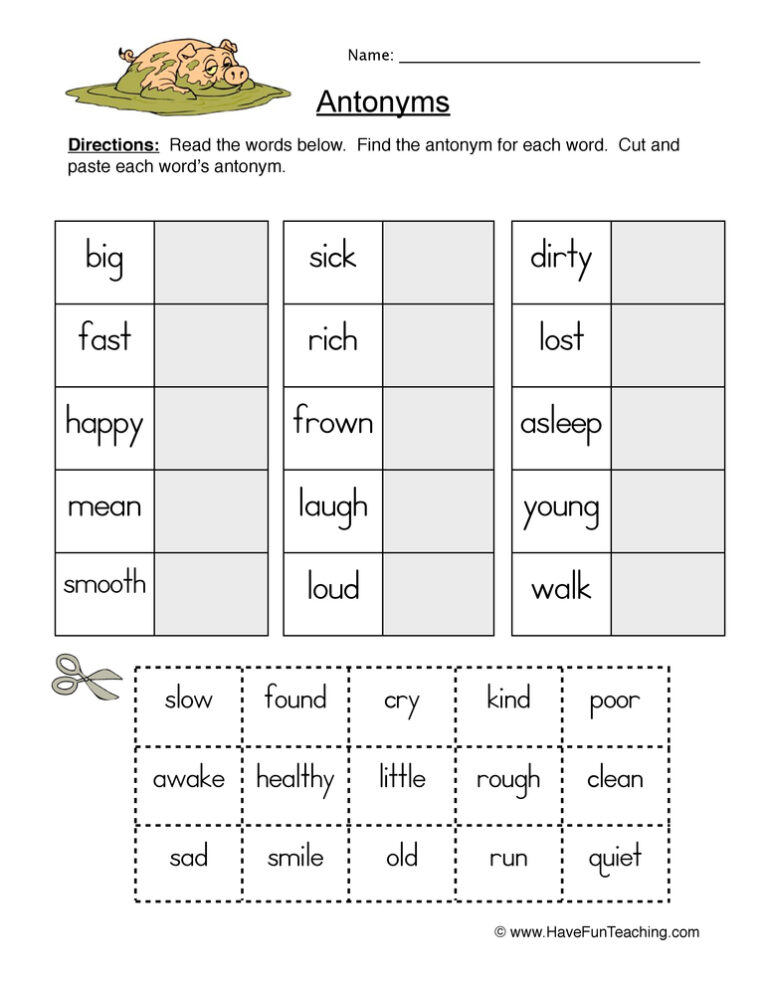
Students cut out six word cards and glue each one beside its opposite in this Antonyms Cutting Worksheet for 2nd grade. An answer key is included, so vocabulary practice checks itself in seconds.

This Antonyms Drawing Pictures Worksheet has 2nd graders write the opposite of six familiar words and draw a picture of each new word. An answer key is included for quick checking.
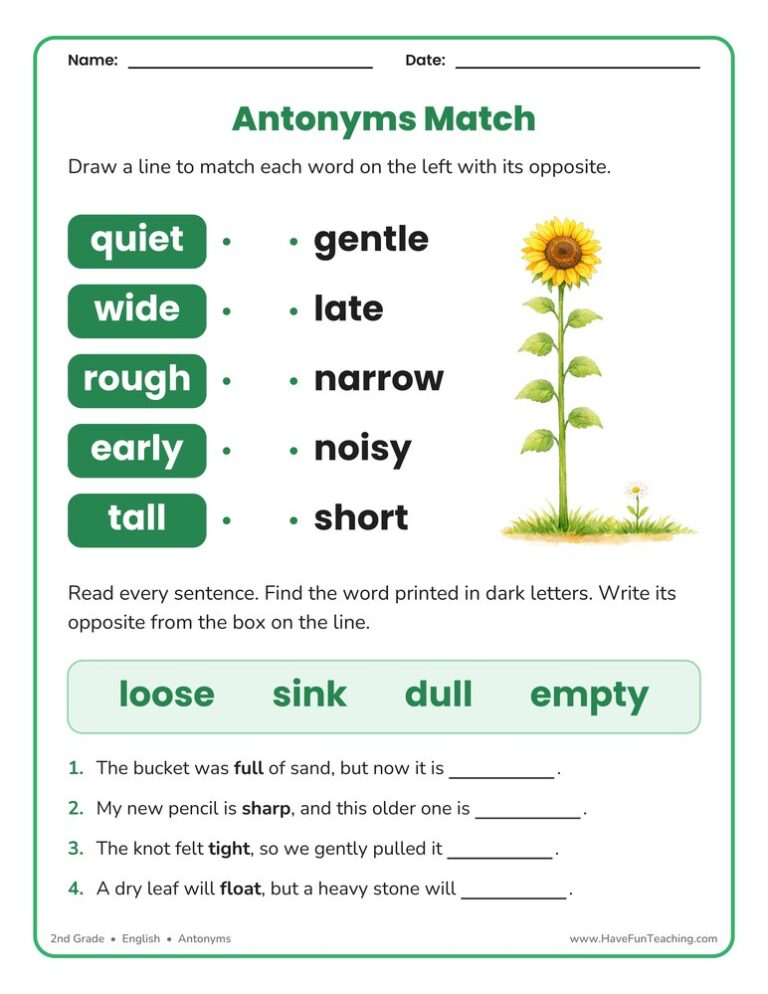
This antonyms game worksheet has 2nd Grade students match five opposite pairs, then fill four sentences from a word box. Answer key included, so checking the page takes seconds.

Using this Antonyms List Worksheet, students create lists of antonyms using the provided words to build their vocabulary.
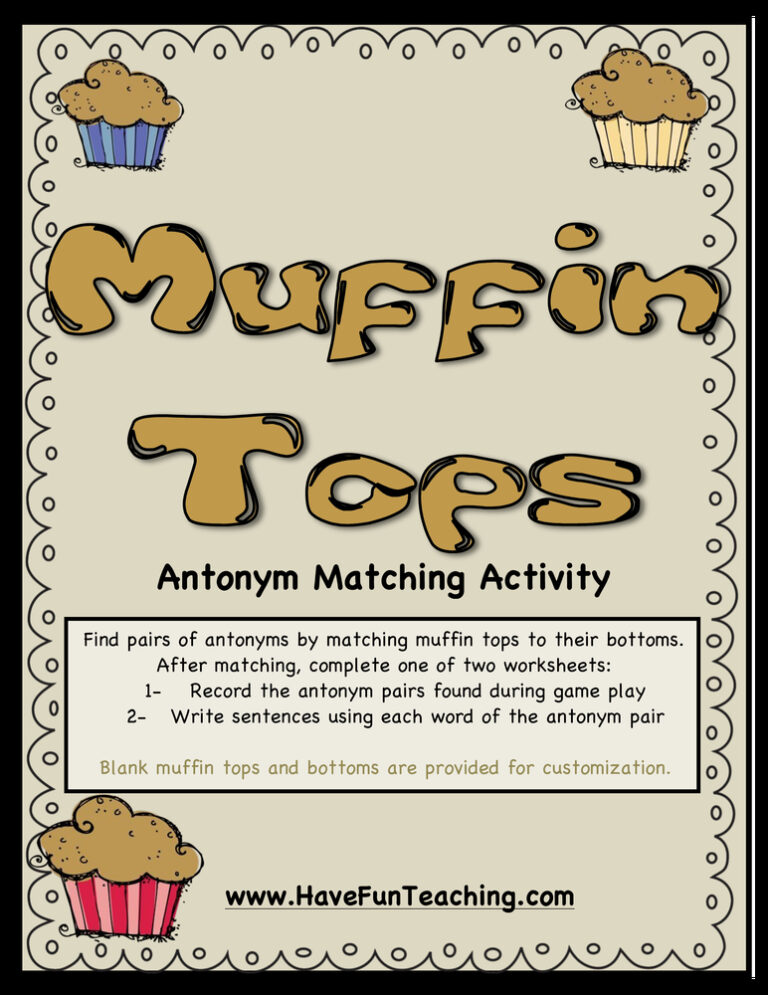
Using this Muffin Tops Antonyms Activity, students match the cards to make antonym pairs of opposite meanings.
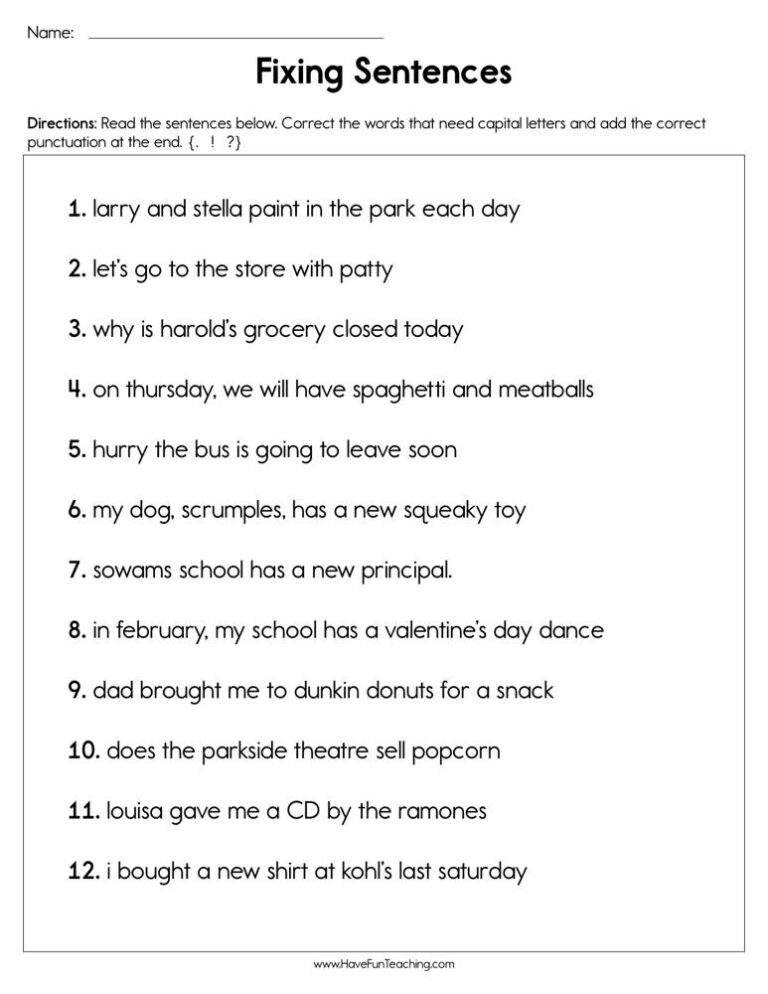
This editing sentences worksheet gives 2nd graders eight sentences to rewrite with the correct capital letters and end marks. Includes a complete answer key—perfect for quick, no-prep proofreading practice at home or school.
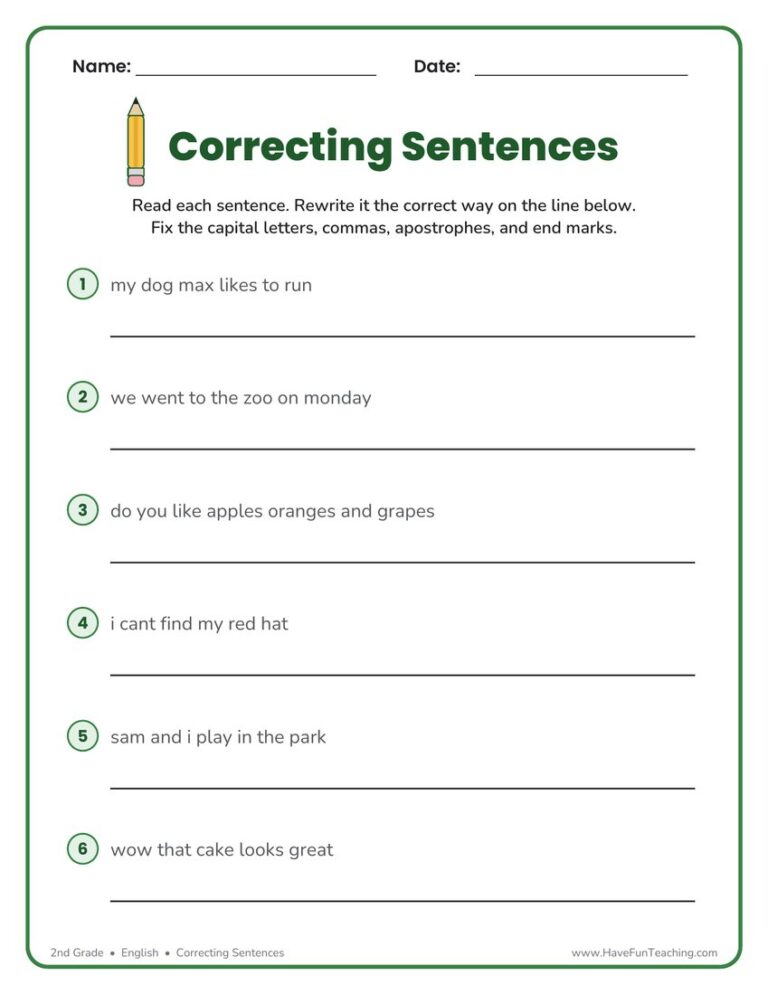
A 2nd grade correcting sentences worksheet where students rewrite six sentences to fix capital letters, commas, apostrophes, and end marks. Includes an answer key for quick, no-prep proofreading practice.
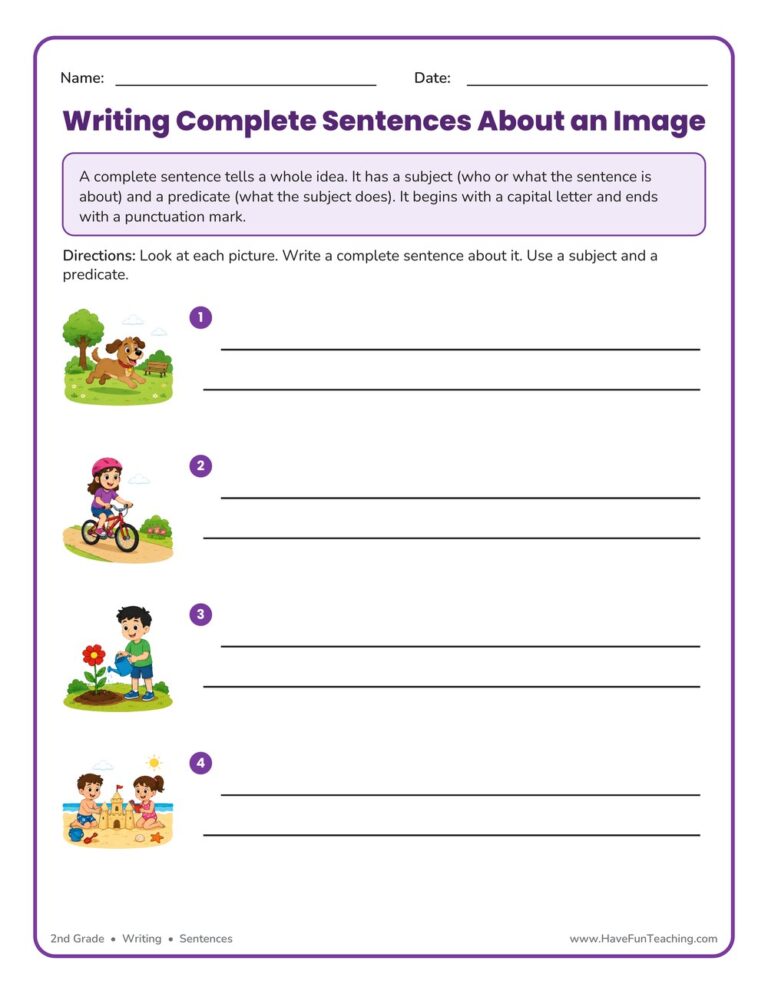
This Writing Complete Sentences About an Image Worksheet gives 2nd graders four picture prompts to practice building sentences with a subject and predicate. Includes sample answers — great for no-prep grammar and writing practice.
Reviews
There are no reviews yet