

Author’s Point and Supporting Evidence Worksheet
This author’s point and supporting evidence worksheet gives 3rd grade students a short persuasive article, four questions, and a written response, with an answer key, so they learn to prove an idea from the text.
$6.97
Want this one free?
Tell us where to send it and it’s yours — no card, no catch.
One free resource per teacher. We’ll also send free teaching ideas each week — unsubscribe anytime.
Free teacher account · no credit card
Membership
Get every game, song, & printable
- Every game, on any device
- 6,500+ resources
- Assign online with HFT Classroom
Then $39.97/year · cancel anytime · See plans
- Instant digital download
- Printable PDF + answer key
- Made by real teachers
Teacher / Family membership
Teaching is easier with every resource
One membership for your whole year: 6,500+ worksheets, games, songs and videos for Preschool–6th, for your classroom or homeschool.
- Unlimited printables & downloads
- Every game, on any device
- Assign online with HFT Classroom
- Cancel anytime
Teacher / Family membership · 3 days free
Yearly
Monthly would be $119.64 a year
$3.33/month
Billed $39.97 once a year
You save $79.67 every year
Start My 3 Free Days$0 today · cancel anytime
Monthly
$9.97/month
Flexible, month to month
Yearly is just $3.33/mo. Switch and save $79.67
Start My 3 Free Days$0 today · cancel anytime
About this resource
Description
Finding what a writer is trying to say, and then proving it from the text, is the reading skill third graders lean on for the rest of school. This author’s point and supporting evidence worksheet teaches both halves of that job at once. The author’s point is the big idea the writer wants you to believe. The supporting evidence is the set of reasons and details the writer gives so you will believe it. Students who can separate the two stop summarizing a text and start analyzing it, which is exactly what the third-grade standards ask for.
The printable opens with an original persuasive article about growing a garden in the classroom. The writer states a clear point in the very first sentence and then builds three named reasons underneath it, each with its own concrete detail. That structure is deliberate: it is obvious enough for a third grader to trace, and specific enough that every question has one right answer. Four multiple-choice items follow on page two, and a written response asks students to state the point and back it up with a detail of their own choosing. The final page is a complete answer key.
What’s Included
- An original 222-word persuasive passage written on a third-grade reading level
- A full-color illustration of the classroom garden the article describes
- Four multiple-choice questions on the author’s point and the evidence behind it
- One written-response item that asks for the point plus one supporting detail
- A complete answer key with a model response
Three Reasons This Helps Kids
- It separates the point from the proof. One question asks what the writer believes and the others ask how the writer supports it, so students learn that the two are different jobs.
- The passage is built to be traced. The reasons are signaled by First, Second, and Last, giving students a visible path back into the text when they hunt for evidence.
- It ends with real writing. The last item makes students put the point and the evidence into their own sentence, which is the constructed-response move tests actually score.
Teacher and Parent Ideas
Use this author’s point and supporting evidence worksheet as a whole-class model, a small-group task, or independent practice after a lesson on opinion writing. Read the article aloud first and stop after the opening sentence to ask students to predict the three reasons. Have them underline each signal word in one color and the detail that follows it in another, so the shape of the argument becomes visible on the page. After the questions, turn the sheet around: ask students to write one sentence that argues the opposite, then find what evidence they would need. As a 3rd grade author’s purpose worksheet it also pairs neatly with a science or gardening unit, and the written response makes a quick exit ticket you can grade in a minute.
Related Resources
What teachers say
Reviews
Write a review, earn store credit
Get 25¢ in credit for every approved review of a resource you’ve downloaded, played or purchased — up to 15 a month. Credit applies automatically to your membership payments, so your reviews can help pay for your membership.
Honest reviews only — any star rating earns the same. Program rules
Log in to write a review and earn store credit.
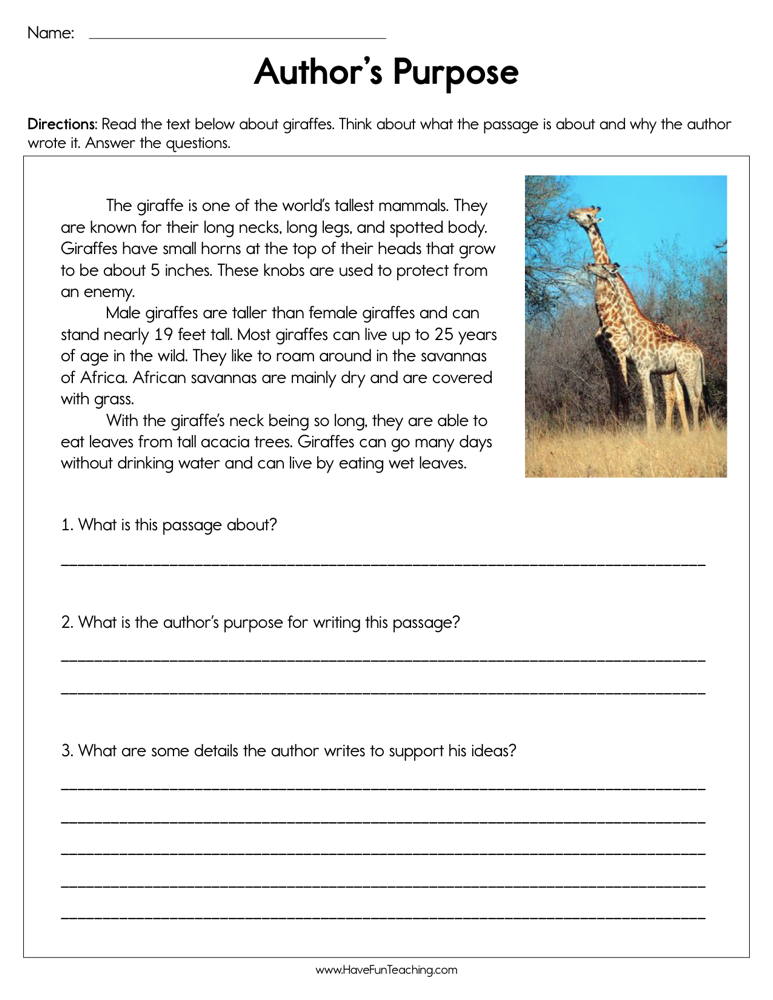
This identifying author's purpose worksheet has 3rd graders read a giraffe passage and decide whether the author wants to inform, persuade, or entertain. Answer key included for easy reading practice.
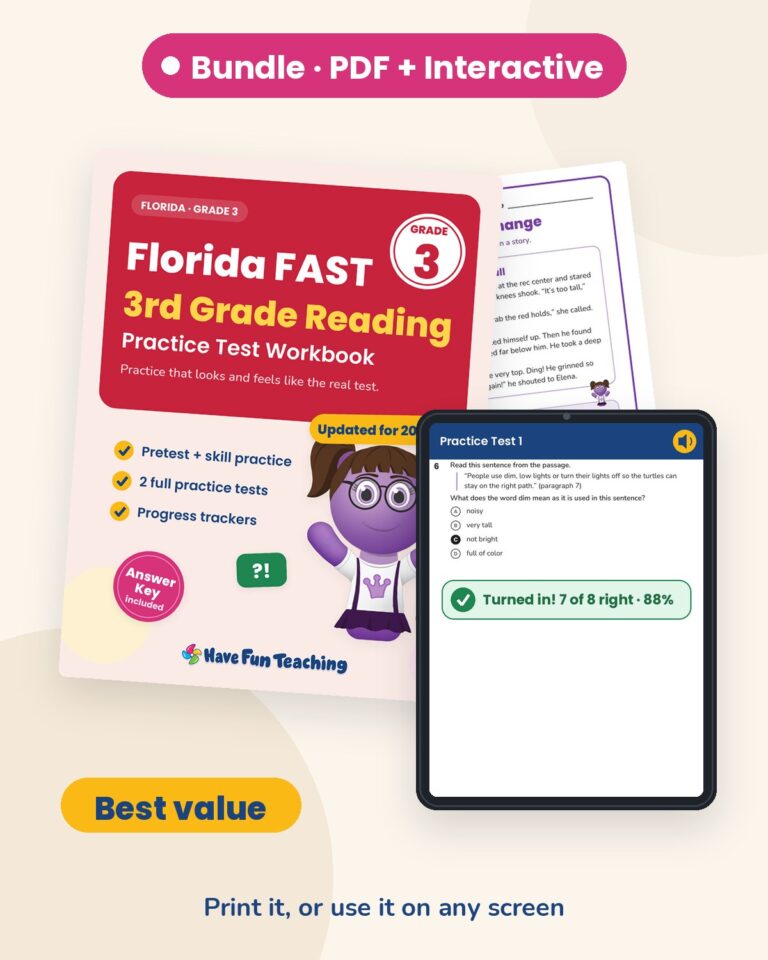
A Florida FAST 3rd grade reading practice test workbook for teachers, with a pretest, skill practice for all 13 benchmarks, mixed review and 2 full-length practice tests. Answer key included, so test prep is ready to go.

This Purpose Worksheet gives 3rd graders six short passages to sort into persuade, inform, or entertain, plus two clue-word items. An answer key is included, so it works as a quick no-prep reading check.
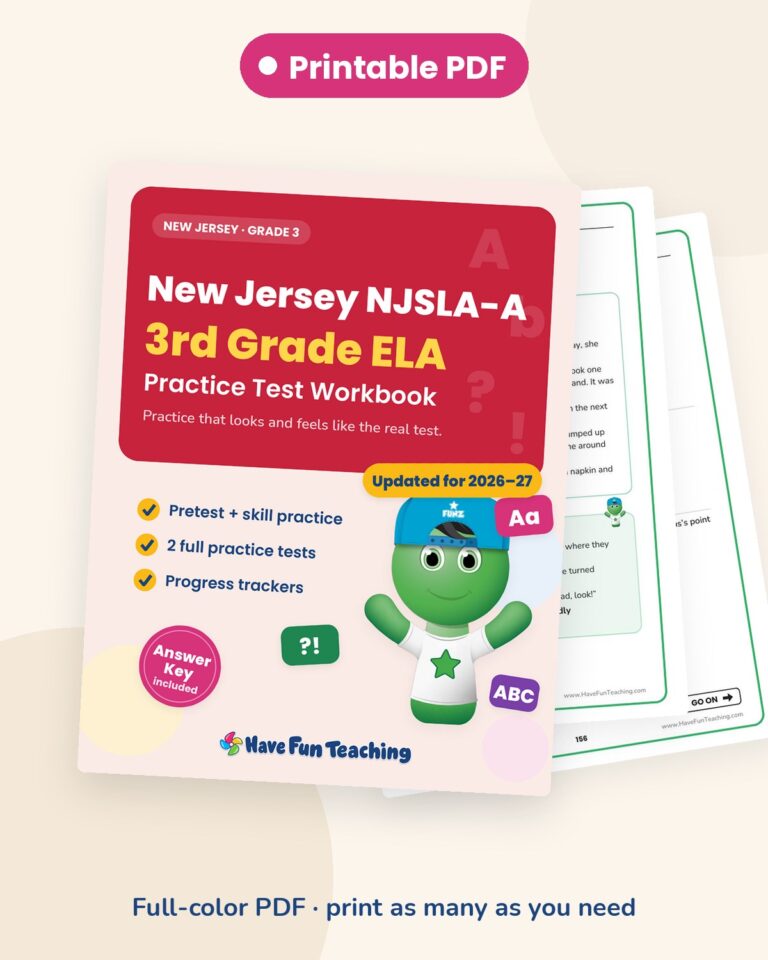
A NJSLA-A 3rd grade ELA practice test workbook for teachers, with a pretest, skill practice for all 19 standards, mixed review and 2 full-length practice tests. Answer key included, so test prep is ready to go.

This author’s purpose of informational text worksheet asks 3rd graders to decide which question each short nonfiction text was written to answer. An answer key is included, so it is easy no-prep practice for close reading.
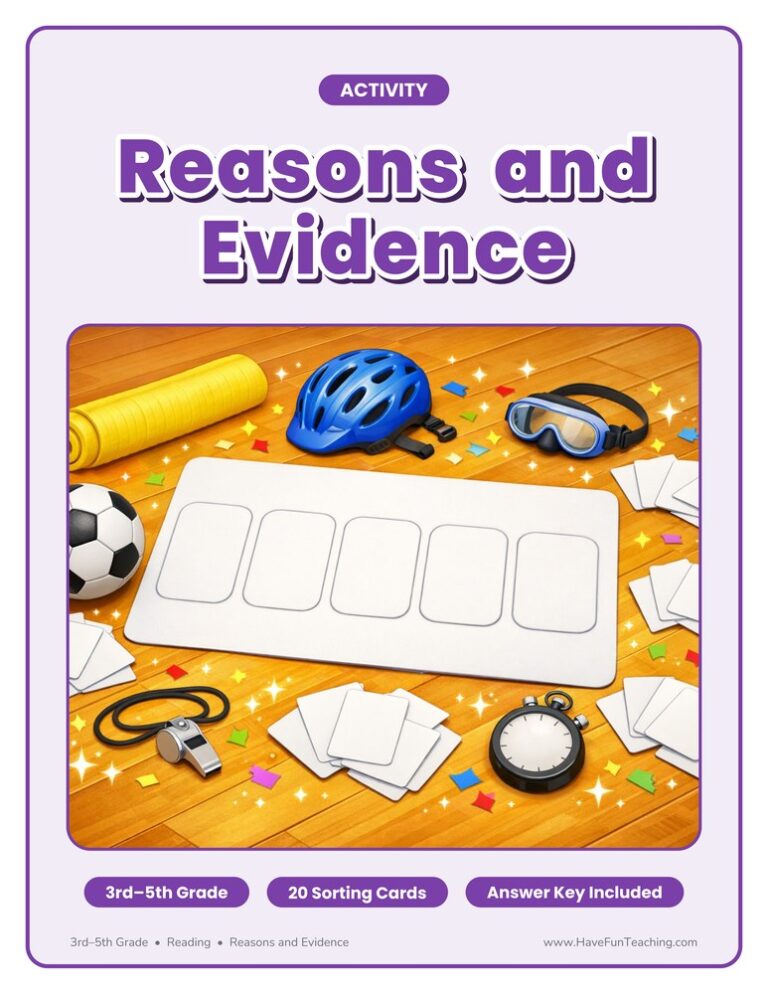
In this reasons and evidence activity, 3rd to 5th grade students sort sports cards to match each point with its reasons and evidence. Answer key included.
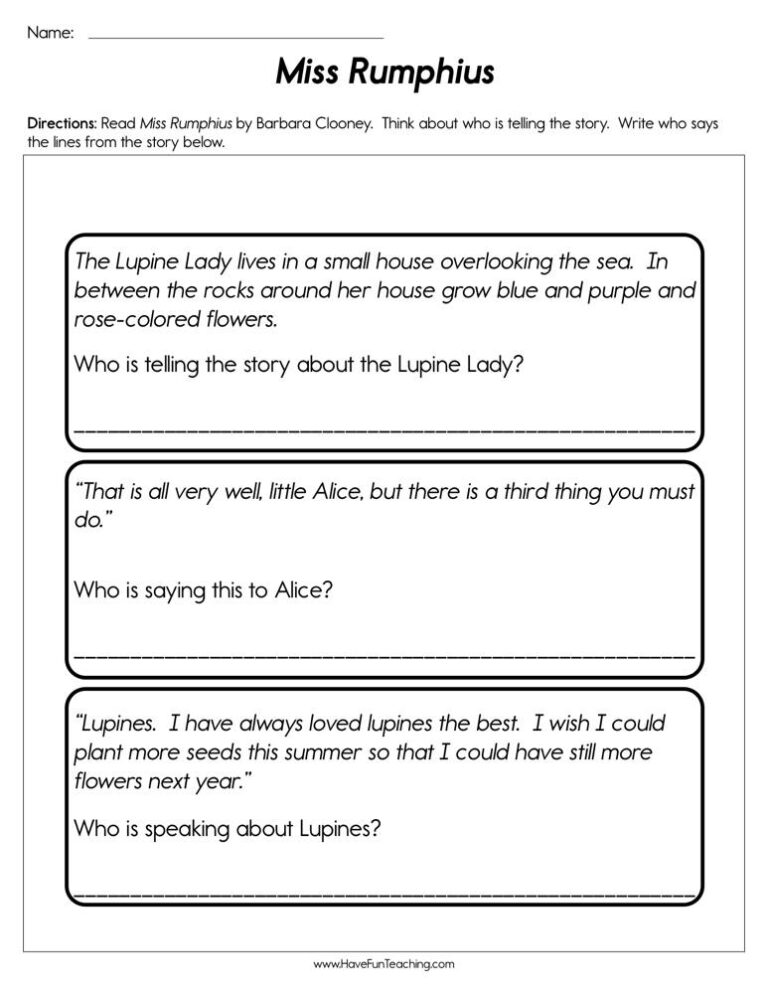
Using Miss Rumphius Point of View Worksheet, students read Miss Rumphius by Barbara Clooney to determine who says the lines from the story.
Using thisAuthor's Purpose Song, students will remember the three reasons why author's write using this catchy animated song.

Practice finding reasons with this support the point worksheet for 3rd grade. Students read a short recycling article, answer questions about the author's point, and use evidence. An answer key is included.
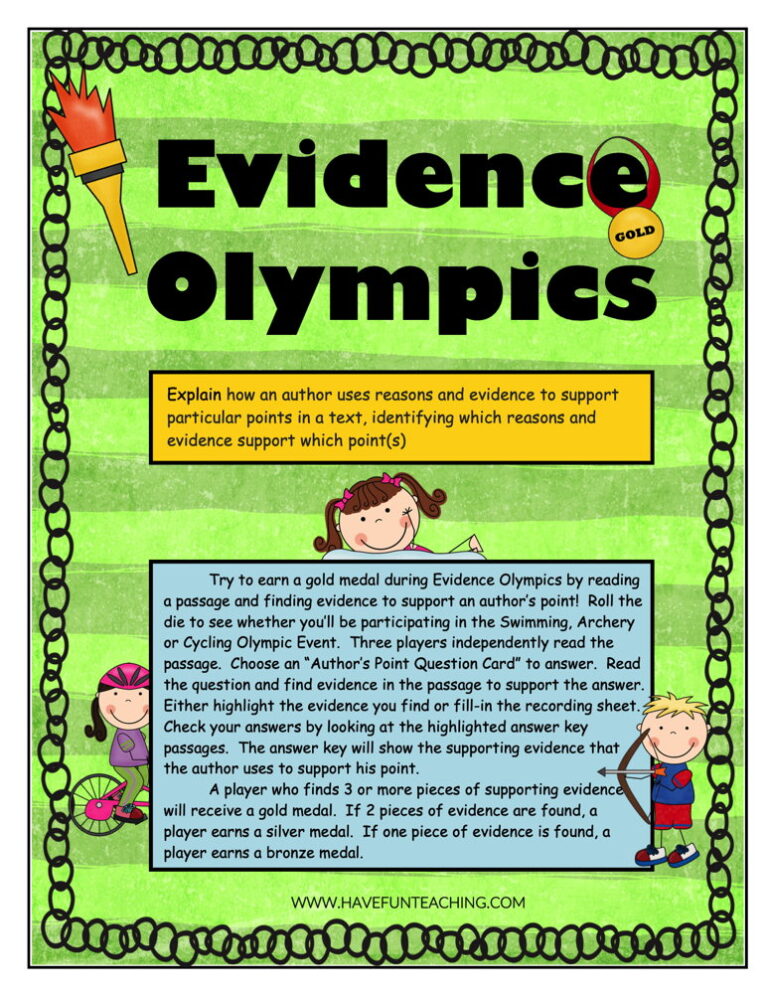
Using this Evidence Olympics Authors Purpose Activity, students try to earn a gold medal during Evidence Olympics by reading a passage and finding evidence to support an author's point.

Using RI.3.6 Third Grade Common Core Lesson, studentsdistinguish their own point of view from that of the author of a text.

The Let's Give Some Support Activity is a matching game where students sort giraffe reason cards under the point each one supports. Made for 2nd and 3rd grade, with an answer key included.




Reviews
There are no reviews yet