
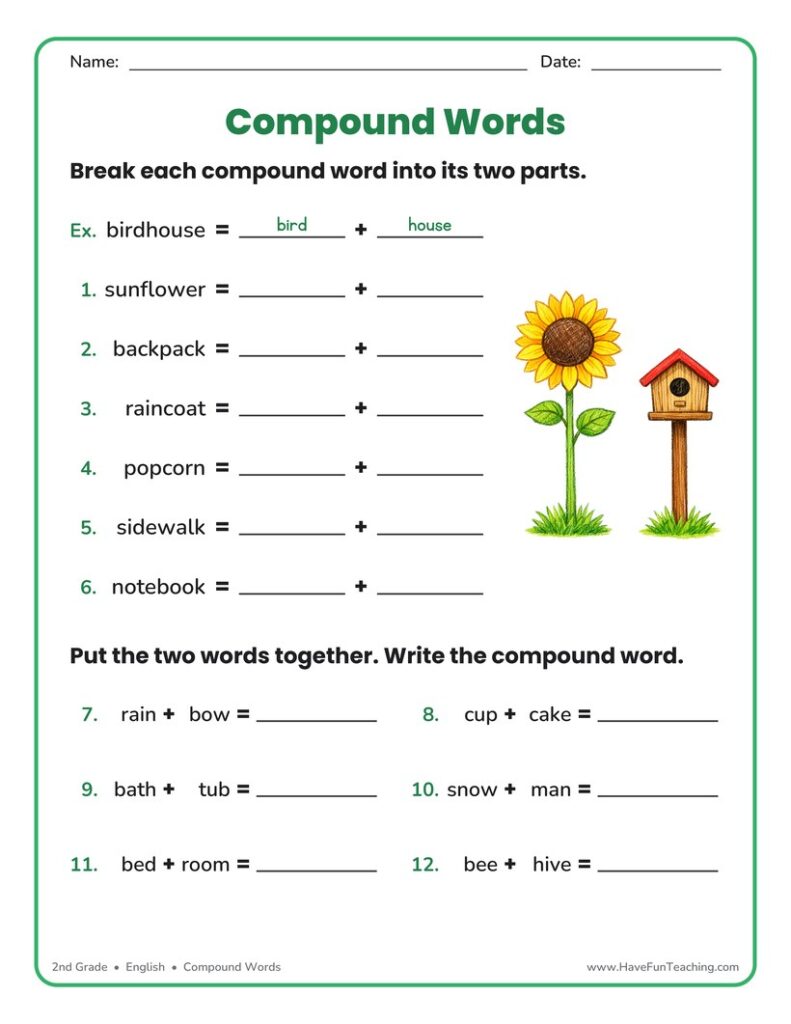
Compound Words Worksheet
This compound words worksheet gives 2nd graders two ways to practice: breaking words like sunflower into their two parts, then joining word pairs to build brand-new words. An answer key is included, so checking takes seconds.
$6.97
Or free with a membership — members pay $3.33/mo for all 10,000+ resources. See plans
Want this one free?
Tell us where to send it and it’s yours — no card, no catch.
One free resource per teacher. We’ll also send free teaching ideas each week — unsubscribe anytime.
Teaching is easier with a membership
Unlimited printables, games & videos for PreK–6th — for your classroom or homeschool. Cancel anytime.
Start your 3-day free trial$0 today · cancel anytime · Instant access to 10,000+ resources
About this resource
Description
A compound word is one big word built from two smaller words a child already knows — sun and flower make sunflower, bird and house make birdhouse. Learning to spot those two parts gives second graders a dependable strategy for reading and understanding new words on their own, and this compound words worksheet builds that habit one word at a time. Instead of guessing at an unfamiliar word, students learn to look inside it, find the two smaller words hiding there, and use their meanings to figure out what the whole word must mean.
This 2nd grade compound words worksheet holds two clear activities on one uncluttered page. In the first, a worked example shows how birdhouse breaks into bird and house, and then students split six more compound words — sunflower, backpack, raincoat, popcorn, sidewalk, and notebook — into their two parts on solid, roomy writing lines. In the second activity students work the other direction: they read a pair of small words such as rain and bow, or bath and tub, and write the compound word those two words make. Print it, hand it out, and use the included answer key to check the work in seconds or let students check their own.
What’s Included
- 1 print-ready PDF worksheet
- Answer key
- 12 compound word activities — 6 break-the-word-apart items with a worked example, plus 6 build-the-word items
Three things make this compound words worksheet especially effective. First, it works in both directions, taking words apart and putting them back together, so students practice the skill as a flexible strategy rather than memorizing a list. Second, every word on the page is made from two everyday words a second grader already reads, which keeps the focus on the structure of the word instead of on decoding. Third, the generous spacing and wide writing lines keep the page calm and easy to scan, which matters for young writers who are still forming their letters at size.
Keep the practice going away from the page. Go on a compound word hunt around the classroom or the house — doorbell, bookshelf, cupcake, football, mailbox — and write each find on a sticky note cut in half so the two parts can be pulled apart and pushed back together. Write single words such as snow, rain, book, and mark on index cards, then let partners shuffle and combine them, keeping every real compound word they build and giggling at the silly ones they do not. You can also ask students to draw a compound word taken literally, draw what it really means beside it, and compare the two pictures.
Related Resources
What teachers say
Reviews
You must be logged in to post a review.
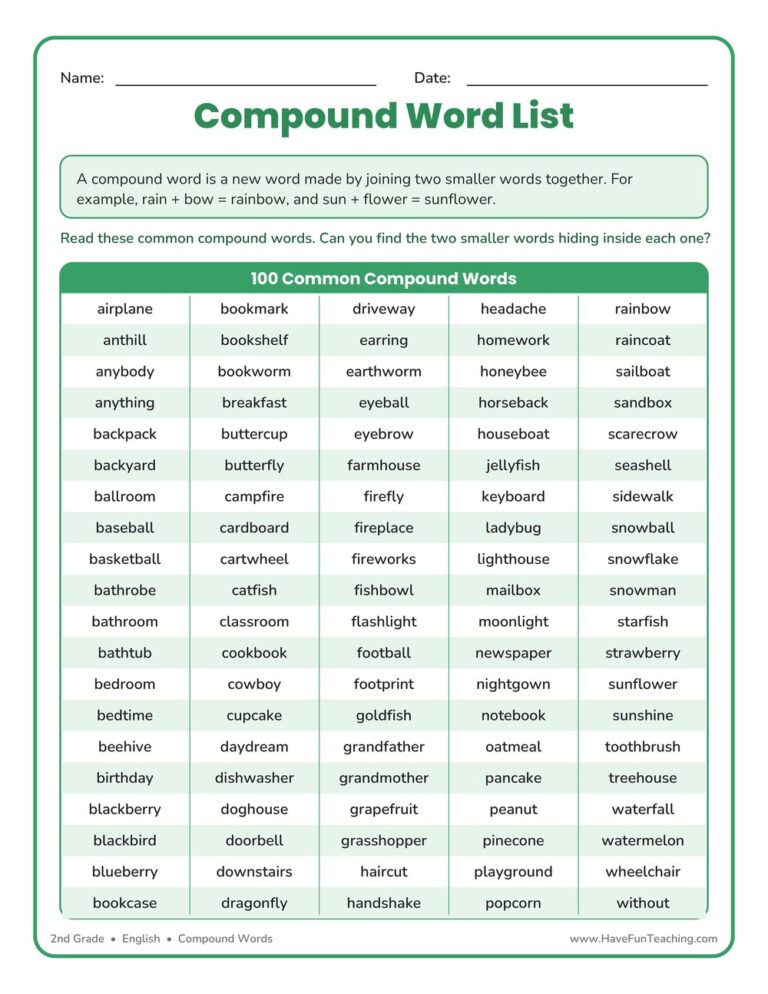
This compound word list worksheet gives 2nd graders a handy reference of 100 common compound words to read, spell, and explore. A clean, printable chart that is perfect for word walls, folders, and no-prep vocabulary practice.

This Create Compound Words Worksheet has 2nd graders match word parts to build rainbow, butterfly, and snowman, then split sunflower, backpack, and doghouse into two small words. Answer key included for fast, no-prep vocabulary practice.

This Compound Words Fill in Blank Worksheet asks 2nd graders to complete six sentences with the right compound word from the word bank. An answer key is included, so practice takes minutes and needs no prep.
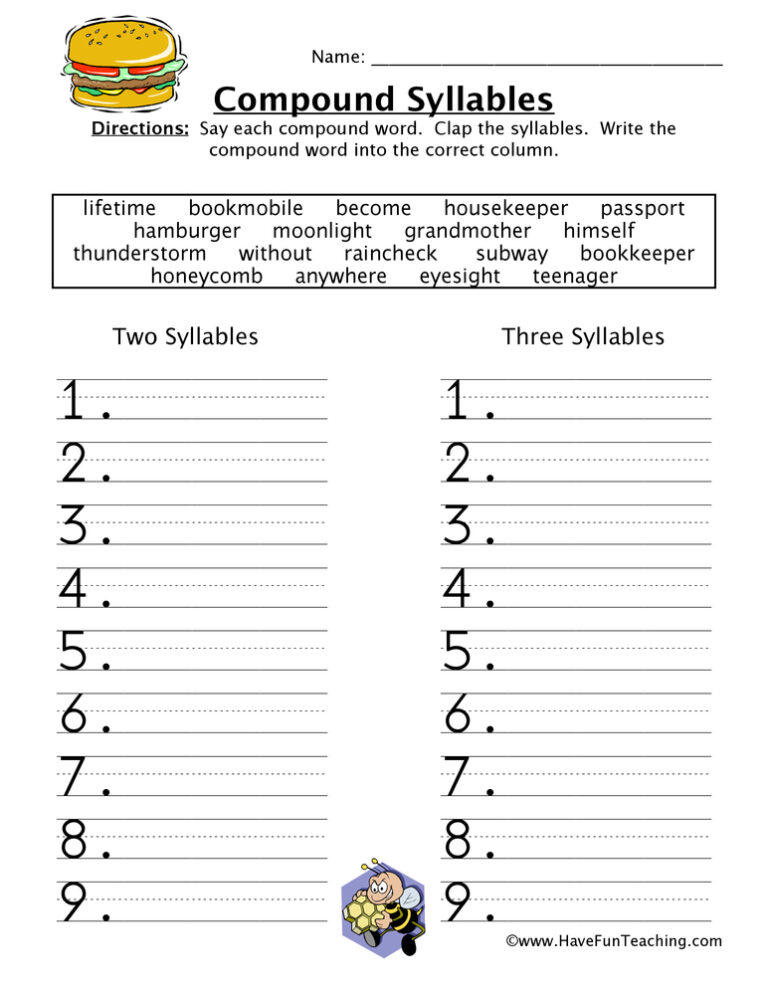
In this Count the Compound Words Syllables Worksheet, 2nd grade students split compound words into their two parts, clap the syllables, and circle compound words in sentences. Answer key included.

UsingCompound Words Activity, students match pictures cards to compound word cards to build their reading fluency.

Using Santa's Compound Cookies Activity, studentsput together his cookies to form compound words to figure out what Santa wants for Christmas.

This syllables compound words worksheet has 2nd Grade students clap and sort compound words by syllables, then split new compound words into two smaller words. An answer key is included.

The Compound Words Equations Worksheet gives 2nd Grade students six word equations to solve and three sentences to finish. An answer key is included, so practice is quick to assign and quick to check.

Materials available in this Compound Words Lesson Plan include Compound Word Activities, Compound Word Worksheets, and a Compound Word Flash Card Set.

Using St Patrick's Day Compound Words Activity, students match pictures cards to compound word cards to build their reading fluency.

Using Compound Words Cutting Worksheet, students cut and glue words to pair together in order to create new compound words.
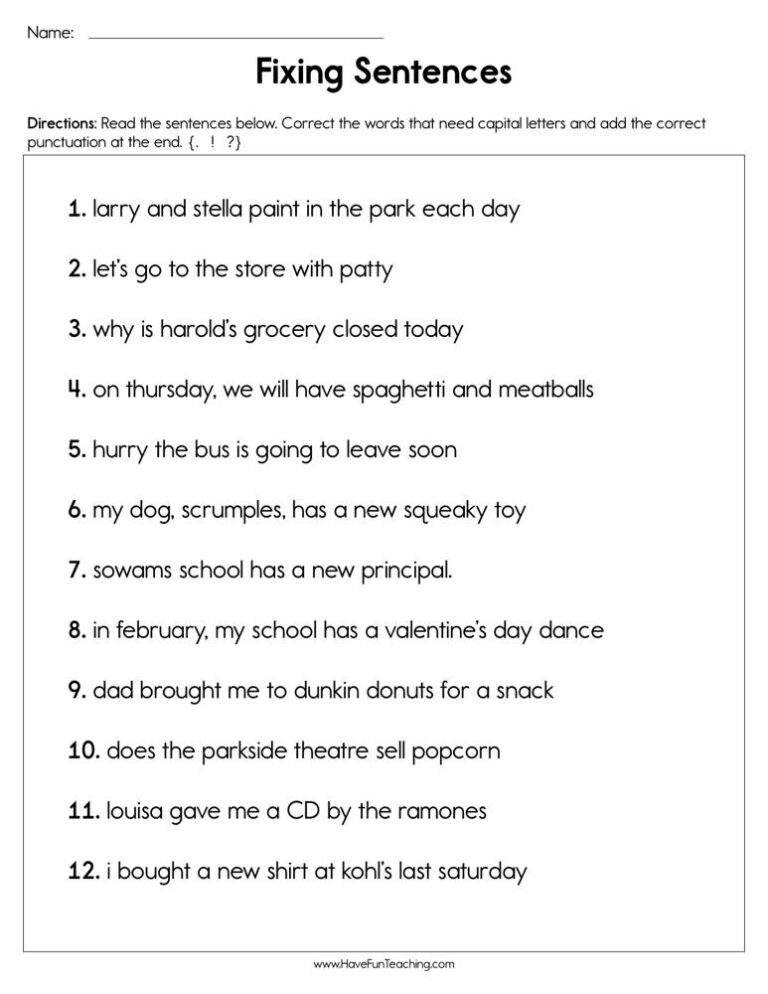
This editing sentences worksheet gives 2nd graders eight sentences to rewrite with the correct capital letters and end marks. Includes a complete answer key—perfect for quick, no-prep proofreading practice at home or school.




Reviews
There are no reviews yet