

Describing Emotions Worksheet
This describing emotions worksheet has 3rd graders pick the feeling word each sentence supports, then swap a plain word for a stronger one. Answer key included for quick, no-prep word-choice practice.
$6.97
Or free with a membership — members pay $3.33/mo for all 10,000+ resources. See plans
Want this one free?
Tell us where to send it and it’s yours — no card, no catch.
One free resource per teacher. We’ll also send free teaching ideas each week — unsubscribe anytime.
Teaching is easier with a membership
Unlimited printables, games & videos for PreK–6th — for your classroom or homeschool. Cancel anytime.
Start your 3-day free trial$0 today · cancel anytime · Instant access to 10,000+ resources
About this resource
Description
Every child can say happy, sad, and mad by the time they reach third grade — the work at this age is choosing the word that says exactly which feeling it was. This describing emotions worksheet teaches that choice twice over: first by picking the one feeling word out of three that the sentence actually supports, and then by trading a plain feeling word for a stronger one. Both parts keep the feeling inside a real sentence, which is where a writer has to find the right word.
This 3rd grade adjectives worksheet has two parts. In Part A, three feeling words sit above each of four sentences and students write the one the sentence supports — a child who worked hard on a model felt thrilled, not angry or sleepy. In Part B, a box of four stronger feeling words sits above four sentences whose underlined word is plain, and students write the better word on the line. Print it for a writing lesson, a word-choice mini-lesson, a literacy center, or homework. A complete answer key fills page two.
What’s Included
- 1 print-ready PDF worksheet
- Part A: 4 sentences with three feeling words to choose from above each
- Part B: a 4-word box of stronger feeling words and 4 sentences to improve
- Twelve different feeling words, every one of them used in a real sentence
- A complete answer key
Three reasons this resource helps children describe emotions in writing. First, giving three real feeling words instead of one blank forces students to read the whole sentence for evidence rather than reaching for the first word they know. Second, the Part B swaps show that a word like glad is not wrong, only vague, which is the idea behind almost every revision a young writer makes. Third, every situation on the sheet is one a third grader recognizes, so the vocabulary lands on feelings they have actually had.
Teachers and parents can build on this describing emotions worksheet in a few easy ways. Keep a running feelings word wall and add a stronger word to it every week. Ask students to act out one word from Part A while a partner guesses which it is. Have them rewrite one Part B sentence again with a different word from the box and talk about how the meaning shifts. Read a page of a favorite book and hunt for the feeling words the author chose.
Related Resources
What teachers say
Reviews
You must be logged in to post a review.

Practice with this comparative and superlative adjectives worksheet: 3rd graders complete a chart, choose the right form in five sentences, and write two of their own. Answer key included for fast, no-prep grammar review.

Using Adjective Flash Cards, students describe pictures using adjectives to build vocabulary and writing skills.

This sorting adjectives worksheet asks third graders to file twelve describing words into feeling, texture, and sound groups, then explain a classmate's mistake. Answer key included, so checking work takes seconds.

This Verb Adjective or Preposition Worksheet has 3rd graders choose the word each sentence needs, then name its part of speech. Answer key included, so grammar practice is ready in one print.

This Adjectives Word Search Worksheet asks 3rd graders to find ten describing words, use five of them in sentences, and write two of their own. Answer key included, so practice with adjectives is ready in one print.

This Adjectives Describe Worksheet has 3rd graders choose the describing word that completes each sentence, then name the noun it tells about. An answer key is included, so adjective practice needs no prep.
Using this Noun, Adjective, and Verb Activity, students sort examples of nouns, verbs, and adjectives into categories to build their parts of speech understanding.
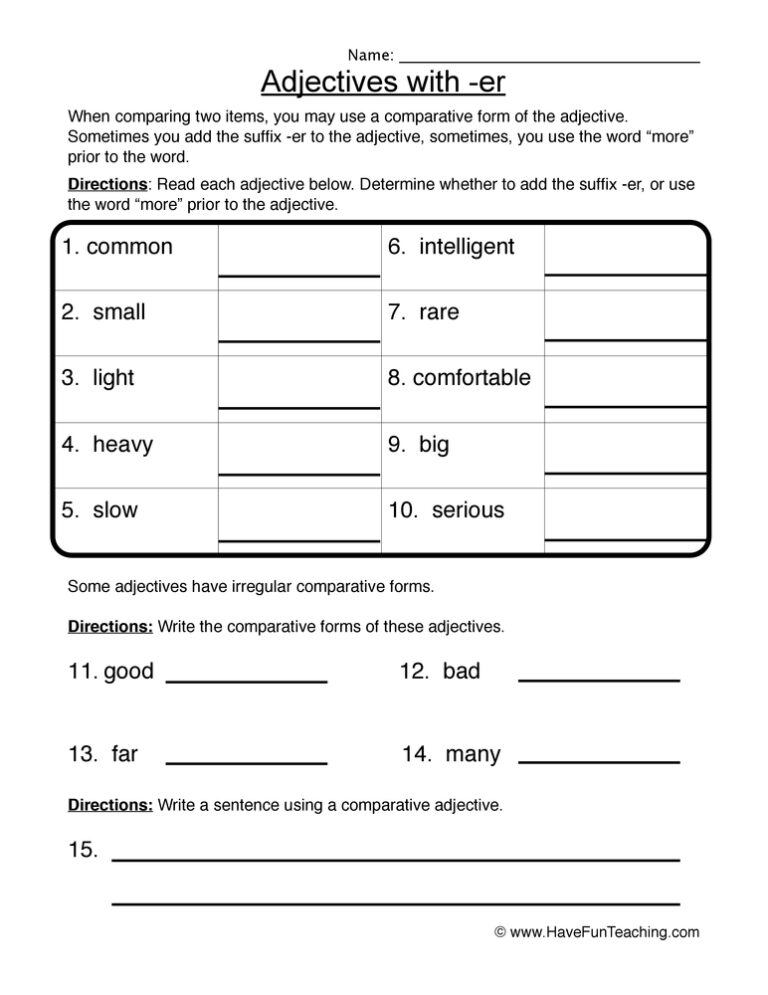
This adjectives -er worksheet gives 3rd graders 15 chances to build comparative adjectives with -er, with more, and the irregular way. Answer key included, so grammar practice is ready the moment you print it.
Using the Adjective Song (MP3), students will be able to define, give examples and use adjectives in their own writing using the catchy and memorable lyrics.

This Memorial Day Nouns Verbs Adjectives Worksheet has 3rd graders sort twelve holiday words, label bold words in sentences, and write two of their own. Answer key included for quick, no-prep grammar practice.

Materials available in this Adjectives Lesson Plan include Adjective Flash Cards, Adjective Worksheets, Apples to Apples Adjective Activity Center, and
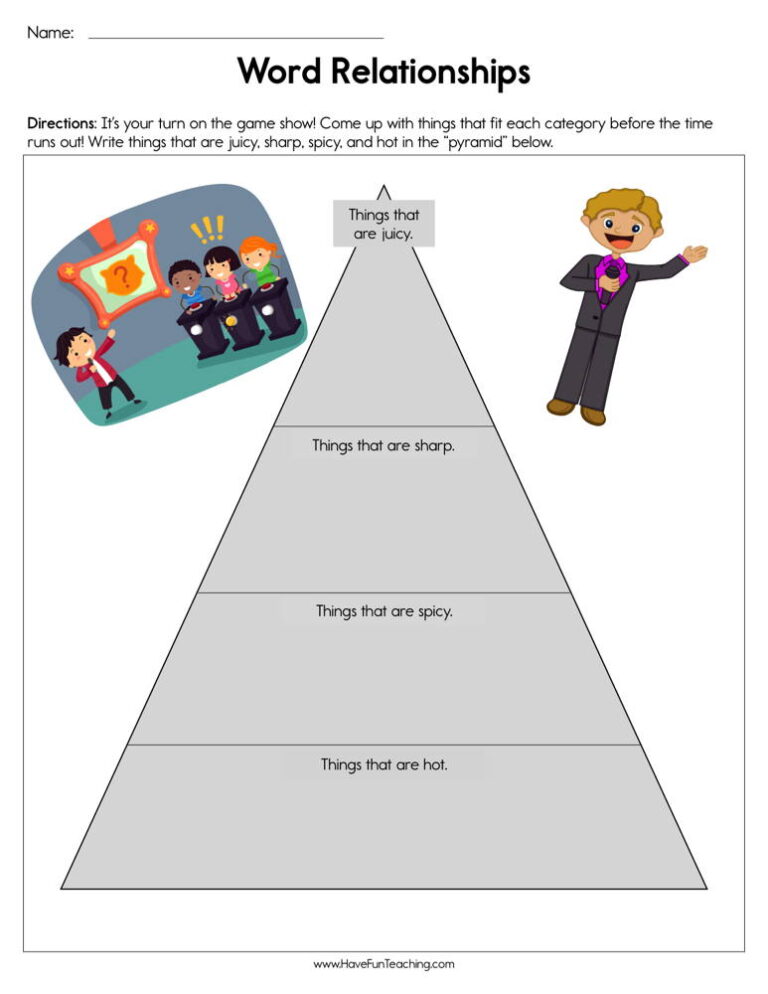
This word relationships worksheet has 3rd graders sort everyday things as juicy, sharp, or soft and pick words that describe real people. An answer key is included for fast checking.




Reviews
There are no reviews yet