
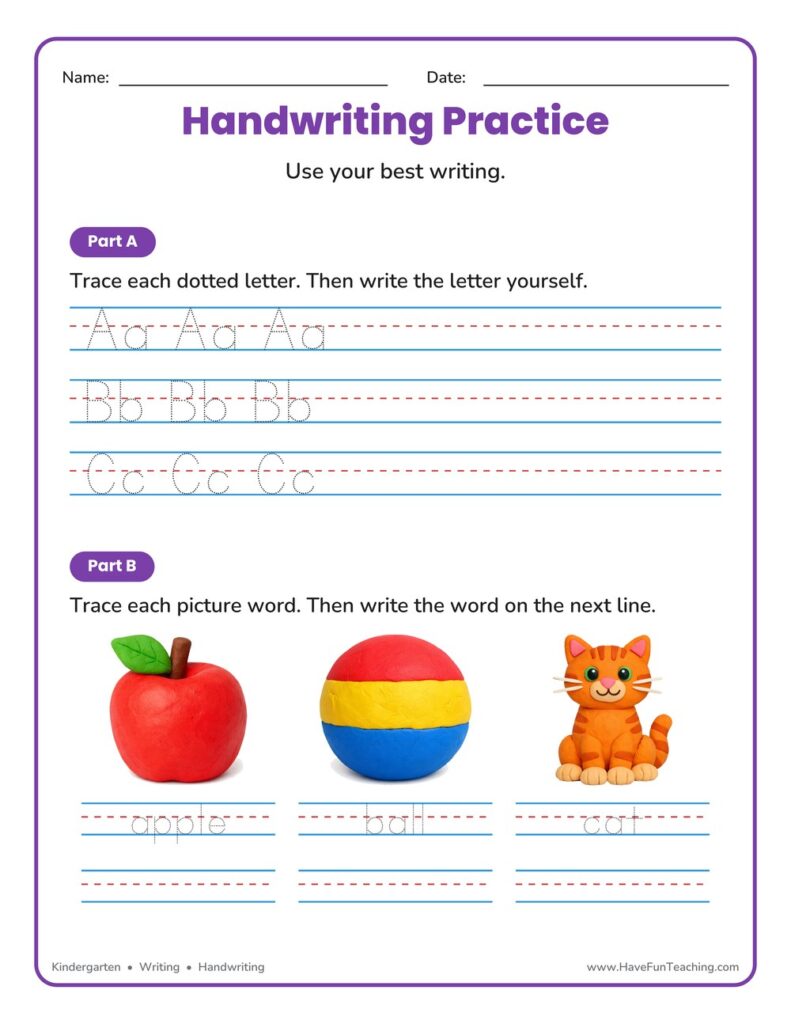
Handwriting Practice Paper
A Kindergarten handwriting practice paper with three-line guides for tracing and writing Aa, Bb, and Cc plus the picture words apple, ball, and cat. Answer key included, so letter formation practice is ready in one print.
$6.97
Or free with a membership — members pay $3.33/mo for all 10,000+ resources. See plans
Want this one free?
Tell us where to send it and it’s yours — no card, no catch.
One free resource per teacher. We’ll also send free teaching ideas each week — unsubscribe anytime.
Teaching is easier with a membership
Unlimited printables, games & videos for PreK–6th — for your classroom or homeschool. Cancel anytime.
Start your 3-day free trial$0 today · cancel anytime · Instant access to 10,000+ resources
About this resource
Description
Forming clear, confident letters is one of the first big milestones of Kindergarten, and it takes daily repetition on lines a child can actually see. This handwriting practice paper worksheet gives young writers the three-line guides they need — a solid top line, a dashed midline, and a solid baseline — so every letter starts in the right place and lands on the right line. Children first trace dotted model letters, then repeat them on their own in the open space that follows, which is exactly how letter formation moves from copying to memory.
This kindergarten handwriting worksheet is built in two short parts so it never overwhelms a beginning writer. In Part A, students trace and then write the uppercase and lowercase pairs Aa, Bb, and Cc on wide three-line guides sized for early handwriting. In Part B, they meet three picture words — apple, ball, and cat — that begin with those same letters. Each picture sits directly above its word, so children connect the letter they just practiced to a real word and a real object. Print one copy per child, model the first letter on the board, and let students work down the page at their own pace.
What’s Included
- 1 print-ready PDF worksheet
- Answer key
- 3 uppercase and lowercase letter tracing lines plus 3 picture-word writing activities
There are three reasons this handwriting practice paper helps children learn to write. First, the three-line guides are derived from real primary handwriting proportions, so ascenders, x-height letters, and descenders all have a place to sit instead of floating on a blank page. Second, the trace-then-write pattern gives immediate support and then immediately removes it, which builds independence rather than dependence on the dotted model. Third, pairing each letter with a familiar picture word gives the letter meaning, so a child is not just drawing shapes but writing something real.
Teachers and parents can stretch this activity in plenty of playful ways. Have children form the same letters in a sand tray, with playdough ropes, or with a finger in the air before they pick up a pencil. Turn the picture words into a hunt around the classroom or kitchen, and add a new word for each letter as children gain confidence. Sing an alphabet song while students trace, and keep finished pages in a handwriting folder so families can watch the letters get steadier week after week.
Related Resources
What teachers say
Reviews
You must be logged in to post a review.
The Letter A Song (Original Music Video) will help students learn all about the letter by watching a video about letter sounds, vocabulary words, and letter formation.

The Baby Shark Alphabet Song (Animated Music Video) will help students learn letter names and sounds by listening to the catchy lyrics and colorful video.
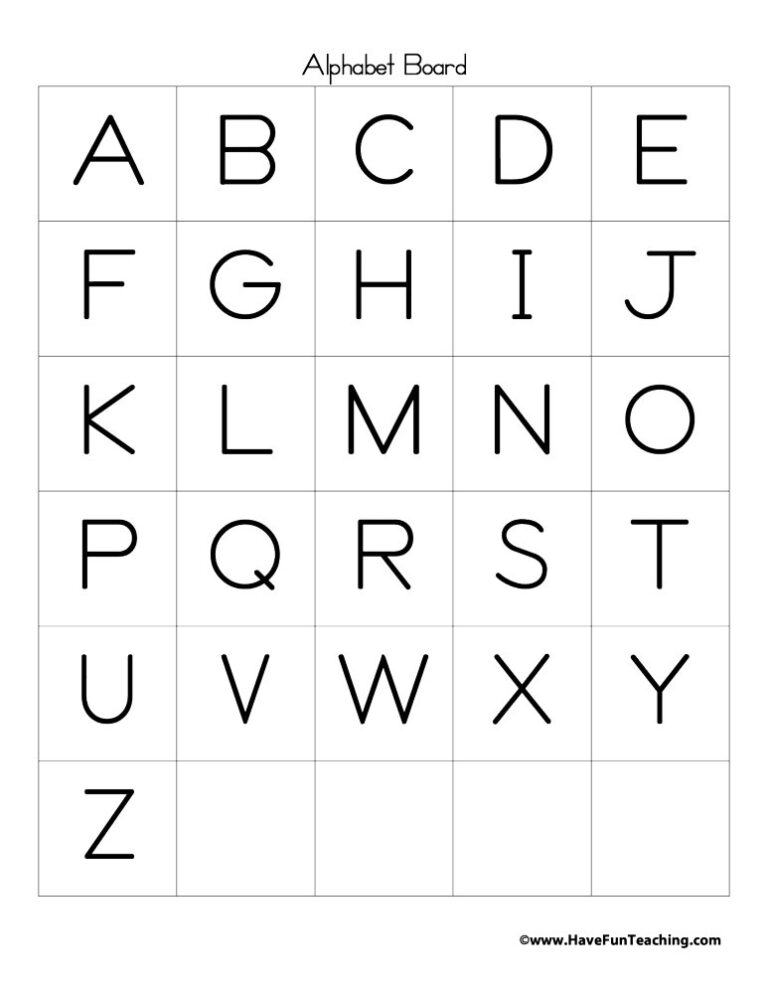

The Alphabet Song (Animated Music Video) will help students learn letter names and sounds by listening to the catchy lyrics and colorful video.
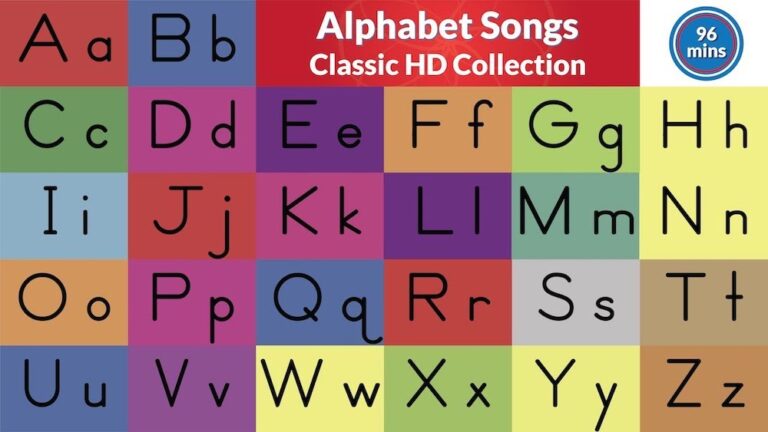
The Alphabet Songs Collection - Classic will help your kids gain a better understanding of letter names and sounds by listening to these ABC Songs.

The Alphabet Songs Pack - Animated will help support your visual learners gain a better understanding of letter names and sounds by listening to this song.
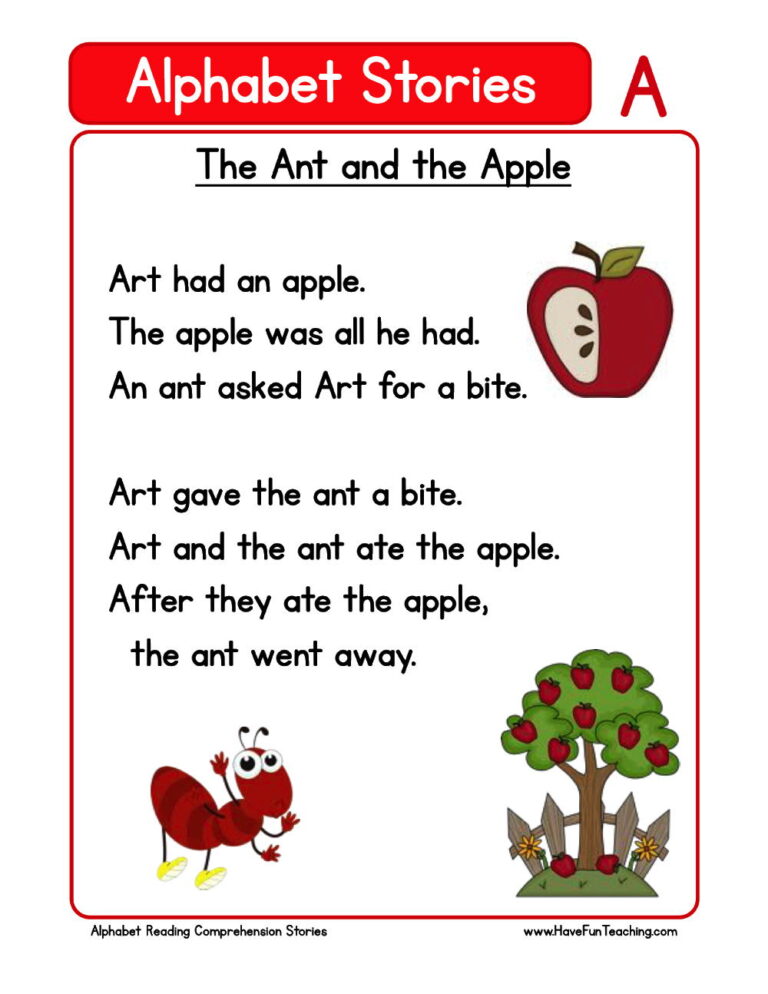
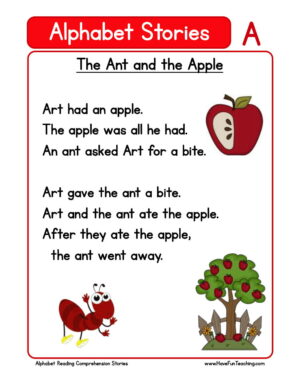
This free Alphabet Stories Letter A Reading Comprehension Worksheet pairs a short letter A story with fill-in-the-bubble questions for kindergarten readers. Includes an answer key — a fun, no-prep way to practice phonics and comprehension.

This alphabet letter recognition assessment helps kindergarten teachers quickly check which uppercase and lowercase letters a child can name. Includes a complete A-to-Z answer key for fast, low-prep progress checks.

The Letter H Song (Original Music Video) will help students learn all about the letter by watching a video about letter sounds, vocabulary words, and letter formation.

The Letter B Song (Original Music Video) will help students learn all about the letter by watching a video about letter sounds, vocabulary words, and letter formation.

These Zaner Bloser Color Alphabet Flash Cards support students' recognition of both upper and lower case ABC letters using this classic school font.
Reviews
There are no reviews yet