
Let’s Separate Things Comma Worksheet
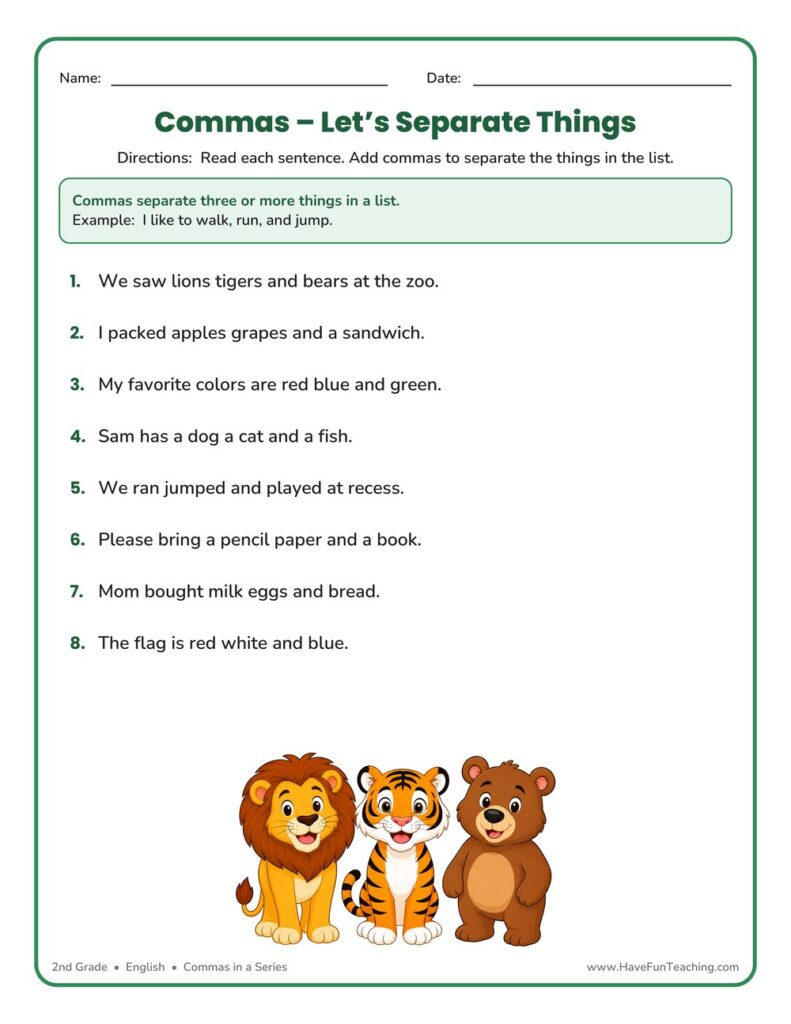
The Let’s Separate Things Comma Worksheet gives 2nd graders eight sentences that need commas added to separate items in a list. Includes a complete answer key — great for no-prep punctuation practice.
$6.97
Or free with a membership — members pay $3.33/mo for all 10,000+ resources. See plans
Want this one free?
Tell us where to send it and it’s yours — no card, no catch.
One free resource per teacher. We’ll also send free teaching ideas each week — unsubscribe anytime.
Teaching is easier with a membership
Unlimited printables, games & videos for PreK–6th — for your classroom or homeschool. Cancel anytime.
Start your 3-day free trial$0 today · cancel anytime · Instant access to 10,000+ resources
About this resource
Description
Commas do an important job in writing: they separate three or more items in a list so a sentence is clear and easy to read. The Let’s Separate Things Comma Worksheet gives second graders focused practice placing commas correctly in a series. Instead of running words together, students learn to slow down, find the list, and drop a comma between each item and before the final “and.”
This 2nd grade comma worksheet presents eight short, familiar sentences that each contain a list of three things written with no commas at all. Students read the sentence, find the items in the series, and add the commas where they belong. A tinted example box at the top models the skill, and the layout leaves plenty of room to write. Use it for morning work, a grammar center, guided practice, or homework.
What’s Included
- 1 print-ready PDF worksheet
- Answer key
- 8 comma-in-a-series practice sentences
The Let’s Separate Things Comma Worksheet helps kids learn in three ways. First, working with real, kid-friendly sentences makes the rule feel useful instead of abstract. Second, repeating the same pattern eight times builds automatic habits for punctuating any list. Third, the included answer key lets students check their own work and see exactly where each comma goes, which builds independence and confidence.
Teachers and parents can stretch this skill with quick, playful activities. Ask your child to list three foods they would pack for a picnic and write it as a sentence with commas. Hunt for lists in a recipe or a favorite book and point out the commas. Or play a “comma clap,” clapping once for each pause in a spoken list. The more children notice commas in everyday reading, the more naturally they will use them in their own writing.
Related Resources
What teachers say
Reviews
You must be logged in to post a review.
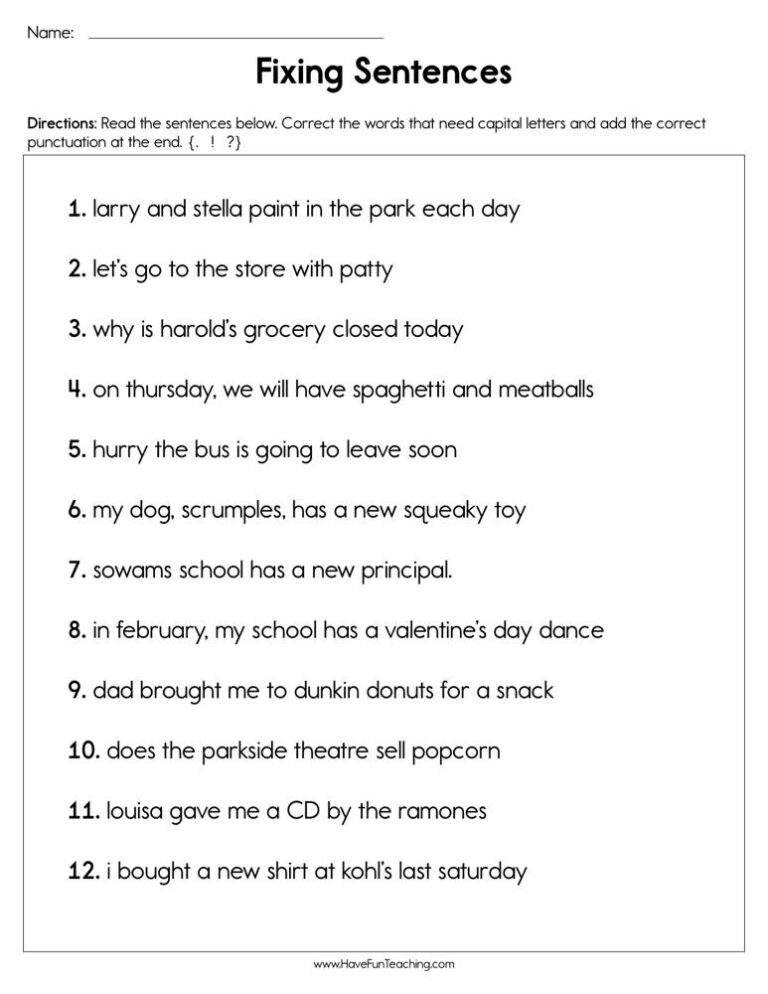
This editing sentences worksheet gives 2nd graders eight sentences to rewrite with the correct capital letters and end marks. Includes a complete answer key—perfect for quick, no-prep proofreading practice at home or school.

This capitalization and end punctuation worksheet gives 2nd graders practice choosing end marks and rewriting sentences with correct capital letters. Includes an answer key to build careful, confident writers.

This Adding End Punctuation Worksheet gives 2nd graders six sentences that need a period, question mark, or exclamation point, then three prompts to write their own. Answer key included.

This add end punctuation worksheet gives 2nd grade students practice choosing the period, question mark, or exclamation point, then writing sentences of their own. An answer key is included, so checking work is quick.
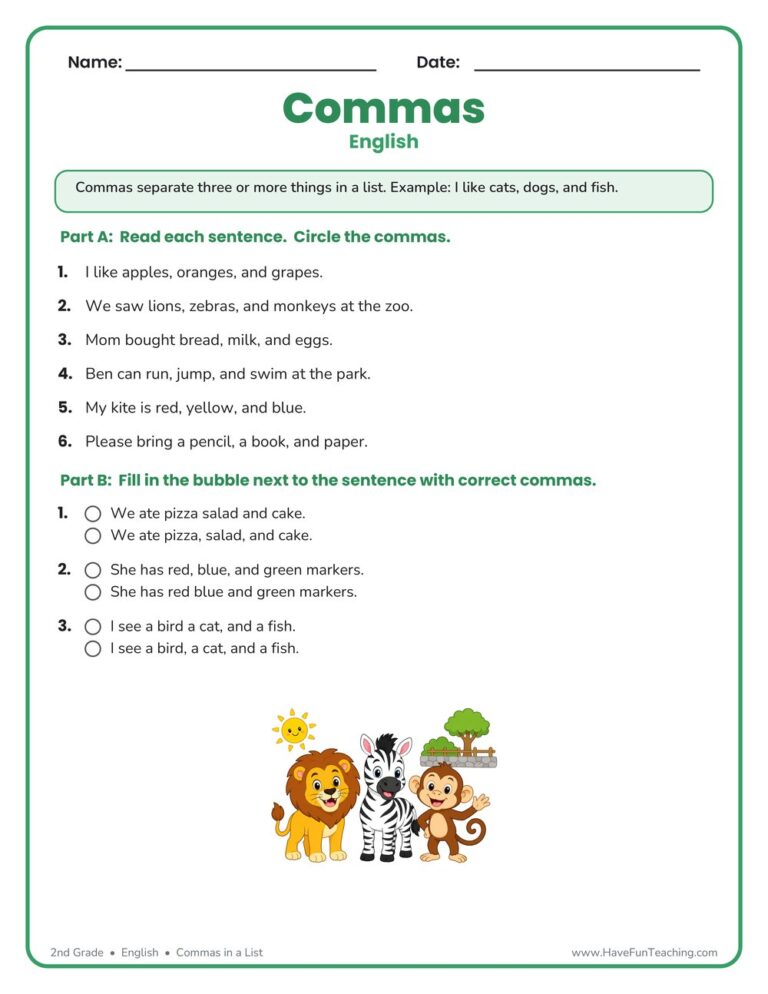
This Commas in a List Worksheet has 2nd graders circle the commas that separate items in a series and pick the sentence that punctuates a list correctly. Includes an answer key for quick, no-prep grammar practice.

This Adding Punctuation Worksheet has 2nd Grade students choose the period, question mark or exclamation mark for six sentences, then write three of their own. An answer key is included.
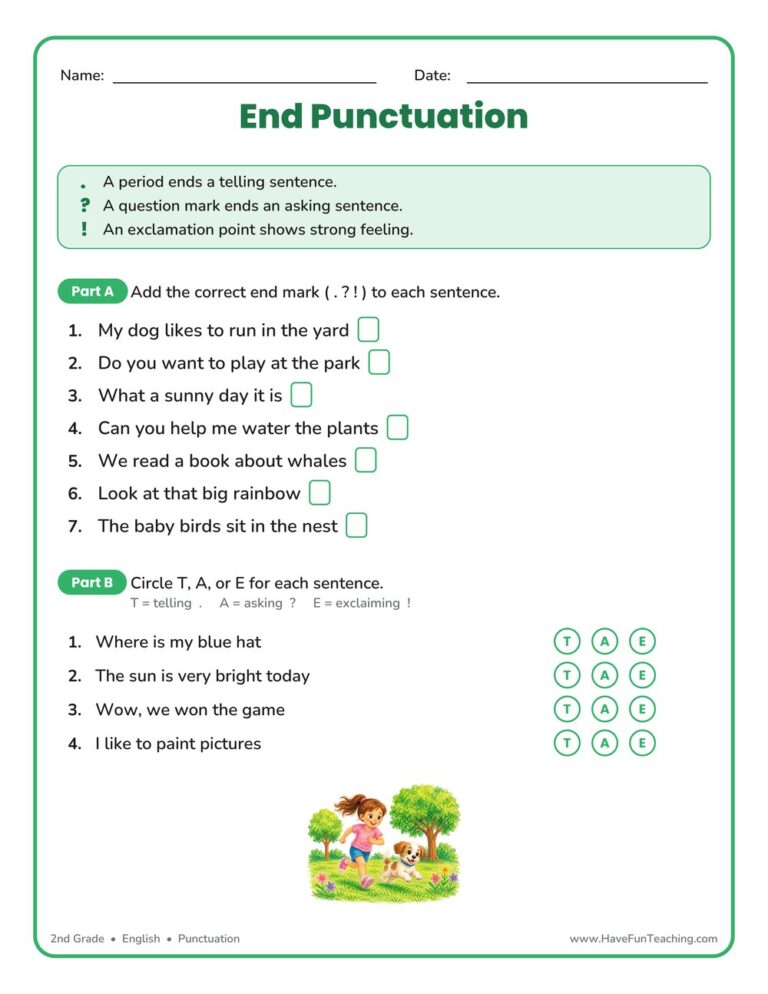
This end punctuation worksheet gives 2nd graders fun practice adding periods, question marks, and exclamation points and sorting telling, asking, and exclaiming sentences. Includes an answer key for quick, no-prep punctuation practice.

The Questions Examples Worksheet helps 2nd grade students mark six sentences with a period or a question mark and write three questions of their own. An answer key is included, so punctuation practice is ready to print.
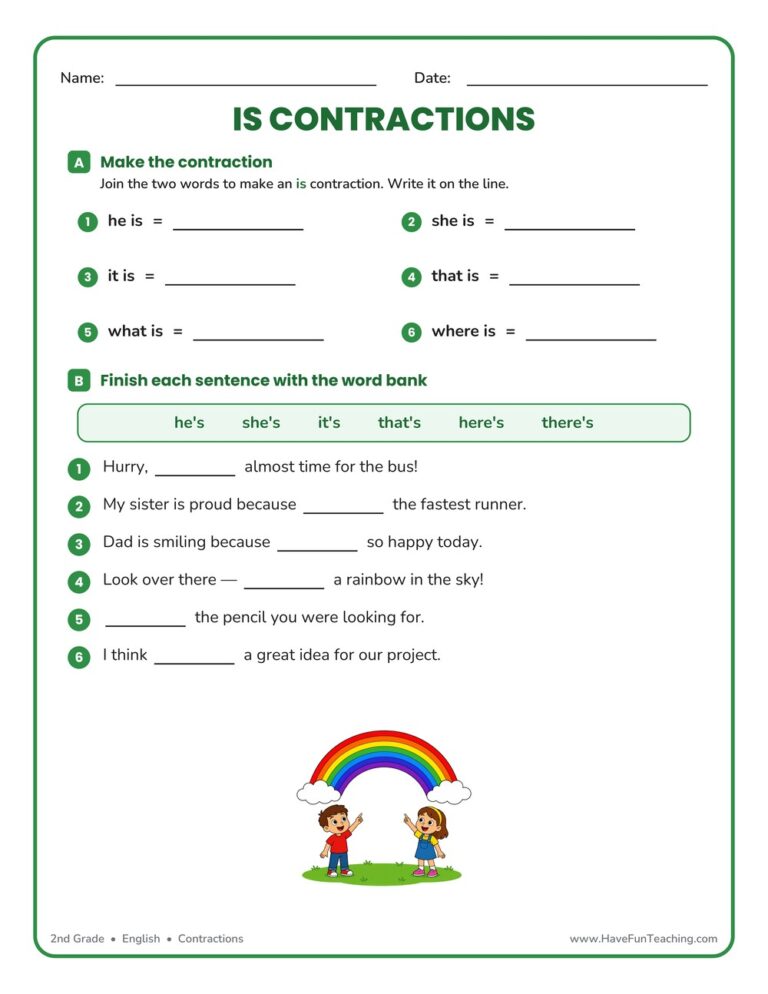
The Is Contractions Worksheet gives 2nd graders two-part practice building and using “is” contractions like he’s, she’s, and it’s. Includes a complete answer key — a quick, low-prep way to strengthen grammar skills at home or in class.

The How To Say It Punctuation Worksheet gives 2nd grade students six sentences to punctuate and four sentence kinds to match, with an answer key included, so end marks finally make sense.

This Fall Asking Sentences Worksheet has second grade students add the end mark to six fall sentences and write three asking sentences of their own, with an answer key for quick checking.
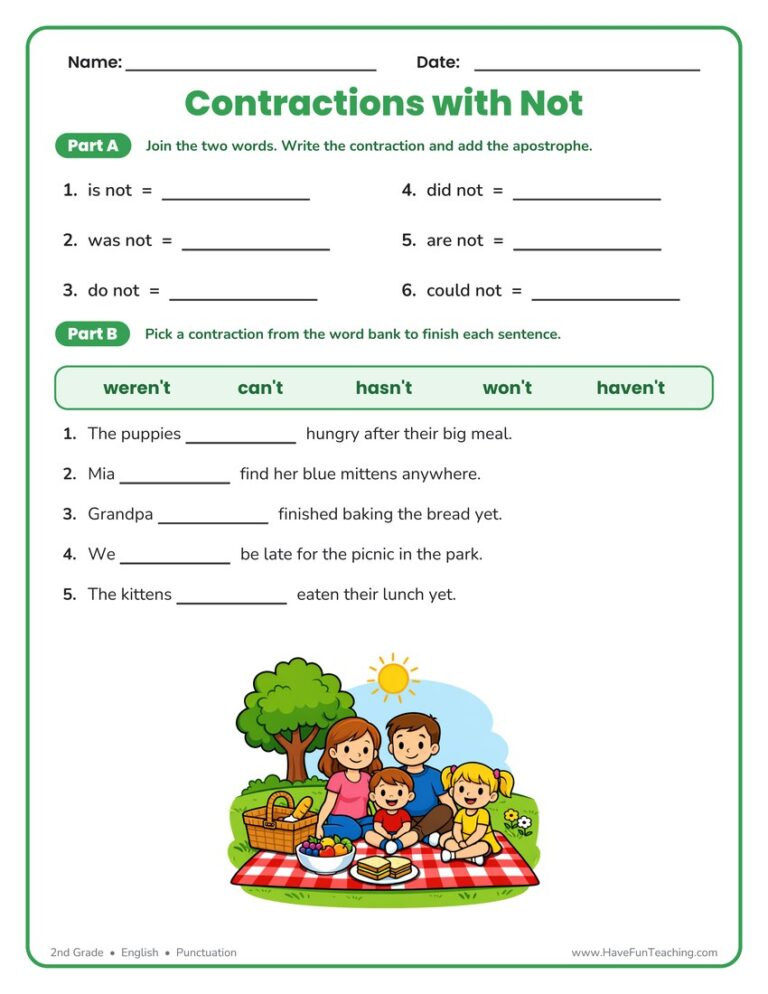
This Not Contractions Worksheet gives 2nd graders focused practice forming and choosing contractions with not, like isn't and don't, and placing the apostrophe correctly. Answer key included for an easy, no-prep way to build strong punctuation skills.

Reviews
There are no reviews yet