

Letter or Number Worksheet
This Letter or Number Worksheet asks Kindergarten students to spot the symbol that does not belong, then write six letters and numbers into the correct box. Answer key included, so checking work takes seconds.
$6.97
Or free with a membership — members pay $3.33/mo for all 10,000+ resources. See plans
Want this one free?
Tell us where to send it and it’s yours — no card, no catch.
One free resource per teacher. We’ll also send free teaching ideas each week — unsubscribe anytime.
Teaching is easier with a membership
Unlimited printables, games & videos for PreK–6th — for your classroom or homeschool. Cancel anytime.
Start your 3-day free trial$0 today · cancel anytime · Instant access to 10,000+ resources
About this resource
Description
Before children can read words or count objects, they have to know the difference between a letter and a number. That single idea sits underneath the whole Kindergarten year, and this Letter or Number Worksheet gives students a clear, low-pressure place to practice it. Uppercase letters and single-digit numerals look alike to a five-year-old, because both are just small black marks on a page, so the skill is really about noticing shape and category at the same time. Students learn to ask one simple question of every symbol they meet: is this something I say a sound for, or something I count with?
This kindergarten letter recognition worksheet has two parts. In the first, students look at four rows of symbols and circle the one that does not belong, either three letters and one number or three numbers and one letter. In the second, six symbols sit in a bank at the top of the page, and students write each one into the Letters box or the Numbers box below. Use it as a morning warm-up, a small-group station, or an independent check after a week of alphabet and counting work.
What’s Included
- 1 print-ready PDF worksheet
- Answer key
- 4 circle-the-odd-one-out rows and a 6-symbol letter and number sort
There are three reasons this Letter or Number Worksheet moves the skill forward. First, it puts the two categories side by side instead of teaching them apart, which is how children actually meet symbols in the real world. Second, the odd-one-out rows make students look at every symbol in the row, not only the first one they recognize. Third, writing each symbol by hand in the sorting boxes turns a quiet recognition task into a motor one, and letters a child forms are letters a child remembers.
Away from the page, keep the sorting going. Hand a child a bowl of magnetic letters and foam numbers and ask them to build two piles on the refrigerator door. Point at house numbers, price tags, and street signs on a walk and ask whether each mark is a letter or a number. Write a mixed row on a whiteboard and have your student circle the ones that do not belong. Toy alphabet blocks and number blocks work the same way, and a two-minute round before snack time is plenty.
Related Resources
What teachers say
Reviews
You must be logged in to post a review.
The Letter A Song (Original Music Video) will help students learn all about the letter by watching a video about letter sounds, vocabulary words, and letter formation.

The Baby Shark Alphabet Song (Animated Music Video) will help students learn letter names and sounds by listening to the catchy lyrics and colorful video.

The Alphabet Song (Animated Music Video) will help students learn letter names and sounds by listening to the catchy lyrics and colorful video.
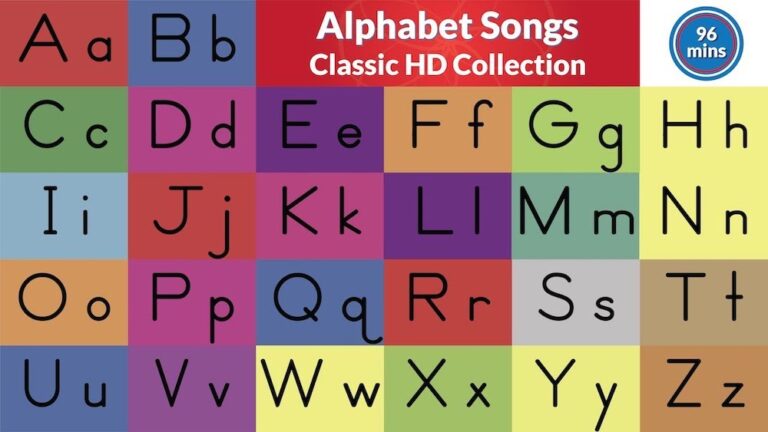
The Alphabet Songs Collection - Classic will help your kids gain a better understanding of letter names and sounds by listening to these ABC Songs.

The Alphabet Songs Pack - Animated will help support your visual learners gain a better understanding of letter names and sounds by listening to this song.
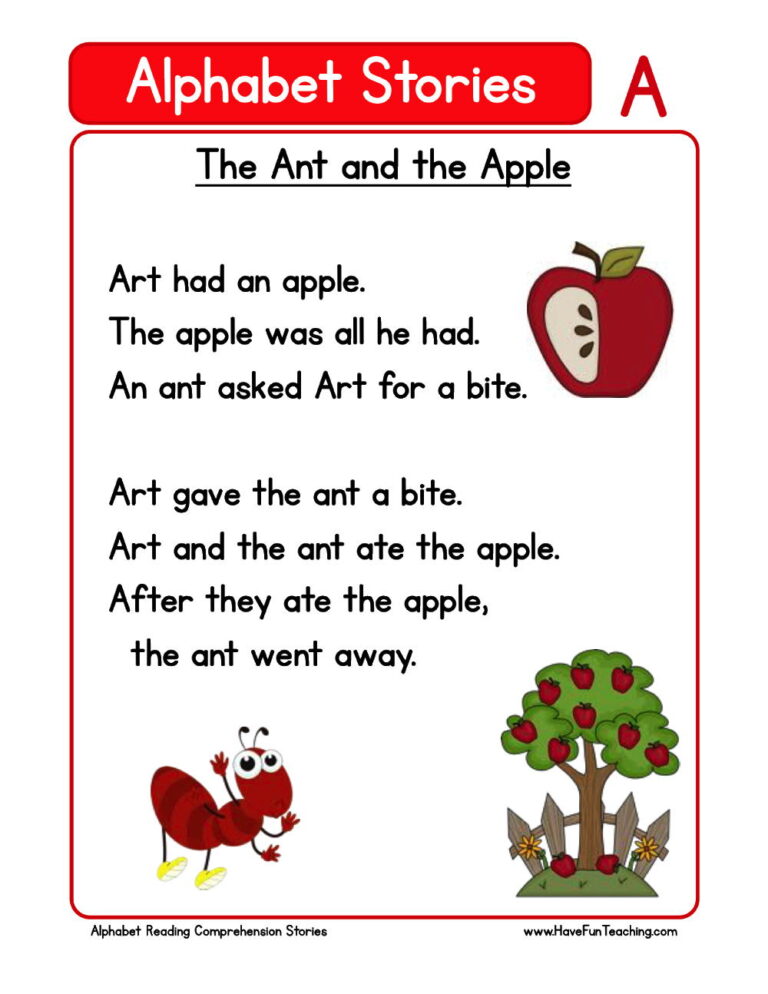
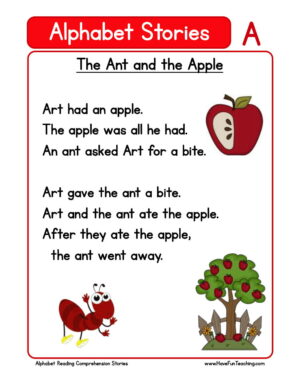
This free Alphabet Stories Letter A Reading Comprehension Worksheet pairs a short letter A story with fill-in-the-bubble questions for kindergarten readers. Includes an answer key — a fun, no-prep way to practice phonics and comprehension.

This alphabet letter recognition assessment helps kindergarten teachers quickly check which uppercase and lowercase letters a child can name. Includes a complete A-to-Z answer key for fast, low-prep progress checks.

The Letter H Song (Original Music Video) will help students learn all about the letter by watching a video about letter sounds, vocabulary words, and letter formation.

The Letter B Song (Original Music Video) will help students learn all about the letter by watching a video about letter sounds, vocabulary words, and letter formation.

The Letter M Song (Original Music Video) will help students learn all about the letter by watching a video about letter sounds, vocabulary words, and letter formation.

These Zaner Bloser Color Alphabet Flash Cards support students' recognition of both upper and lower case ABC letters using this classic school font.
Reviews
There are no reviews yet