
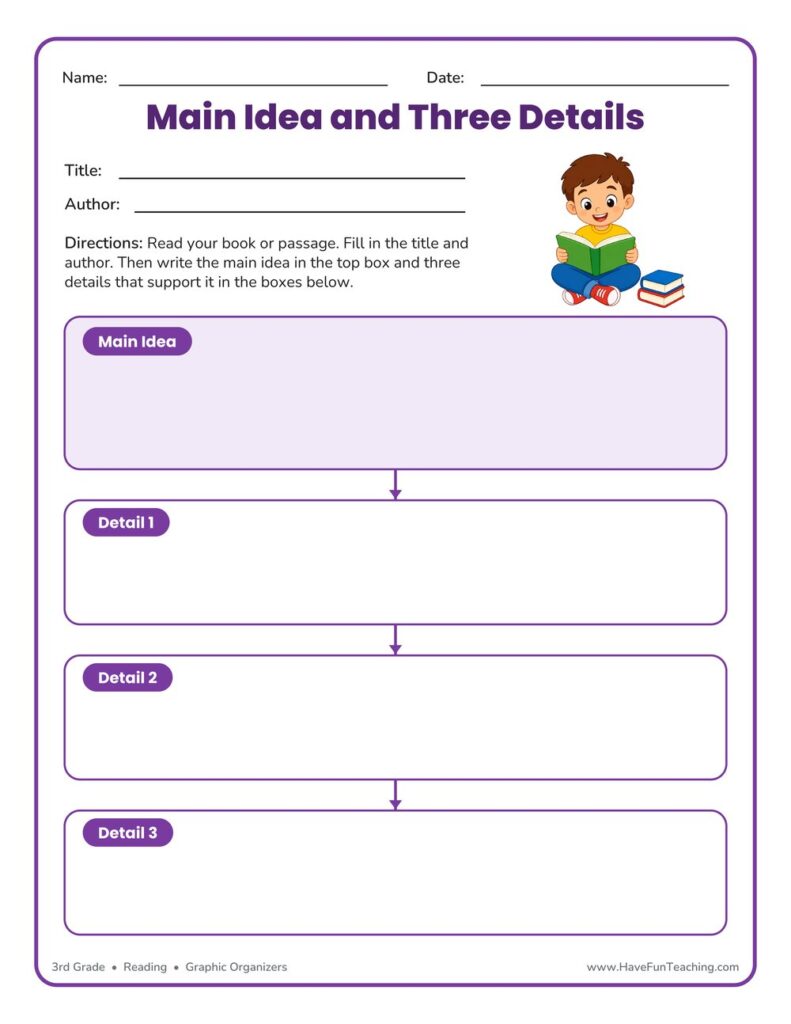
Main Idea and Three Details Graphic Organizer Worksheet
A 3rd grade main idea and three details graphic organizer worksheet that helps students name a text’s main idea and back it up with three supporting details. Works with any book or passage for quick, no-prep reading practice.
$6.97
Or free with a membership — members pay $3.33/mo for all 10,000+ resources. See plans
Want this one free?
Tell us where to send it and it’s yours — no card, no catch.
One free resource per teacher. We’ll also send free teaching ideas each week — unsubscribe anytime.
Teaching is easier with a membership
Unlimited printables, games & videos for PreK–6th — for your classroom or homeschool. Cancel anytime.
Start your 3-day free trial$0 today · cancel anytime · Instant access to 10,000+ resources
About this resource
Description
Finding the main idea and the details that support it is one of the most important reading comprehension skills a young reader can build. This Main Idea and Three Details Graphic Organizer Worksheet gives students a simple, visual way to break down any text they read, so they can name what a passage is mostly about and then back it up with three supporting details. When children can separate the big idea from the smaller facts, they read with more purpose and remember far more of what they read.
This 3rd grade main idea graphic organizer works with any book, article, or passage you choose, which makes it easy to use again and again. After reading, students write the title and author at the top, record the main idea in the large box, and then fill in three details that support that idea in the boxes below. The clear arrows guide readers from the main idea down to each supporting detail, so even students who are new to graphic organizers can follow the flow on their own.
What’s Included
- 1 print-ready PDF worksheet
- A main idea and three details graphic organizer
- Title and author response lines for any text
There are three big reasons this Main Idea and Three Details Graphic Organizer Worksheet helps children learn. First, it turns an abstract skill into something visual and hands-on, so readers can literally see how details connect to a central idea. Second, because the organizer works with any reading material, it lets students practice the same thinking across fiction, nonfiction, and current classroom texts. Third, the structured boxes build confidence: students always know exactly what to look for and where to write it, which keeps them focused on comprehension instead of formatting.
Teachers and parents can stretch this activity in lots of fun ways. Read a short passage aloud and complete the organizer together as a class before letting students try one on their own. Turn it into a game by having partners compare their main ideas and defend their choices with details. Use it after a read-aloud at home, with a favorite picture book, or alongside a science or social studies chapter to reinforce reading across subjects. You can also have students use their three details to write a short summary paragraph, connecting reading and writing in one lesson.
Related Resources
What teachers say
Reviews
You must be logged in to post a review.
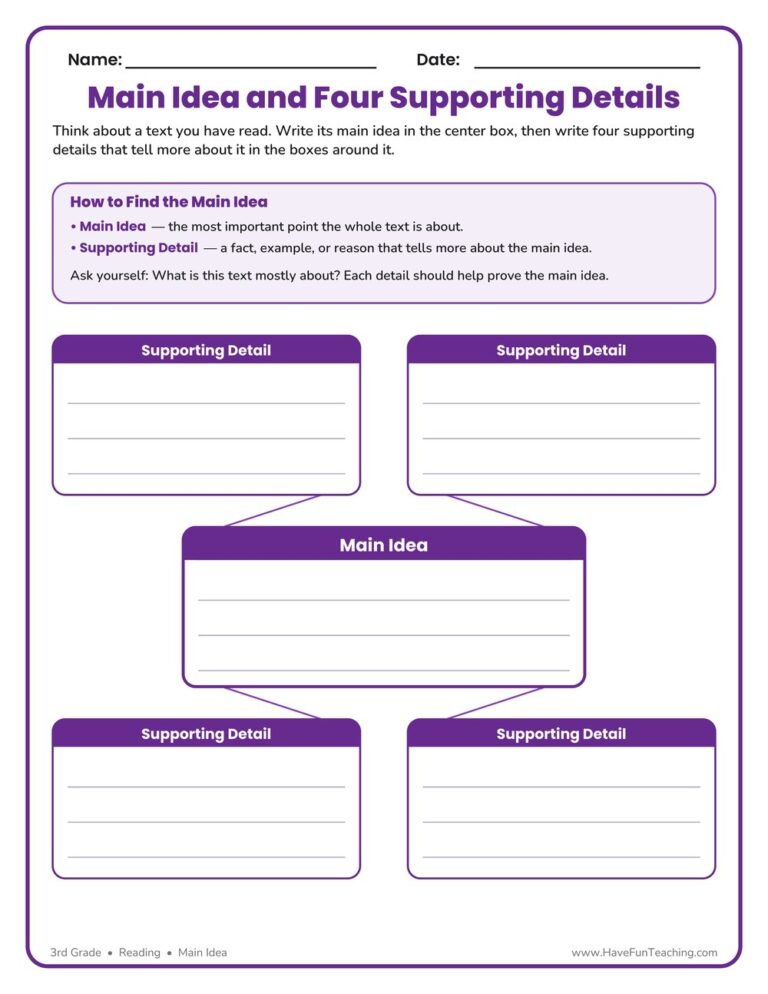
This Main Idea and Four Supporting Details Graphic Organizer Worksheet gives 3rd graders a visual way to record a text’s main idea and the four details that support it. A no-prep, reusable printable that works with any reading passage.
Using Key Details Activity,students read a book and then respond to the questions on the card to understand the main idea of the text.
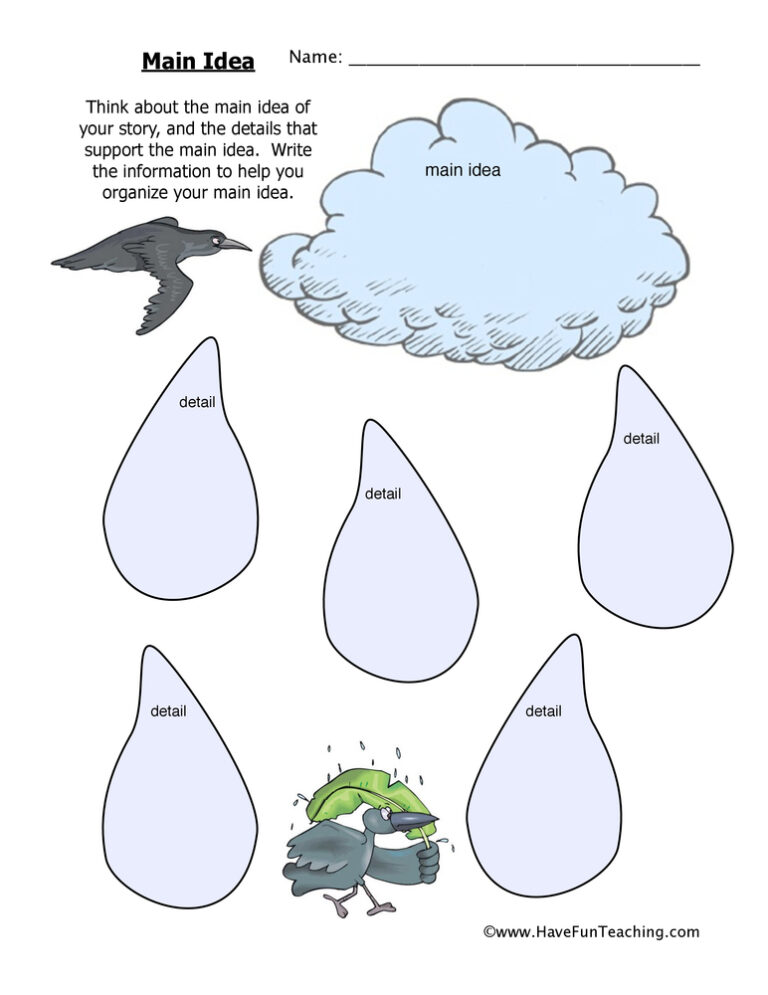
This main idea cloud graphic organizer helps 3rd grade readers name the big idea of any text, list four supporting details, and write a short summary they can share.

This American Industrial Revolution Worksheet gives 3rd grade readers a short true passage about Samuel Slater's mill, four questions, a written response and an answer key, so main idea practice feels like real history.
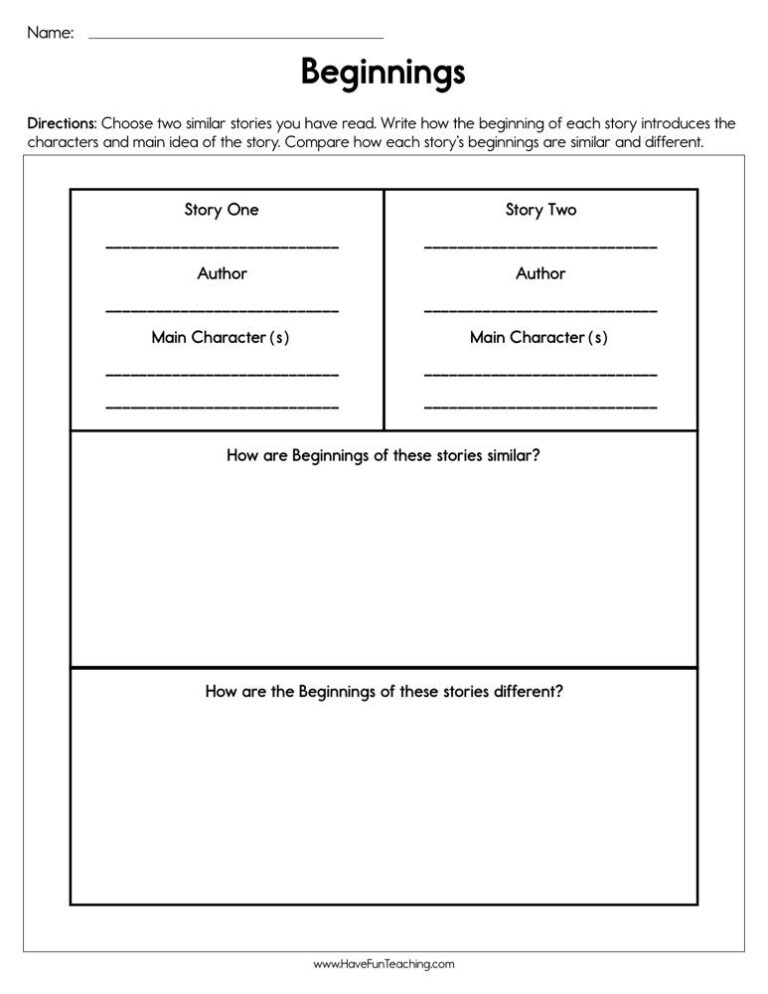
Using Beginnings Worksheet, students write how the beginning of each story introduces the characters and main idea of the story to compare the two similar stories read.
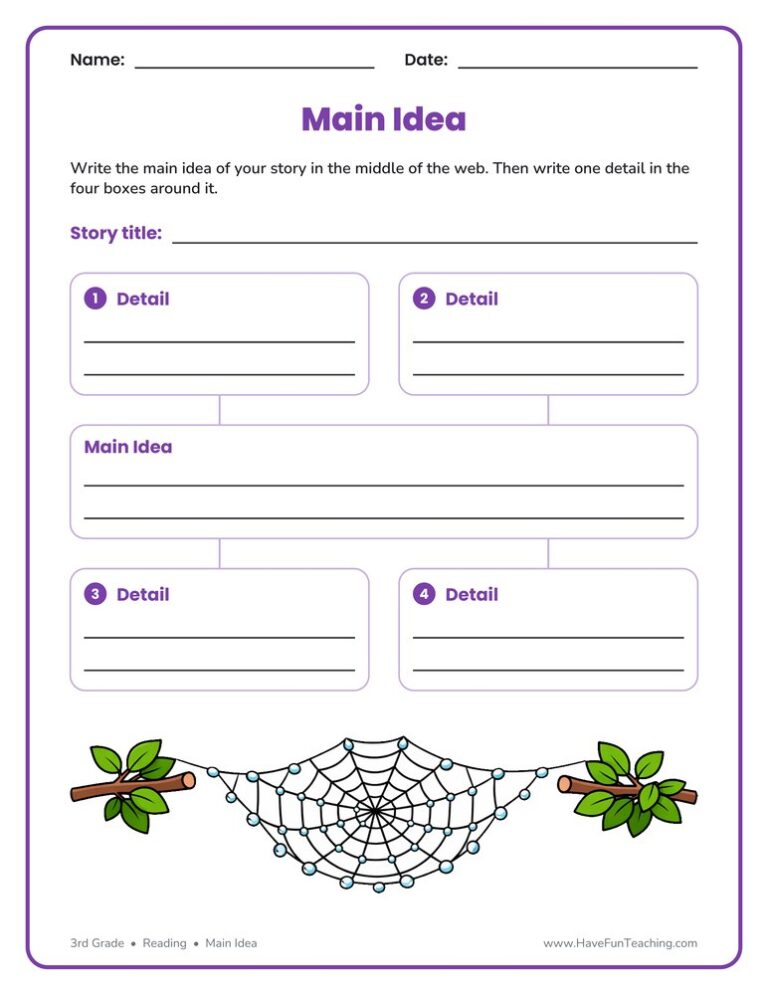
This main idea spider graphic organizer worksheet gives 3rd grade readers a web for one big idea and four supporting details, so students learn to back up what a story is mostly about with real evidence.
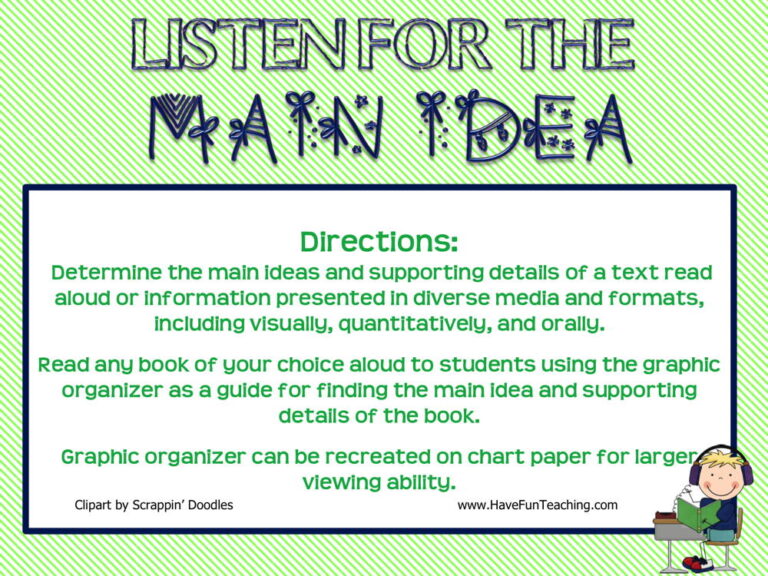
Using Listen for the Main Idea Activity,students determine the main ideas and supporting details of a text read aloud or information presented in diverse media and formats, including visually, quantitatively, and orally.
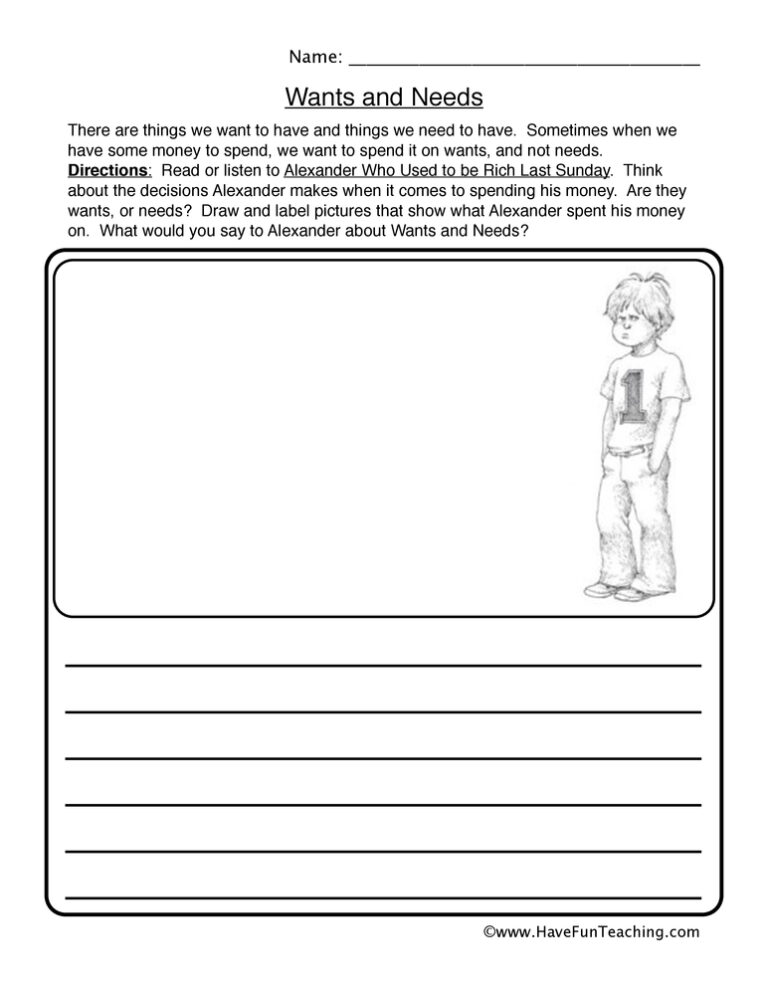
Using this Wants Needs Reading Response Worksheet, students readAlexander Who Used to be Rich Last Sunday to build their understanding of wants and needs.
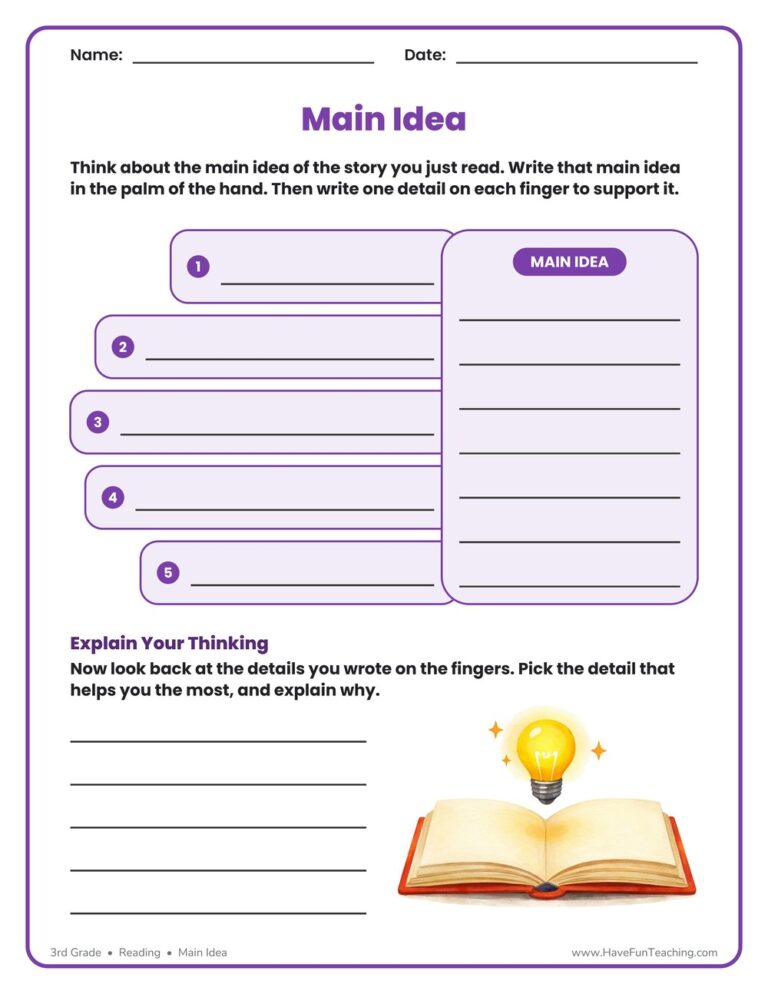
This main idea hand graphic organizer worksheet gives 3rd graders a palm for the main idea and five fingers for supporting details, plus a short written explanation that turns notes into real reasoning.

Using Describing Key Ideas Activity,students make up something that the Person on the card might say to show the key idea.

Using Main Idea and Details Reading Activity,students read any book and respond to the questions to gain a better understanding of the main idea.
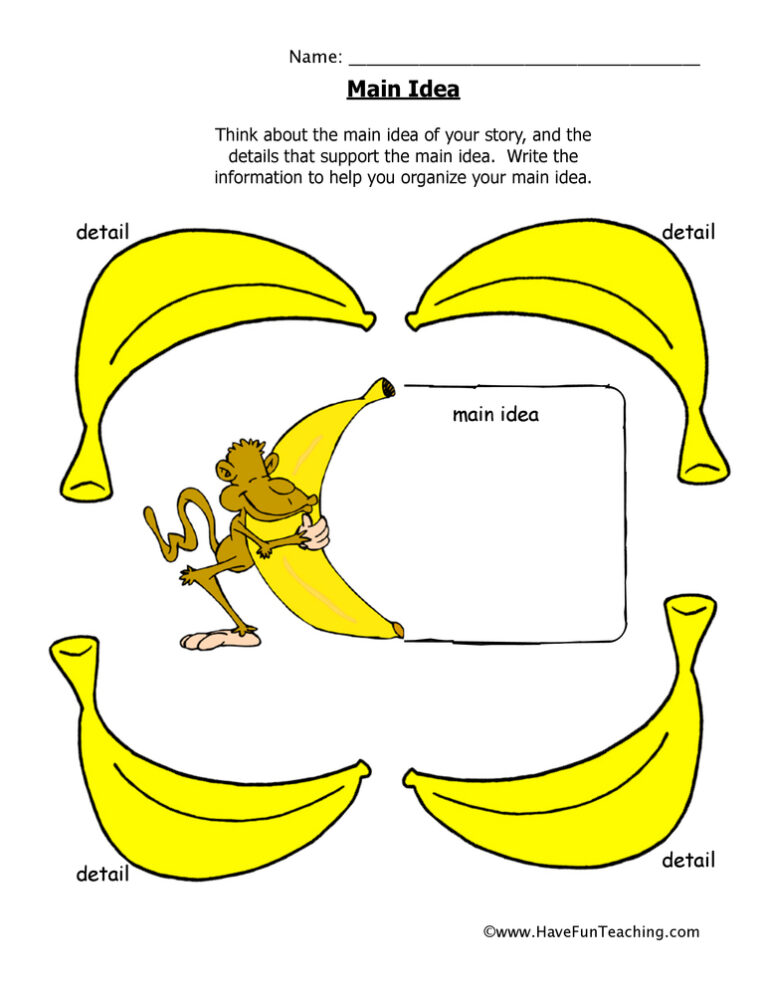
Using this Main Idea Banana Graphic Organizer, students organize details as they independently read to determine the main idea.




Reviews
There are no reviews yet