

Natural Disasters Matching Worksheet
This Natural Disasters Matching Worksheet gives 2nd Grade students six weather words, six clues to match them to and an answer key, so severe-weather vocabulary is learned by its features.
$6.97
Or free with a membership — members pay $3.33/mo for all 10,000+ resources. See plans
Want this one free?
Tell us where to send it and it’s yours — no card, no catch.
One free resource per teacher. We’ll also send free teaching ideas each week — unsubscribe anytime.
Teaching is easier with a membership
Unlimited printables, games & videos for PreK–6th — for your classroom or homeschool. Cancel anytime.
Start your 3-day free trial$0 today · cancel anytime · Instant access to 10,000+ resources
About this resource
Description
Second graders already know what a storm feels like; what they usually cannot do is name one. This natural disasters matching worksheet gives them the six words that do the naming — blizzard, drought, flood, hurricane, thunderstorm and tornado — and a short clue for each, so the vocabulary is learned the way a scientist uses it: by the feature that tells one event from another. A spinning tube of wind is not the same as a huge storm that comes off the ocean, and once a child can say which is which, the weather report on the kitchen radio starts making sense.
This 2nd grade earth science worksheet is a two-page, no-prep printable. Page one holds the Word Box, six clue cards and a short second section; page two is the answer key. Students read each clue, find the matching word in the box and write it on the line, then finish two sentences with two more weather words that are not in the box — hail and fog — each one defined by the sentence it sits in. The clue order and the Word Box order deliberately do not match, so a student has to read rather than pair the first clue with the first word.
What’s Included
- 1 print-ready PDF worksheet
- Answer key
- A six-word Word Box, 6 clue cards and 2 sentence items
Three things make this natural disasters matching worksheet worth the ten minutes it takes. First, every clue turns on the one feature that identifies its event, so the sheet teaches a definition instead of a picture-matching habit. Second, the set is scoped to weather a child can actually observe, and it is written calmly — nothing is damaged, nobody is in danger, and the illustration is a rain cloud over a green hill. Third, the second section asks for two words the Word Box does not supply, so the sheet ends with recall rather than six repetitions of the same move.
Ways to Use It
- Read the clues aloud together first, then let students write the words on their own.
- Ask students to add one more clue for a word from the box and trade with a partner.
- Pair it with the day’s forecast and find which of the six words fits your week.
- Use the two sentence items as a quick exit ticket at the end of a weather unit.
Related Resources
What teachers say
Reviews
You must be logged in to post a review.
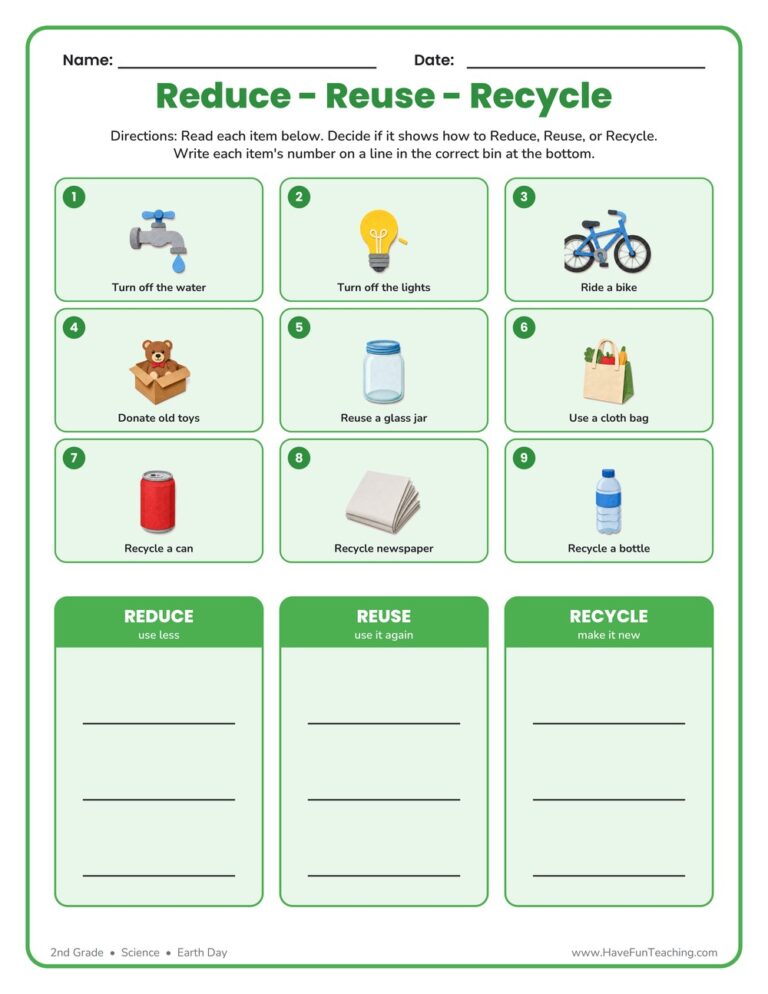
A second grade Reduce, Reuse, Recycle Sorting Worksheet where students sort nine everyday items into the correct earth-friendly bin. Answer key included — a quick, no-prep Earth Day activity for home or classroom.

The Seasons Song by Have Fun Teaching is perfect for teaching and learning all about the seasons of the year. This is a fun way for kids to learn the seasons. With this seasons song, your kids can learn about Spring, Summer, Fall, and Winter. While listening to the Seasons…
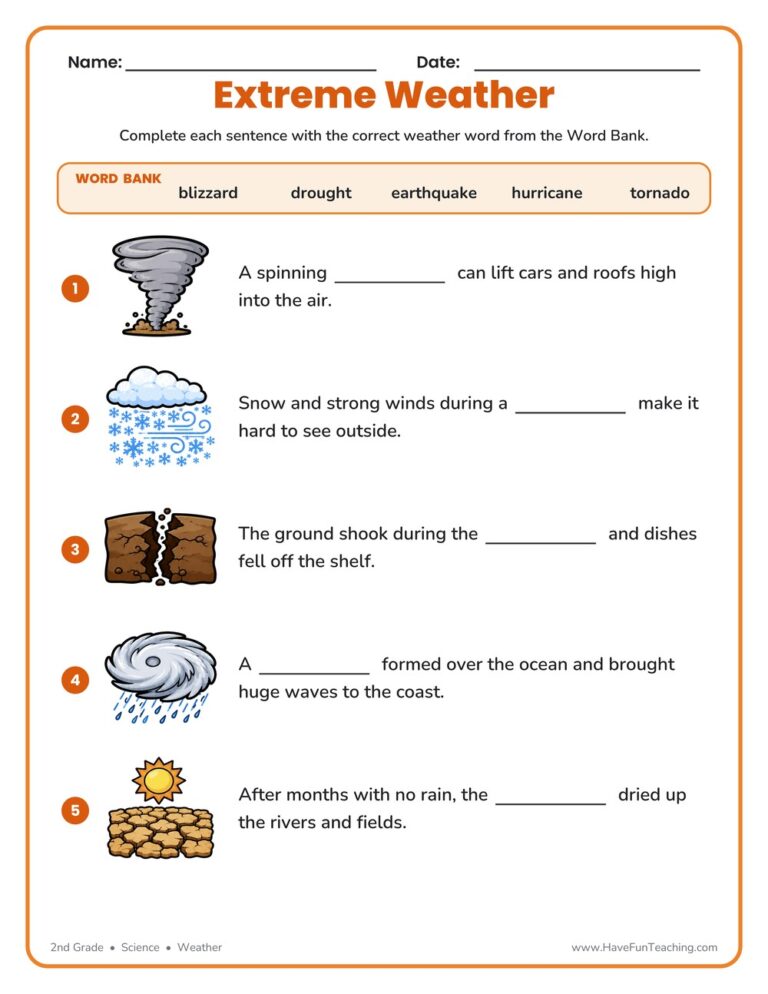
This Natural Disasters Fill in the Blanks Worksheet has 2nd graders match blizzards, droughts, earthquakes, hurricanes, and tornadoes to picture-clue sentences. Answer key included — perfect for no-prep extreme weather vocabulary practice.
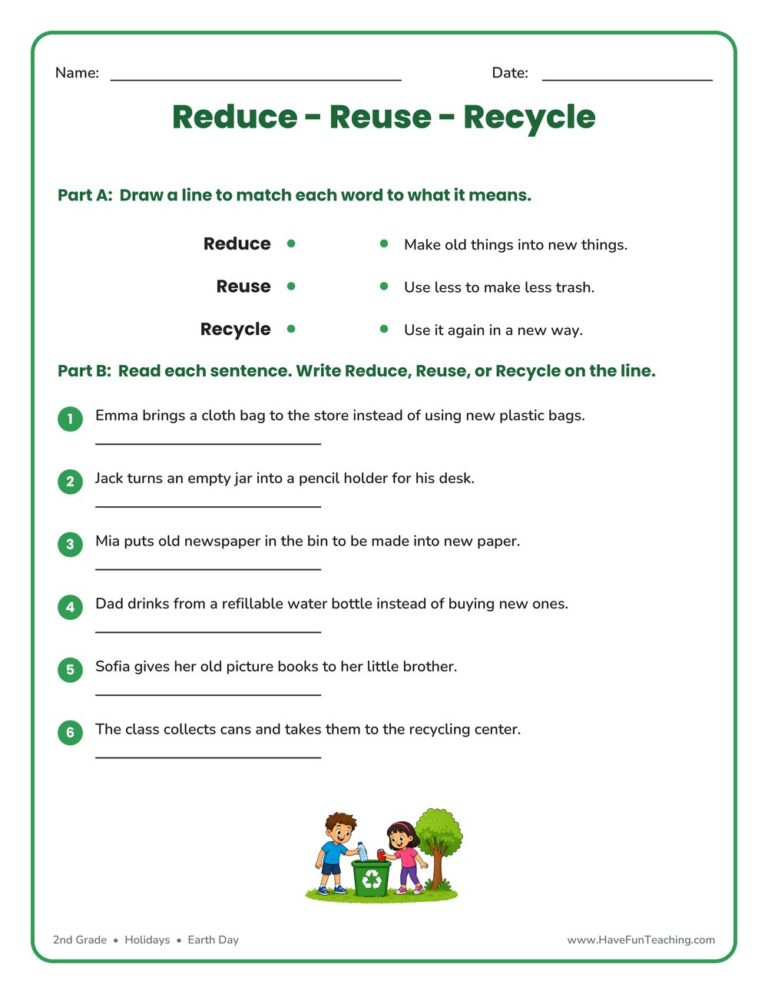
This Reduce, Reuse, Recycle worksheet helps 2nd grade students learn the three Rs by matching each word to its meaning and sorting Earth Day scenarios. Answer key included for quick, no-prep practice.
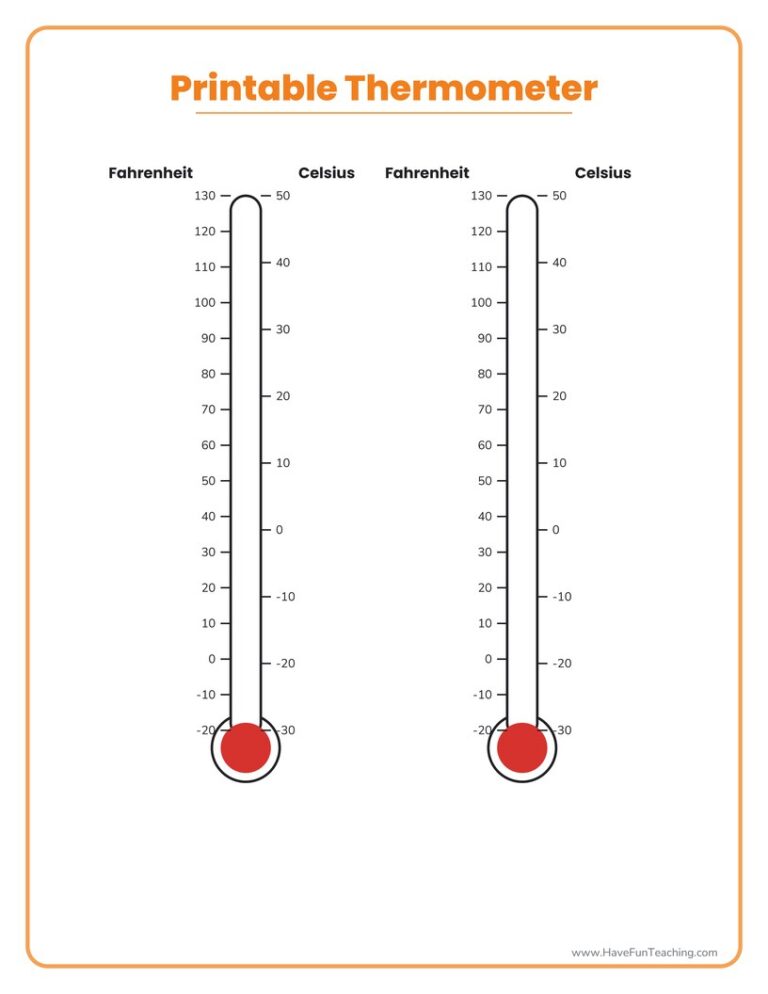
This Printable Thermometer shows Fahrenheit and Celsius scales side by side, giving 2nd grade students an easy classroom tool for tracking temperature and weather. Print, mark, and reuse all year long.
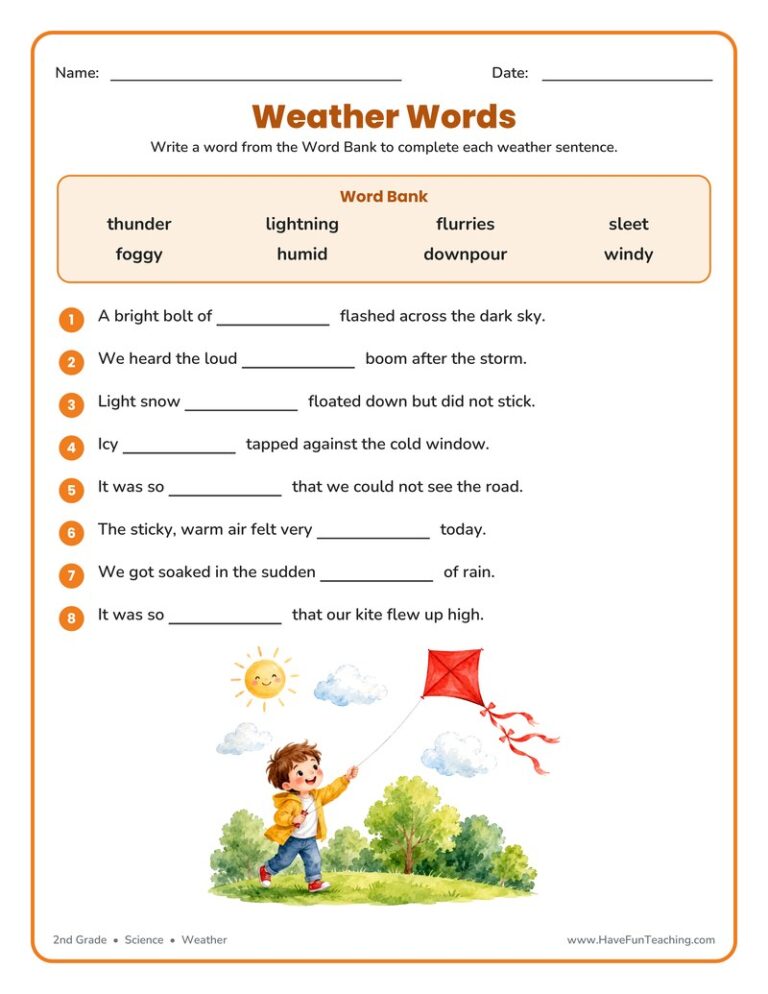
This Weather Fill in the Blank Worksheet lets 2nd graders complete eight weather sentences using a word bank of terms like thunder, sleet, and downpour. Includes an answer key for quick, no-prep science vocabulary practice.
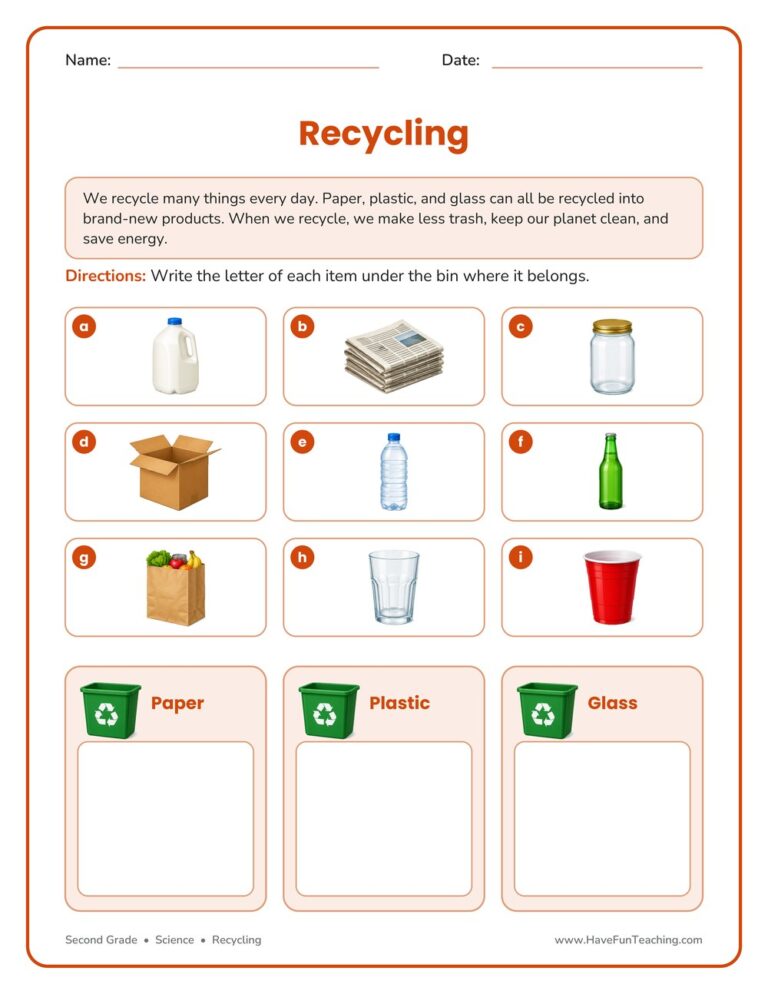
A recycling sort worksheet for second grade, where students sort paper, plastic, and glass items into the correct bins. Includes an answer key—a hands-on Earth Day science activity for classrooms and homeschool.
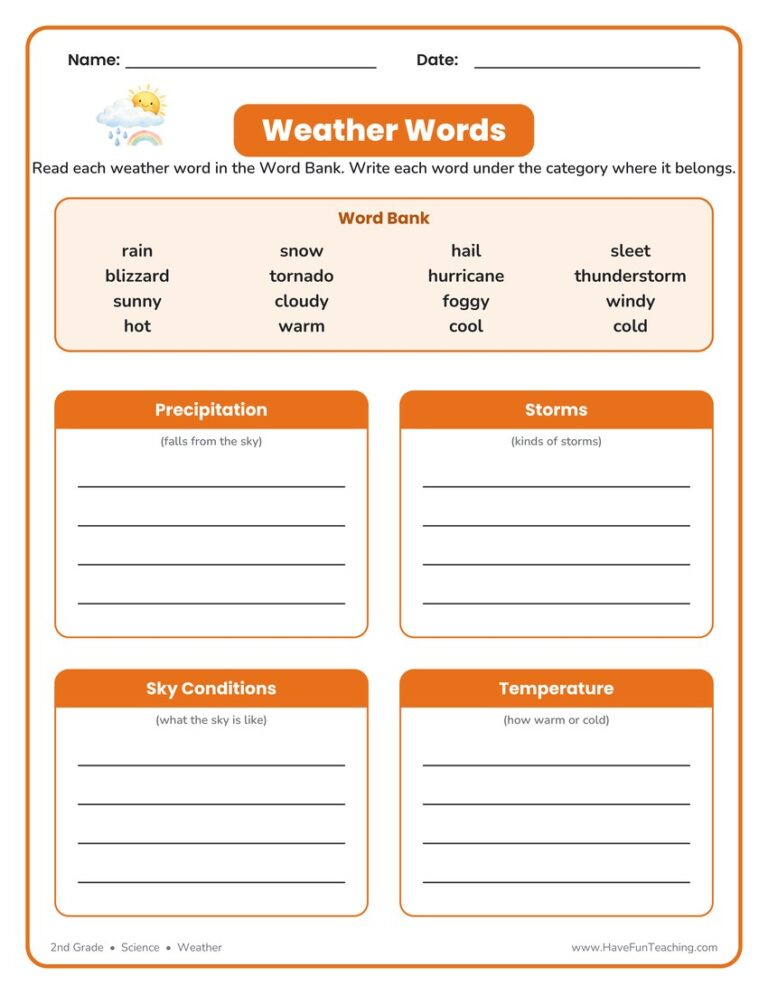
This Weather Words Worksheet helps 2nd graders sort sixteen weather terms into precipitation, storms, sky conditions, and temperature. Answer key included — a quick, no-prep way to grow earth science vocabulary.
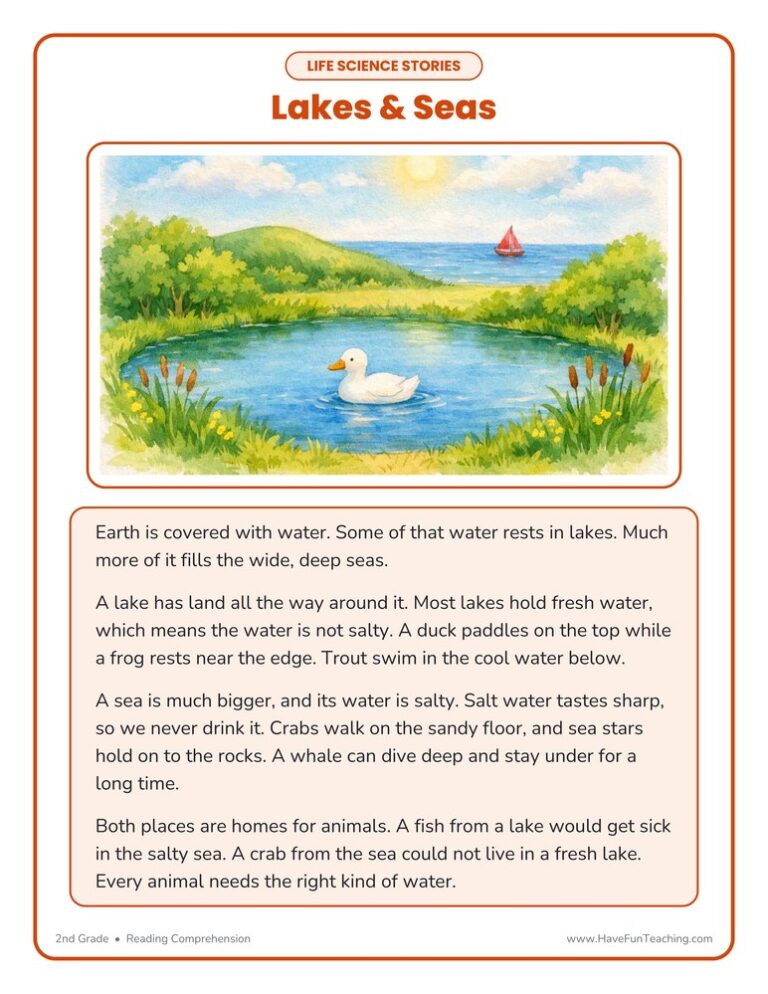
This Lakes and Seas Life Science Reading Comprehension Worksheet gives 2nd Grade students an original passage about fresh water and salt water habitats, with bubble, fill-in, and writing questions. Answer key included.
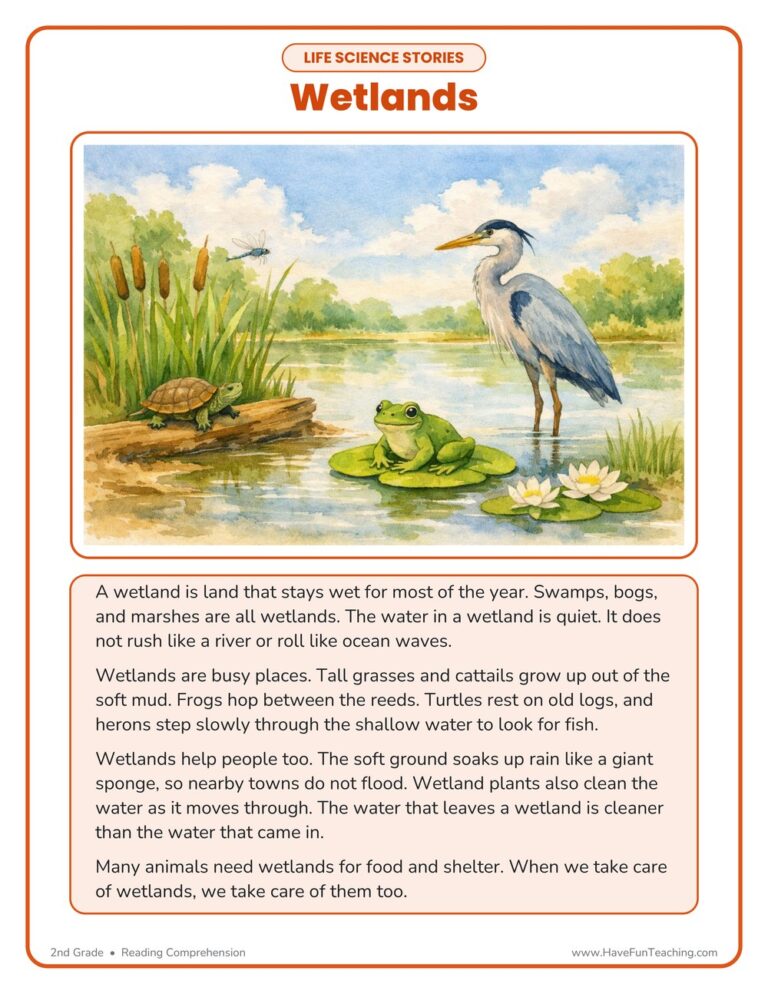
Explore swamps, bogs, and marshes with this wetlands life science reading comprehension worksheet. Second graders read a short nonfiction passage and answer six questions, and an answer key is included, so learning about habitats stays easy and fun.
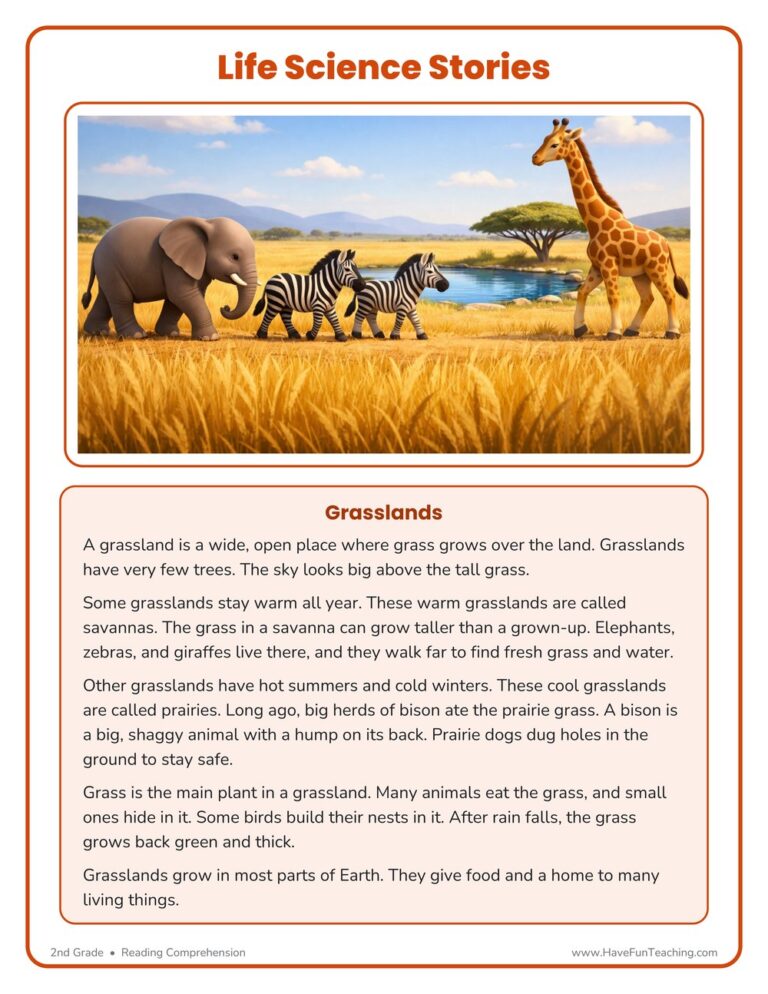
This Grasslands Life Science Reading Comprehension Worksheet gives 2nd Grade readers a nonfiction passage about savannas and prairies, seven text-based questions, and an answer key included for fast checking.
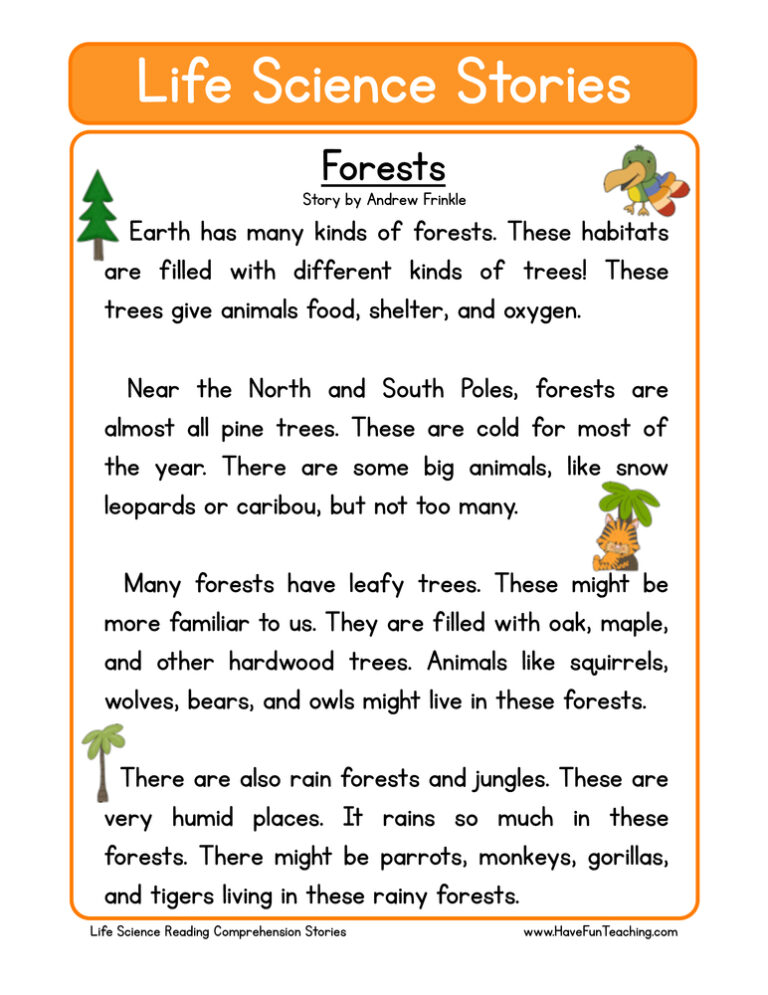
This Forests Life Science Reading Comprehension Worksheet gives 2nd graders a short non-fiction passage about pine, leafy, and rain forests, plus questions and an answer key. Great no-prep practice for main idea and key details.




Reviews
There are no reviews yet