
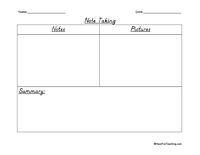
Note Taking Worksheet
This note taking worksheet has 3rd Grade students read a short article about lighthouses, finish five notes in a chart, and choose the best summary. An answer key is included.
$6.97
Want this one free?
Tell us where to send it and it’s yours — no card, no catch.
One free resource per teacher. We’ll also send free teaching ideas each week — unsubscribe anytime.
Free teacher account · no credit card
Membership
Get every game, song, & printable
- Every game, on any device
- 10,000+ printables
- Assign online with HFT Classroom
Then $39.97/year · cancel anytime · See plans
- Instant digital download
- Printable PDF + answer key
- Made by real teachers
Teacher / Family membership
Teaching is easier with every resource
One membership for your whole year: 10,000+ worksheets, games, songs and videos for Preschool–6th, for your classroom or homeschool.
- Unlimited printables & downloads
- Every game, on any device
- Assign online with HFT Classroom
- Cancel anytime
Teacher / Family membership · 3 days free
Yearly
Monthly would be $119.64 a year
$3.33/month
Billed $39.97 once a year
You save $79.67 every year
Start My 3 Free Days$0 today · cancel anytime
Monthly
$9.97/month
Flexible, month to month
Yearly is just $3.33/mo. Switch and save $79.67
Start My 3 Free Days$0 today · cancel anytime
About this resource
Description
This note taking worksheet gives students something real to take notes on. Most organizers hand a child an empty chart and leave the reading somewhere else, so the note taking worksheet turns into a blank box. Here the short article sits right on the page, and every note the student writes has to come out of it.
Students read a 107-word article about lighthouses, then finish five notes in the chart below it. Each note names one fact to look for — what a lighthouse keeps safe, what early lighthouses burned, what bends the light into a beam — so students practise pulling out key words instead of copying whole sentences. The page finishes with a summary question: three summaries are offered and students fill in the bubble beside the one that really covers the article. That is the second half of note taking, and it is the part a blank organizer never asks for. As a 3rd grade graphic organizer worksheet it works on its own or as a model before students take notes on a longer book.
What’s Included
- A short non-fiction article written on a 3rd grade reading level
- A five-line note chart, one cue per line
- A best-summary question with three fill-in-the-bubble choices
- A full answer key on the final page
Three Reasons This Helps Kids
- Notes stay short. Each cue asks for a word or two, so students learn that a note is not a whole sentence copied off the page.
- The cues model the questions good readers ask. After a few pages like this, students start asking them without a chart.
- Summarizing gets practised, not assumed. Choosing the best summary shows students the difference between a true detail and the main point.
Ideas for Teachers and Parents
Read the article aloud once before students write anything, then let them reread on their own while they fill in the chart. Ask students to cover the article and retell it using only their five notes; if the retelling falls apart, the notes were too thin, and that is a useful thing for a student to discover. Once the page is done, hand out a paragraph from a science or social studies book and have students write their own five cues for it. The same chart also works as a partner activity: one student reads a line of the article aloud while the other decides whether it belongs in the notes.
Related Resources
What teachers say
Reviews
You must be logged in to post a review.

This who what when where why graphic organizer worksheet helps 3rd graders record the five key details — who, what, when, where, and why — from any story or article. A clear, reusable note-taking template.

A Who What When Where Why Summary Graphic Organizer Worksheet that walks 3rd graders from a short story to the five W answers and on to a written summary. Answer key included, so students get quick feedback and real confidence.

This read a recipe worksheet gives 3rd grade students a banana-bread recipe to read, then four multiple-choice questions and a written response. An answer key is included, so following directions is easy to check.
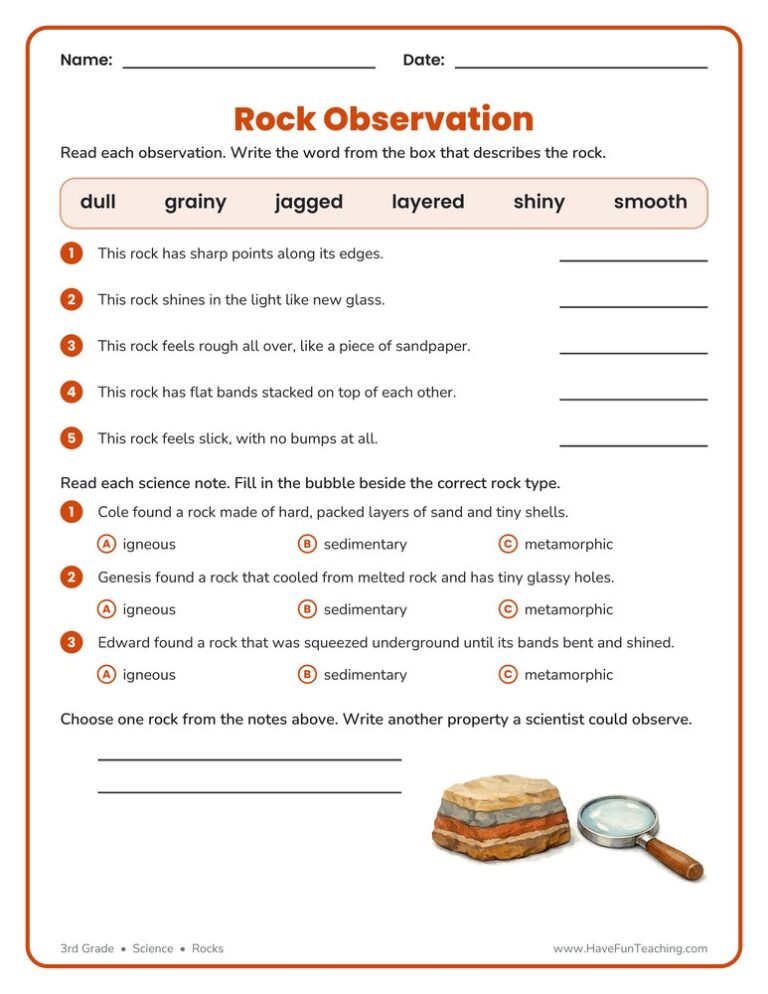
This Rock Observation Worksheet has 3rd grade students match describing words to five rock observations, name three rock types, and record one more property. An answer key is included, so it is ready to print.
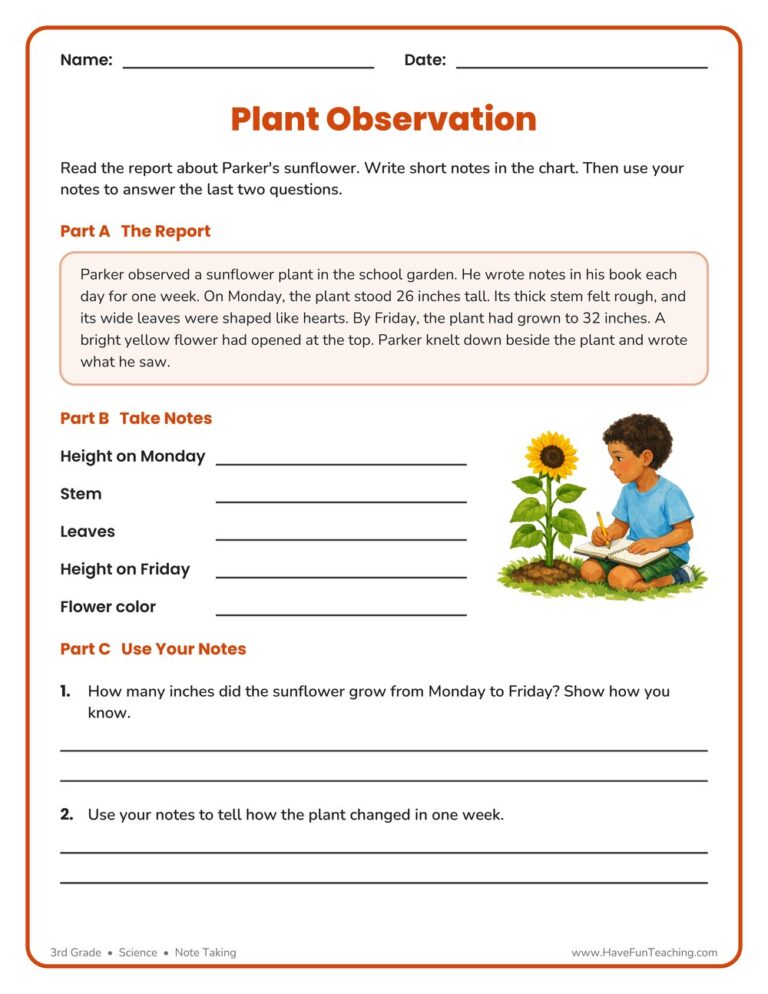
This plant observation worksheet gives 3rd graders a short sunflower report to read and a chart for taking clear, useful notes. An answer key is included, so checking work takes seconds.

This story map worksheet lets 3rd grade students record the characters, setting, problem, main events, and solution of any story they read, building stronger comprehension and retelling skills.
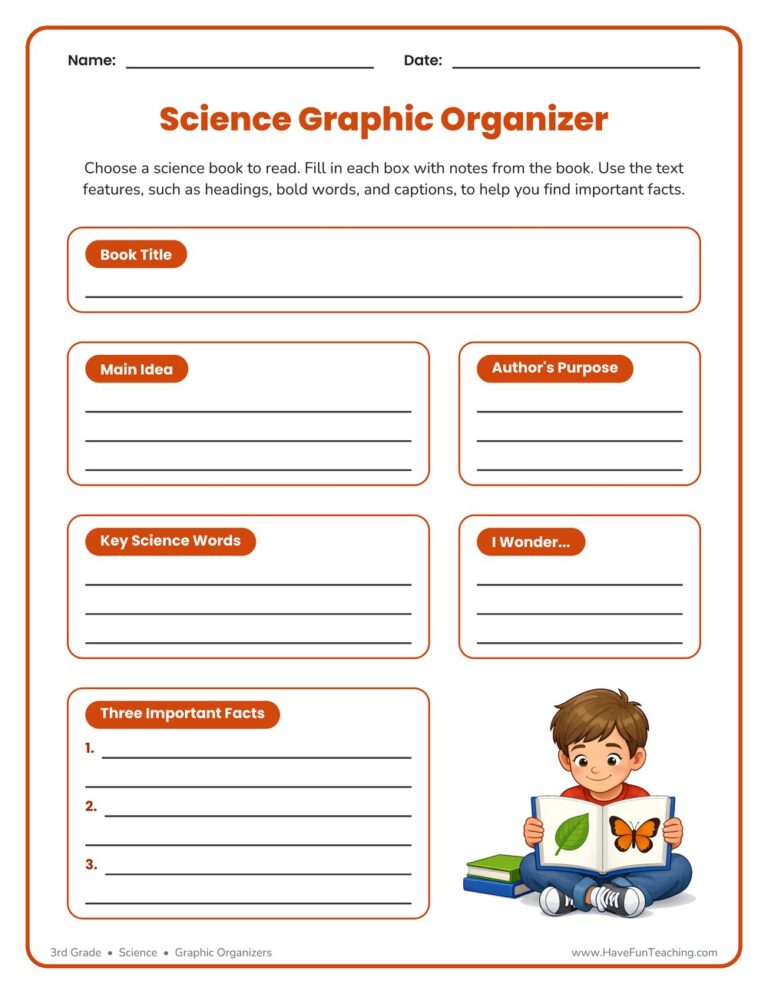
This science graphic organizer worksheet helps 3rd graders take notes on any nonfiction science book, from main idea and author’s purpose to key science words and three important facts. A reusable page that turns reading into real understanding.
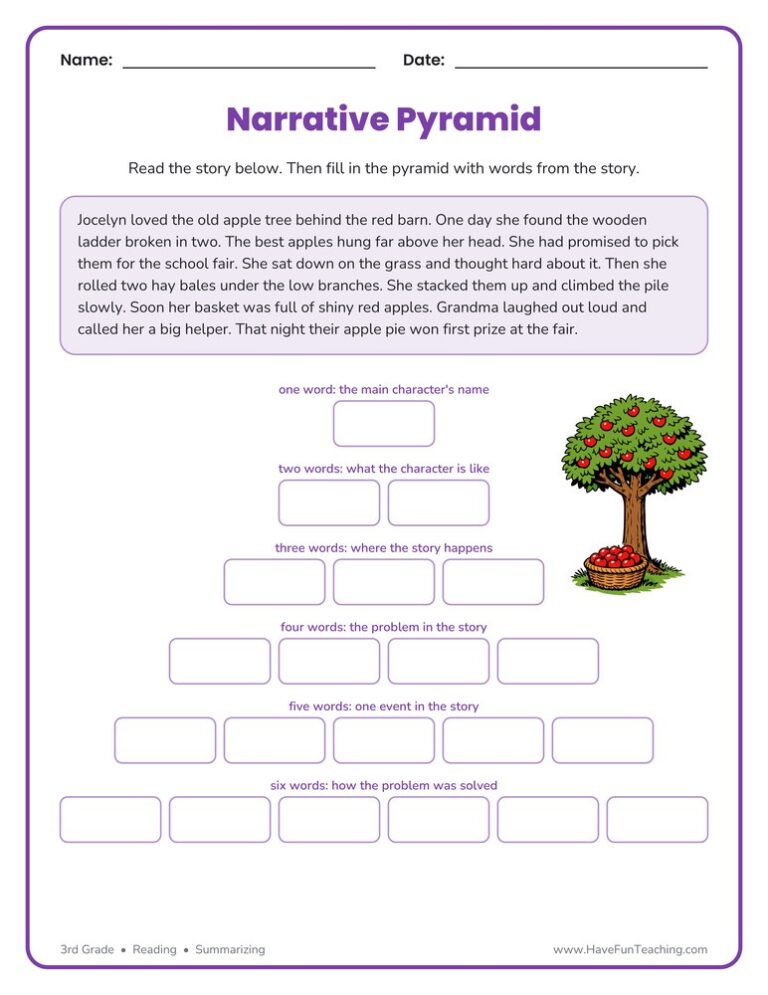
This Narrative Pyramid Worksheet prints an original story for 3rd graders, then asks them to summarize it row by row, from one word up to six. An answer key is included, so it works as a quick reading check or a pre-writing plan.
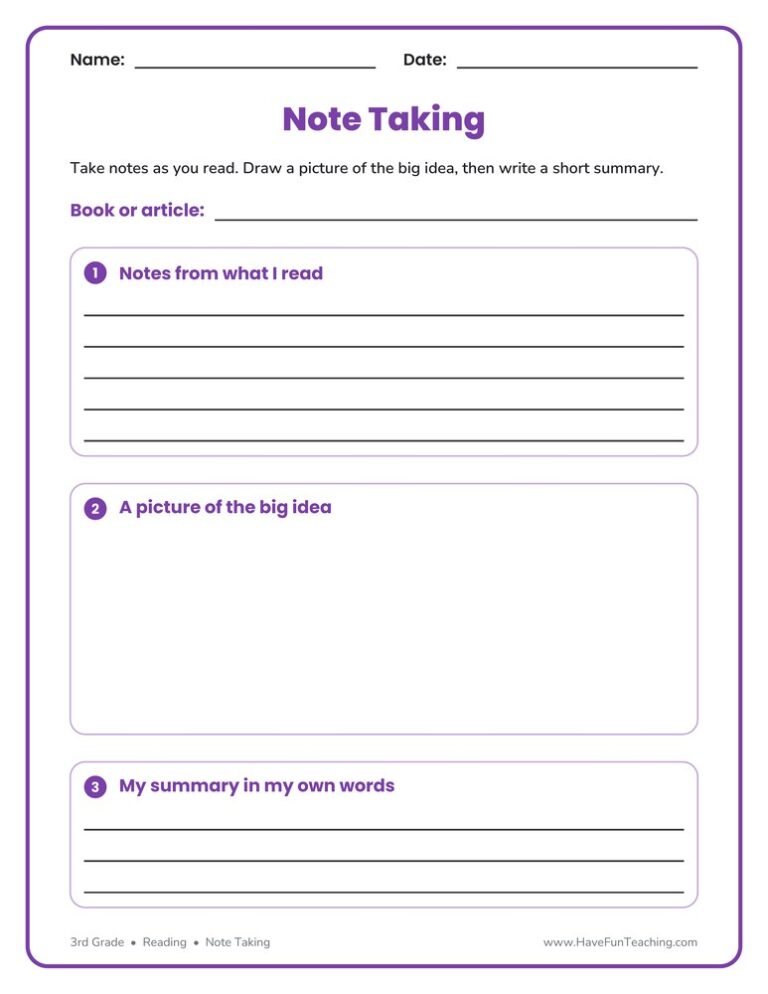
This Note Taking and Summarizing Graphic Organizer Worksheet gives 3rd Grade students one page for notes, a drawing of the big idea, and a short summary of any book or article they read.
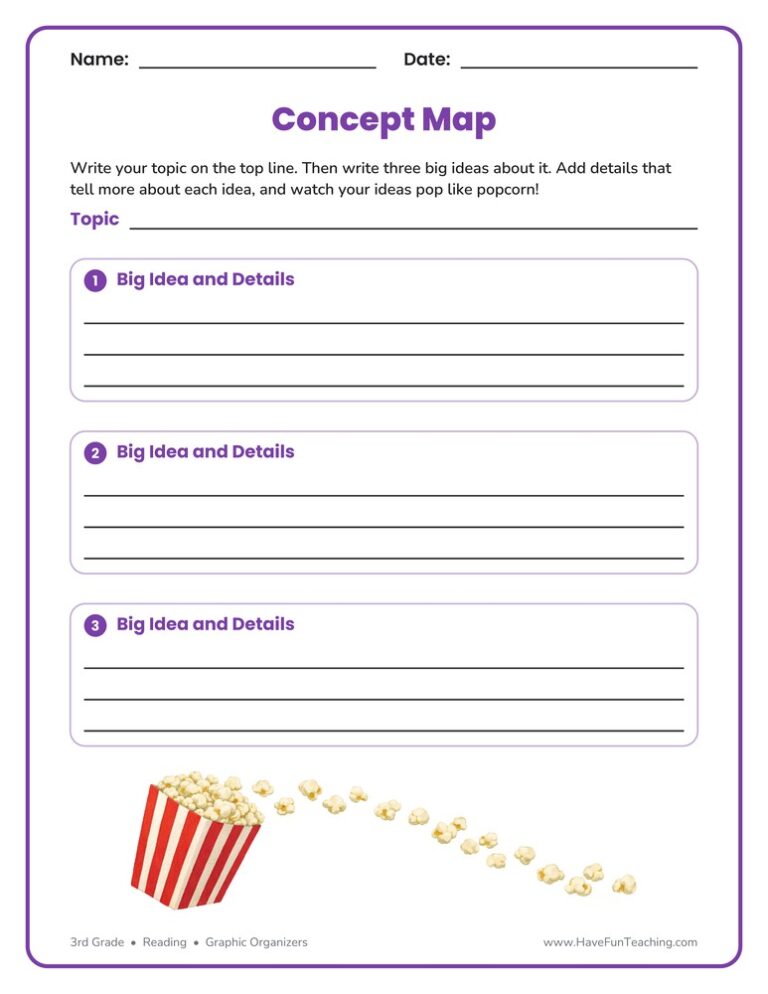
This popcorn concept map graphic organizer worksheet helps third graders sort any topic into three big ideas with supporting details, building strong note-taking habits for reading, science, and social studies.
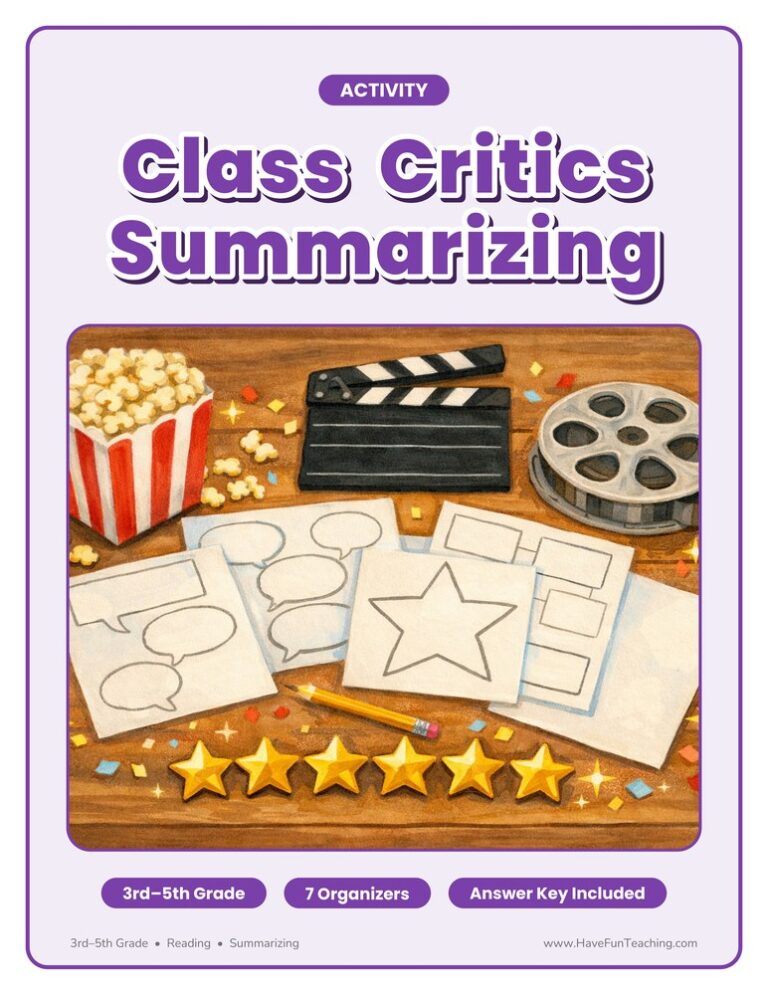
This class critics summarizing activity gives 3rd to 5th grade students seven organizers to summarize books, videos, and articles. Answer key included for the model and practice.
This organize your thinking informational text activity helps students take clear notes on nonfiction. Made for 3rd to 5th Grade, with a practice page and answer key included.




Reviews
There are no reviews yet