Skip to content
Start My 3 Free Days $0 today · cancel anytime

Note Taking Resources

25 note taking resources: 20 worksheets, 14 graphic organizers, 3 test prep and more. How teachers use these

Note Taking Resources

25 note taking resources: 20 worksheets, 14 graphic organizers, 3 test prep and more. How teachers use these

Worksheet
Worksheet3rd GradeRead a Recipe Worksheet

This read a recipe worksheet gives 3rd grade students a banana-bread recipe to read, then four multiple-choice questions and a written response. An answer key is included, so following directions is easy to check.

Worksheet
Worksheet3rd GradeWho What When Where Why Graphic Organizer Worksheet

This who what when where why graphic organizer worksheet helps 3rd graders record the five key details — who, what, when, where, and why — from any story or article. A clear, reusable note-taking template.

Worksheet
Worksheet3rd GradeWho What When Where Why Summary Graphic Organizer Worksheet

A Who What When Where Why Summary Graphic Organizer Worksheet that walks 3rd graders from a short story to the five W answers and on to a written summary. Answer key included, so students get quick feedback and real confidence.

Worksheet
Worksheet4th GradeInformational Text Note-Taking Worksheet

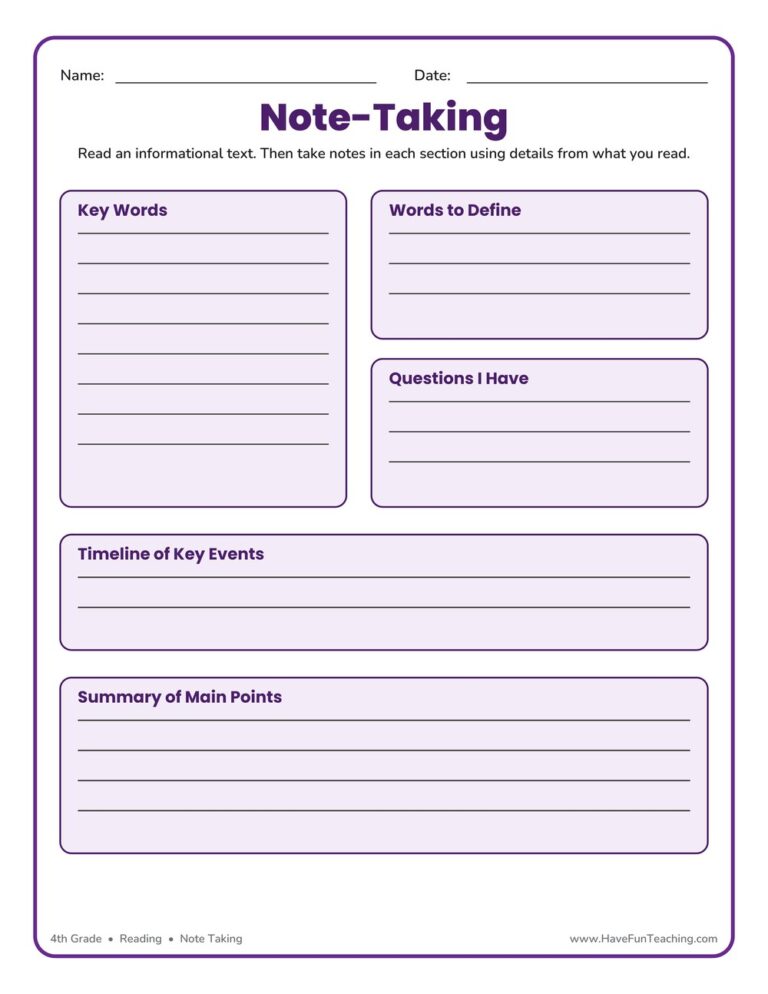
This Informational Text Note-Taking Worksheet gives 4th grade readers a five-section graphic organizer for recording key words, vocabulary, questions, a timeline, and a summary from any nonfiction text — a no-prep tool for building stronger comprehension.

Worksheet
Worksheet5th GradeMain Idea Worksheet

This Main Idea Worksheet helps 5th graders find two main ideas in any nonfiction text, back each one with key details, and write a clear summary of what they read.

Worksheet
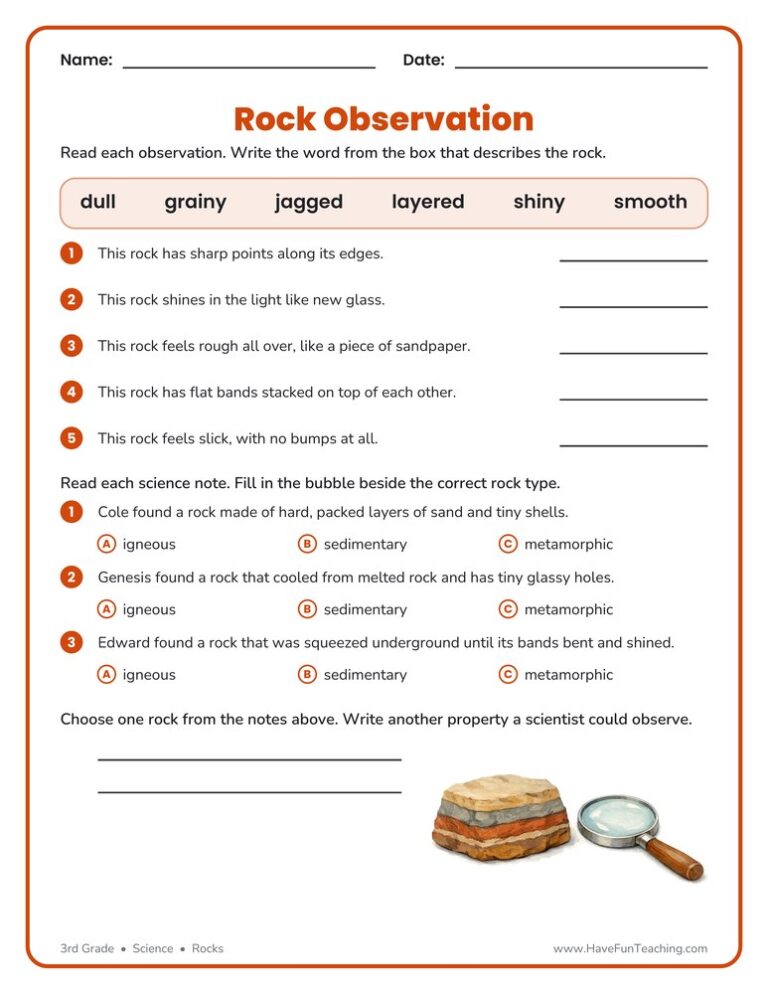
Worksheet3rd GradeRock Observation Worksheet

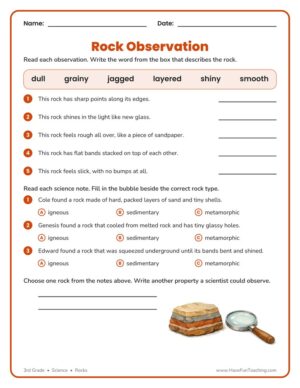
This Rock Observation Worksheet has 3rd grade students match describing words to five rock observations, name three rock types, and record one more property. An answer key is included, so it is ready to print.

Worksheet
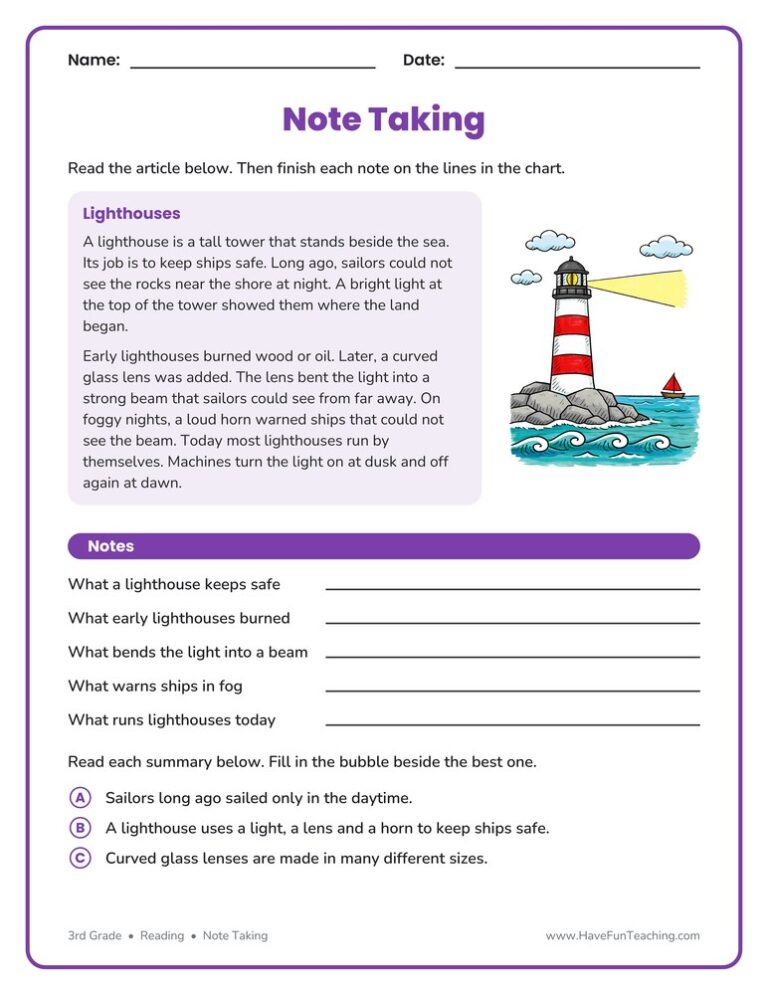
Worksheet3rd GradeNote Taking Worksheet

This note taking worksheet has 3rd Grade students read a short article about lighthouses, finish five notes in a chart, and choose the best summary. An answer key is included.

Worksheet
Worksheet3rd GradeStory Map Worksheet

This story map worksheet lets 3rd grade students record the characters, setting, problem, main events, and solution of any story they read, building stronger comprehension and retelling skills.

Worksheet
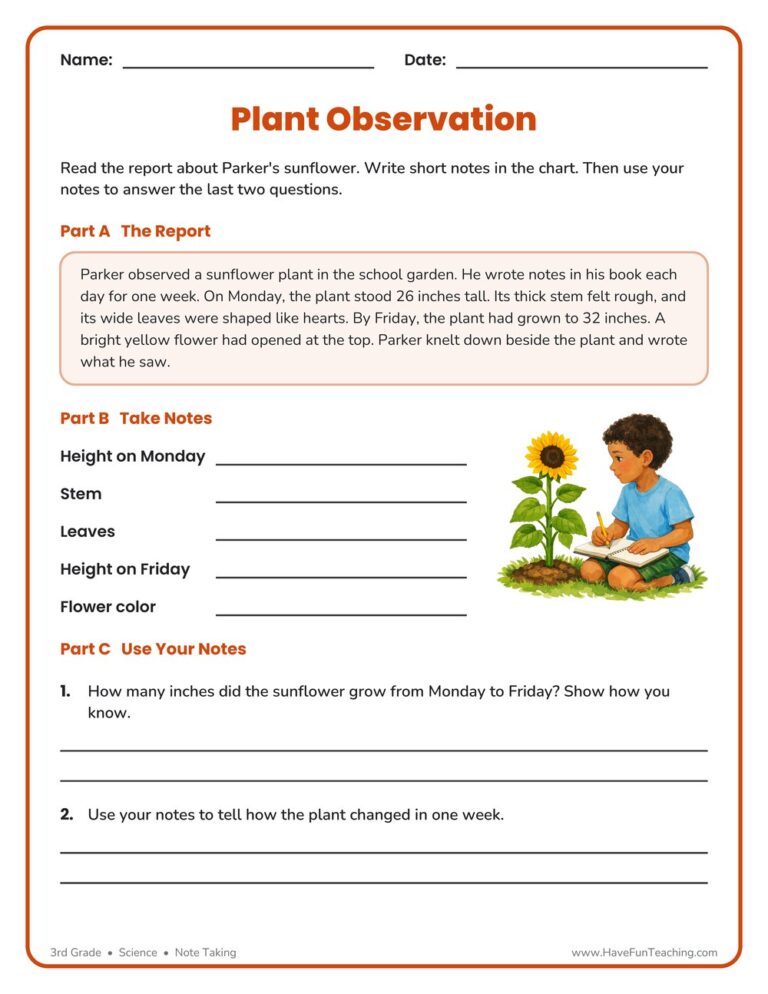
Worksheet3rd GradePlant Observation Worksheet

This plant observation worksheet gives 3rd graders a short sunflower report to read and a chart for taking clear, useful notes. An answer key is included, so checking work takes seconds.

Worksheet
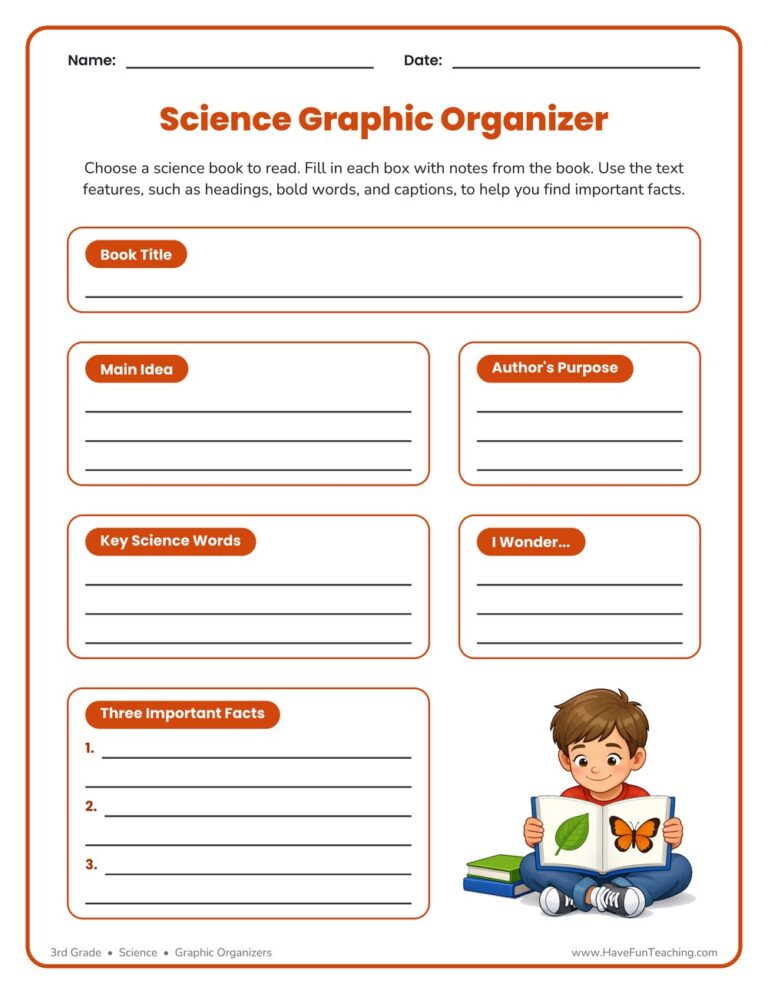
Worksheet3rd GradeScience Graphic Organizer Worksheet

This science graphic organizer worksheet helps 3rd graders take notes on any nonfiction science book, from main idea and author’s purpose to key science words and three important facts. A reusable page that turns reading into real understanding.

Worksheet
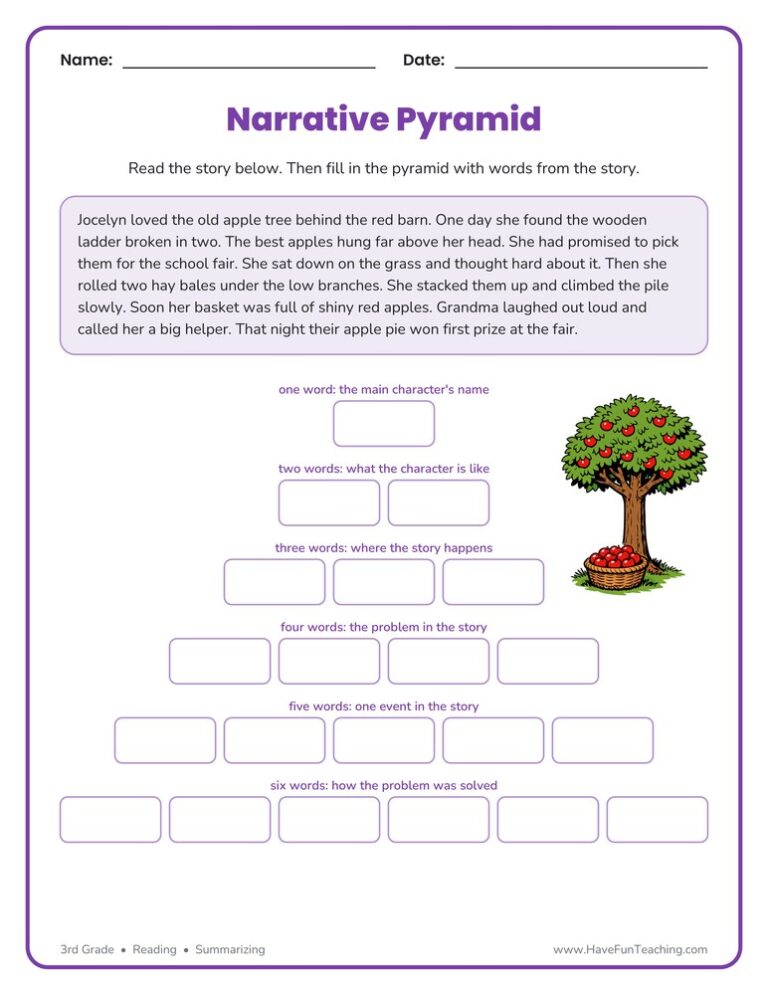
Worksheet3rd GradeNarrative Pyramid Worksheet

This Narrative Pyramid Worksheet prints an original story for 3rd graders, then asks them to summarize it row by row, from one word up to six. An answer key is included, so it works as a quick reading check or a pre-writing plan.

Worksheet
Worksheet4th GradeMain Idea Graphic Organizer

This Main Idea Graphic Organizer helps 4th graders record the main idea of any nonfiction text, add four supporting details, and write a short summary that builds strong reading skills.

Workbook
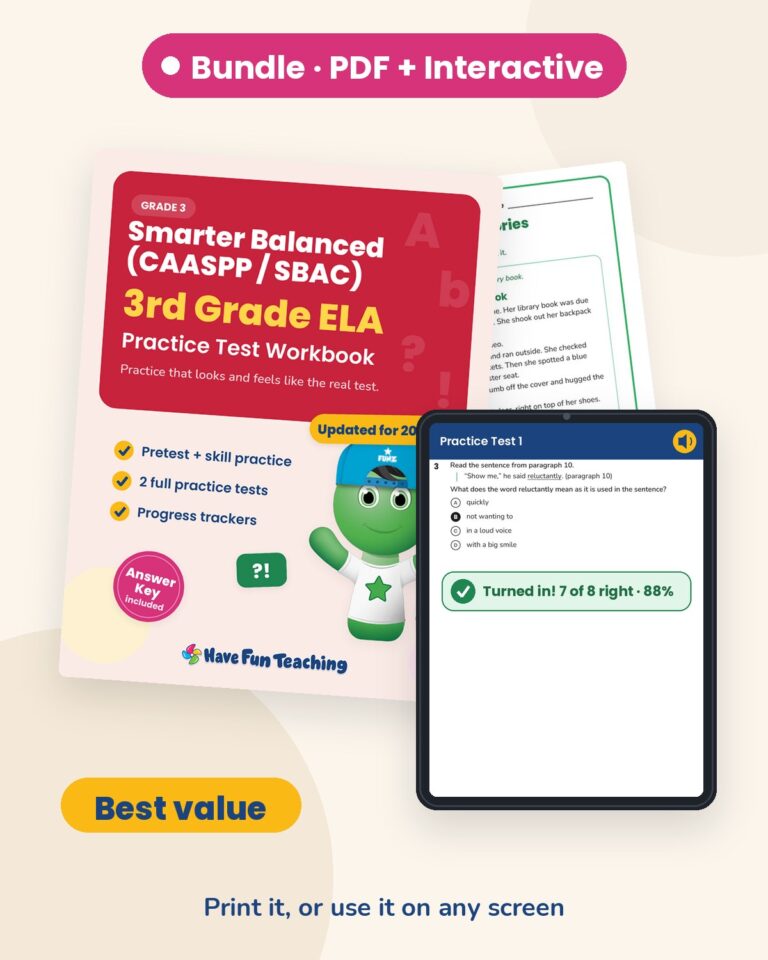
Workbook3rd GradeSmarter Balanced (CAASPP / SBAC) 3rd Grade ELA Practice Test Workbook

A Smarter Balanced (CAASPP / SBAC) 3rd grade ELA practice test workbook for teachers, with a pretest, skill practice for all 24 standards, mixed review and 2 full-length practice tests. Answer key included, so test prep is ready to go.

Worksheet
Worksheet1st GradeTaking Notes Worksheet

This Taking Notes Worksheet gives 1st grade readers a short apple passage, one main-idea question and four key-idea questions. An answer key is included, so children can check their own notes.

Worksheet
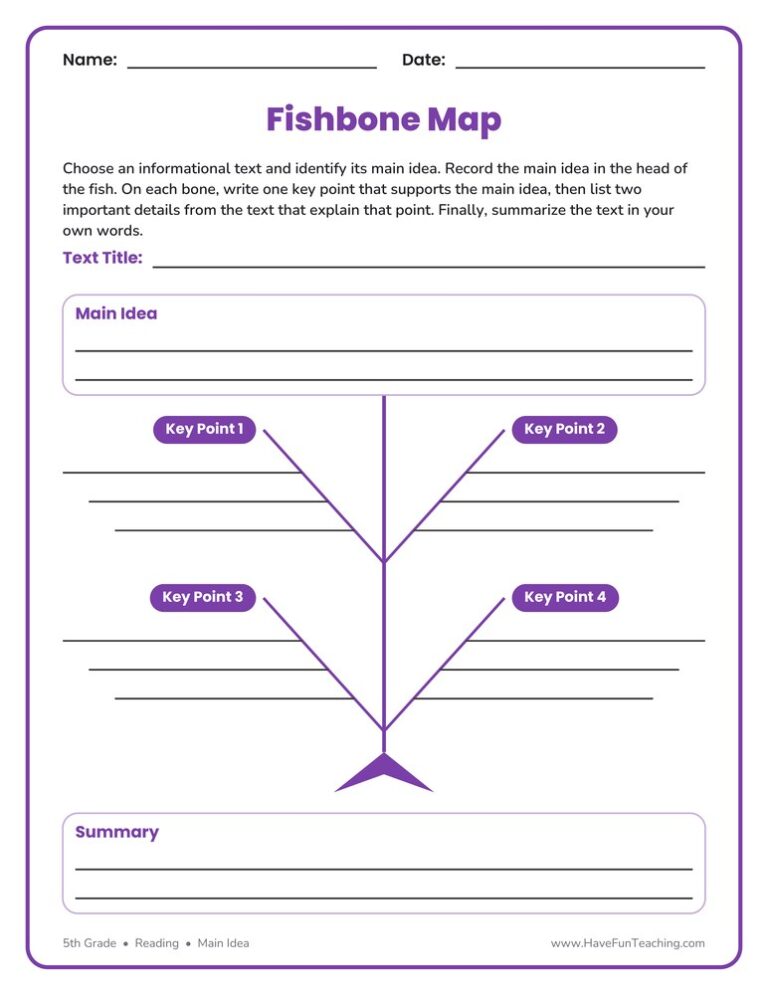
Worksheet5th GradeFishbone Graphic Organizer

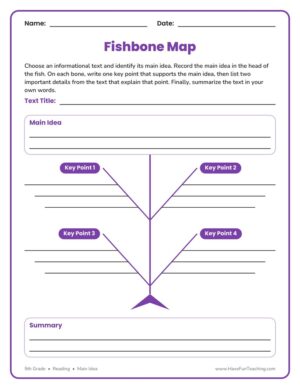
Use this fishbone graphic organizer worksheet to help 5th grade readers map a text's main idea, four key points, and supporting details, then write a clear summary.

Workbook
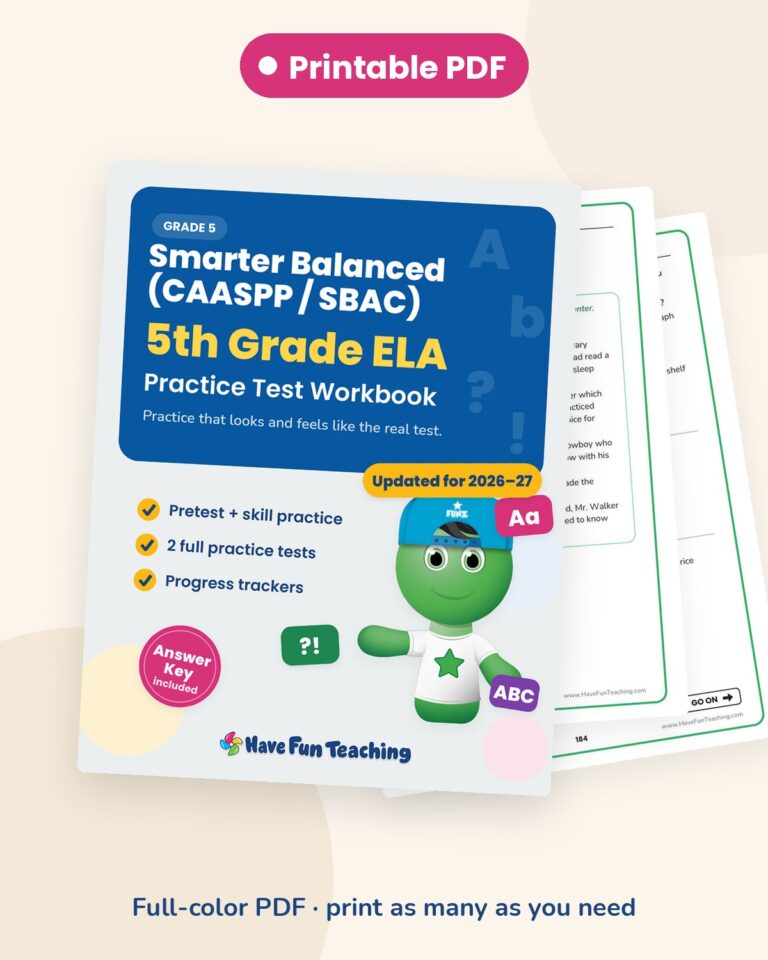
Workbook5th GradeSmarter Balanced (CAASPP / SBAC) 5th Grade ELA Practice Test Workbook

A Smarter Balanced (CAASPP / SBAC) 5th grade ELA practice test workbook for teachers, with a pretest, skill practice for all 24 standards, mixed review and 2 full-length practice tests. Answer key included, so test prep is ready to go.

Activity
Activity3rd GradeClass Critics Summarizing Activity

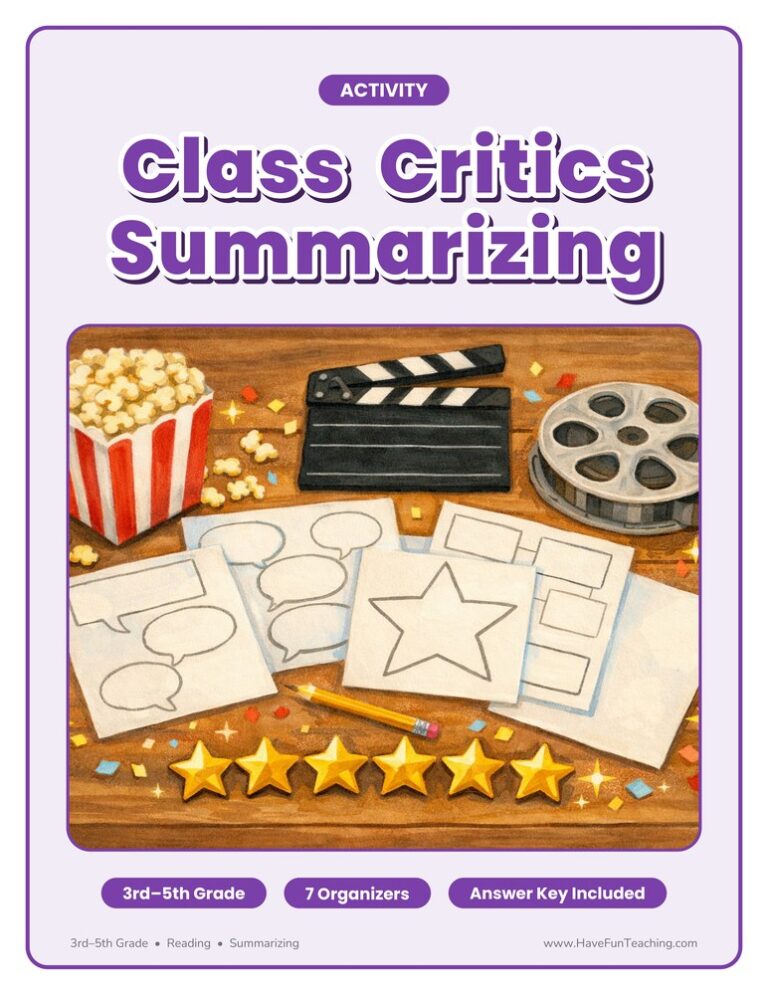
This class critics summarizing activity gives 3rd to 5th grade students seven organizers to summarize books, videos, and articles. Answer key included for the model and practice.

Worksheet
Worksheet4th GradeResearch Notes Worksheet

A one-page research notes worksheet where 4th graders record their topic, source, facts, definitions, details, and quotations in one place, so their notes stay organized from the first source to the last.

Worksheet
Worksheet2nd GradeMain Idea Graphic Organizer Worksheet

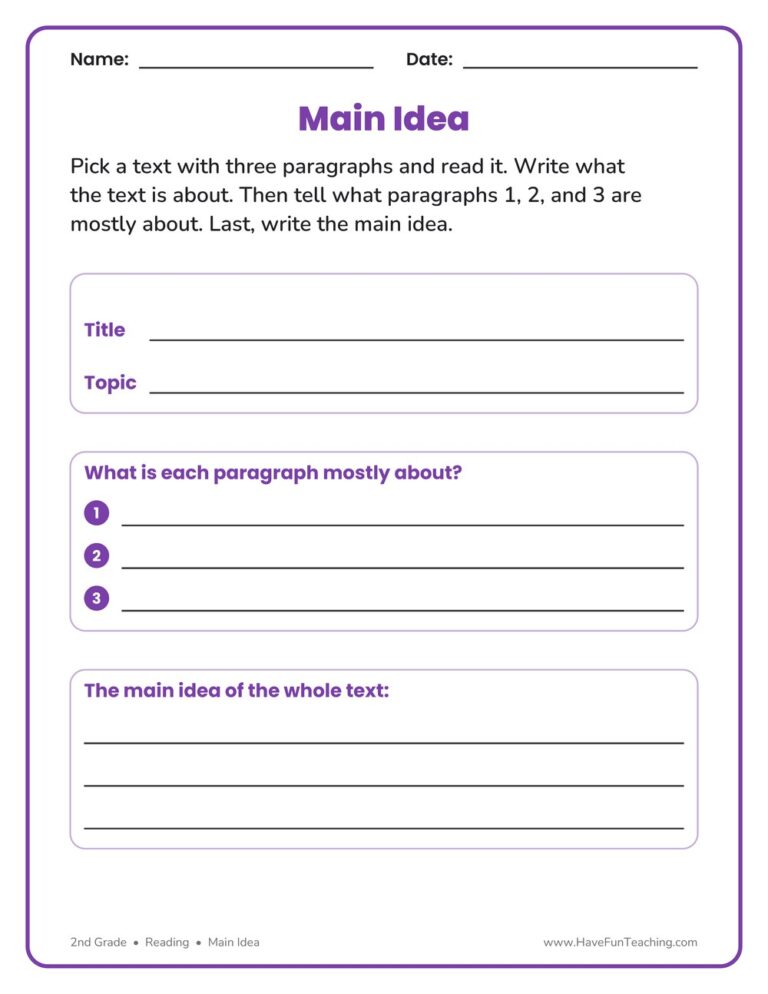
This main idea graphic organizer worksheet helps 2nd grade readers note what each of three paragraphs is about, then write the main idea of the whole text, building strong summarizing skills.

Worksheet
Worksheet3rd GradePopcorn Concept Map Graphic Organizer Worksheet

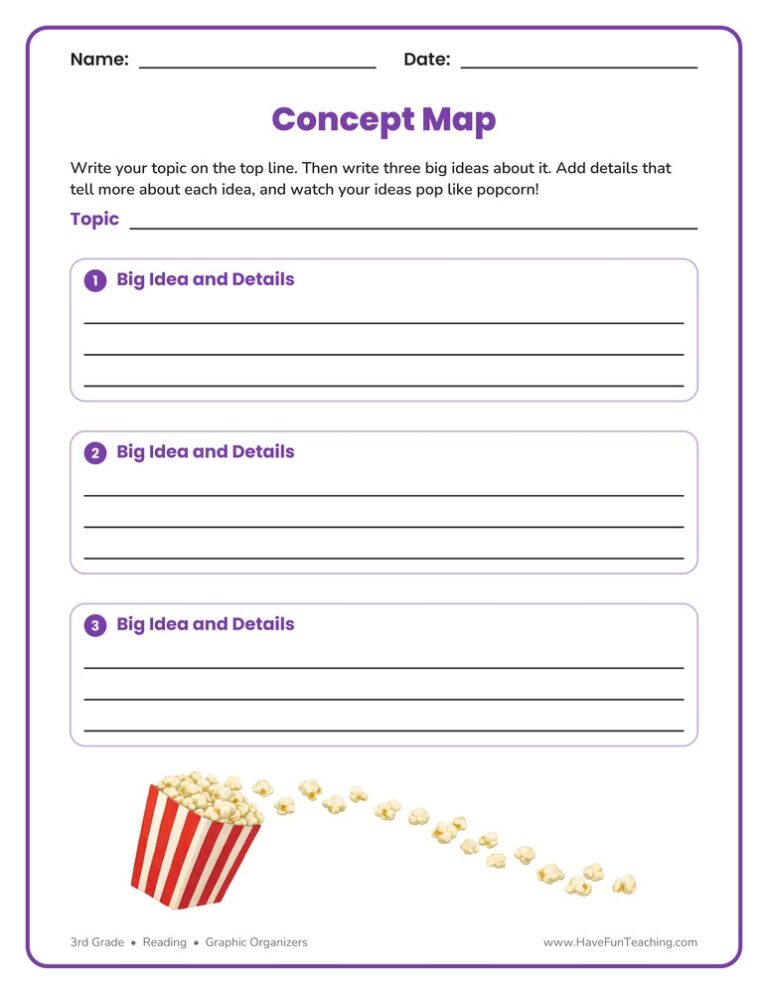
This popcorn concept map graphic organizer worksheet helps third graders sort any topic into three big ideas with supporting details, building strong note-taking habits for reading, science, and social studies.

From our teachers' playbook

Catch the important stuff

What do kids learn about note taking?

Note taking is learning to grab the important ideas from what you read, see or hear, without copying every word. Young kids start by recording observations, like drawing and labeling a plant as it grows. In 3rd through 5th grade, kids take brief notes from books and articles, sort them into categories, and use them to write reports. The big idea: key words, not whole sentences. When kids learn to write in their own words, they actually understand and remember what they read.

Our favorite ways to teach note taking

Note taking is a skill kids need to see in action. These moves make it doable.

Three words or less

Read a paragraph aloud and model jotting just a few key words: "Penguins - can't fly - swim fast." Then cover the passage and retell it using only your notes. Kids see that short notes can hold a lot of information.

Why it works: handing over the work step by step, from teacher to student, is one of the most widely used teaching frameworks (Pearson and Gallagher, 1983).
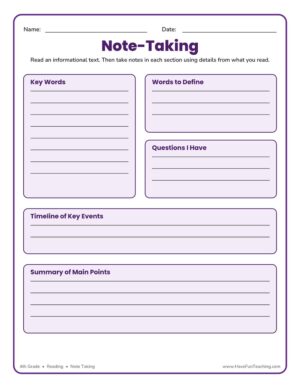
Informational Text Note-Taking WorksheetTry it withInformational Text Note-Taking WorksheetWorksheetsOpen it →

Sticky note sort

When kids research a topic, have them write one fact per sticky note. Then they sort the notes into piles like food, home and body. Each pile becomes a paragraph, so the report almost writes itself.

Why it works: kids understand an idea best when they touch it, then draw it, then write it, the order the U.S. Department of Education recommends for elementary math.

Research Notes WorksheetTry it withResearch Notes WorksheetWorksheetsOpen it →

Fishbone the cause

For science or history, use a fishbone organizer: the big event goes in the head and the causes go on the bones. Kids see how several facts connect to one result, and their notes turn into a clear explanation.

Why it works: pairing a picture with each word gives kids two ways to remember it, a well-tested principle of how people learn (Mayer, 2009).

Fishbone Graphic OrganizerTry it withFishbone Graphic OrganizerGraphic OrganizersOpen it →

Note taking questions we hear a lot

How do I teach kids to take notes?

Model it first. Read a short passage, then show how you write only key words or short phrases in your own words. Give kids an organizer with spaces for main ideas and details until they can do it on their own.

What grade do kids learn note taking?

Kids record observations from the early grades, and 3rd through 5th graders learn to take brief notes from texts and sort them into categories for research projects.

What's the difference between note taking and copying?

Copying means writing the exact words from the book. Note taking means picking out the important ideas and writing them in your own words. Notes should be short.

Why is note taking important for kids?

Taking notes helps kids pay attention, find the main ideas and remember what they read. It's also the first step in writing reports and research papers.

Keep exploring