

Ordering Fractions, Decimals, and Whole Numbers Worksheet
This Ordering Fractions, Decimals, and Whole Numbers Worksheet gives 5th graders four mixed-form sets plus a measurement problem to explain, with an answer key included, so comparing across forms finally clicks.
$6.97
Or free with a membership — members pay $3.33/mo for all 10,000+ resources. See plans
Want this one free?
Tell us where to send it and it’s yours — no card, no catch.
One free resource per teacher. We’ll also send free teaching ideas each week — unsubscribe anytime.
Teaching is easier with a membership
Unlimited printables, games & videos for PreK–6th — for your classroom or homeschool. Cancel anytime.
Start your 3-day free trial$0 today · cancel anytime · Instant access to 10,000+ resources
About this resource
Description
By fifth grade, students stop meeting numbers one form at a time. A single problem can hand them a fraction, a decimal, and a whole number at once and ask which is smallest. This Ordering Fractions, Decimals, and Whole Numbers Worksheet builds the habit that makes those comparisons quick: convert everything to one form, usually a decimal, and then order the set. Each of the four sets on this page deliberately mixes forms, so students cannot fall back on comparing digits left to right and hoping the answer works out.
This 5th grade ordering numbers worksheet keeps the page uncluttered on purpose. Four sets sit at the top, each with a full-width line underneath for the reordered numbers, so students have real room to rewrite fractions rather than cramming them into a margin. Encourage learners to jot the decimal equivalent above each fraction before they commit to an order; that visible step is where most mistakes get caught. The page closes with a measurement problem about Rose and her paper airplane throws, which asks for both an ordered answer and a written explanation. A complete answer key is included on page two.
What’s Included
- 1 print-ready PDF worksheet
- Answer key
- 4 mixed-form ordering sets (fractions, decimals, and whole numbers)
- 1 real-world measurement problem with a written explanation
Three things make this Ordering Fractions, Decimals, and Whole Numbers Worksheet useful in a fifth grade classroom. First, mixing forms within a single set forces genuine conversion instead of pattern matching. Second, the values were chosen to be close together, so 0.35 against one fourth and 0.8 against three fourths reward careful thinking rather than a quick glance. Third, the closing problem asks students to justify their reasoning in writing, which is exactly what state assessments expect and what shows a teacher whether the understanding is real.
Take the skill off the page. Hand out index cards with mixed fractions, decimals, and whole numbers, and have small groups arrange themselves in a human number line. Compare prices at the grocery store or lap times from gym class. Use a measuring tape at home and record distances in both decimal and fraction form, then order them together. Ask your student to explain out loud how they knew which number was smallest, because saying it aloud is often the fastest way to expose a shaky conversion.
Related Resources
What teachers say
Reviews
You must be logged in to post a review.
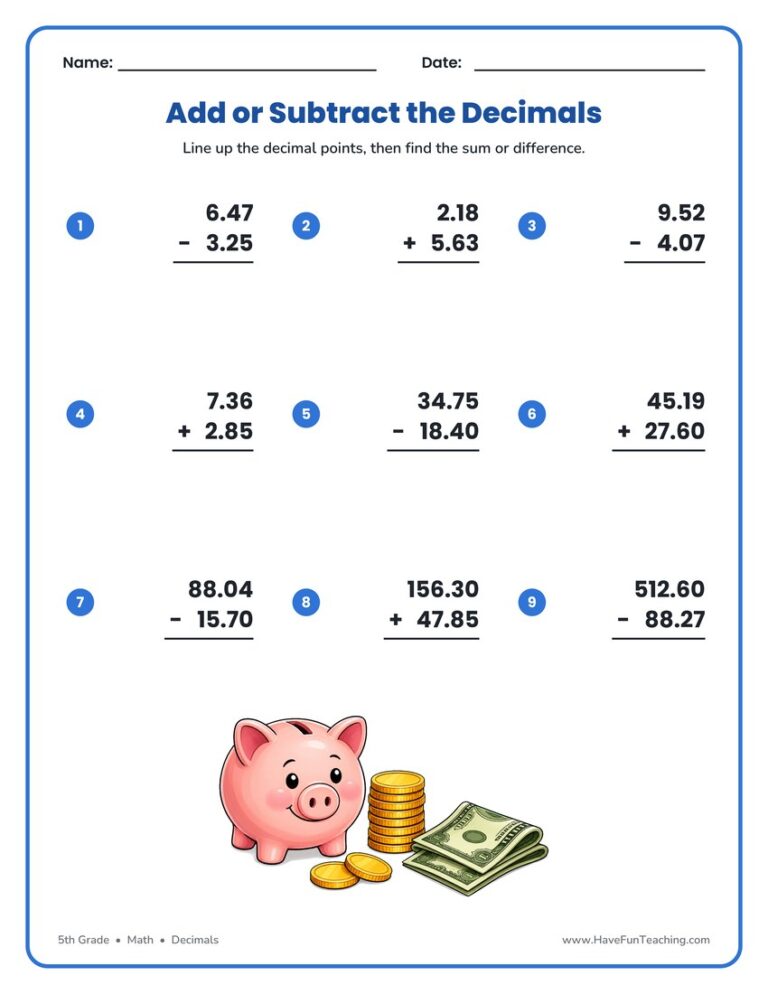
Fifth graders practice adding and subtracting decimals on this add/subtract decimals worksheet with nine aligned column problems. Includes a complete answer key for quick, no-prep math practice.
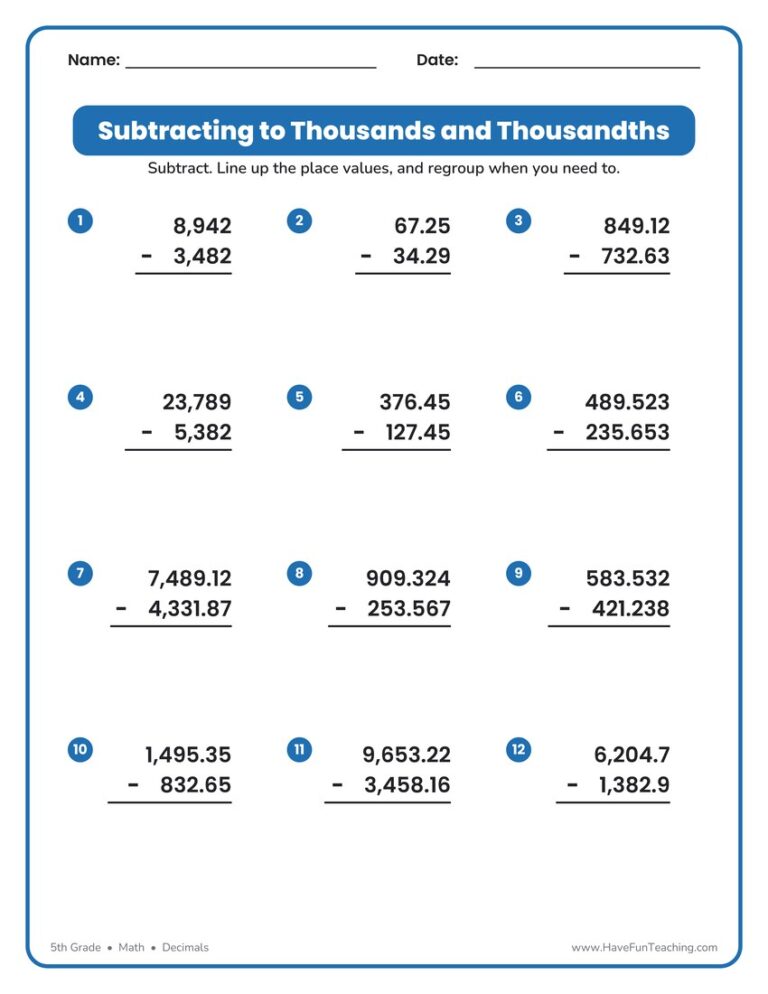
This Subtracting Thousands Thousandths Worksheet gives 5th grade students twelve problems subtracting whole numbers and decimals to the thousandths. Includes an answer key for quick, no-prep decimal practice.
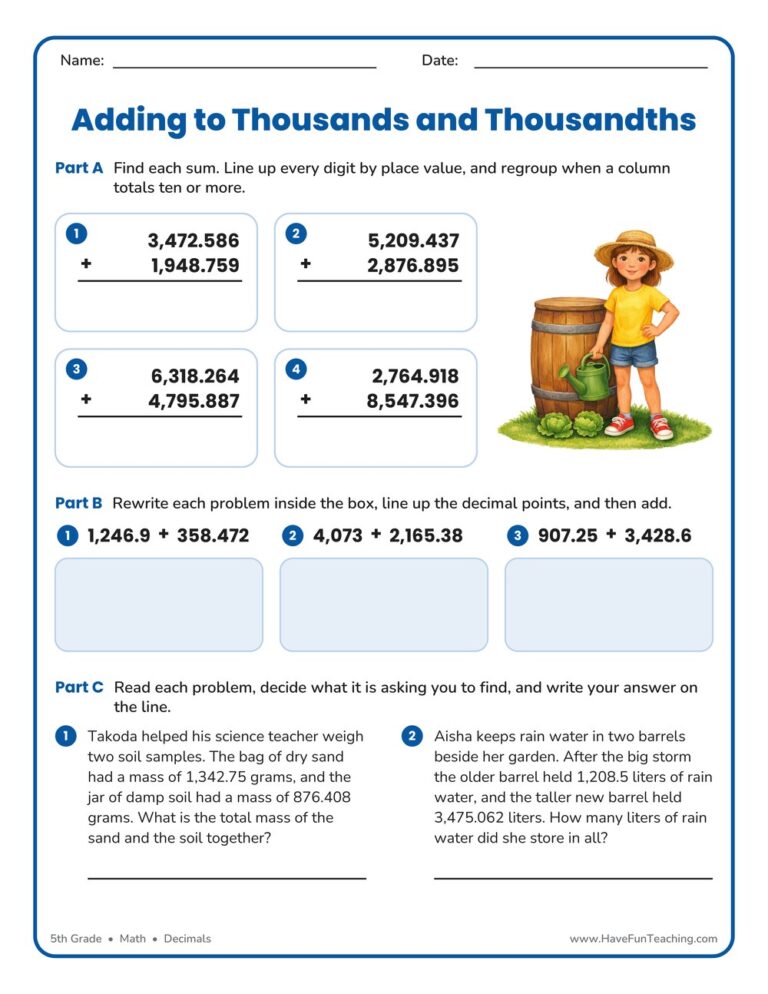
An add thousands thousandths worksheet for 5th grade, with stacked column problems, rewrite-and-align practice, and two measurement word problems. Answer key included, so decimal place value practice is ready to print.

Students turn six fractions into decimals and solve three word problems on this converting fractions to decimals worksheet, built for 5th grade. An answer key is included, so checking work takes seconds.
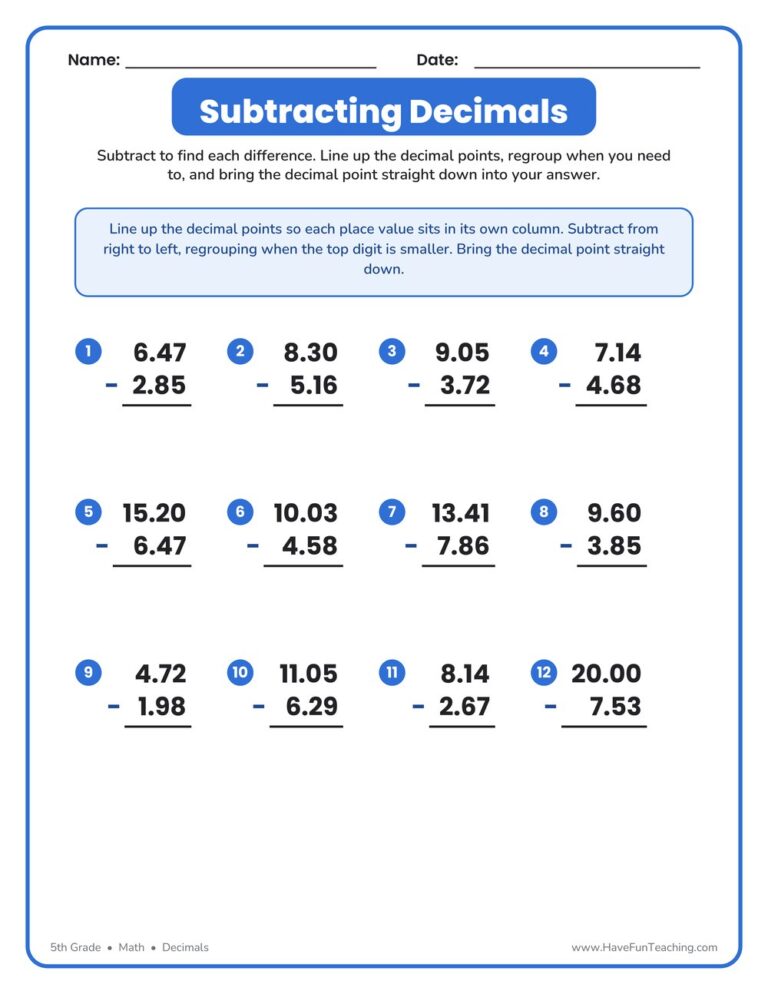
This subtracting decimals worksheet gives 5th graders twelve column subtraction problems that build place-value alignment and regrouping. Includes an answer key for quick, no-prep decimal practice at home or school.
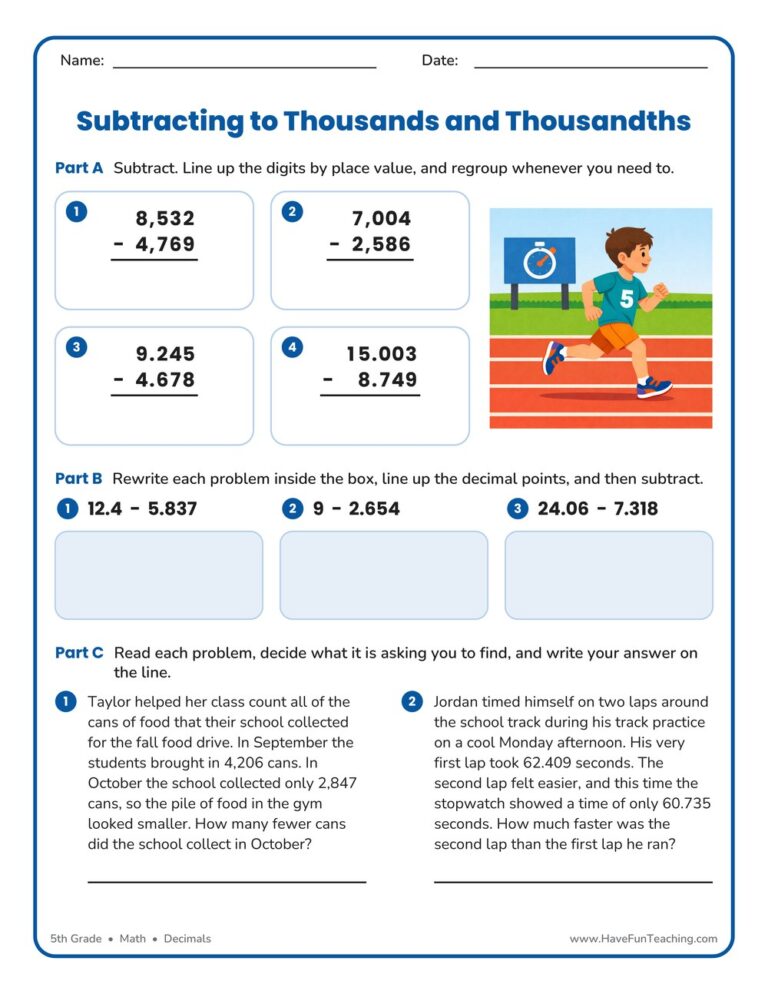
A 5th grade subtracting to thousands and thousandths worksheet with column practice, rewrite-and-align decimal problems, and two word problems. Answer key included, so students can check their own place-value work.
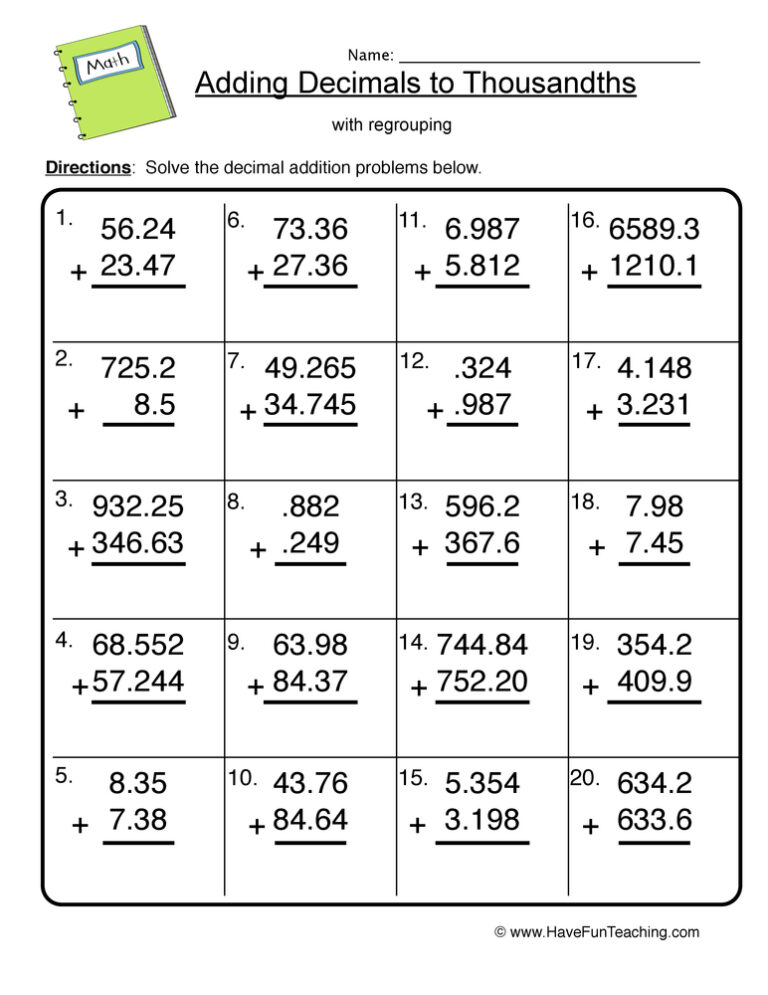
This Add Thousandths Decimal Worksheet gives 5th graders six stacked decimal sums plus three word problems, with an answer key included, so place value practice takes no prep at all.
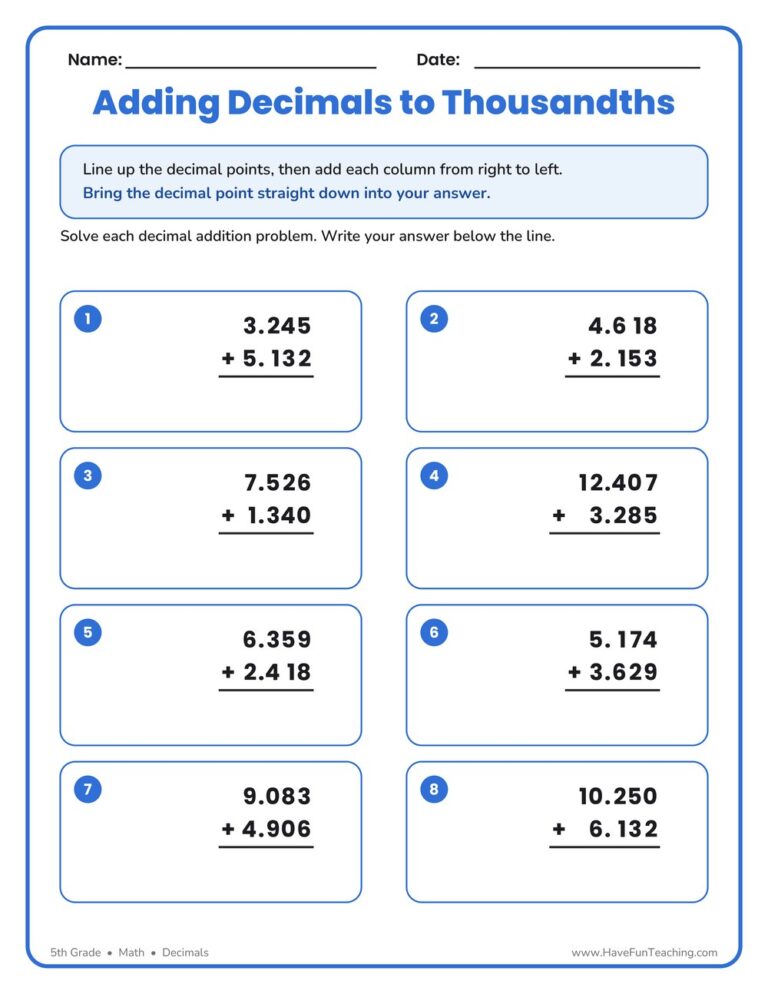
This adding thousandths decimal worksheet gives 5th graders eight column-addition problems to solve by lining up the decimal points. Includes a complete answer key for fast, no-prep decimal practice.

An adding decimals equations worksheet for 5th grade, with six column-form sums, three problems to rewrite in column form, and a hiking word problem. Answer key included, so students can check their own decimal alignment.

This convert mixed numbers to decimals worksheet gives 5th Grade students six conversions and two word problems, with an answer key included, so they build real fluency with division and place value.

Students rename fractions and decimals as percents, read two shaded grid models, and solve two real-world problems on this Making Percentages Worksheet. Built for 5th grade with an answer key included, so practice stays quick and low-prep.

This Adding Decimals Word Problems Worksheet gives 5th Grade students five real-world problems plus a training log to solve by lining up the decimal points. An answer key is included, so checking work takes seconds.




Reviews
There are no reviews yet