

Place Value Expanded Form Worksheet
A place value expanded form worksheet for 4th grade, with numbers that hide a zero in every place and a closing question that asks students to explain their reasoning. Includes a full answer key.
$6.97
Or free with a membership — members pay $3.33/mo for all 10,000+ resources. See plans
Want this one free?
Tell us where to send it and it’s yours — no card, no catch.
One free resource per teacher. We’ll also send free teaching ideas each week — unsubscribe anytime.
Teaching is easier with a membership
Unlimited printables, games & videos for PreK–6th — for your classroom or homeschool. Cancel anytime.
Start your 3-day free trial$0 today · cancel anytime · Instant access to 10,000+ resources
About this resource
Description
Expanded notation is the bridge between a digit and the value it really carries, and this place value expanded form worksheet gives fourth graders a clean, focused place to practice it. When a student writes 52,846 as 50,000 + 2,000 + 800 + 40 + 6, that student is proving they understand the 5 is not a five at all — it is five ten thousands. The same idea sits underneath rounding, comparing, adding, and subtracting multi-digit numbers, so time spent on expanded notation pays off across the whole year.
This 4th grade place value worksheet moves in both directions. The first section prints five multi-digit numbers and asks students to write each one in expanded notation on the wide line below it. The second section reverses the task: students read an expanded notation, or a short set of place-value words, and write the matching number in standard form. A worked example sits at the top of the page so students can check the format before they begin, and a final problem asks them to find a classmate’s mistake and explain it in a complete sentence.
What’s Included
- 1 print-ready PDF worksheet
- Answer key
- 9 expanded notation and standard form problems, including a written explanation
Three things make this place value expanded form worksheet effective. First, almost every practice number hides a zero in a different place, which is exactly where expanded notation breaks down for most students — 90,317 has no thousands, and 135,070 has neither hundreds nor ones. Second, working in both directions stops students from memorizing a procedure; they have to think about what each digit is worth whether they are taking a number apart or putting one back together. Third, the closing error-analysis question asks for reasoning in writing, the kind of constructed response that state assessments use and that quick drill pages never build.
Teachers and parents can stretch this skill well beyond the page. Write a large number on a card, hand each student one digit, and have the group line up and say the value of the digit they are holding. Play a rolling game where students roll a number cube five times, build a number from the digits, and race to write it in expanded notation. Pull big numbers out of a sports page or a news story and take them apart together. Short spoken repetitions like these make the written practice feel familiar, and they turn place value into something students hear as well as write.
Related Resources
What teachers say
Reviews
You must be logged in to post a review.
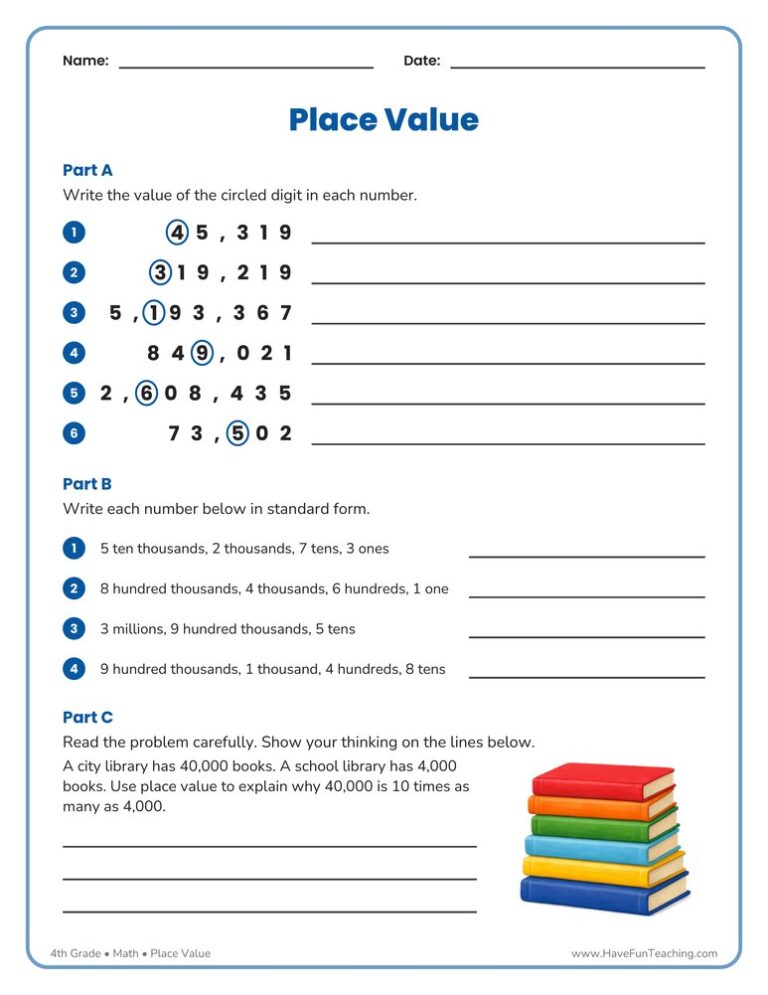
A place value identification worksheet for 4th grade: name the value of circled digits through the millions, build numbers in standard form, and explain ten times as much. Answer key included for no-prep practice.
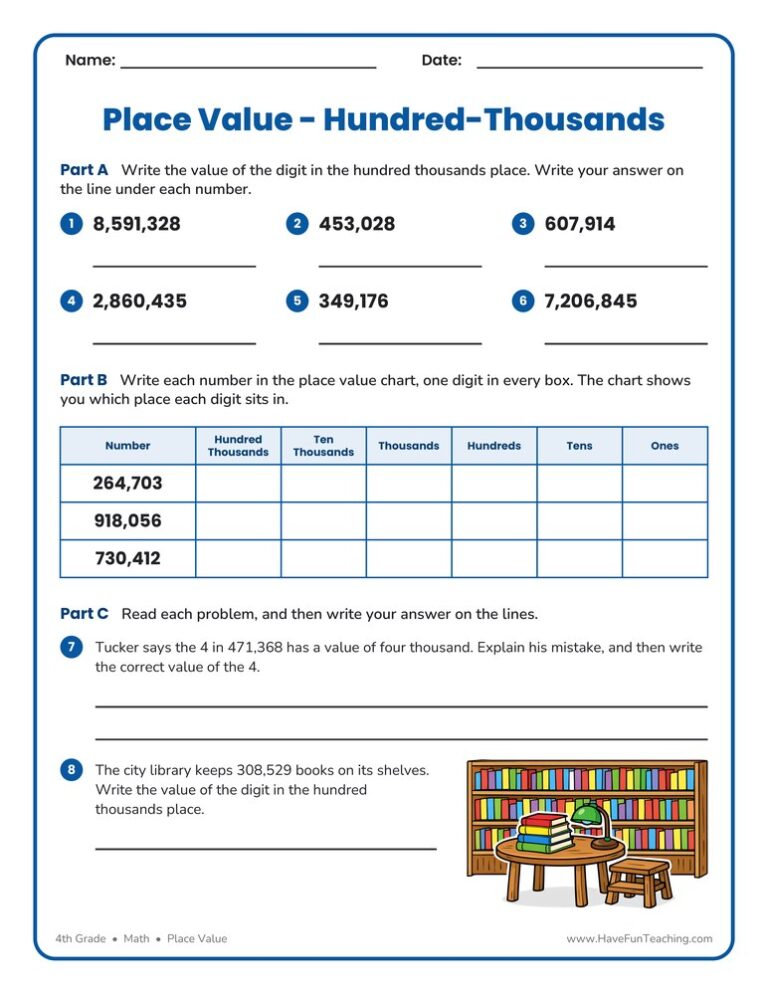
This hundred thousands place value worksheet gives 4th graders six digit-value problems, a six-column place value chart, and a written error-analysis question. Answer key included, so checking work takes seconds.
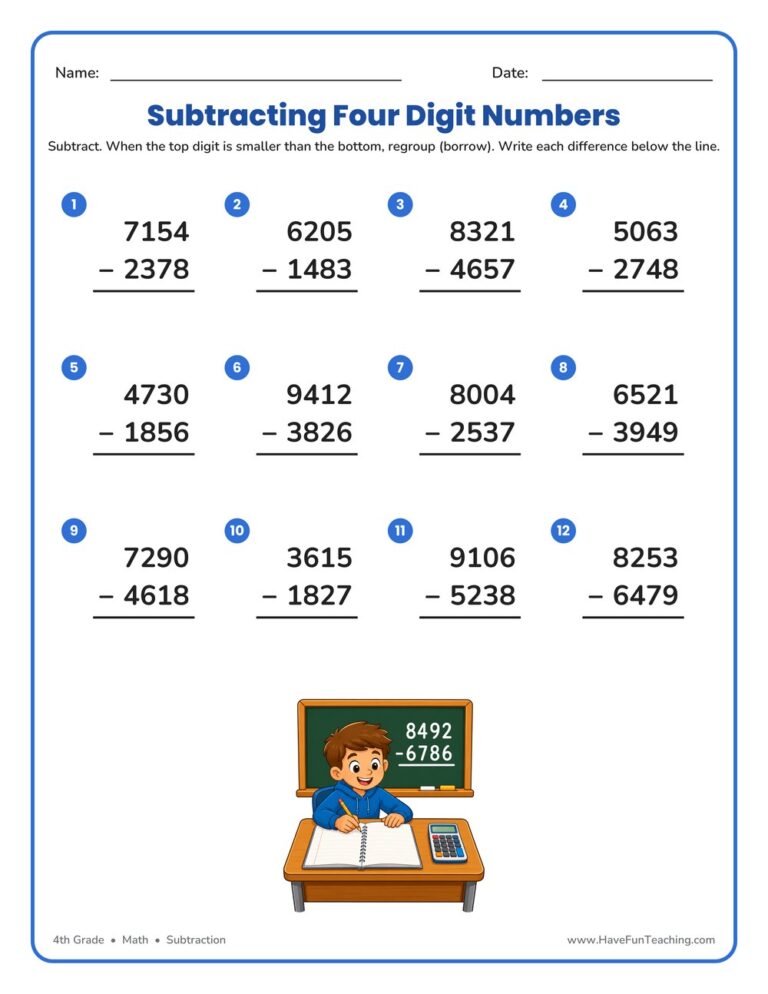
This 4th grade four digit subtraction regrouping worksheet gives students twelve vertical problems that all require borrowing, with a complete answer key included—perfect for quick, no-prep multi-digit subtraction practice.
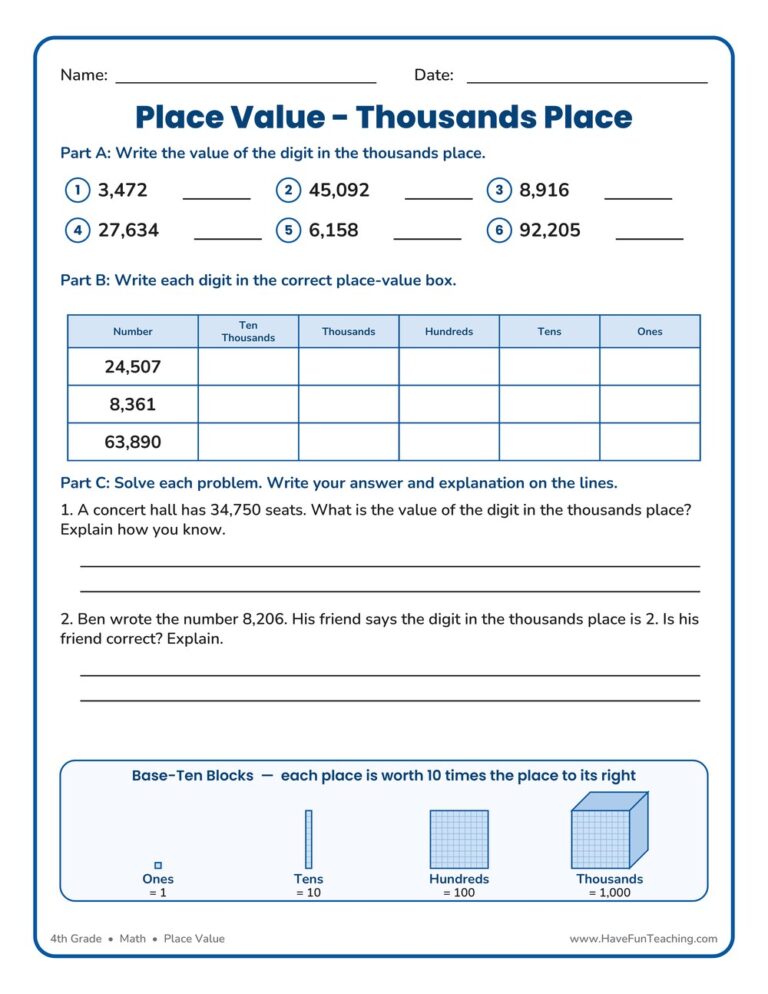
This Thousands Place Value Worksheet gives 4th grade students practice finding the value of the digit in the thousands place, filling in a place-value chart, and explaining their reasoning. An answer key is included to make checking fast.
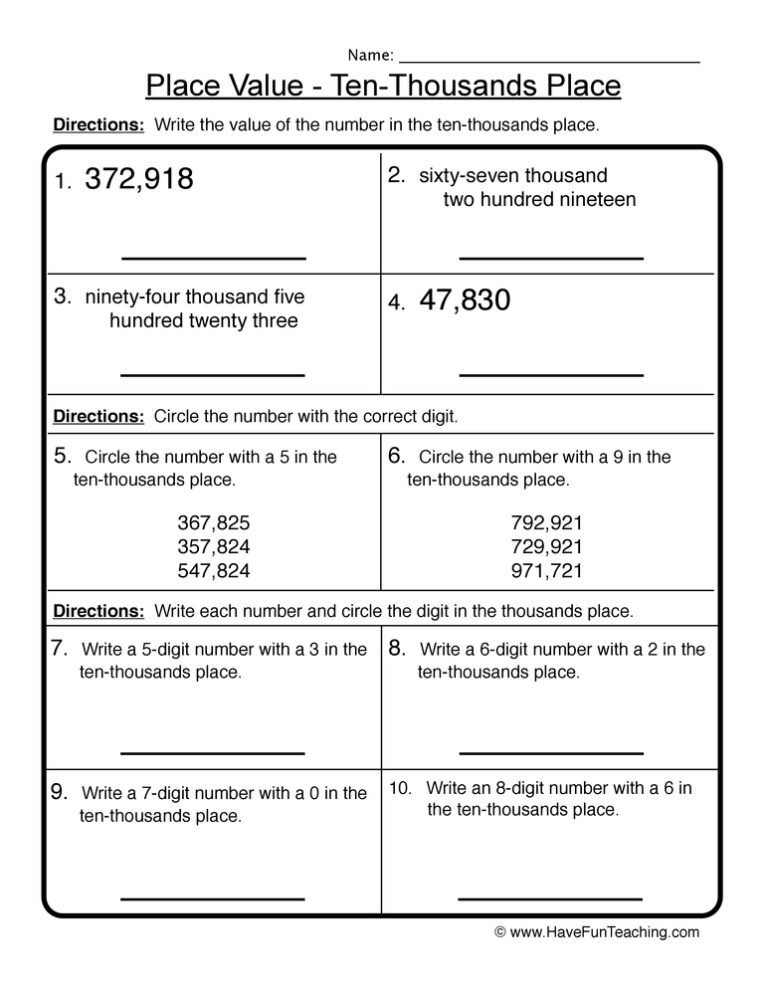
This Ten Thousands Place Value Worksheet asks 4th grade students to write the value of the ten-thousands digit, convert number words, and explain a mistake, with an answer key included.
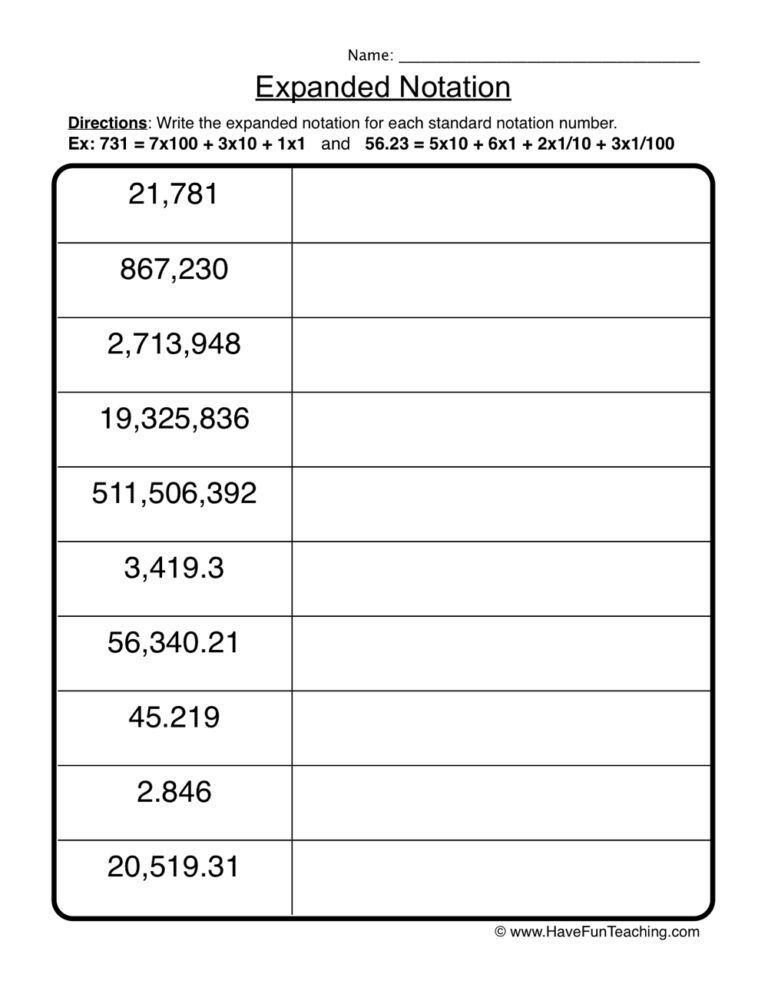
Students use this place value expanded notation worksheet to break 4th grade numbers into the value of every digit, then build them back again. An answer key is included, so checking work takes seconds.
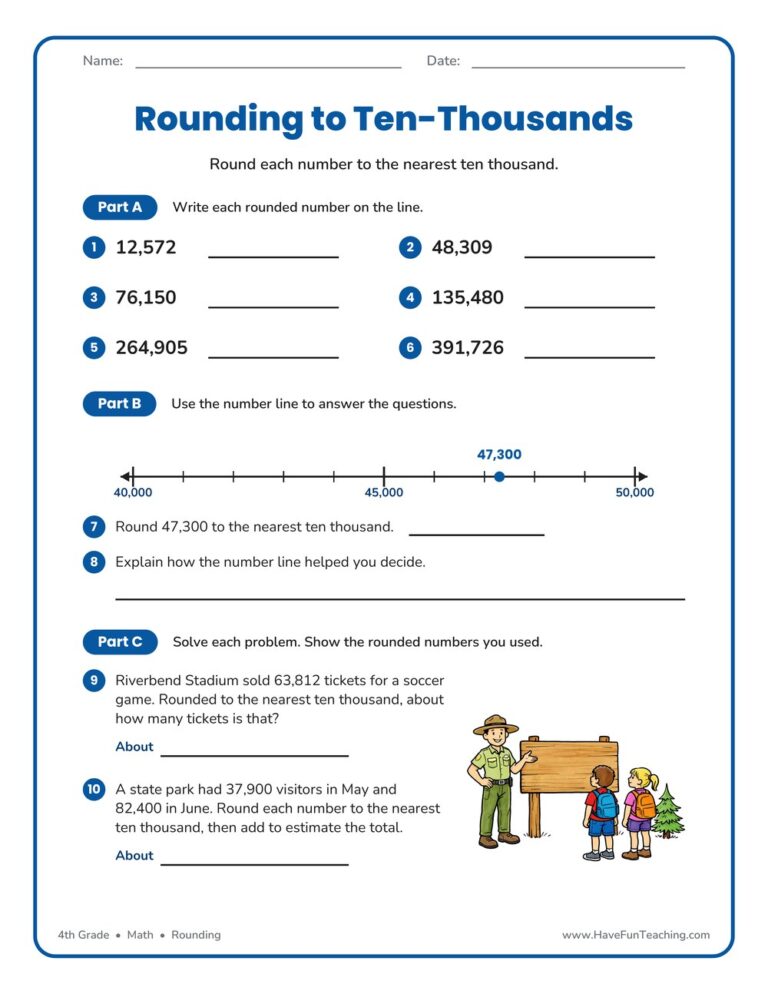
This Rounding to Ten Thousands Worksheet gives 4th Grade students six rounding problems, a number line to reason with, and two word problems. An answer key is included, so estimation practice is ready in one print.

This place value review worksheet has 4th graders circle the digit in a named place across nine five- and six-digit numbers, write a number in expanded form, and correct a classmate's mistake. Answer key included.
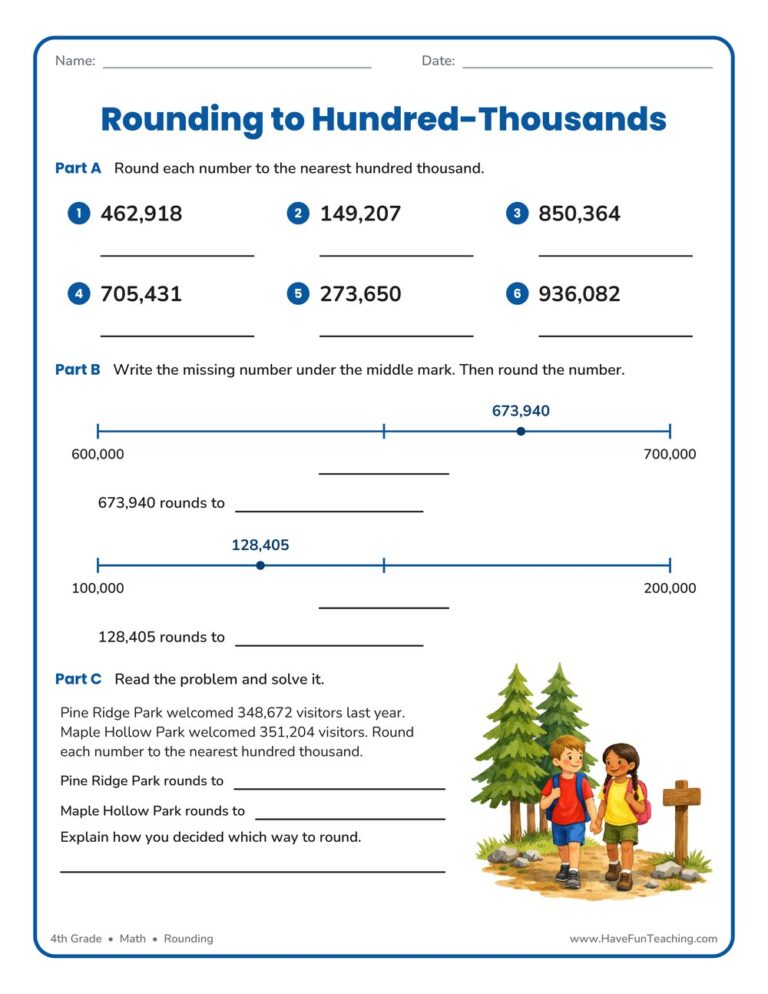
This round to hundred thousands worksheet gives 4th Grade students six numbers to round, two number lines to reason with, and a park word problem to solve. An answer key is included, so checking work takes seconds.
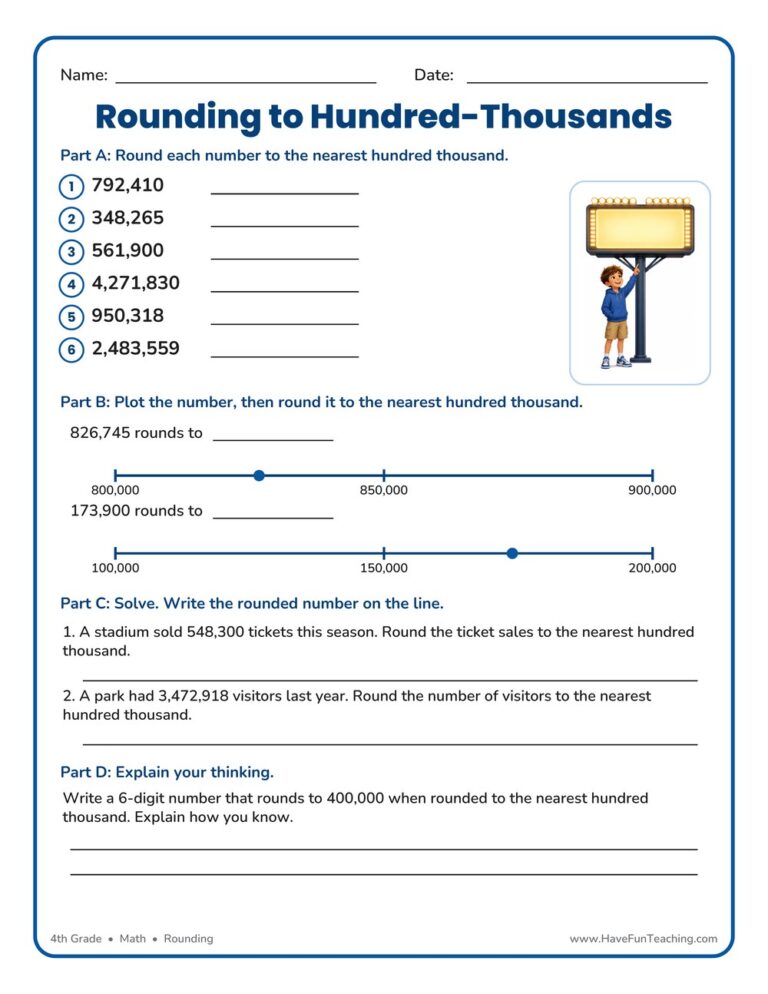
This rounding to hundred thousands worksheet gives 4th graders place-value practice rounding big numbers on a number line and in word problems. Answer key included for quick, no-prep math review.
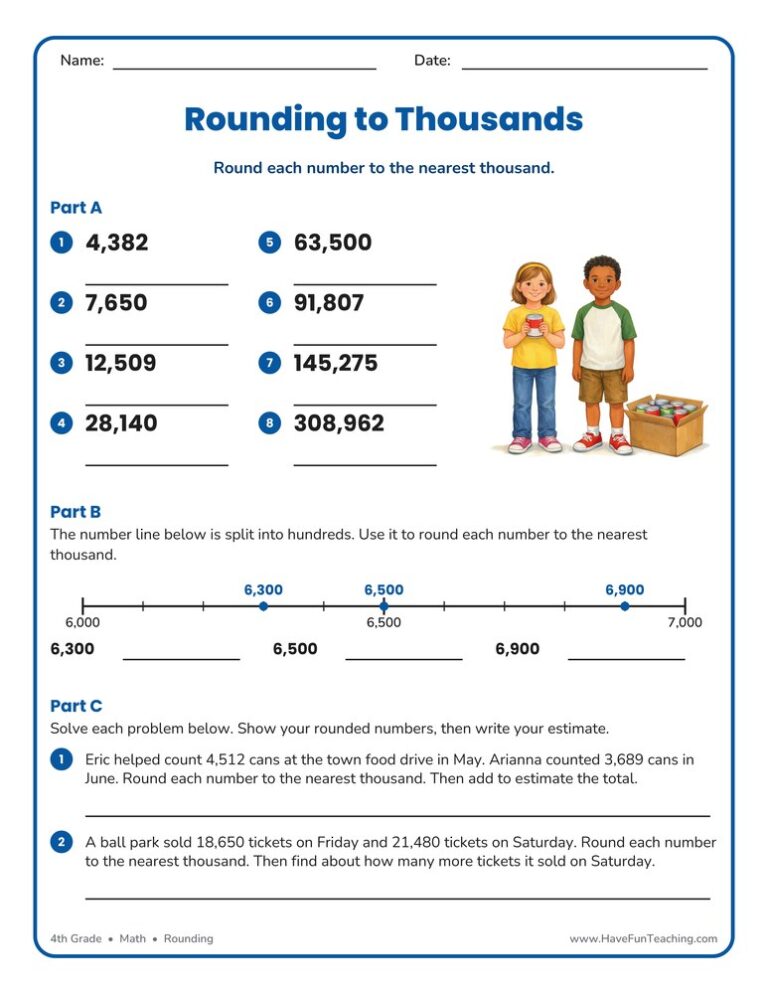
This rounding to thousands worksheet gives 4th graders eight numbers, a labeled number line, and two estimation word problems. An answer key is included, so checking work takes seconds.
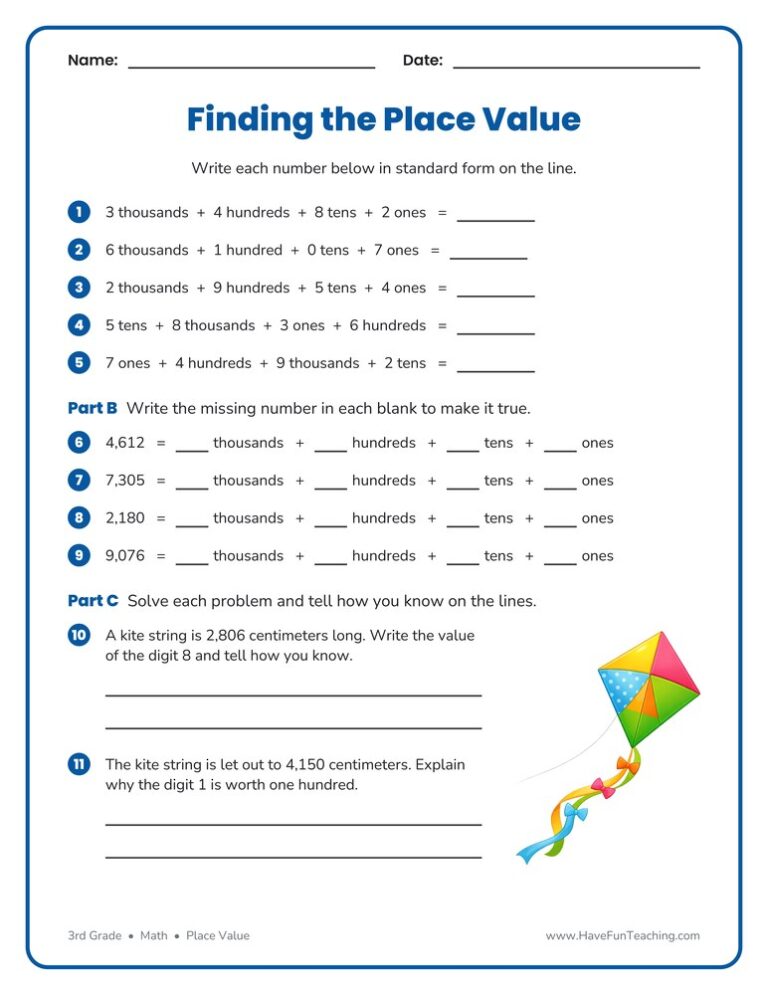
A four-digit Thousands, Hundreds, Tens, Ones Place Value Worksheet that walks 3rd graders from expanded form to standard form and back, then asks them to explain one digit's value. Answer key included.




Reviews
There are no reviews yet