
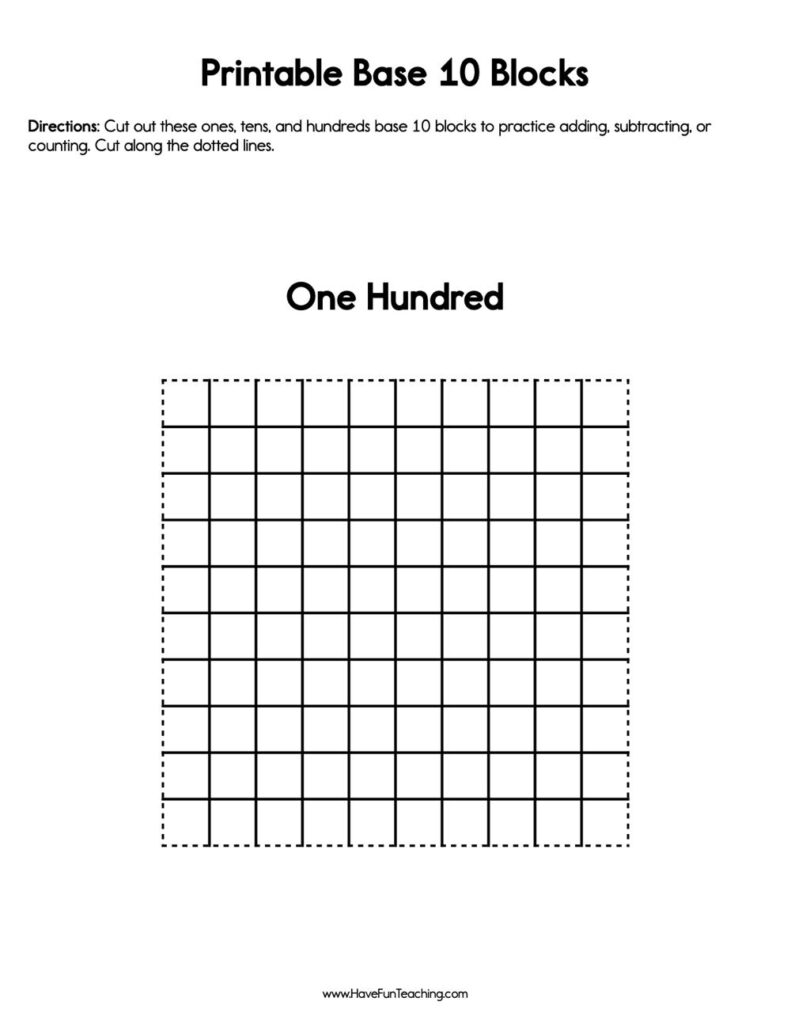
Printable Base 10 Blocks
This Printable Base 10 Blocks worksheet gives 2nd graders cut-out hundreds, tens, and ones blocks to build numbers by hand — a no-prep, hands-on way to make place value, counting, and addition click.
$6.97
Want this one free?
Tell us where to send it and it’s yours — no card, no catch.
One free resource per teacher. We’ll also send free teaching ideas each week — unsubscribe anytime.
Free teacher account · no credit card
Membership
Get every game, song, & printable
- Every game, on any device
- 10,000+ printables
- Assign online with HFT Classroom
Then $39.97/year · cancel anytime · See plans
- Instant digital download
- Printable PDF + answer key
- Made by real teachers
Teacher / Family membership
Teaching is easier with every resource
One membership for your whole year: 10,000+ worksheets, games, songs and videos for Preschool–6th, for your classroom or homeschool.
- Unlimited printables & downloads
- Every game, on any device
- Assign online with HFT Classroom
- Cancel anytime
Teacher / Family membership · 3 days free
Yearly
Monthly would be $119.64 a year
$3.33/month
Billed $39.97 once a year
You save $79.67 every year
Start My 3 Free Days$0 today · cancel anytime
Monthly
$9.97/month
Flexible, month to month
Yearly is just $3.33/mo. Switch and save $79.67
Start My 3 Free Days$0 today · cancel anytime
About this resource
Description
This Printable Base 10 Blocks worksheet gives students a complete set of base ten manipulatives they can cut out and use to build numbers with their own hands. Base ten blocks are one of the clearest ways to show how our number system works: single ones cubes join together to make a ten, and ten of those rods build a hundred flat. When children physically group and regroup these pieces, the ideas behind place value, counting, adding, and subtracting stop being abstract and start to make real sense.
The set prints on three ready-to-use pages — a hundreds flat, a page of tens rods, and a page of ones cubes — with dotted lines that show exactly where to cut. Simply print, cut the blocks apart, and students have their own hands-on math toolkit. Flexible enough to double as a preschool activities worksheet for early counting and rich enough to support second-grade place value, it works at a table, in a math center, or in a take-home bag.
What’s Included
- 1 print-ready PDF (3 pages)
- Cut-out hundreds, tens, and ones base ten blocks
- Dotted cut lines for easy trimming
There are three big reasons this Printable Base 10 Blocks worksheet helps children learn. First, it turns place value into something they can touch, so ten ones really becomes a ten they can hold. Second, the matching sizes let students self-check their work — swapping ten ones cubes for one tens rod makes regrouping in addition and subtraction obvious. Third, the open-ended blocks stretch across grade levels and skills, from counting to comparing numbers to modeling two- and three-digit problems.
Teachers and parents can extend the blocks in dozens of ways. Call out a number and have students build it with the fewest blocks, then trade up ten ones for a rod. Play “race to one hundred,” adding a block on each turn. Use them to model addition and subtraction with regrouping, to compare two numbers side by side, or to explore even and odd. Laminate a set so the pieces last all year, and keep a bag at each desk for quick warm-ups.
Related Resources
What teachers say
Reviews
You must be logged in to post a review.
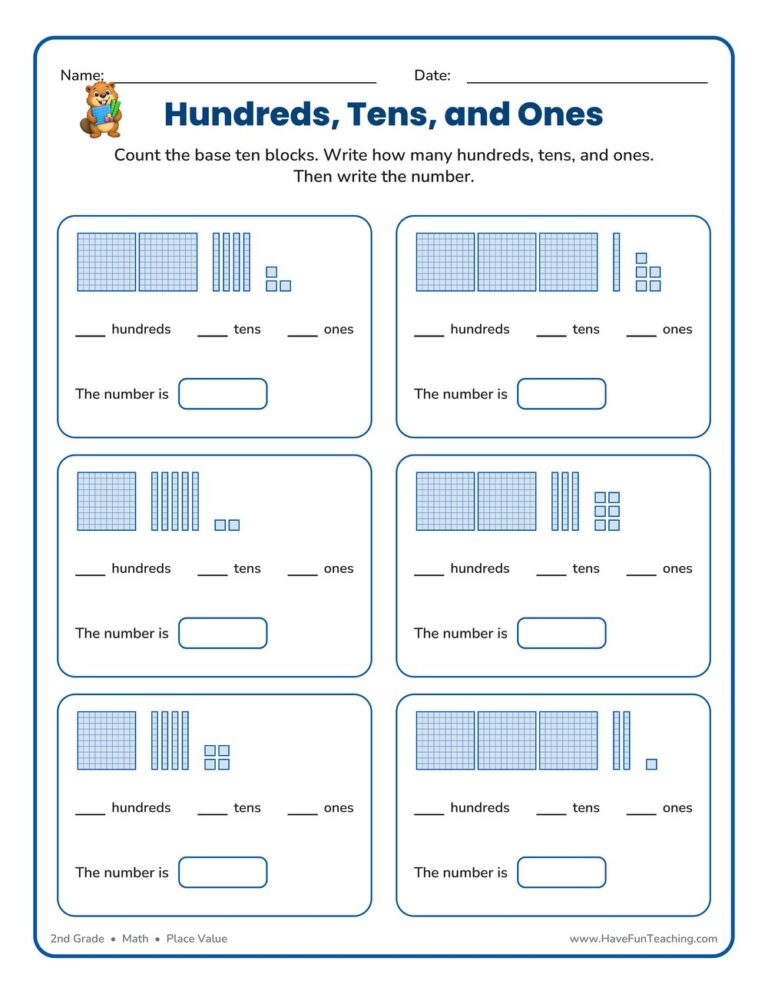
This Base 10 Blocks Place Value Worksheet helps 2nd graders count the hundreds, tens, and ones shown with base ten blocks and write each three-digit number. Answer key included for quick, no-prep place value practice.
A 2nd grade place value game where Penny asks how many hundreds, tens and ones are in each number and kids tap the right gumball, then watch the number built in candy flats, rods and gumdrops. Play online on any phone, tablet, Chromebook or computer.
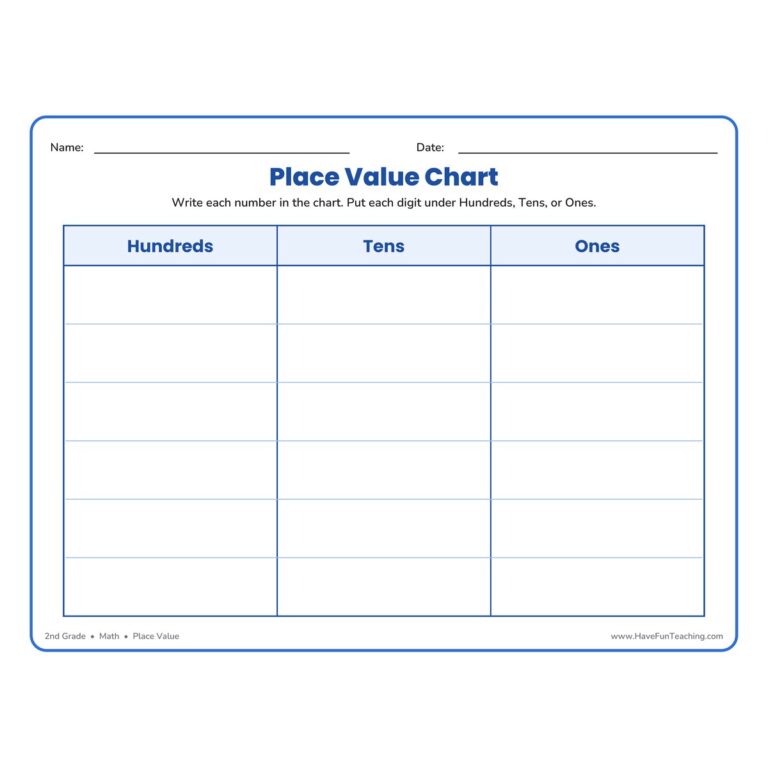
A reusable Hundreds, Tens, Ones place value chart worksheet for 2nd grade. Students write the digits of each number in the hundreds, tens, and ones columns to build place value skills.

A determining place value worksheet where 2nd graders read three-digit numbers and write the hundreds, tens, and ones in each. Includes a complete answer key — great for quick, no-prep place value practice.
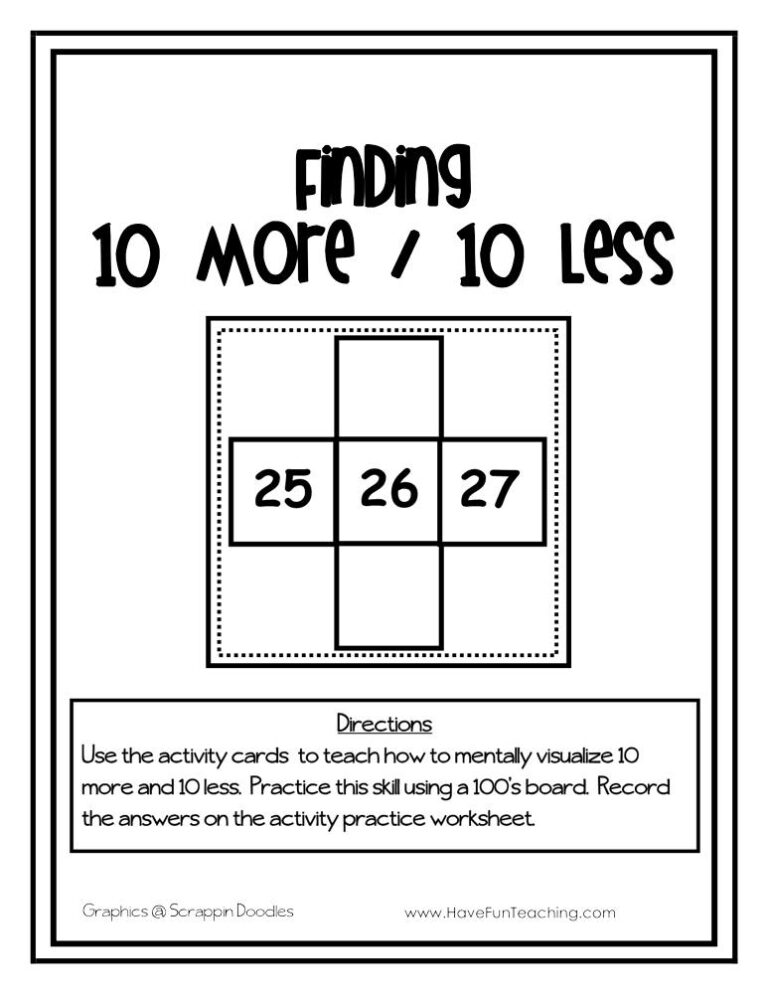
This finding 10 more 10 less activity helps 1st and 2nd grade children use a hundred chart to find 10 more and 10 less. Practice page and answer key included.

This Add and Subtract 10 and 100 Worksheet gives 2nd Grade students mental math practice with tens and hundreds, number patterns, and two word problems. An answer key is included, so checking work takes seconds.
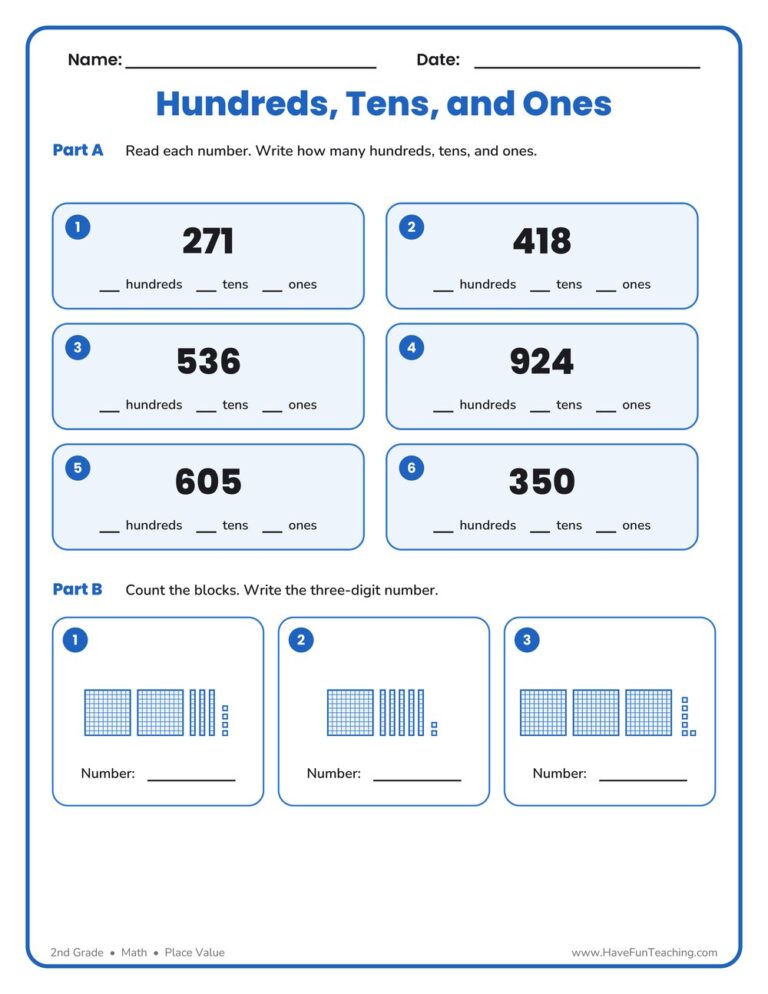
A hundreds tens and ones worksheet where 2nd graders read three-digit numbers and count base-ten blocks to name each digit’s value. Includes an answer key for fast, no-prep place value practice.
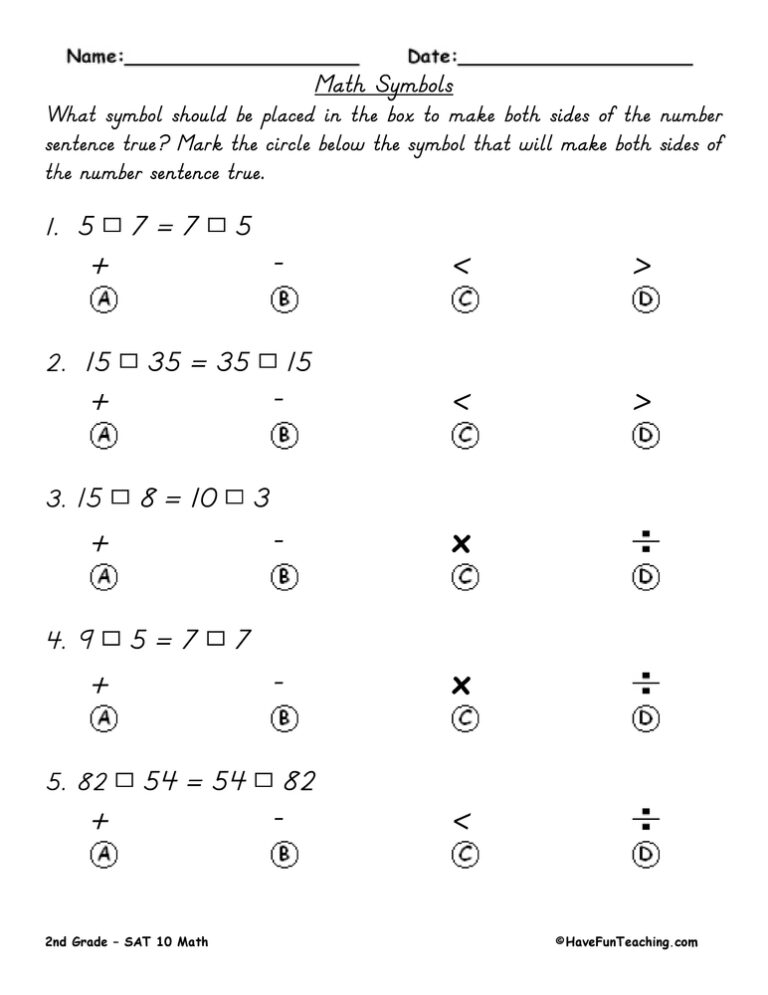
This second grade math skills test practice worksheet asks students to choose the plus, minus, greater than, less than, or equal sign that makes each number sentence true. An answer key is included, so checking work takes seconds.

The Identify Place Value Worksheet gives 2nd Grade students base ten block models, three-digit numbers, and a word problem to break apart into hundreds, tens, and ones. Answer key included, so practice checks itself.

Practice this add and subtract 10 and 100 word problems worksheet with three number stories and a 10 more, 10 less, 100 more, 100 less chart. Built for 2nd Grade with an answer key included, so mental math clicks fast.
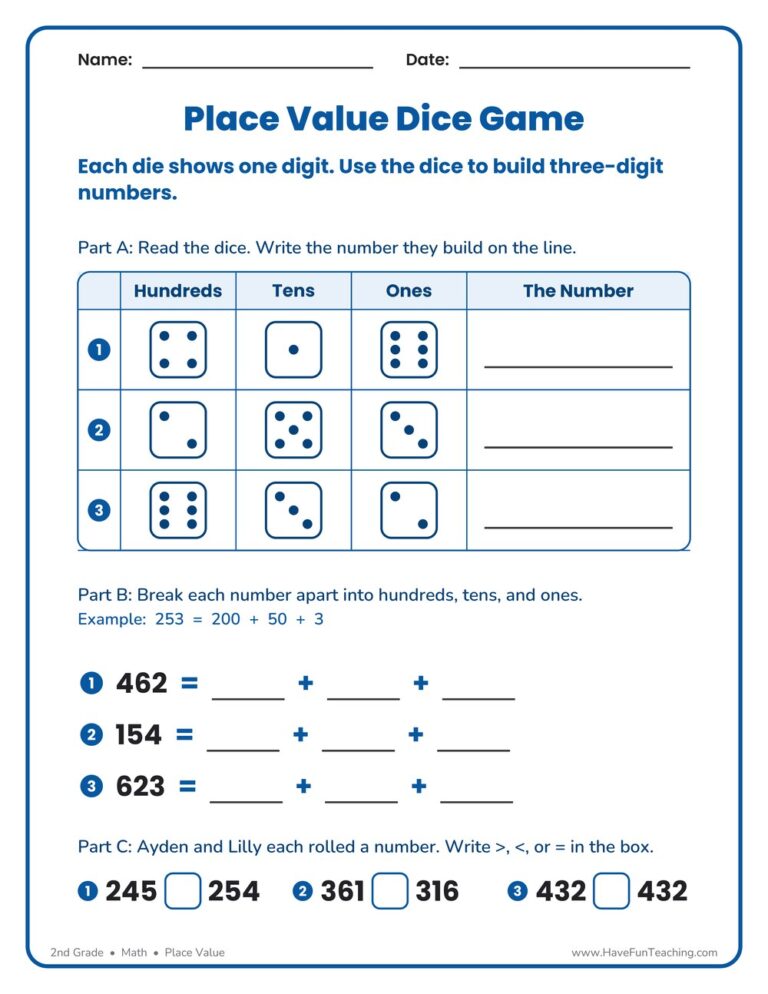
Roll, build, and compare three-digit numbers with this place value dice game worksheet. Second graders read dice in a hundreds, tens, and ones chart, write expanded form, and compare two numbers. Answer key included for fast, no-prep practice.
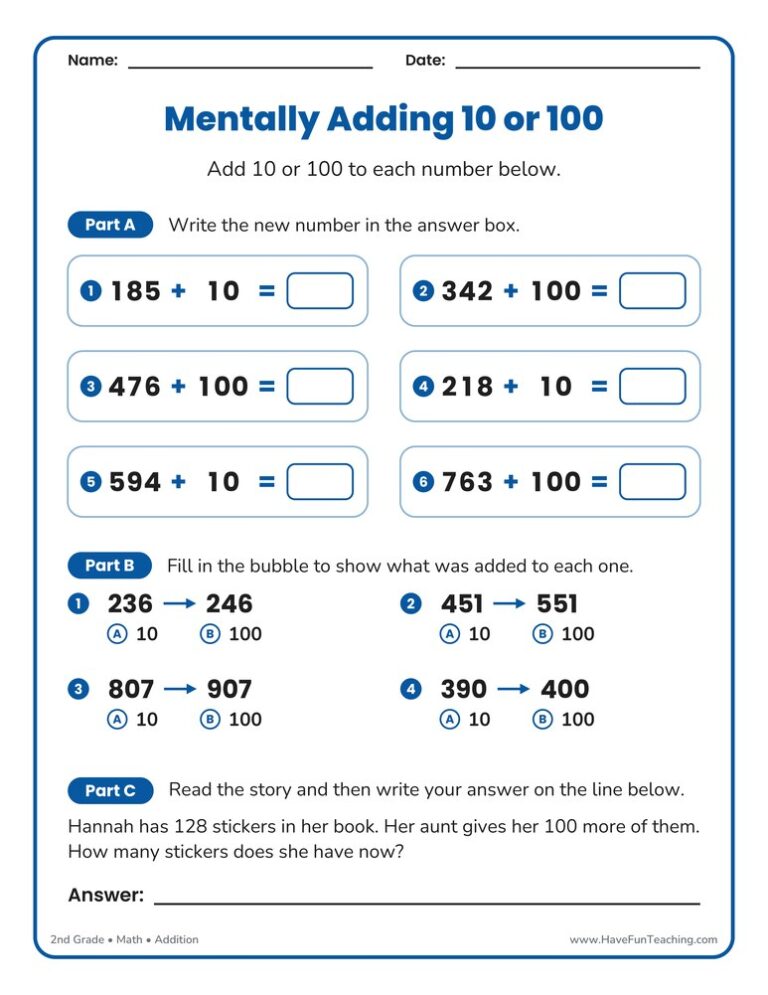
This mentally adding 10 or 100 worksheet gives 2nd graders six equations, four bubble-in items, and a story problem using numbers from 100 to 900. Answer key included for quick, no-prep place value practice.




Reviews
There are no reviews yet