

Weathering Worksheet
A weathering worksheet that helps 4th graders sort mechanical and chemical weathering, master key earth science vocabulary, and explain their thinking. Answer key included for fast, no-prep review.
$6.97
Or free with a membership — get this and 10,000+ resources. See plans
Teaching is easier with a membership
Unlimited printables, games & videos for PreK–6th — for your classroom or homeschool. Cancel anytime.
Start your 3-day free trialNo commitment · Cancel anytime · Instant access to 10,000+ resources
About this resource
Description
Weathering is the slow, steady work that breaks solid rock into smaller and smaller pieces, and it is happening on every mountain, sidewalk, and stone wall on Earth right now. Some weathering is mechanical: water seeps into a crack, freezes overnight, and pushes the crack a little wider. Some weathering is chemical: acid rain reacts with limestone and marble and wears the surface away. This weathering worksheet gives 4th grade students a clear, hands-on way to tell those two processes apart, and to see how weathering fits together with erosion, sediment, and the shaping of landforms over long stretches of time.
This printable 4th grade earth science worksheet moves students through three levels of thinking on a single page. Part A is a word bank of five earth science terms — weathering, erosion, sediment, acid rain, and ice wedging — that students place into sentences that define each one. Part B lists five real-world examples, from waves tumbling pebbles smooth to rust forming inside a rock, and students fill in a bubble to label each one mechanical or chemical. Part C shows a boulder with ice frozen inside a crack and asks students to explain, in their own words, which type of weathering the picture shows. Use it as guided practice during an earth science unit, as an independent check before a test, or as a quick review station.
What’s Included
- 1 print-ready PDF worksheet
- Answer key
- 5 word bank vocabulary sentences, 5 mechanical-or-chemical sorting items, and 1 written explanation prompt with an illustration
This weathering worksheet helps kids learn the skill in three ways. First, the word bank locks down the vocabulary students need before they can reason about the process, so weathering, erosion, and sediment stop blurring together. Second, the sorting section turns an abstract definition into a decision students make five times about real examples, which is exactly how the concept shows up on a state science assessment. Third, the written prompt asks students to justify an answer using evidence from a picture, building the constructed-response skill that multiple-choice practice alone never reaches.
Teachers and parents can stretch this lesson well beyond the page. Freeze a plastic bottle of water overnight and let students see the ice push the sides outward, then connect that to ice wedging in a rock. Drop a piece of chalk into a cup of vinegar and watch chemical weathering happen in minutes. Take a walk around the school and photograph weathered sidewalks, rusted railings, and rounded river stones, then sort the photos into mechanical and chemical piles. Ask students to keep a two-week weather journal and predict which nights would freeze water inside a crack.
Related Resources
What teachers say
Reviews
You must be logged in to post a review.

A layers of the Earth definition worksheet for 4th grade where students match each layer to its description and label a cross-section diagram. Answer key included for quick, no-prep earth science practice.
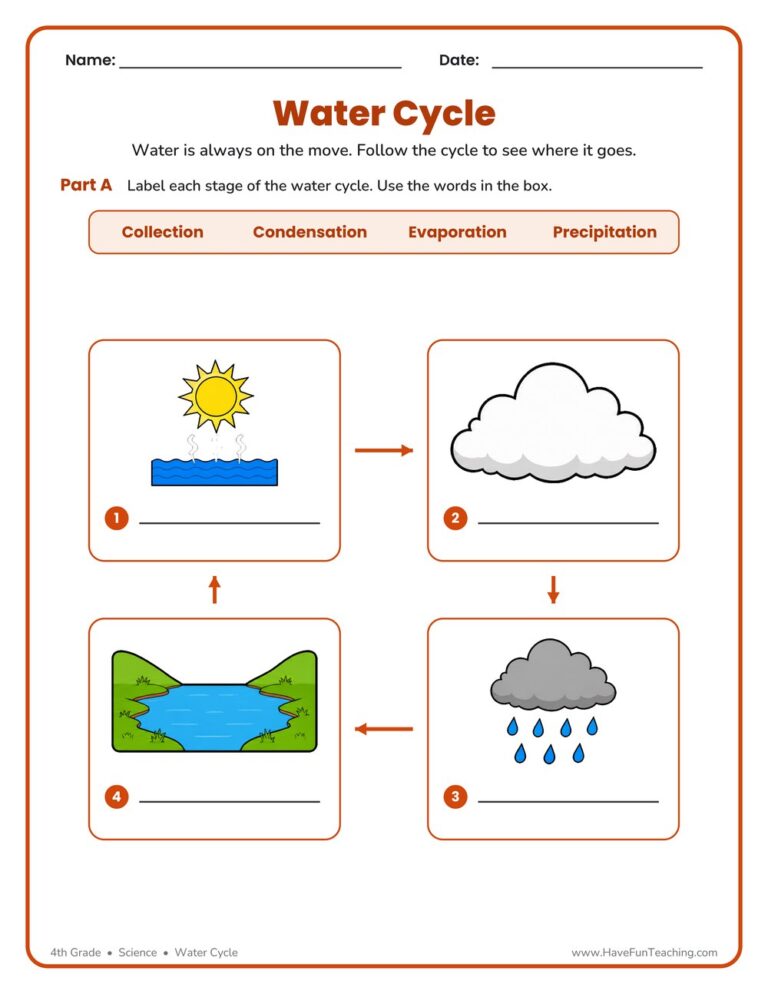
This Water Cycle Worksheet helps 4th graders label the stages of the water cycle, match science terms to clues, and explain the process in their own words. Includes an answer key — a no-prep way to reinforce earth science vocabulary.
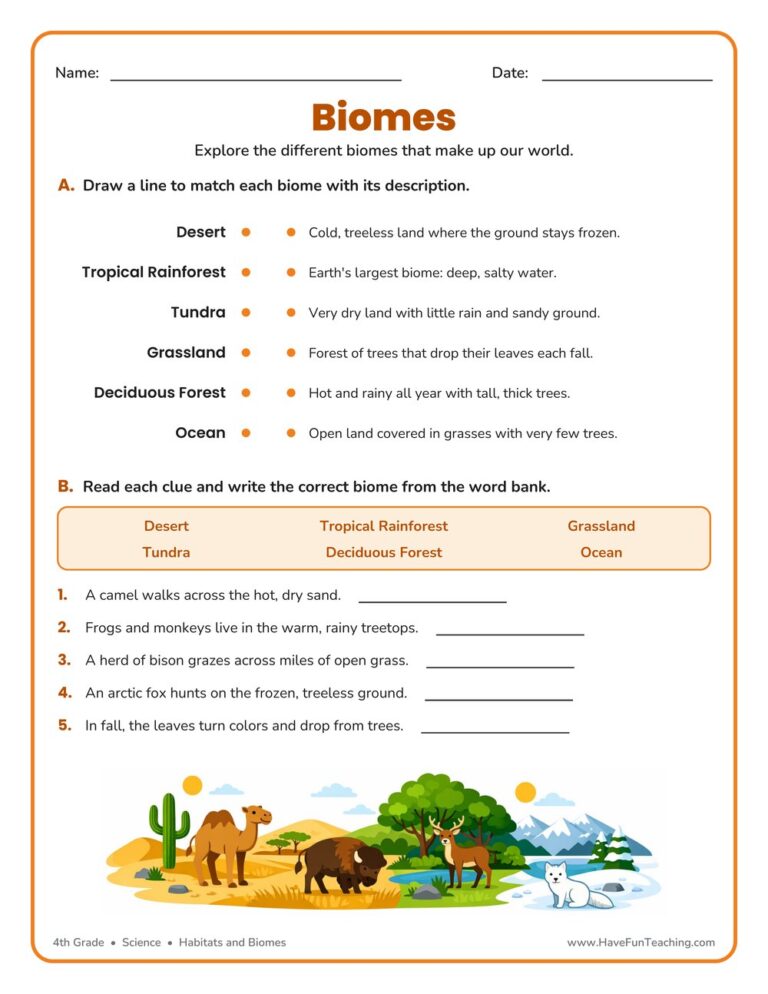
This Biomes Worksheet helps 4th grade students match major biomes to their climates and identify each one from real-world clues. Includes an answer key for fast, no-prep science practice at home or school.

Using this Weather Writing Worksheet, students use words from the bank to write a short story about weather to build their understanding of weather conditions.

Our Natural Resources Worksheet asks 4th graders to sort eight resources into renewable and nonrenewable columns, then explain the difference in writing. Answer key included — easy no-prep Earth Science practice.

This Earth Layers Worksheet has 4th graders label a colorful cross-section of the planet, then name each layer from a short description. An answer key is included, so it is ready to print and teach today.

The Natural Resources Sorting Worksheet has 4th graders sort a word bank of twelve resources into renewable and non-renewable columns, then write a sentence. Answer key included for easy Earth Science practice.
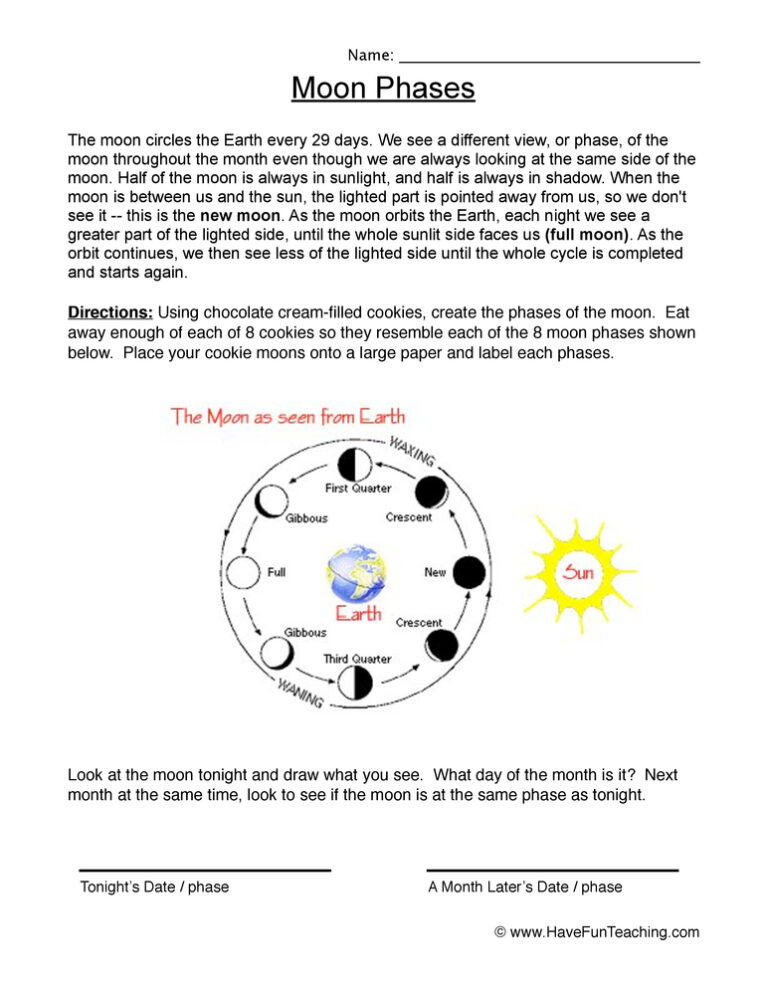
Using Moon Phases Cookies Worksheet, students create the phases of the moon out of cookies so they can understand the pattern of the moon.
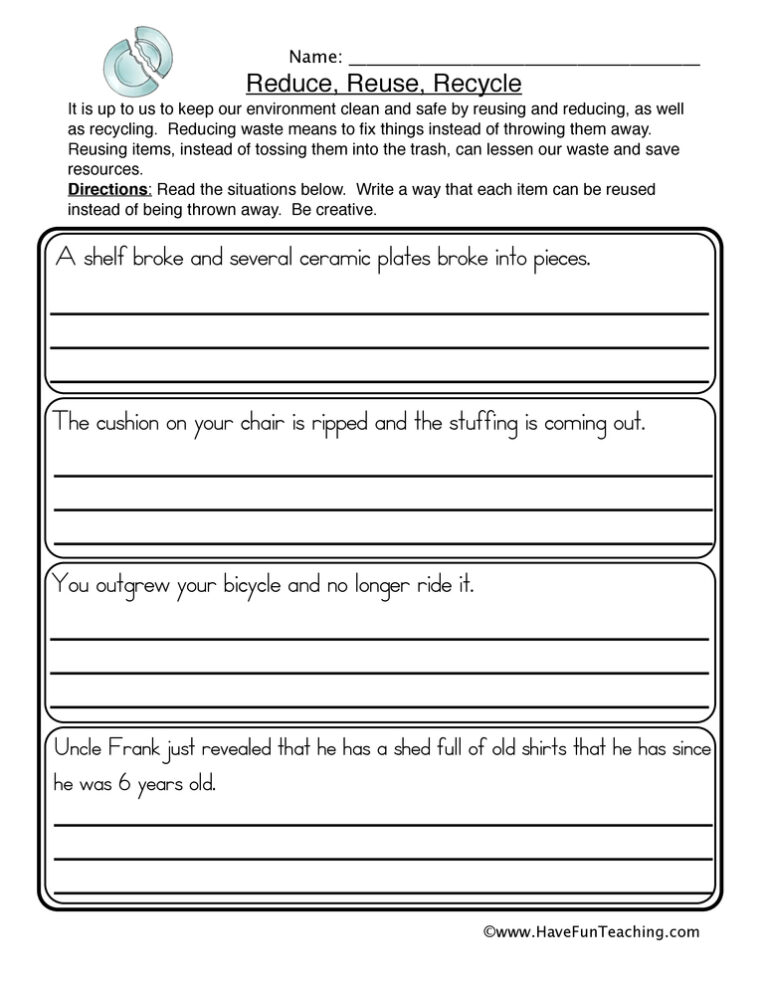
Using Reduce, Reuse, Recycle Scenarios Worksheet, students read the situations below and then, write a way that each item can be reused instead of being thrown away.

A Weather Instruments Match Worksheet for 4th Grade: students match six weather tools to what they measure, pick the right instrument for real situations, and explain their thinking. Answer key included for fast, no-prep science practice.
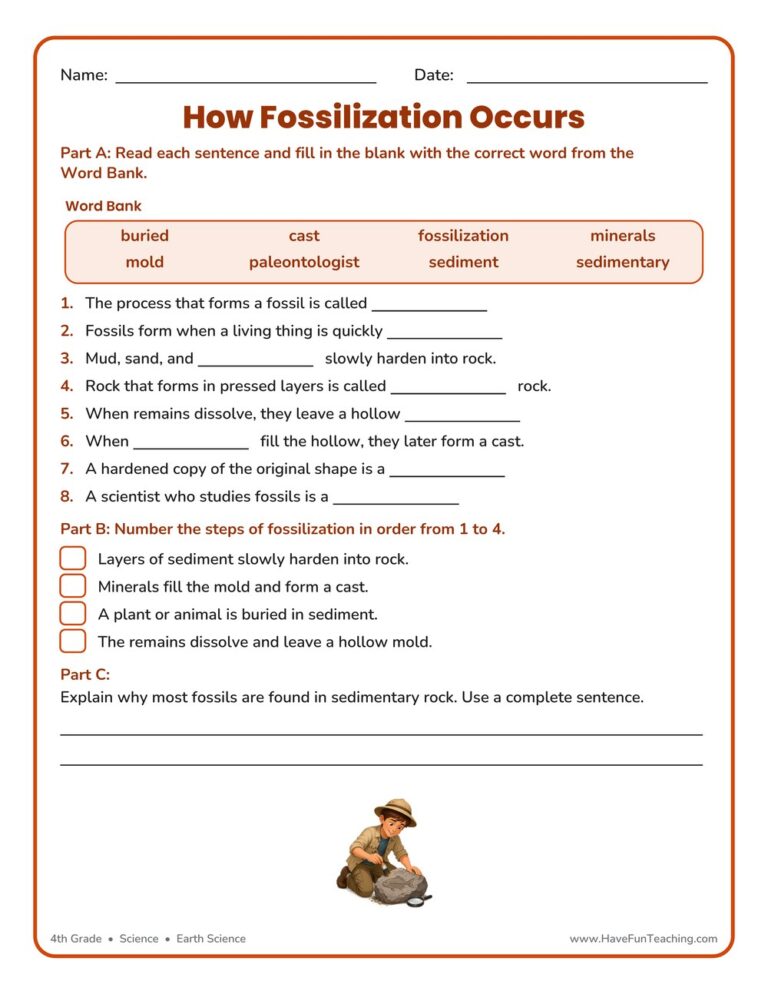
This Fossils Fill in the Blank Worksheet gives 4th grade students hands-on earth science practice with fossilization, sedimentary rock, and key vocabulary. Answer key included to make review quick and easy.

While watching the Creation Song, students learn about the days of Creation perfect for Sunday school, kid's church, and Bible lessons for kids. Bring joy and understanding into your kid's church, Sunday school, and classroom with this song about the days of Creation. Your kids will love a new way…
Reviews
There are no reviews yet