
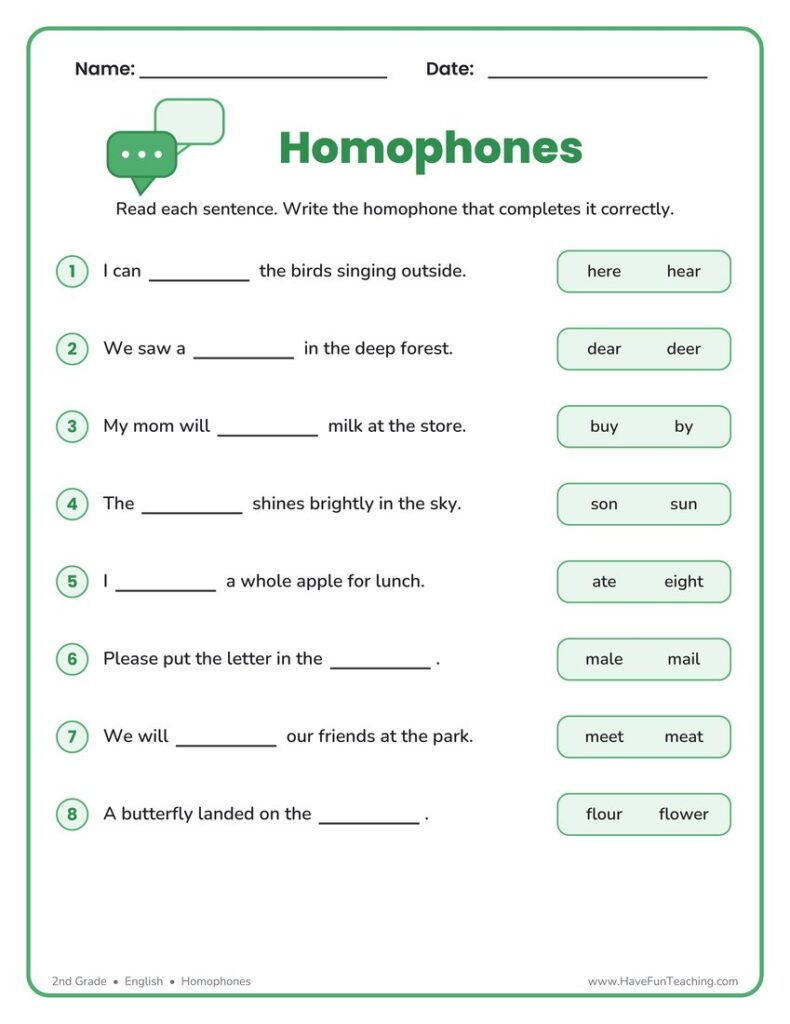
Selecting Homophones Worksheet
A 2nd grade Selecting Homophones Worksheet where students choose the correct homophone to complete each sentence using context clues. Includes a complete answer key for quick, no-prep grammar practice at home or school.
$6.97
Or free with a membership — members pay $3.33/mo for all 10,000+ resources. See plans
Want this one free?
Tell us where to send it and it’s yours — no card, no catch.
One free resource per teacher. We’ll also send free teaching ideas each week — unsubscribe anytime.
Teaching is easier with a membership
Unlimited printables, games & videos for PreK–6th — for your classroom or homeschool. Cancel anytime.
Start your 3-day free trial$0 today · cancel anytime · Instant access to 10,000+ resources
About this resource
Description
Homophones are words that sound the same but have different spellings and meanings, like hear and here or sun and son. Learning to tell these sound-alike words apart helps young readers and writers choose the right word every time. This Selecting Homophones Worksheet gives second graders focused practice picking the correct homophone to complete a sentence, so they build the habit of reading for meaning instead of relying on sound alone.
On this 2nd grade homophones worksheet, students read eight short sentences, each missing one word. Two homophones are offered beside every sentence, and the child writes the one that fits the meaning on the line. The clean layout and friendly design make it easy to use during a literacy block, in a small group, or as morning work, and the included answer key lets teachers and parents check responses in seconds.
What’s Included
- 1 print-ready PDF worksheet
- Answer key
- 8 choose-the-correct-homophone sentence activities
There are three big reasons this resource helps children master homophones. First, pairing each sentence with two real homophone choices pushes students to slow down and use context clues, the exact skill strong readers depend on. Second, writing the answer on the line reinforces correct spelling and connects reading to writing. Third, the Selecting Homophones Worksheet keeps practice short and clear, so kids stay confident and focused instead of overwhelmed by a long page of words.
To extend the learning, try a few playful activities at home or in the classroom. Start a homophone wall where students add new sound-alike pairs they discover in books. Play a quick “which word” game by reading a sentence aloud and having children point to the correct spelling. Challenge learners to write their own silly sentences using both words in a pair, then illustrate the difference. Even a daily three-minute review keeps these tricky words fresh and helps the meaning stick.
Related Resources
What teachers say
Reviews
You must be logged in to post a review.

This Their, There, They're Homophones Worksheet gives 2nd graders friendly practice choosing the right word to complete each sentence, with a handy meaning box and a complete answer key included for fast, no-prep review.
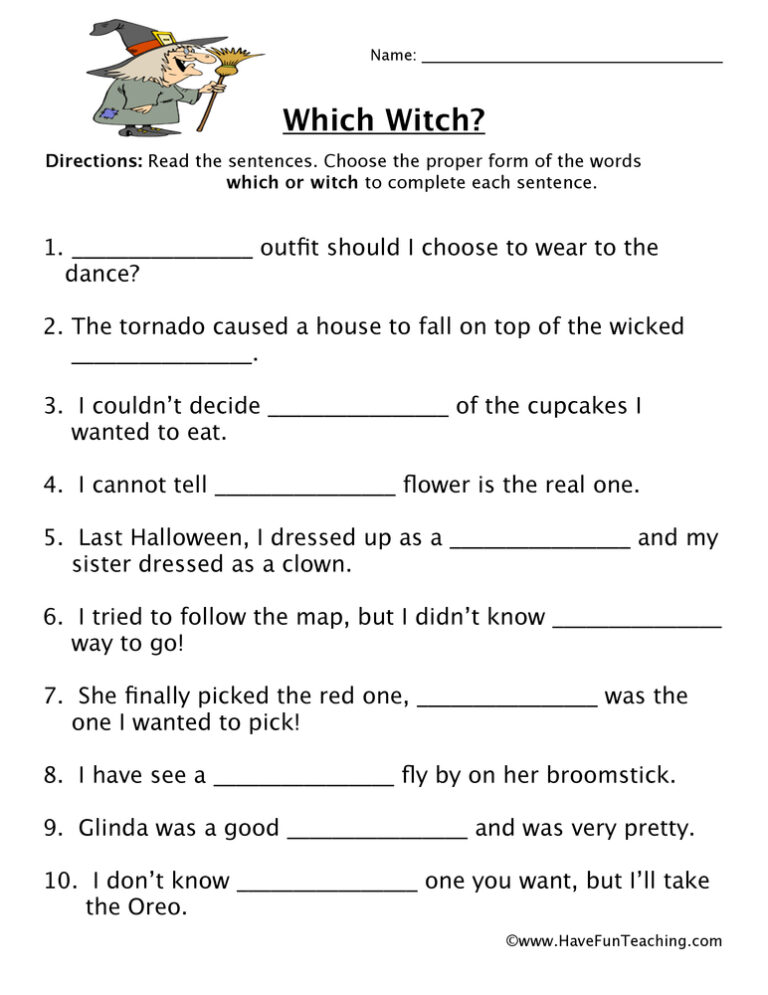
Students use this which, witch homophones worksheet to finish six sentences and then proofread three more, choosing the right word every time. Written for 2nd Grade, with an answer key included, so practice stays quick and clear.

This Words with Multiple Meanings Worksheet gives 2nd Grade students six sentences and three meaning pairs to solve, with an answer key included, so they learn to let sentence context decide which meaning fits.
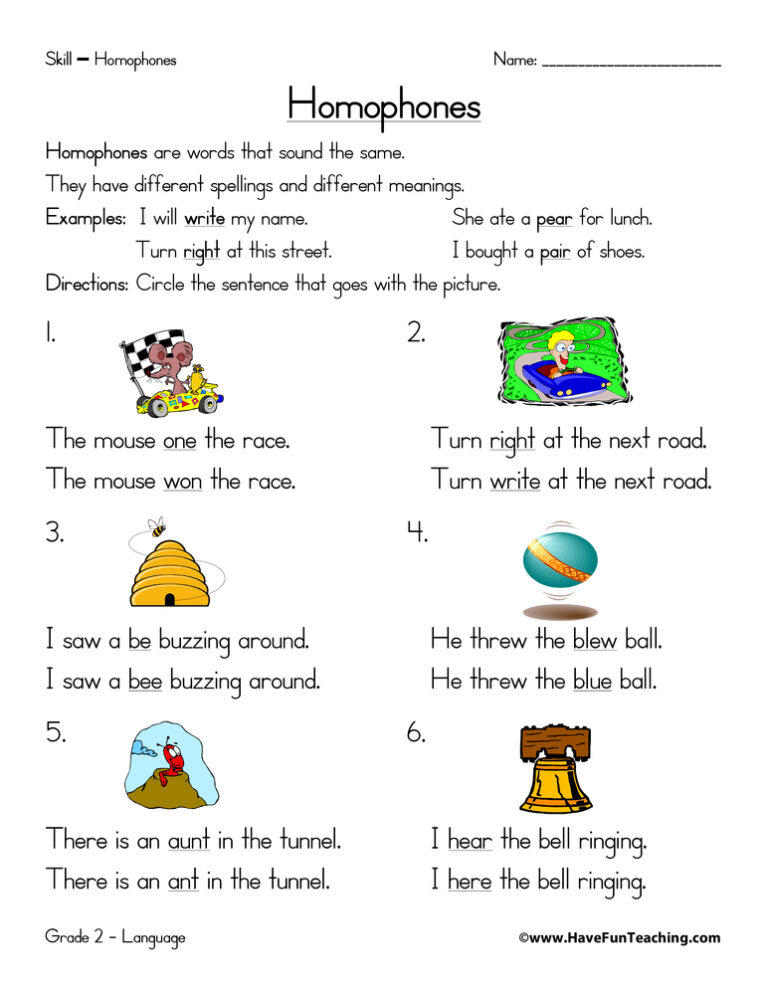
The Circle the Best Homophone Worksheet gives 2nd grade students four sentences to solve by circling the correct homophone, plus a word box section and an answer key, so tricky spellings finally make sense.
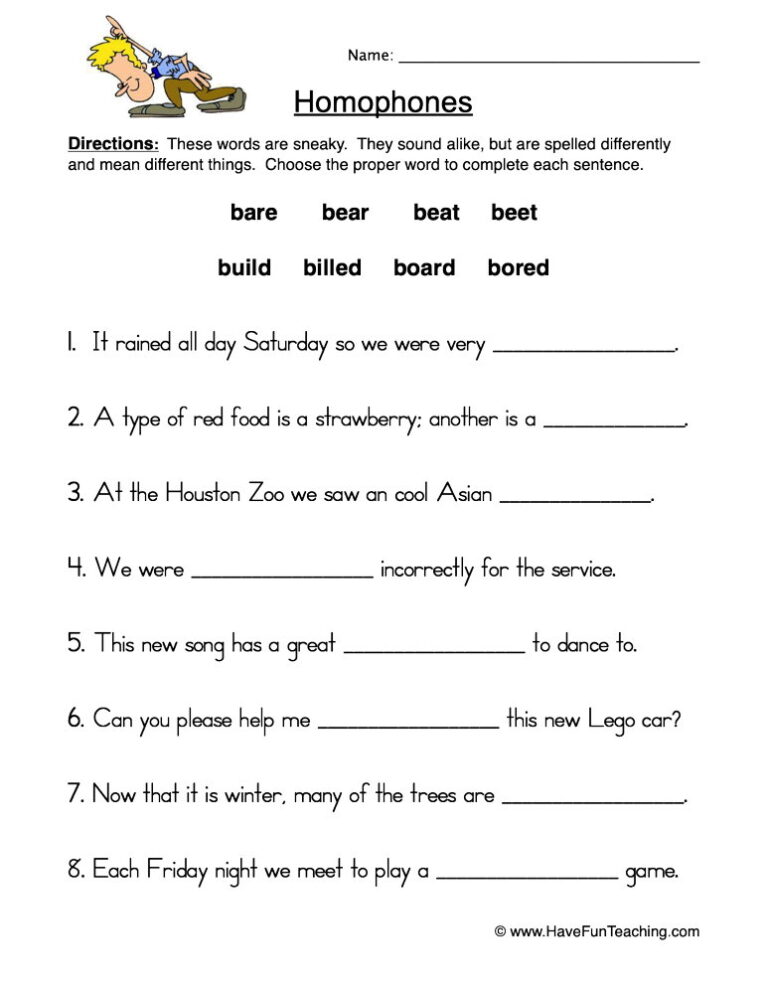
This fill in the blank homophones worksheet lets 2nd graders circle and write the correct homophone in each sentence. An answer key is included, making practice quick to check and easy to repeat.

Using Double Dip Homographs Activity, students match each cone with the two sentences using the same homographs.
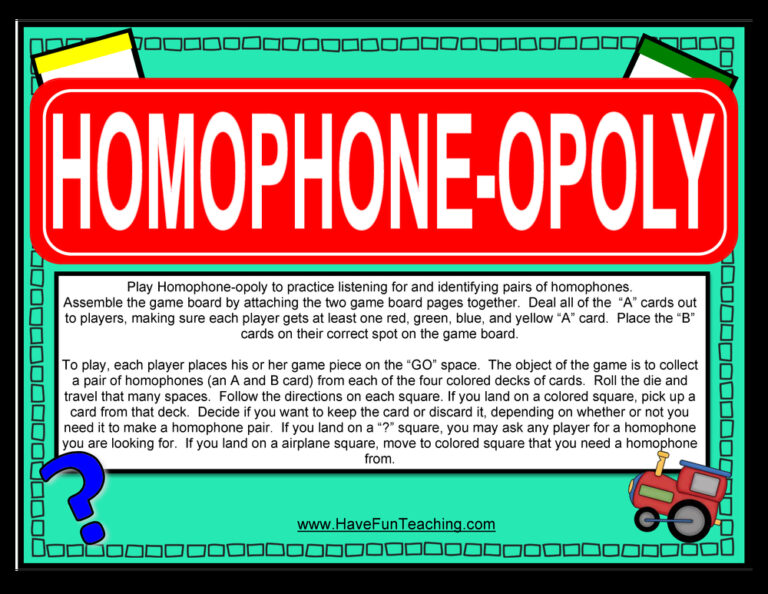
Using Homophoneopoly Homophones Activity, students play Homophone-opoly to practice listening for and identifying pairs of homophones.
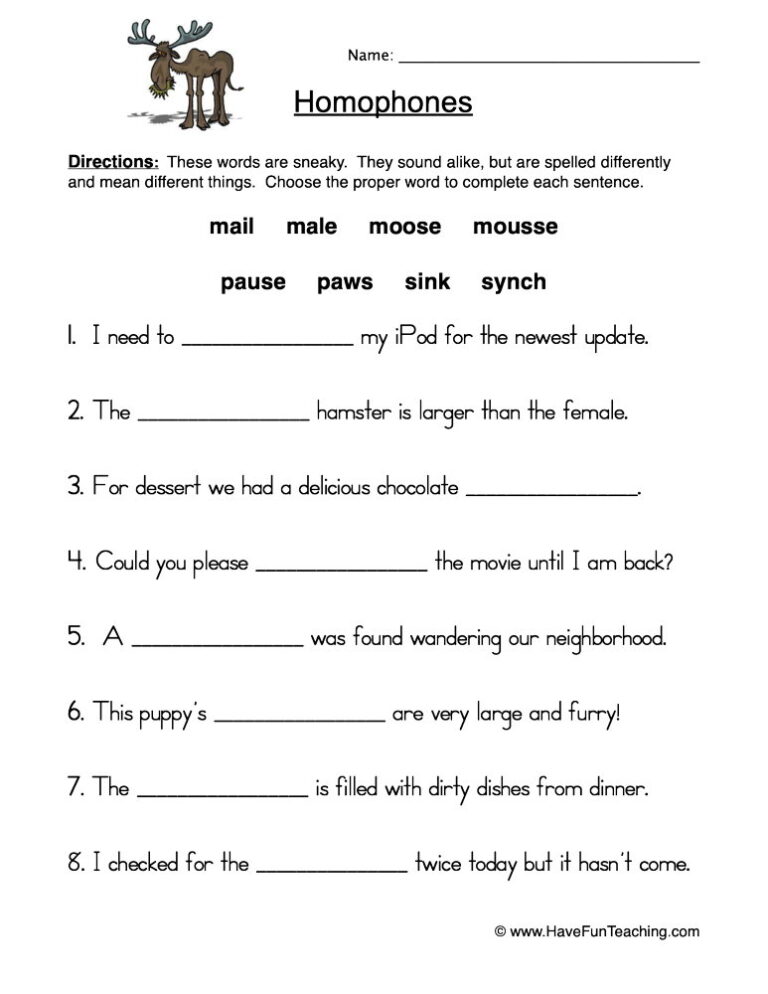
This using homophones worksheet has 2nd graders circle and write the correct homophone to finish each sentence. An answer key is included, so checking work is quick and practice builds real spelling confidence.

Using Get The Scoop On Confusing Words Activity, students match each cone with the with the confusing word that completes the sentence.
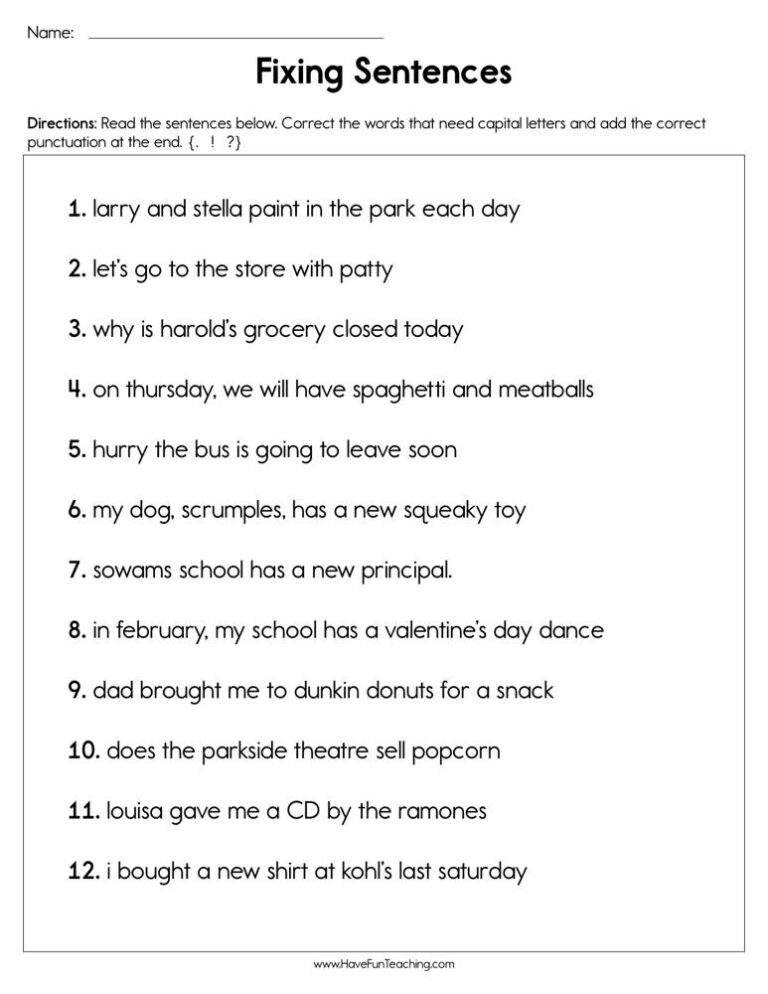
This editing sentences worksheet gives 2nd graders eight sentences to rewrite with the correct capital letters and end marks. Includes a complete answer key—perfect for quick, no-prep proofreading practice at home or school.
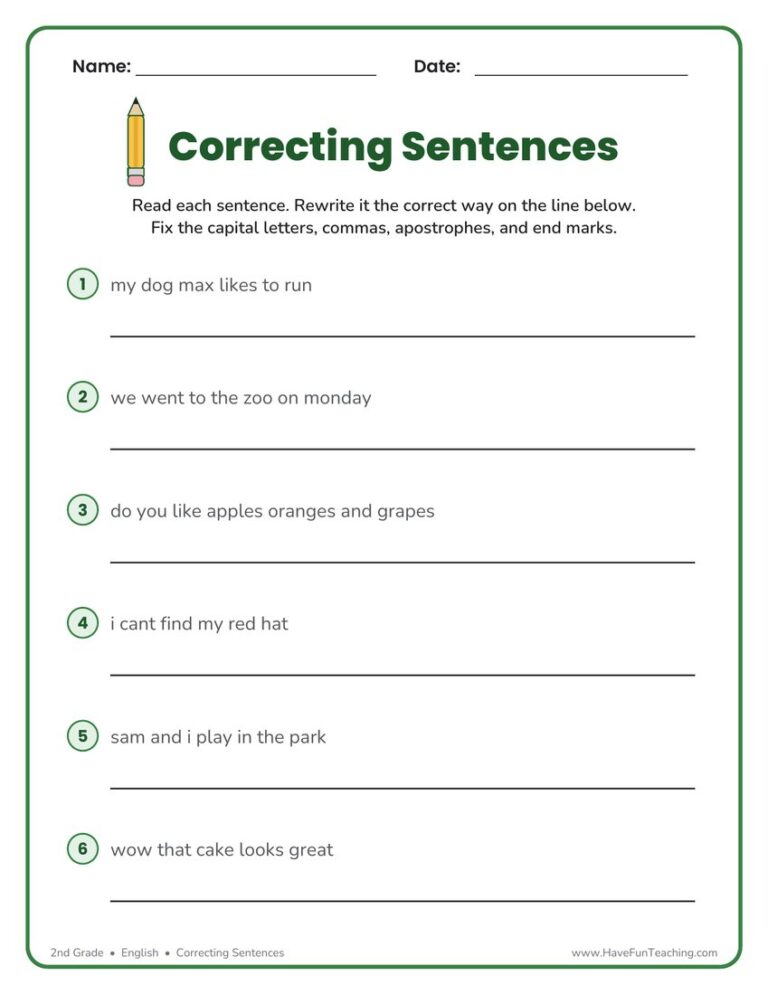
A 2nd grade correcting sentences worksheet where students rewrite six sentences to fix capital letters, commas, apostrophes, and end marks. Includes an answer key for quick, no-prep proofreading practice.
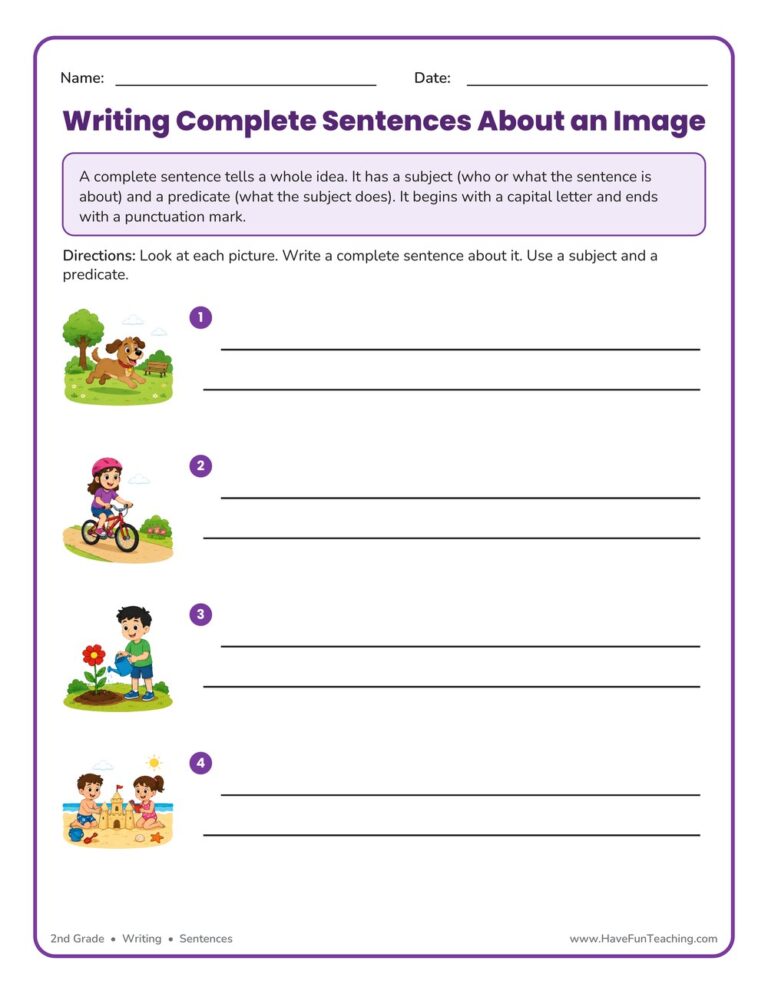
This Writing Complete Sentences About an Image Worksheet gives 2nd graders four picture prompts to practice building sentences with a subject and predicate. Includes sample answers — great for no-prep grammar and writing practice.
Reviews
There are no reviews yet