Skip to content
Start My 3 Free Days $0 today · cancel anytime

2nd Grade Homophones Resources

10 2nd grade homophones resources: 7 worksheets and 3 activities. How teachers use these

2nd Grade Homophones Resources

10 2nd grade homophones resources: 7 worksheets and 3 activities. How teachers use these

Worksheet
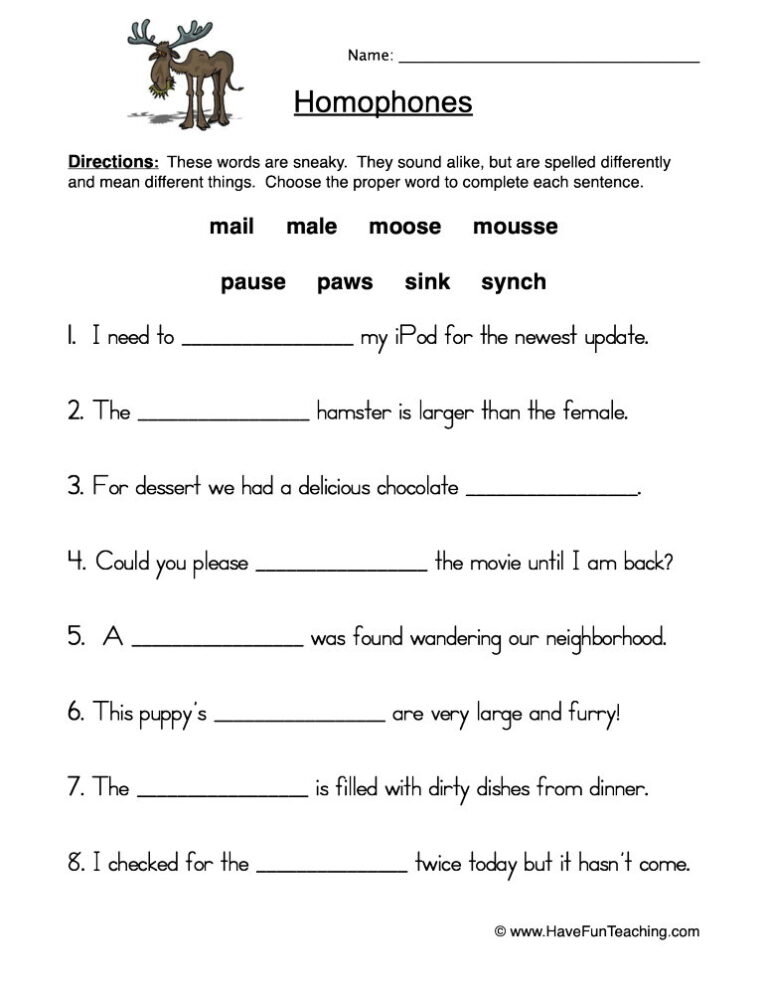
Worksheet2nd GradeSelecting Homophones Worksheet

A 2nd grade Selecting Homophones Worksheet where students choose the correct homophone to complete each sentence using context clues. Includes a complete answer key for quick, no-prep grammar practice at home or school.

Worksheet
Worksheet2nd GradeTheir, There, They're Homophones Worksheet

This Their, There, They're Homophones Worksheet gives 2nd graders friendly practice choosing the right word to complete each sentence, with a handy meaning box and a complete answer key included for fast, no-prep review.

Worksheet
Worksheet2nd GradeWords with Multiple Meanings Worksheet

This Words with Multiple Meanings Worksheet gives 2nd Grade students six sentences and three meaning pairs to solve, with an answer key included, so they learn to let sentence context decide which meaning fits.

Worksheet
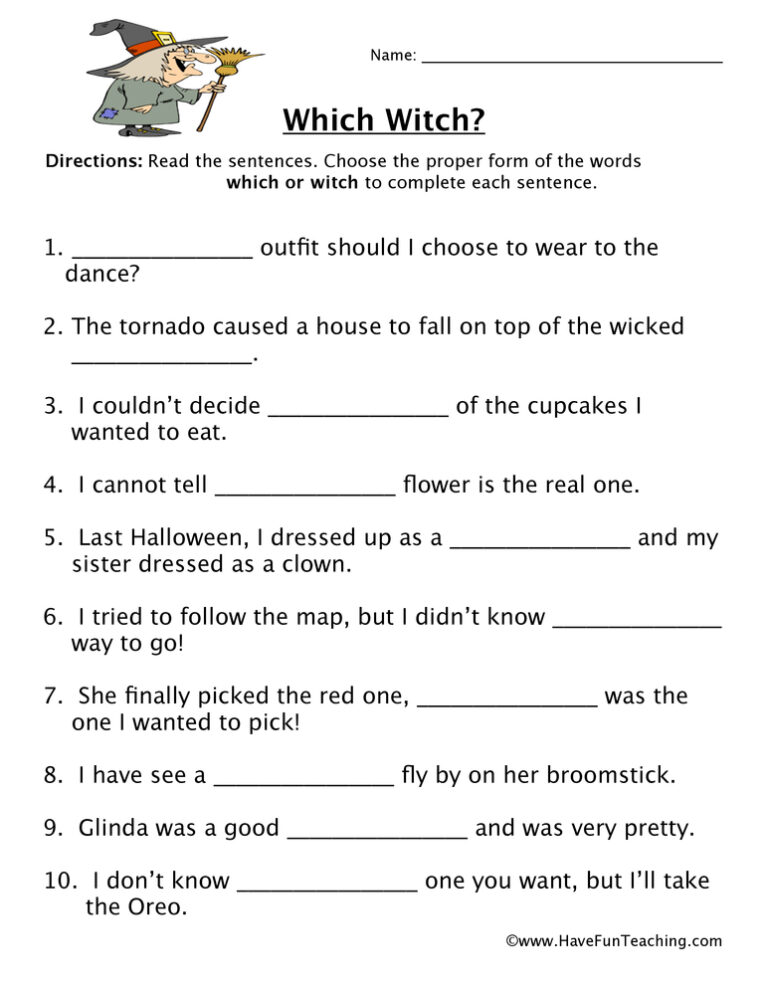
Worksheet2nd GradeWhich, Witch Homophones Worksheet

Students use this which, witch homophones worksheet to finish six sentences and then proofread three more, choosing the right word every time. Written for 2nd Grade, with an answer key included, so practice stays quick and clear.

Worksheet
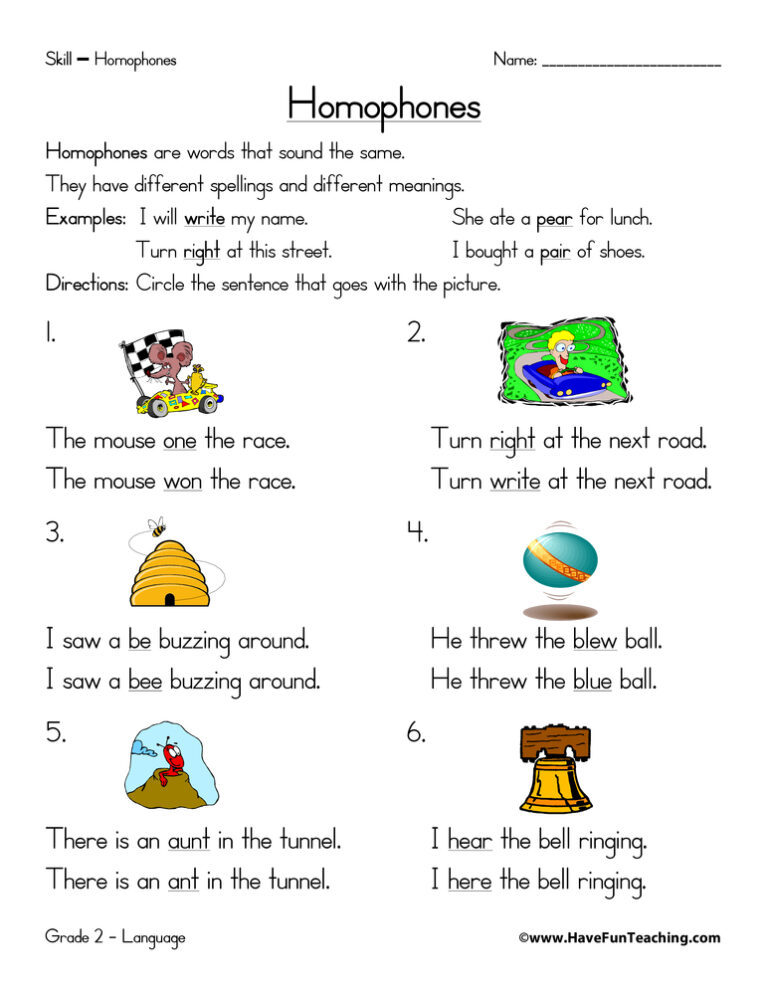
Worksheet2nd GradeCircle the Best Homophone Worksheet

The Circle the Best Homophone Worksheet gives 2nd grade students four sentences to solve by circling the correct homophone, plus a word box section and an answer key, so tricky spellings finally make sense.

Activity
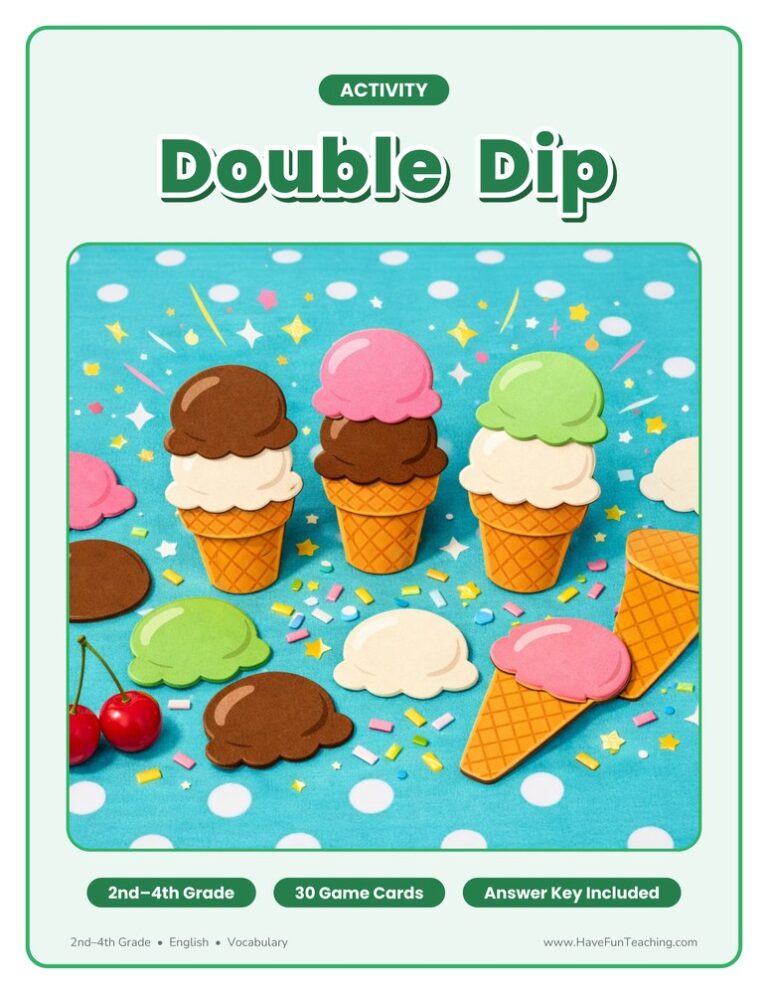
Activity2nd GradeDouble Dip Homographs Activity

This double dip homographs activity for 2nd to 4th Grade has kids match cone words to two scoop sentences, one for each meaning. Answer key included for quick checking.

Worksheet
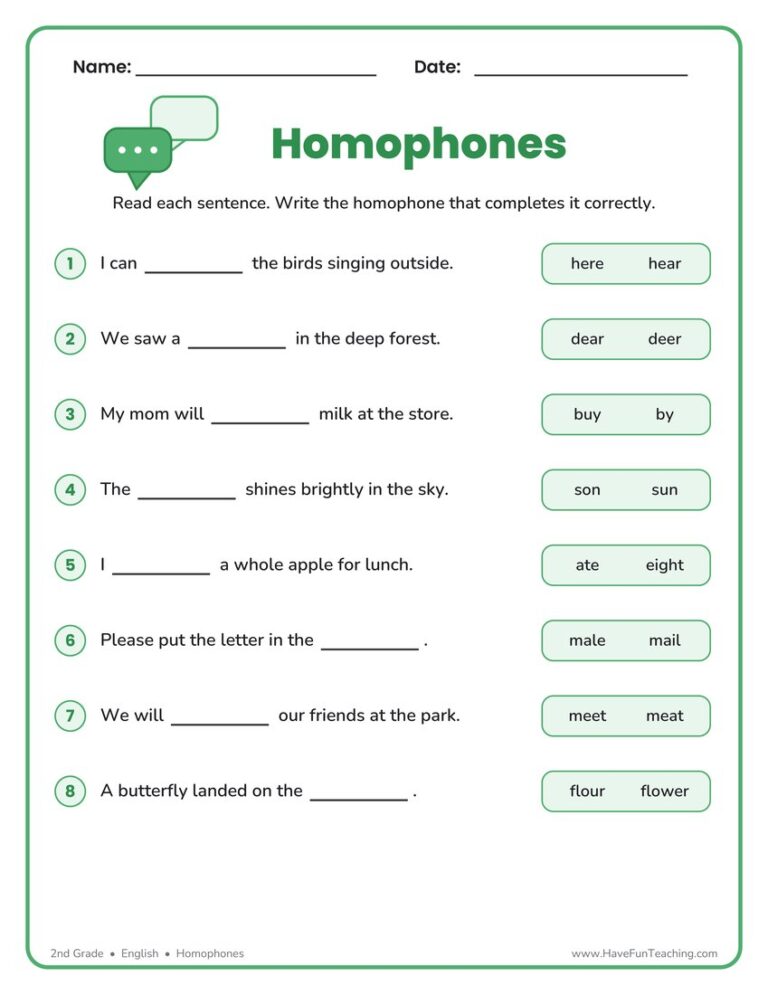
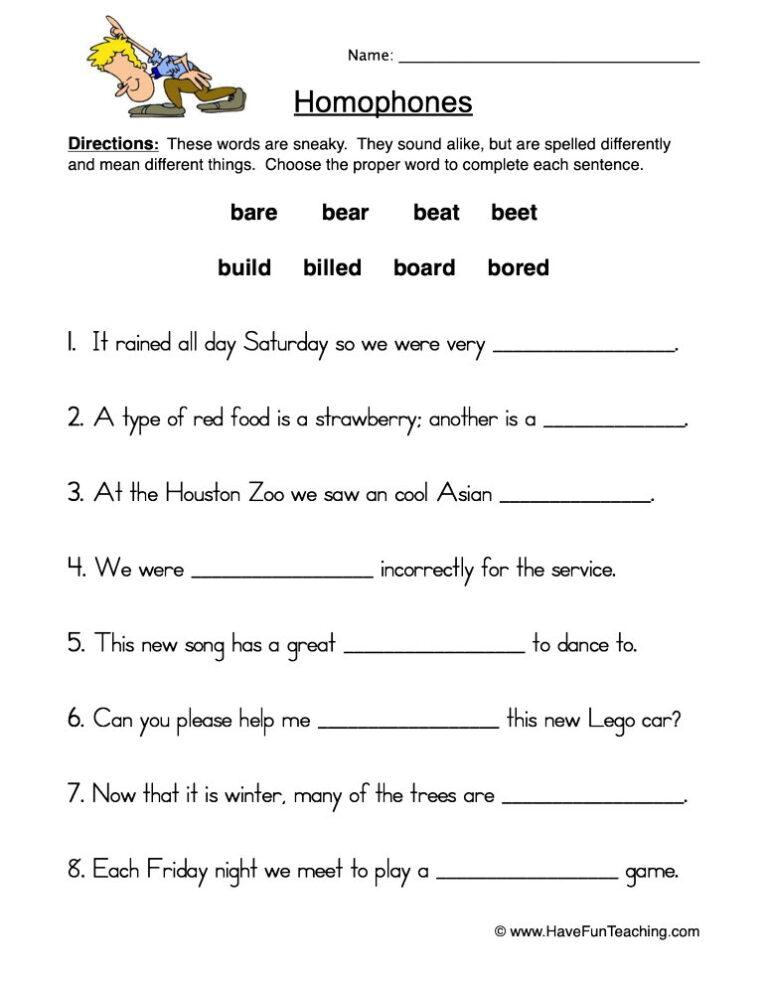
Worksheet2nd GradeUsing Homophones Worksheet

This using homophones worksheet has 2nd graders circle and write the correct homophone to finish each sentence. An answer key is included, so checking work is quick and practice builds real spelling confidence.

Worksheet
Worksheet2nd GradeFill in the Blank Homophones Worksheet

This fill in the blank homophones worksheet lets 2nd graders circle and write the correct homophone in each sentence. An answer key is included, making practice quick to check and easy to repeat.

Activity
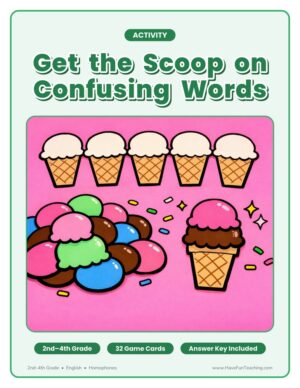
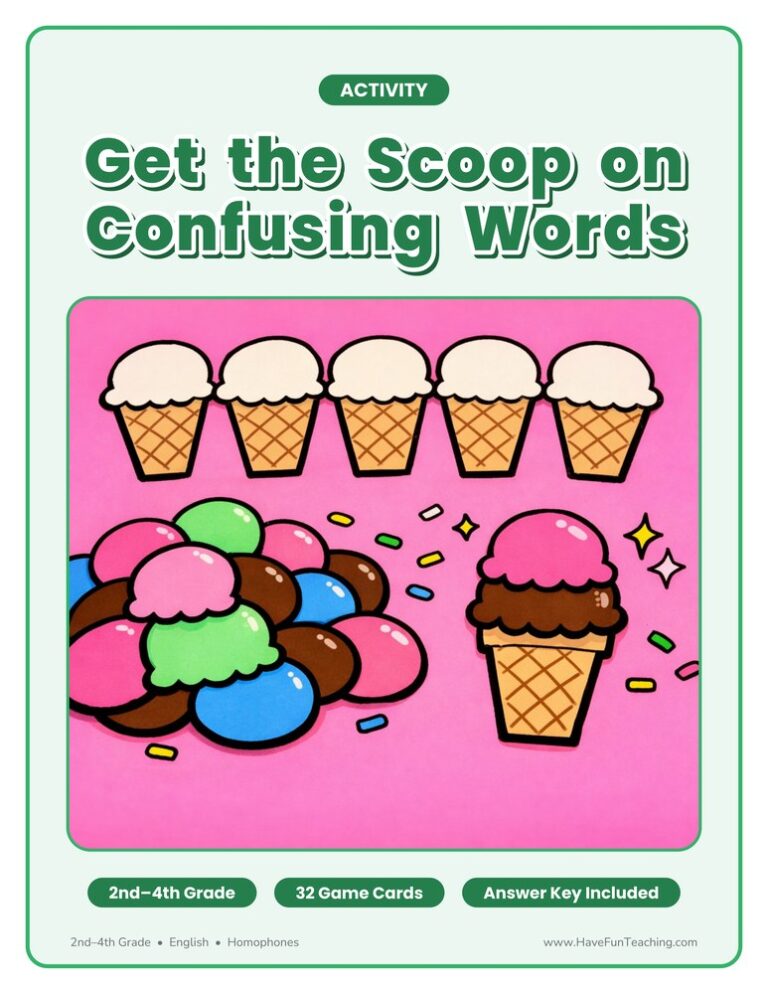
Activity2nd GradeGet The Scoop On Confusing Words Activity

This get the scoop on confusing words activity has 2nd to 4th grade students match ice cream cone sentences to the homophone scoop that completes them. Answer key included.

Activity
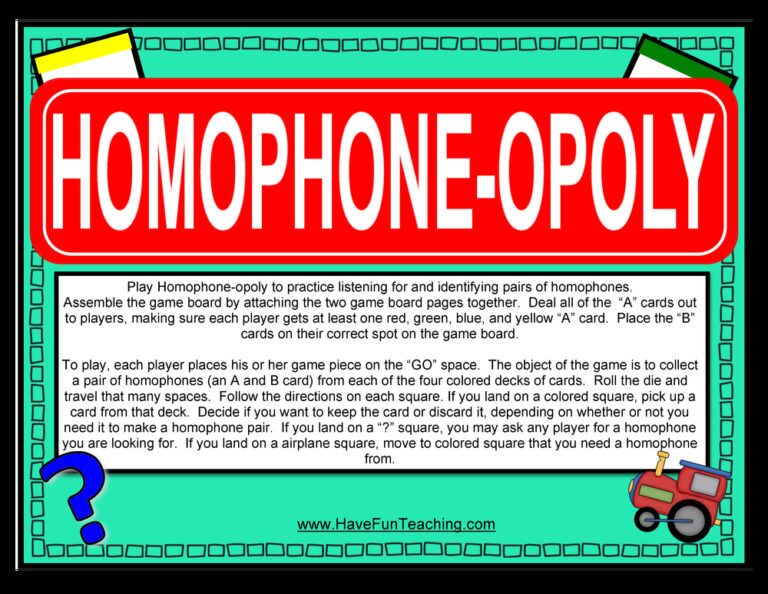
Activity2nd GradeHomophoneopoly Homophones Activity

Using Homophoneopoly Homophones Activity, students play Homophone-opoly to practice listening for and identifying pairs of homophones.

From our teachers' playbook

Same sound, different word!

What do 2nd graders learn about homophones?

Homophones are words that sound the same but have different meanings and spellings, like see and sea, or night and knight. Second graders learn to read the sentence around a homophone to figure out which one fits: "I ate eight grapes!" The tricky trio their, there and they're often shows up now, along with to, too and two. Kids also meet multiple-meaning words, like bat (the animal or the baseball bat). The click happens when a child giggles at a sentence like "The bare ate a pair."

Our favorite ways to teach homophones

Homophones are best learned in sentences and with a sense of humor. These moves use both.

Draw the difference

Kids fold a paper in half and draw each homophone on one side: a pear and a pair of socks, a flower and a bag of flour. A picture gives them a memory hook for each spelling.

Why it works: children learn more from words and pictures together than from words alone (Mayer, 2009).

Using Homophones WorksheetTry it withUsing Homophones WorksheetWorksheetsOpen it →

Their, there, they're tricks

Teach one clue for each: there has "here" in it (a place), their has "heir" (belongs to someone), they're means "they are." Model each one in a sentence, then kids test every example by swapping in "they are."

Why it works: handing over the work step by step, from teacher to student, is one of the most widely used teaching frameworks (Pearson and Gallagher, 1983).

Their, There, They're Homophones WorksheetTry it withTheir, There, They're Homophones WorksheetWorksheetsOpen it →

Pick the right one

Read sentences with a blank and two homophone choices. Kids hold up card A or B. Quick whole-class checks show you which pairs still need practice.

Why it works: a big review of study methods ranked quick self-quizzing among the most powerful ways to remember (Dunlosky and colleagues, 2013).

Circle the Best Homophone WorksheetTry it withCircle the Best Homophone WorksheetWorksheetsOpen it →

Questions parents and teachers ask about homophones

What are homophones for 2nd graders?

Homophones are words that sound the same but have different spellings and meanings. Common examples are to, too and two; see and sea; and their, there and they're.

What is the difference between homophones and homographs?

Homophones sound the same but are spelled differently, like flour and flower. Homographs are spelled the same but have different meanings, like bat the animal and bat for baseball.

How do I help my child remember homophones?

Draw a picture for each word and use it in a funny sentence. Practicing one pair at a time works better than a big list.

Why are their, there and they're so hard?

They sound exactly alike and are all very common. A simple test helps: if "they are" fits, use they're. If it is a place, use there. If it belongs to someone, use their.