

Fill in the Blank Homophones Worksheet
This fill in the blank homophones worksheet lets 2nd graders circle and write the correct homophone in each sentence. An answer key is included, making practice quick to check and easy to repeat.
$6.97
Or free with a membership — members pay $3.33/mo for all 10,000+ resources. See plans
Want this one free?
Tell us where to send it and it’s yours — no card, no catch.
One free resource per teacher. We’ll also send free teaching ideas each week — unsubscribe anytime.
Teaching is easier with a membership
Unlimited printables, games & videos for PreK–6th — for your classroom or homeschool. Cancel anytime.
Start your 3-day free trial$0 today · cancel anytime · Instant access to 10,000+ resources
About this resource
Description
This fill in the blank homophones worksheet helps second graders tell apart words that sound the same but have different spellings and meanings. Homophones such as two and to, see and sea, or blew and blue trip up young writers all the time, because the ear cannot tell them apart. The only way to choose the right word is to read the whole sentence and think about what it means.
Students begin by reading four short sentences and circling the homophone that correctly completes each one. Next, they use a word box to fill in the blank in four more sentences, writing bear, tail, night or eight on each line. A worked example at the top models the task, and a friendly kite illustration keeps the page cheerful. Use it for independent practice, a quick check after a lesson, or homework.
What’s Included
- One printable 2nd grade homophones worksheet
- Part A: circle the correct homophone in four sentences
- Part B: fill in the blank from a word box in four sentences
- A complete answer key
Why This Worksheet Helps Kids
First, it builds the habit of using context to pick a spelling, which is exactly how strong readers handle homophones. Second, it pairs recognition with writing, so children both spot the right word and produce it themselves. Third, the sentences are short and on grade level, so students can focus on word meaning instead of struggling to decode.
Ideas for Teachers and Parents
After the sheet is finished, ask children to say a sentence out loud for the other word in each pair, such as sea and see. You can also make homophone flash cards, play a quick “which spelling?” game on the board, or have students hunt for homophones in a favorite book. This 2nd grade homophones worksheet works well in literacy centers, small groups, and morning work.
Related Resources
What teachers say
Reviews
You must be logged in to post a review.

This Their, There, They're Homophones Worksheet gives 2nd graders friendly practice choosing the right word to complete each sentence, with a handy meaning box and a complete answer key included for fast, no-prep review.
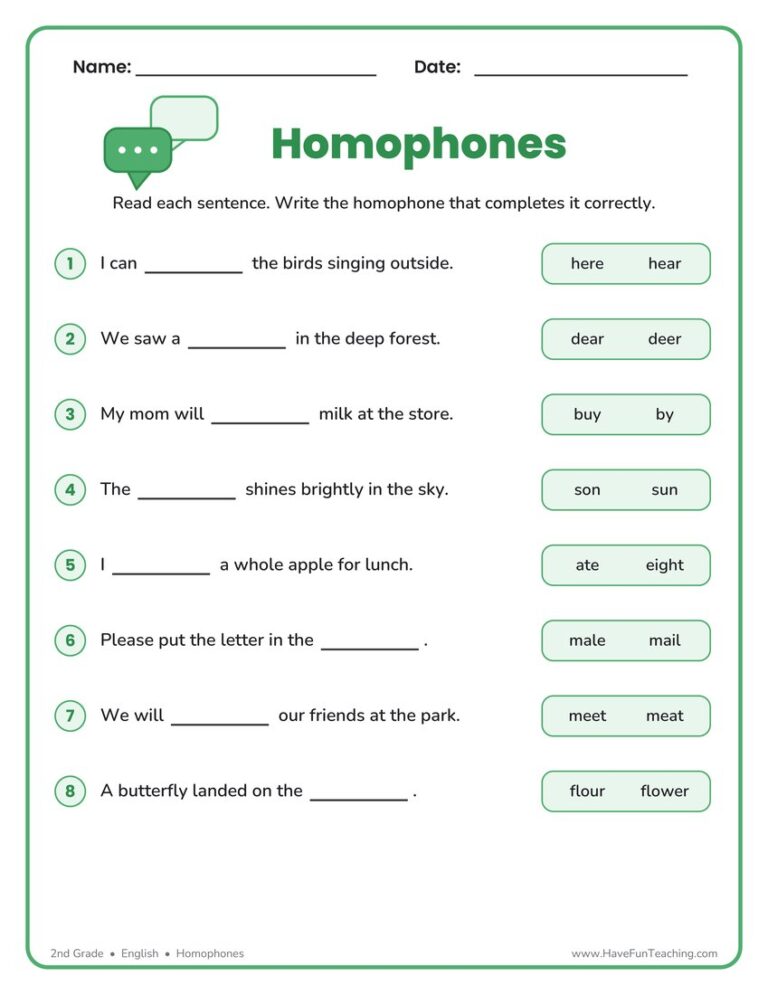
A 2nd grade Selecting Homophones Worksheet where students choose the correct homophone to complete each sentence using context clues. Includes a complete answer key for quick, no-prep grammar practice at home or school.
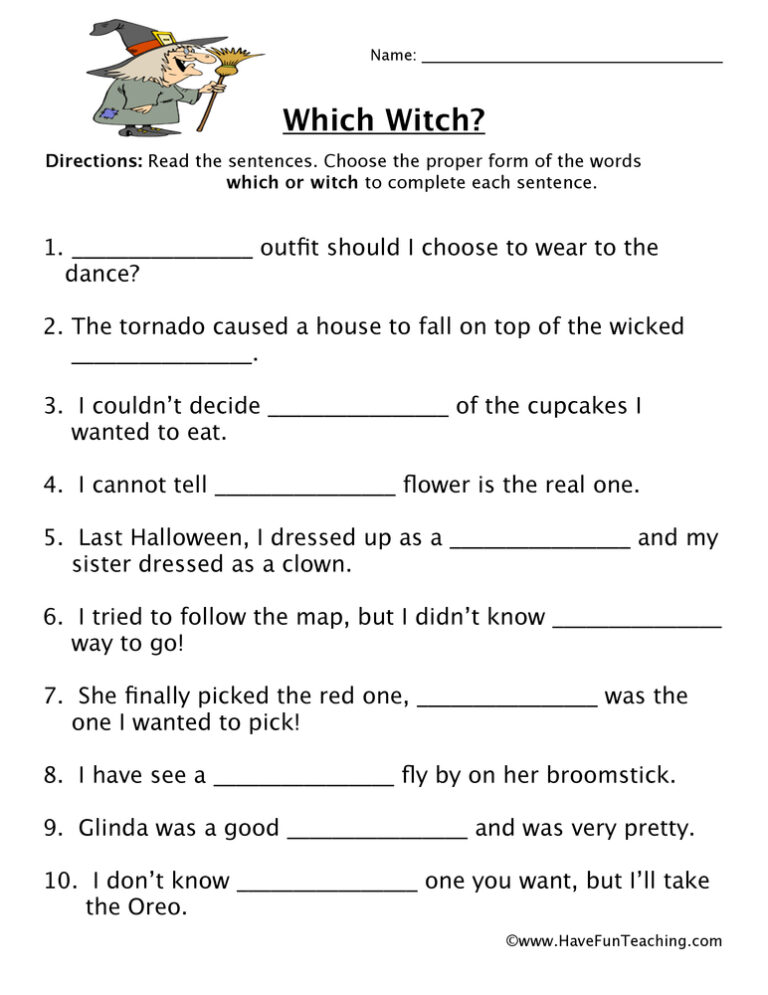
Students use this which, witch homophones worksheet to finish six sentences and then proofread three more, choosing the right word every time. Written for 2nd Grade, with an answer key included, so practice stays quick and clear.

This Words with Multiple Meanings Worksheet gives 2nd Grade students six sentences and three meaning pairs to solve, with an answer key included, so they learn to let sentence context decide which meaning fits.
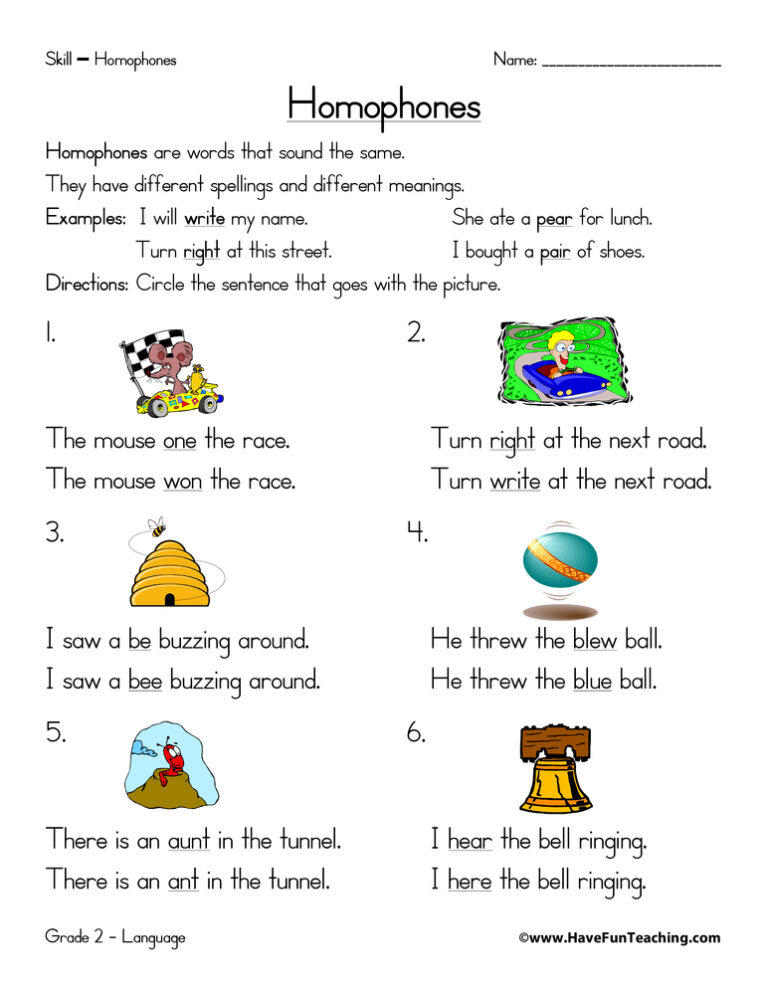
The Circle the Best Homophone Worksheet gives 2nd grade students four sentences to solve by circling the correct homophone, plus a word box section and an answer key, so tricky spellings finally make sense.

Using Writing with Homophones Worksheet, students write sentences with three homophones that show their different definitions.

Using Double Dip Homographs Activity, students match each cone with the two sentences using the same homographs.
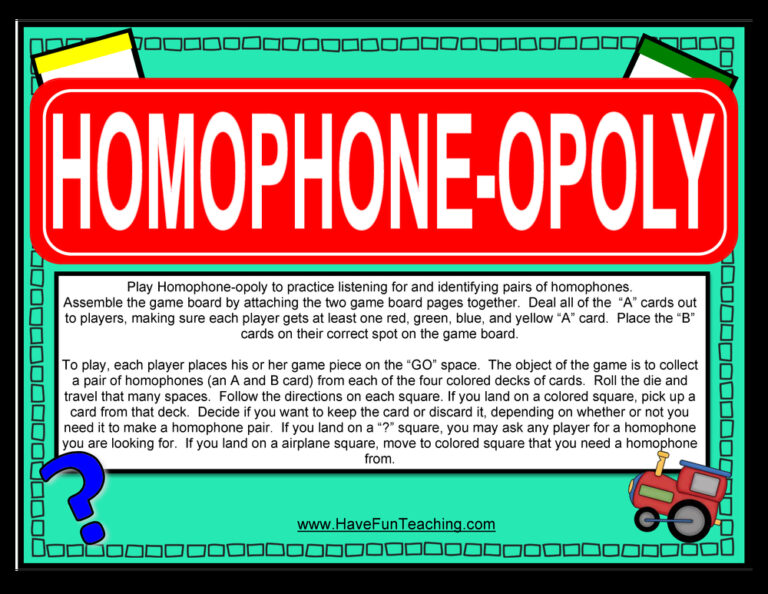
Using Homophoneopoly Homophones Activity, students play Homophone-opoly to practice listening for and identifying pairs of homophones.
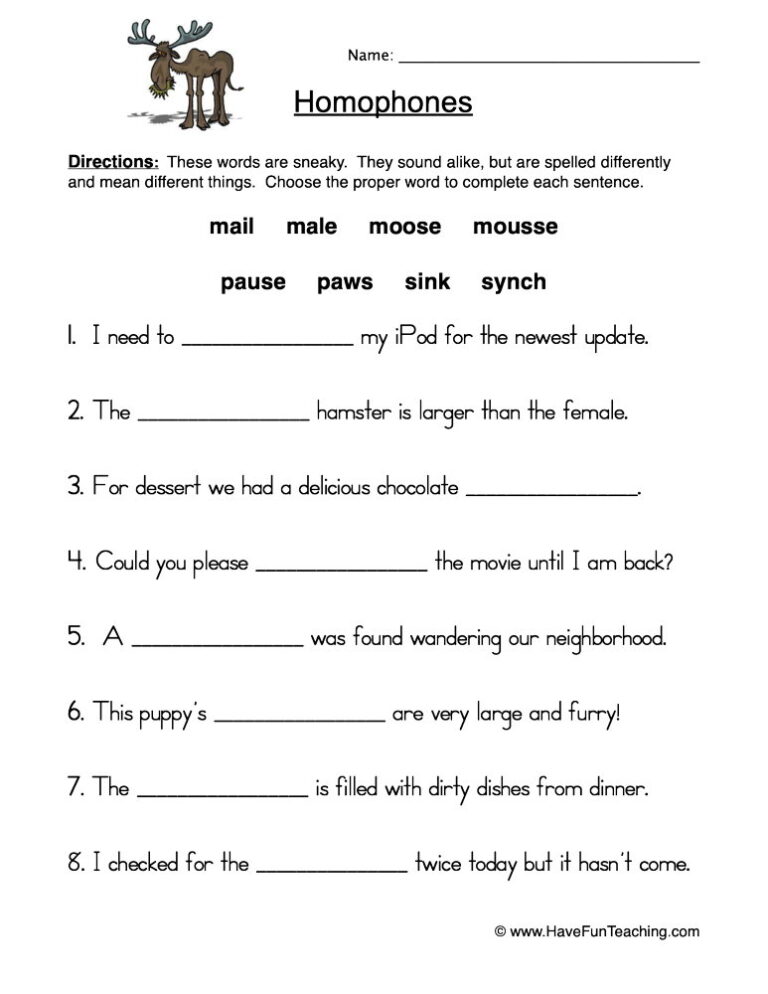
This using homophones worksheet has 2nd graders circle and write the correct homophone to finish each sentence. An answer key is included, so checking work is quick and practice builds real spelling confidence.

Using Get The Scoop On Confusing Words Activity, students match each cone with the with the confusing word that completes the sentence.
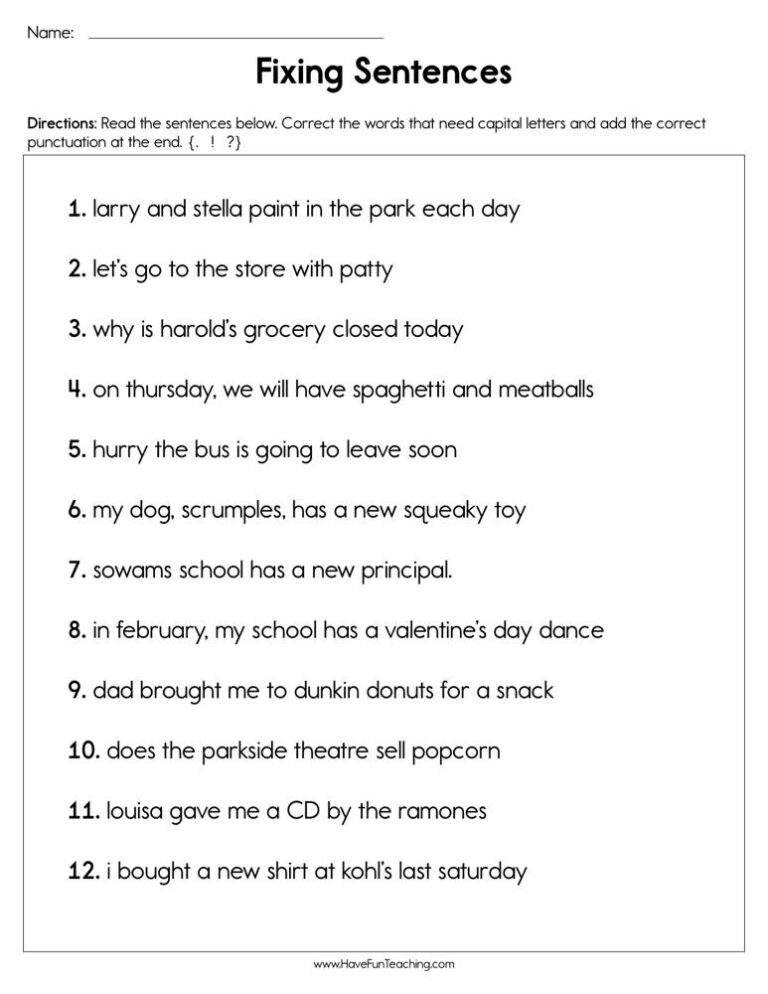
This editing sentences worksheet gives 2nd graders eight sentences to rewrite with the correct capital letters and end marks. Includes a complete answer key—perfect for quick, no-prep proofreading practice at home or school.
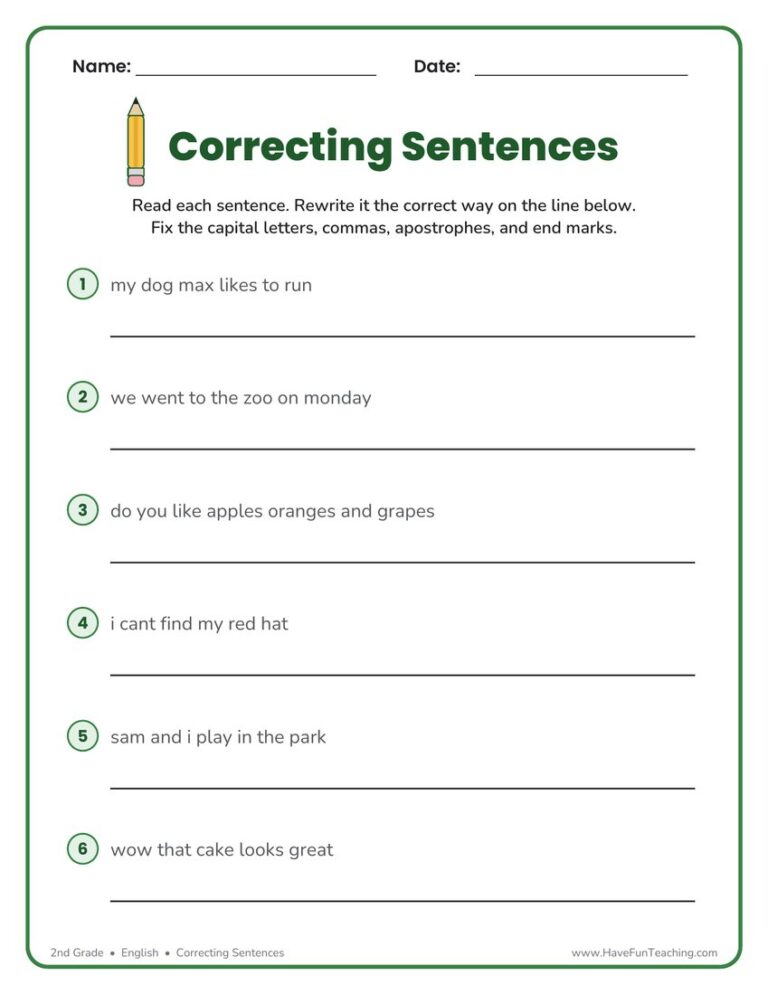
A 2nd grade correcting sentences worksheet where students rewrite six sentences to fix capital letters, commas, apostrophes, and end marks. Includes an answer key for quick, no-prep proofreading practice.
Reviews
There are no reviews yet