
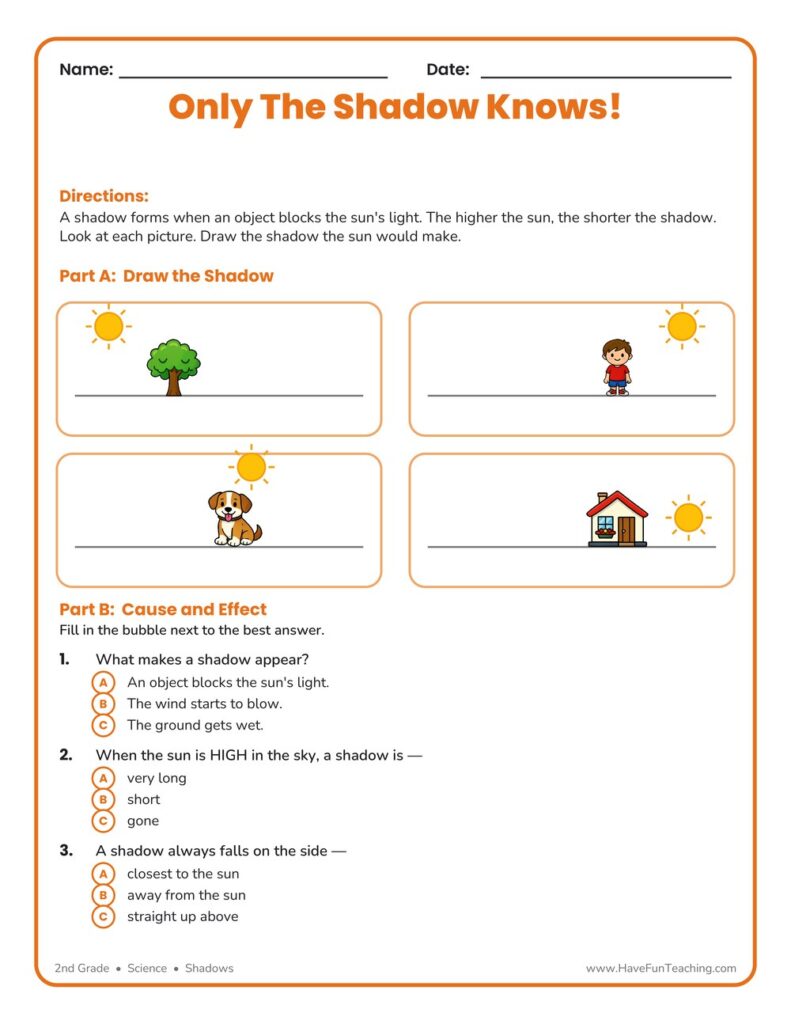
Shadows Worksheet
A hands-on Shadows Worksheet where 2nd graders draw each object’s shadow based on the sun’s position and explore how light causes shadows. Complete answer key included for quick, no-prep science practice.
$6.97
Or free with a membership — members pay $3.33/mo for all 10,000+ resources. See plans
Want this one free?
Tell us where to send it and it’s yours — no card, no catch.
One free resource per teacher. We’ll also send free teaching ideas each week — unsubscribe anytime.
Teaching is easier with a membership
Unlimited printables, games & videos for PreK–6th — for your classroom or homeschool. Cancel anytime.
Start your 3-day free trial$0 today · cancel anytime · Instant access to 10,000+ resources
About this resource
Description
A shadow appears whenever an object blocks light from the sun, and this Shadows Worksheet helps second graders explore that everyday cause and effect. Children discover that the position of the sun decides both the direction a shadow points and how long or short it becomes. By connecting a cause — the blocked sunlight — to its effect — the shadow — students build a foundation in both science and reading skills.
This printable shadows worksheet is split into two simple parts. In Part A, learners study four pictures (a tree, a child, a dog, and a house), each lit by the sun from a different position, and draw the shadow the sun would create. In Part B, this 2nd grade cause and effect worksheet asks three multiple-choice questions that check whether students understand what makes a shadow, how a high sun makes a short shadow, and which way a shadow always falls. Print it and hand it out for morning work, a science center, or homework.
What’s Included
- 1 print-ready PDF worksheet
- Answer key
- 4 draw-the-shadow pictures and 3 cause and effect questions
There are three big reasons this Shadows Worksheet helps children learn. First, the draw-the-shadow activity turns an abstract idea into something students can see and create with their own pencils. Second, the mix of drawing and multiple-choice questions reaches both visual and analytical learners. Third, the built-in answer key lets kids check their thinking right away, so the cause-and-effect relationship between the sun and a shadow really sticks.
Teachers and parents can extend the lesson in fun, active ways. Take students outside on a sunny day and trace their shadows with chalk in the morning and again at noon to see how a shadow changes. Use a flashlight and small toys indoors to make shadows grow and shrink on the wall. Read the poem “My Shadow” by Robert Louis Stevenson together, or play a game of shadow tag to connect the science to movement and play.
Related Resources
What teachers say
Reviews
You must be logged in to post a review.
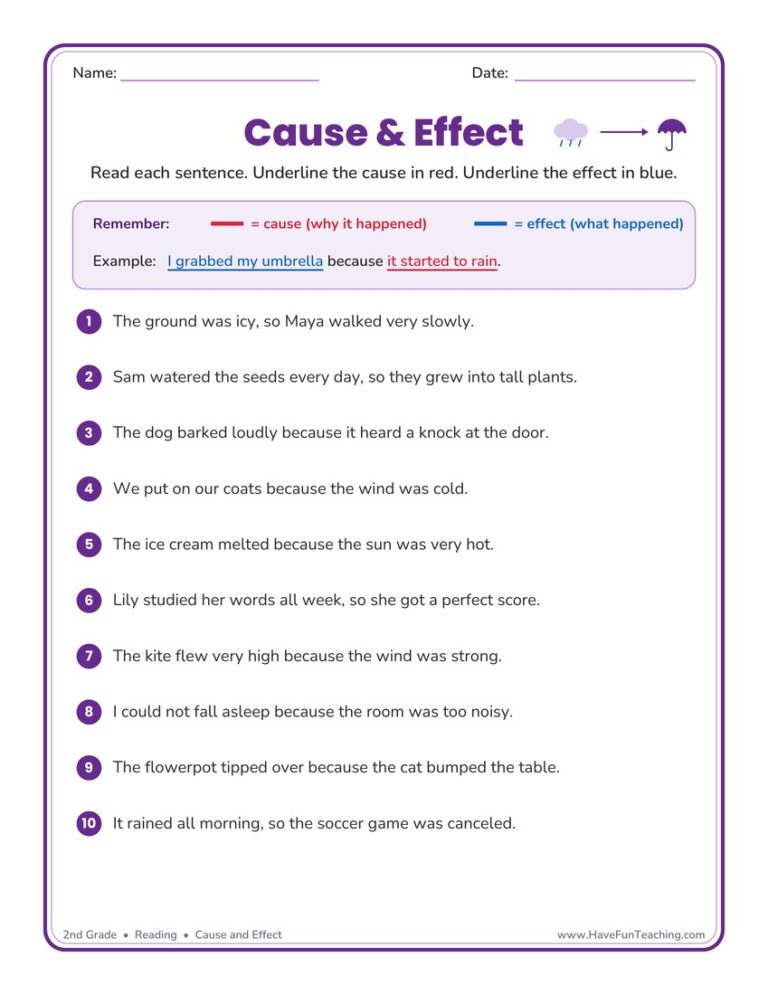
An Identifying Cause and Effect Worksheet where 2nd graders underline each cause in red and each effect in blue across ten simple sentences. Includes a complete answer key for quick, no-prep reading practice.
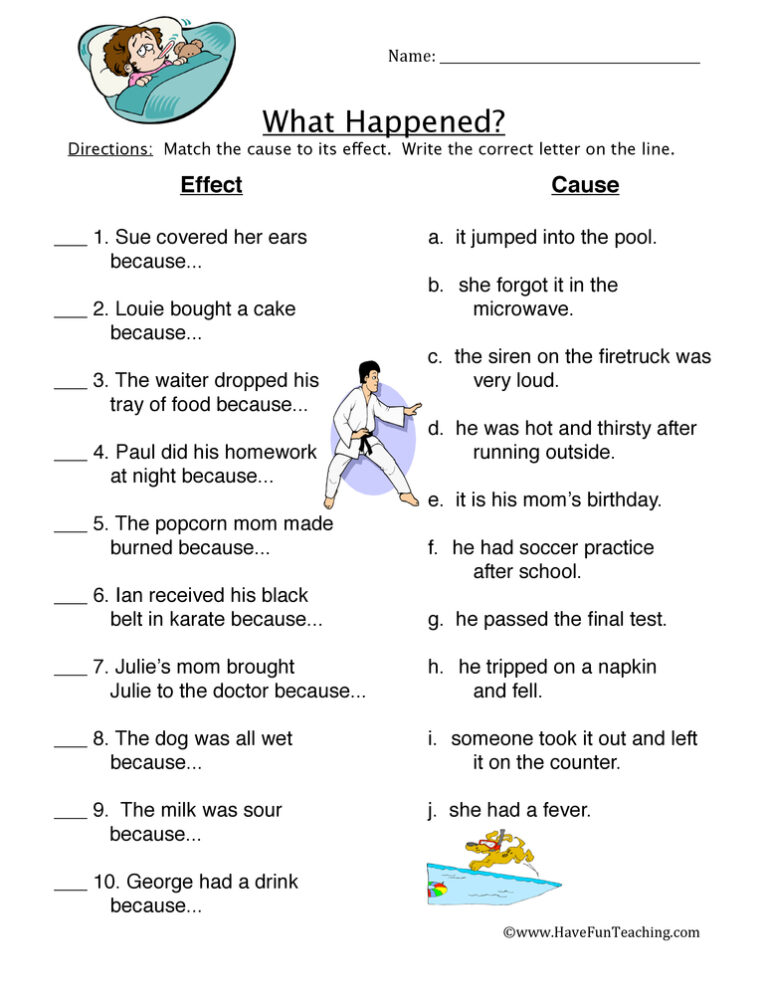
This what happened cause effect worksheet gives 2nd graders five matching pairs and three bubble questions that link each reason to its result. Answer key included, so reading practice is ready in one print.
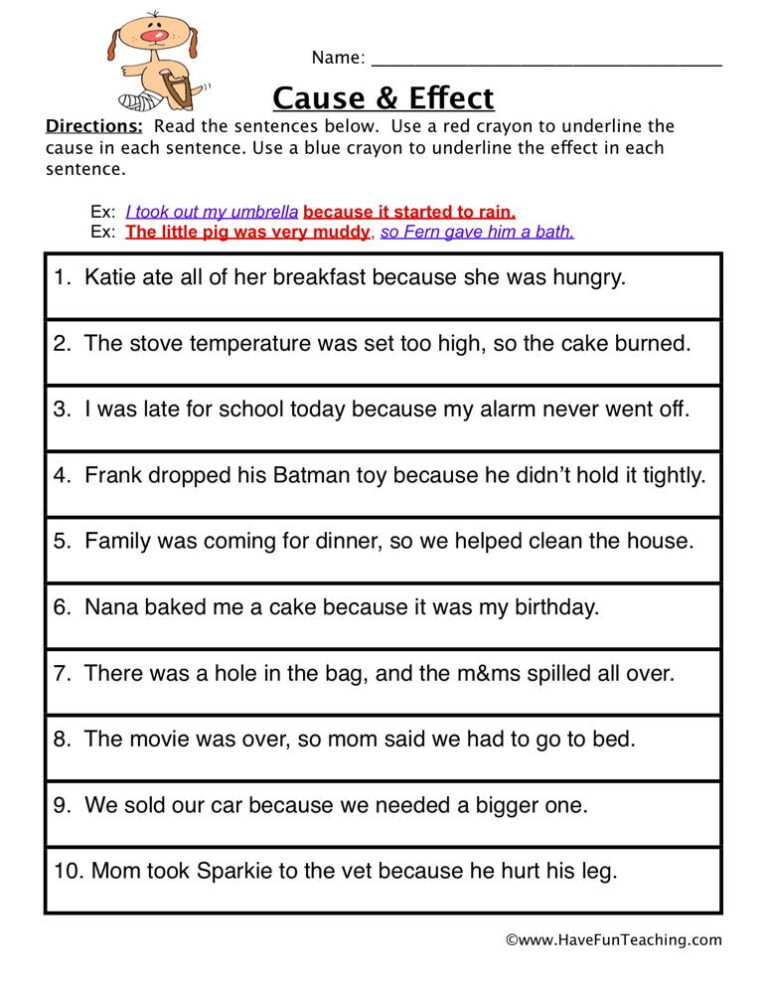
This Cause and Effect Find It Worksheet has 2nd graders underline the cause and circle the effect in each sentence, then match causes to their effects. Includes an answer key for quick, no-prep reading practice.
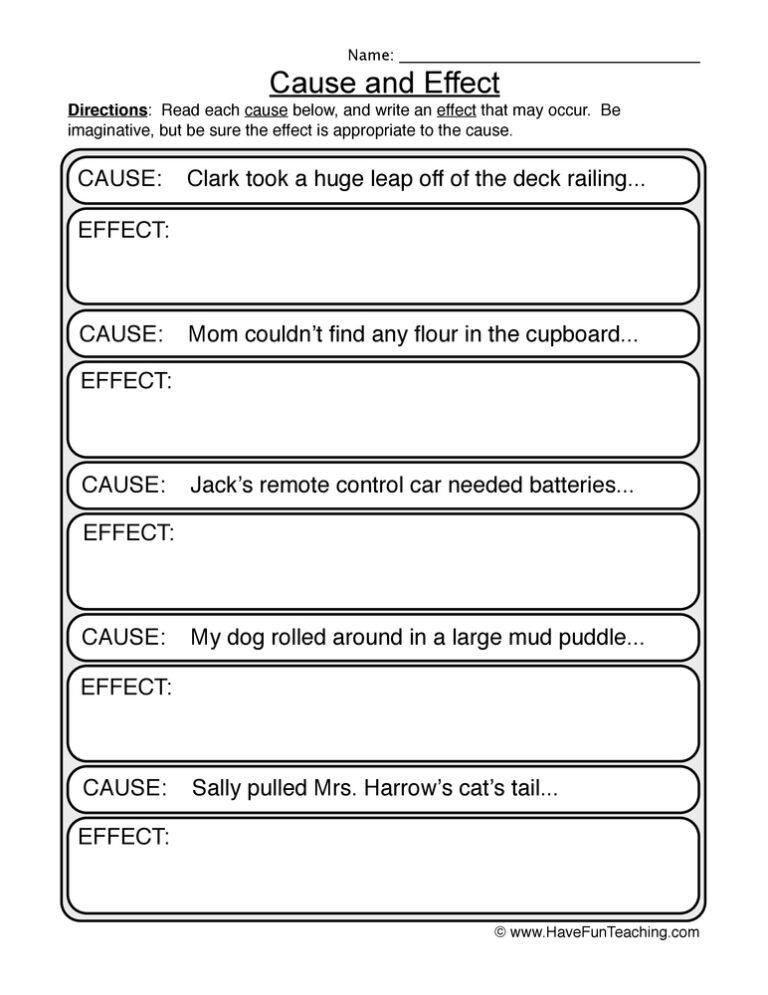
Students use this Find the Effect Cause and Effect Worksheet to match four causes to their effects and write two effects of their own. Built for 2nd grade, with an answer key included for fast, no-prep reading practice.
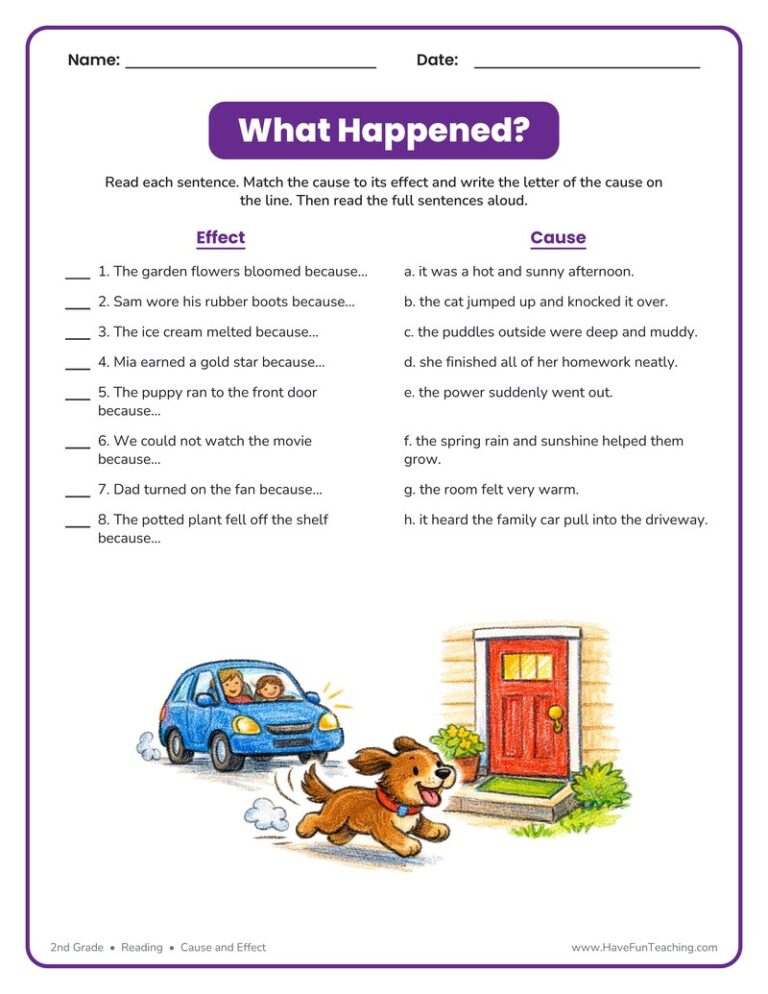
The What Happened Cause Effect Matching Worksheet has 2nd graders match eight everyday effects to their causes, then read the full sentences aloud for fluency. Includes a complete answer key for quick, no-prep reading practice.
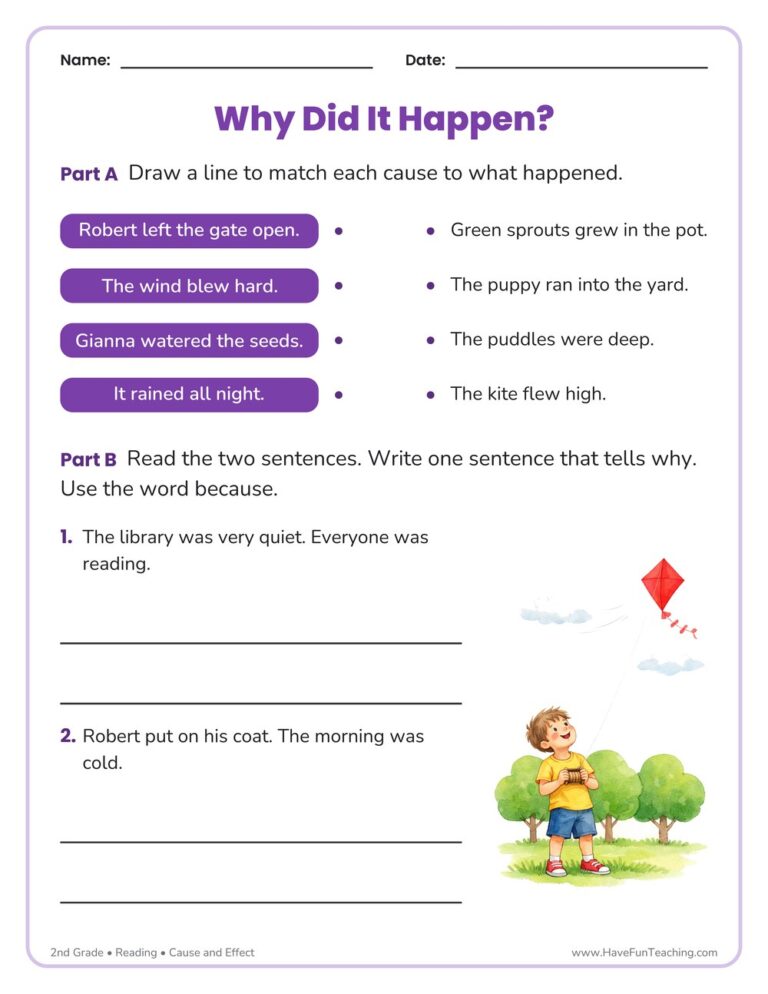
This Why Did It Happen Cause and Effect Worksheet has 2nd Grade students match four causes to their effects, then combine sentence pairs using because. Answer key included for quick, no-prep reading practice.

This what happened? cause and effect worksheet asks 2nd graders to match four causes to their effects and then write two effects in complete sentences. An answer key is included for quick checking.
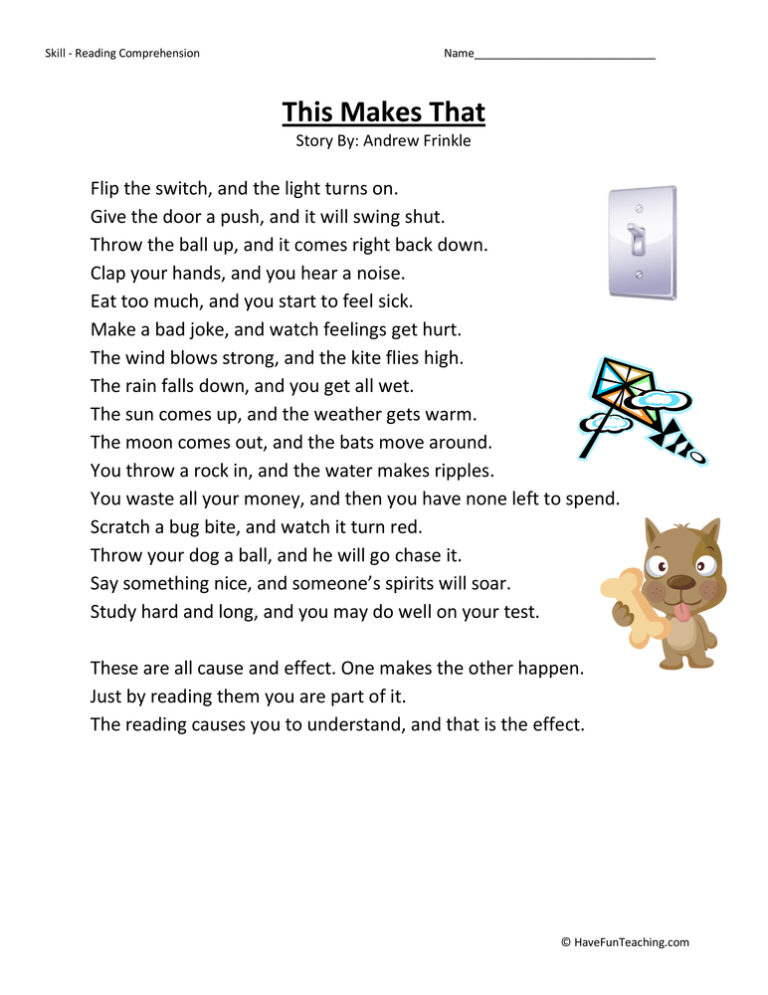
This Makes That Reading Comprehension Worksheet gives 2nd graders an original sunflower story plus five cause-and-effect questions. Answer key included, so one page of reading practice is ready to print and grade in minutes.
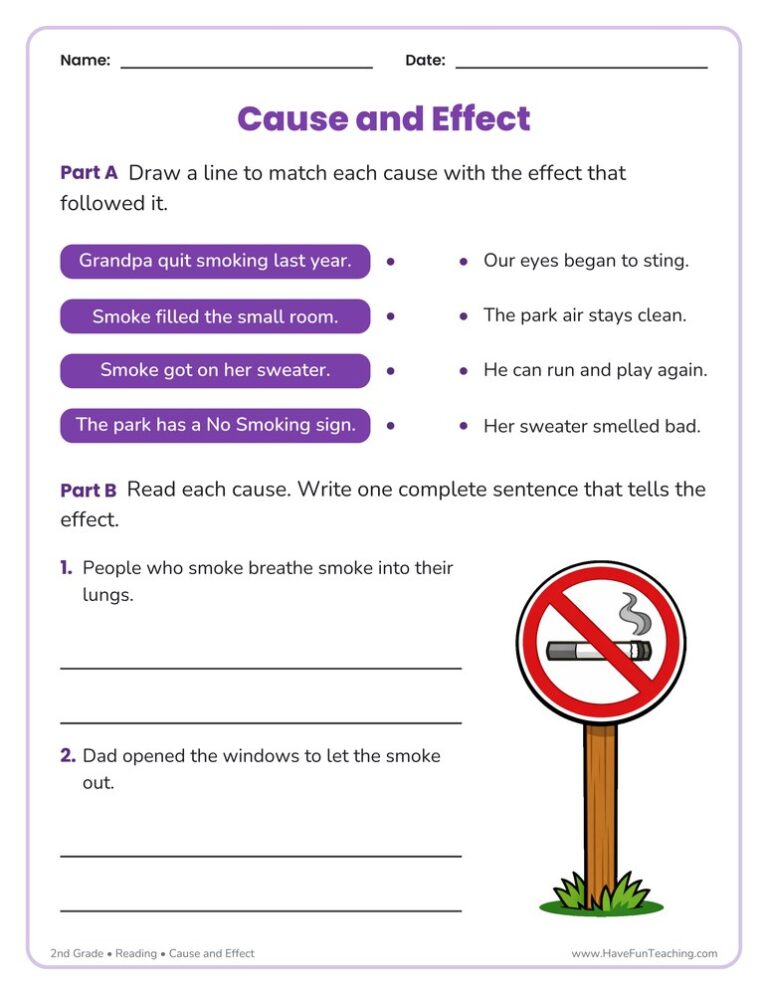
This Smoking Cause and Effect Graphic Organizer Worksheet helps 2nd graders link four health causes to their effects and write two more. An answer key is included, so kids practice reading and healthy choices together.
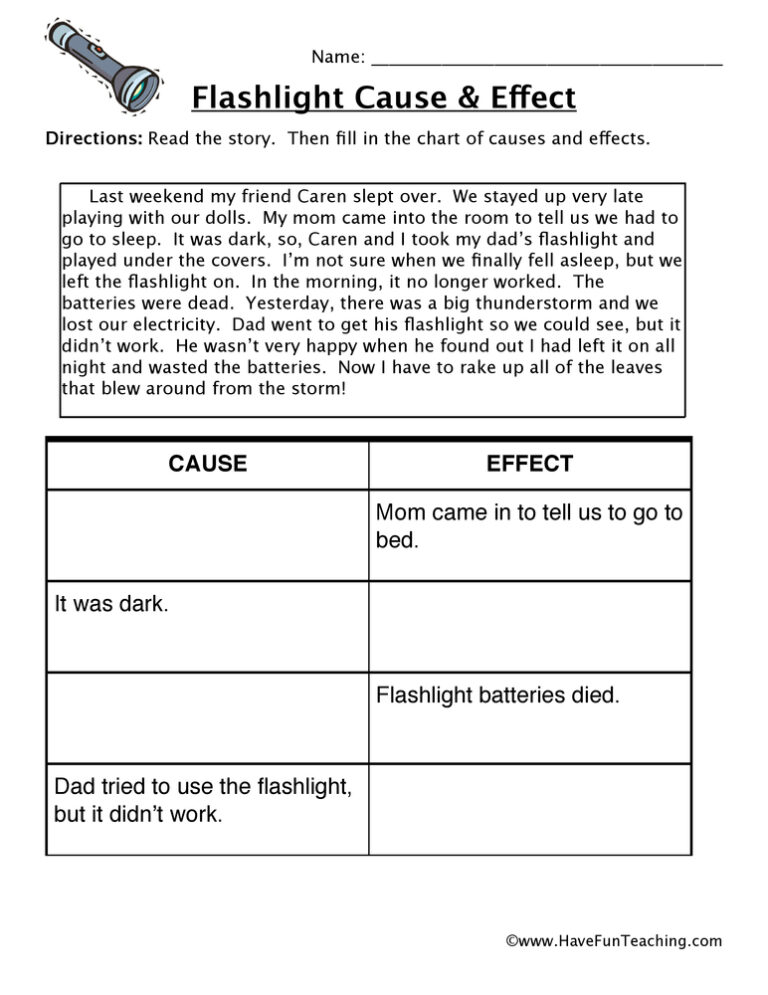
This Flashlight Cause and Effect Worksheet gives 2nd graders a short sleepover story and a four-row chart to complete. Answer key included — a quick, no-prep way to build real cause-and-effect thinking.
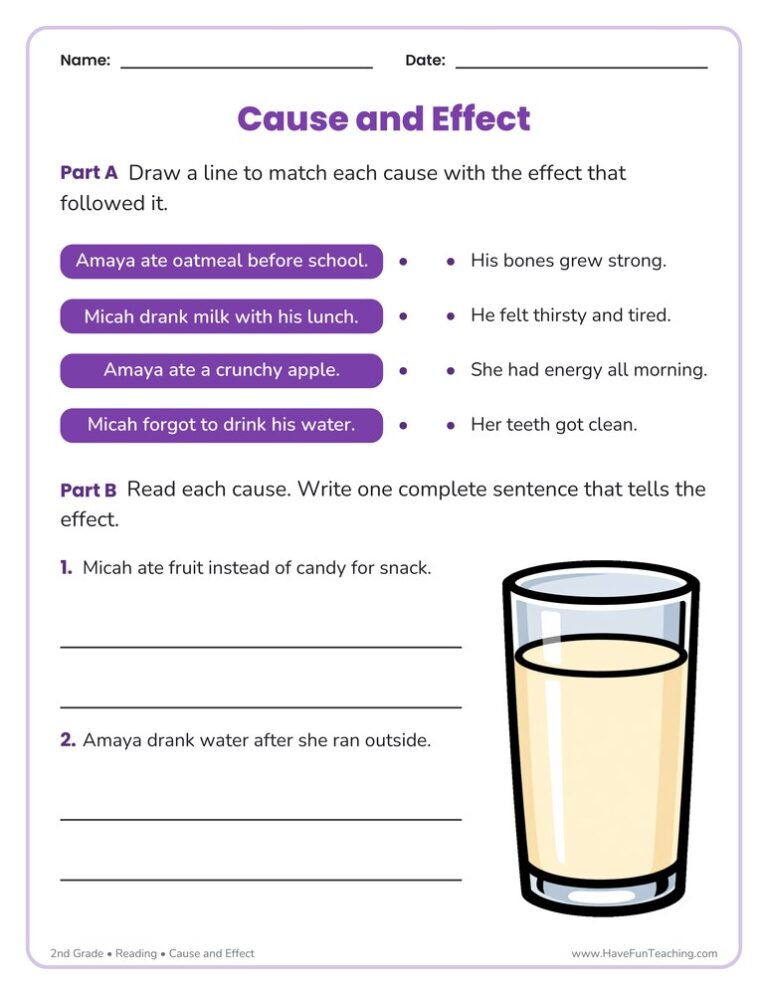
This Eating Healthy Cause and Effect Graphic Organizer Worksheet gives 2nd graders four healthy-eating causes to match with their effects, plus two sentences to write. Answer key included for no-prep reading practice.
Using this Cause and Effect Sequencing Activity, students explain the reasons why the situations were caused.
Reviews
There are no reviews yet