
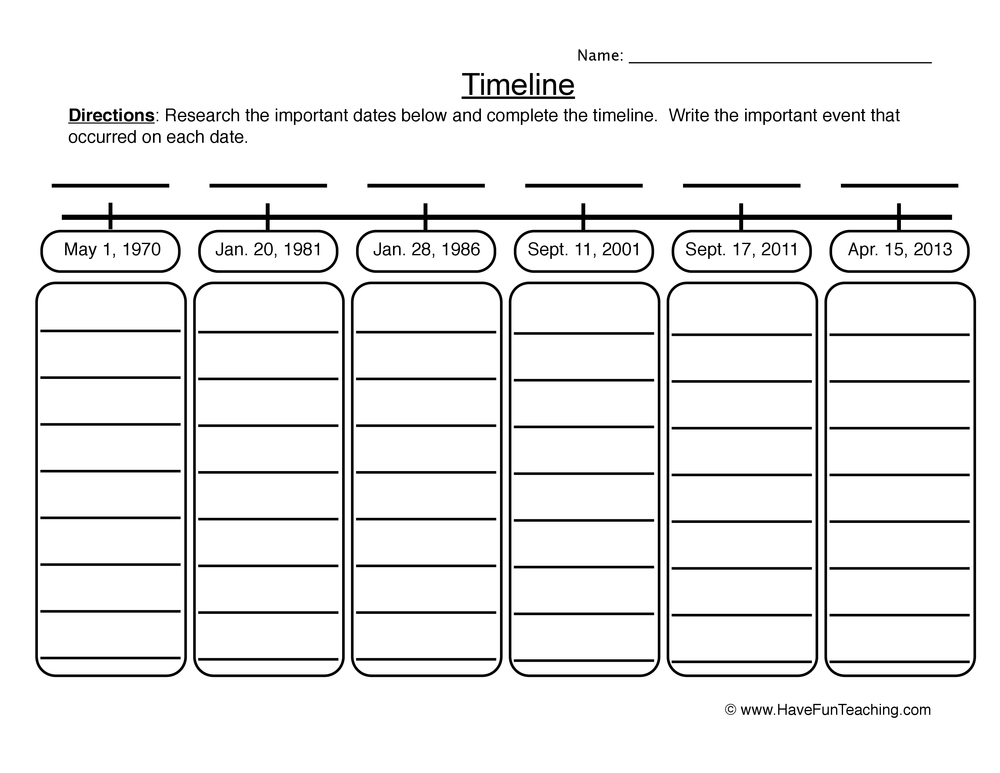
Timeline Worksheet
This timeline worksheet gives 4th graders a six-event town library timeline to read, question, and put in order. Answer key included, so students get real practice reading dates and events with no prep at all.
$6.97
Or free with a membership — get this and 10,000+ resources. See plans
Teaching is easier with a membership
Unlimited printables, games & videos for PreK–6th — for your classroom or homeschool. Cancel anytime.
Start your 3-day free trialNo commitment · Cancel anytime · Instant access to 10,000+ resources
About this resource
Description
A timeline puts events in the order they really happened, and reading one is a skill every young historian needs. This timeline worksheet gives 4th grade students a finished, six-event timeline of a small town library and asks them to pull real information back out of it. Students find a year, name an event, compare which of two events came first, and figure out how many years passed between two points on the line. That last step is where a timeline stops being decoration and starts being a tool: the dates on the line are the data, and the student has to do something with them.
This timeline activity for 4th grade works well as an introduction to a history unit, as independent morning work, or as a quick check before students build a timeline of their own. Start by reading the six events aloud together, left to right, so students hear the story the line tells. Then let them work through Part A on their own, writing full answers on the lines. Part B asks them to number four of the events in the order they happened, which means going back to the timeline instead of guessing. Everything students need is printed on the page, so there is no research to assign and no prep to do.
What’s Included
- 1 print-ready PDF worksheet
- Answer key
- 1 six-event reference timeline, 4 comprehension and elapsed-time questions, and 1 four-item sequencing activity
There are three reasons this timeline worksheet helps students learn to read a timeline. First, it supplies the timeline instead of asking students to invent one, so all of their attention goes to reading left-to-right order rather than to hunting for facts. Second, the elapsed-year question turns the timeline into a math tool and asks students to show their thinking, which is exactly the kind of multi-step reasoning 4th grade assessments ask for. Third, the sequencing section forces a second pass through the same information, and a second pass is where the order of events actually sticks. The included answer key makes it easy to check work in a minute or two.
To keep the skill going, ask students to build a timeline of their own week, their school year, or a book the class just finished, using the same layout of dates below the line and events above it. Parents can make a family timeline together on a long strip of paper, adding birthdays, moves, and pets. Try covering one event on this page and asking students what could reasonably go there based on the years on either side. Older students can add a seventh event to the library’s story and defend where it belongs. Comparing two timelines side by side, one for a person and one for a place, is a strong next step toward reading the timelines that appear in social studies textbooks.
Related Resources
What teachers say
Reviews
You must be logged in to post a review.
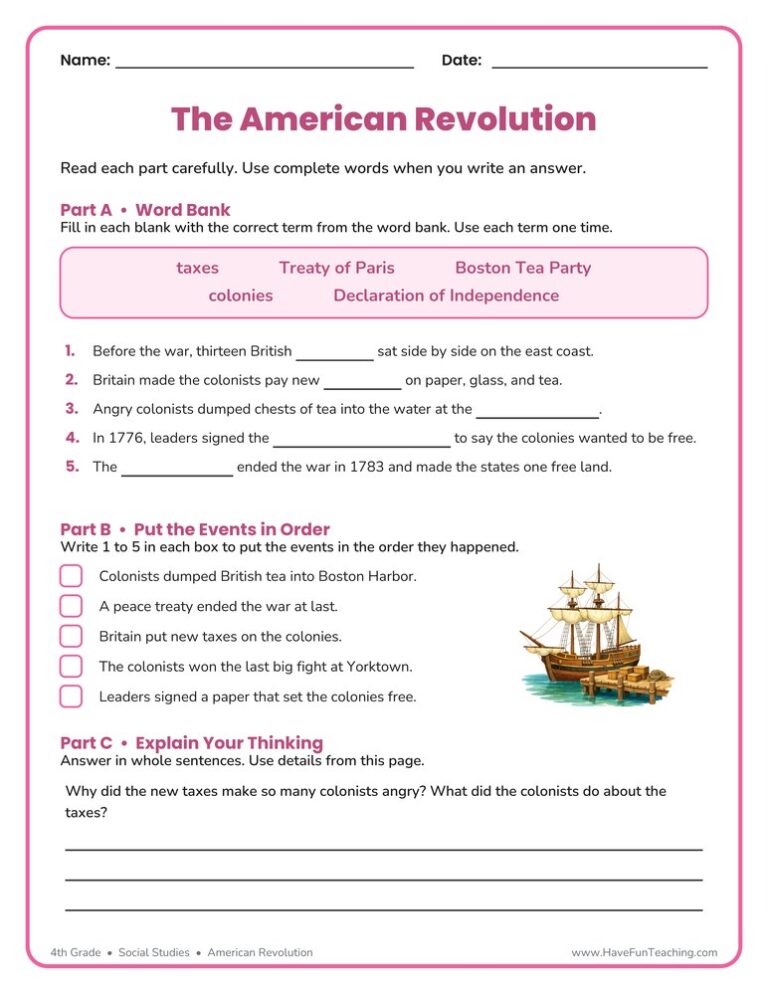
This American Revolution worksheet gives 4th graders word-bank vocabulary, a five-event timeline to put in order, and a short written response. An answer key is included, so review takes no prep at all.

Using this Colonial America Worksheet, students will research important terms and events related to the American Revolution.

Using this National Parks Matching Worksheet, students will match the national parks to the states they are in.

Using this Mayflower Compact Worksheet, students will learn about the Mayflower Compact by reading a short story and answering questions.
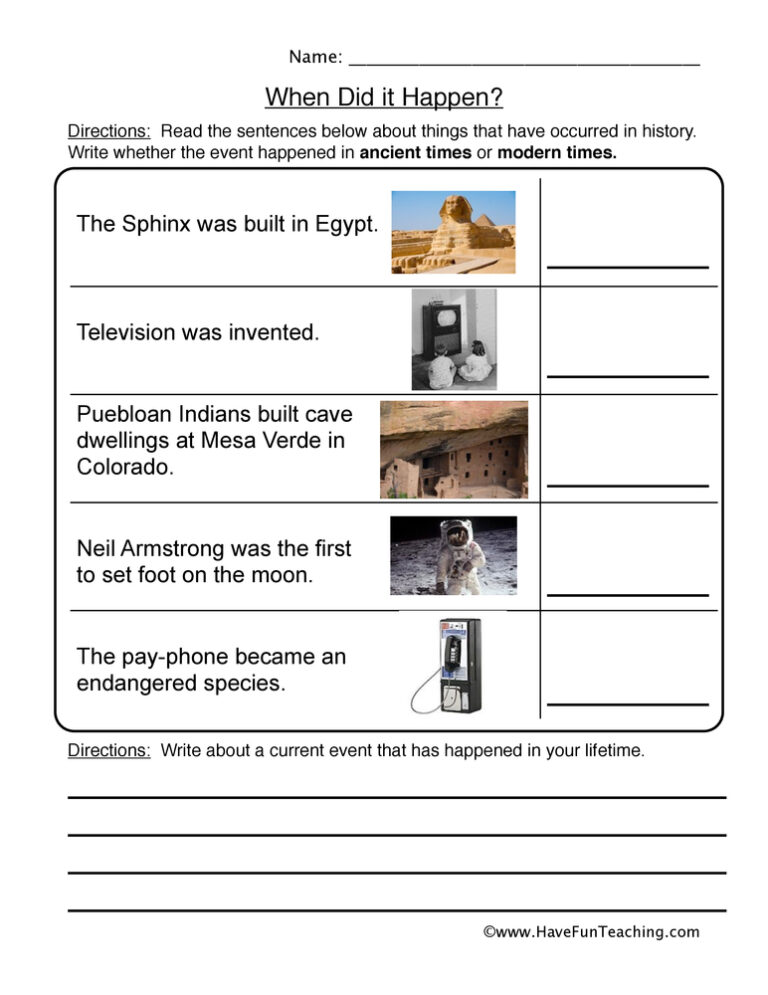
Using Historical Events Order of Events Worksheet, studentsresearch historical events to put them in order and classify them as ancient or modern events.
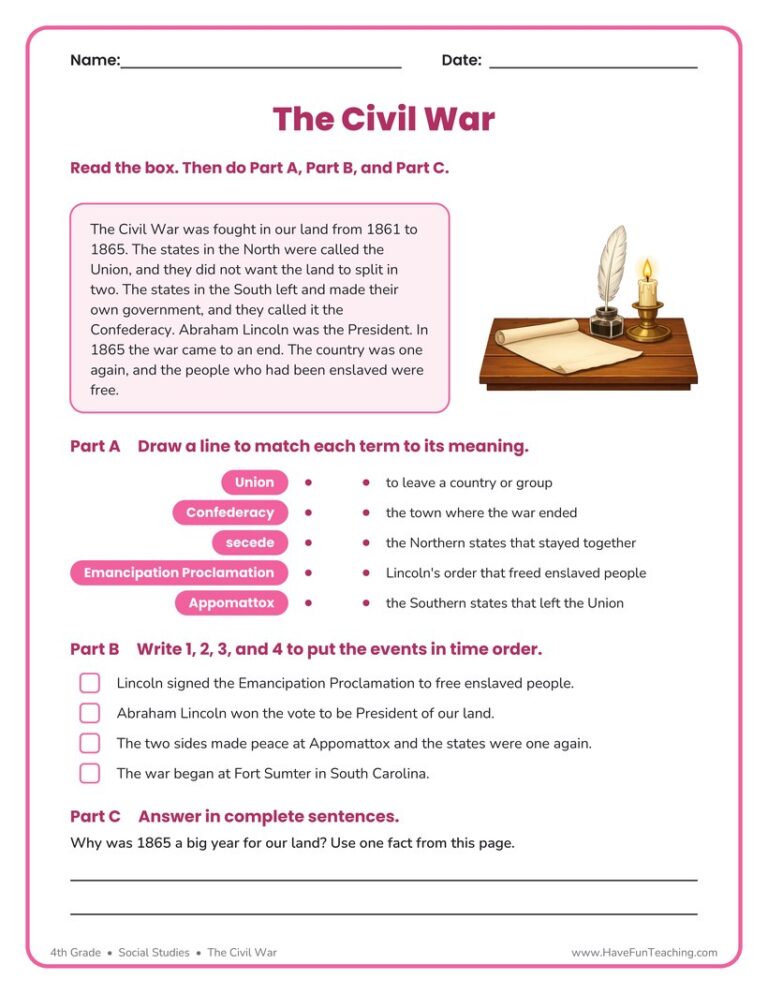
Students read a short passage, match Civil War terms, put four events in time order, and write a supported answer. This Civil War Worksheet fits 4th grade classrooms and homeschools, and an answer key is included.

This Donald Trump Reading Comprehension Worksheet is a comprehension story that teaches all about Donald Trump, including facts about him as President.
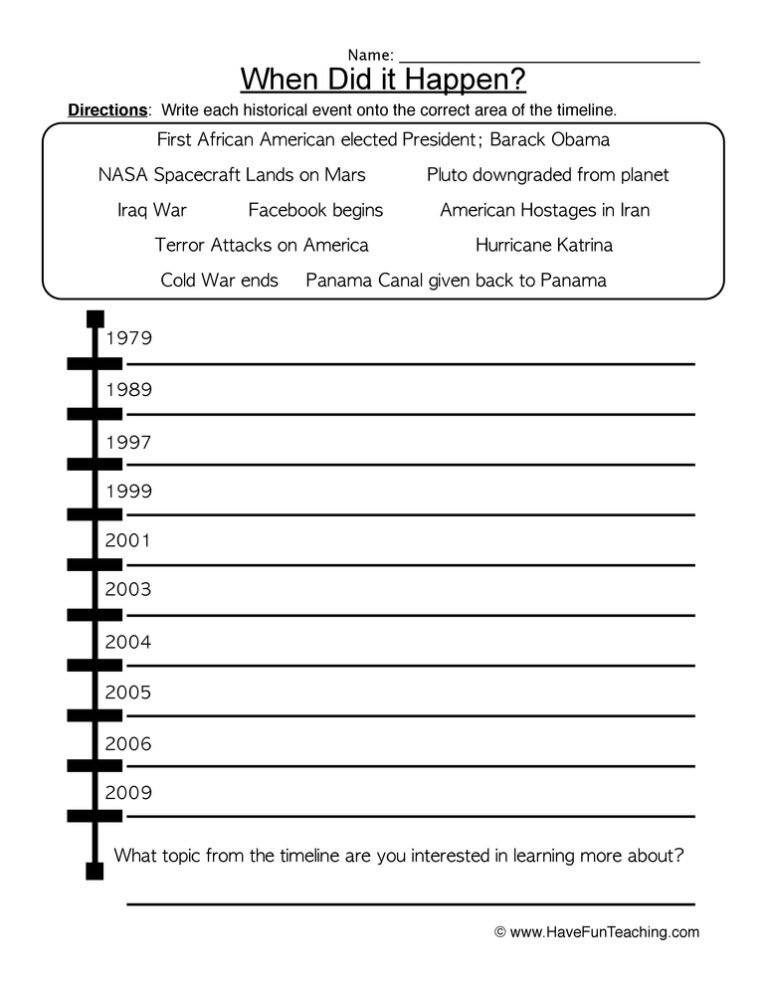
Using When Did it Happen in History Worksheet, studentsresearch US historical events to put them in order.
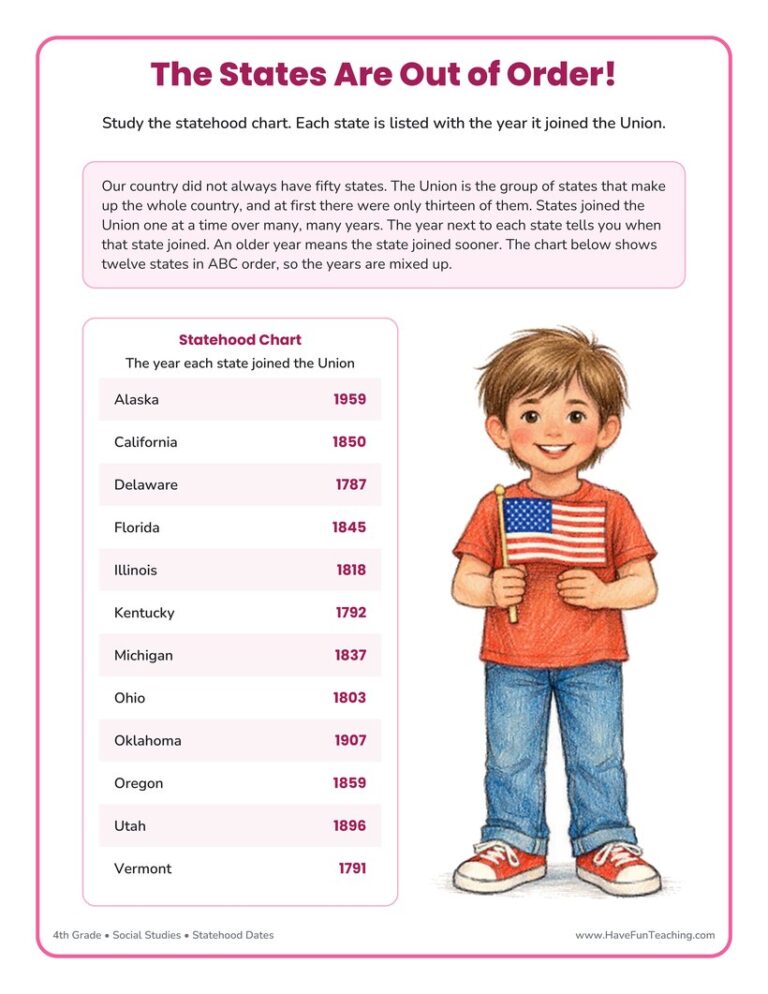
Students use a statehood chart to put six states in the order they joined the Union. This State Dates Worksheet is built for 4th grade and includes a complete answer key, so ordering historical dates becomes quick and clear.
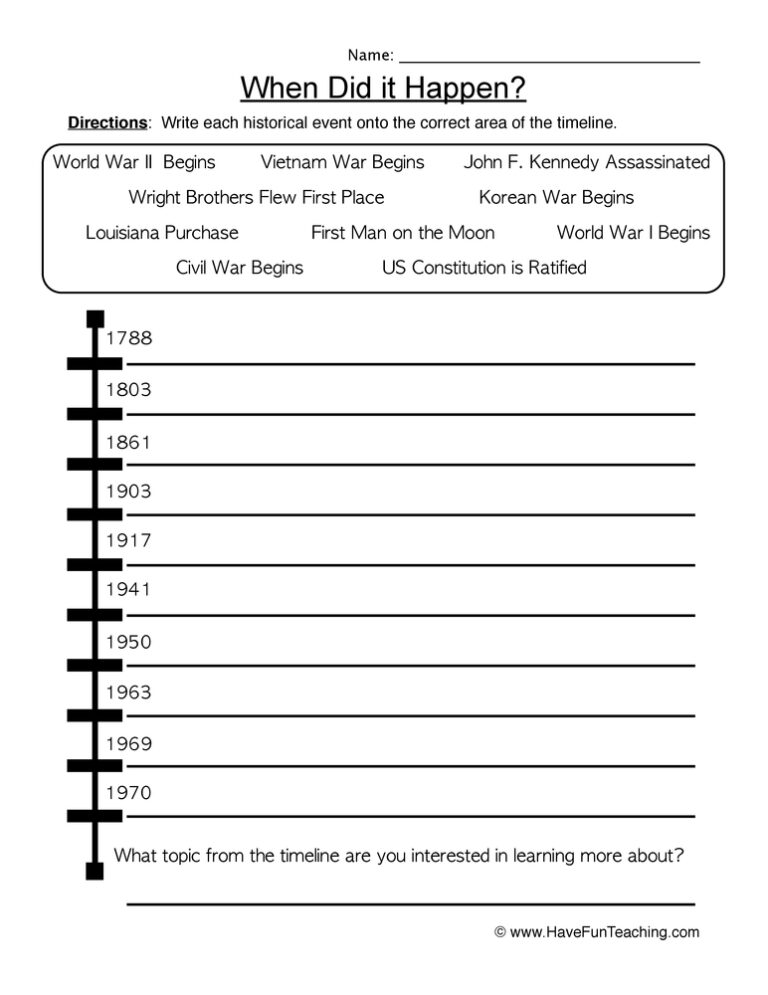
Using When Did it Happen Worksheet, studentsresearch US historical events to put them in order.
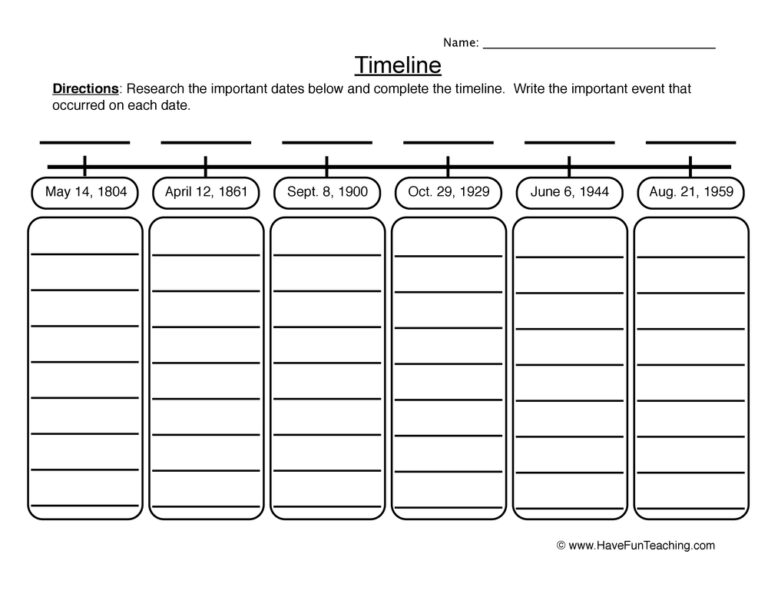
Using Historical Timeline Worksheet, students research the important dates and complete the timeline.

Using Natural Disasters History Research Worksheet, students research five natural disasters that have occurred.
Reviews
There are no reviews yet