
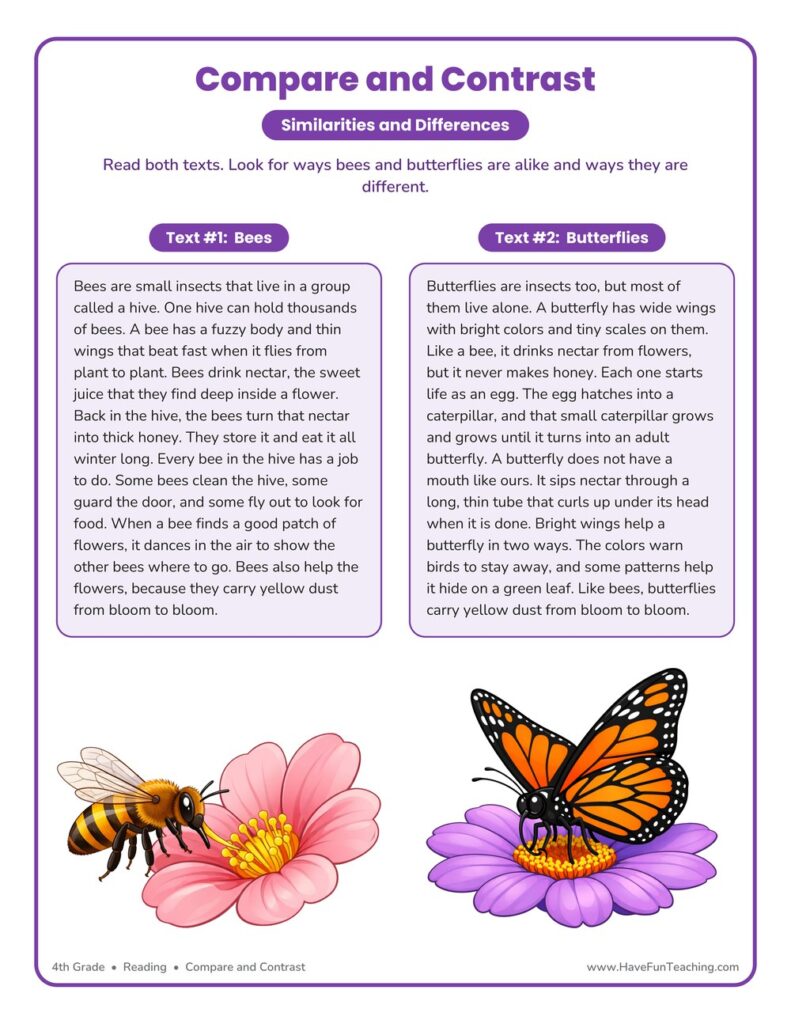
Compare and Contrast Similarities and Differences Graphic Organizer Worksheet
This Compare and Contrast Similarities and Differences Graphic Organizer Worksheet gives 4th graders two short texts about bees and butterflies plus a clear organizer for sorting them. Answer key included, so checking work takes seconds.
$6.97
Or free with a membership — members pay $3.33/mo for all 10,000+ resources. See plans
Want this one free?
Tell us where to send it and it’s yours — no card, no catch.
One free resource per teacher. We’ll also send free teaching ideas each week — unsubscribe anytime.
Teaching is easier with a membership
Unlimited printables, games & videos for PreK–6th — for your classroom or homeschool. Cancel anytime.
Start your 3-day free trial$0 today · cancel anytime · Instant access to 10,000+ resources
About this resource
Description
Comparing and contrasting is one of the most useful reading skills a student can build, because it asks a reader to hold two texts in mind at the same time and notice how their ideas connect. This Compare and Contrast Similarities and Differences Graphic Organizer Worksheet gives 4th grade readers two short nonfiction texts and a clear organizer for sorting what is true of both and what is true of only one. Instead of guessing, students go back into the reading, find the evidence, and place each detail where it belongs.
This compare and contrast worksheet for 4th grade opens with two matched passages, one about bees and one about butterflies. Students read both, then fill in the three-part organizer: a wide Similarities box for the details the two insects share, and two narrower boxes for the details that belong to only bees or only butterflies. A short-response section follows, asking students to explain their thinking in complete sentences. Use it after a paired-text lesson, as a reading center, or as a quick check before a longer writing assignment.
What’s Included
- 1 print-ready PDF worksheet
- Answer key
- 2 original paired nonfiction texts (about 260 words in all)
- A three-part similarities and differences graphic organizer
- 2 written-response questions
There are three reasons this Compare and Contrast Similarities and Differences Graphic Organizer Worksheet helps children learn. First, the organizer makes an abstract thinking skill visible, because students can see that shared details belong in the wide box while unique details move to the sides. Second, both texts are written on grade level, so readers spend their energy comparing ideas rather than decoding hard words. Third, the written-response questions push students past listing and into explaining, which is exactly what state reading assessments ask them to do.
Teachers and parents can stretch this skill in plenty of fun ways. Read two versions of the same fairy tale and compare the endings. Compare two family pets, two sports, or two seasons using the same three-box shape drawn on a whiteboard. Try a scavenger hunt where students find one similarity and one difference between two photographs. You can also reuse this organizer with any pair of classroom texts, because the structure stays the same even when the topic changes.
Related Resources
What teachers say
Reviews
You must be logged in to post a review.

This compare and contrast worksheet fiction and non-fiction pairs a sea otter article with a short story so 4th graders can chart what is alike and different. Answer key included for fast, no-prep paired-text practice.

Using Compare and Contrast Across Cultures Activity, students compare and contrast two or more versions of the same story by different authors or from different cultures.
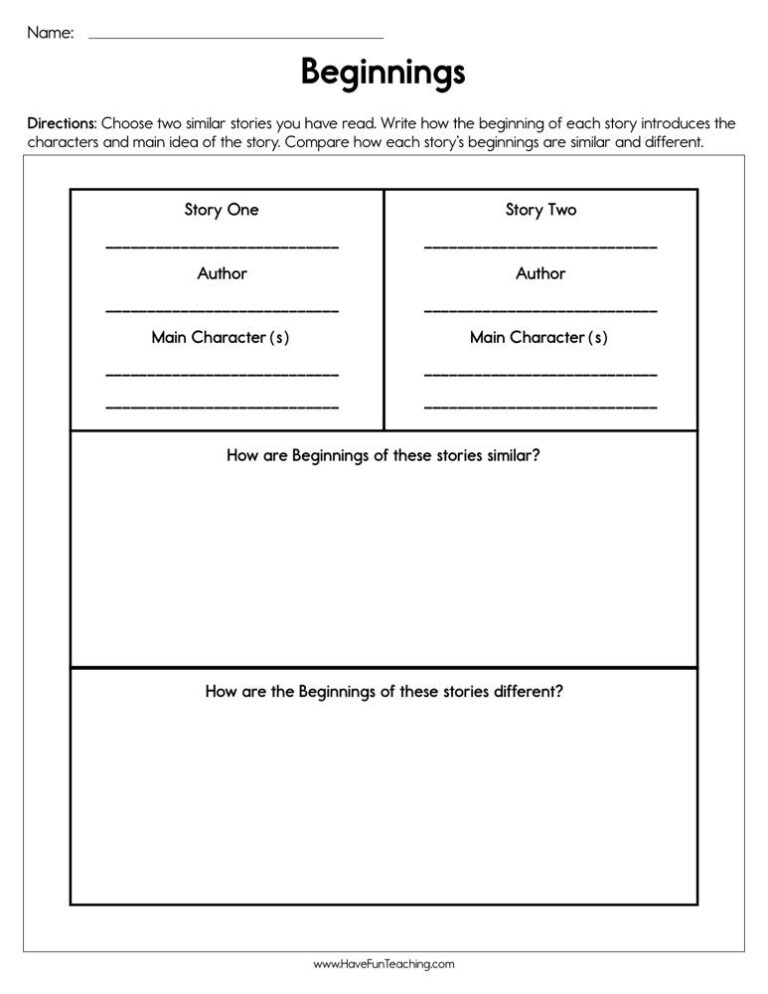
Using Beginnings Worksheet, students write how the beginning of each story introduces the characters and main idea of the story to compare the two similar stories read.

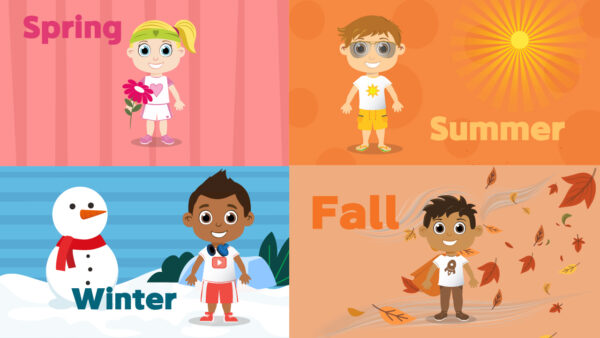
Using this Comparing Seasons Venn Diagram Worksheet, students compare two seasons using a Venn Diagram.
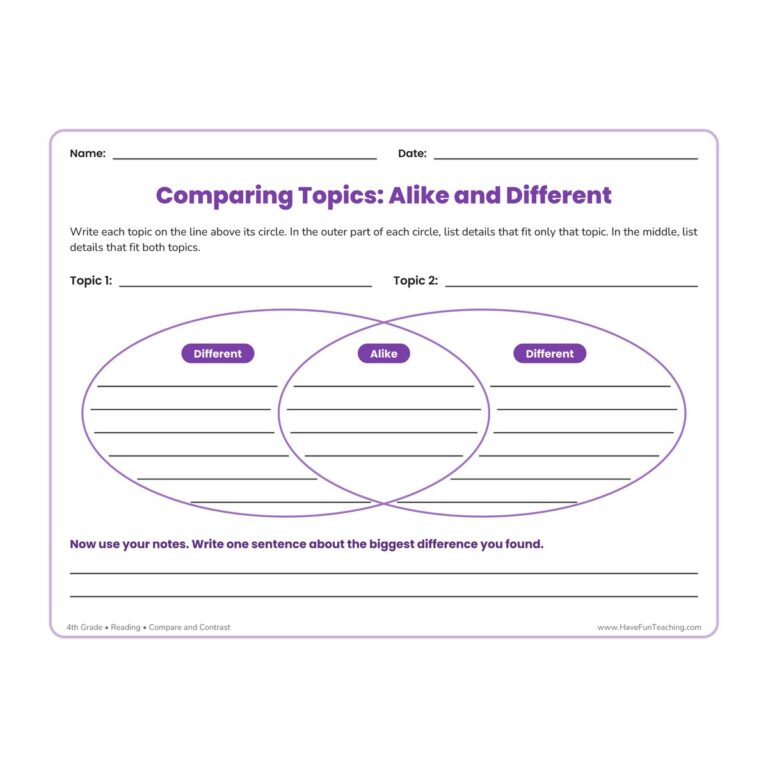
This Comparing Topics Alike and Different Graphic Organizer Worksheet gives 4th graders a two-circle Venn to sort details for any two topics, then a prompt to explain the biggest difference in writing.

Using Determining Theme Activity, students determine the theme of a story or poem from details in the text to learn a lesson that can be used in their life.

Using Identifying Theme Activity, students determine the theme of a story, drama, or poem from details in the text in order to apply to their own life.

Using this Compare and Contrast Graphic Organizer Activity, students organize their ideas using any of the provided graphic organizers in order to compare and contrast the structure of events, ideas, concepts, and information in two or more texts.
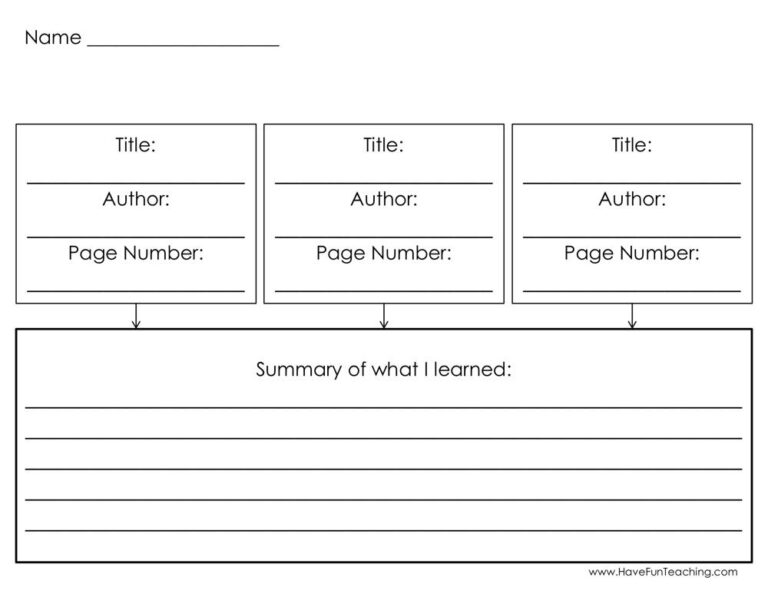
With thisComparing Three Texts Graphic Organizer Worksheet, your students will compare three texts they are reading. They will then write a brief summary

Using Math Same Different Worksheet, students look at the two examples and determine if they represent the same or different thing.

Using the Comparing Themes of Two Stories Activity, students use a Venn Diagram to compare and contrast the theme of two passages.

If your kids are learning about sequencing of events, you need thisCompare and Contrast Chronology of Events Graphic Organizer Worksheet!
Reviews
There are no reviews yet