
Skip to content
Start My 3 Free Days $0 today · cancel anytime

5th Grade Classification Resources

10 5th grade classification resources: 9 worksheets, 1 song, 1 video and more. How teachers use these

5th Grade Classification Resources

10 5th grade classification resources: 9 worksheets, 1 song, 1 video and more. How teachers use these

Video
Video5th GradeAnimal Song (Animated Music Video)

Using this Animal Song (Animated Music Video), your students learn about different types of animals and their sounds by watching this fun, catchy video.

Worksheet
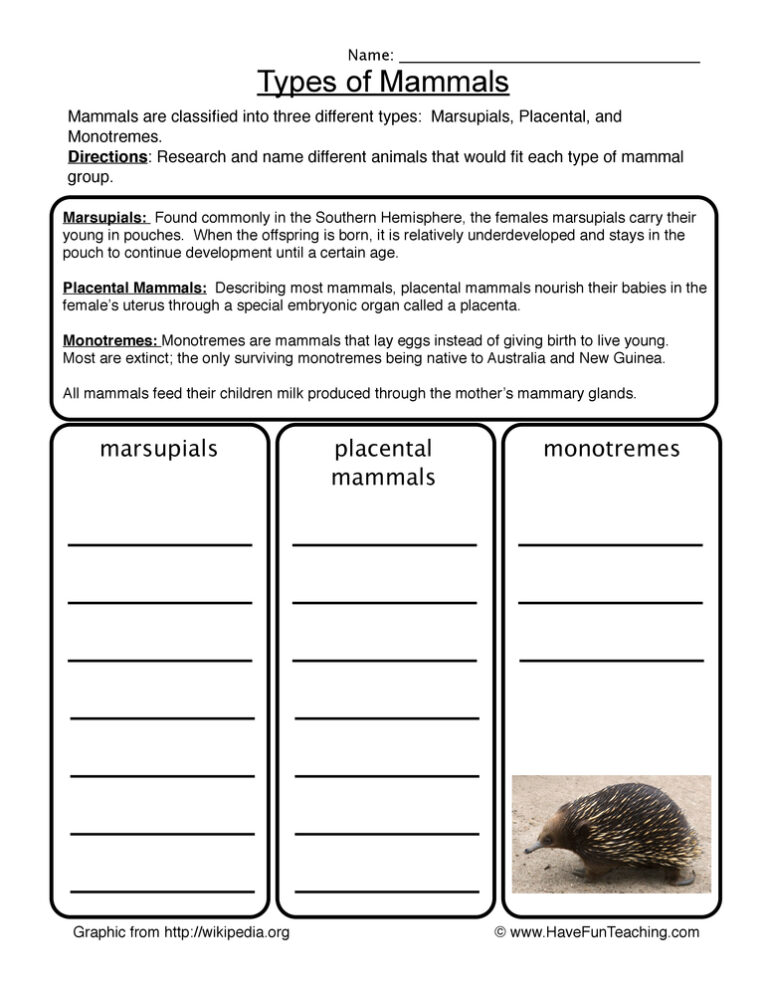
Worksheet5th GradeMammals Worksheet

A three-part mammals worksheet that has 5th graders define, sort, and explain the three mammal groups: marsupials, placental mammals, and monotremes. Answer key included for fast, no-prep science practice.

Worksheet
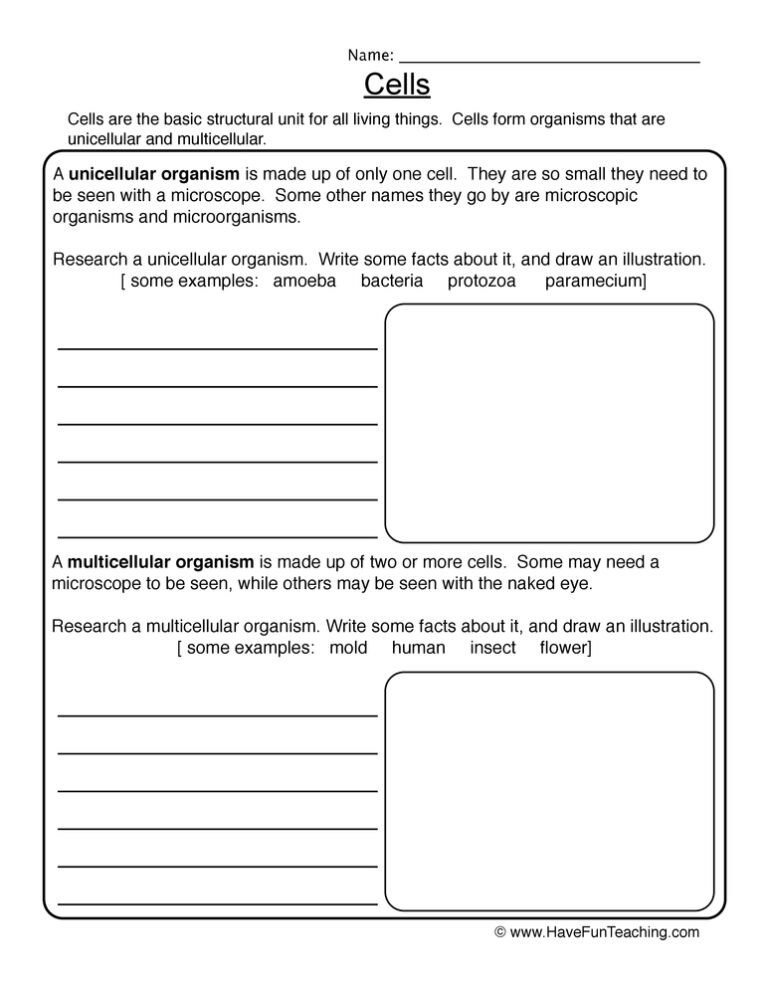
Worksheet5th GradeCells Worksheet

This cells worksheet has 5th graders sort eight living things into unicellular and multicellular columns, then use clues to classify four more. An answer key is included, so science practice is ready to print and grade in minutes.

Worksheet
Worksheet5th GradeMammal Taxonomy Worksheet

This mammal taxonomy worksheet has 5th grade students use a gray wolf model and word endings to classify a lion from kingdom to species. Includes an answer key and four chart questions.

Worksheet
Worksheet5th GradeInsect Taxonomy Worksheet

This Insect Taxonomy Worksheet gives 5th Grade students a finished honey bee chart to classify a monarch butterfly beside it, plus four questions and an answer key, so taxonomy becomes reasoning instead of memorizing.

Worksheet
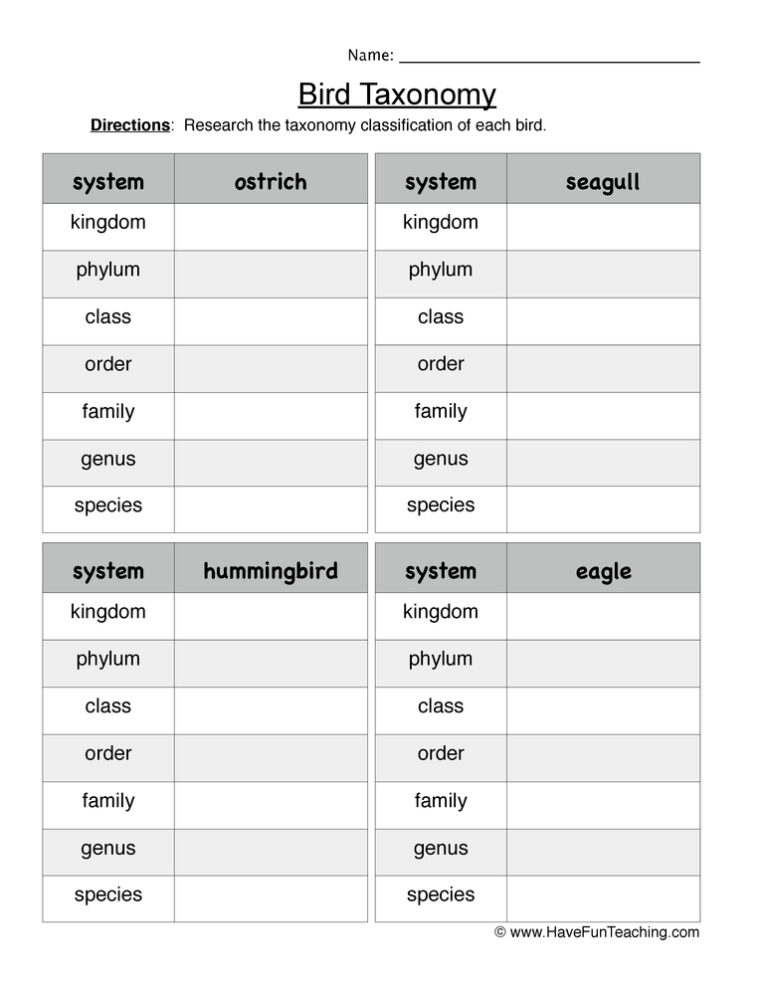
Worksheet5th GradeBird Taxonomy Worksheet

This bird taxonomy worksheet has 5th grade students use a bald eagle model and word endings to classify a hummingbird from kingdom to species. Includes an answer key and four chart questions.

Worksheet
Worksheet5th GradeFish Taxonomy Worksheet

This fish taxonomy worksheet has 5th grade students use a European anchovy model and word endings to classify an Atlantic herring from kingdom to species. Includes an answer key and four chart questions.

Worksheet
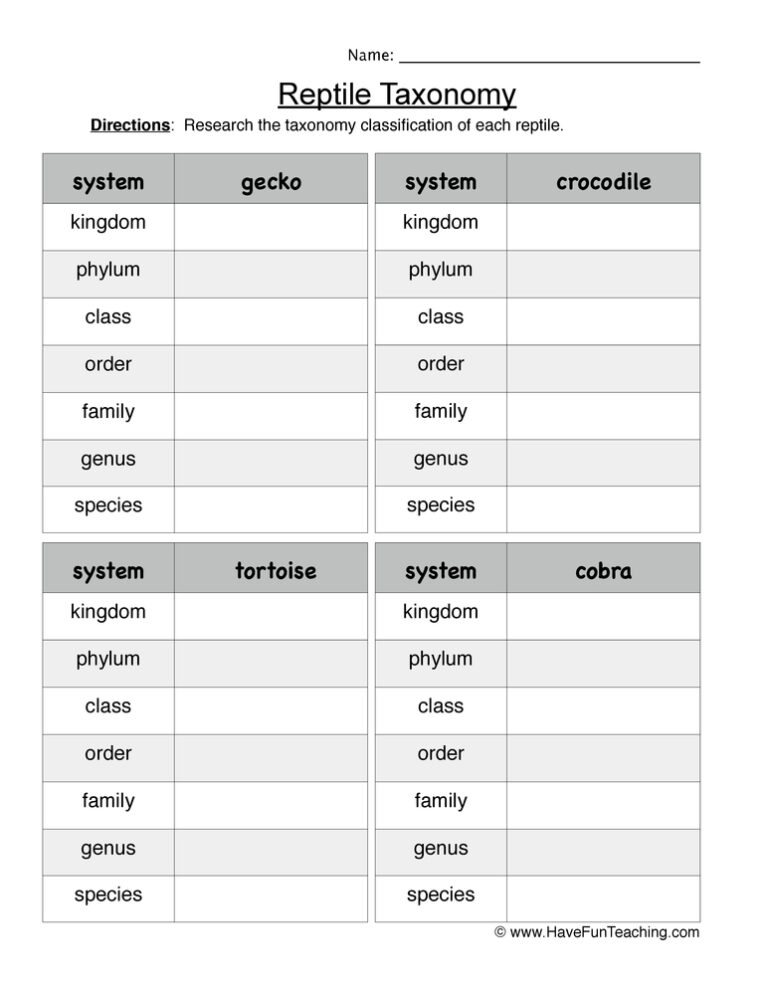
Worksheet5th GradeReptile Taxonomy Worksheet

This reptile taxonomy worksheet has 5th grade students use a painted turtle model and word endings to classify a gopher tortoise from kingdom to species. Includes an answer key and four chart questions.

Worksheet
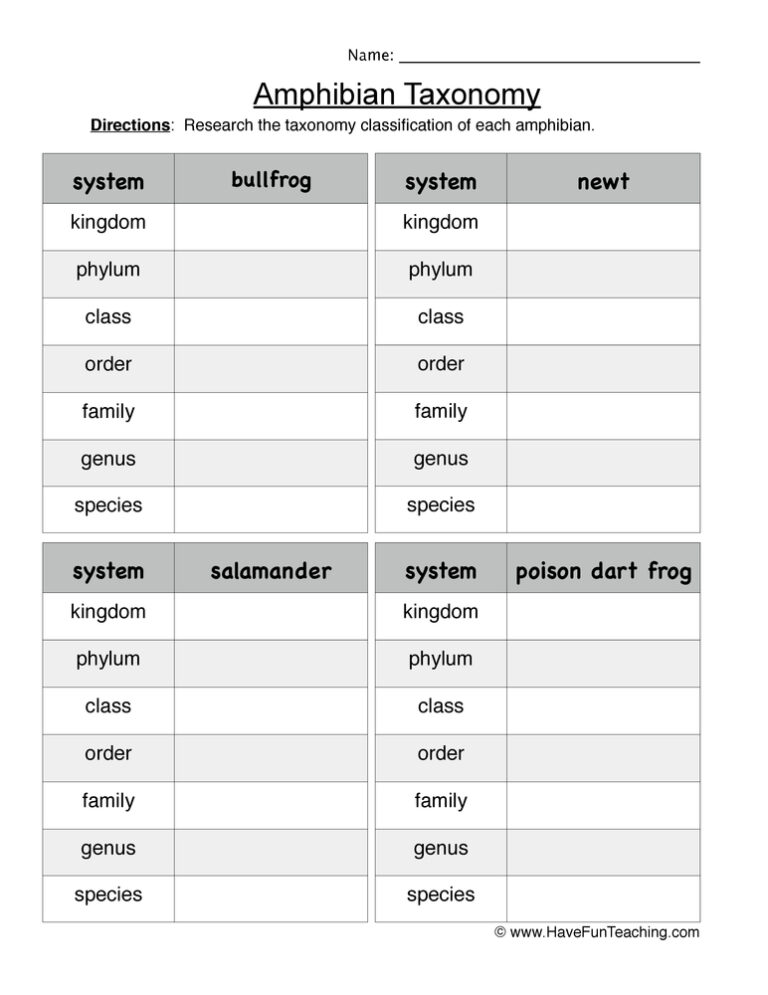
Worksheet5th GradeAmphibian Taxonomy Worksheet

This amphibian taxonomy worksheet has 5th grade students use a common frog model and word endings to classify an American toad from kingdom to species. Includes an answer key and four chart questions.

Assessment
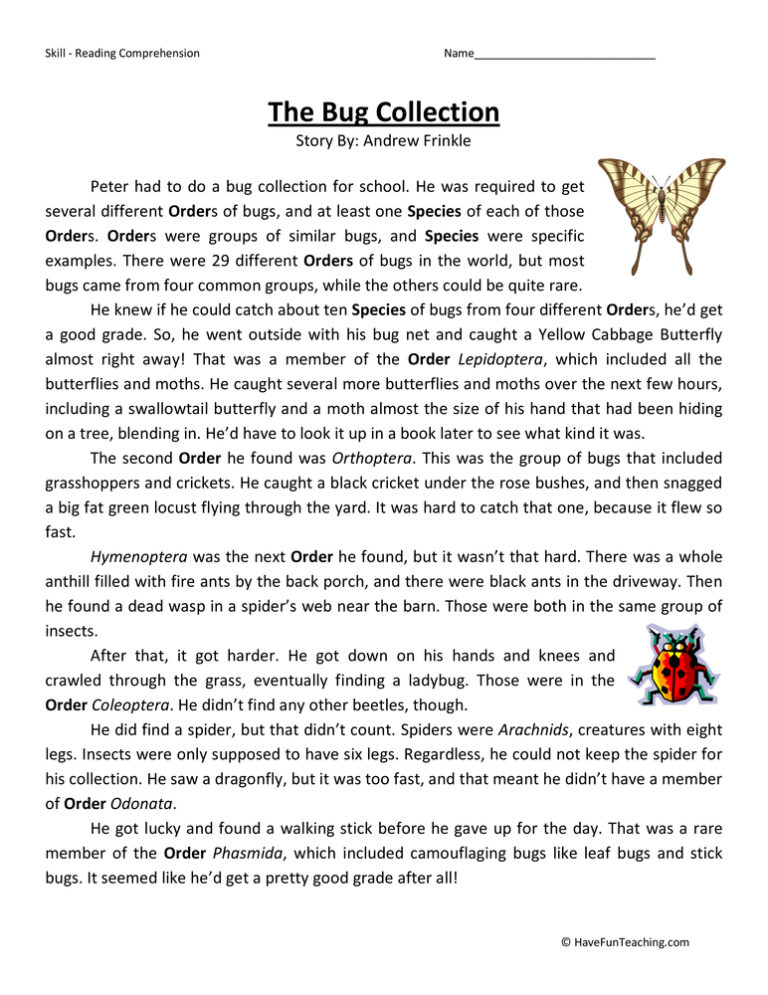
Assessment5th GradeBug Collection - Reading Comprehension Worksheet

This Bug Collection Reading Comprehension Worksheet gives 5th Grade students a two-page nonfiction passage about sorting insects by order, four questions and a written response. An answer key is included.

From our teachers' playbook

Sort it like a scientist

What do 5th graders learn about classification?

Fifth graders learn how scientists sort living things into groups based on shared traits. They meet the levels of taxonomy, from broad to specific: kingdom → phylum → class → order → family → genus → species. Kids sort animals into vertebrates and invertebrates, then into classes like mammals, birds, reptiles, amphibians and fish, using clues like fur, feathers, scales and how babies are born. The aha moment? Realizing a bat is a mammal, not a bird, because of its fur and the milk it feeds its babies.

How we teach classification in 5th grade

Classification is all about noticing traits and making smart groups. These moves help students think like biologists.

Start with insects

Hand out an insect taxonomy page and have students trace one insect from kingdom down to species. Then ask, "Which traits put it in each group?" Starting with one animal makes the long list of levels feel manageable.

Why it works: kids understand an idea best when they touch it, then draw it, then write it, the order the U.S. Department of Education recommends for elementary math.

Insect Taxonomy WorksheetTry it withInsect Taxonomy WorksheetWorksheetsOpen it →

Trait-by-trait mammal check

Show photos of a whale, a bat and a platypus and ask, "Are these mammals?" Students use a mammal taxonomy worksheet to check each trait. The tricky examples spark great debate and lock in the real rules.

Why it works: children learn more from words and pictures together than from words alone (Mayer, 2009).

Mammal Taxonomy WorksheetTry it withMammal Taxonomy WorksheetWorksheetsOpen it →

Sing the animal groups

Play an animated animal song at the start of class. Its repeated groups help students remember the vertebrate classes and their key traits. Sing it again before a quiz for a quick, fun review.

Why it works: a catchy, repeating tune gives the brain a hook to hang words on, so sung text is remembered better (Wallace, 1994).

Animal Song (Animated Music Video)Try it withAnimal Song (Animated Music Video)SongsOpen it →

Questions teachers and parents ask

What are the 7 levels of classification?

Kingdom, phylum, class, order, family, genus and species. Each level gets more specific, and a species is a single kind of living thing.

How do you remember the levels of taxonomy?

Try the saying "King Philip Came Over For Good Soup." The first letter of each word matches kingdom, phylum, class, order, family, genus and species.

What are the 5 classes of vertebrates?

Mammals, birds, reptiles, amphibians and fish. Kids sort them using traits like body covering, breathing, temperature and how babies are born.

Why do scientists classify living things?

Classification helps scientists organize millions of living things, see how they are related and communicate clearly. Every species gets a two-part scientific name, like Homo sapiens for humans.



