Skip to content
Start My 3 Free Days $0 today · cancel anytime

1st Grade Prompts Resources

40 1st grade prompts resources: 29 worksheets and 12 activities. How teachers use these

1st Grade Prompts Resources

40 1st grade prompts resources: 29 worksheets and 12 activities. How teachers use these

Worksheet
Worksheet1st GradeAsking and Answering Questions Worksheet

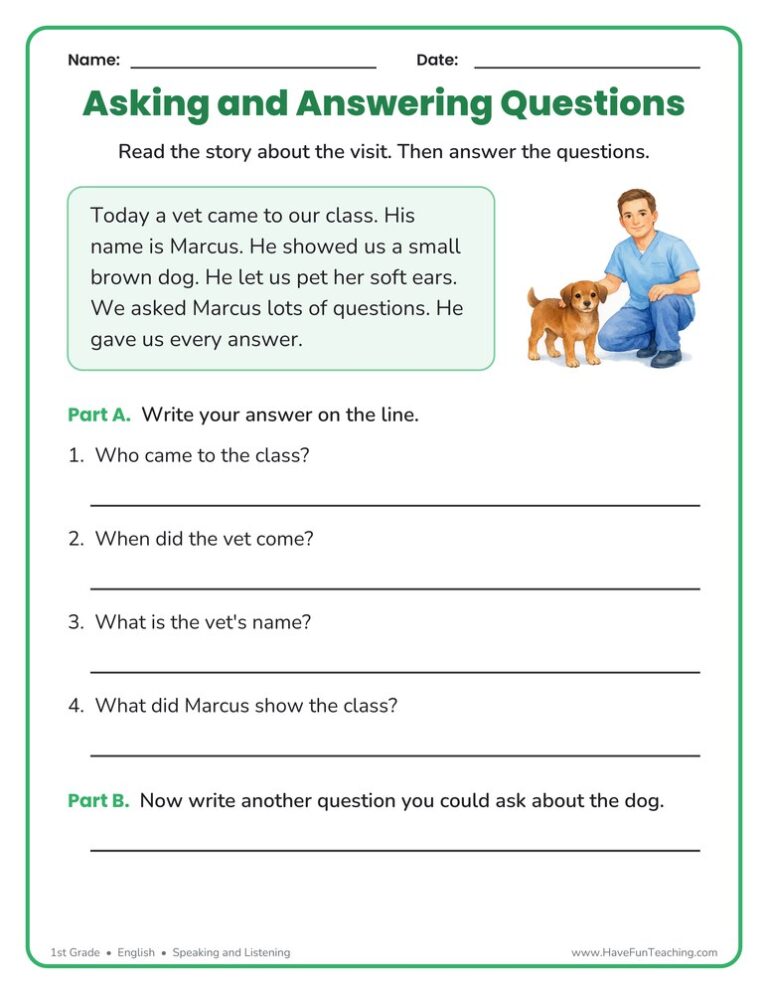
This Asking and Answering Questions Worksheet gives 1st Grade students a short story, four text-based questions, and room to write a question of their own. Answer key included, so checking work takes seconds.

Worksheet
Worksheet1st GradeSharing Experiences Worksheet

This Sharing Experiences Worksheet gives 1st Grade students a simple page for planning a true story: the topic, what happened first and next, and describing words that help a reader picture the day.

Worksheet
Worksheet1st GradeWriting about Animals Worksheet

Writing about Animals Worksheet helps 1st graders pick an animal they love and write what it looks like, what it eats, and where it lives on clear, roomy lines that build confident sentence writing.

Worksheet
Worksheet1st GradeAnimal Facts Worksheet

Our animal facts worksheet teaches 1st graders to spot the name, facts, and ending in a frog piece, then write their own. Includes an answer key and builds strong informative writers.

Worksheet
Worksheet1st GradeWriting about a Character Worksheet

This writing about a character worksheet asks 1st Grade students to draw a favorite book character and then write two things about them, turning any story they read into real writing practice.

Worksheet
Worksheet1st GradeWhat Would a Soldier Say? Worksheet

This What Would a Soldier Say? Worksheet gives 1st Grade students three writing prompts about a soldier they want to thank, with room to write in their own words on Memorial Day.

Worksheet
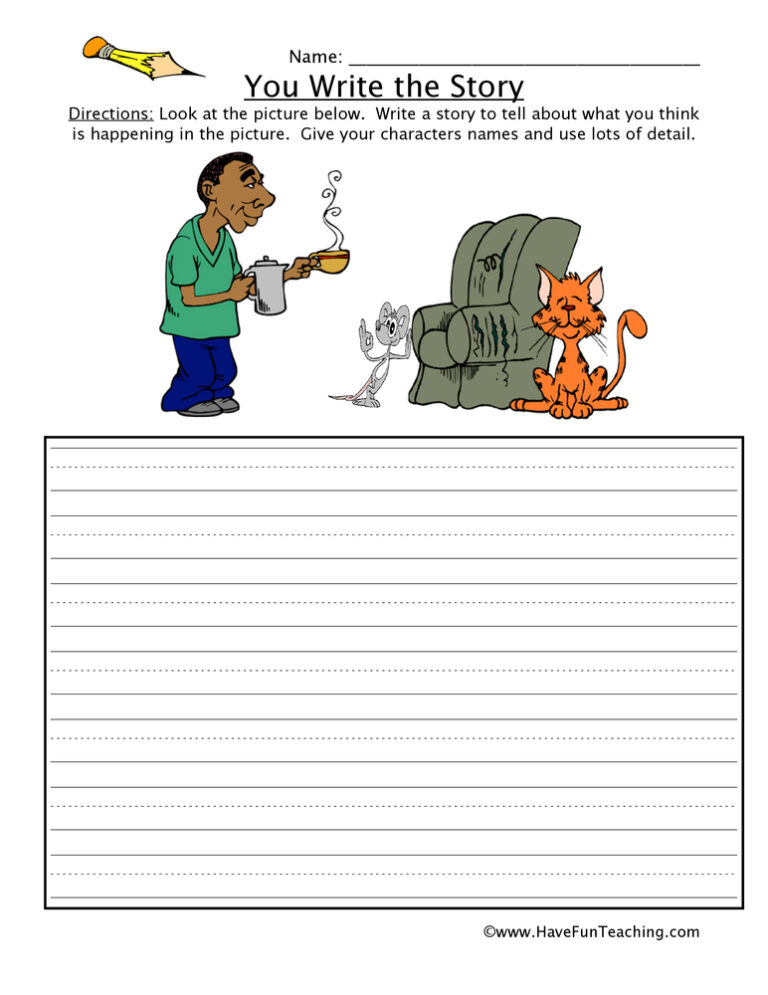
Worksheet1st GradeYou Write the Story Cats Picture Worksheet

This You Write the Story Cats picture worksheet gives 2nd grade students one clear illustration of two cats and a ball of yarn, plus eight writing lines, so every child can name the characters and tell their own story.

Worksheet
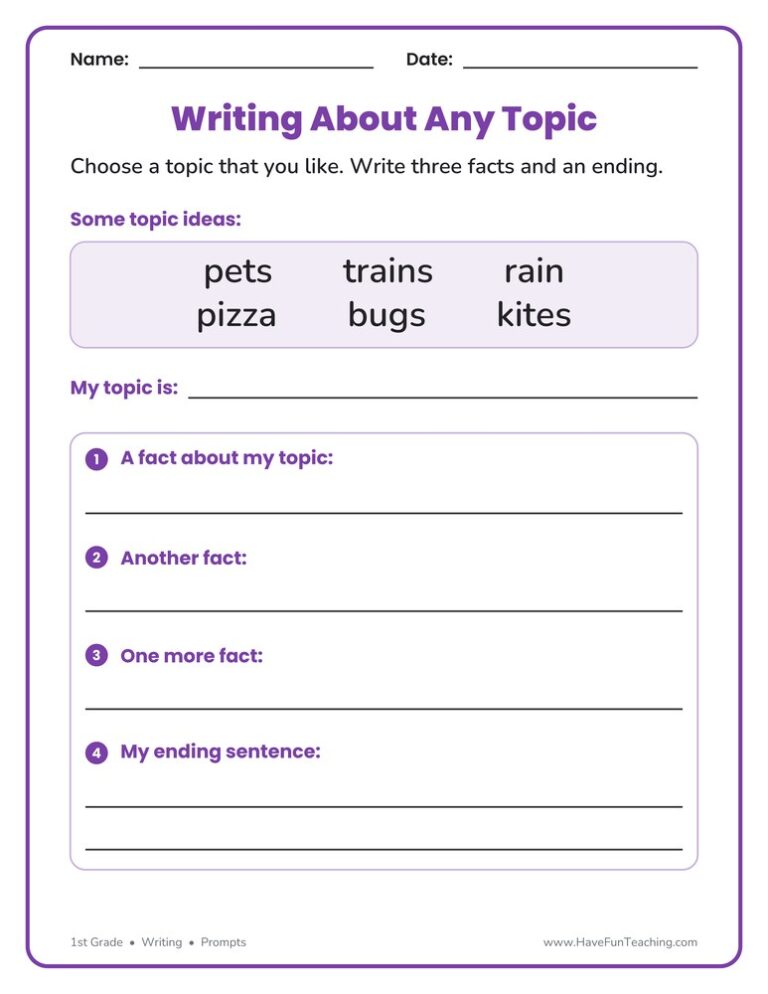
Worksheet1st GradeWriting about any Topic Worksheet

This writing about any topic worksheet helps 1st grade students pick a topic, write three facts, and add an ending sentence. It builds early informative writing skills one clear step at a time.

Worksheet
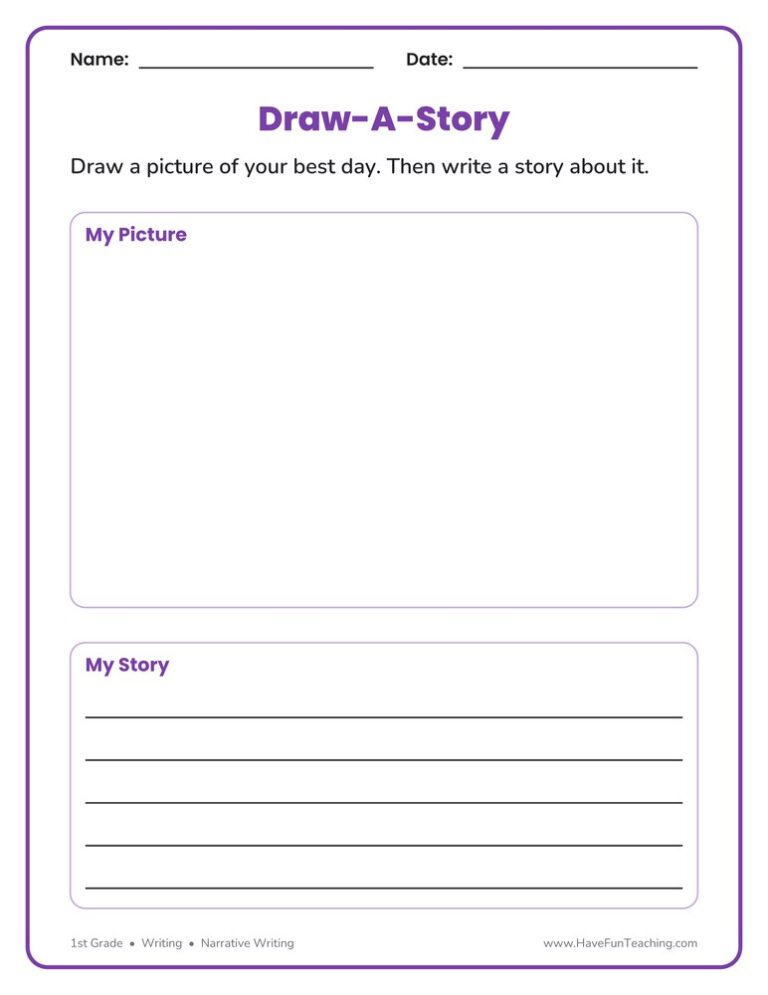
Worksheet1st GradeDraw A Story Worksheet

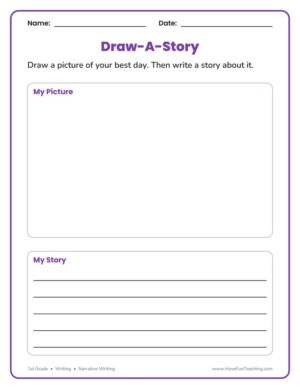
A Draw A Story Worksheet for 1st graders: draw a picture of your best day, then write the story on wide lined paper. A simple, no-prep way to turn a child's own idea into real narrative writing.

Worksheet
Worksheet1st GradeJust the Facts Worksheet

This just the facts worksheet teaches 1st grade students to label the topic, fact, and ending sentences of a short piece, then write their own. An answer key is included for quick checking.

Activity
Activity1st GradeInformative Text Paragraph Writing Activity

Plan and write a first paragraph with this informative text paragraph writing activity for kindergarten and 1st grade: topic cards, a Fact Planner, a writing page and practice, answer key included.

Activity
Activity1st Grade50 States Research Activity

Using 50 States Research Activity, studentsparticipate in shared research and writing projects to learn about the 50 states.

Activity
Activity1st GradeSt. Patrick's Day Writing Activity

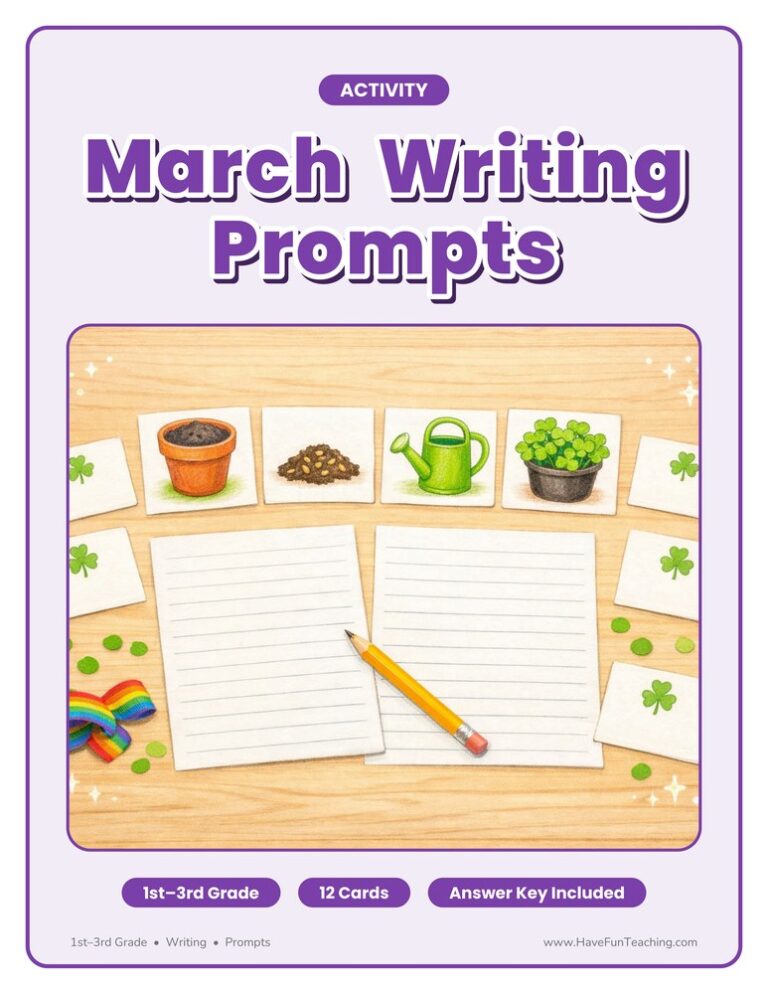
This St. Patrick's Day writing activity gives 1st to 3rd grade children prompt cards, shamrock step cards, a story map and themed writing paper so every child can plan and write. Answer key included.

Activity
Activity1st GradeAdding Details to Your Story Activity

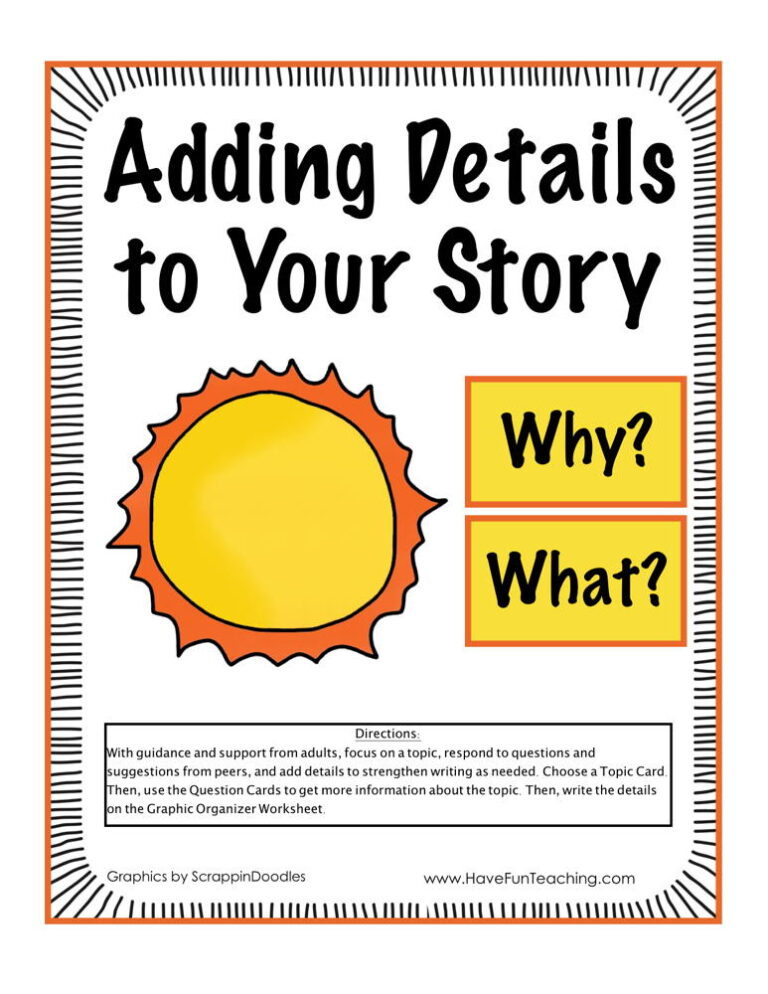
This adding details to your story activity helps kindergarten to 3rd grade writers turn one sentence into a longer story with question cards and a planner. Answer key included, so practice is quick to check.

Worksheet
Worksheet1st GradeWriting about School Worksheet

This writing about school worksheet gives 1st grade students a large drawing frame and six writing lines for telling about one thing that happened at school. Every response is the child's own.

Worksheet
Worksheet1st GradeWriting about a Favorite Book Worksheet

The Writing about a Favorite Book Worksheet gives 1st Grade students three friendly prompts about the book they like best, with roomy lines that make writing about reading feel easy.

Worksheet
Worksheet1st GradeWriting Sentences Safety Tips Worksheet

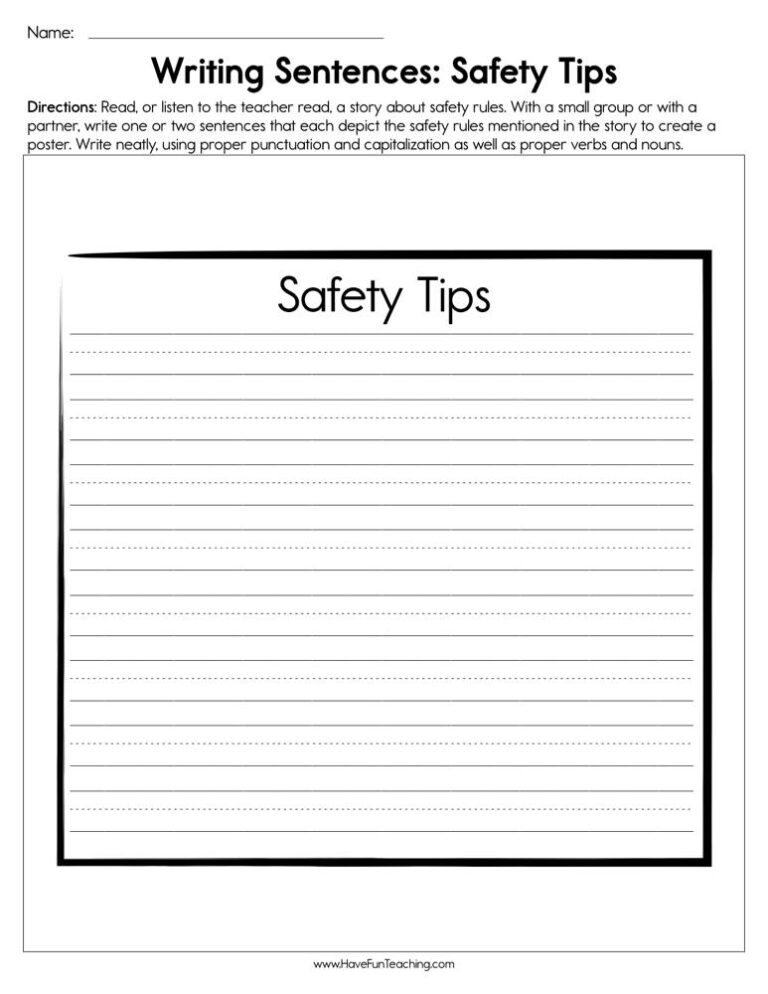
This writing sentences safety tips worksheet helps 1st grade students unscramble safety rules, write them with capitals and periods, and add a tip of their own. An answer key is included for quick checking.

Worksheet
Worksheet1st GradeDescribing Experiences Worksheet

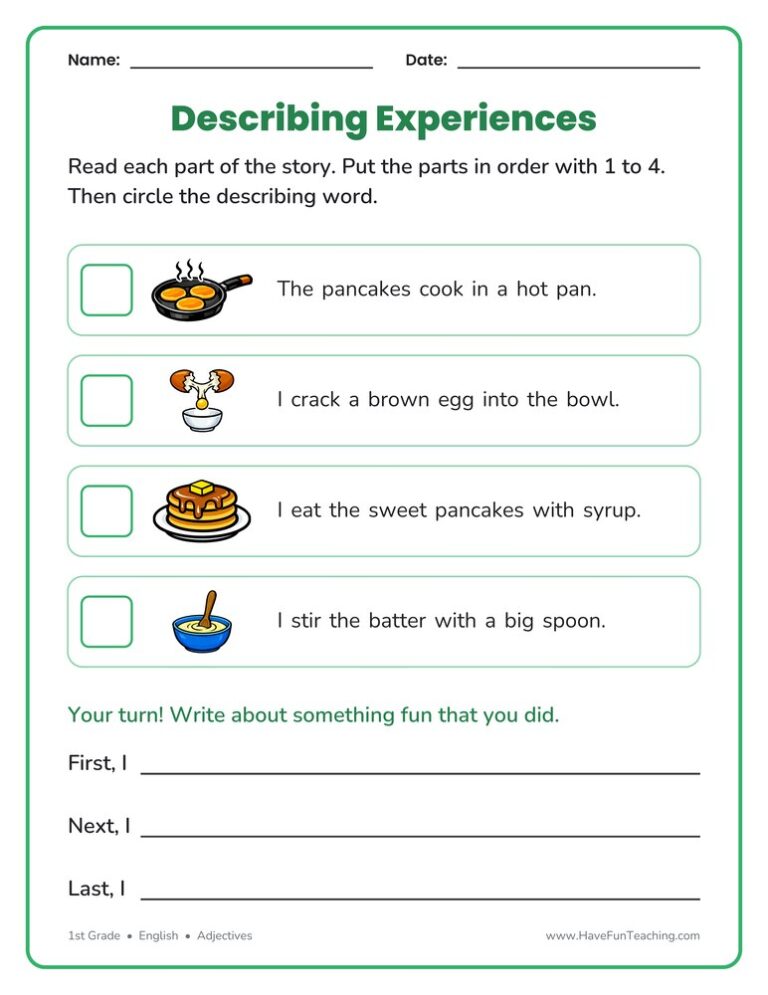
This describing experiences worksheet has 1st grade students put a four-part pancake story in order, circle each describing word, and then write their own First, Next, Last recount. An answer key is included.

Worksheet
Worksheet1st GradeDescribing Your Favorite Book Worksheet

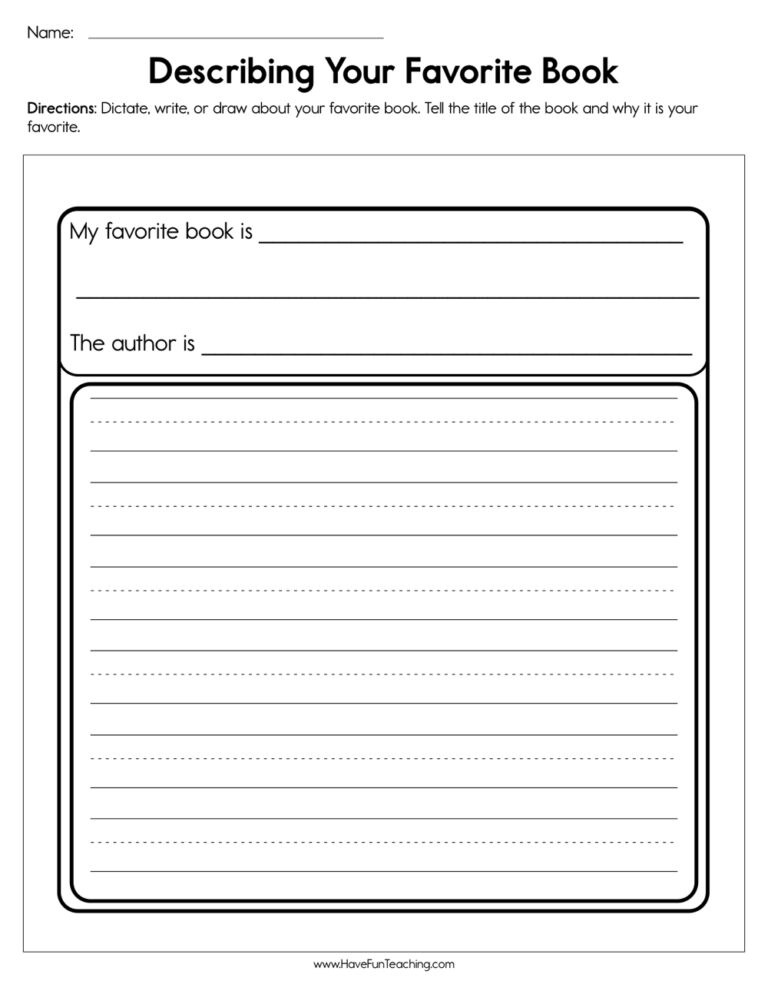
This Describing Your Favorite Book Worksheet gives 1st Grade readers three guided prompts and room to write about any book they choose, turning a retell into three easy questions.

Worksheet
Worksheet1st GradeWriting about a Topic Worksheet

A writing about a topic worksheet for 1st grade: name a topic you know well, draw it, then write two facts on the lines. Open-ended, so it can be used again with a new topic.

From our teachers' playbook

Little writers, big ideas

What do 1st graders learn with writing prompts?

First graders learn to write a few connected sentences about one idea. With a prompt to get them started, they tell about something that happened, share facts about an animal or give their opinion about a favorite book with a reason. They practice putting events in order with words like first, next and last, and adding details that make writing interesting. The click comes when a child stops writing "I like dogs" and writes "I like dogs because they are soft and they play fetch with me."

Our favorite ways to teach with prompts

A good prompt gets kids started. These moves help them keep going.

Add one more detail

After kids write, ask "Can you tell me more?" and have them add one detail to their story with a different color pencil. The color shows them how much their writing grew. Expect three-sentence stories to turn into five.

Why it works: kids understand an idea best when they touch it, then draw it, then write it, the order the U.S. Department of Education recommends for elementary math.

Adding Details to Your Story ActivityTry it withAdding Details to Your Story ActivityActivitiesOpen it →

Talk it before you write it

Before writing about an experience, partners tell each other the story out loud using first, next, last. Then you model writing your own story on chart paper. Kids who say it first write more and stall less.

Why it works: handing over the work step by step, from teacher to student, is one of the most widely used teaching frameworks (Pearson and Gallagher, 1983).

Sharing Experiences WorksheetTry it withSharing Experiences WorksheetWorksheetsOpen it →

Draw, then write

Let kids sketch their idea first. A picture holds the plan, so they can look back at it while writing each sentence. Draw details, write details.

Why it works: children learn more from words and pictures together than from words alone (Mayer, 2009).

Draw A Story WorksheetTry it withDraw A Story WorksheetWorksheetsOpen it →

Questions parents and teachers ask

How much should a 1st grader write?

Most first graders can write three to five related sentences by the end of the year. Early in the year, a picture and one or two sentences is a great start.

What are good writing prompts for 1st grade?

Prompts about their own life work best: a favorite day, a pet, a trip, a favorite book or what they want to be. Animal facts and "what happens next" picture prompts are also kid favorites.

How do I help a 1st grader who says "I don't know what to write"?

Talk first. Ask a few questions about the topic and repeat back what they said. Then help them write that first sentence, and they're usually off and running.

Should I correct spelling in 1st grade writing?

Focus on ideas first and praise good tries at spelling. Fix a few high-frequency words they should know, but don't cover the page in corrections.