Skip to content
Start My 3 Free Days $0 today · cancel anytime

1st Grade Animals Worksheets

34 1st grade animals worksheets. Teacher favorites: Mammals, Fish, or Birds Classifying Animals Worksheet and Reptile Classification Worksheet. How teachers use these

1st Grade Animals Worksheets

34 1st grade animals worksheets. Teacher favorites: Mammals, Fish, or Birds Classifying Animals Worksheet and Reptile Classification Worksheet. How teachers use these

Worksheet
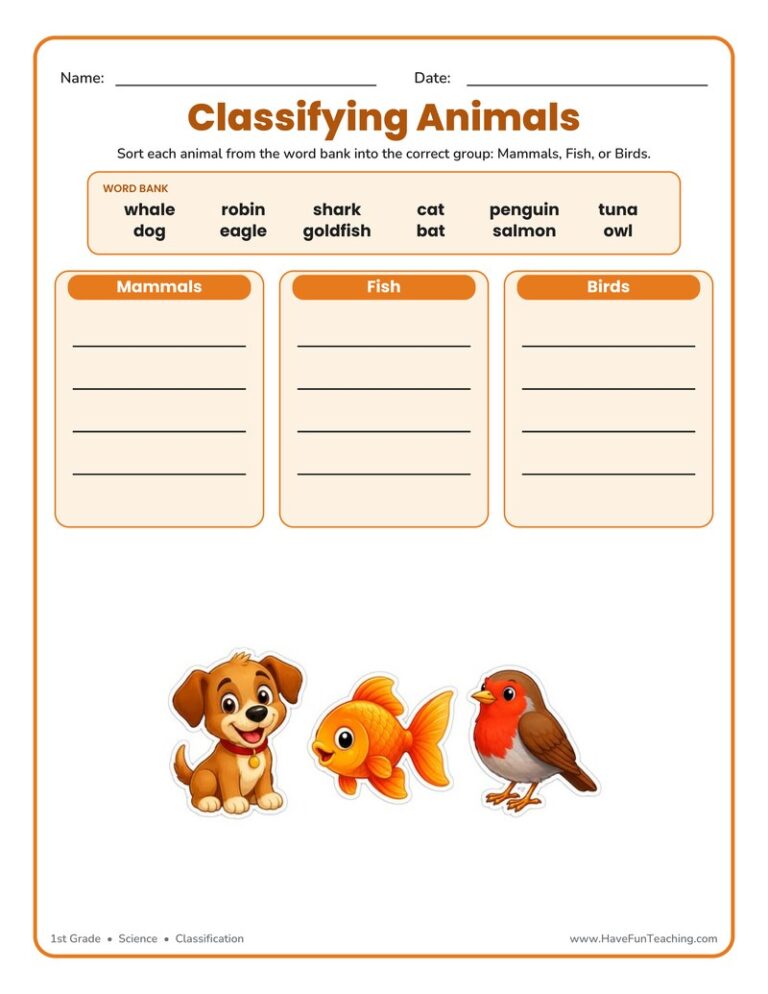
Worksheet1st GradeMammals, Fish, or Birds Classifying Animals Worksheet

A 1st grade Mammals, Fish, or Birds Classifying Animals Worksheet where students sort a word bank of animals into three groups. Includes a complete answer key for quick, no-prep science practice.

Worksheet
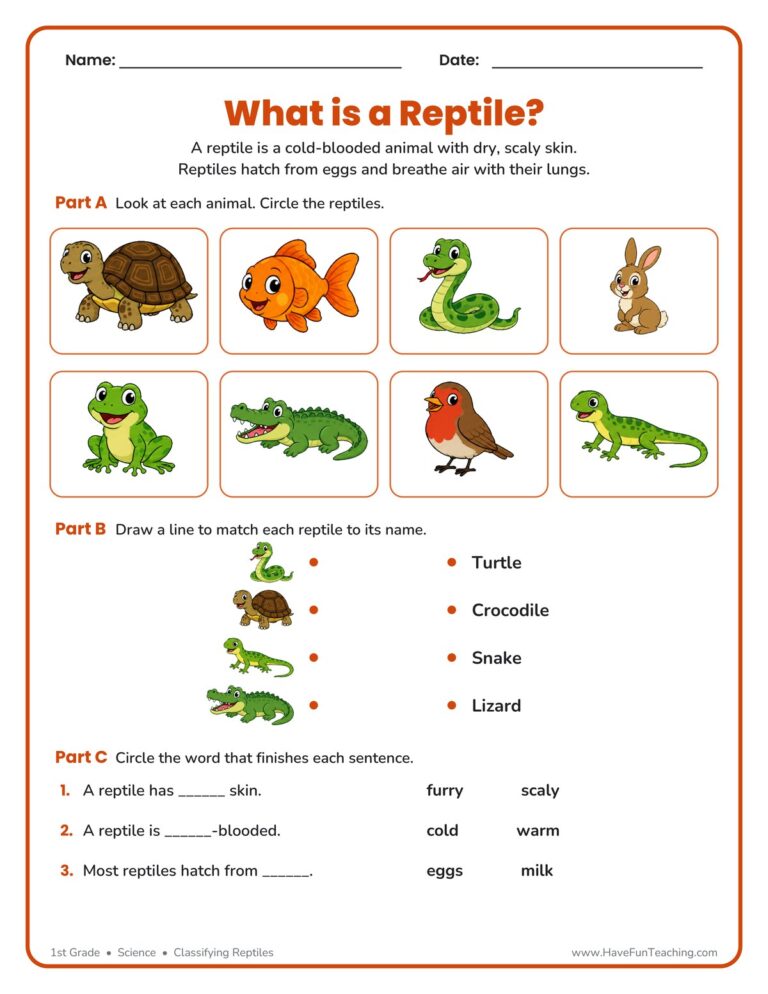
Worksheet1st GradeReptile Classification Worksheet

This reptile classification worksheet helps 1st graders sort animals by circling reptiles, matching them to their names, and completing simple reptile facts. Includes a complete answer key for fast, no-prep life science practice.

Worksheet
Worksheet1st GradeAnimal Names Worksheet

Students label nine friendly animal pictures using a nine-word bank in this animal names worksheet. Built for 1st Grade science, with an answer key included so checking work takes seconds.

Worksheet
Worksheet1st GradeImportance of Farming Worksheet

Use this Importance of Farming Worksheet to help 1st Grade students sort six farm foods into plants and animals and decide what farms really give people. Answer key included for fast, no-prep science practice.

Worksheet
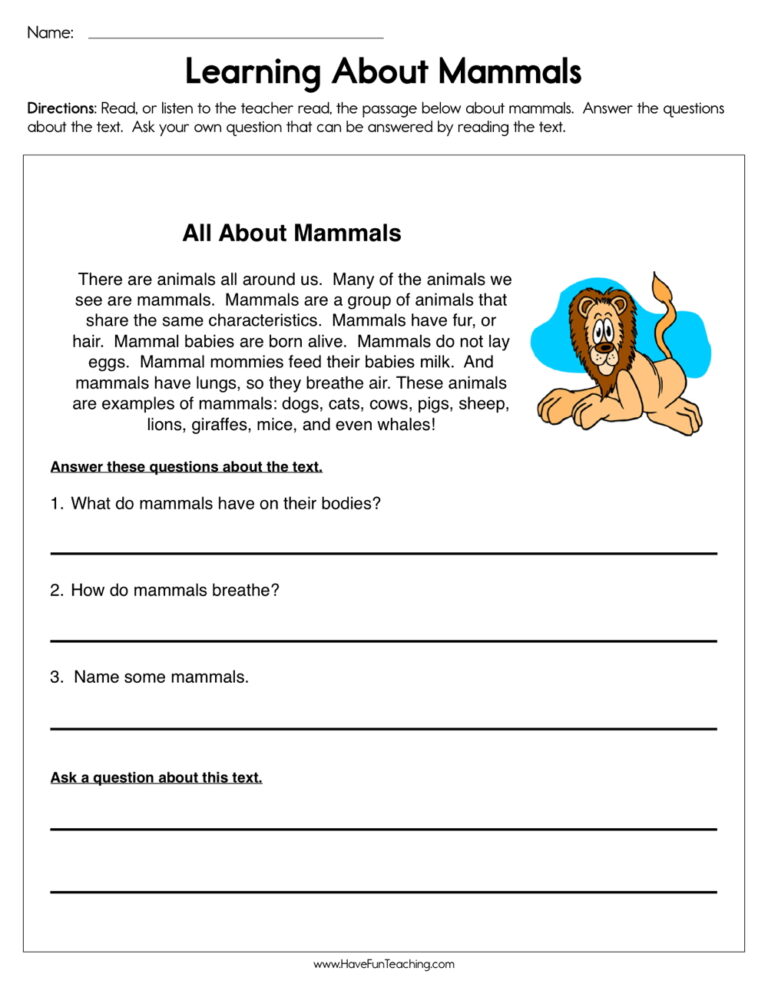
Worksheet1st GradeLearning about Mammals Worksheet

This Learning about Mammals Worksheet gives 1st graders a short informational passage and five fill-in-the-bubble questions about mammal traits. An answer key is included, so reading comprehension practice takes no prep at all.

Worksheet
Worksheet1st GradeSnake Rebus Worksheet

This Snake Rebus Worksheet gives 1st graders a picture-supported story to read aloud, then four pictures to label with the matching word. Answer key included, so fluency practice takes almost no prep.

Worksheet
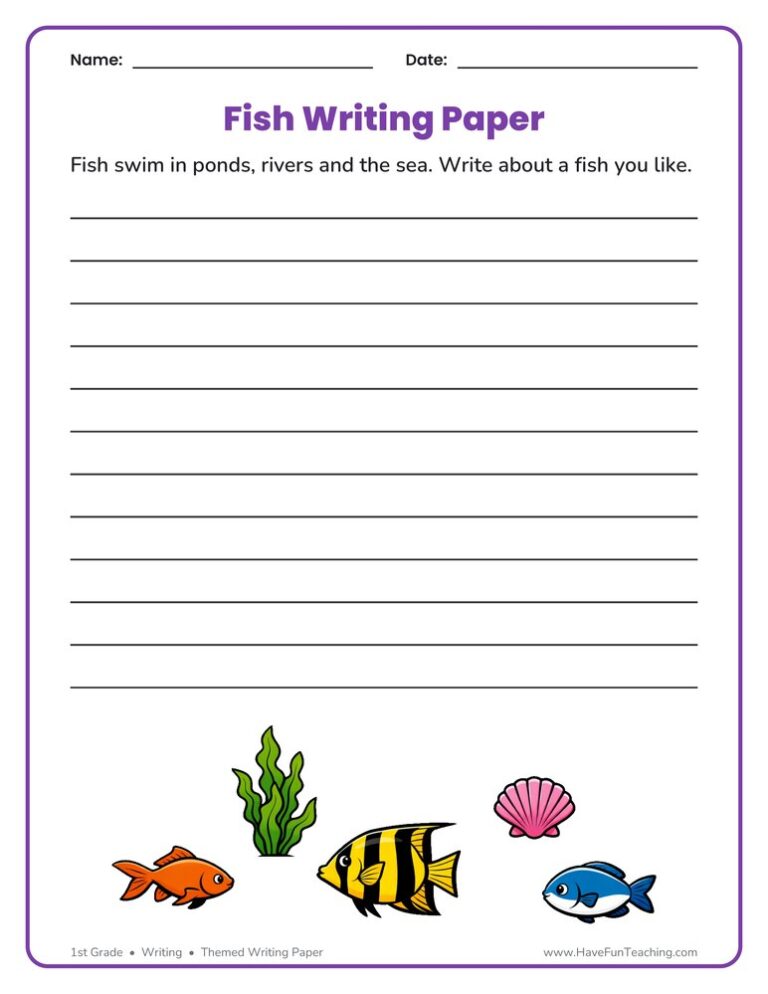
Worksheet1st GradeFish Writing Paper

This fish writing paper worksheet gives 1st grade students wide lined paper and a fun fish prompt, so every child can write about a favorite fish and practice neat, complete sentences.

Worksheet
Worksheet1st GradeBasic Fish Parts Worksheet

This Basic Fish Parts Worksheet asks 1st graders to label six numbered parts on a big, friendly fish using a word box. An answer key is included, so science practice takes no prep at all.

Worksheet
Worksheet1st GradeMain Details Whales Worksheet

This Main Details Whales Worksheet pairs a short first grade whale passage with five main topic and key detail questions. An answer key is included, so comprehension practice needs no prep at all.

Worksheet
Worksheet1st GradeWriting about Animals Worksheet

Writing about Animals Worksheet helps 1st graders pick an animal they love and write what it looks like, what it eats, and where it lives on clear, roomy lines that build confident sentence writing.

Worksheet
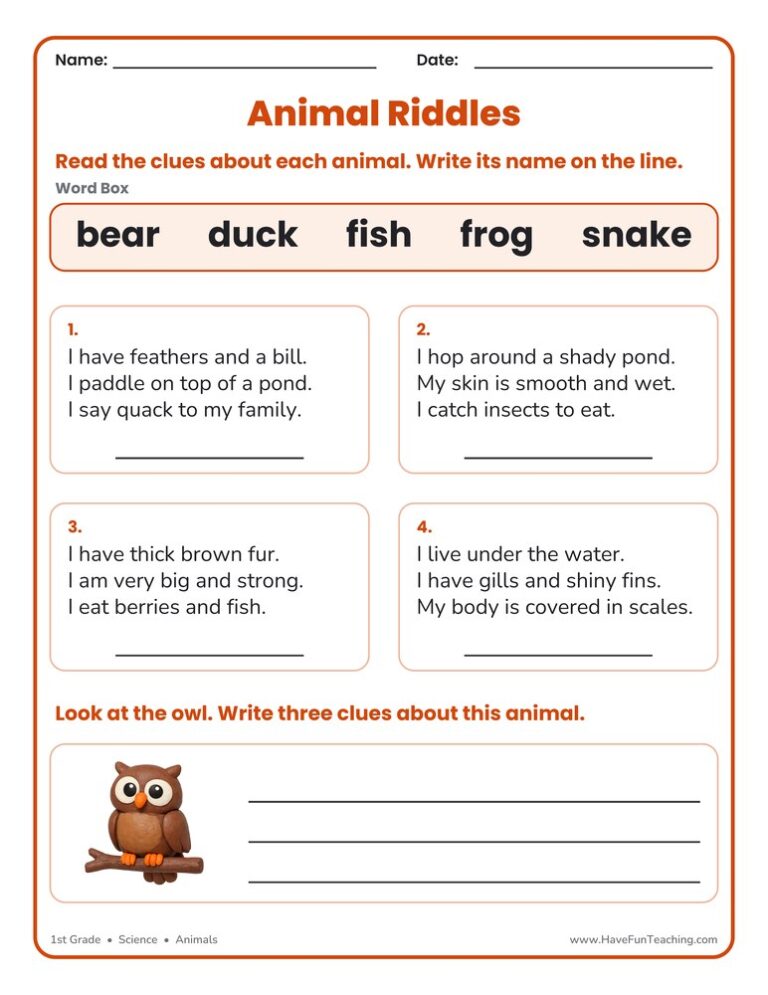
Worksheet1st GradeAnimal Riddles Worksheet

This animal riddles worksheet has first graders read three clues about an animal, choose its name from a word box, and then write their own clues about an owl. Answer key included for quick, no-prep science practice.

Worksheet
Worksheet1st GradeAnimal Facts Worksheet

Our animal facts worksheet teaches 1st graders to spot the name, facts, and ending in a frog piece, then write their own. Includes an answer key and builds strong informative writers.

Worksheet
Worksheet1st GradeParents Offspring Worksheet

This parents offspring worksheet has 1st Grade students match five baby animals to their parents, then write each baby's name from a trait it shares. An answer key is included.

Worksheet
Worksheet1st GradeOcean Animal Habitat Worksheet

This Ocean Animal Habitat Worksheet has 1st graders circle the animals that live in the sea, then write the three names on wide handwriting lines. Answer key included for quick, no-prep science practice.

Worksheet
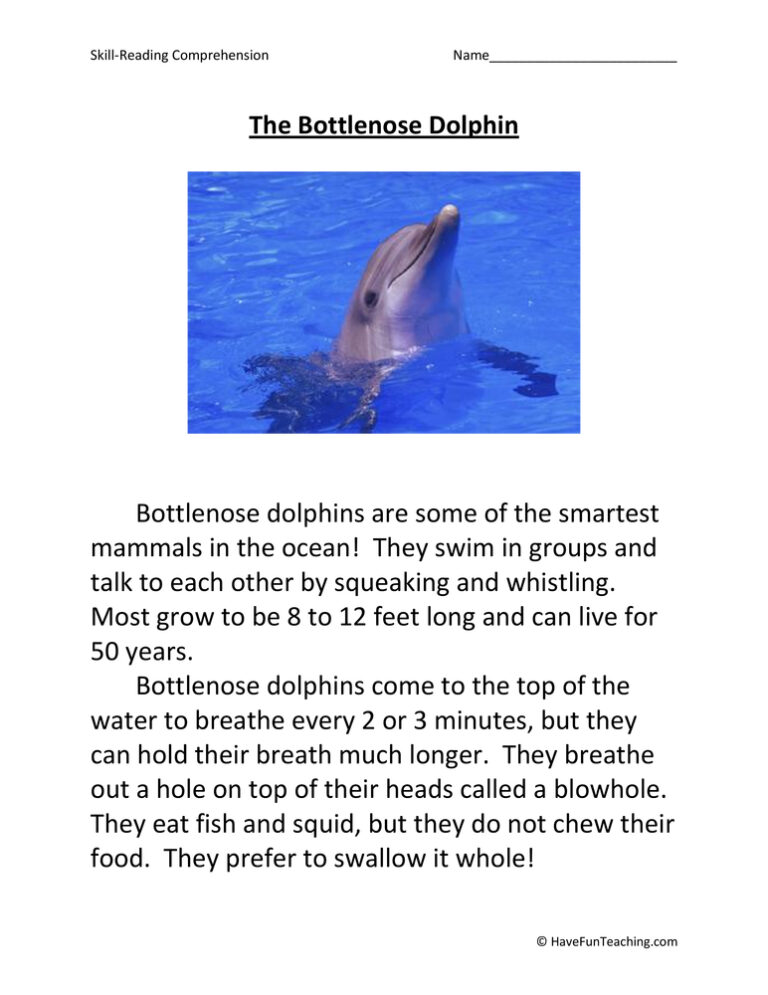
Worksheet1st GradeThe Bottlenose Dolphin Reading Comprehension Worksheet

The Bottlenose Dolphin Reading Comprehension Worksheet gives 1st grade readers a short nonfiction ocean passage and five bubble-in questions. An answer key is included, so close-reading practice takes only minutes to set up.

Worksheet
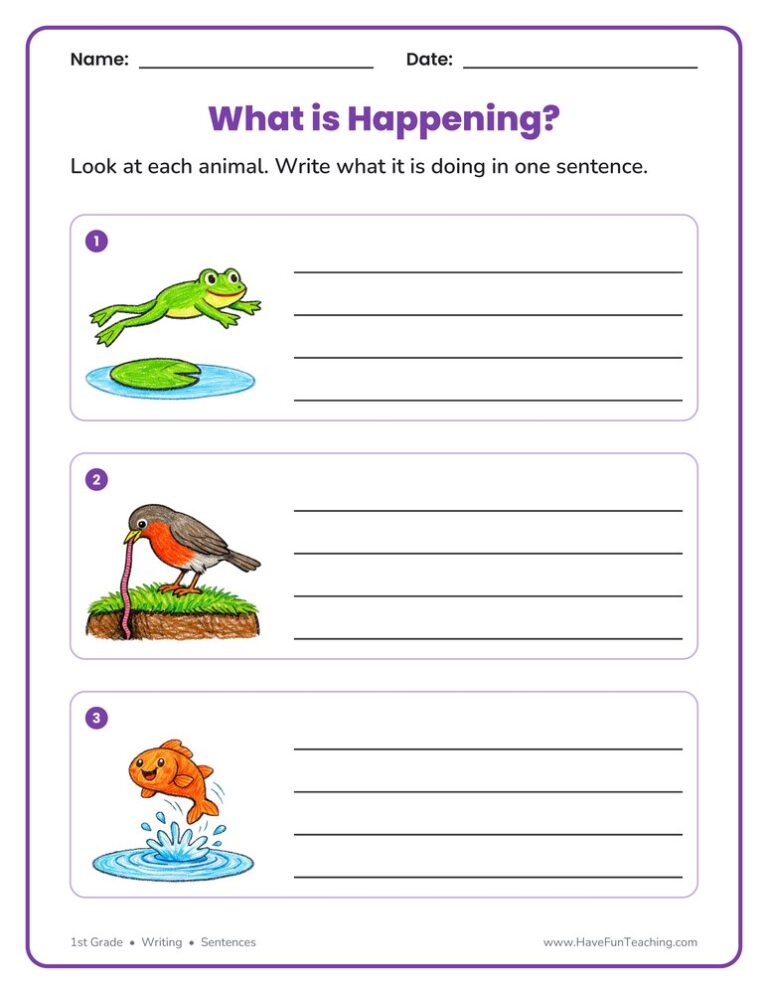
Worksheet1st GradeAnimal Sentence Worksheet

This Animal Sentence Worksheet gives 1st Grade students three lively animal pictures to write about, building complete sentences with strong action words while they practice careful observation.

Worksheet
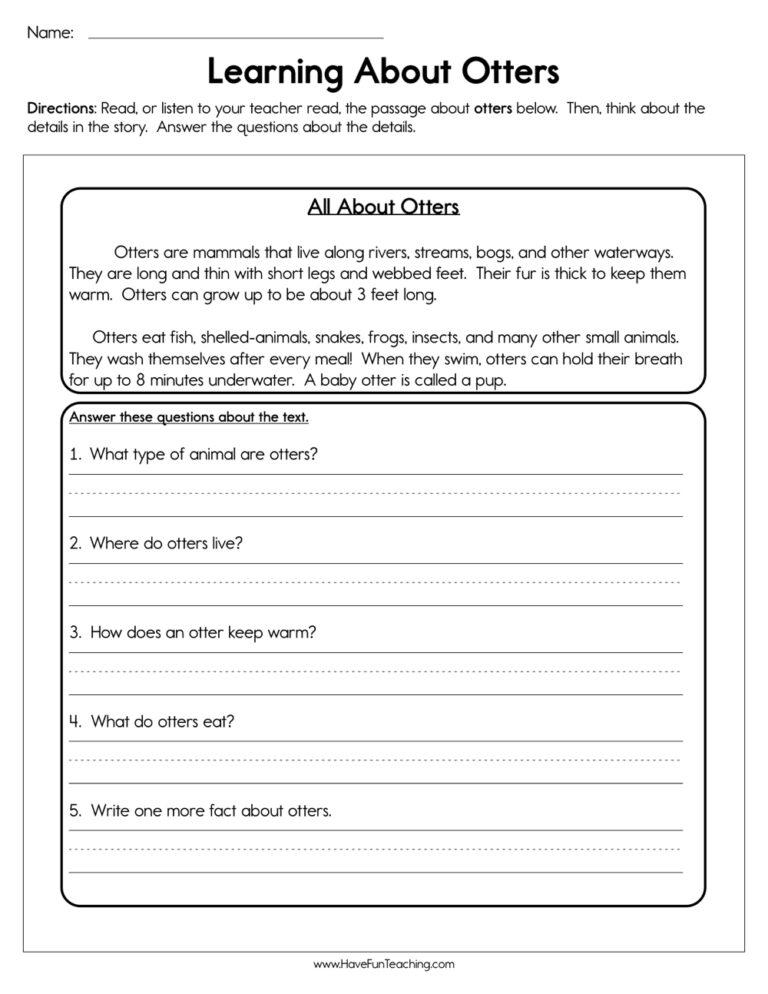
Worksheet1st GradeLearning about Otters Worksheet

This Learning about Otters worksheet gives first graders a short non-fiction passage and five multiple-choice questions about otter fur, food and habitat. An answer key is included, so comprehension practice takes no prep at all.

Worksheet
Worksheet1st GradeAnimal Habitats Matching Worksheet

This animal habitats matching worksheet has first graders match five animals to their homes, then write the animal that lives in each pictured habitat. Answer key included.

Worksheet
Worksheet1st GradeDescribing Frogs Worksheet

This describing frogs worksheet has 1st graders sort frog words by how a frog looks, sounds, or feels, with an answer key included to build science vocabulary and sharp observation skills.

Worksheet
Worksheet1st GradeAnimal Beginning Digraphs Sounds Worksheet

This animal beginning digraphs sounds worksheet has 1st grade students write ch, sh, or st to finish nine animal names. An answer key is included, making phonics practice quick to check.

From our teachers' playbook

Who has fur, scales or feathers?

What do 1st graders learn about animals?

First graders learn that animals come in groups with things in common. Mammals have fur or hair and feed their babies milk, birds have feathers, fish have gills and scales, and reptiles have dry, scaly skin. Kids learn what all animals need (food, water, air and shelter), where they live, and how their body parts help them survive, like a fish's fins for swimming. They also sort living and nonliving things. The click moment is a child explaining why a dog and a whale are both mammals.

Our favorite ways to make animal science stick

First graders are natural animal experts. These moves turn their curiosity into science.

Fur, fins or feathers?

Give kids animal pictures and three bins: mammals, fish and birds. They sort and give one clue for each: "Feathers, so it's a bird!" Kids who can say the reason really understand the groups.

Why it works: the U.S. Department of Education's guide for teaching elementary math recommends moving from hands-on objects to drawings to numbers.
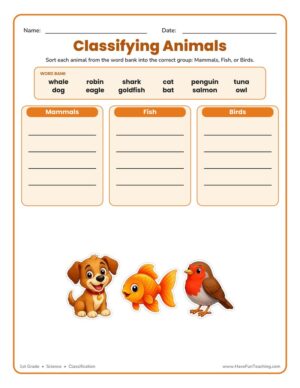
Mammals, Fish, or Birds Classifying Animals WorksheetTry it withMammals, Fish, or Birds Classifying Animals WorksheetWorksheetsOpen it →
Sing about mammals

Play the Mammal Song and have kids hold up a picture of a mammal each time a feature is mentioned: fur, milk, breathing air. Then add surprises like bats and whales.

Why it works: a catchy, repeating tune gives the brain a hook to hang words on, so sung text is remembered better (Wallace, 1994).

Mammal SongTry it withMammal SongSongsOpen it →

Ocean homes

Show an ocean habitat scene and kids find and name each animal, then tell how its body helps it live there. Talking about body parts and homes together builds real understanding.

Why it works: children learn more from words and pictures together than from words alone (Mayer, 2009).

Ocean Animal Habitat WorksheetTry it withOcean Animal Habitat WorksheetWorksheetsOpen it →

Questions teachers and parents ask

What do 1st graders learn about animals?

They learn animal groups like mammals, birds, fish and reptiles, what animals need to live, where they live and how their body parts help them survive.

What do all animals need to survive?

Food, water, air and shelter. Kids learn that different animals meet these needs in different ways.

How do you teach animal groups to 1st graders?

Use pictures and real examples. Sort animals by features kids can see, like fur, feathers and scales, and talk about why each animal belongs in its group.

How can I explore animals at home?

Visit a zoo or farm, watch animal videos, read nonfiction animal books and observe birds and bugs outside.