Skip to content
Start My 3 Free Days $0 today · cancel anytime

4th Grade Punctuation Resources

10 4th grade punctuation resources: 5 worksheets, 2 activities, 2 test prep and more. How teachers use these

4th Grade Punctuation Resources

10 4th grade punctuation resources: 5 worksheets, 2 activities, 2 test prep and more. How teachers use these

Worksheet
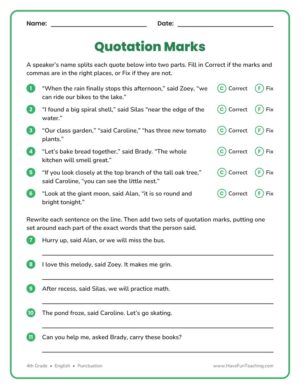
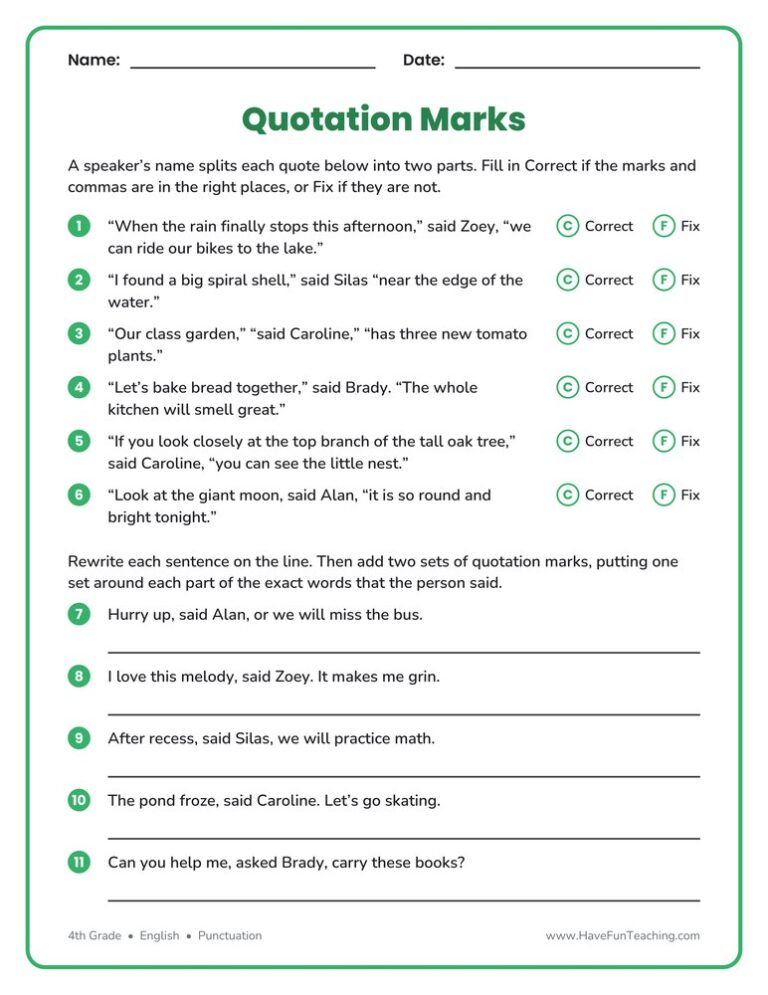
Worksheet4th GradeQuotation Marks Punctuation Worksheet

This quotation marks punctuation worksheet gives 4th grade students practice with split quotations: they check six sentences for errors, then rewrite five with two sets of marks. An answer key is included.

Activity
Activity4th GradeProofreading Capitalization and Punctuation Activity

This proofreading capitalization and punctuation activity gives 2nd to 5th grade students 16 self-checking detective cards for fixing sentences. A practice page and answer key are included.

Worksheet
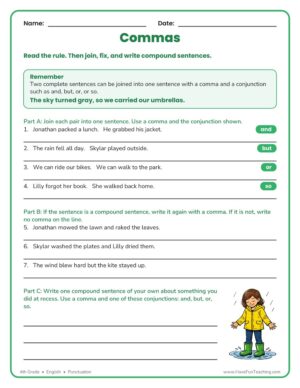
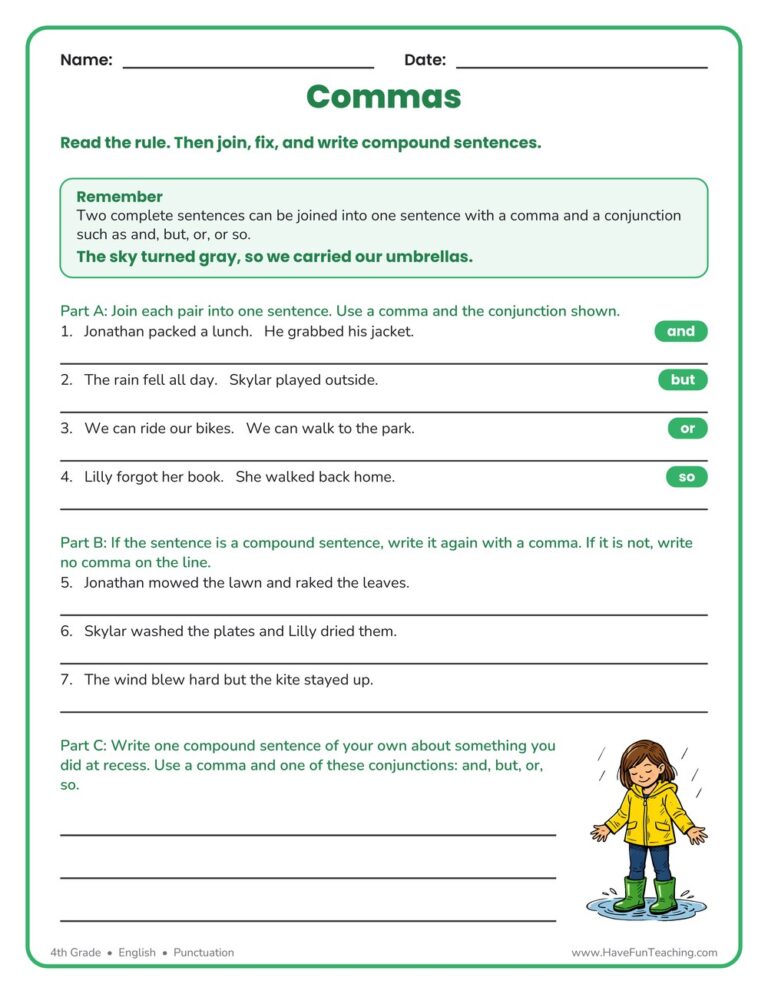
Worksheet4th GradeIndependent Clauses Comma Worksheet

This independent clauses comma worksheet gives 4th graders eight chances to join, fix, and write compound sentences with a comma. Answer key included, so students can check their own punctuation and write with confidence.

Workbook
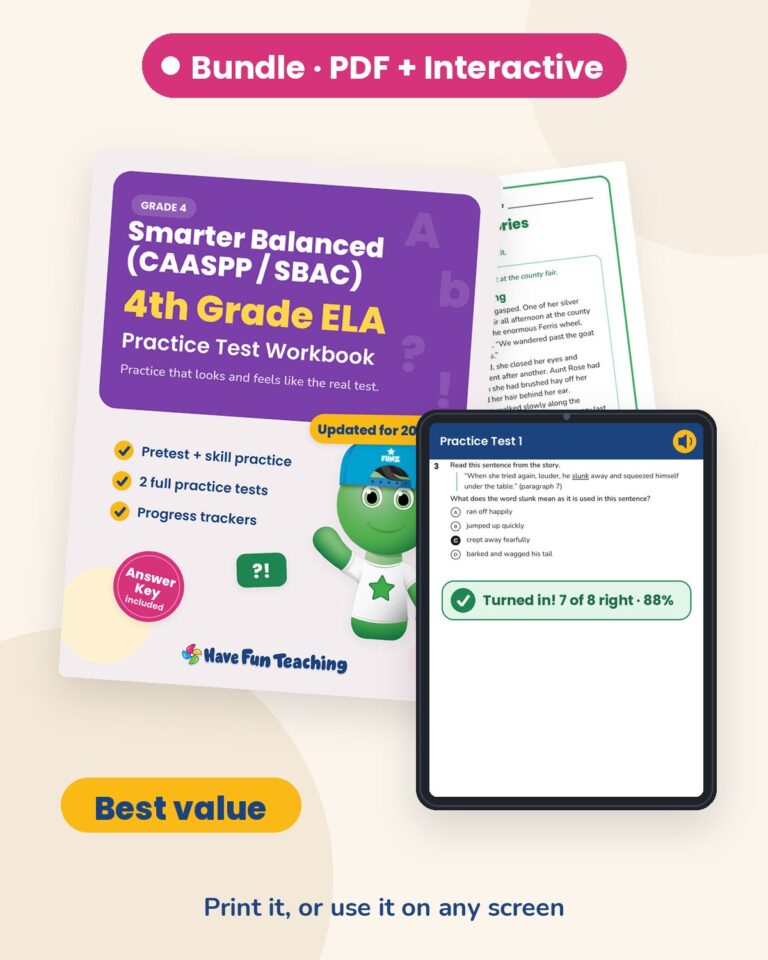
Workbook4th GradeSmarter Balanced (CAASPP / SBAC) 4th Grade ELA Practice Test Workbook

A Smarter Balanced (CAASPP / SBAC) 4th grade ELA practice test workbook for teachers, with a pretest, skill practice for all 24 standards, mixed review and 2 full-length practice tests. Answer key included, so test prep is ready to go.

Worksheet
Worksheet4th GradeIncluding End Punctuation Worksheet

This Including End Punctuation Worksheet has 4th grade students add the missing end mark, name each sentence type, and write their own sentences. An answer key is included for quick checking.

Worksheet
Worksheet4th GradeWriting with Commas Worksheet

This writing with commas worksheet helps 4th graders add commas to lists and compound sentences, sort how each comma is used and write their own sentence. An answer key is included for easy checking.

Worksheet
Worksheet4th GradeQuotations Punctuation Worksheet

This Quotations Punctuation Worksheet asks 4th graders to tell direct speech from retold speech, then rewrite five sentences with quotation marks in place. Answer key included for fast, no-prep grammar practice.

Common Core Lesson
Common Core Lesson4th GradeL.4.2 Fourth Grade Common Core Lesson

Using L.4.2 Fourth Grade Common Core Lesson, students correctly use quotation marks in their writing to share their character's thoughts and feelings effectively.

Workbook
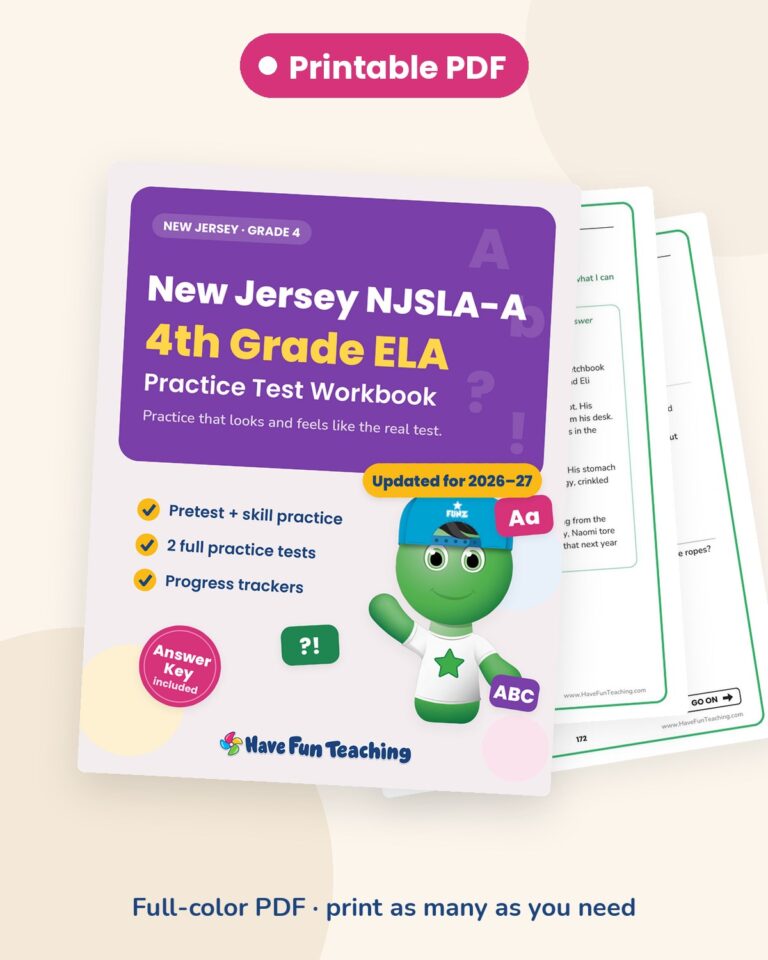
Workbook4th GradeNew Jersey NJSLA-A 4th Grade ELA Practice Test Workbook

A NJSLA-A 4th grade ELA practice test workbook for teachers, with a pretest, skill practice for all 20 standards, mixed review and 2 full-length practice tests. Answer key included, so test prep is ready to go.

Activity
Activity4th GradeSay What Quotation Station Activity

This say what quotation station activity has 2nd to 4th Grade students match animal speech bubbles to speakers and write each sentence with quotation marks. Answer key included.

From our teachers' playbook

Commas, quotes, and the perfect pause

What do 4th graders learn about punctuation?

Fourth grade punctuation is all about dialogue and longer sentences. Kids learn to use quotation marks and commas when characters talk: "Let's go," said Mia. They put a comma before the joining word in a compound sentence: I was tired, but I kept running. They also keep sharpening end marks and capital letters as their writing grows longer. The click moment comes when kids read their own story aloud and realize the punctuation tells the reader exactly where to pause and who is speaking.

Our favorite ways to make punctuation stick

Punctuation sticks when kids use it in real writing, not just on drills. These are the moves we use most.

Think-aloud dialogue

Write a two-line conversation between two characters on the board with no punctuation at all. Think out loud as you add each mark: "Who is talking? Where do their words start and stop?" Then let kids punctuate the next line with you.

Why it works: showing first, practicing together, then letting kids try alone is the "gradual release" model teachers have relied on for decades (Pearson and Gallagher, 1983).

L.4.2 Fourth Grade Common Core LessonTry it withL.4.2 Fourth Grade Common Core LessonCommon Core LessonsOpen it →

Proofreading partners

Give partners a short paragraph full of punctuation mistakes and colored pencils. One reads aloud while the other marks every spot that needs a fix. Hearing the pauses helps kids find the missing commas.

Why it works: going from real objects to pictures to symbols is a core recommendation of the U.S. Department of Education's elementary math guide.

Proofreading Capitalization and Punctuation ActivityTry it withProofreading Capitalization and Punctuation ActivityActivitiesOpen it →

Comma or no comma?

Show two short sentences and a joining word, and kids decide if a comma belongs. Five quick examples at the start of class show you who understands compound sentences before they write.

Why it works: pulling an answer out of memory makes it stick far better than rereading it, one of the strongest findings in learning research (Dunlosky and colleagues, 2013).

Independent Clauses Comma WorksheetTry it withIndependent Clauses Comma WorksheetWorksheetsOpen it →

Questions parents and teachers ask about punctuation

What punctuation should a 4th grader know?

Fourth graders should use end marks, capital letters, commas in a series and in compound sentences, and quotation marks with commas for dialogue. They also use apostrophes for contractions and possessives.

Where does the comma go in a compound sentence?

The comma goes right before the joining word, like and, but or so. For example: "It rained, so we stayed inside."

How do you teach quotation marks to 4th graders?

Start with speech bubbles from comics. Show that the words inside the bubble go inside the quotation marks, then add who said it.

How can I help my child with punctuation at home?

Have them read their writing out loud. Wherever they pause or a character speaks, ask "What mark goes here?" Reading aloud catches most mistakes.