Skip to content
Start My 3 Free Days $0 today · cancel anytime

4th Grade Phonics Resources

12 4th grade phonics resources: 3 worksheets, 3 activities, 3 lesson plans and more, covering pronunciation, ending sounds, digraphs, plus 1 more topic. How teachers use these

4th Grade Phonics Resources

12 4th grade phonics resources: 3 worksheets, 3 activities, 3 lesson plans and more, covering pronunciation, ending sounds, digraphs, plus 1 more topic. How teachers use these

Game
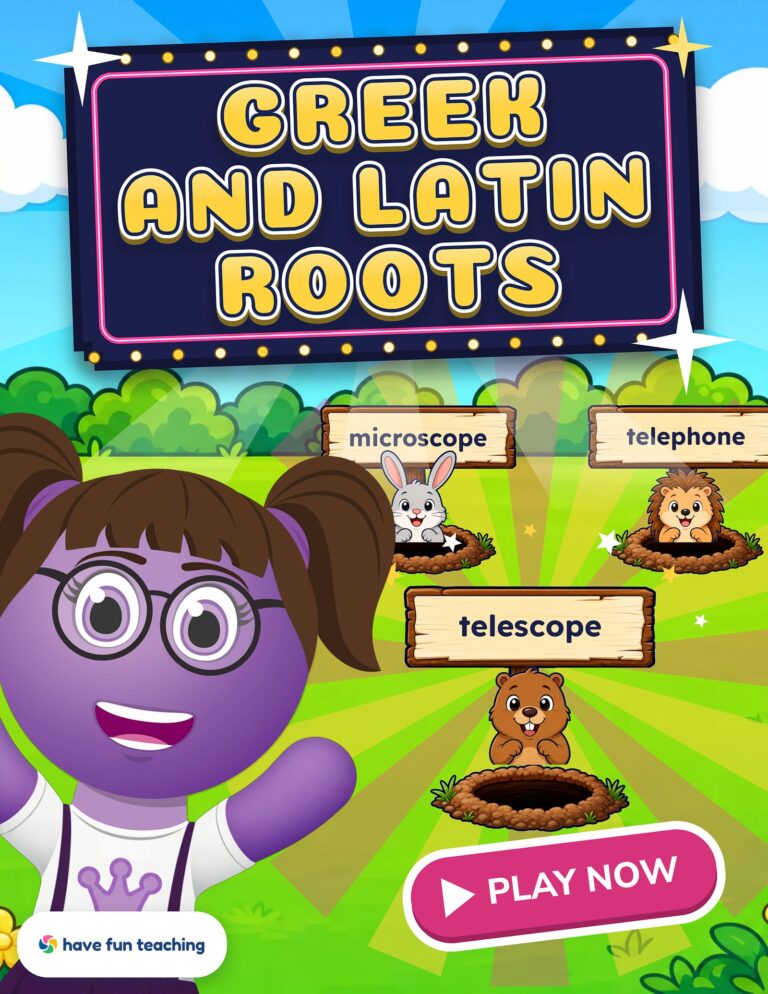
Game4th GradeGreek and Latin Roots Game

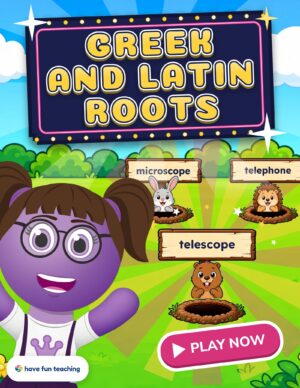
A retro arcade game where 4th grade kids read each clue and tap the critter holding the matching word, using Greek and Latin roots like tele, scope, port and graph. Play online on any phone, tablet, Chromebook or computer.

Worksheet
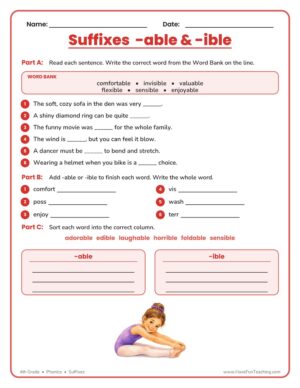
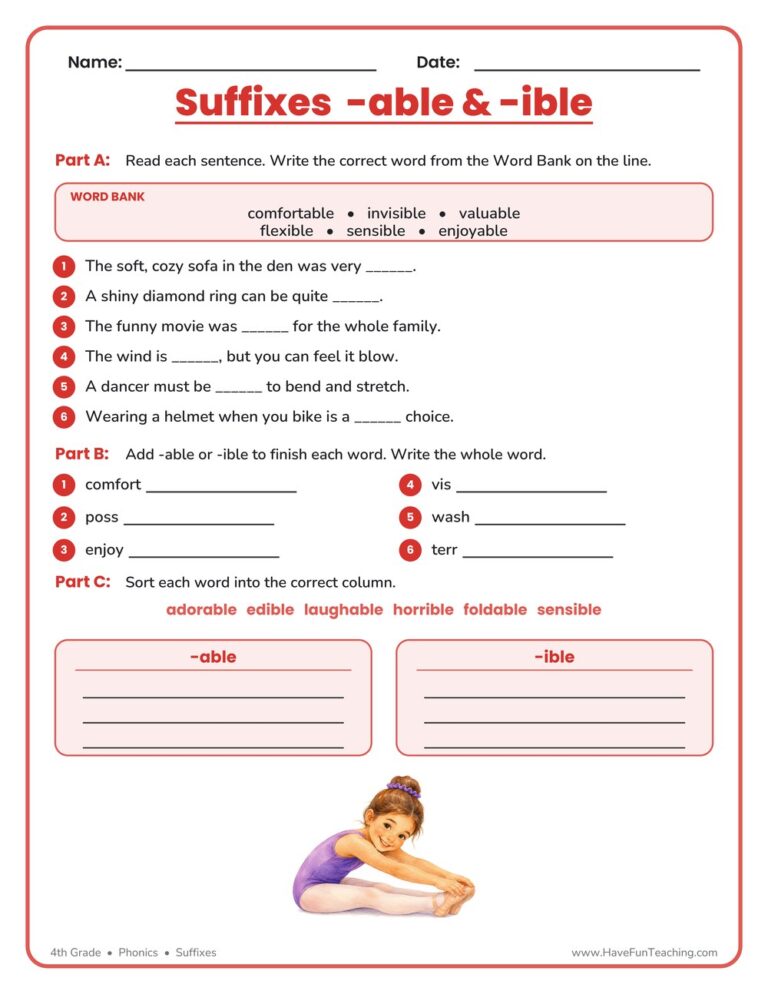
Worksheet4th GradeSuffix ABLE and IBLE Worksheet

This Suffix ABLE and IBLE Worksheet helps 4th graders add -able or -ible and sort words by their ending across three quick activities. Answer key included — perfect for no-prep phonics and spelling practice.

Flash Cards
Flash Cards4th GradePrefix Flash Cards

These prefix flash cards help kindergarten to 4th grade students learn 24 common prefixes, their meanings and an example word for each. Fold-over cards, a practice page and an answer key are included.

Worksheet
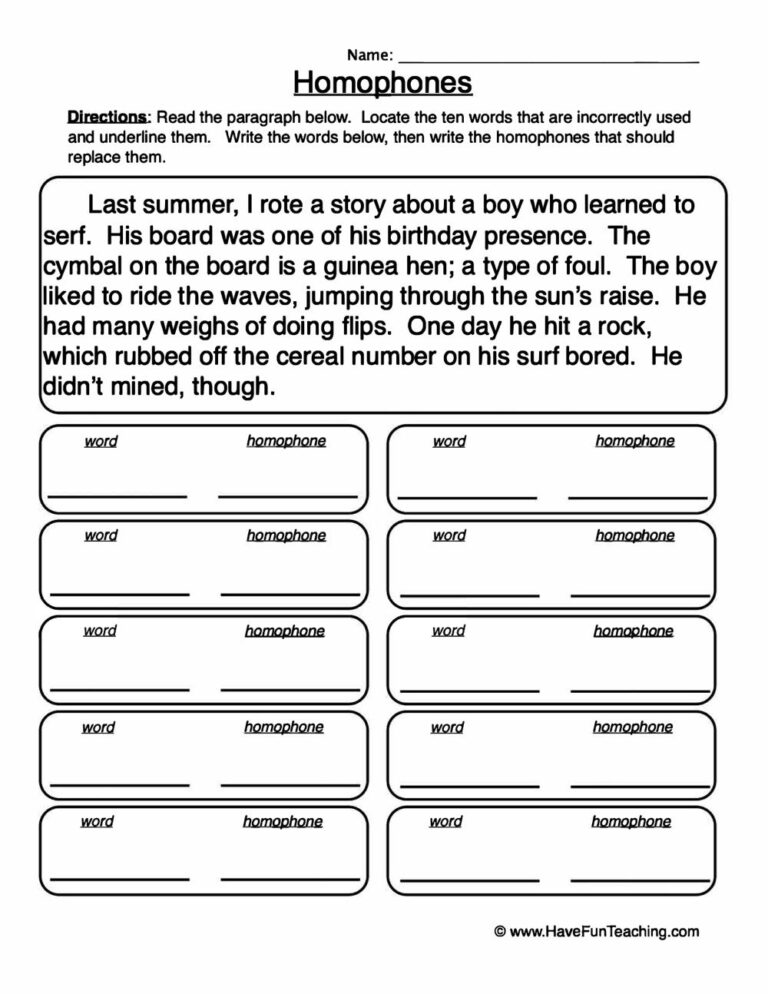
Worksheet4th GradeFinding Homophones Worksheet

This finding homophones worksheet asks 4th grade students to hunt down eight misused homophones inside a garden paragraph and write the word that belongs. An answer key is included, so checking the work takes seconds.

Flash Cards
Flash Cards4th GradeSuffix Flash Cards

Students learn 24 common suffixes, their meanings and example words with these suffix flash cards for kindergarten to 4th grade. Fold-over cards, a practice page and an answer key are included.

Activity
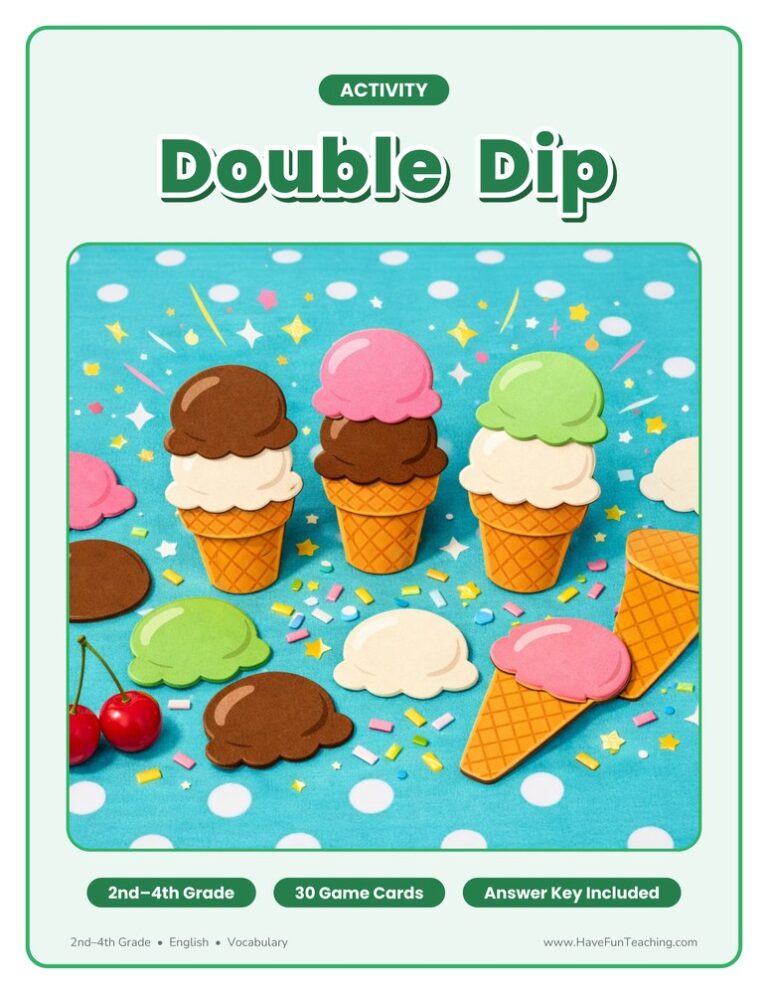
Activity4th GradeDouble Dip Homographs Activity

This double dip homographs activity for 2nd to 4th Grade has kids match cone words to two scoop sentences, one for each meaning. Answer key included for quick checking.

Lesson Plan
Lesson Plan4th GradeSingle Lesson Plan Template

Using this Single Lesson Plan Template, you will be able to plan lessons that best meet your students and have all of the information you need in one place!

Worksheet
Worksheet4th GradeOU OW Matching Game Worksheet

This ou ow matching game worksheet helps 1st graders match pictures to words and write the missing ou or ow. It includes an answer key and builds confident vowel team reading.

Activity
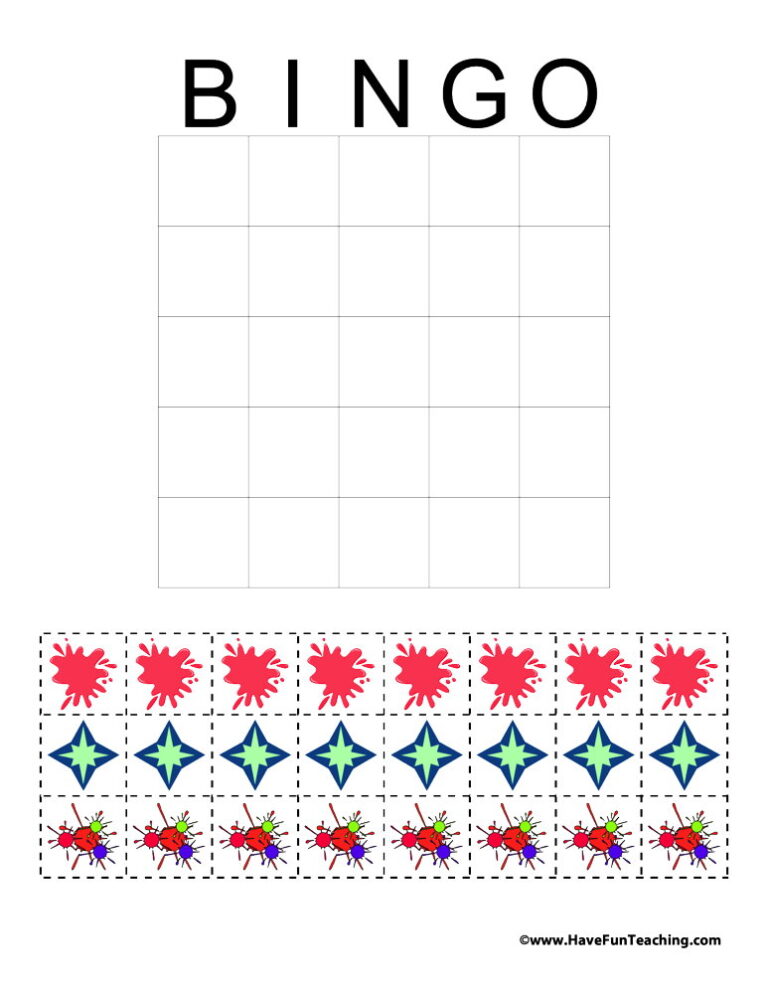
Activity4th GradeBlank BINGO Board

Play a blank bingo board activity with any skill you teach. Preschool to 5th grade students fill in the boards, listen for each answer, and cover five in a row to win.

Lesson Plan
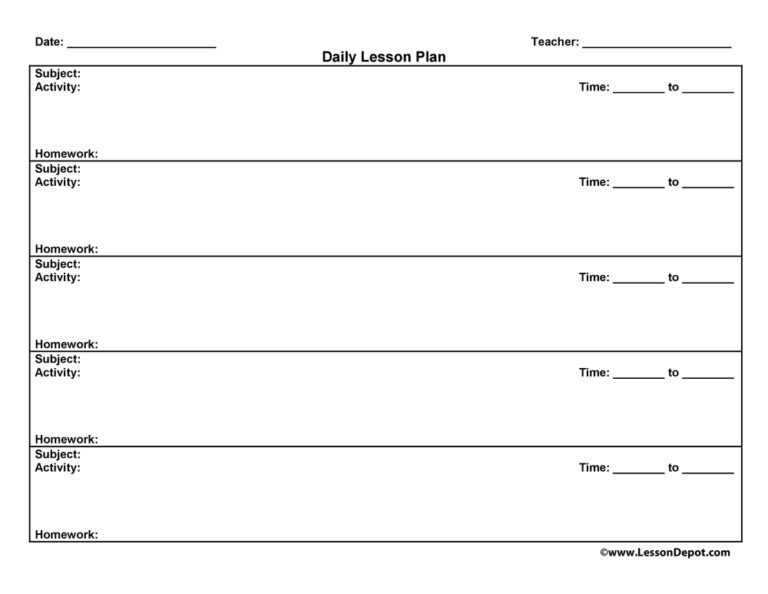
Lesson Plan4th Grade5 Subject Lesson Plan Template

Using this 5 Subject Lesson Plan Template, teachers will be able to keep track of your lesson plans for five subjects that they prepare to teach.

Lesson Plan
Lesson Plan4th GradeESOL Strategies Lesson Plan Template

Using this ESOL Strategies Lesson Plan Template, you will be able to plan lessons that best meet your ESL students and have all of the information you need in one place!

Activity
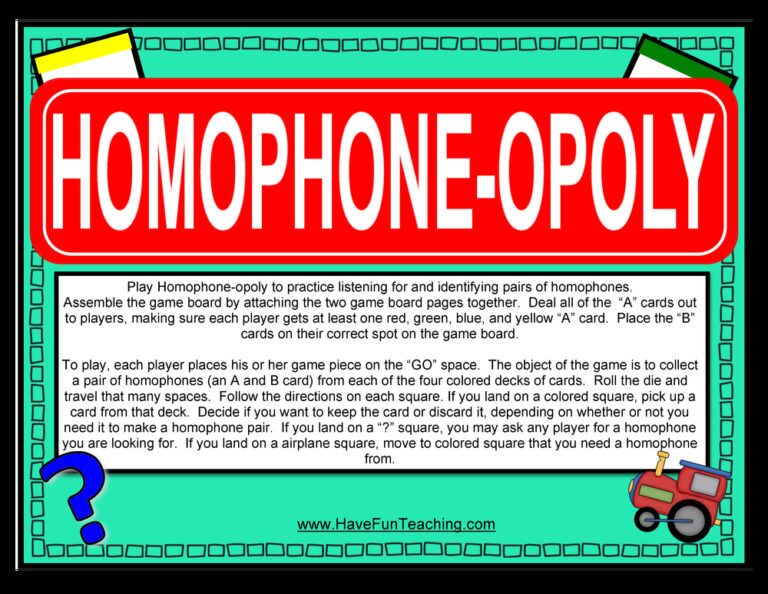
Activity4th GradeHomophoneopoly Homophones Activity

Using Homophoneopoly Homophones Activity, students play Homophone-opoly to practice listening for and identifying pairs of homophones.

From our teachers' playbook

Big words, broken into little pieces.

What do 4th graders learn in phonics?

By 4th grade, phonics is about cracking long, unfamiliar words. Kids use what they know about syllables, prefixes, suffixes and roots to read words like un + predict + able = unpredictable. They learn common Greek and Latin roots, such as "tele" (far) and "port" (carry), which unlock whole families of words. They also sort out tricky patterns like -able and -ible, and tell apart homophones and homographs, like "read" (now) and "read" (yesterday). The click moment is when kids stop skipping long words and start taking them apart.

Our favorite ways to teach 4th grade phonics

Fourth graders need tools for big words. These moves give them a plan for every word they meet.

Peel off the prefix

Show a long word and have kids find and cover the prefix with a finger, then the suffix, then read the root. Flash a prefix card and ask for three words that use it. Kids quickly see that long words are just short parts glued together.

Why it works: the National Reading Panel found that systematic, explicit phonics teaching clearly improves how children learn to read.

Prefix Flash CardsTry it withPrefix Flash CardsFlash CardsOpen it →
Root detectives

Give each team a Greek or Latin root and two minutes to list words that contain it. Then they guess what the root means from their list. Figuring out "port" means carry from "transport" and "portable" sticks far better than a definition.

Why it works: playful practice with a clear goal keeps kids practicing longer, and simple learning games have been shown to build real skills (Ramani and Siegler, 2008).

Greek and Latin Roots GameTry it withGreek and Latin Roots GameGamesOpen it →

Suffix snap checks

Flash a suffix card and have kids say what it means and a word that uses it. Keep it to two minutes and mix in suffixes from earlier weeks. Quick, repeated checks make suffixes automatic.

Why it works: a big review of study methods ranked quick self-quizzing among the most powerful ways to remember (Dunlosky and colleagues, 2013).

Suffix Flash CardsTry it withSuffix Flash CardsFlash CardsOpen it →

Questions parents and teachers ask us

Do 4th graders still need phonics?

Yes. Fourth graders use phonics to read long, multisyllabic words. They learn syllable patterns, prefixes, suffixes and roots, which help them read and understand harder words in every subject.

What are Greek and Latin roots?

Roots are word parts that come from Greek and Latin and carry meaning. "Bio" means life and "graph" means write, so "biography" is writing about someone's life.

How do I help my 4th grader read long words?

Teach them to break the word into parts. Find the prefix and suffix first, then read the root, then put the parts back together. Practicing with words from their science or social studies books works well.

What is the difference between homophones and homographs?

Homophones sound the same but are spelled differently, like "pair" and "pear." Homographs are spelled the same but have different meanings, and sometimes different sounds, like "bass" the fish and "bass" the instrument.