Skip to content
Start My 3 Free Days $0 today · cancel anytime

4th Grade Inference Resources

11 4th grade inference resources: 5 worksheets, 4 activities, 3 graphic organizers and more. How teachers use these

4th Grade Inference Resources

11 4th grade inference resources: 5 worksheets, 4 activities, 3 graphic organizers and more. How teachers use these

Activity
Activity4th GradeInference Chains Activity

This inference chains activity has 3rd to 5th grade students match each inference to two supporting clues and build paper chains. Answer key included.

Worksheet
Worksheet4th GradeInference Recording Worksheet

This inference recording worksheet has 4th grade students record clues from any book, connect them to what they know, and write their own inferences to build deeper reading comprehension.

Worksheet
Worksheet4th GradeCompare and Contrast Worksheet Fiction and Non-Fiction

This compare and contrast worksheet fiction and non-fiction pairs a sea otter article with a short story so 4th graders can chart what is alike and different. Answer key included for fast, no-prep paired-text practice.

Activity
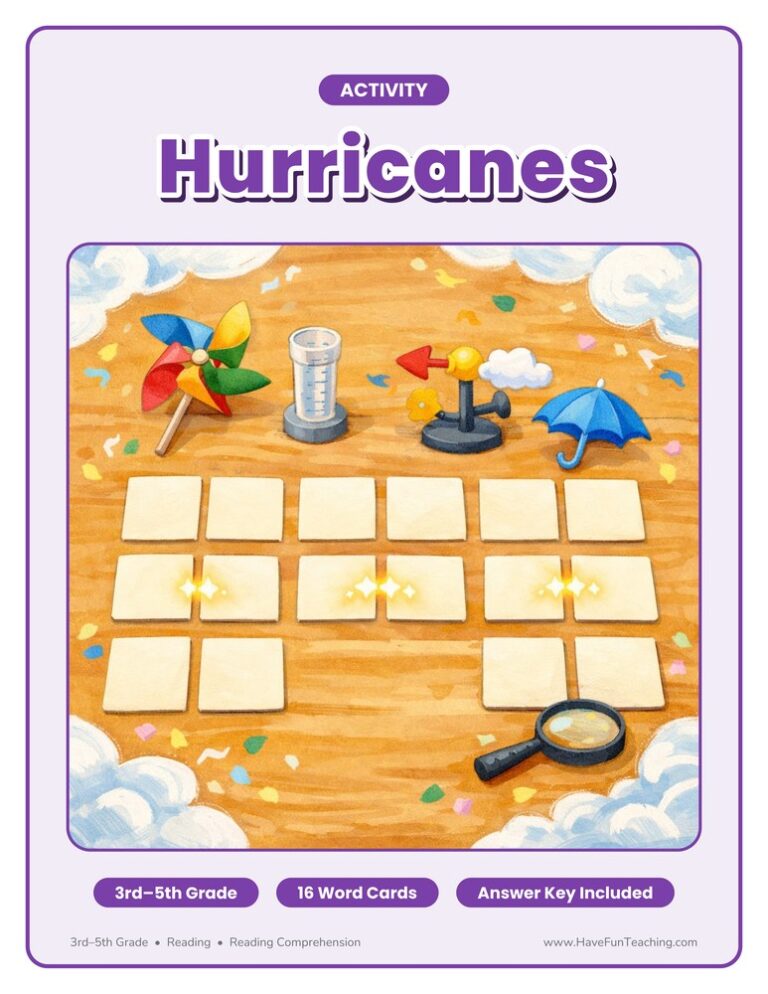
Activity4th GradeHurricanes Reading Comprehension Activity

This hurricanes reading comprehension activity has 3rd to 5th grade students read a passage, match vocabulary cards and answer text-based questions. An answer key is included.

Workbook
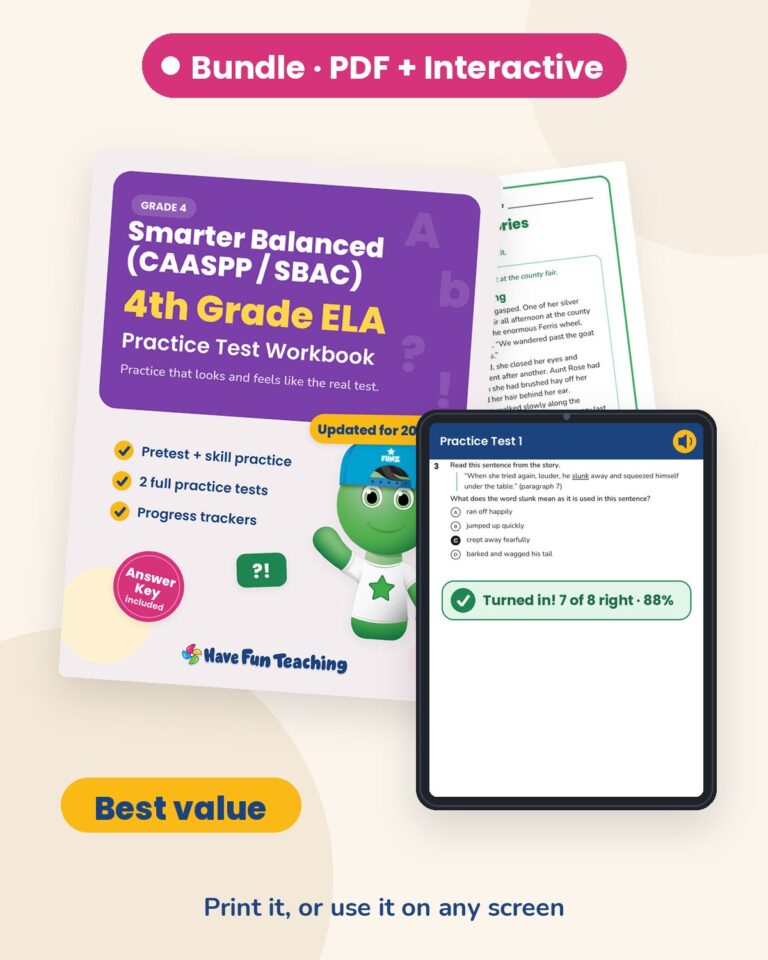
Workbook4th GradeSmarter Balanced (CAASPP / SBAC) 4th Grade ELA Practice Test Workbook

A Smarter Balanced (CAASPP / SBAC) 4th grade ELA practice test workbook for teachers, with a pretest, skill practice for all 24 standards, mixed review and 2 full-length practice tests. Answer key included, so test prep is ready to go.

Activity
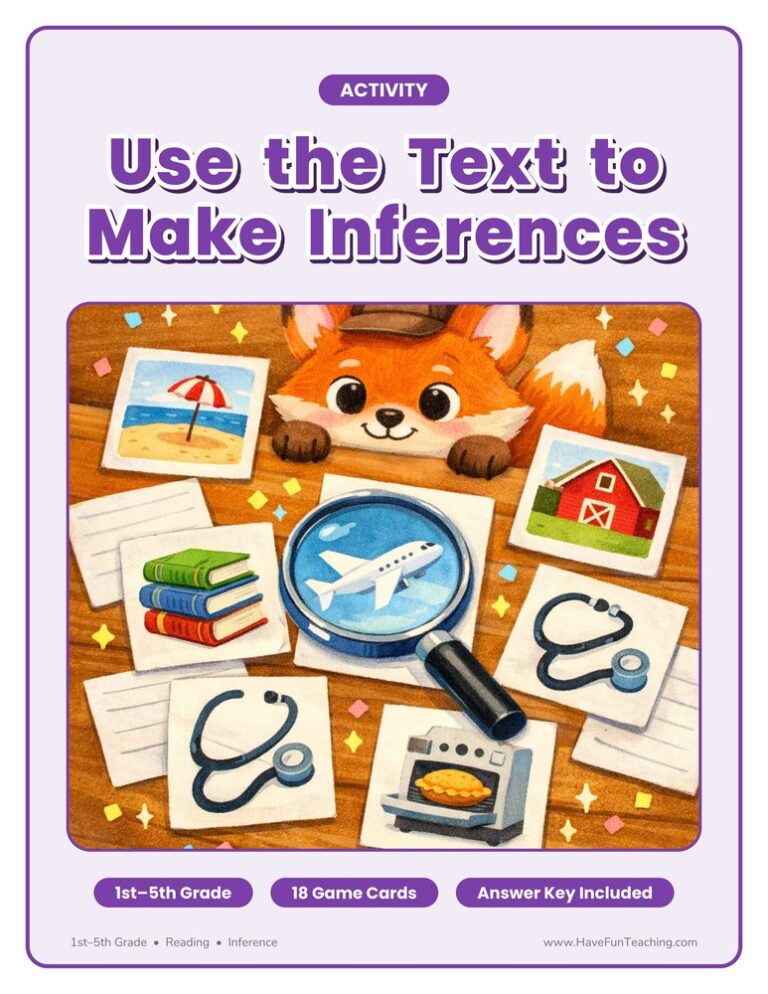
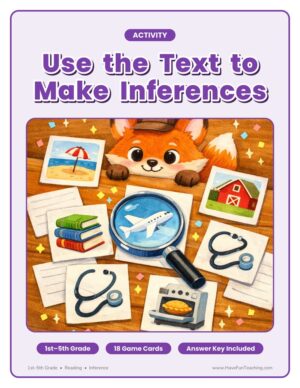
Activity4th GradeUse the Text to Make Inferences Activity

In this use the text to make inferences activity, 1st to 5th grade students read short clue stories, infer the place, and name the text clues. Answer key included.

Common Core Lesson
Common Core Lesson4th GradeRL.4.1 Fourth Grade Common Core Lesson

Using this RL.4.1 Fourth Grade Common Core Lesson, students Refer to details and examples in a text when explaining what the text says explicitly and when drawing inferences from the text.

Worksheet
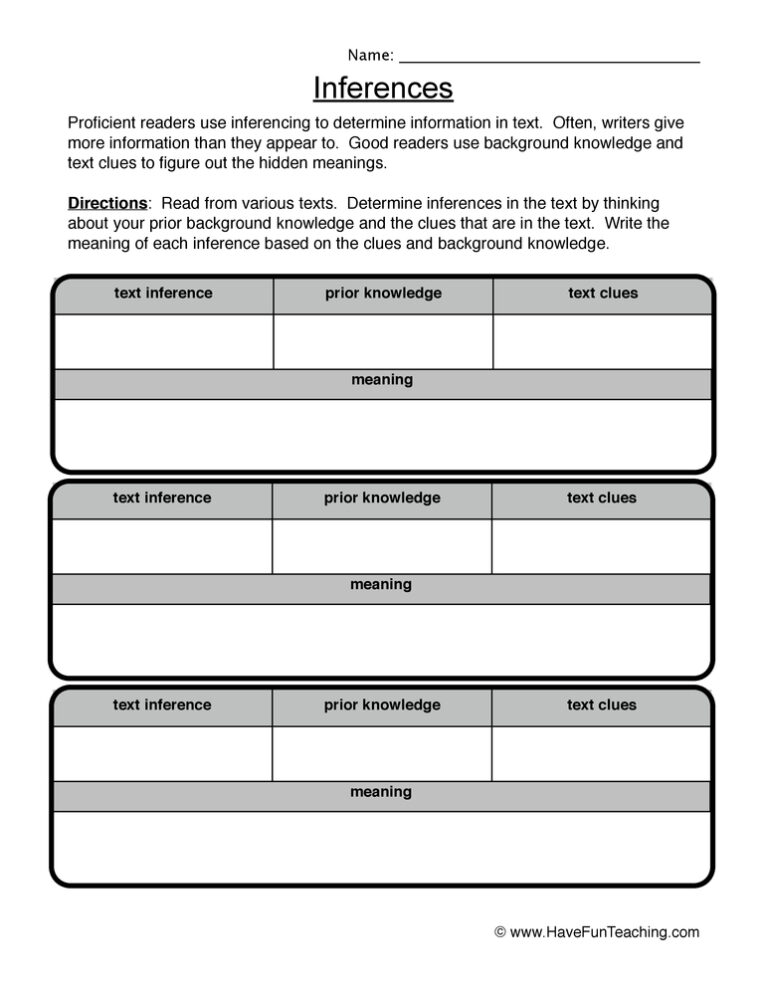
Worksheet4th GradeInference Graphic Organizer Worksheet

Students use this inference graphic organizer worksheet to link text clues with what they already know and write a clear inference for three short stories. Built for 4th grade, with an answer key.

Activity
Activity4th GradeMaking Inferences Math Operations Activity

This making inferences math operations activity helps 4th and 5th grade students use clue words to choose the right operation and solve word problems. An answer key is included for quick checking.

Worksheet
Worksheet4th GradeMaking Inferences Recording Worksheet

This Making Inferences Recording Worksheet helps 4th grade readers find story clues, add what they know, and write a clear inference for three short stories. An answer key is included.

Worksheet
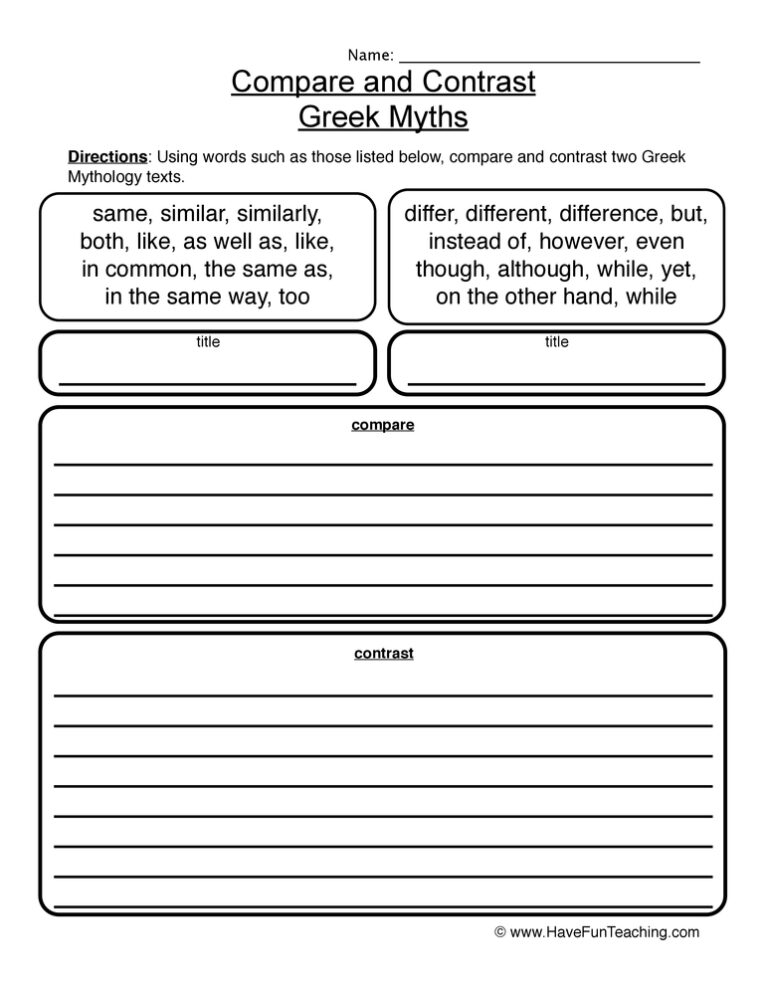
Worksheet4th GradeCompare and Contrast Greek Myths Worksheet

This compare and contrast Greek myths worksheet helps 4th graders record how two myths are alike and different, then give a reason for the one they liked more.

From our teachers' playbook

Read between the lines like a detective

What do 4th graders learn about inference?

An inference is a smart guess built from text clues plus what you already know. Fourth graders don't just make inferences, they prove them: "I think Maya is nervous because she's chewing her pencil and keeps checking the clock." They quote or point to details from the text to back up every idea, in stories and in nonfiction. The formula kids love: clue + what I know = inference. The click comes when a student realizes the author left the answer out on purpose, and they found it anyway.

How we teach inference in 4th grade

Inference is a thinking habit. These moves make the thinking visible so kids can copy it.

Think aloud with evidence

Read a paragraph aloud and stop: "The author doesn't say it's winter, but the kids are wearing mittens and the pond is frozen, so I infer it's winter." Point to each clue as you say it. Then have kids find the clue for your next inference.

Why it works: handing over the work step by step, from teacher to student, is one of the most widely used teaching frameworks (Pearson and Gallagher, 1983).
Use the Text to Make Inferences ActivityTry it withUse the Text to Make Inferences ActivityActivitiesOpen it →

Fill the inference organizer

Give kids a three-column chart: Clue from the text, What I know, My inference. They fill it in while reading a short passage. Seeing the three parts side by side shows them inference isn't a wild guess.

Why it works: pairing a picture with each word gives kids two ways to remember it, a well-tested principle of how people learn (Mayer, 2009).

Inference Graphic Organizer WorksheetTry it withInference Graphic Organizer WorksheetGraphic OrganizersOpen it →

Link an inference chain

Have partners write one clue on each paper strip and link them into a chain that leads to a final inference. Longer chains mean stronger evidence. Hang the chains up and let groups challenge each other's thinking.

Why it works: the U.S. Department of Education's guide for teaching elementary math recommends moving from hands-on objects to drawings to numbers.

Inference Chains ActivityTry it withInference Chains ActivityActivitiesOpen it →

Questions parents and teachers ask

What is an inference in 4th grade reading?

An inference is a conclusion you reach using clues from the text and what you already know. Fourth graders explain their inferences and support them with details from the text.

How do you teach inference to 4th graders?

Model it out loud, then use a simple formula: clue plus what I know equals inference. Organizers and lots of short passages help kids practice explaining their thinking.

What is the difference between an inference and a prediction?

A prediction is a guess about what will happen next. An inference is a conclusion about what's happening now, or why, based on clues. Predictions are one kind of inference.

How can I practice making inferences at home?

Watch a show with the sound off and ask how characters feel. Or look at a photo and ask "What do you think happened here? How do you know?"