Skip to content
Start My 3 Free Days $0 today · cancel anytime

4th Grade Machines Resources

4 4th grade machines resources: 3 worksheets and 1 flash card. How teachers use these

4th Grade Machines Resources

4 4th grade machines resources: 3 worksheets and 1 flash card. How teachers use these

Worksheet
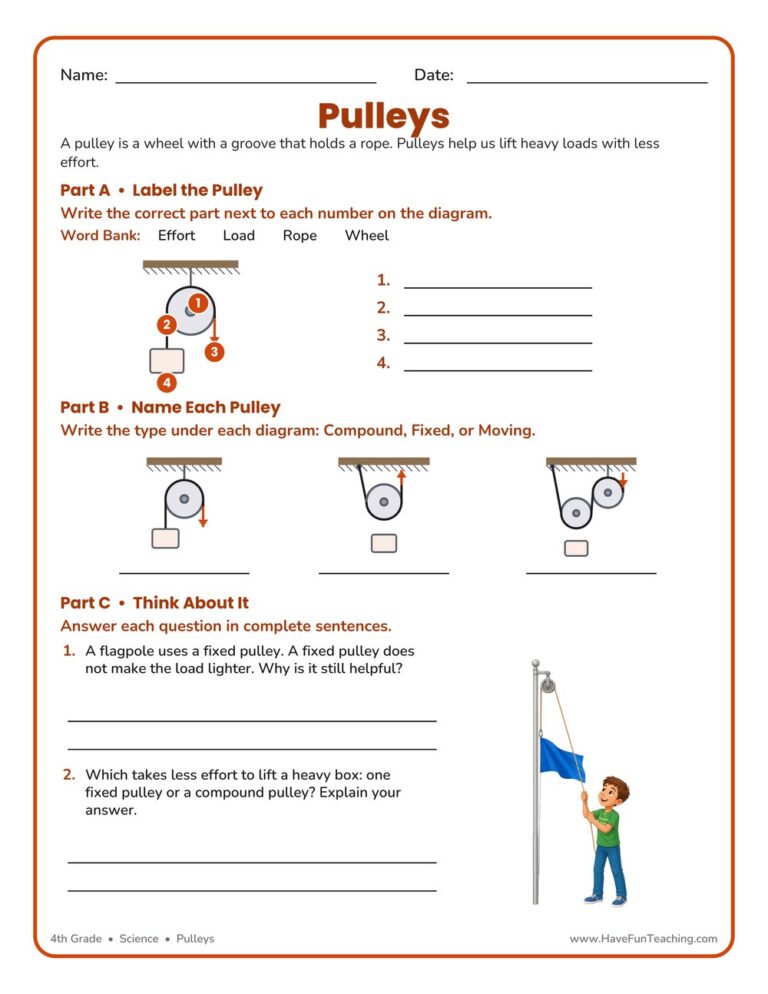
Worksheet4th GradePulleys Worksheet

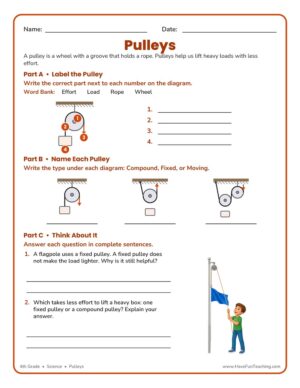
This Pulleys Worksheet helps 4th graders label a pulley, compare fixed, moving, and compound pulleys, and explain how pulleys lift heavy loads. Includes an answer key — a no-prep way to practice simple machines science.

Worksheet
Worksheet4th GradeSimple Machines Match Worksheet

This Simple Machines Match Worksheet gives 4th Grade students six machines to pair with the jobs they do, plus everyday examples to name. An answer key is included, so checking work takes seconds.

Worksheet
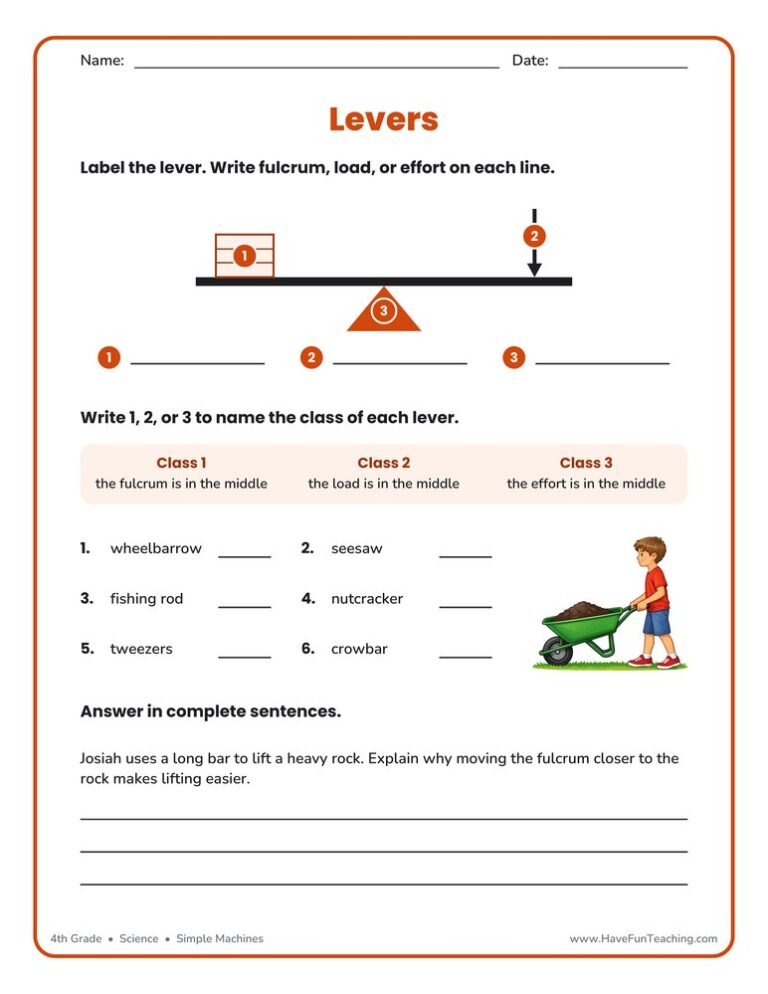
Worksheet4th GradeLevers Worksheet

This Levers Worksheet helps 4th grade students label the fulcrum, load, and effort, then name the class of six everyday tools. An answer key is included, so practice checks fast.

Flash Cards
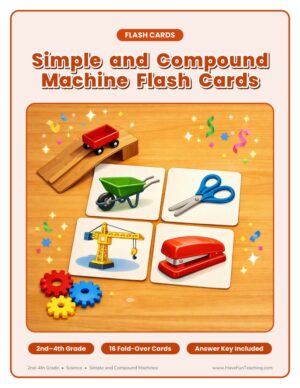
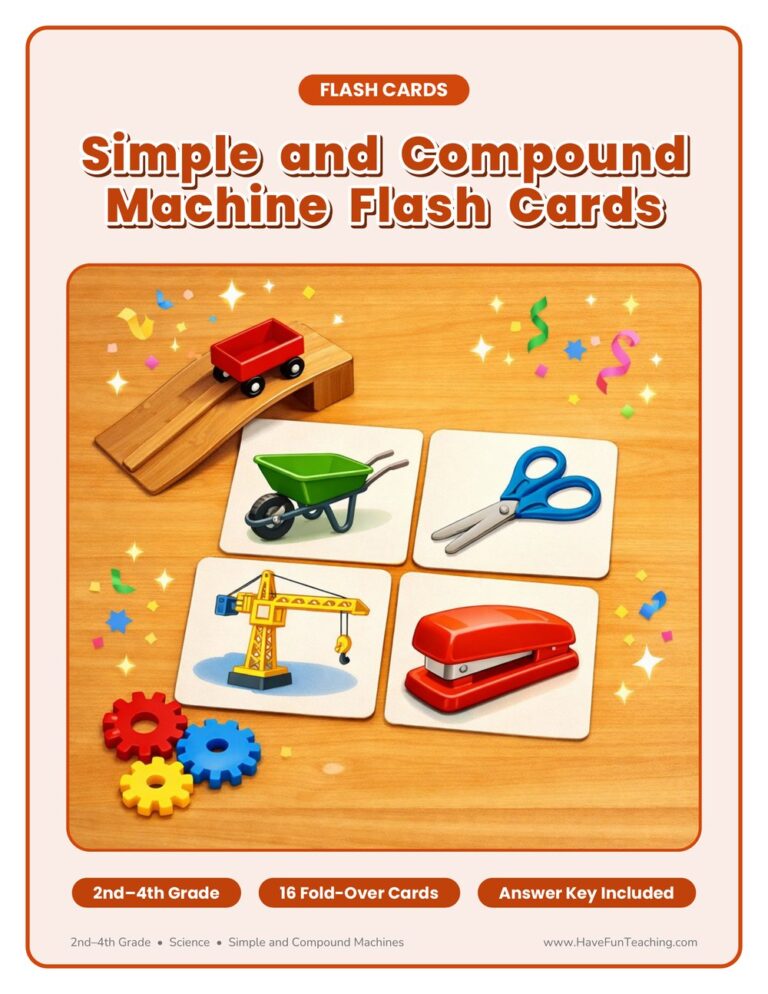
Flash Cards4th GradeSimple and Compound Machines Flash Cards

Simple and compound machines flash cards for 2nd to 4th grade: 16 fold-over picture cards, a practice page and an answer key included, so students learn to spot the simple machines inside everyday tools.

From our teachers' playbook

Work smarter, not harder!

What do 4th graders learn about simple machines?

Fourth graders learn that simple machines make work easier by changing the size or direction of a force. The six simple machines are the lever, pulley, wheel and axle, inclined plane, wedge and screw. A seesaw is a lever, a flagpole uses a pulley, and a ramp is an inclined plane. Kids learn that a machine does not create energy; it trades a longer push for a smaller force. The click comes when kids try to lift something heavy with and without a lever and feel the difference.

Our favorite ways to teach simple machines

Simple machines are perfect for hands-on science. These moves let kids feel the physics.

Make a lever

Give groups a ruler, a pencil for the fulcrum and a few books. They move the fulcrum and find where lifting the books is easiest. Then they explain what changed.

Why it works: the U.S. Department of Education's guide for teaching elementary math recommends moving from hands-on objects to drawings to numbers.
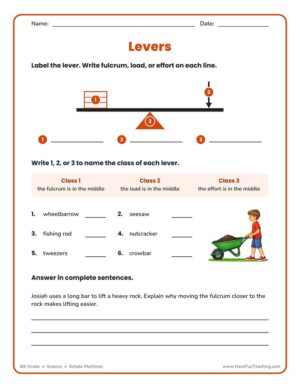
Levers WorksheetTry it withLevers WorksheetWorksheetsOpen it →
Pulley sketch and label

Have kids draw a single pulley lifting a bucket and label the rope, wheel and load. Ask how the pulley changes the direction of the pull. Drawing it helps the idea stick.

Why it works: children learn more from words and pictures together than from words alone (Mayer, 2009).

Pulleys WorksheetTry it withPulleys WorksheetWorksheetsOpen it →

Machine match-up

Show quick pictures of everyday tools, like scissors, a doorknob and a ramp. Kids name the simple machine in each. A fast daily round builds the vocabulary.

Why it works: a big review of study methods ranked quick self-quizzing among the most powerful ways to remember (Dunlosky and colleagues, 2013).

Simple Machines Match WorksheetTry it withSimple Machines Match WorksheetWorksheetsOpen it →

Questions parents and teachers ask

What are the six simple machines?

The six simple machines are the lever, pulley, wheel and axle, inclined plane, wedge and screw. Each one makes work easier.

How do simple machines make work easier?

They change the size or direction of a force. You might push farther, but you need less force to move a heavy load.

What are examples of simple machines at home?

A doorknob is a wheel and axle, a knife is a wedge, a jar lid is a screw, and a seesaw is a lever.

How do I teach simple machines to my child?

Find real examples around the house and try them out. Have your child lift something with and without a lever to feel the difference.