

Levers Worksheet
This Levers Worksheet helps 4th grade students label the fulcrum, load, and effort, then name the class of six everyday tools. An answer key is included, so practice checks fast.
$6.97
Or free with a membership — members pay $3.33/mo for all 10,000+ resources. See plans
Want this one free?
Tell us where to send it and it’s yours — no card, no catch.
One free resource per teacher. We’ll also send free teaching ideas each week — unsubscribe anytime.
Teaching is easier with a membership
Unlimited printables, games & videos for PreK–6th — for your classroom or homeschool. Cancel anytime.
Start your 3-day free trial$0 today · cancel anytime · Instant access to 10,000+ resources
About this resource
Description
A lever is one of the six simple machines, and it is the one students meet most often — on the playground seesaw, inside a pair of tweezers, and under the handles of a wheelbarrow. Every lever has the same three parts: a fulcrum to pivot on, a load to move, and an effort that does the pushing. This Levers Worksheet gives fourth graders a clear way to name those three parts and then sort real tools into first, second, and third class levers. Once students can find the fulcrum, they can predict which arrangement will make a heavy job feel lighter.
This Levers Worksheet is a one page activity with a complete answer key. Students start with a labeled diagram, writing fulcrum, load, and effort on the correct lines. Next they use a short reference strip to decide whether a wheelbarrow, seesaw, fishing rod, nutcracker, tweezers, or crowbar is a class one, class two, or class three lever. The page finishes with a written explanation question that asks students to reason about where the fulcrum belongs on a lifting bar. Use it during a simple machines unit, as review before a test, or as an independent science center.
What’s Included
- One printable Levers Worksheet page (PDF)
- A labeled lever diagram for fulcrum, load, and effort
- Six real tools to sort into first, second, and third class levers
- A constructed response question with writing lines
- A complete answer key
There are three reasons this activity works so well in a fourth grade classroom. First, it moves students from vocabulary to application on a single page — naming the parts, then using them to classify. Second, every tool listed is an object students have actually held, so the science connects to real life instead of staying abstract. Third, the closing prompt asks for an explanation rather than a one word answer, which builds the evidence based reasoning that state science assessments expect.
Teachers can pair this 4th grade energy worksheet with a hands on station where students balance a ruler on a pencil and slide the pencil to feel the effort change. Parents can walk through the kitchen and the garage together, hunting for levers — scissors, a bottle opener, a broom, a shovel — and naming the class of each one. Homeschool families can extend the lesson by building a simple lever from a paint stirrer and a block, then measuring how high the load rises.
Related Resources
What teachers say
Reviews
You must be logged in to post a review.
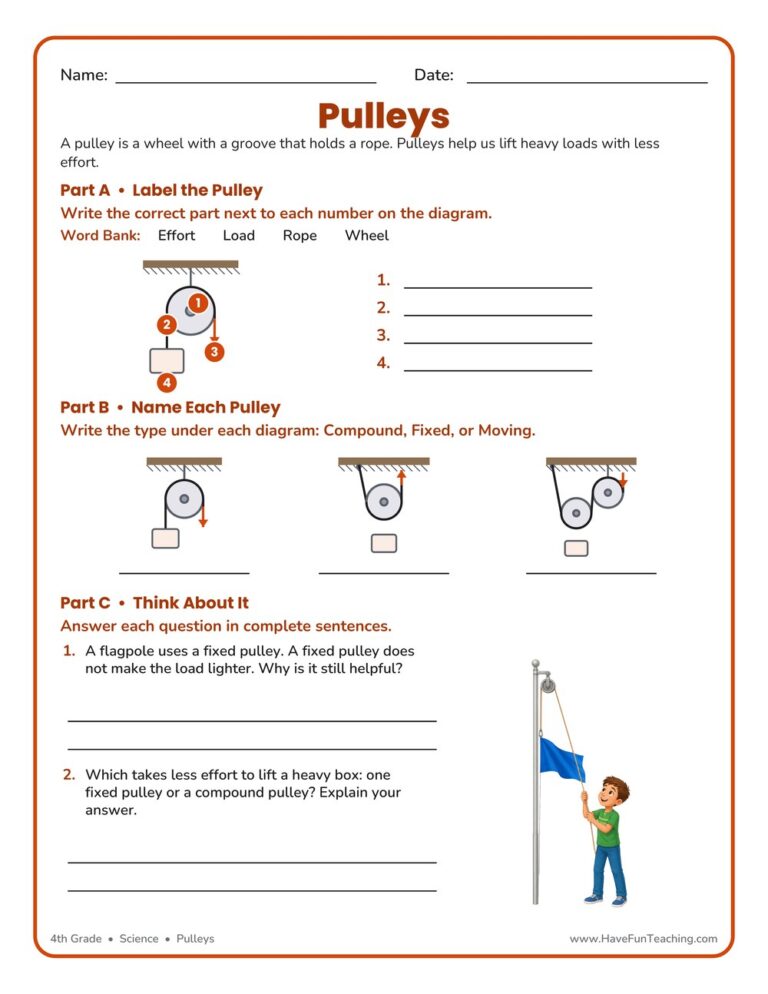
This Pulleys Worksheet helps 4th graders label a pulley, compare fixed, moving, and compound pulleys, and explain how pulleys lift heavy loads. Includes an answer key — a no-prep way to practice simple machines science.

This Circuits Worksheet helps 4th Grade students label the battery, bulb, switch, and wire, decide whether a circuit is open or closed, and explain how current flows. Answer key included, so checking work is quick.

The What Made That Sound Worksheet asks 4th graders to read four one-second sound waves and decide whether each note is loud or soft, high or low. Answer key included for fast, confident checking.

This Electricity Worksheet pairs a short reading passage with vocabulary and explanation questions that show 4th graders how current, circuits, conductors, and insulators work. Answer key included for fast, no-prep science practice.

This Simple Machines Match Worksheet gives 4th Grade students six machines to pair with the jobs they do, plus everyday examples to name. An answer key is included, so checking work takes seconds.
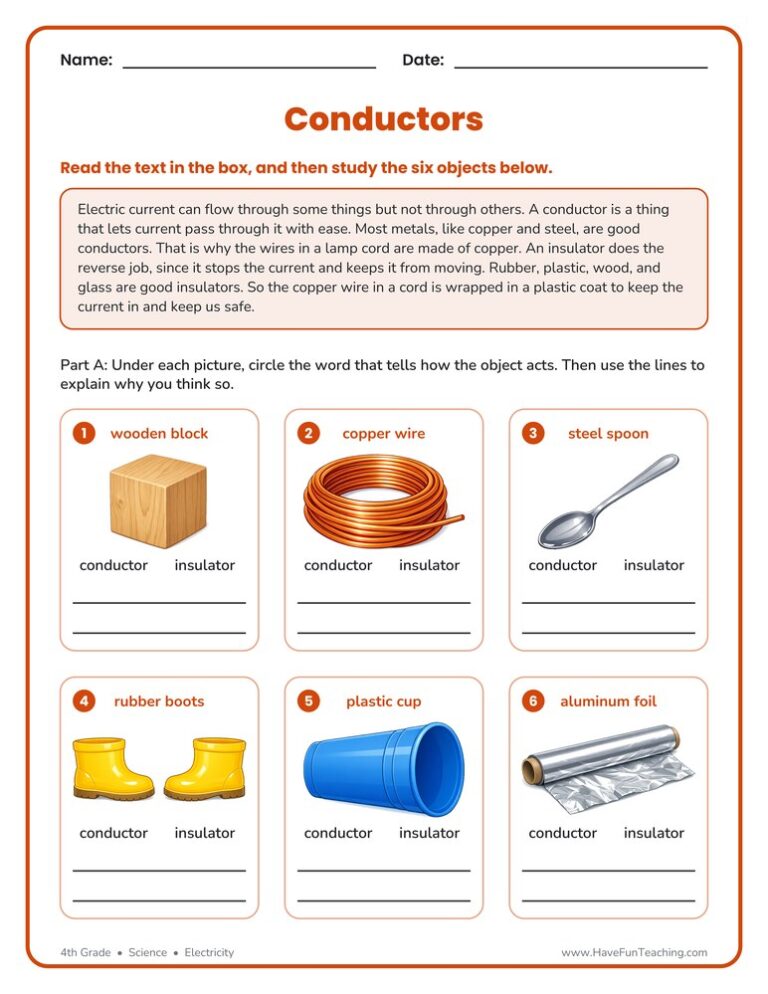
This conductors worksheet has 4th graders read a short passage, sort six objects as conductors or insulators, and explain each choice. An answer key is included for easy checking.

This Magnetic Earth Worksheet gives 4th Grade students four magnet words and six real-life clues to match, plus an answer key, so magnetism vocabulary sticks long after the lesson ends.

Using Drawing Light Objects Worksheet,students draw objects that give off light to show their understanding energy.

These Light Bulb Cut Outs quickly give you templates that can be easily cut and applied for classroom decoration or student activities about electricity.
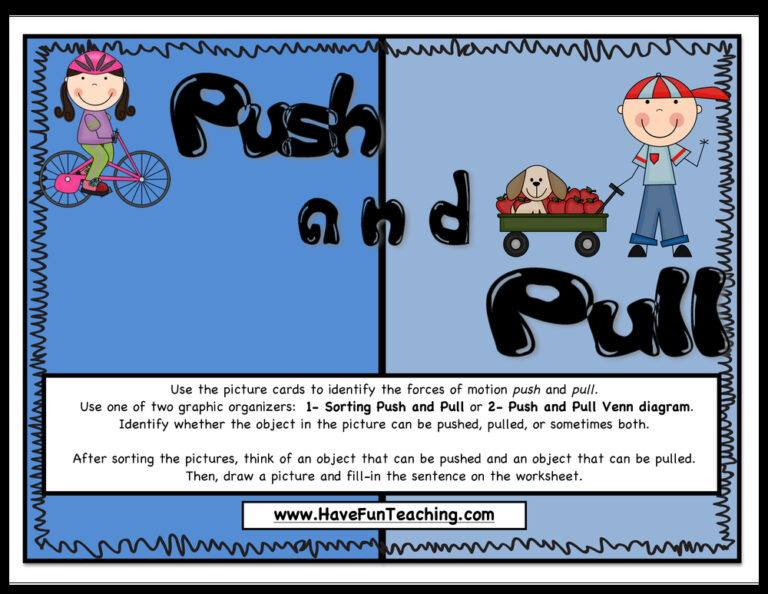
Using Motion Activity, students sort picture cards into categories of push, pull, or both to build their understanding of force.

UsingCircuits Conductors Worksheet. students draw pictures of circuits and conductors to build their understanding of how electricity works.

Using Some Like it Hot Heat Worksheet, students place items in direct sunlight or under a heat lamp after ten minutes record your observations.




Reviews
There are no reviews yet