Skip to content
Start My 3 Free Days $0 today · cancel anytime

Machines Resources

13 machines resources: 11 worksheets, 2 flash cards and 1 activity. How teachers use these

Machines Resources

13 machines resources: 11 worksheets, 2 flash cards and 1 activity. How teachers use these

Worksheet
Worksheet3rd GradeLabeling Force and Motion Worksheet

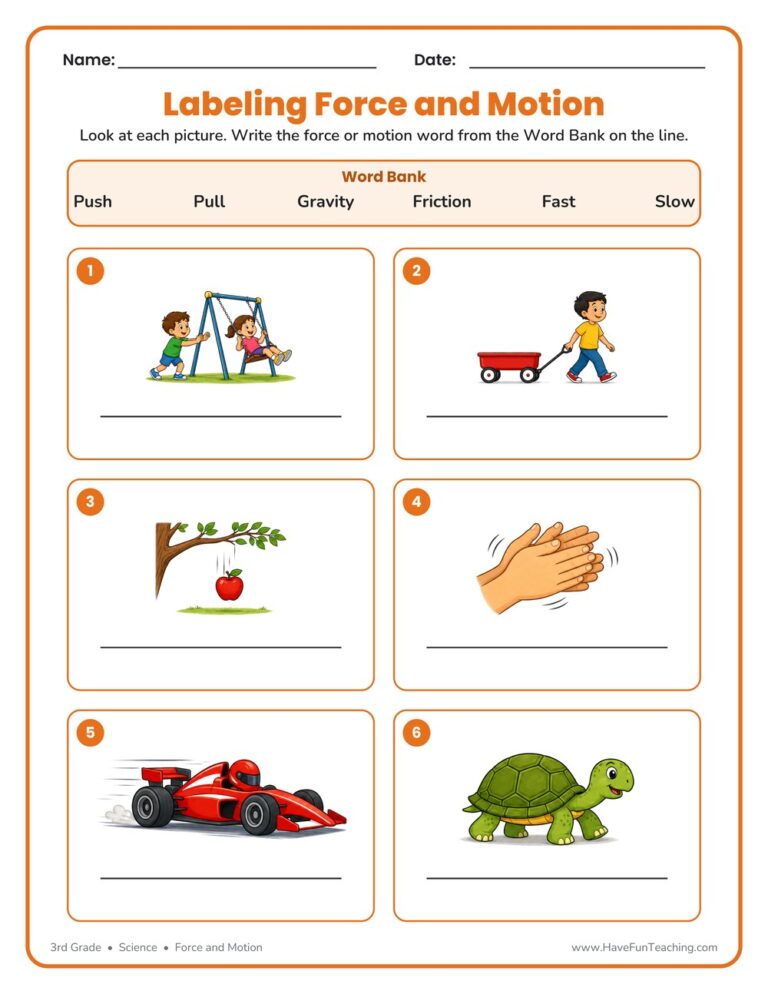
The Labeling Force and Motion Worksheet has 3rd graders label six pictures with push, pull, gravity, friction, fast, and slow from a word bank. Includes an answer key for easy, no-prep science practice.

Worksheet
Worksheet3rd GradeSimple Machines Fill in the Blanks Worksheet

This simple machines fill in the blanks worksheet has 3rd graders name the lever, pulley, wedge, screw, inclined plane, and wheel and axle from real-life clues, then explain how two of them make work easier. Answer key included.

Worksheet
Worksheet4th GradePulleys Worksheet

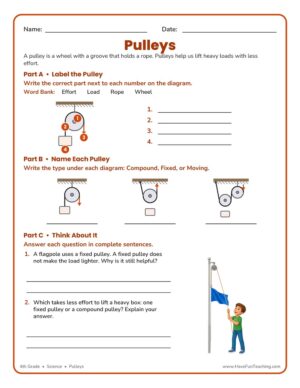
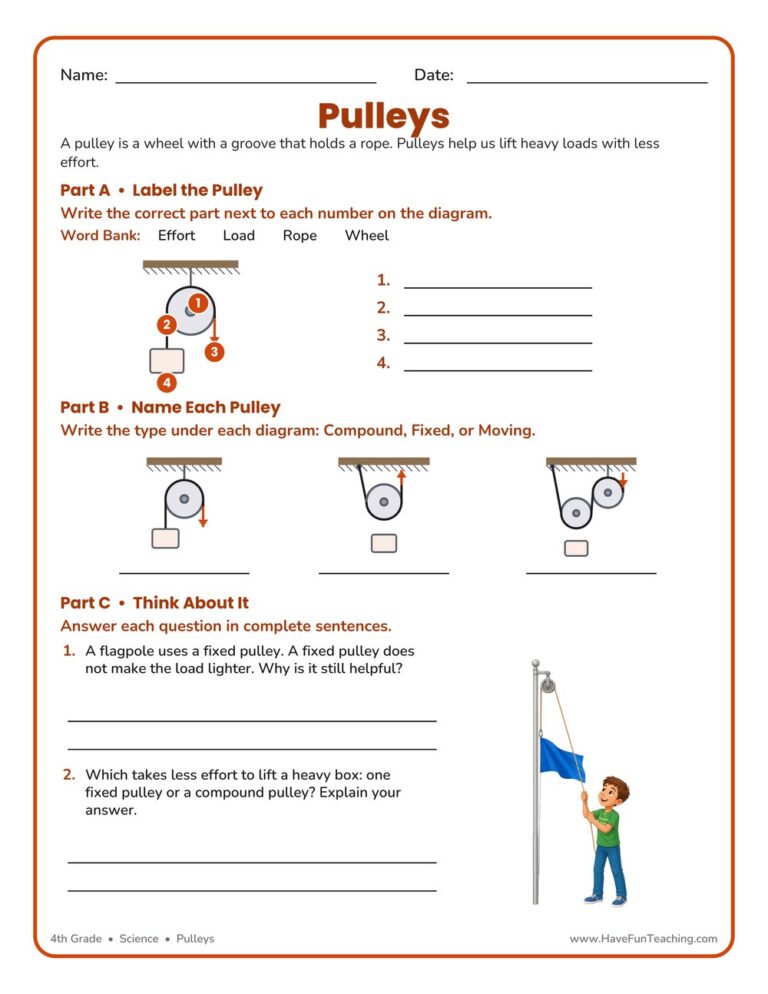
This Pulleys Worksheet helps 4th graders label a pulley, compare fixed, moving, and compound pulleys, and explain how pulleys lift heavy loads. Includes an answer key — a no-prep way to practice simple machines science.

Worksheet
Worksheet4th GradeSimple Machines Match Worksheet

This Simple Machines Match Worksheet gives 4th Grade students six machines to pair with the jobs they do, plus everyday examples to name. An answer key is included, so checking work takes seconds.

Worksheet
Worksheet4th GradeLevers Worksheet

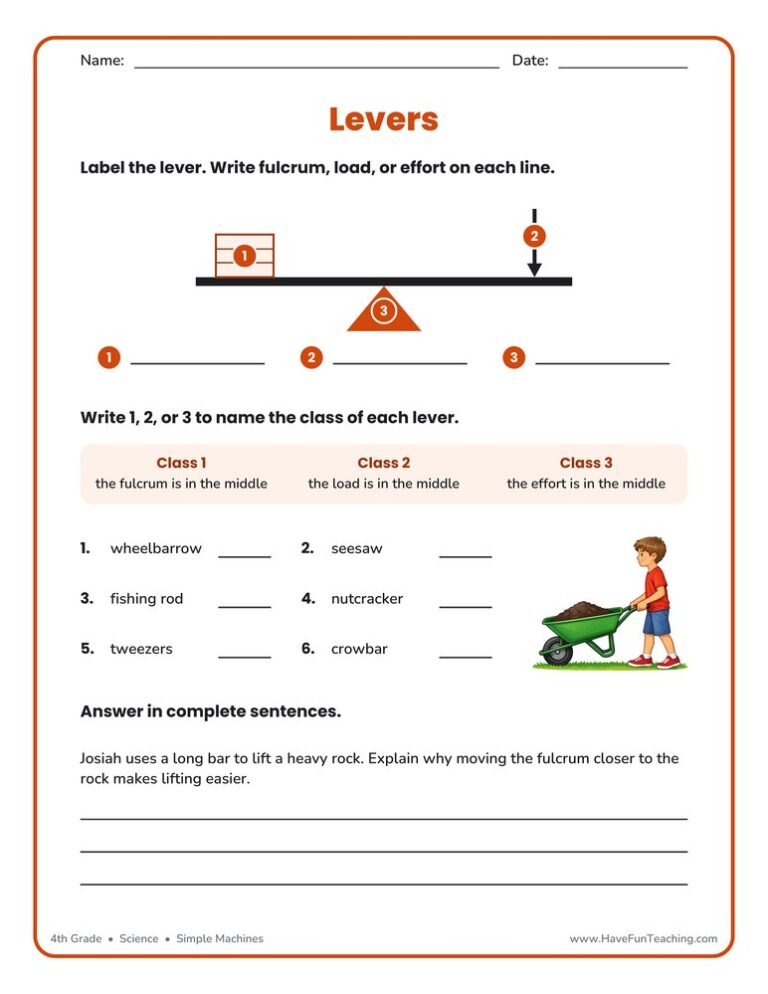
This Levers Worksheet helps 4th grade students label the fulcrum, load, and effort, then name the class of six everyday tools. An answer key is included, so practice checks fast.

Worksheet
Worksheet3rd GradeIdentify Simple Machines Worksheet

This Identify Simple Machines Worksheet asks 3rd graders to name the simple machine in six everyday objects, then explain how one of them helps people work. An answer key is included.

Worksheet
Worksheet5th GradeSimple Machines Worksheet

This simple machines worksheet has 5th graders sort everyday objects into six machine columns and name the machine each tool uses. An answer key is included for quick, confident checking.

Worksheet
Worksheet2nd GradePeople Riding Transportation Worksheet

This people riding transportation worksheet asks 2nd grade students to name the vehicle in each clue and draw a place they travel to. An answer key is included for fast, easy checking.

Worksheet
Worksheet2nd GradeSimple Machine ABC Order Worksheet

The Simple Machine ABC Order Worksheet helps 2nd graders put ten simple machine words in alphabetical order and compare words letter by letter. An answer key is included, making it perfect for quick, no-prep ABC order practice.

Flash Cards
Flash Cards1st GradeSimple Machines Flash Cards

These simple machines flash cards help 1st-3rd grade students learn the six simple machines with diagram cards and everyday object cards. Answer key included.

Activity
Activity3rd GradeRobot Cut Outs

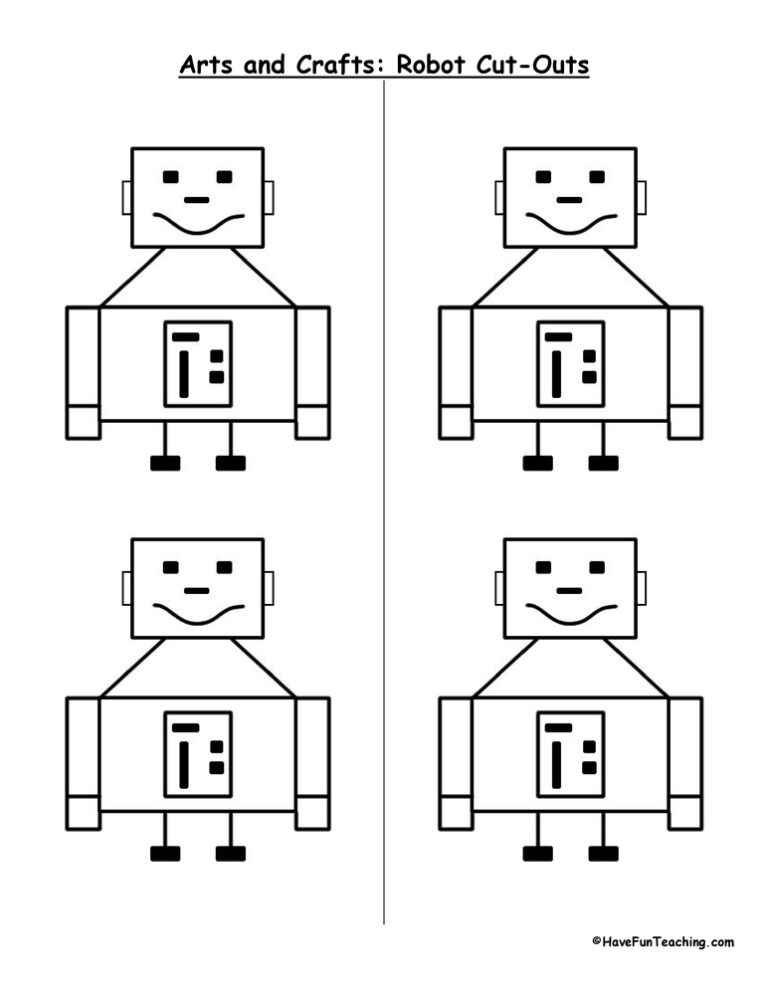
This robot cut outs worksheet gives 3rd grade students four robots to fill with ideas for helpful robot jobs, then color and cut out, building a bright technology bulletin board the whole class can enjoy.

Worksheet
Worksheet3rd GradeMan and Fuel Powered Worksheet

This man and fuel powered worksheet asks 3rd graders to sort eight machines into people powered and fuel powered columns, then explain four more in writing. Answer key included for a no prep science lesson.

Flash Cards
Flash Cards2nd GradeSimple and Compound Machines Flash Cards

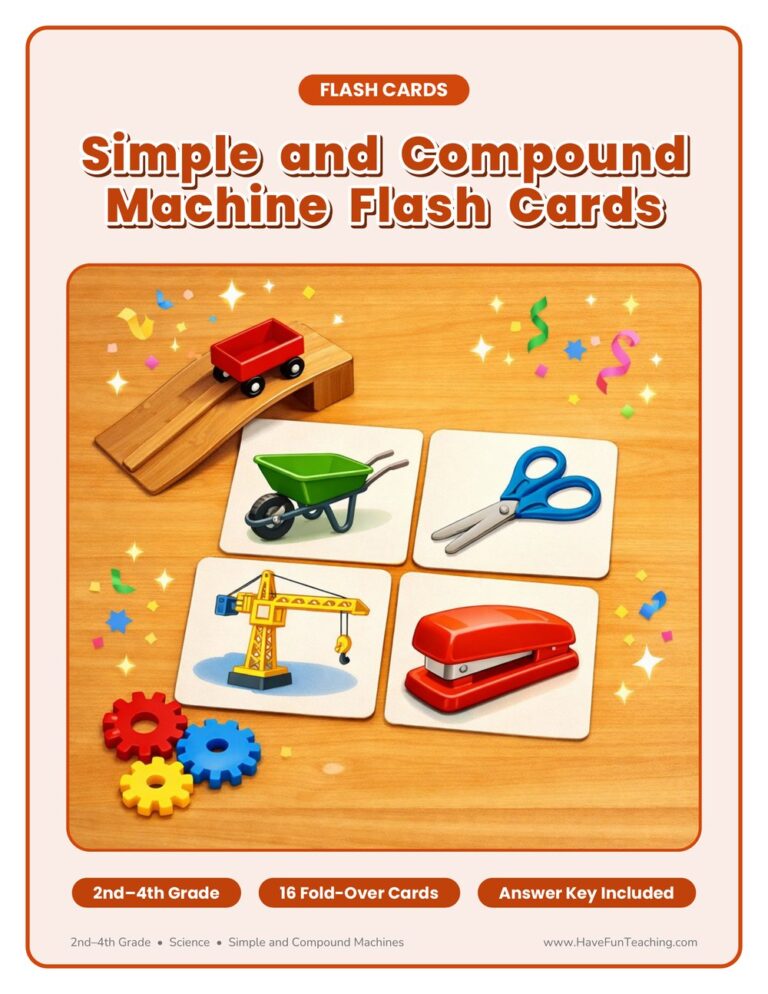
Simple and compound machines flash cards for 2nd to 4th grade: 16 fold-over picture cards, a practice page and an answer key included, so students learn to spot the simple machines inside everyday tools.

From our teachers' playbook

Push, pull and make it easier

What do kids learn about machines?

Machines are tools that make work easier, and kids are surprised how many they use every day. They learn the six simple machines: lever, pulley, wheel and axle, inclined plane, wedge and screw. A seesaw is a lever, a ramp is an inclined plane, and a doorknob is a wheel and axle. Kids learn that machines don't make less work, they make it easier by changing how much force you need or which direction you push. Older students see how simple machines combine into compound machines like scissors or a bike. The click moment is when a child spots a lever in the cafeteria and can't stop pointing out machines everywhere.

Our favorite ways to teach machines

Simple machines are best learned by touching them. These moves bring the science to the desk.

Machine of the day

Show one simple machine flash card each morning and have kids name three real objects that use it. Post their examples under each card. By the end of the week you have a class machine museum.

Why it works: children learn more from words and pictures together than from words alone (Mayer, 2009).

Simple Machines Flash CardsTry it withSimple Machines Flash CardsFlash CardsOpen it →
Build a lever

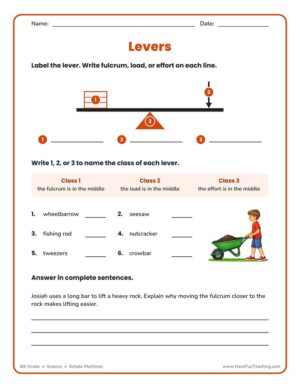
Balance a ruler on a pencil and stack coins on one end. Kids move the pencil closer and farther and record how many coins they can lift. They discover the fulcrum's power on their own.

Why it works: the U.S. Department of Education's guide for teaching elementary math recommends moving from hands-on objects to drawings to numbers.

Levers WorksheetTry it withLevers WorksheetWorksheetsOpen it →

Match the machine

Give a quick matching check: picture on one side, machine name on the other. Kids explain one match out loud. Explaining why a knife is a wedge shows real understanding.

Why it works: a big review of study methods ranked quick self-quizzing among the most powerful ways to remember (Dunlosky and colleagues, 2013).

Simple Machines Match WorksheetTry it withSimple Machines Match WorksheetWorksheetsOpen it →

Questions parents and teachers ask us

What are the 6 simple machines?

The six simple machines are the lever, pulley, wheel and axle, inclined plane, wedge and screw. Each one makes work easier by changing the force or direction needed.

What grade learns about simple machines?

Many schools introduce simple machines in 2nd through 5th grade, often as part of a force and motion unit. Younger kids explore pushes and pulls first.

What is a compound machine?

A compound machine is two or more simple machines working together. Scissors combine two levers and two wedges. A bicycle uses wheels and axles, levers and pulleys.

What are examples of simple machines at home?

A doorknob is a wheel and axle, a ramp is an inclined plane, a knife is a wedge, a jar lid is a screw, and a bottle opener is a lever. Kids love finding them all.

Keep exploring