Skip to content
Start My 3 Free Days $0 today · cancel anytime

Preschool Opposites Resources

8 preschool opposites resources: 6 activities, 1 flash card and 1 worksheet. How teachers use these

Preschool Opposites Resources

8 preschool opposites resources: 6 activities, 1 flash card and 1 worksheet. How teachers use these

Flash Cards
Flash CardsPreschoolOpposites Flash Cards

Opposites flash cards for Preschool through 1st Grade: 12 fold-over picture cards teach 24 opposite words, with a practice page and answer key included for fun, hands-on vocabulary review.

Activity
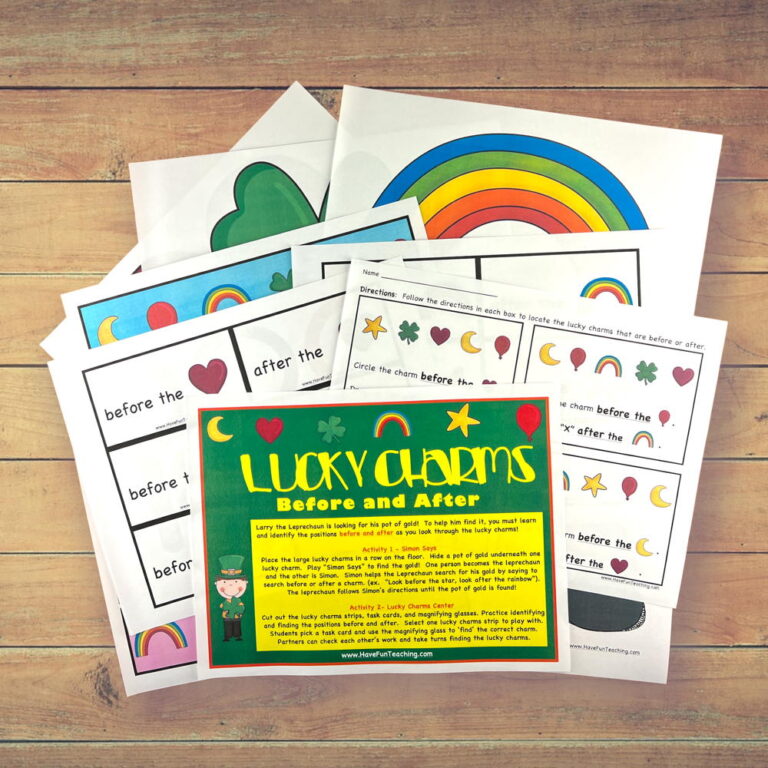
ActivityPreschoolLucky Charms Before and After Activity

Using Lucky Charms Before and After Activity, studentsplay this fun game to practice identifying before and after.

Activity
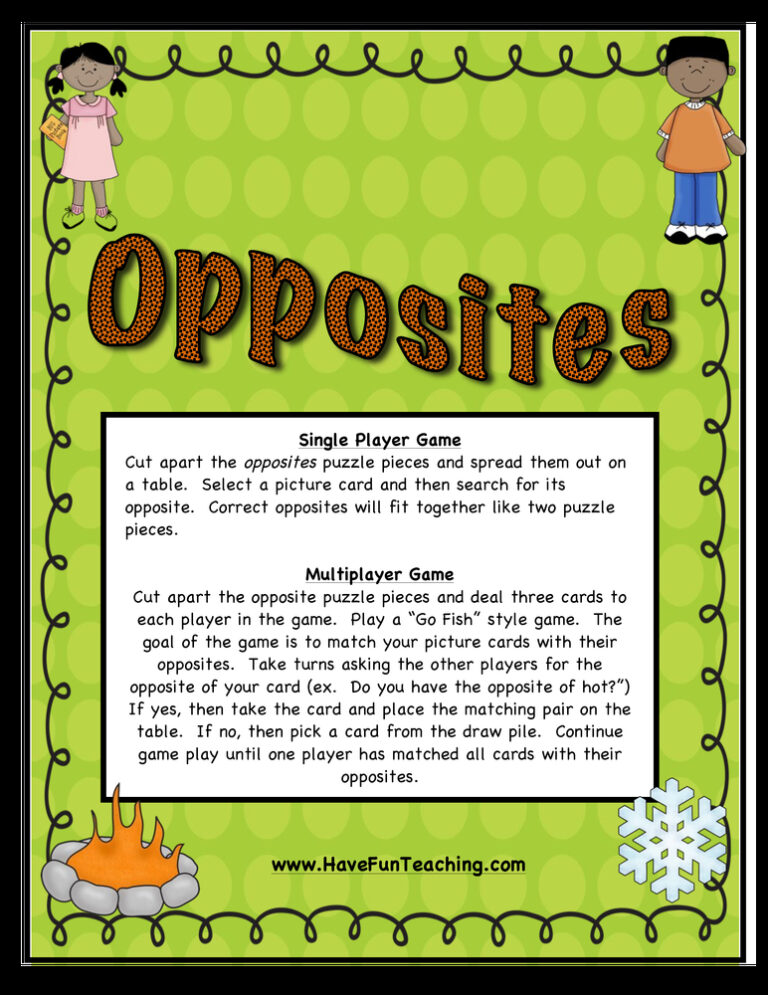
ActivityPreschoolOpposites Activity

Using Opposites Activity, studentsplay this fun game to practice identifying opposite pairs.

Activity
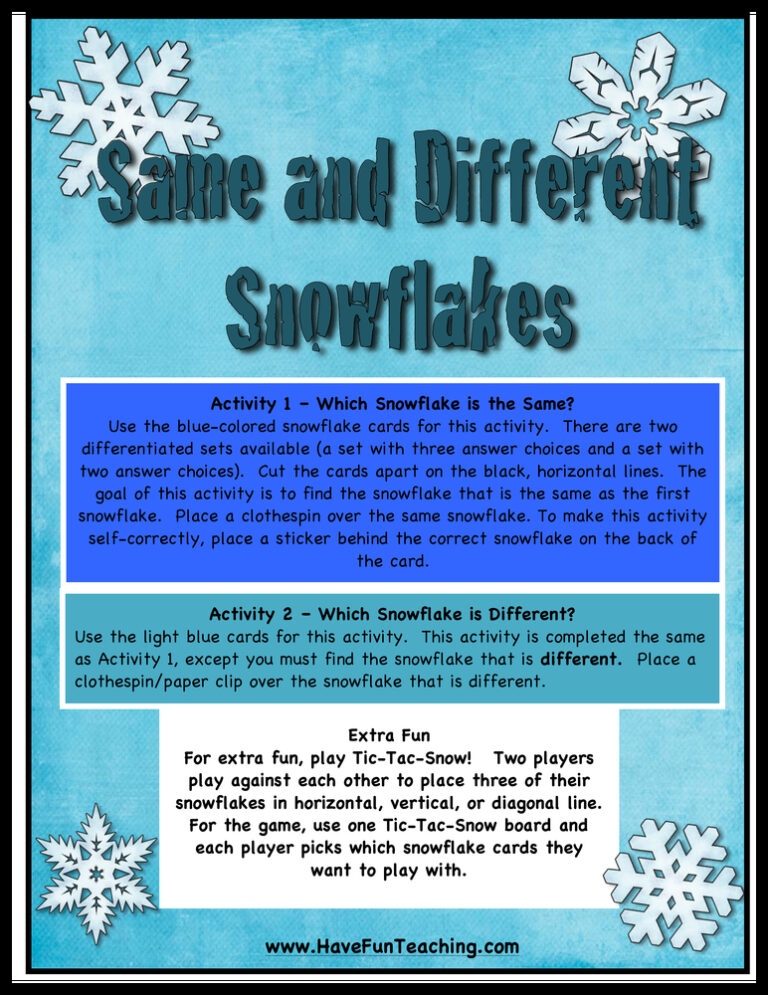
ActivityPreschoolSame and Different Snowflakes Opposites Activity

Using Same and Different Snowflakes Opposites Activity, studentsplay this fun game to practice identifying same and different opposite pairs.

Activity
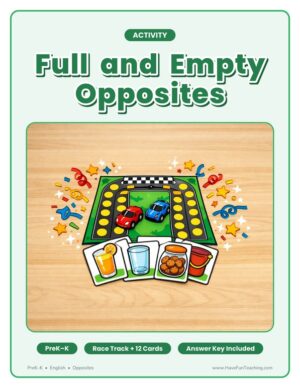
ActivityPreschoolFull and Empty Opposites Activity

This full and empty opposites activity lets preschool and kindergarten children race cars to the finish by naming full and empty pictures, with an answer key included for quick checking.

Activity
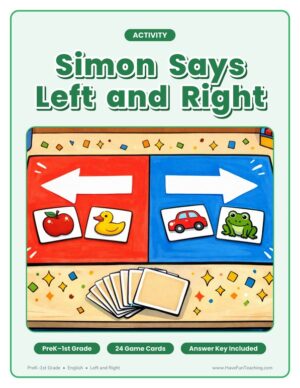
ActivityPreschoolLeft and Right Simon Says Opposites Activity

Play the Left and Right Simon Says Opposites Activity with preschool to 1st grade: move picture cards to the correct side of the mat. Practice page and answer key included.

Activity
ActivityPreschoolTop and Bottom Toys Edition Opposites Activity Board Game

This top and bottom toys edition opposites activity board game helps preschool to 1st grade students use top, middle and bottom with a toy shelf, spinner and cards. Answer key included.

From our teachers' playbook

Big and little, up and down!

What do preschoolers learn about opposites?

Opposites are pairs of words that mean completely different things: big and little, hot and cold, up and down, full and empty. Preschoolers learn them by seeing, touching and acting them out. They describe the world with them: "The cup is full. Now it is empty!" Learning opposites grows vocabulary fast, because every new word comes with a partner. It also builds thinking skills, since kids compare two things and notice how they are different. The giggle moment comes when you say "fast" and the whole class moves in slow motion.

Our favorite ways to teach opposites to preschoolers

Little learners understand opposites best with their whole bodies. These moves keep it active and joyful.

Flip the card, say the partner

Show a flash card of a big elephant and ask, "What is the opposite?" Kids shout "little!" and you flip to the mouse. A few cards a day, every day, and they will know dozens of pairs by the end of the month.

Why it works: a big review of study methods ranked quick self-quizzing among the most powerful ways to remember (Dunlosky and colleagues, 2013).

Opposites Flash CardsTry it withOpposites Flash CardsFlash CardsOpen it →
Simon says opposites

Play Simon says with a twist: "Simon says raise your left hand. Now the opposite!" Moving their bodies helps preschoolers feel the meaning of left and right, up and down, before they ever see the words.

Why it works: in a well-known study, a few short sessions of a simple number board game measurably boosted young children's number skills (Ramani and Siegler, 2008).

Left and Right Simon Says Opposites ActivityTry it withLeft and Right Simon Says Opposites ActivityActivitiesOpen it →

Match the pictures

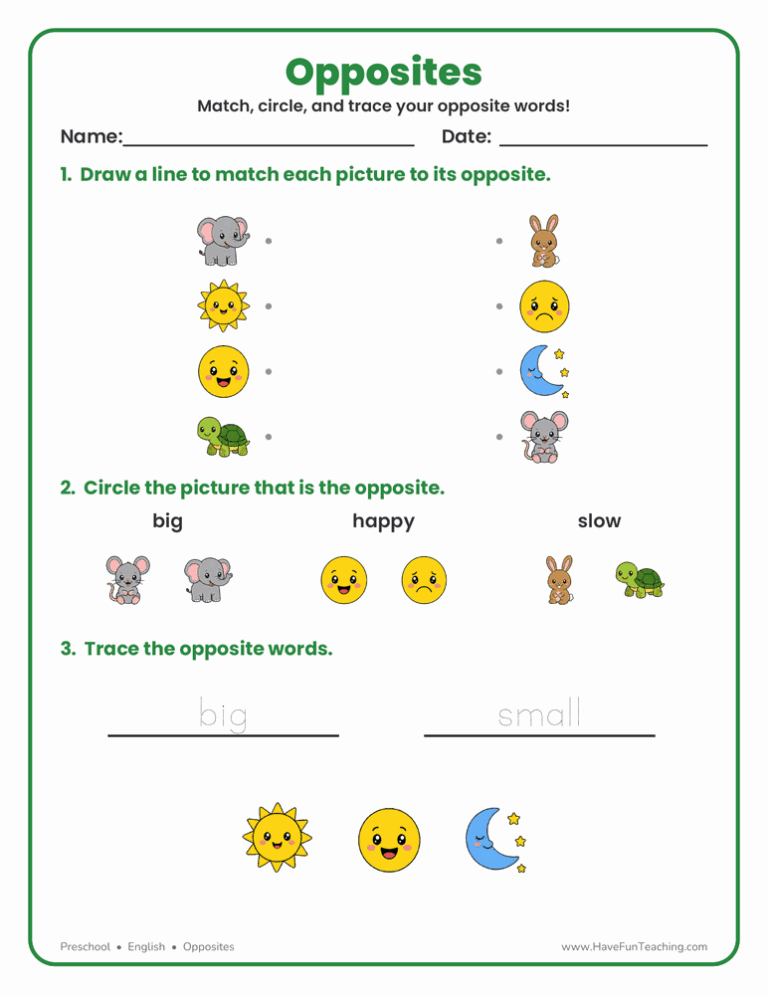
Kids draw a line from a hot sun to a cold snowman, or a happy face to a sad face. Pictures let pre-readers practice opposites on paper, and you can talk about each pair as they work.

Why it works: children learn more from words and pictures together than from words alone (Mayer, 2009).

Opposites WorksheetTry it withOpposites WorksheetWorksheetsOpen it →

Preschool opposites questions

What are good first opposites for preschoolers?

Start with ones kids can see and feel: big and little, up and down, hot and cold, open and closed, full and empty. Add happy and sad, fast and slow, and day and night next.

At what age do kids learn opposites?

Most children start understanding simple opposites around age 3 and use many of them by age 4 or 5. Lots of play and talk speeds it up.

How can I teach opposites at home?

Point them out all day: "The door is open, now it is closed." Act them out with toys, play opposite games in the car, and read picture books that show pairs.

Why are opposites important for preschoolers?

They grow vocabulary quickly and help kids describe and compare things. That comparing skill is the start of sorting, math thinking and early reading comprehension.