Skip to content
Start My 3 Free Days $0 today · cancel anytime

KWL and KWHL Resources

12 kwl and kwhl resources: 10 graphic organizers, 10 worksheets and 2 activities. How teachers use these

KWL and KWHL Resources

12 kwl and kwhl resources: 10 graphic organizers, 10 worksheets and 2 activities. How teachers use these

Activity
Activity3rd GradeClass Critics Summarizing Activity

This class critics summarizing activity gives 3rd to 5th grade students seven organizers to summarize books, videos, and articles. Answer key included for the model and practice.

Worksheet
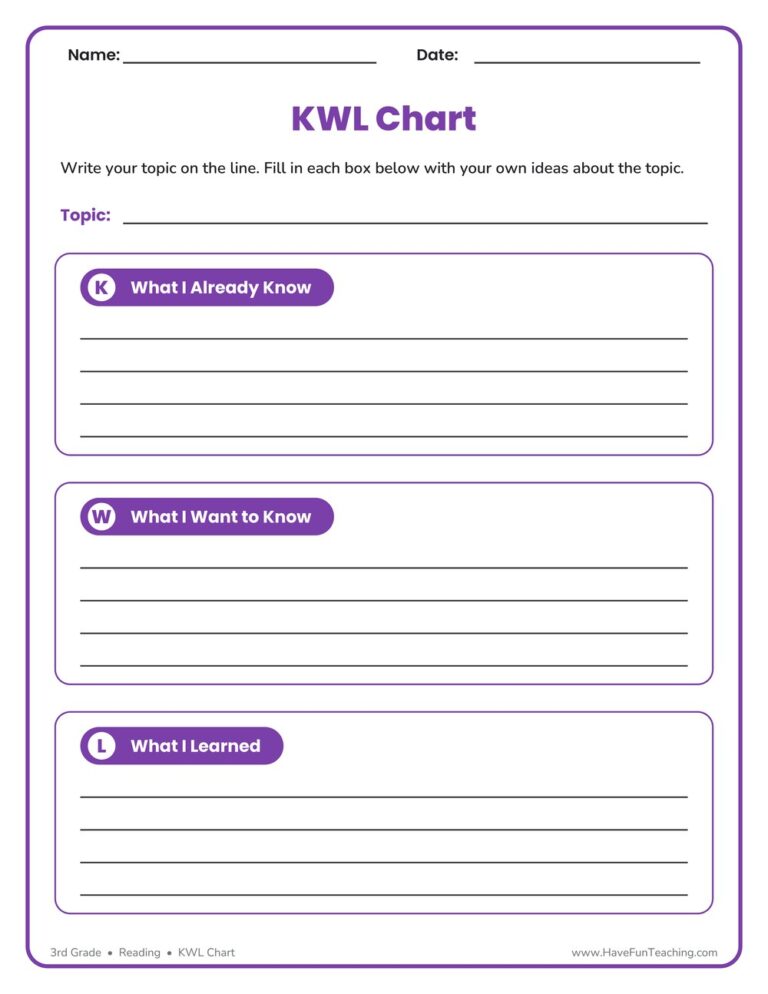
Worksheet3rd GradeKWL About a Topic Graphic Organizer Worksheet

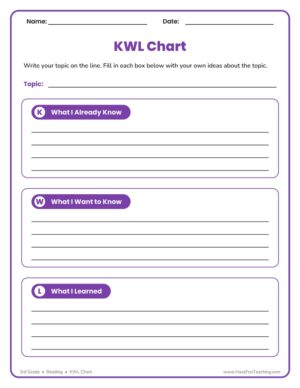
This KWL About a Topic Graphic Organizer Worksheet gives 3rd graders a roomy, full-width chart for recording what they know, what they want to know, and what they learned about any topic — a simple way to make thinking visible.

Worksheet
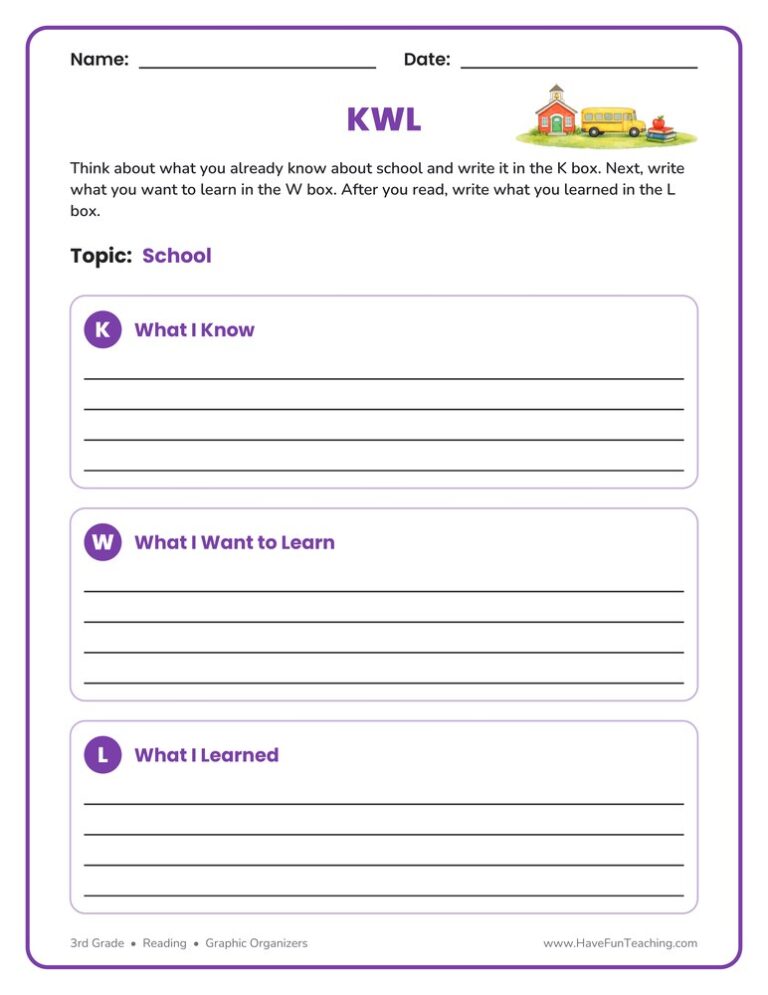
Worksheet3rd GradeSchool KWL Graphic Organizer

This school KWL graphic organizer lets 3rd grade students list what they know, what they wonder, and what they learn about their school, making the first weeks of class feel welcoming and organized.

Worksheet
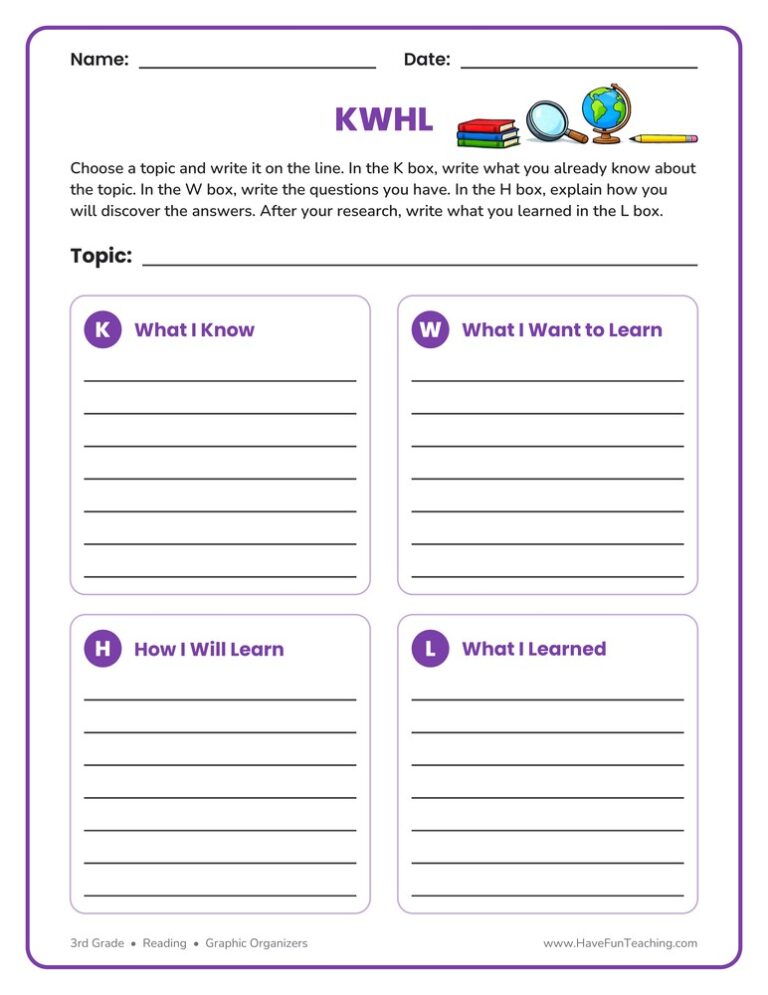
Worksheet3rd GradeKWHL Graphic Organizer

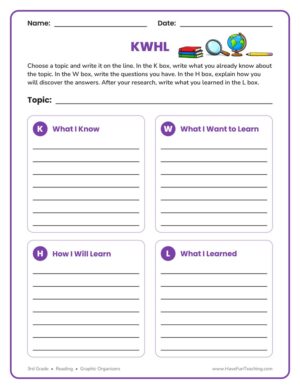
This KWHL graphic organizer helps 3rd grade students plan research on any topic by recording what they know, what they want to learn, how they will learn it, and what they discover.

Worksheet
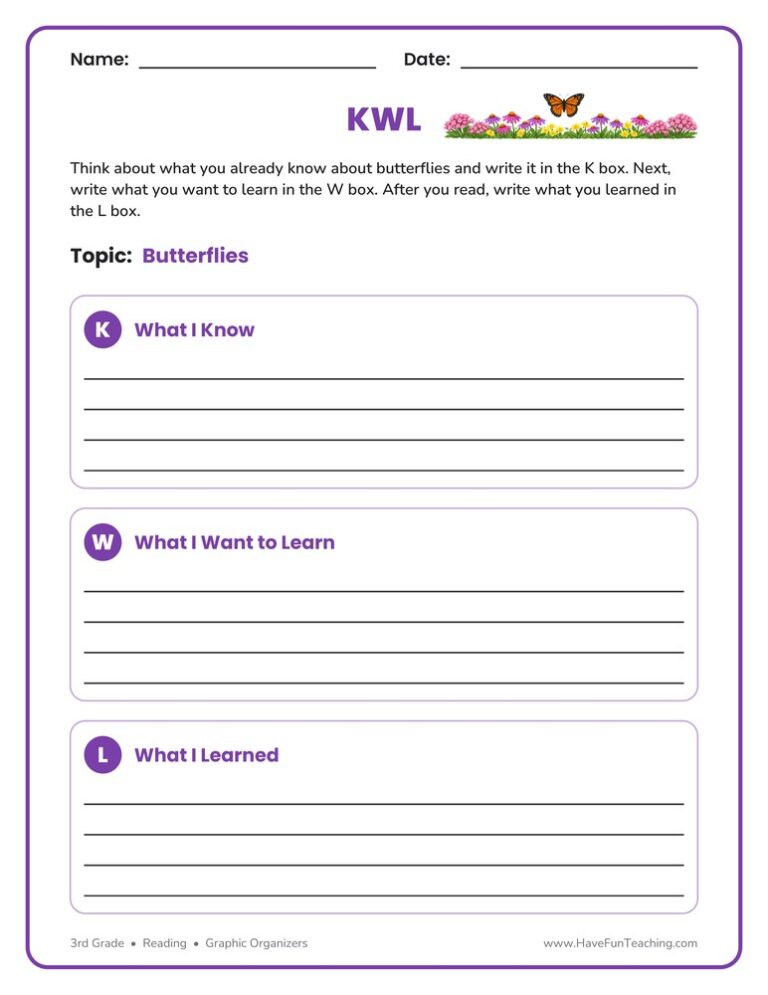
Worksheet3rd GradeButterflies KWL Graphic Organizer

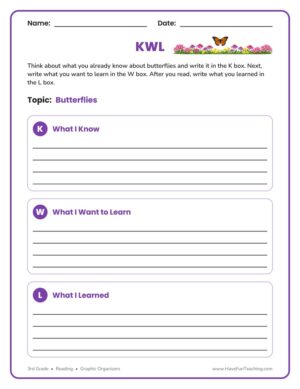
This butterflies KWL graphic organizer helps 3rd grade students record what they know, what they want to learn, and what they learned about butterflies, building strong reading and science habits.

Activity
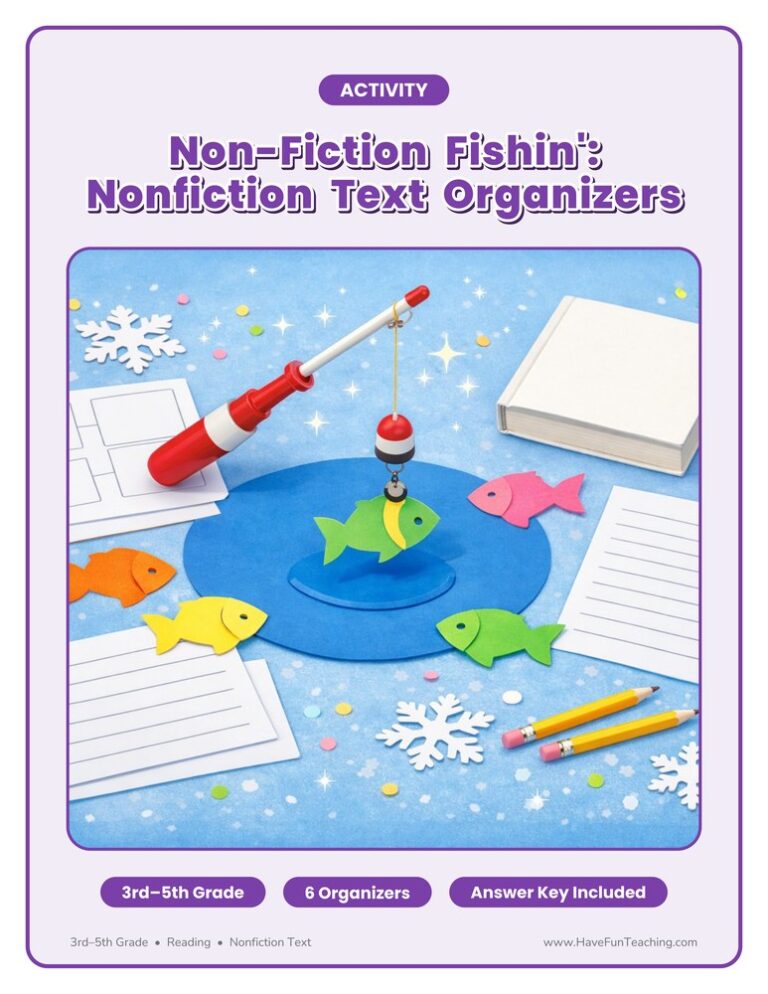
Activity3rd GradeNonfiction Fishin' Activity

This nonfiction fishin' activity gives 3rd-5th Grade readers six graphic organizers for different kinds of nonfiction text, a model article and practice, with an answer key included.

Worksheet
Worksheet3rd GradeKWL Graphic Organizer

This KWL graphic organizer helps 3rd grade students record what they know, what they want to learn, and what they learned about any topic, building strong reading and research habits.

Worksheet
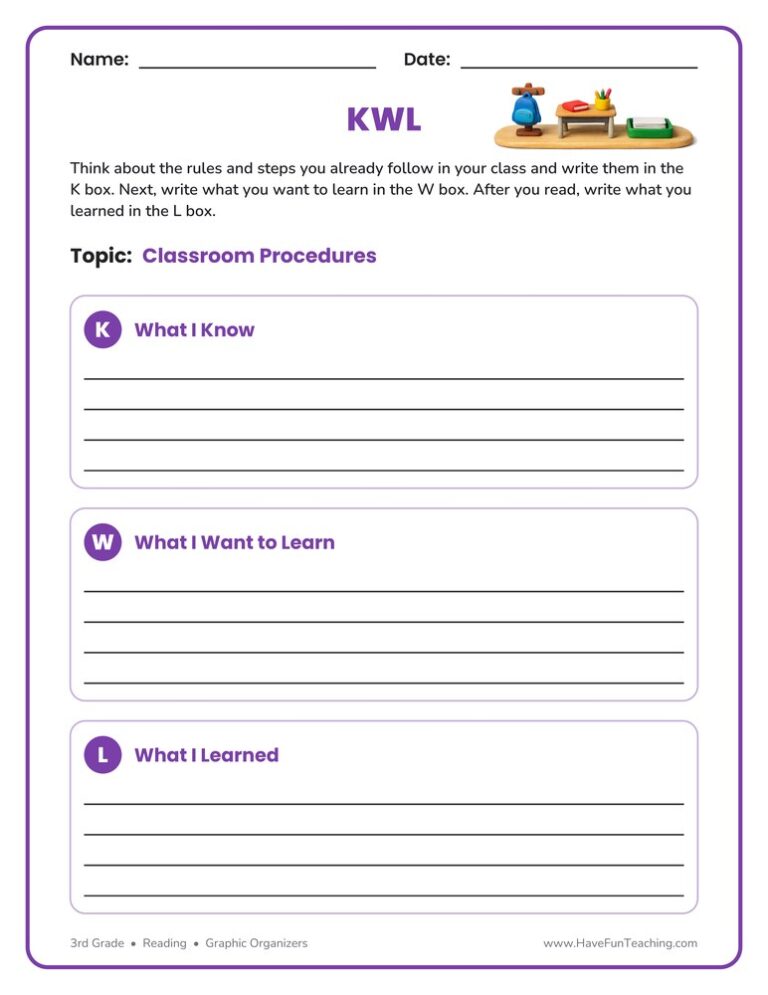
Worksheet3rd GradeClassroom Procedures KWL Graphic Organizer

This classroom procedures KWL graphic organizer helps 3rd grade students record what they know, want to learn, and learned about class routines, building a calm, confident start to the school year.

Worksheet
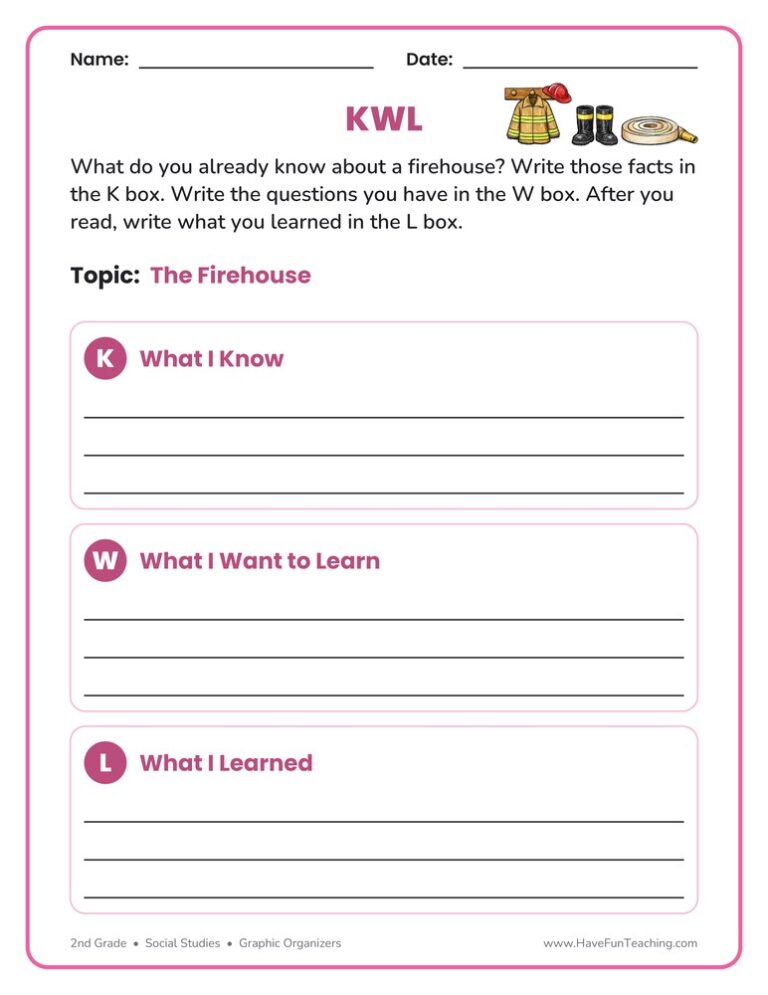
Worksheet2nd GradeFirehouse KWL Graphic Organizer

This firehouse KWL graphic organizer lets 2nd grade students write what they know, what they wonder, and what they learn about firefighters, turning any community helpers lesson into active learning.

Worksheet
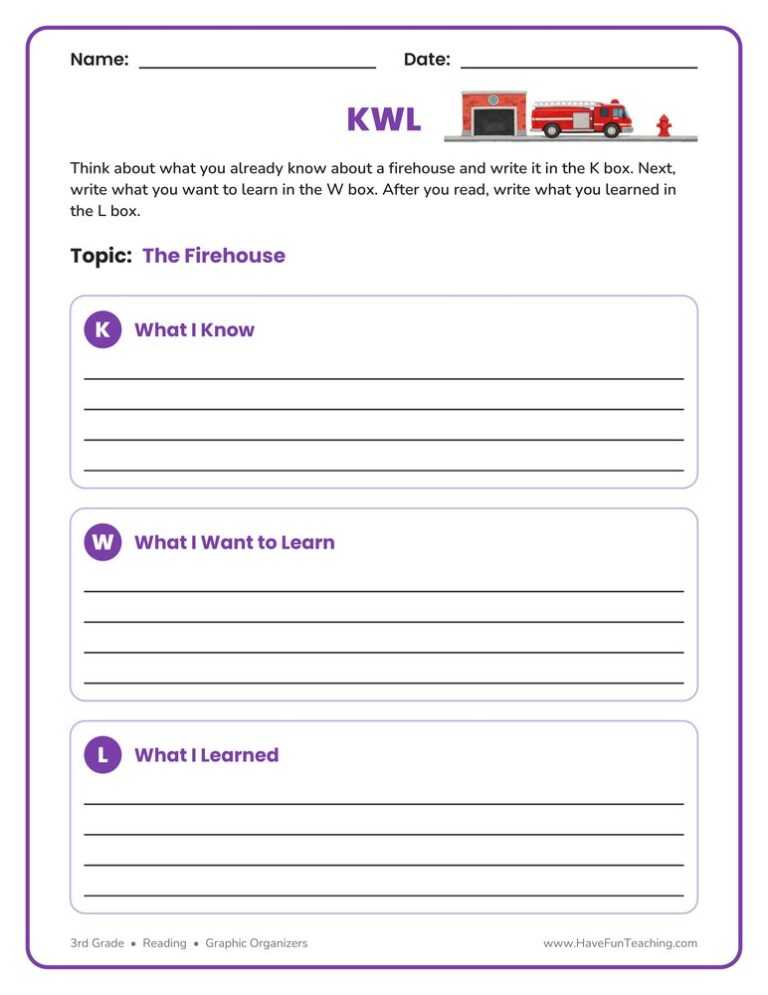
Worksheet3rd GradeFire KWL Graphic Organizer

This fire KWL graphic organizer helps 3rd grade students record what they know, what they want to learn, and what they learned about the firehouse, building strong reading and research habits.

Worksheet
Worksheet3rd GradeKWLS Graphic Organizer Worksheet

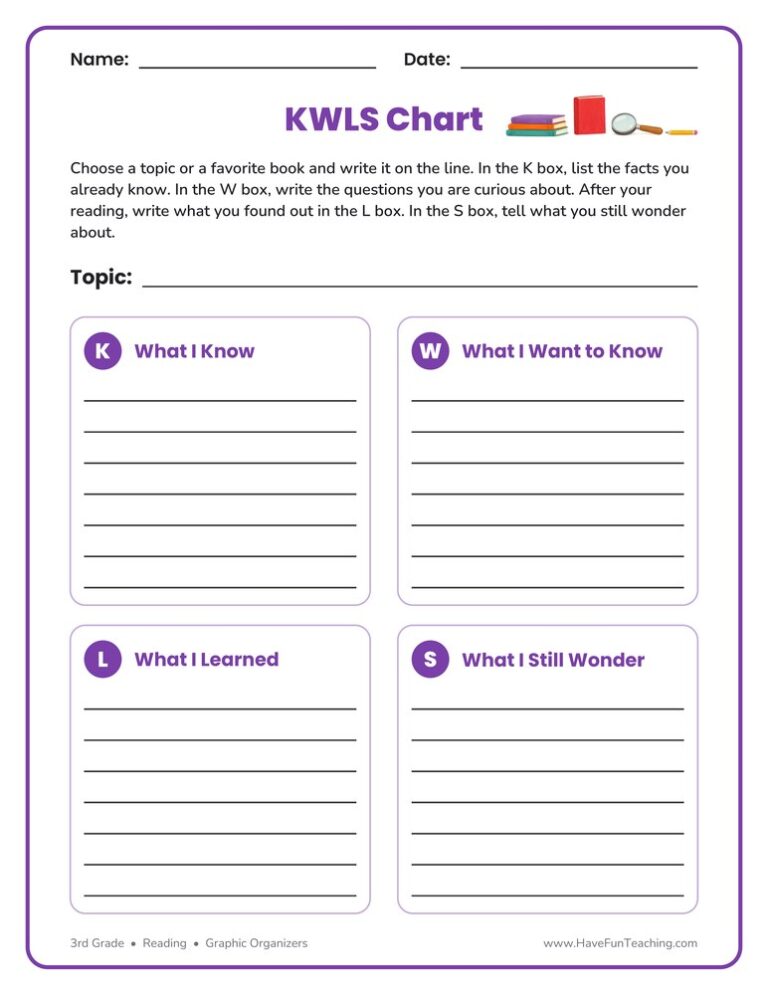
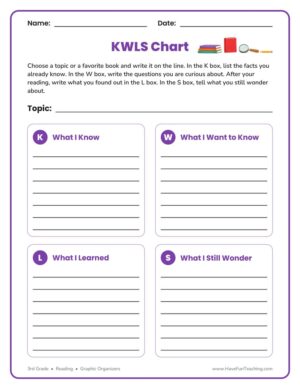
This KWLS graphic organizer worksheet guides 3rd grade readers to record what they know, want to know, learned, and still wonder about any topic or book, building curious, purposeful readers.

Worksheet
Worksheet3rd GradePlants KWL Graphic Organizer

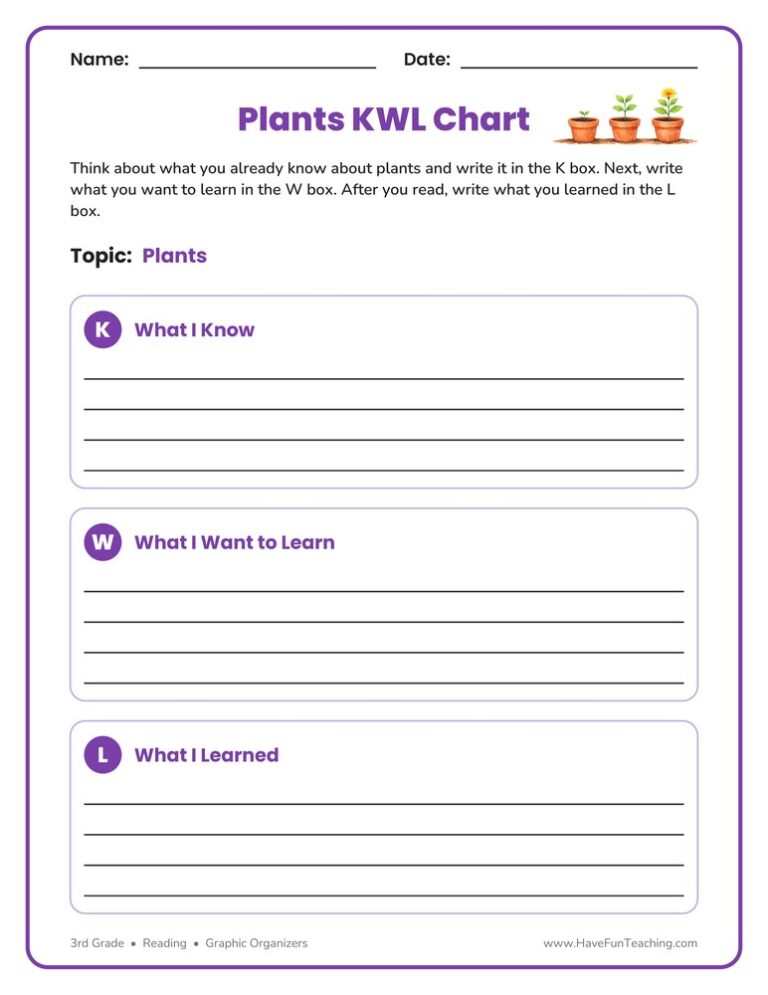
This plants KWL graphic organizer helps 3rd grade students record what they know, what they want to learn, and what they learned about plants, building strong reading and science habits.

From our teachers' playbook

Know it, wonder it, learn it!

What do kids learn with a KWL chart?

A KWL chart turns reading into a question hunt. Before a book or unit, kids write what they Know and what they Want to know. Afterward they record what they Learned. The KWHL version adds How they'll find out (a book, a video, an expert), and KWLS adds what they Still wonder. The magic moment comes when a child looks back at the K column and says, "Wait, that's not right!" That's real learning happening on paper.

How we make KWL charts actually work

A KWL chart can be a fill-in-the-boxes chore or the best part of a unit. These moves keep it the second one.

Think aloud the first chart

Fill the first KWL chart together on chart paper before kids ever try one alone. Say your thinking out loud: "I think fire needs air... I'm not sure, so I'll put a question mark." Kids learn that guesses and questions are welcome in the K and W columns.

Why it works: handing over the work step by step, from teacher to student, is one of the most widely used teaching frameworks (Pearson and Gallagher, 1983).

KWL Graphic OrganizerTry it withKWL Graphic OrganizerWorksheetsOpen it →
Plan the H before you read

With the KWHL organizer, kids pick a How for every Want question: the library book, the class video, or asking a firefighter. Suddenly they're planning research, not just wondering. Circle back at the end and check which How actually answered the question.

Why it works: going from real objects to pictures to symbols is a core recommendation of the U.S. Department of Education's elementary math guide.

KWHL Graphic OrganizerTry it withKWHL Graphic OrganizerWorksheetsOpen it →
Fix the K column in red

After the unit, hand out red pencils and have kids reread their K column. Anything that turned out wrong gets crossed out and corrected. Kids love catching their own old mistakes, and it shows them their thinking grew.

Why it works: children learn more from words and pictures together than from words alone (Mayer, 2009).

KWLS Graphic Organizer WorksheetTry it withKWLS Graphic Organizer WorksheetGraphic OrganizersOpen it →

KWL chart questions we hear a lot

What does KWL stand for?

Know, Want to know, and Learned. Kids fill in the first two columns before reading or starting a unit and the last column afterward. It was created by educator Donna Ogle in 1986 as a way to activate what kids already know.

What is the difference between KWL and KWHL?

KWHL adds an H column for How will I find out? It nudges kids to plan where their answers will come from, like a book, a website or an interview. It works well from 2nd grade up, when kids start doing simple research.

What grade level is a KWL chart for?

Kids can use one from kindergarten on. Little ones dictate or draw while the teacher writes on a class chart. By 2nd or 3rd grade most kids can fill out their own.

When should students fill in the L column?

At the end of the reading or unit, but it also works to add to it as you go. Many teachers stop after each lesson for a quick L entry so the final fill-in isn't overwhelming.

Can I use KWL charts for science and social studies?

Absolutely! KWL fits any nonfiction topic, from plants and butterflies to fire safety and classroom rules. Themed organizers make it easy to start a new unit with one.

Keep exploring